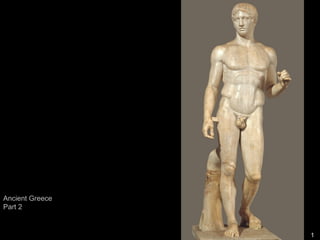
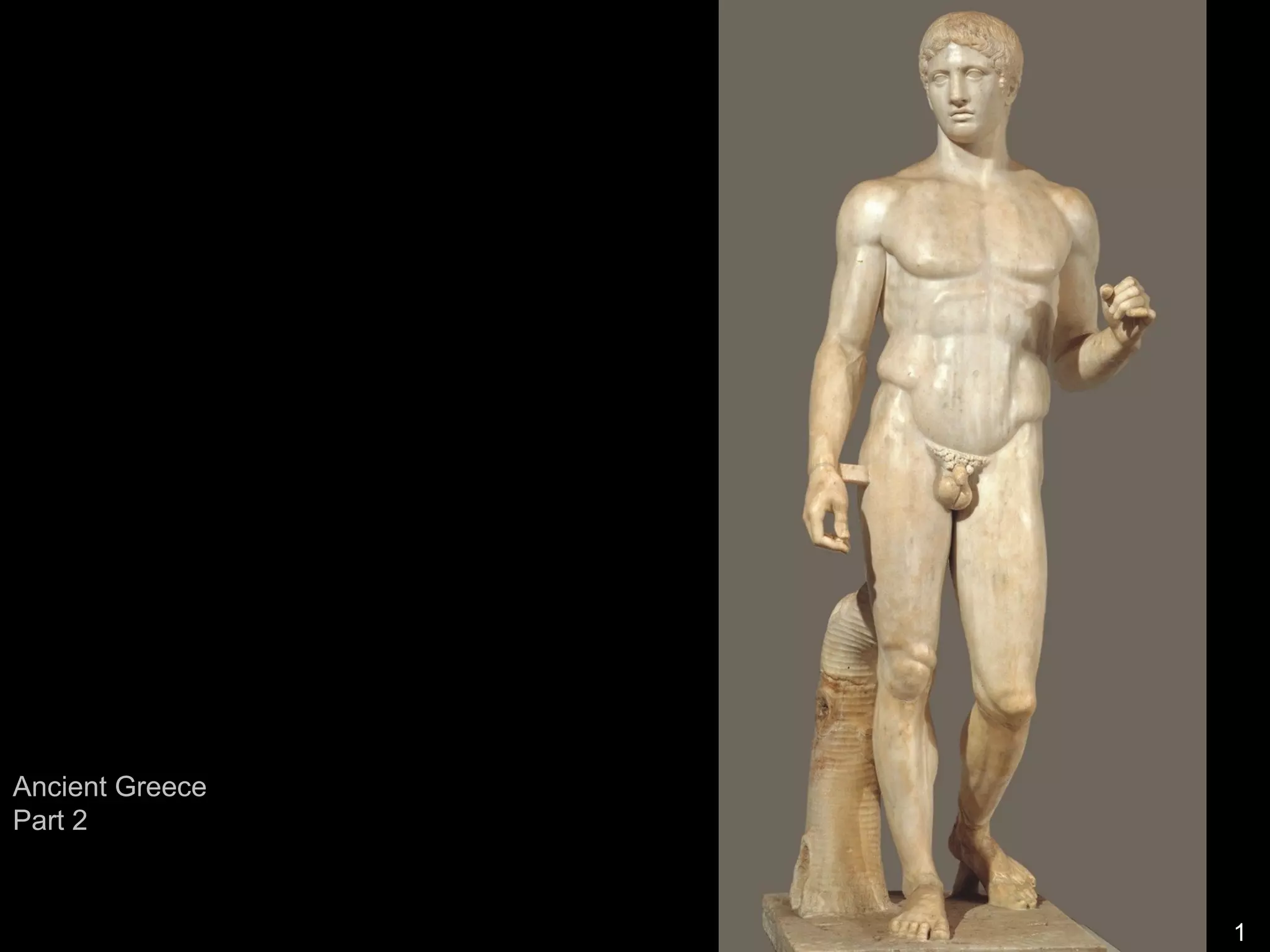

Ancient Greece
Part 2
1
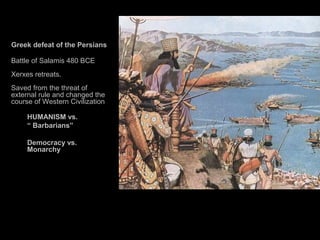
Greek defeat of the Persians
Battle of Salamis 480 BCE
Xerxes retreats.
Saved from the threat of
external rule and changed the
course of Western Civilization
HUMANISM vs.
“ Barbarians”
Democracy vs.
Monarchy
3
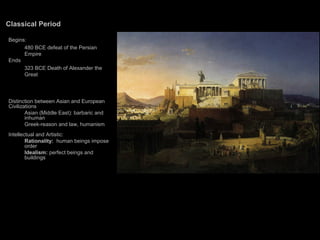
Classical Period
Begins:
480 BCE defeat of the Persian
Empire
Ends
323 BCE Death of Alexander the
Great
Distinction between Asian and European
Civilizations
Asian (Middle East): barbaric and
inhuman
Greek-reason and law, humanism
Intellectual and Artistic:
Rationality: human beings impose
order
Idealism: perfect beings and
buildings
Classical Age
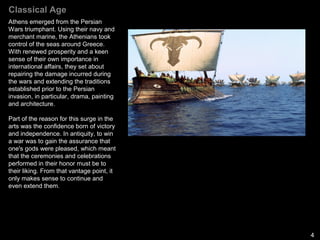
Athens emerged from the Persian
Wars triumphant. Using their navy and
merchant marine, the Athenians took
control of the seas around Greece.
With renewed prosperity and a keen
sense of their own importance in
international affairs, they set about
repairing the damage incurred during
the wars and extending the traditions
established prior to the Persian
invasion, in particular, drama, painting
and architecture.
Part of the reason for this surge in the
arts was the confidence born of victory
and independence. In antiquity, to win
a war was to gain the assurance that
one's gods were pleased, which meant
that the ceremonies and celebrations
performed in their honor must be to
their liking. From that vantage point, it
only makes sense to continue and
even extend them.
5
Classical Age
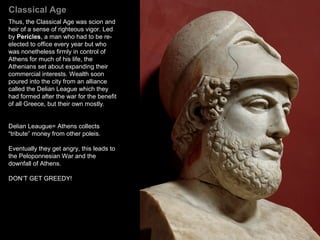
Thus, the Classical Age was scion and
heir of a sense of righteous vigor. Led
by Pericles, a man who had to be re-
elected to office every year but who
was nonetheless firmly in control of
Athens for much of his life, the
Athenians set about expanding their
commercial interests. Wealth soon
poured into the city from an alliance
called the Delian League which they
had formed after the war for the benefit
of all Greece, but their own mostly.
Delian Leaugue= Athens collects
“tribute” money from other poleis.
Eventually they get angry, this leads to
the Peloponnesian War and the
downfall of Athens.
DON’T GET GREEDY!
6
7
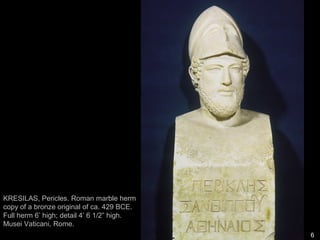
KRESILAS, Pericles. Roman marble herm
copy of a bronze original of ca. 429 BCE.
Full herm 6’ high; detail 4’ 6 1/2” high.
Musei Vaticani, Rome.
8
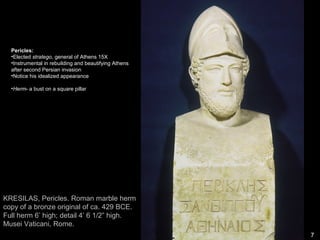
KRESILAS, Pericles. Roman marble herm
copy of a bronze original of ca. 429 BCE.
Full herm 6’ high; detail 4’ 6 1/2” high.
Musei Vaticani, Rome.
Pericles:
•Elected stratego, general of Athens 15X
•Instrumental in rebuilding and beautifying Athens
after second Persian invasion
•Notice his idealized appearance
•Herm- a bust on a square pillar
9
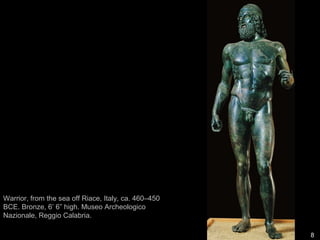
Warrior, from the sea off Riace, Italy, ca. 460–450
BCE. Bronze, 6’ 6” high. Museo Archeologico
Nazionale, Reggio Calabria.
10
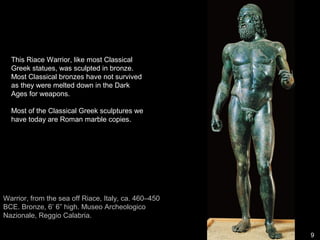
Warrior, from the sea off Riace, Italy, ca. 460–450
BCE. Bronze, 6’ 6” high. Museo Archeologico
Nazionale, Reggio Calabria.
This Riace Warrior, like most Classical
Greek statues, was sculpted in bronze.
Most Classical bronzes have not survived
as they were melted down in the Dark
Ages for weapons.
Most of the Classical Greek sculptures we
have today are Roman marble copies.
11
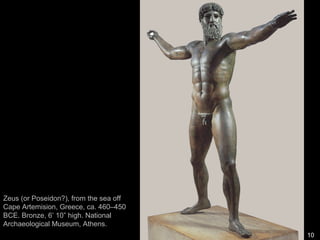
Zeus (or Poseidon?), from the sea off
Cape Artemision, Greece, ca. 460–450
BCE. Bronze, 6’ 10” high. National
Archaeological Museum, Athens.
12
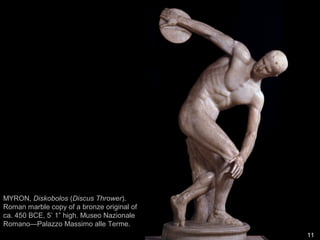
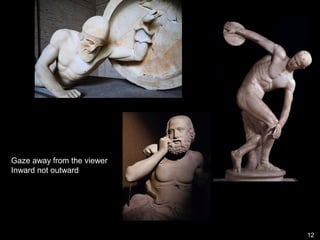
MYRON, Diskobolos (Discus Thrower).
Roman marble copy of a bronze original of
ca. 450 BCE, 5’ 1” high. Museo Nazionale
Romano—Palazzo Massimo alle Terme.
13
Gaze away from the viewer
Inward not outward
14
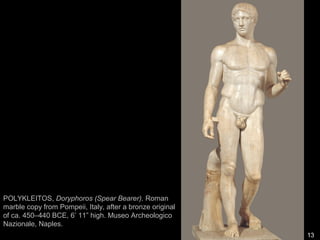
POLYKLEITOS, Doryphoros (Spear Bearer). Roman
marble copy from Pompeii, Italy, after a bronze original
of ca. 450–440 BCE, 6’ 11” high. Museo Archeologico
Nazionale, Naples.
15
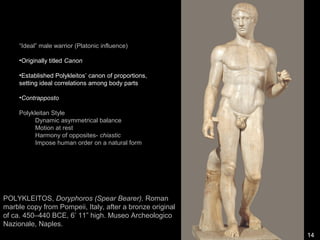
POLYKLEITOS, Doryphoros (Spear Bearer). Roman
marble copy from Pompeii, Italy, after a bronze original
of ca. 450–440 BCE, 6’ 11” high. Museo Archeologico
Nazionale, Naples.
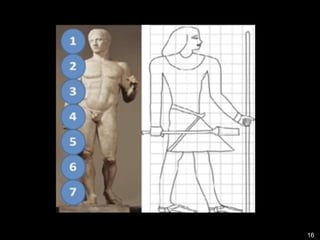
“Ideal” male warrior (Platonic influence)
•Originally titled Canon
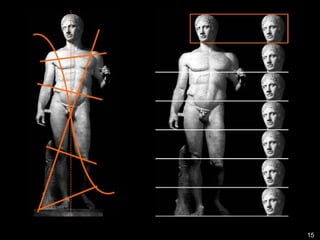
•Established Polykleitos’ canon of proportions,
setting ideal correlations among body parts
•Contrapposto
Polykleitan Style
Dynamic asymmetrical balance
Motion at rest
Harmony of opposites- chiastic
Impose human order on a natural form
16
17
18
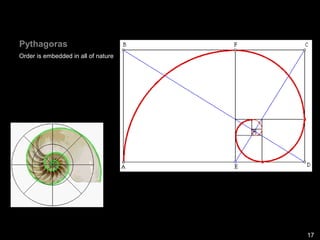
Pythagoras
Order is embedded in all of nature
19
20
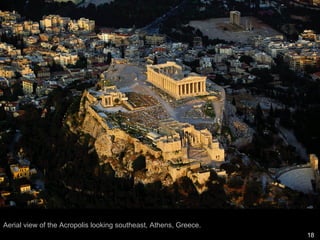
Aerial view of the Acropolis looking southeast, Athens, Greece.
21
22
23
24
25
26
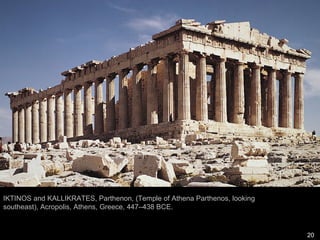
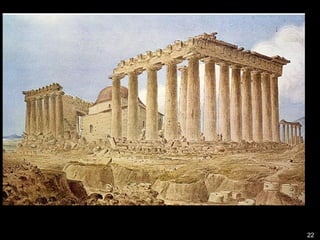
IKTINOS and KALLIKRATES, Parthenon, (Temple of Athena Parthenos, looking
southeast), Acropolis, Athens, Greece, 447–438 BCE.
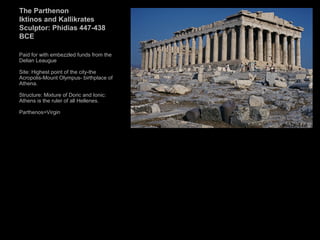
The Parthenon
Iktinos and Kallikrates
Sculptor: Phidias 447-438
BCE
Paid for with embezzled funds from the
Delian Leaugue
Site: Highest point of the city-the
Acropolis-Mount Olympus- birthplace of
Athena.
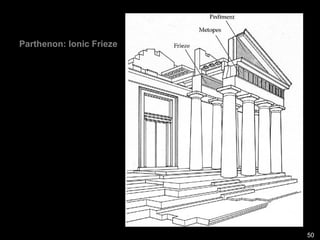
Structure: Mixture of Doric and Ionic:
Athens is the ruler of all Hellenes.
Parthenos=Virgin
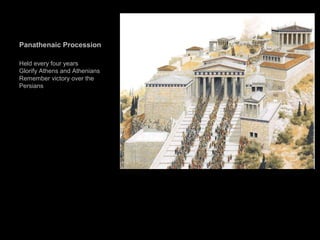
Panathenaic Procession
Held every four years
Glorify Athens and Athenians
Remember victory over the
Persians
29
30
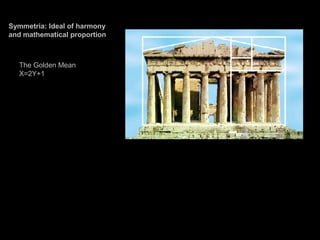
Symmetria: Ideal of harmony
and mathematical proportion
The Golden Mean
X=2Y+1
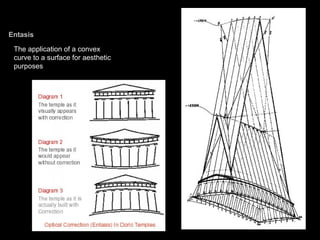
Entasis
The application of a convex
curve to a surface for aesthetic
purposes
33
34
35
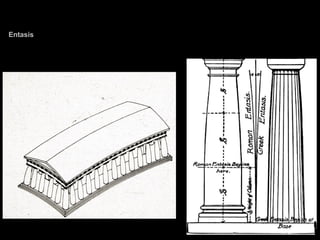
Entasis
37
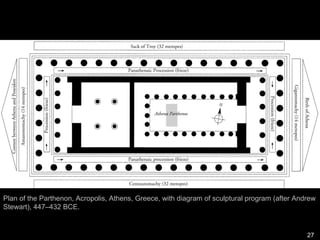
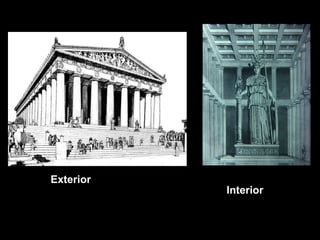
Plan of the Parthenon, Acropolis, Athens, Greece, with diagram of sculptural program (after Andrew
Stewart), 447–432 BCE.
Exterior
Interior
39
40
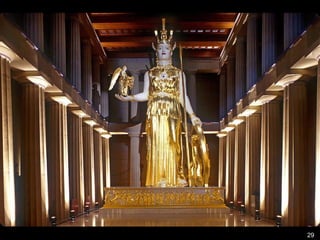
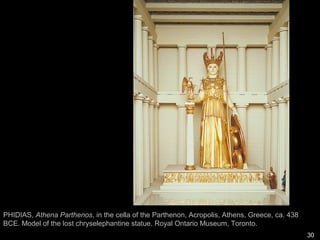
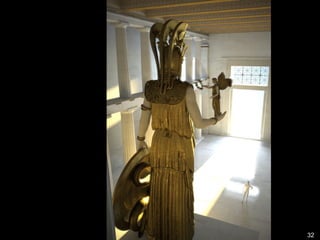
PHIDIAS, Athena Parthenos, in the cella of the Parthenon, Acropolis, Athens, Greece, ca. 438
BCE. Model of the lost chryselephantine statue. Royal Ontario Museum, Toronto.
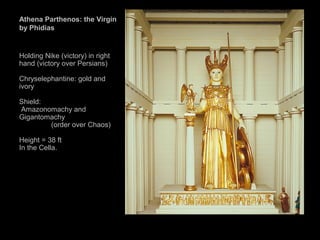
Athena Parthenos: the Virgin
by Phidias
Holding Nike (victory) in right
hand (victory over Persians)
Chryselephantine: gold and
ivory
Shield:
Amazonomachy and
Gigantomachy
(order over Chaos)
Height = 38 ft
In the Cella.
42
43
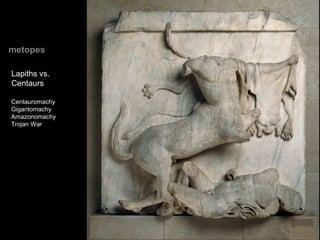
metopes
44
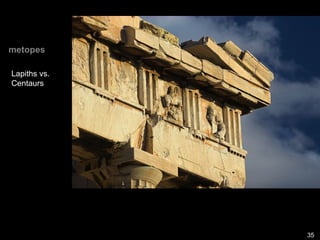
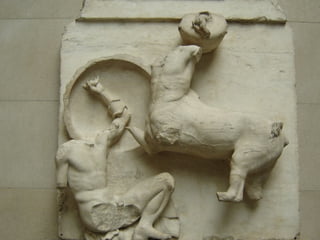
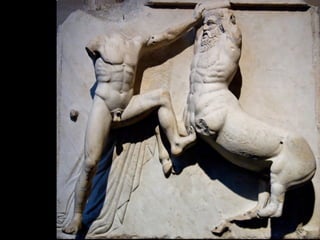
Lapiths vs.
Centaurs
metopes
Centauromachy
Gigantomachy
Amazonomachy
Trojan War
45
Lapiths vs.
Centaurs
46
47
48
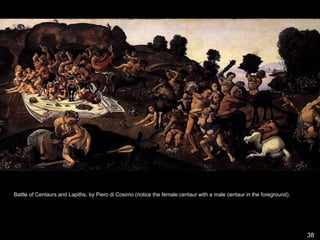
Battle of Centaurs and Lapiths, by Piero di Cosimo (notice the female centaur with a male centaur in the foreground).
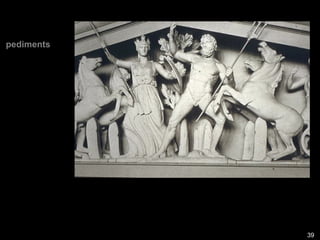
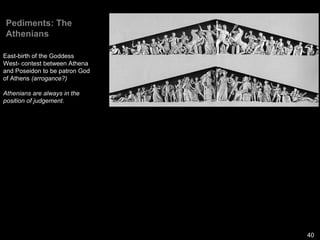
Pediments: The
Athenians
East-birth of the Goddess
West- contest between Athena
and Poseidon to be patron God
of Athens (arrogance?)
Athenians are always in the
position of judgement.
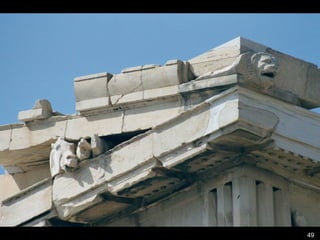
49
pediments
50
51
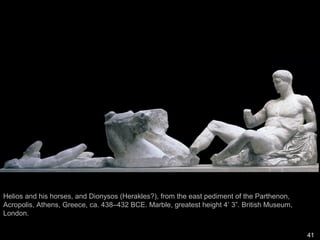
Helios and his horses, and Dionysos (Herakles?), from the east pediment of the Parthenon,
Acropolis, Athens, Greece, ca. 438–432 BCE. Marble, greatest height 4’ 3”. British Museum,
London.
52
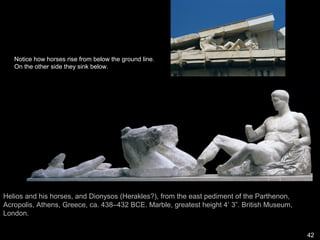
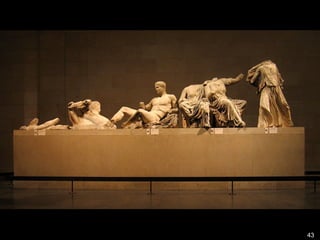
Helios and his horses, and Dionysos (Herakles?), from the east pediment of the Parthenon,
Acropolis, Athens, Greece, ca. 438–432 BCE. Marble, greatest height 4’ 3”. British Museum,
London.
Notice how horses rise from below the ground line.
On the other side they sink below.
53
54
55
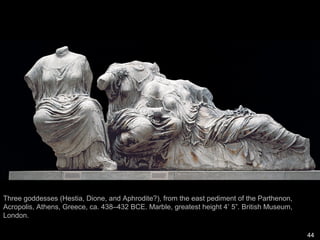
Three goddesses (Hestia, Dione, and Aphrodite?), from the east pediment of the Parthenon,
Acropolis, Athens, Greece, ca. 438–432 BCE. Marble, greatest height 4’ 5”. British Museum,
London.
56
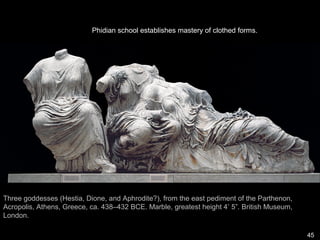
Three goddesses (Hestia, Dione, and Aphrodite?), from the east pediment of the Parthenon,
Acropolis, Athens, Greece, ca. 438–432 BCE. Marble, greatest height 4’ 5”. British Museum,
London.
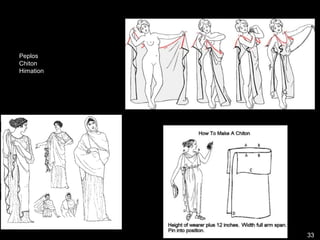
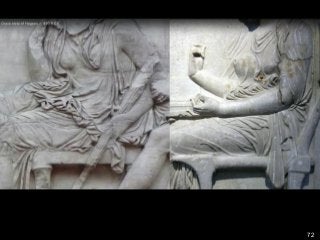
Phidian school establishes mastery of clothed forms.
57
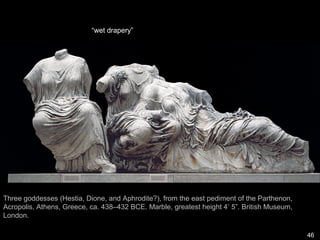
Three goddesses (Hestia, Dione, and Aphrodite?), from the east pediment of the Parthenon,
Acropolis, Athens, Greece, ca. 438–432 BCE. Marble, greatest height 4’ 5”. British Museum,
London.
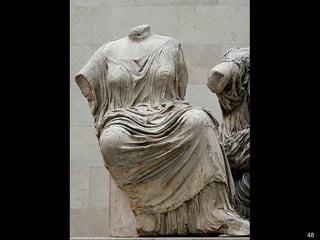
“wet drapery”
58
59
60
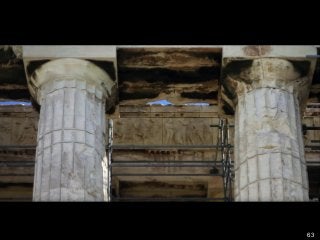
Parthenon: Ionic Frieze
61
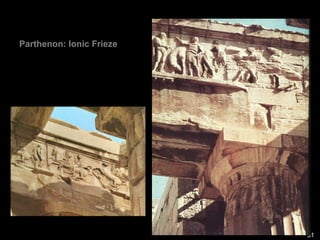
Parthenon: Ionic Frieze
62
63
64
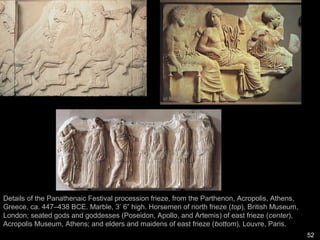
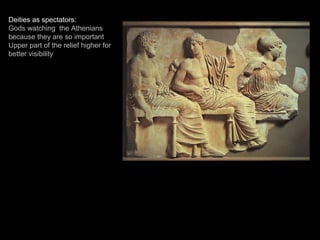
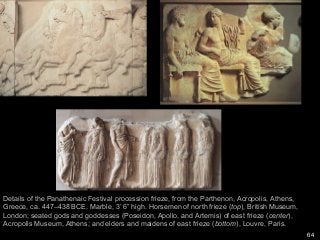
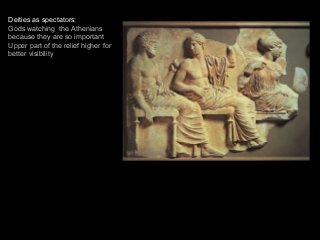
Details of the Panathenaic Festival procession frieze, from the Parthenon, Acropolis, Athens,
Greece, ca. 447–438 BCE. Marble, 3’ 6” high. Horsemen of north frieze (top), British Museum,
London; seated gods and goddesses (Poseidon, Apollo, and Artemis) of east frieze (center),
Acropolis Museum, Athens; and elders and maidens of east frieze (bottom), Louvre, Paris.
Deities as spectators:
Gods watching the Athenians
because they are so important
Upper part of the relief higher for
better visibility
66
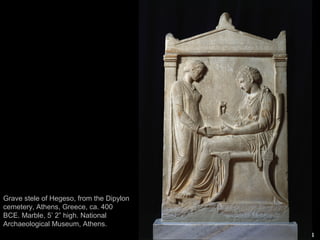
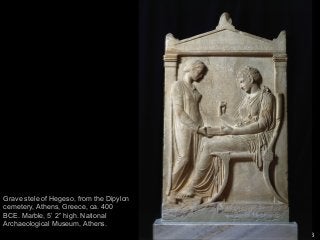
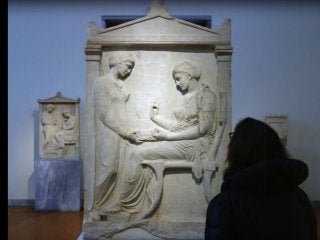
Grave stele of Hegeso, from the Dipylon
cemetery, Athens, Greece, ca. 400
BCE. Marble, 5’ 2” high. National
Archaeological Museum, Athens.
67
68
69
70
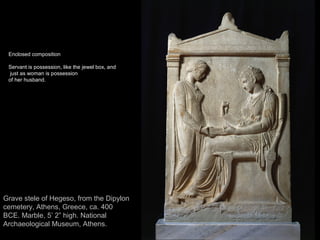
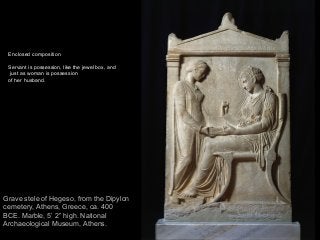
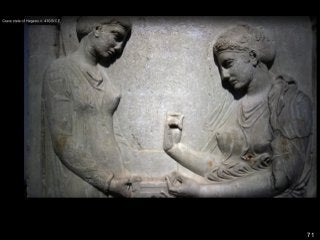
Grave stele of Hegeso, from the Dipylon
cemetery, Athens, Greece, ca. 400
BCE. Marble, 5’ 2” high. National
Archaeological Museum, Athens.
Enclosed composition
Servant is possession, like the jewel box, and
just as woman is possession
of her husband.
71
72
73
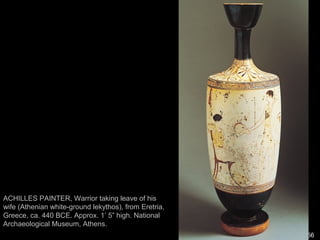
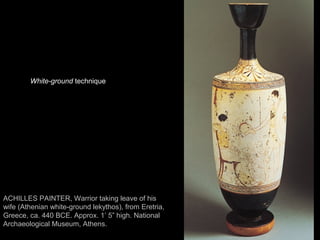
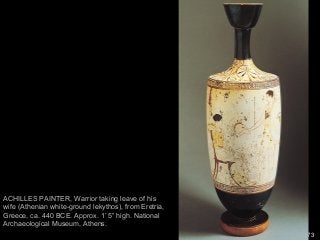
ACHILLES PAINTER, Warrior taking leave of his
wife (Athenian white-ground lekythos), from Eretria,
Greece, ca. 440 BCE. Approx. 1’ 5” high. National
Archaeological Museum, Athens.
74
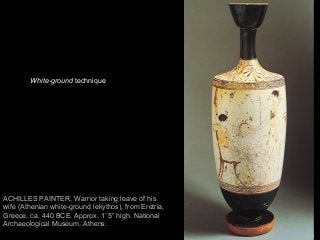
ACHILLES PAINTER, Warrior taking leave of his
wife (Athenian white-ground lekythos), from Eretria,
Greece, ca. 440 BCE. Approx. 1’ 5” high. National
Archaeological Museum, Athens.
White-ground technique
75
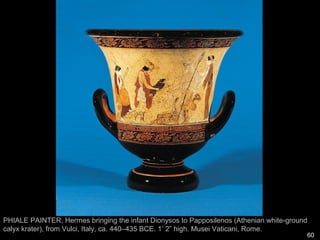
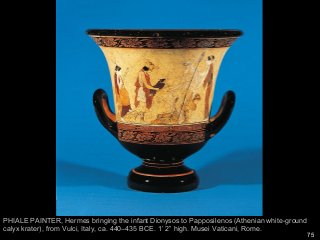
PHIALE PAINTER, Hermes bringing the infant Dionysos to Papposilenos (Athenian white-ground
calyx krater), from Vulci, Italy, ca. 440–435 BCE. 1’ 2” high. Musei Vaticani, Rome.
76
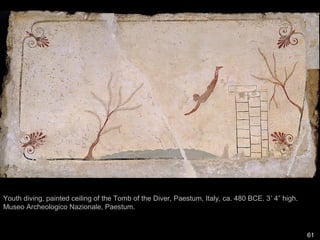
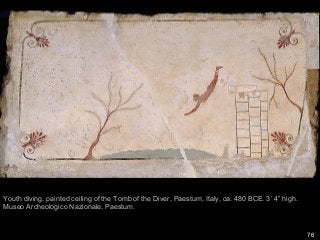
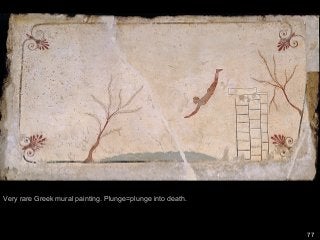
Youth diving, painted ceiling of the Tomb of the Diver, Paestum, Italy, ca. 480 BCE. 3’ 4” high.
Museo Archeologico Nazionale, Paestum.
77
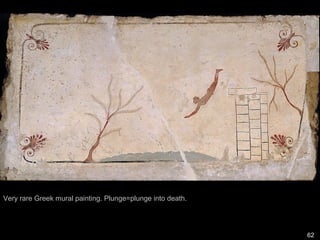
Very rare Greek mural painting. Plunge=plunge into death.

GREECE part 2 de Beaufort

  • 1.
  • 2.
    Greek defeat ofthe Persians Battle of Salamis 480 BCE Xerxes retreats. Saved from the threat of external rule and changed the course of Western Civilization HUMANISM vs. “ Barbarians” Democracy vs. Monarchy
  • 3.
  • 4.
    Classical Period Begins: 480 BCEdefeat of the Persian Empire Ends 323 BCE Death of Alexander the Great Distinction between Asian and European Civilizations Asian (Middle East): barbaric and inhuman Greek-reason and law, humanism Intellectual and Artistic: Rationality: human beings impose order Idealism: perfect beings and buildings
  • 5.
    Classical Age Athens emergedfrom the Persian Wars triumphant. Using their navy and merchant marine, the Athenians took control of the seas around Greece. With renewed prosperity and a keen sense of their own importance in international affairs, they set about repairing the damage incurred during the wars and extending the traditions established prior to the Persian invasion, in particular, drama, painting and architecture. Part of the reason for this surge in the arts was the confidence born of victory and independence. In antiquity, to win a war was to gain the assurance that one's gods were pleased, which meant that the ceremonies and celebrations performed in their honor must be to their liking. From that vantage point, it only makes sense to continue and even extend them. 5
  • 6.
    Classical Age Thus, theClassical Age was scion and heir of a sense of righteous vigor. Led by Pericles, a man who had to be re- elected to office every year but who was nonetheless firmly in control of Athens for much of his life, the Athenians set about expanding their commercial interests. Wealth soon poured into the city from an alliance called the Delian League which they had formed after the war for the benefit of all Greece, but their own mostly. Delian Leaugue= Athens collects “tribute” money from other poleis. Eventually they get angry, this leads to the Peloponnesian War and the downfall of Athens. DON’T GET GREEDY! 6
  • 7.
    7 KRESILAS, Pericles. Romanmarble herm copy of a bronze original of ca. 429 BCE. Full herm 6’ high; detail 4’ 6 1/2” high. Musei Vaticani, Rome.
  • 8.
    8 KRESILAS, Pericles. Romanmarble herm copy of a bronze original of ca. 429 BCE. Full herm 6’ high; detail 4’ 6 1/2” high. Musei Vaticani, Rome. Pericles: •Elected stratego, general of Athens 15X •Instrumental in rebuilding and beautifying Athens after second Persian invasion •Notice his idealized appearance •Herm- a bust on a square pillar
  • 9.
    9 Warrior, from thesea off Riace, Italy, ca. 460–450 BCE. Bronze, 6’ 6” high. Museo Archeologico Nazionale, Reggio Calabria.
  • 10.
    10 Warrior, from thesea off Riace, Italy, ca. 460–450 BCE. Bronze, 6’ 6” high. Museo Archeologico Nazionale, Reggio Calabria. This Riace Warrior, like most Classical Greek statues, was sculpted in bronze. Most Classical bronzes have not survived as they were melted down in the Dark Ages for weapons. Most of the Classical Greek sculptures we have today are Roman marble copies.
  • 11.
    11 Zeus (or Poseidon?),from the sea off Cape Artemision, Greece, ca. 460–450 BCE. Bronze, 6’ 10” high. National Archaeological Museum, Athens.
  • 12.
    12 MYRON, Diskobolos (DiscusThrower). Roman marble copy of a bronze original of ca. 450 BCE, 5’ 1” high. Museo Nazionale Romano—Palazzo Massimo alle Terme.
  • 13.
    13 Gaze away fromthe viewer Inward not outward
  • 14.
    14 POLYKLEITOS, Doryphoros (SpearBearer). Roman marble copy from Pompeii, Italy, after a bronze original of ca. 450–440 BCE, 6’ 11” high. Museo Archeologico Nazionale, Naples.
  • 15.
    15 POLYKLEITOS, Doryphoros (SpearBearer). Roman marble copy from Pompeii, Italy, after a bronze original of ca. 450–440 BCE, 6’ 11” high. Museo Archeologico Nazionale, Naples. “Ideal” male warrior (Platonic influence) •Originally titled Canon •Established Polykleitos’ canon of proportions, setting ideal correlations among body parts •Contrapposto Polykleitan Style Dynamic asymmetrical balance Motion at rest Harmony of opposites- chiastic Impose human order on a natural form
  • 16.
  • 17.
  • 18.
  • 19.
    Pythagoras Order is embeddedin all of nature 19
  • 20.
    20 Aerial view ofthe Acropolis looking southeast, Athens, Greece.
  • 21.
  • 22.
  • 23.
  • 24.
  • 25.
  • 26.
    26 IKTINOS and KALLIKRATES,Parthenon, (Temple of Athena Parthenos, looking southeast), Acropolis, Athens, Greece, 447–438 BCE.
  • 27.
    The Parthenon Iktinos andKallikrates Sculptor: Phidias 447-438 BCE Paid for with embezzled funds from the Delian Leaugue Site: Highest point of the city-the Acropolis-Mount Olympus- birthplace of Athena. Structure: Mixture of Doric and Ionic: Athens is the ruler of all Hellenes. Parthenos=Virgin
  • 28.
    Panathenaic Procession Held everyfour years Glorify Athens and Athenians Remember victory over the Persians
  • 29.
  • 30.
  • 31.
    Symmetria: Ideal ofharmony and mathematical proportion The Golden Mean X=2Y+1
  • 32.
    Entasis The application ofa convex curve to a surface for aesthetic purposes
  • 33.
  • 34.
  • 35.
  • 36.
  • 37.
    37 Plan of theParthenon, Acropolis, Athens, Greece, with diagram of sculptural program (after Andrew Stewart), 447–432 BCE.
  • 38.
  • 39.
  • 40.
    40 PHIDIAS, Athena Parthenos,in the cella of the Parthenon, Acropolis, Athens, Greece, ca. 438 BCE. Model of the lost chryselephantine statue. Royal Ontario Museum, Toronto.
  • 41.
    Athena Parthenos: theVirgin by Phidias Holding Nike (victory) in right hand (victory over Persians) Chryselephantine: gold and ivory Shield: Amazonomachy and Gigantomachy (order over Chaos) Height = 38 ft In the Cella.
  • 42.
  • 43.
  • 44.
  • 45.
  • 46.
  • 47.
  • 48.
    48 Battle of Centaursand Lapiths, by Piero di Cosimo (notice the female centaur with a male centaur in the foreground).
  • 49.
    Pediments: The Athenians East-birth ofthe Goddess West- contest between Athena and Poseidon to be patron God of Athens (arrogance?) Athenians are always in the position of judgement. 49
  • 50.
  • 51.
    51 Helios and hishorses, and Dionysos (Herakles?), from the east pediment of the Parthenon, Acropolis, Athens, Greece, ca. 438–432 BCE. Marble, greatest height 4’ 3”. British Museum, London.
  • 52.
    52 Helios and hishorses, and Dionysos (Herakles?), from the east pediment of the Parthenon, Acropolis, Athens, Greece, ca. 438–432 BCE. Marble, greatest height 4’ 3”. British Museum, London. Notice how horses rise from below the ground line. On the other side they sink below.
  • 53.
  • 54.
  • 55.
    55 Three goddesses (Hestia,Dione, and Aphrodite?), from the east pediment of the Parthenon, Acropolis, Athens, Greece, ca. 438–432 BCE. Marble, greatest height 4’ 5”. British Museum, London.
  • 56.
    56 Three goddesses (Hestia,Dione, and Aphrodite?), from the east pediment of the Parthenon, Acropolis, Athens, Greece, ca. 438–432 BCE. Marble, greatest height 4’ 5”. British Museum, London. Phidian school establishes mastery of clothed forms.
  • 57.
    57 Three goddesses (Hestia,Dione, and Aphrodite?), from the east pediment of the Parthenon, Acropolis, Athens, Greece, ca. 438–432 BCE. Marble, greatest height 4’ 5”. British Museum, London. “wet drapery”
  • 58.
  • 59.
  • 60.
  • 61.
  • 62.
  • 63.
  • 64.
    64 Details of thePanathenaic Festival procession frieze, from the Parthenon, Acropolis, Athens, Greece, ca. 447–438 BCE. Marble, 3’ 6” high. Horsemen of north frieze (top), British Museum, London; seated gods and goddesses (Poseidon, Apollo, and Artemis) of east frieze (center), Acropolis Museum, Athens; and elders and maidens of east frieze (bottom), Louvre, Paris.
  • 65.
    Deities as spectators: Godswatching the Athenians because they are so important Upper part of the relief higher for better visibility
  • 66.
    66 Grave stele ofHegeso, from the Dipylon cemetery, Athens, Greece, ca. 400 BCE. Marble, 5’ 2” high. National Archaeological Museum, Athens.
  • 67.
  • 68.
  • 69.
  • 70.
    70 Grave stele ofHegeso, from the Dipylon cemetery, Athens, Greece, ca. 400 BCE. Marble, 5’ 2” high. National Archaeological Museum, Athens. Enclosed composition Servant is possession, like the jewel box, and just as woman is possession of her husband.
  • 71.
  • 72.
  • 73.
    73 ACHILLES PAINTER, Warriortaking leave of his wife (Athenian white-ground lekythos), from Eretria, Greece, ca. 440 BCE. Approx. 1’ 5” high. National Archaeological Museum, Athens.
  • 74.
    74 ACHILLES PAINTER, Warriortaking leave of his wife (Athenian white-ground lekythos), from Eretria, Greece, ca. 440 BCE. Approx. 1’ 5” high. National Archaeological Museum, Athens. White-ground technique
  • 75.
    75 PHIALE PAINTER, Hermesbringing the infant Dionysos to Papposilenos (Athenian white-ground calyx krater), from Vulci, Italy, ca. 440–435 BCE. 1’ 2” high. Musei Vaticani, Rome.
  • 76.
    76 Youth diving, paintedceiling of the Tomb of the Diver, Paestum, Italy, ca. 480 BCE. 3’ 4” high. Museo Archeologico Nazionale, Paestum.
  • 77.
    77 Very rare Greekmural painting. Plunge=plunge into death.