Session – 2019-2020
GRAFT VERSES HOST REACTION AND REJECTION
Guided by –NEETU DAS MAM
Submitted by-
YOGITA LOKHANDE
CLASS – MSC-1ST SEMESTER
MICROBIOLOGY
CONTENT
 Introduction
 Transplantation
 History of transplantation
 Needs of transplantation
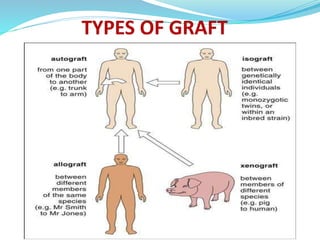
 Types of graft
 Graft rejection
 Mechanism of allograft rejection
 Autoimmunity
 Graft verses host reaction
 Immunosuppression
Transplantation is the process of moving cells , tissue
or organ from one site to another , either within the
same person or between a donor and a recipient . If an
organ system fails or become damaged as a
consequence of disease or injury , it can be replaced
with a healthy organ or tissue from a donor .
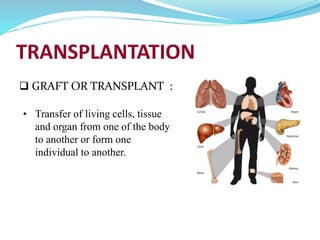
TRANSPLANTATION
 GRAFT OR TRANSPLANT :
• Transfer of living cells, tissue
and organ from one of the body
to another or form one
individual to another.
HISTORY :-
 ALEXIS CARREL reported the first systematic study of
transplantation in 1908.
 The first human kidney transplant, attempted in 1935 by russian
surgeon.
 In 1954 the first successful human kidney transplant was
performed between twins in boston.
 The first liver transplant by DR. THOMAS E. STARLZ in 1967.
 The first heart transplantation by CHRISTIAN BAMARD in 1967.
 The first succssesful bone marrow transplant by E.DONNALL
THOMAS in 1968.
NEEDS OF TRANPLANTATION :
Damaged or injured organ .
Non functional organ
GRAFT REJECTION
ā€œRejection is a complex process in which recipient immune system
recognize the graft as foreign and attack it.ā€
The immune system has evolved elaborate and effective
mechanism to protect the organism from attack by foreign agents.
And thus same mechanism cause rejection of grafts from anyone
who is not genetically identical to the recipient.
It involves:-
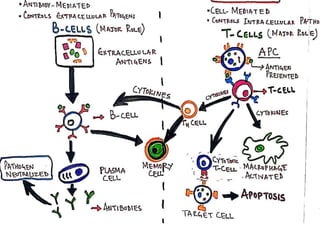
Cellular mediated rejection
Antibody mediated rejection
CELLULAR MEDIATED REJECTION
ļ‚— These rejection is mediated by lymphocytes that have been
activated against donor antigen , primarily in the lymphoid
tissue of the recipient.
ļ‚— The donor dendritic cells enter the circulation and function
as antigen presenting cells [APSc].
ļ‚— Destruction of graft occur by CD8+CTLs and CD4+ helper
cells .
ļ‚— Two types of pathway are involved;
1.Direct pathway.
2.Indirect pathway.
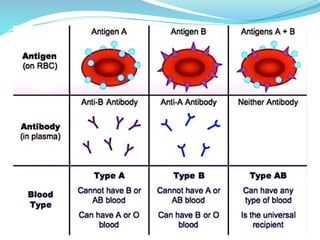
 Antibody mediated rejection defines all allograft
rejection caused by antibodies directed against donor-
specific HLA molecules ,blood group antigens [ABO]-
isoagglutinins ,or endothelial cell antigens.
 It is also called as humoral rejections.
 It have 3 types-
1.Hyperacute rejection .
2.Acute rejection .
3.Chronic rejection .
ANTIBODY MEDIATED REJECTION
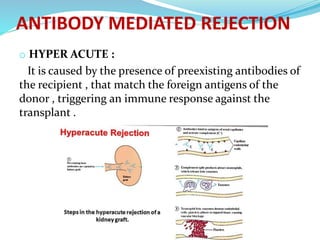
o HYPER ACUTE :
It is caused by the presence of preexisting antibodies of
the recipient , that match the foreign antigens of the
donor , triggering an immune response against the
transplant .
o ACUTE:
Acute rejection will occur in all transplantation ,
except between identical twins , Acute rejection is
caused by the formation of antibodies following the
detection of non self antigen in the donated graft .
o CHRONIC:
Repeated episodes of acute rejection can ultimately
lead to chronic rejection of the graft and failure of
the transplant
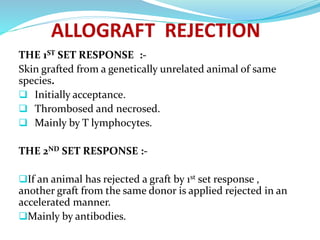
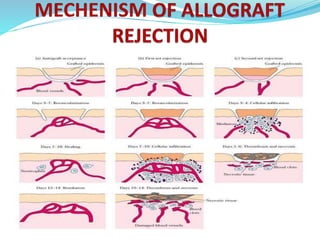
THE 1ST SET RESPONSE ::-
Skin grafted from a genetically unrelated animal of same
species.
 Initially acceptance.
 Thrombosed and necrosed.
 Mainly by T lymphocytes.
THE 2ND SET RESPONSE :-
If an animal has rejected a graft by 1st set response ,
another graft from the same donor is applied rejected in an
accelerated manner.
Mainly by antibodies.
BASIC IMMUNOLOGICAL:
AUTOIMMUNITY
Sometimes immune system makes a mistake and
attack the body`s own tissues or organ . This is called
autoimmunity.
Example- 1. juvenile diabetes.
2. polymyositis.
 The contrary situation, in which the graft mounts an
immune response against the antigen of the host is
known as the graft-versus-host reaction.
 This occur when the following conditions are required:-
1. The graft contains immunocompetent T cells.
2. The recipient possesses transplantation antigens that are
absent in the graft.
3. The recipient must not reject the graft.
4. Allograft in a recipient in whom specific immunological
tolerance has been induced.
5. Adult lymphocytes injected into an immunologically
deficient recipient.
 suppression of the immune system and its ability to
fight infection.
 To reduce the risk of transplant rejection.
 Immunosuppression may also be deliberately including
with drugs, as in preparation for bone marrow or other
organ transplantation , to prevent the rejection of a
transplant .
 These drugs are-
1.Azathioprine.
2.steroids.
3.Rapamycin.
REFRENCE
1. TEXTBOOK OF MICROBIOLOGY-9TH EDITION
ANANTHNARAYAN.
2.KUBY IMMUNOLOGY.
THANK YOU

Graft verses host reaction and rejection

  • 1.
    Session – 2019-2020 GRAFTVERSES HOST REACTION AND REJECTION Guided by –NEETU DAS MAM Submitted by- YOGITA LOKHANDE CLASS – MSC-1ST SEMESTER MICROBIOLOGY
  • 2.
    CONTENT  Introduction  Transplantation History of transplantation  Needs of transplantation  Types of graft  Graft rejection  Mechanism of allograft rejection  Autoimmunity  Graft verses host reaction  Immunosuppression
  • 3.
    Transplantation is theprocess of moving cells , tissue or organ from one site to another , either within the same person or between a donor and a recipient . If an organ system fails or become damaged as a consequence of disease or injury , it can be replaced with a healthy organ or tissue from a donor .
  • 4.
    TRANSPLANTATION  GRAFT ORTRANSPLANT : • Transfer of living cells, tissue and organ from one of the body to another or form one individual to another.
  • 5.
    HISTORY :-  ALEXISCARREL reported the first systematic study of transplantation in 1908.  The first human kidney transplant, attempted in 1935 by russian surgeon.  In 1954 the first successful human kidney transplant was performed between twins in boston.  The first liver transplant by DR. THOMAS E. STARLZ in 1967.  The first heart transplantation by CHRISTIAN BAMARD in 1967.  The first succssesful bone marrow transplant by E.DONNALL THOMAS in 1968.
  • 6.
    NEEDS OF TRANPLANTATION: Damaged or injured organ . Non functional organ
  • 8.
    GRAFT REJECTION ā€œRejection isa complex process in which recipient immune system recognize the graft as foreign and attack it.ā€ The immune system has evolved elaborate and effective mechanism to protect the organism from attack by foreign agents. And thus same mechanism cause rejection of grafts from anyone who is not genetically identical to the recipient. It involves:- Cellular mediated rejection Antibody mediated rejection
  • 10.
    CELLULAR MEDIATED REJECTION ļ‚—These rejection is mediated by lymphocytes that have been activated against donor antigen , primarily in the lymphoid tissue of the recipient. ļ‚— The donor dendritic cells enter the circulation and function as antigen presenting cells [APSc]. ļ‚— Destruction of graft occur by CD8+CTLs and CD4+ helper cells . ļ‚— Two types of pathway are involved; 1.Direct pathway. 2.Indirect pathway.
  • 11.
     Antibody mediatedrejection defines all allograft rejection caused by antibodies directed against donor- specific HLA molecules ,blood group antigens [ABO]- isoagglutinins ,or endothelial cell antigens.  It is also called as humoral rejections.  It have 3 types- 1.Hyperacute rejection . 2.Acute rejection . 3.Chronic rejection .
  • 12.
    ANTIBODY MEDIATED REJECTION oHYPER ACUTE : It is caused by the presence of preexisting antibodies of the recipient , that match the foreign antigens of the donor , triggering an immune response against the transplant .
  • 14.
    o ACUTE: Acute rejectionwill occur in all transplantation , except between identical twins , Acute rejection is caused by the formation of antibodies following the detection of non self antigen in the donated graft . o CHRONIC: Repeated episodes of acute rejection can ultimately lead to chronic rejection of the graft and failure of the transplant
  • 15.
    THE 1ST SETRESPONSE ::- Skin grafted from a genetically unrelated animal of same species.  Initially acceptance.  Thrombosed and necrosed.  Mainly by T lymphocytes. THE 2ND SET RESPONSE :- If an animal has rejected a graft by 1st set response , another graft from the same donor is applied rejected in an accelerated manner. Mainly by antibodies.
  • 16.
  • 17.
    AUTOIMMUNITY Sometimes immune systemmakes a mistake and attack the body`s own tissues or organ . This is called autoimmunity. Example- 1. juvenile diabetes. 2. polymyositis.
  • 18.
     The contrarysituation, in which the graft mounts an immune response against the antigen of the host is known as the graft-versus-host reaction.  This occur when the following conditions are required:- 1. The graft contains immunocompetent T cells. 2. The recipient possesses transplantation antigens that are absent in the graft. 3. The recipient must not reject the graft. 4. Allograft in a recipient in whom specific immunological tolerance has been induced. 5. Adult lymphocytes injected into an immunologically deficient recipient.
  • 19.
     suppression ofthe immune system and its ability to fight infection.  To reduce the risk of transplant rejection.  Immunosuppression may also be deliberately including with drugs, as in preparation for bone marrow or other organ transplantation , to prevent the rejection of a transplant .  These drugs are- 1.Azathioprine. 2.steroids. 3.Rapamycin.
  • 20.
    REFRENCE 1. TEXTBOOK OFMICROBIOLOGY-9TH EDITION ANANTHNARAYAN. 2.KUBY IMMUNOLOGY.
  • 21.