Signal selection criteria - 1
ď‚— The signal must provide

  ď‚— Acceptable received signal power with reasonable power
    levels and Earth coverage satellite antenna patterns

  ď‚— Antenna design considerations


  ď‚— Minimum ionosperic delay and fluctuations
Remedy- 1

       Choose L band frequency
            1GHz – 2 GHz
Why L band ?
ď‚— Ionospheric delays are enormous for frequency ranges
 below 500 MHz and above 10 GHz

ď‚— Frequencies above 2 GHz requires beam antenna for
 signal reception

 Dual frequency requirement – so high band width signal
 preferred
GPS Signal frequencies
ď‚— Navigation signal modulation
   ď‚— L1- Link 1, Carrier frequency = 1575.420 MHz
   ď‚— L2- Link 2, Carrier frequency = 1227.600 MHz
ď‚— Nuclear detection system (NDS) and NDS analysis package
  (NAP)
   ď‚— L3- Link 3, Carrier frequency = 1381.050 MHz
   ď‚— L4- Link 4, Carrier frequency = 1379.913 MHz
ď‚— Additional signal link
   ď‚— L5- Link 5, Carrier frequency = 1176.450 MHz
   ď‚— L2C for improving accuracy of navigation and easy tracking for
     civil use.
Signal selection criteria - 2
ď‚— Rejection of multipath signals

  ď‚— Signals reaching the receiver after reflection


  ď‚— Noise and flutter
Remedy- 2
 ď‚— Use Circularly polarized electromagnetic waves

   ď‚— Right Hand Circularly Polarized wave is used for GPS


   ď‚— Reflection changes the direction of polarization


   ď‚— Reflected waves get attenuated by the choke ring
     antenna.
Signal selection criteria - 3
ď‚— Power spectral density constrains

  ď‚— The GPS signals received on the earth sufficiently low so as
    to avoid interference with the terrestrial microwave line-of-
    sight communication

  ď‚— ITU regulations for each microwave band
Remedy- 3

       Spread spectrum signaling
Why Spread Spectrum Signaling ?
ď‚— It can be proved by Shannon Hartley channel-capacity
 theorem

  C = B Ă— log2 (1 + S/N)


ď‚— It states that one can maintain or even increase
 communication performance (high C) by allowing or
 injecting more bandwidth (high B), even when signal
 power is below the noise floor.
Spread Spectrum Signaling
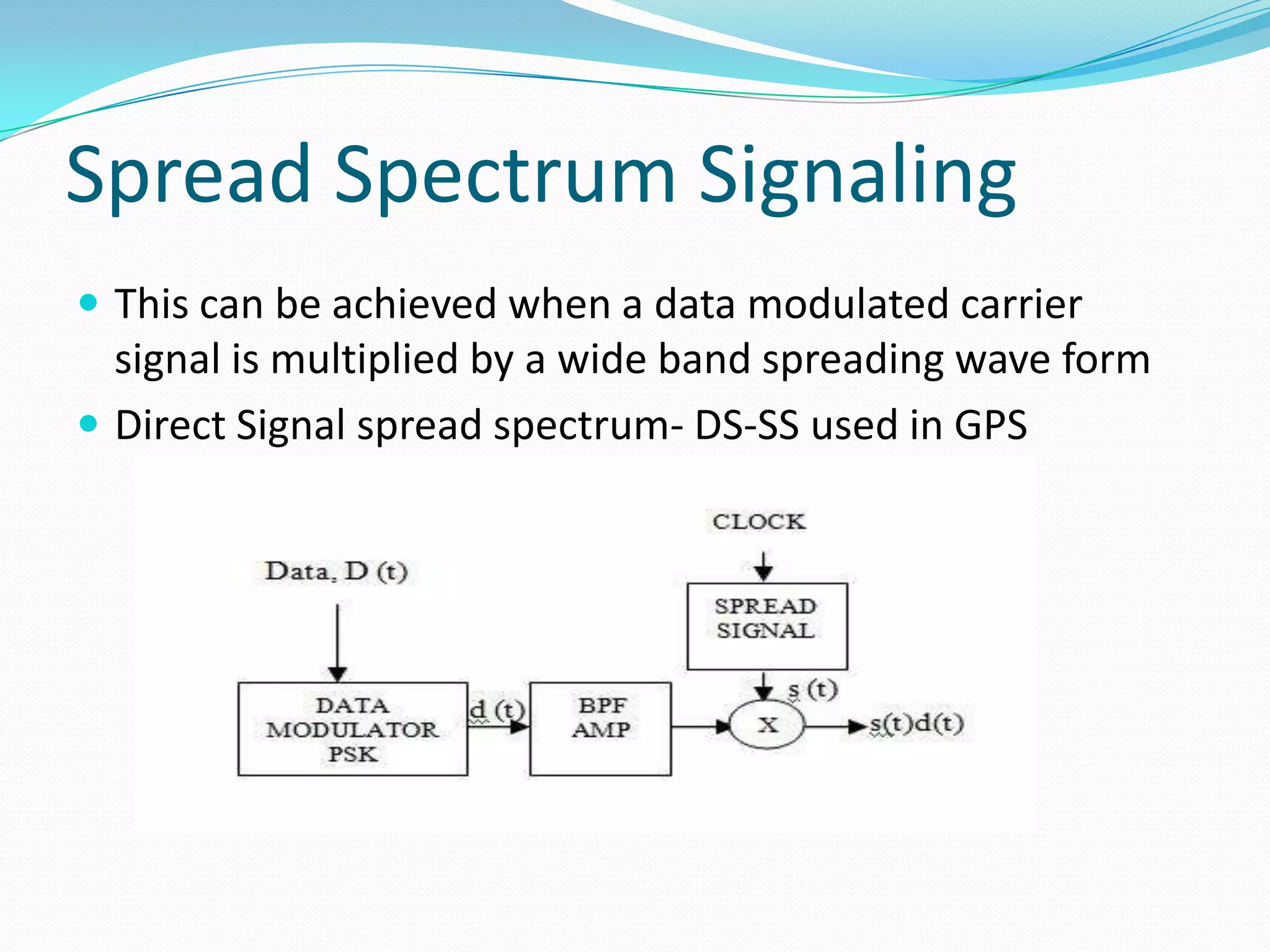
ď‚— This can be achieved when a data modulated carrier
  signal is multiplied by a wide band spreading wave form
ď‚— Direct Signal spread spectrum- DS-SS used in GPS
Spread Spectrum Signaling
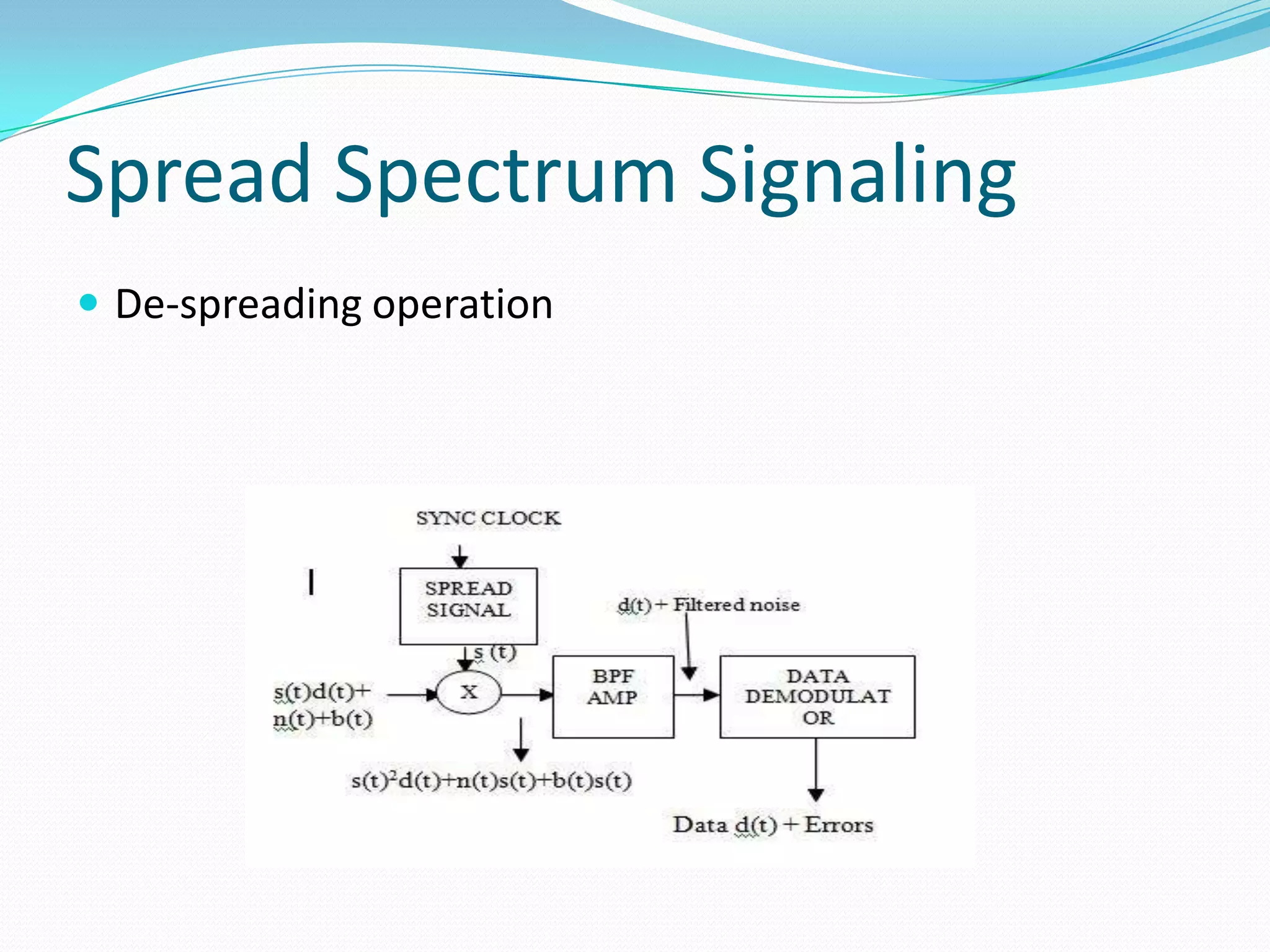
ď‚— De-spreading operation
Signal selection criteria - 4

ď‚— Multiple access

  ď‚— Capability of accessing multiple signal simultaneously
Remedy- 4

       Code Division Multiple
           Access (CDMA)
CDMA

ď‚— Spread spectrum signalling aids CDMA


ď‚— Low bit rate data is encoded with a high bit rate PRN


ď‚— The receiver knows the PRN of each satellite to
  reconstruct data
CDMA Encoding

ď‚— Two distinct CDMA encodings are used

  ď‚— Coarse/ Acquisition or C/A code at 10.23 Mcps


  ď‚— Precision code or P code at 1.023 Mcps
Signal selection criteria - 5

ď‚— Provide ionospheric correction

  ď‚— Ionosphere causes delays the microwave signals
Remedy- 5

        Use dual frequency
            L1 and L2
Signal modulation
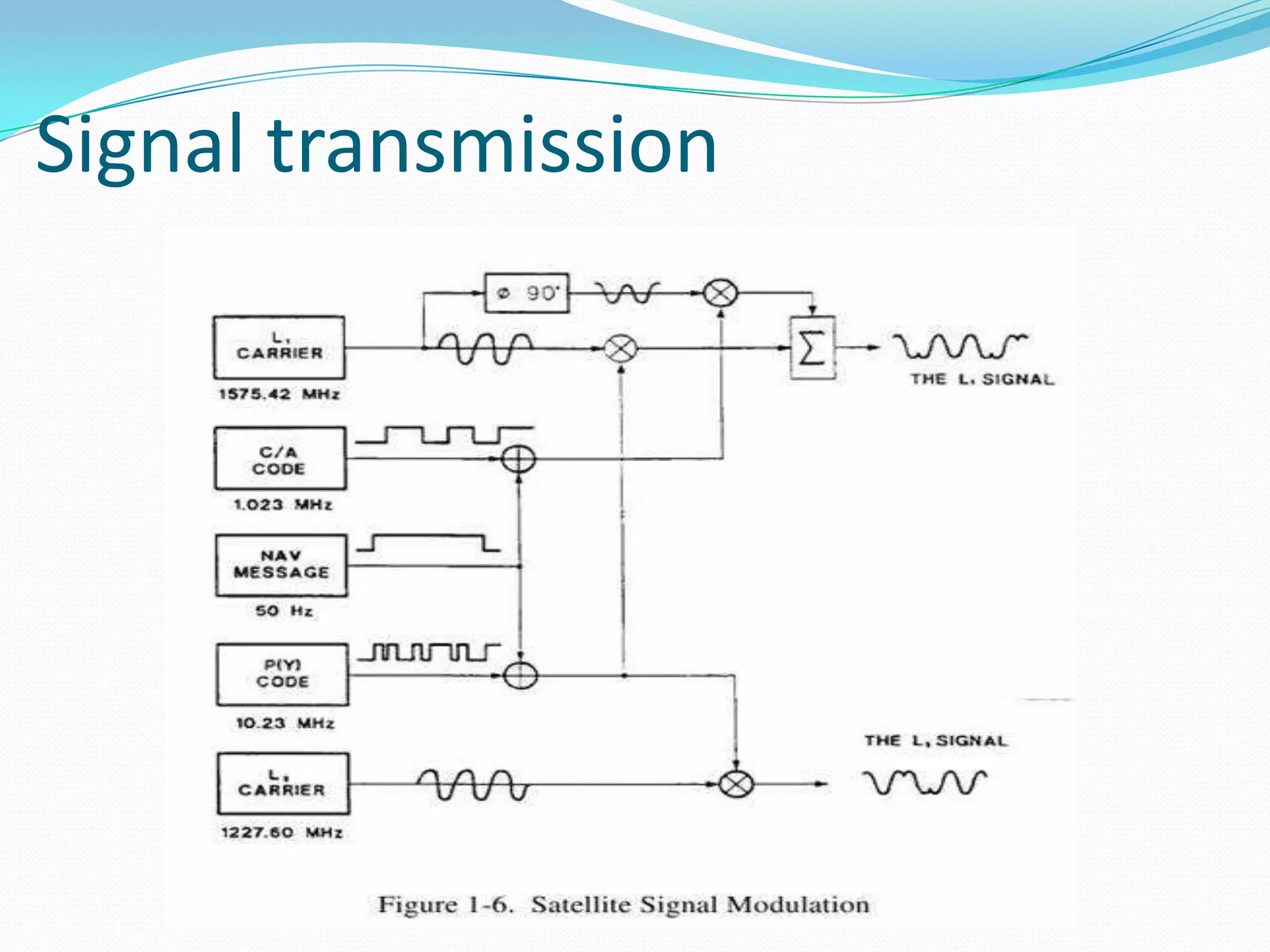
ď‚— C/A code is modulated onto the L1 signal


ď‚— P code is modulated on to L1 and L2 carrier


ď‚— The navigation data is modulo-2 added to the C/A and
 P code before modulation

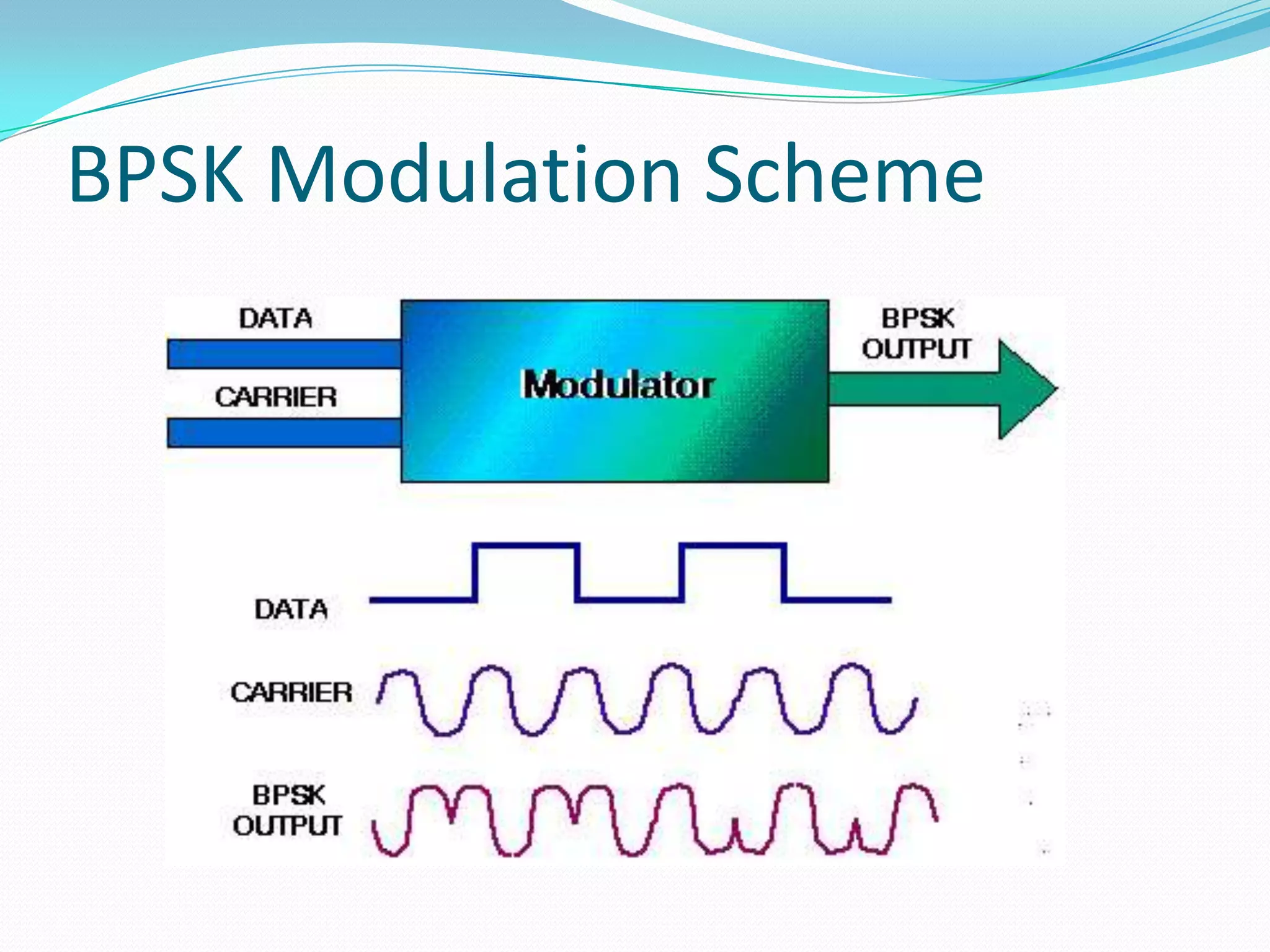
ď‚— Binary phase shift keying (BPSK) is used as digital
 modulation technique
BPSK Modulation Scheme
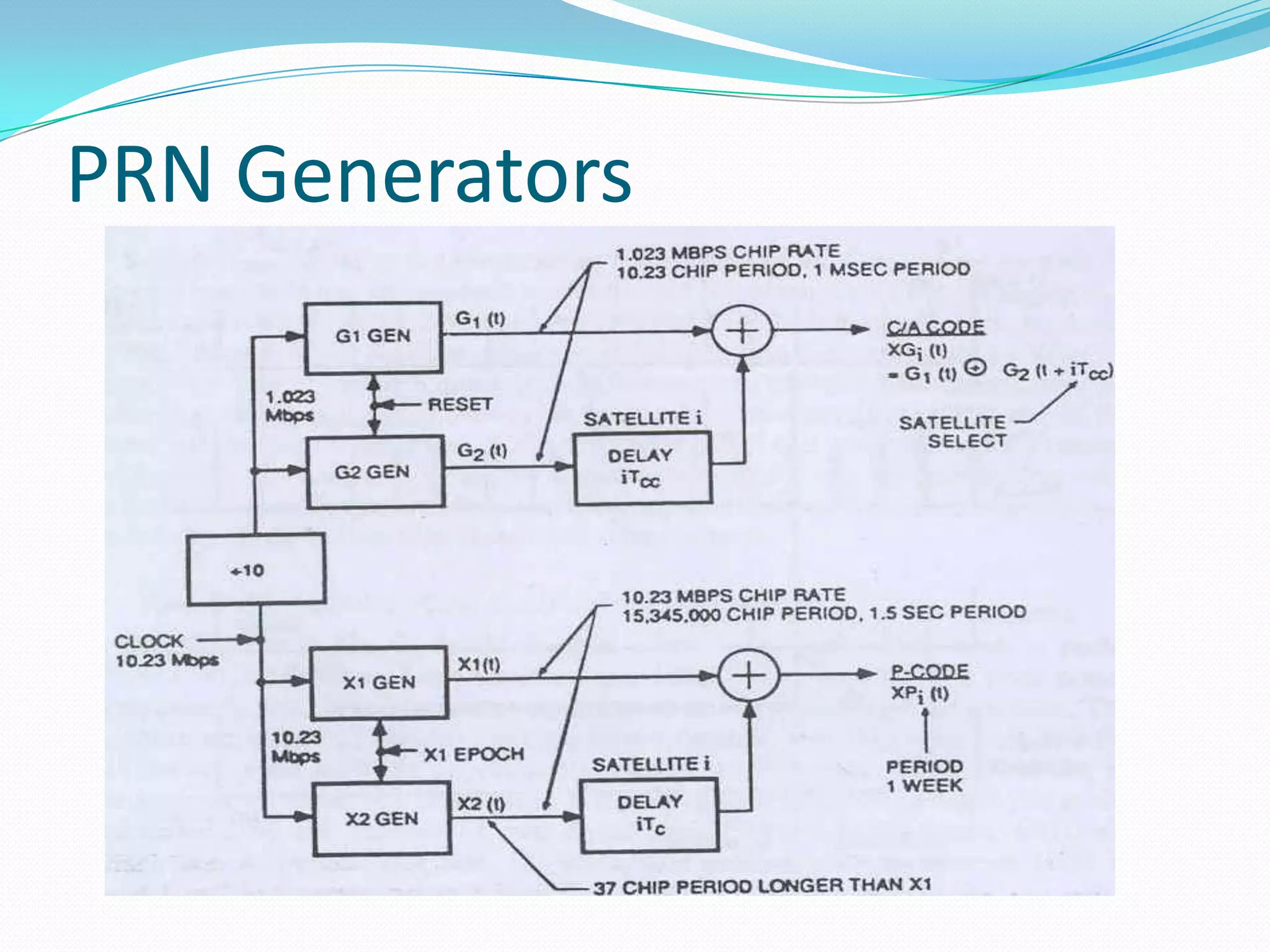
PRN Generators
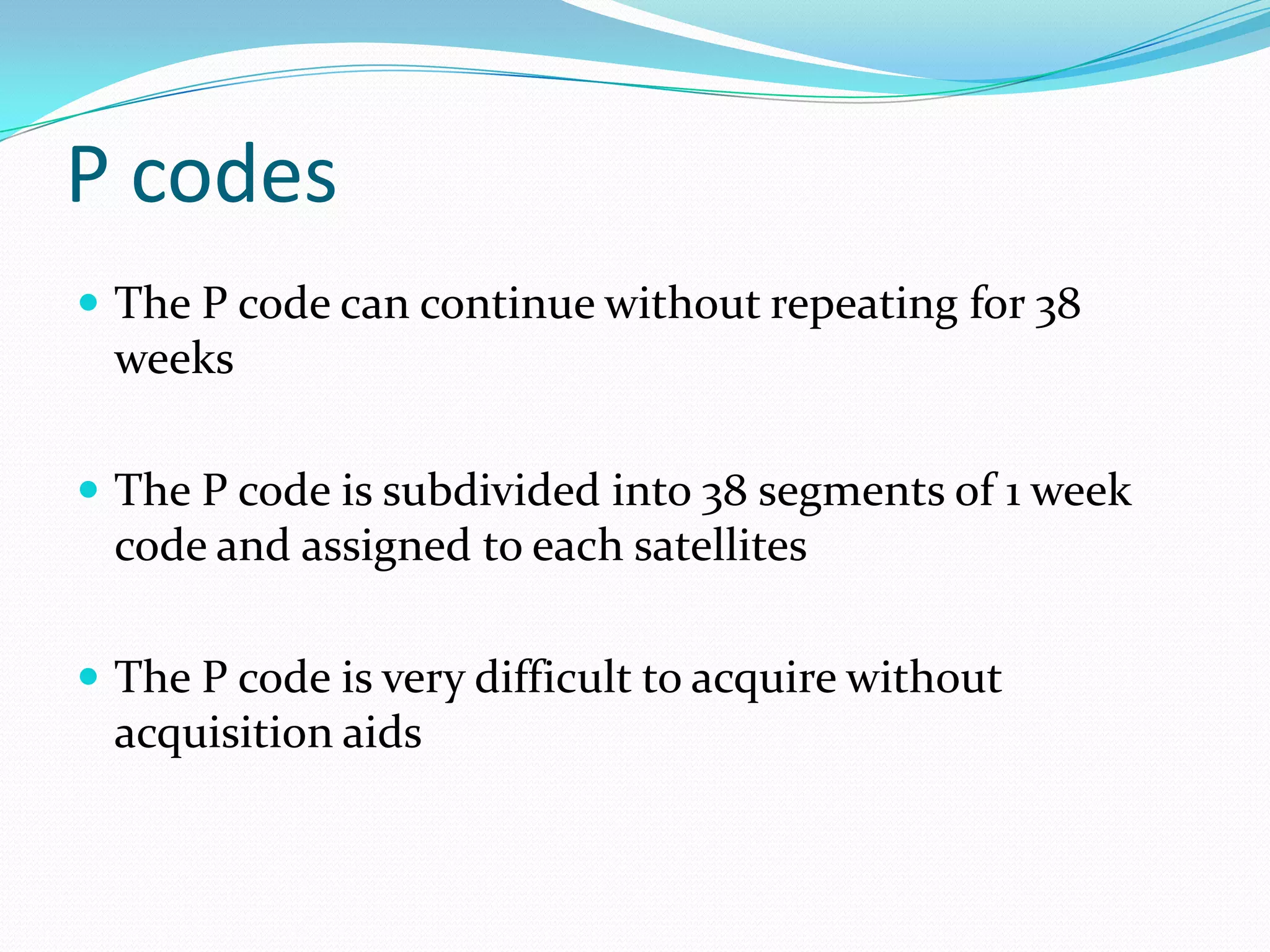
P codes
ď‚— The P code can continue without repeating for 38
  weeks

ď‚— The P code is subdivided into 38 segments of 1 week
  code and assigned to each satellites

ď‚— The P code is very difficult to acquire without
  acquisition aids
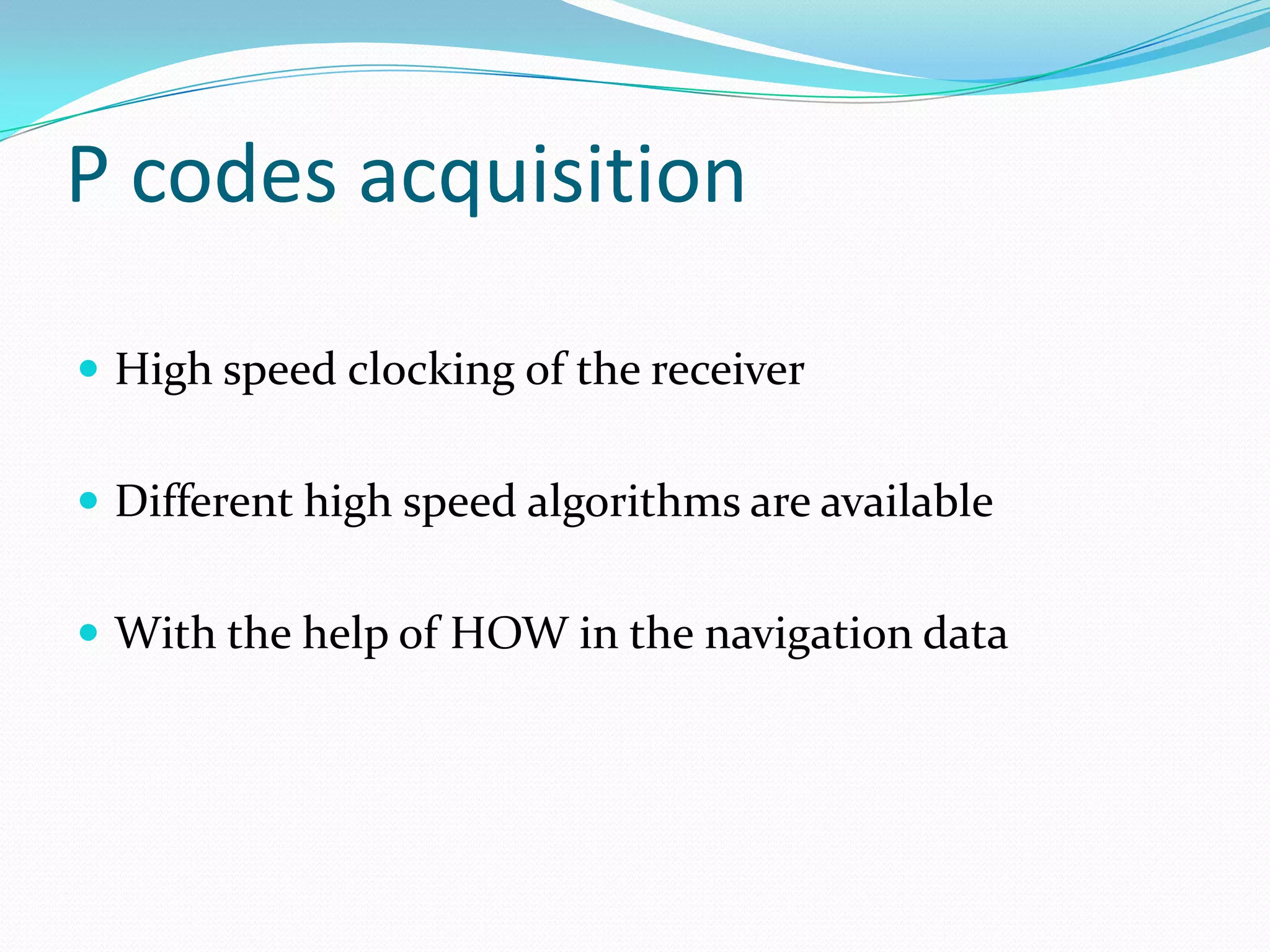
P codes acquisition

ď‚— High speed clocking of the receiver


ď‚— Different high speed algorithms are available


ď‚— With the help of HOW in the navigation data
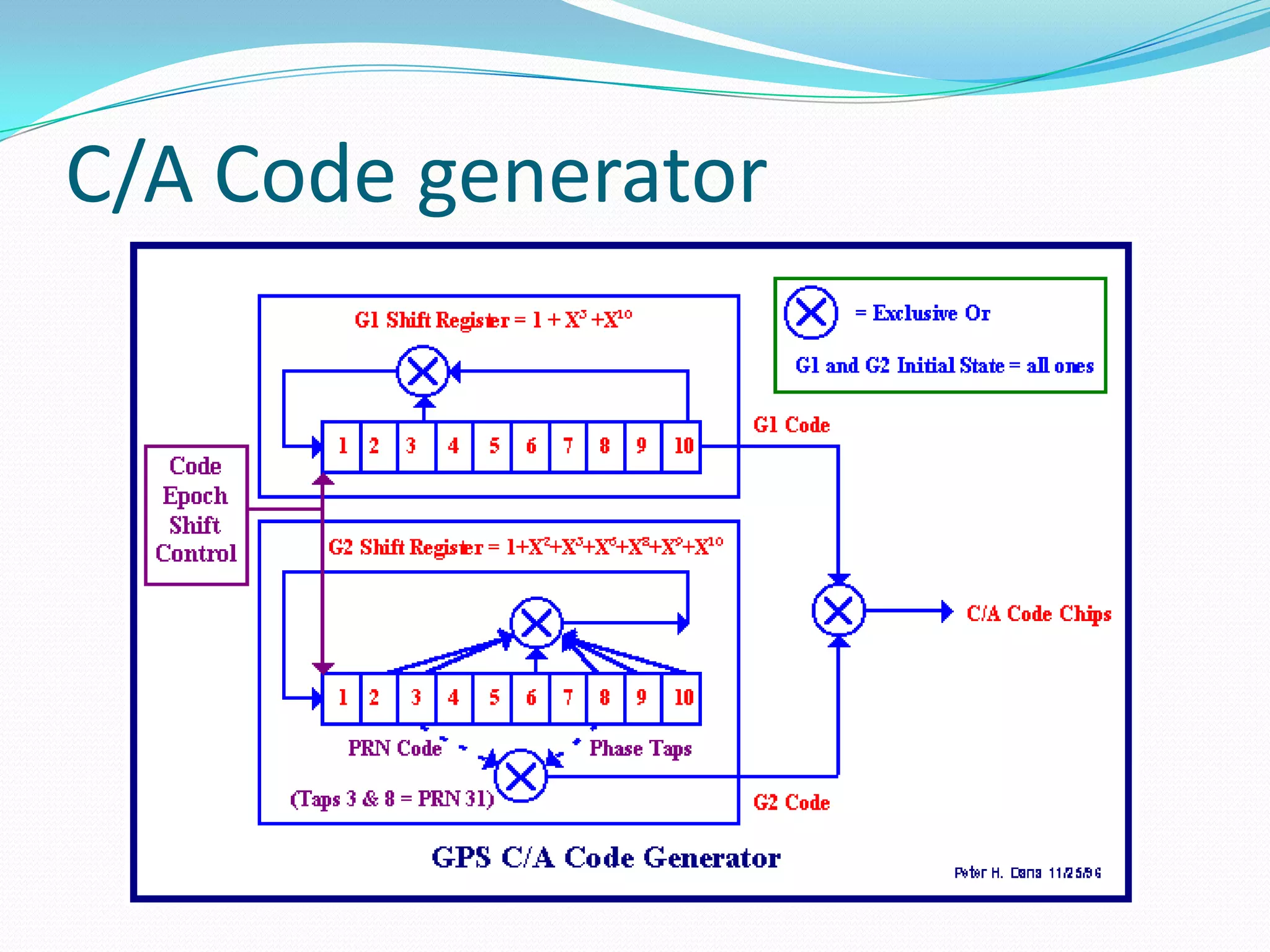
C/A Code generator
C/A code
ď‚— Designed for rapid acquisition


ď‚— 1023 bits in 1ms


ď‚— Used for satellite multiple access technique
Navigation data
ď‚— 50 bps signal


ď‚— Modulo-2 added with P and C/A code


ď‚— GPS week number (5th Jan 1980) and satellite health
 information, an ephemeris and an almanac
Signal transmission
THANK YOU

Gps signal structure

  • 2.
    Signal selection criteria- 1 ď‚— The signal must provide ď‚— Acceptable received signal power with reasonable power levels and Earth coverage satellite antenna patterns ď‚— Antenna design considerations ď‚— Minimum ionosperic delay and fluctuations
  • 3.
    Remedy- 1 Choose L band frequency 1GHz – 2 GHz
  • 4.
    Why L band?  Ionospheric delays are enormous for frequency ranges below 500 MHz and above 10 GHz  Frequencies above 2 GHz requires beam antenna for signal reception  Dual frequency requirement – so high band width signal preferred
  • 5.
    GPS Signal frequencies ď‚—Navigation signal modulation ď‚— L1- Link 1, Carrier frequency = 1575.420 MHz ď‚— L2- Link 2, Carrier frequency = 1227.600 MHz ď‚— Nuclear detection system (NDS) and NDS analysis package (NAP) ď‚— L3- Link 3, Carrier frequency = 1381.050 MHz ď‚— L4- Link 4, Carrier frequency = 1379.913 MHz ď‚— Additional signal link ď‚— L5- Link 5, Carrier frequency = 1176.450 MHz ď‚— L2C for improving accuracy of navigation and easy tracking for civil use.
  • 6.
    Signal selection criteria- 2 ď‚— Rejection of multipath signals ď‚— Signals reaching the receiver after reflection ď‚— Noise and flutter
  • 7.
    Remedy- 2 ď‚—Use Circularly polarized electromagnetic waves ď‚— Right Hand Circularly Polarized wave is used for GPS ď‚— Reflection changes the direction of polarization ď‚— Reflected waves get attenuated by the choke ring antenna.
  • 8.
    Signal selection criteria- 3 ď‚— Power spectral density constrains ď‚— The GPS signals received on the earth sufficiently low so as to avoid interference with the terrestrial microwave line-of- sight communication ď‚— ITU regulations for each microwave band
  • 9.
    Remedy- 3 Spread spectrum signaling
  • 10.
    Why Spread SpectrumSignaling ? ď‚— It can be proved by Shannon Hartley channel-capacity theorem C = B Ă— log2 (1 + S/N) ď‚— It states that one can maintain or even increase communication performance (high C) by allowing or injecting more bandwidth (high B), even when signal power is below the noise floor.
  • 11.
    Spread Spectrum Signaling ď‚—This can be achieved when a data modulated carrier signal is multiplied by a wide band spreading wave form ď‚— Direct Signal spread spectrum- DS-SS used in GPS
  • 12.
    Spread Spectrum Signaling ď‚—De-spreading operation
  • 13.
    Signal selection criteria- 4 ď‚— Multiple access ď‚— Capability of accessing multiple signal simultaneously
  • 14.
    Remedy- 4 Code Division Multiple Access (CDMA)
  • 15.
    CDMA ď‚— Spread spectrumsignalling aids CDMA ď‚— Low bit rate data is encoded with a high bit rate PRN ď‚— The receiver knows the PRN of each satellite to reconstruct data
  • 16.
    CDMA Encoding ď‚— Twodistinct CDMA encodings are used ď‚— Coarse/ Acquisition or C/A code at 10.23 Mcps ď‚— Precision code or P code at 1.023 Mcps
  • 17.
    Signal selection criteria- 5 ď‚— Provide ionospheric correction ď‚— Ionosphere causes delays the microwave signals
  • 18.
    Remedy- 5 Use dual frequency L1 and L2
  • 19.
    Signal modulation ď‚— C/Acode is modulated onto the L1 signal ď‚— P code is modulated on to L1 and L2 carrier ď‚— The navigation data is modulo-2 added to the C/A and P code before modulation ď‚— Binary phase shift keying (BPSK) is used as digital modulation technique
  • 20.
  • 21.
  • 22.
    P codes ď‚— TheP code can continue without repeating for 38 weeks ď‚— The P code is subdivided into 38 segments of 1 week code and assigned to each satellites ď‚— The P code is very difficult to acquire without acquisition aids
  • 23.
    P codes acquisition ď‚—High speed clocking of the receiver ď‚— Different high speed algorithms are available ď‚— With the help of HOW in the navigation data
  • 24.
  • 25.
    C/A code ď‚— Designedfor rapid acquisition ď‚— 1023 bits in 1ms ď‚— Used for satellite multiple access technique
  • 26.
    Navigation data ď‚— 50bps signal ď‚— Modulo-2 added with P and C/A code ď‚— GPS week number (5th Jan 1980) and satellite health information, an ephemeris and an almanac
  • 27.
  • 28.