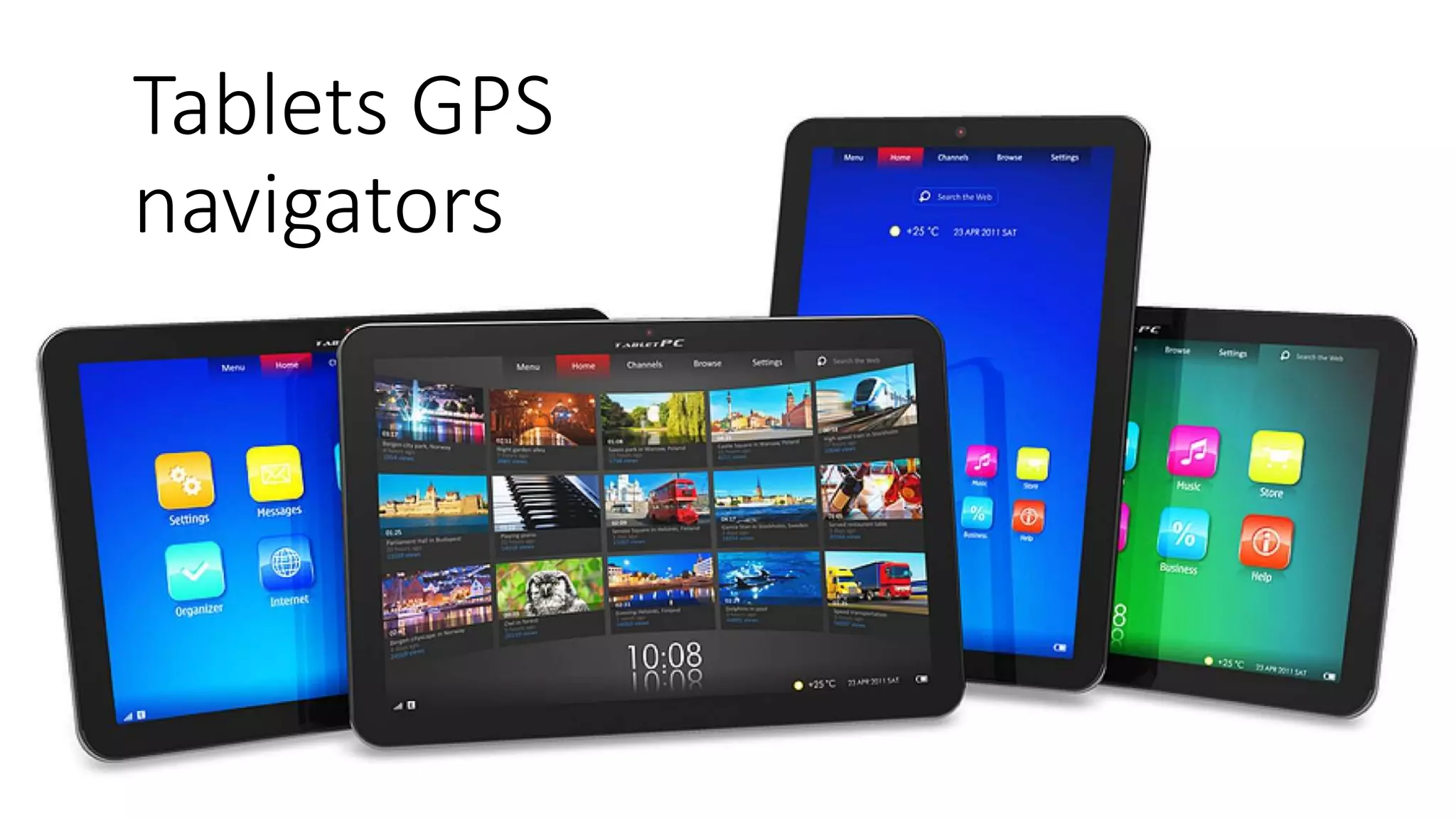
Tablets GPS
navigators
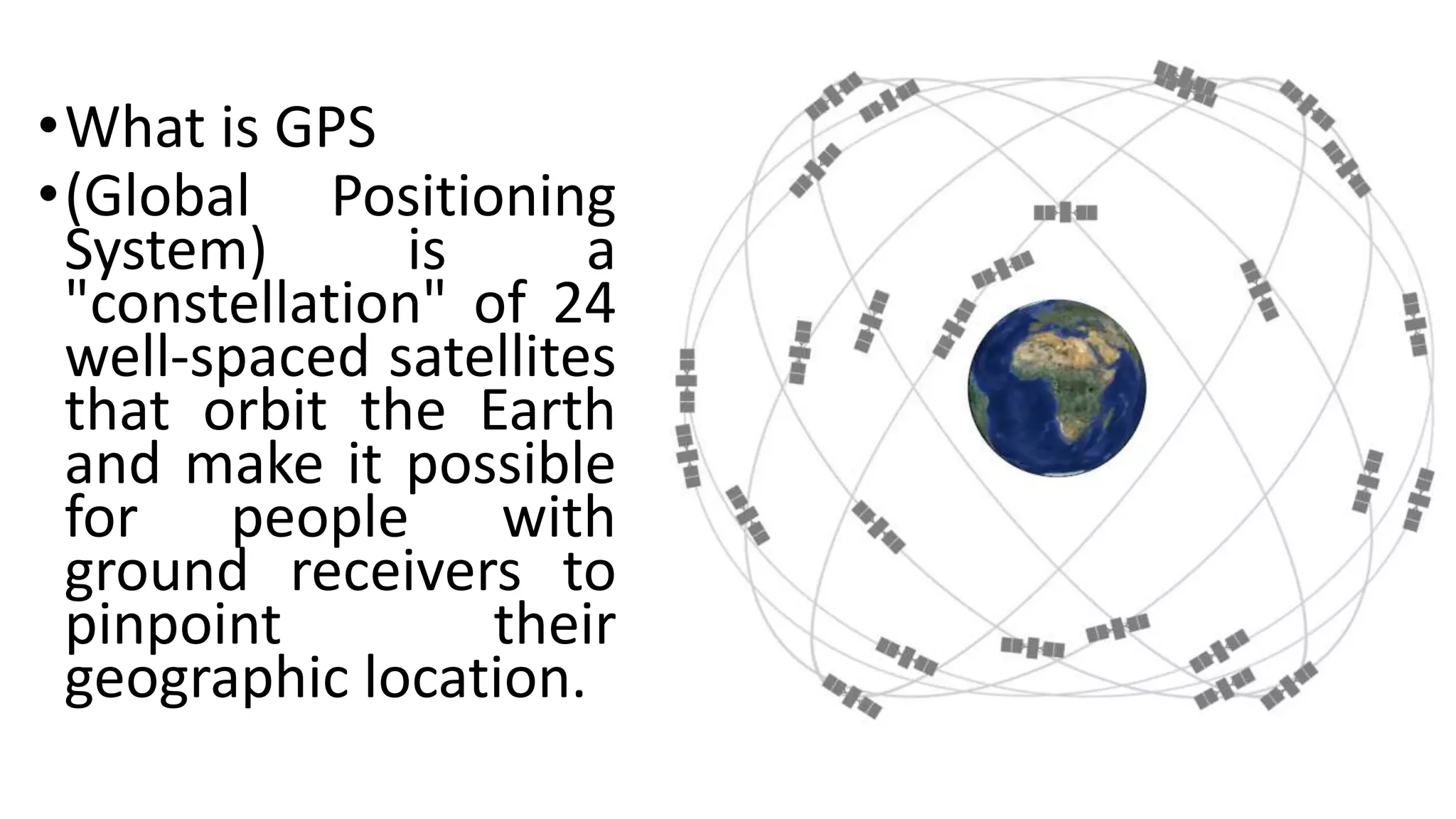
•What is GPS
•(Global Positioning
System) is a
"constellation" of 24
well-spaced satellites
that orbit the Earth
and make it possible
for people with
ground receivers to
pinpoint their
geographic location.
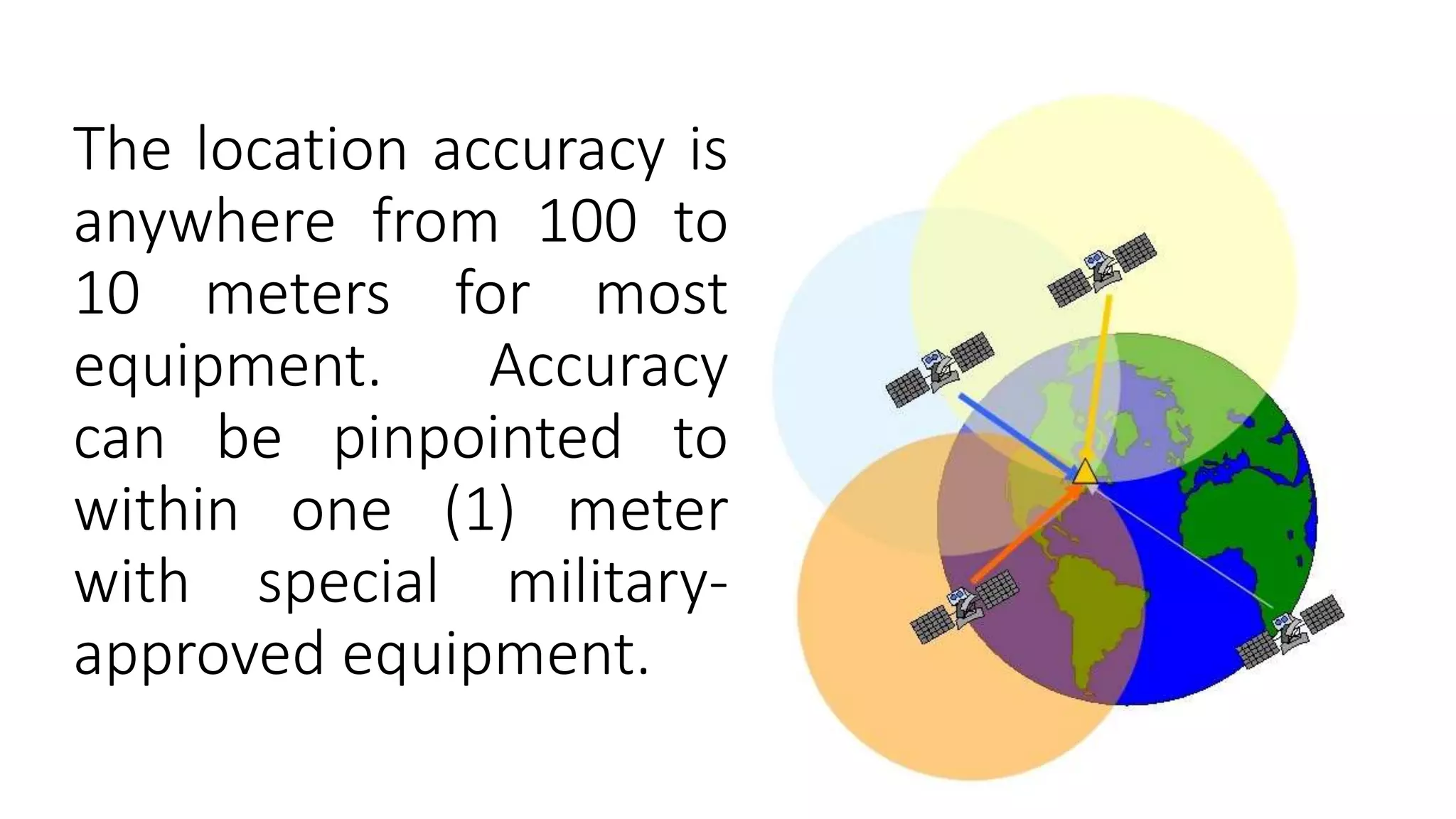
The location accuracy is
anywhere from 100 to
10 meters for most
equipment. Accuracy
can be pinpointed to
within one (1) meter
with special military-
approved equipment.
Consumer applications
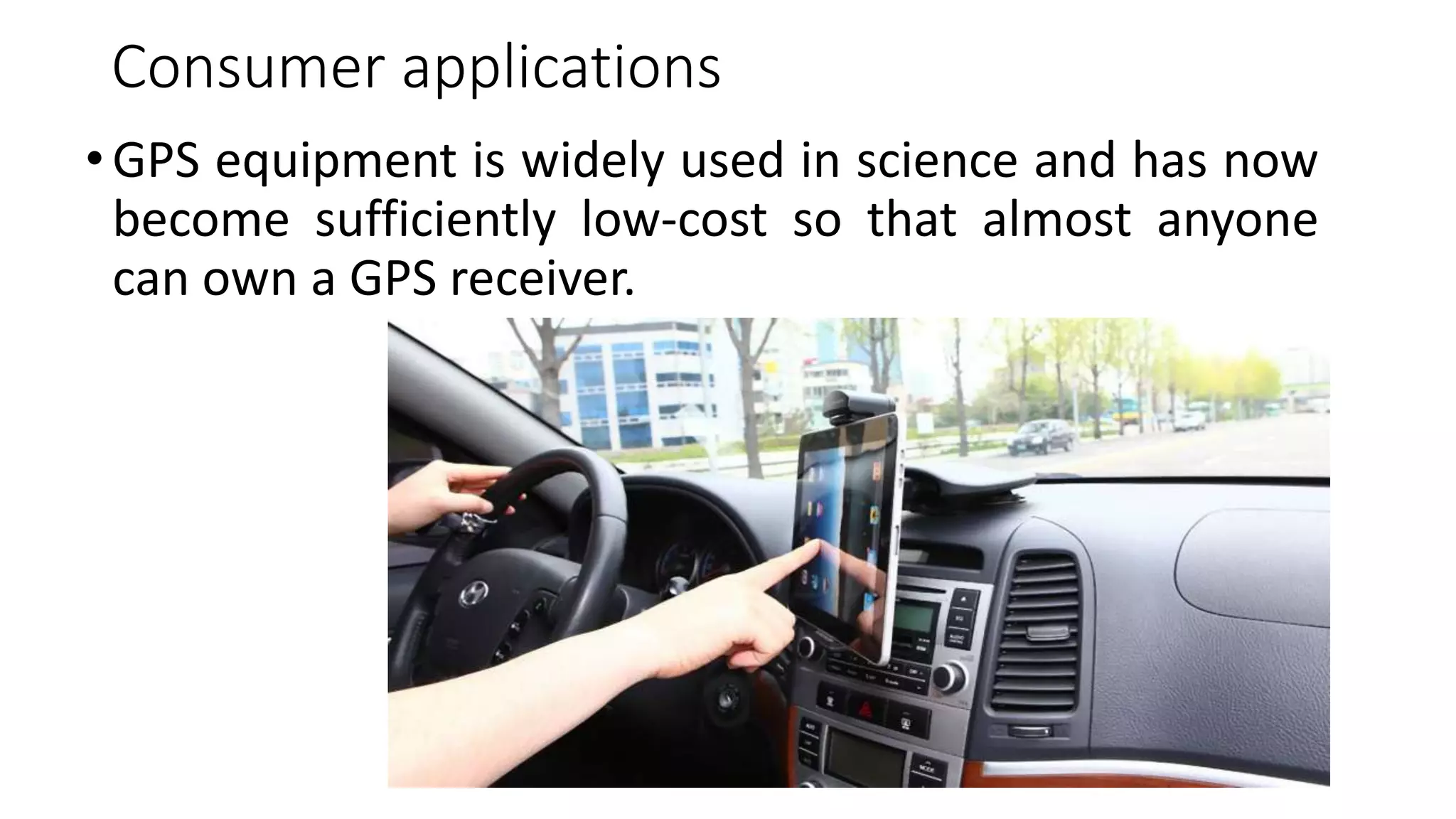
•GPS equipment is widely used in science and has now
become sufficiently low-cost so that almost anyone
can own a GPS receiver.
• Unfortunately, it’s usually impossible to tell from the product
specs whether a smartphone or tablet GPS works offline, and
if so, whether it’s any good.
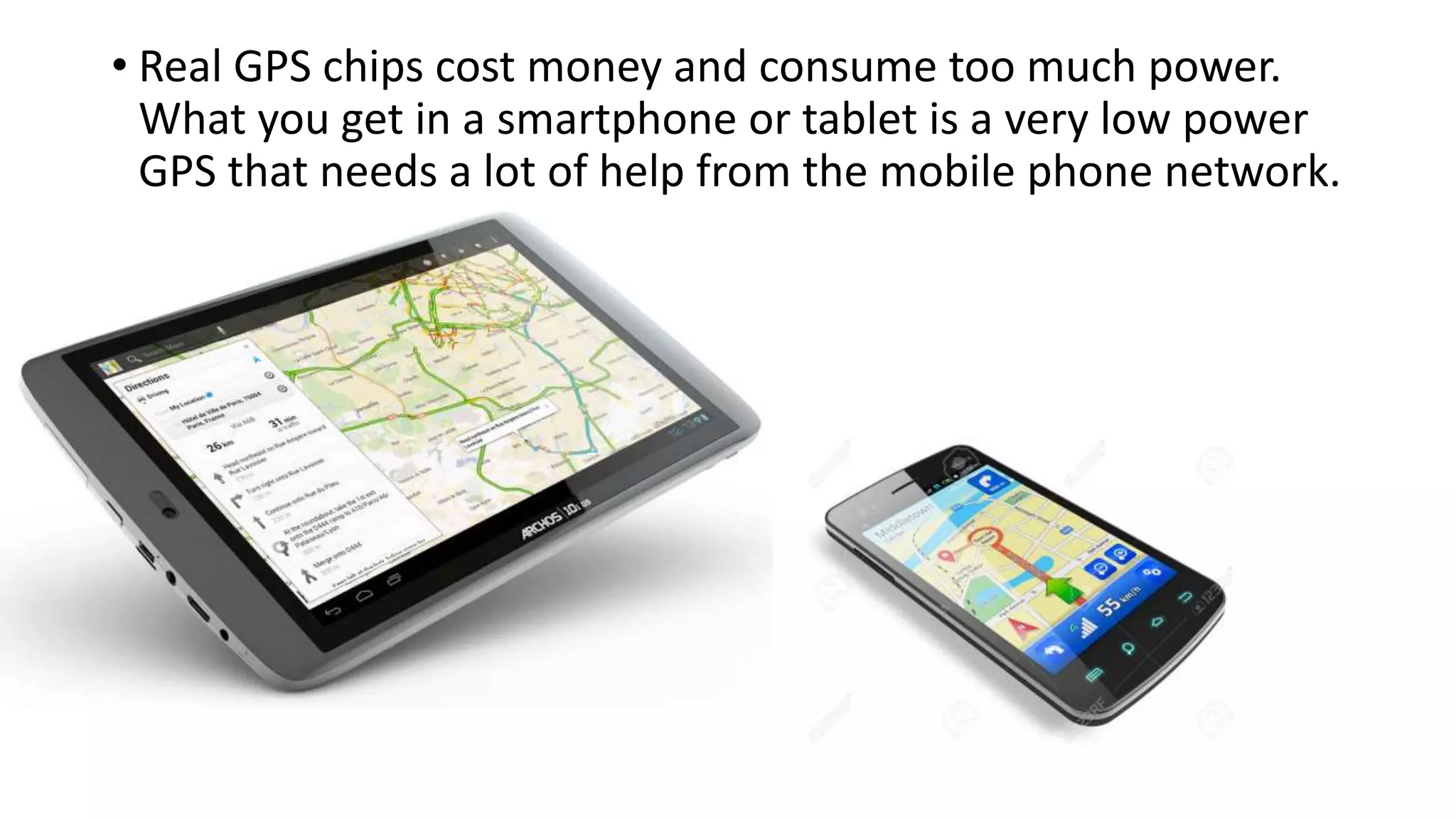
• Real GPS chips cost money and consume too much power.
What you get in a smartphone or tablet is a very low power
GPS that needs a lot of help from the mobile phone network.
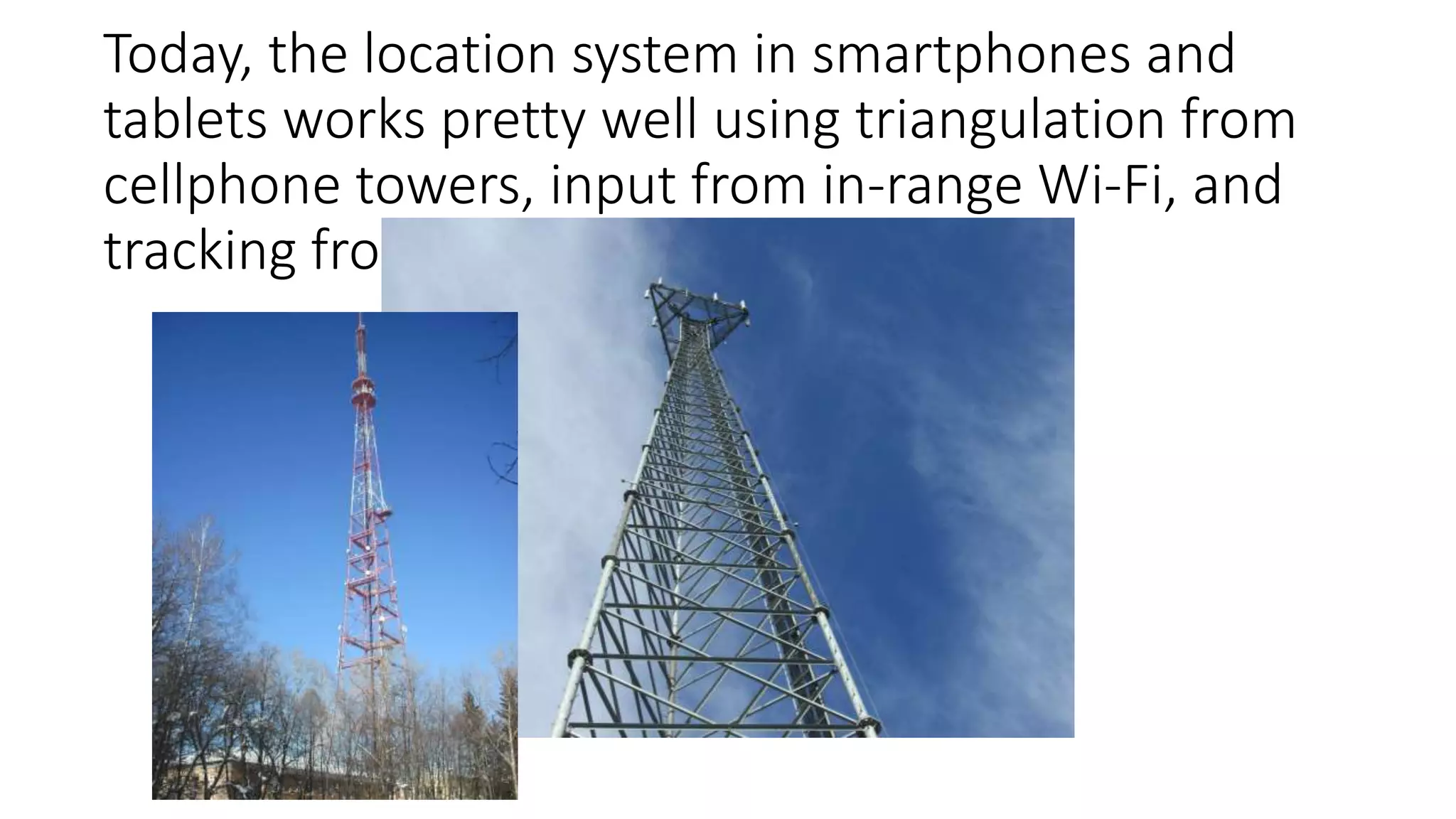
Today, the location system in smartphones and
tablets works pretty well using triangulation from
cellphone towers, input from in-range Wi-Fi, and
tracking from your last known position.
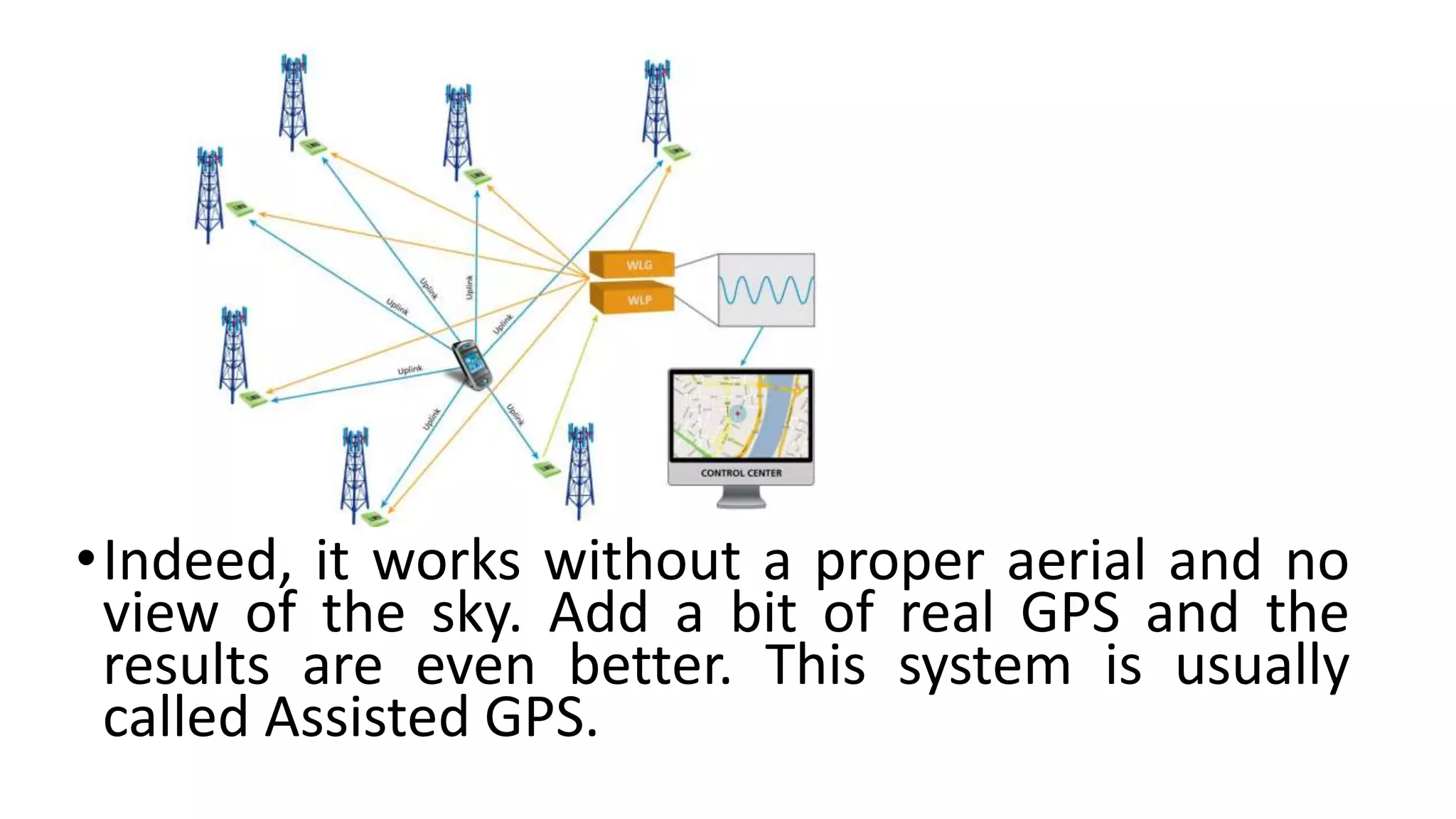
•Indeed, it works without a proper aerial and no
view of the sky. Add a bit of real GPS and the
results are even better. This system is usually
called Assisted GPS.
•So, the GPS systems in current smartphones and
tablets work well because they already know where
you are, because they remember your last fix, because
they have tracked you on a cached map.

Gps and tablets

  • 1.
  • 2.
    •What is GPS •(GlobalPositioning System) is a "constellation" of 24 well-spaced satellites that orbit the Earth and make it possible for people with ground receivers to pinpoint their geographic location.
  • 3.
    The location accuracyis anywhere from 100 to 10 meters for most equipment. Accuracy can be pinpointed to within one (1) meter with special military- approved equipment.
  • 4.
    Consumer applications •GPS equipmentis widely used in science and has now become sufficiently low-cost so that almost anyone can own a GPS receiver.
  • 5.
    • Unfortunately, it’susually impossible to tell from the product specs whether a smartphone or tablet GPS works offline, and if so, whether it’s any good.
  • 6.
    • Real GPSchips cost money and consume too much power. What you get in a smartphone or tablet is a very low power GPS that needs a lot of help from the mobile phone network.
  • 7.
    Today, the locationsystem in smartphones and tablets works pretty well using triangulation from cellphone towers, input from in-range Wi-Fi, and tracking from your last known position.
  • 8.
    •Indeed, it workswithout a proper aerial and no view of the sky. Add a bit of real GPS and the results are even better. This system is usually called Assisted GPS.
  • 9.
    •So, the GPSsystems in current smartphones and tablets work well because they already know where you are, because they remember your last fix, because they have tracked you on a cached map.