Chapter 3 
The Constitution
Common Checks and Balances 
• President recommends legislation to congress 
• Presidential veto 
• Congressional override of veto 
• Senate confirmation of presidential 
appointments to executive branch and courts 
• Senate ratification of treaties 
• Impeachment of President or judge 
• Constitutional amendments 
• Judicial review of laws
Amending the Constitution 
Step 1 
• Proposing the Amendment 
– 2/3 vote of both houses of Congress OR 
– 2/3 of states petition Congress to hold a 
constitutional convention (never used)
Amending the Constitution 
Step 2 
• Ratifying the Amendment 
– ¾ of 50 state legislatures vote to ratify OR 
– all states hold special constitutional 
conventions and ¾ vote to ratify (used only 
once – to repeal prohibition)
Amending the Constitution 
What is the difference? 
• In the State Legislature method, representatives 
vote for or against the amendment. 
• With special conventions, the one time it was 
used, delegates ran on a platform either supporting 
or not supporting the amendment. People then 
voted for delegates, based on their position on that 
one issue. So, in effect, the people were voting 
directly on the amendment.
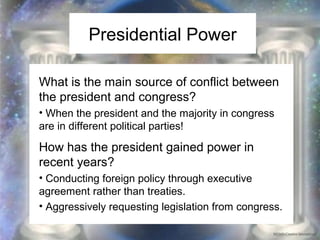
Presidential Power 
What is the main source of conflict between 
the president and congress? 
• When the president and the majority in congress 
are in different political parties! 
How has the president gained power in 
recent years? 
• Conducting foreign policy through executive 
agreement rather than treaties. 
• Aggressively requesting legislation from congress.
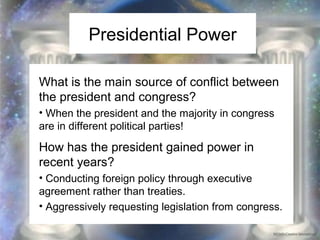
Presidential Power 
What is the main source of conflict between 
the president and congress? 
• When the president and the majority in congress 
are in different political parties! 
How has the president gained power in 
recent years? 
• Conducting foreign policy through executive 
agreement rather than treaties. 
• Aggressively requesting legislation from congress.

Government ch. 3 - constitution (1)

  • 1.
    Chapter 3 TheConstitution
  • 2.
    Common Checks andBalances • President recommends legislation to congress • Presidential veto • Congressional override of veto • Senate confirmation of presidential appointments to executive branch and courts • Senate ratification of treaties • Impeachment of President or judge • Constitutional amendments • Judicial review of laws
  • 3.
    Amending the Constitution Step 1 • Proposing the Amendment – 2/3 vote of both houses of Congress OR – 2/3 of states petition Congress to hold a constitutional convention (never used)
  • 4.
    Amending the Constitution Step 2 • Ratifying the Amendment – ¾ of 50 state legislatures vote to ratify OR – all states hold special constitutional conventions and ¾ vote to ratify (used only once – to repeal prohibition)
  • 5.
    Amending the Constitution What is the difference? • In the State Legislature method, representatives vote for or against the amendment. • With special conventions, the one time it was used, delegates ran on a platform either supporting or not supporting the amendment. People then voted for delegates, based on their position on that one issue. So, in effect, the people were voting directly on the amendment.
  • 6.
    Presidential Power Whatis the main source of conflict between the president and congress? • When the president and the majority in congress are in different political parties! How has the president gained power in recent years? • Conducting foreign policy through executive agreement rather than treaties. • Aggressively requesting legislation from congress.
  • 7.
    Presidential Power Whatis the main source of conflict between the president and congress? • When the president and the majority in congress are in different political parties! How has the president gained power in recent years? • Conducting foreign policy through executive agreement rather than treaties. • Aggressively requesting legislation from congress.