Gothic Genre
By: Matías Ripoll
What is the gothic genre?
The gothic genre blends and combines fear and fiction, including
sometimes romance and nature thrown in it. It includes the writings
which employ dark and picturesque scenery, melodramatic narrative
devices. These writings, try to present an overall atmosphere of
exoticism and fear. Feelings of mystery, horror and death can also be
present in the gothic literature.
Features of the gothic genre
- Gloomy, decaying setting: Like haunted houses or castles with secret
passages, trapdoors.
- Supernatural beings or monsters: Ghosts, vampires, zombies, giants which
create fear and horror in the protagonists.
- Curses or prophecies: The destroyed, old castles of gothic stories may
include a prophecy or may be cursed, adding horror, tension and a gloomy
atmosphere.
- Damsels in distress.
- Real people in unreal situations.
More features of the gothic genre
- Dark, abandoned and decaying settings: Ornate architecture, old castles,
destroyed houses.
- Plot conventions: Plots which include revenge or family secrets which add
tension and mystery.
- A lot of symbolism: Symbolic characters, setting or objects of the place.
- Romance.
- Intense emotions.
- An atmosphere of mystery and suspense: It's created by the fear and the
unknown, which lead to mystery and suspense.
- Heroes: They have to overcome obstacles and difficulties all along the story,
resulting in their figure of heroes.
Setting of a gothic story/novel
Elements which enhance and improve the gothic mood:
- Eerie sounds
- Driving rain
- Lights going on and off
- Doors slamming shut
- Howling wind
- Distant baying or howling
- Clanking chains
- Crazed laughter
- Approaching footsteps
- Uninhabited places.
- Creaking doors
The origins of the gothic novel
In 1764, Horace Walpole introduced to the world a new genre of literature known as Gothic
fiction. He employed elements of the supernatural as well as the everyday in a manner to
strike fear into the reader. This was the first time that the supernatural was used for the
purpose of terrifying its audience. In his story The Castle of Otranto, Walpole introduced the
literary device of the Gothic. He used unnatural life, mysterious voices, specters and gloomy
prophecies to keep the audience on edge.
The literary world gathered and rushed to buy this exciting new book. In doing so, he
founded not only a new literary genre but also one of the most perennial features of the
Gothic story. Many of the features of Gothic which endure today, such as the subterranean
secret, the gloomy castle, and the mysterious ghostly sightings, were all used in Walpole’s
novel. Without Walpole, it is doubtful whether there could have been any Edgar Allan Poe or
even Stephen King writing. This one novel founded not only a genre but a whole style of
writing.
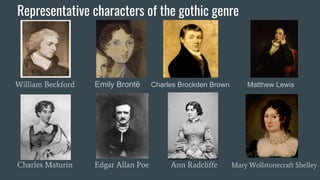
Representative characters of the gothic genre
William Beckford Emily Brontë Charles Brockden Brown Matthew Lewis
Charles Maturin Edgar Allan Poe Ann Radcliffe Mary Wollstonecraft Shelley
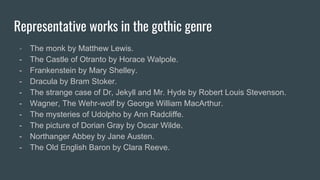
Representative works in the gothic genre
- The monk by Matthew Lewis.
- The Castle of Otranto by Horace Walpole.
- Frankenstein by Mary Shelley.
- Dracula by Bram Stoker.
- The strange case of Dr, Jekyll and Mr. Hyde by Robert Louis Stevenson.
- Wagner, The Wehr-wolf by George William MacArthur.
- The mysteries of Udolpho by Ann Radcliffe.
- The picture of Dorian Gray by Oscar Wilde.
- Northanger Abbey by Jane Austen.
- The Old English Baron by Clara Reeve.
THE END

The Gothic genre

  • 1.
  • 2.
    What is thegothic genre? The gothic genre blends and combines fear and fiction, including sometimes romance and nature thrown in it. It includes the writings which employ dark and picturesque scenery, melodramatic narrative devices. These writings, try to present an overall atmosphere of exoticism and fear. Feelings of mystery, horror and death can also be present in the gothic literature.
  • 3.
    Features of thegothic genre - Gloomy, decaying setting: Like haunted houses or castles with secret passages, trapdoors. - Supernatural beings or monsters: Ghosts, vampires, zombies, giants which create fear and horror in the protagonists. - Curses or prophecies: The destroyed, old castles of gothic stories may include a prophecy or may be cursed, adding horror, tension and a gloomy atmosphere. - Damsels in distress. - Real people in unreal situations.
  • 4.
    More features ofthe gothic genre - Dark, abandoned and decaying settings: Ornate architecture, old castles, destroyed houses. - Plot conventions: Plots which include revenge or family secrets which add tension and mystery. - A lot of symbolism: Symbolic characters, setting or objects of the place. - Romance. - Intense emotions. - An atmosphere of mystery and suspense: It's created by the fear and the unknown, which lead to mystery and suspense. - Heroes: They have to overcome obstacles and difficulties all along the story, resulting in their figure of heroes.
  • 5.
    Setting of agothic story/novel Elements which enhance and improve the gothic mood: - Eerie sounds - Driving rain - Lights going on and off - Doors slamming shut - Howling wind - Distant baying or howling - Clanking chains - Crazed laughter - Approaching footsteps - Uninhabited places. - Creaking doors
  • 6.
    The origins ofthe gothic novel In 1764, Horace Walpole introduced to the world a new genre of literature known as Gothic fiction. He employed elements of the supernatural as well as the everyday in a manner to strike fear into the reader. This was the first time that the supernatural was used for the purpose of terrifying its audience. In his story The Castle of Otranto, Walpole introduced the literary device of the Gothic. He used unnatural life, mysterious voices, specters and gloomy prophecies to keep the audience on edge. The literary world gathered and rushed to buy this exciting new book. In doing so, he founded not only a new literary genre but also one of the most perennial features of the Gothic story. Many of the features of Gothic which endure today, such as the subterranean secret, the gloomy castle, and the mysterious ghostly sightings, were all used in Walpole’s novel. Without Walpole, it is doubtful whether there could have been any Edgar Allan Poe or even Stephen King writing. This one novel founded not only a genre but a whole style of writing.
  • 7.
    Representative characters ofthe gothic genre William Beckford Emily Brontë Charles Brockden Brown Matthew Lewis Charles Maturin Edgar Allan Poe Ann Radcliffe Mary Wollstonecraft Shelley
  • 8.
    Representative works inthe gothic genre - The monk by Matthew Lewis. - The Castle of Otranto by Horace Walpole. - Frankenstein by Mary Shelley. - Dracula by Bram Stoker. - The strange case of Dr, Jekyll and Mr. Hyde by Robert Louis Stevenson. - Wagner, The Wehr-wolf by George William MacArthur. - The mysteries of Udolpho by Ann Radcliffe. - The picture of Dorian Gray by Oscar Wilde. - Northanger Abbey by Jane Austen. - The Old English Baron by Clara Reeve.
  • 9.