Creation Myths
Myth
 a story about the origins of a culture’s beliefs and practices


 usually derived from oral tradition


 set in an imagined supernatural past
Myths are narratives (stories)

They ask questions about the world and human existence:


       How did the universe come to be?


       Who are we?


       How should we behave?


       What are the larger forces that regulate our lives?
Cosmogony
“Cosmogony” is a technical term for “creation myth.”

    derived from two Greek words meaning order and beginning:


      cosmos (kosmos) = order, form, arrangement, the world or universe


        -gony = production, genesis, origination; used in the formation of compound words:

                cosmogony, theogony


    theogony = an account of the origin of the gods, a genealogical account of the gods


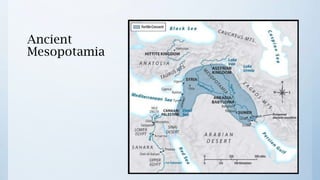
    earliest Western written cosmogony, or creation myth, comes from
     ancient Mesopotamia
Ancient
Mesopotamia
Some Features of Creation Myths

 a god or gods act upon
                                       the myth is an integral part of
  pre-existing chaos
                                        religion


 the myth makes an affirmation
                                       the myth establishes an axis
  of a culture’s values and practices
                                        mundi, a “world axis,” a point
                                        where the natural and divine
                                        worlds intersect
 it asserts a central reality, then
  structures values in relation to it
Five types of creation myths

Ex Nihilo

“out of nothing”

 a diety (a god) creates the
 cosmos through thought,
 dream, word, or other means
                                Creation of Adam
 Example: The Book of Genesis
 from The Bible
Chaos or a Cosmic Egg
a breaking of primordial chaos to form a
unity

Example: earliest Babylonian creation
story, called Eridu Genesis

Example: a primal being, Pan Gu, is contained
within an egg. When the egg breaks, Pan Gu      Pan Gu
appears as a giant who separates chaos into
the many opposites of yin and yang, Chinese

Other cosmic egg myths have twins within
the egg: for example, the Mande people of
West Africa, have twins who represent male
and female, who became the first people
Earth Diver
a deity sends a bird or animal down into the
primal waters to bring up a bit of mud from
which the earth is made

Example: a water beetle dives and brings up
soft mud, Cherokee tribe                        Turtle Island

Example: a bird, the water wagtail, splashes
water and stomps his feet to make pieces of
earth, thus making islands where the Ainu
people of Japan would live.

Example: in an Ojibwa myth, a giant tortoise
rises from the primordial waters and the back
of it forms land, called Turtle Island.
Emergence
Creation is a gradual process featuring human-like
creatures who must travel through many worlds
before reaching this one.

Example: three worlds below with events which shape Hopi Emergence
the Fourth world, the one in which we now live,
Navaho, but similar myths are common among many
Native America tribes.

Example: Ra, the sun-god, emerging with new land
after the annual flood, Egyptian
The World Parents

Two types:

1. A primal pair is separated, sometimes turning
   against one another, with little care for their
                                                      Tiamat and Marduk
   offspring. The pair might be Sky and Earth or
   other features of nature.

  Example: The Epic of Creation (Enamu Elish) where
  Apsu and Tiamat are fresh and salt water

2. Creation comes from the dismemberment of one of
   the parents in order to create heaven and earth.

   Example: The Epic of Creation (Enamu Elish)
Works Cited

Kramer, Samuel Noah. "Reflections on the Mesopotamian

   Flood." Expedition, 9. 4 (summer 1967). Web.

Voth, Grant L. Myth in Human History. Chantilly, VA. The

   Teaching Company. 2010. Print.

Creation myths

  • 1.
  • 2.
    Myth  a storyabout the origins of a culture’s beliefs and practices  usually derived from oral tradition  set in an imagined supernatural past
  • 3.
    Myths are narratives(stories) They ask questions about the world and human existence:  How did the universe come to be?  Who are we?  How should we behave?  What are the larger forces that regulate our lives?
  • 4.
    Cosmogony “Cosmogony” is atechnical term for “creation myth.”  derived from two Greek words meaning order and beginning:  cosmos (kosmos) = order, form, arrangement, the world or universe -gony = production, genesis, origination; used in the formation of compound words: cosmogony, theogony  theogony = an account of the origin of the gods, a genealogical account of the gods  earliest Western written cosmogony, or creation myth, comes from ancient Mesopotamia
  • 5.
  • 6.
    Some Features ofCreation Myths  a god or gods act upon  the myth is an integral part of pre-existing chaos religion  the myth makes an affirmation  the myth establishes an axis of a culture’s values and practices mundi, a “world axis,” a point where the natural and divine worlds intersect  it asserts a central reality, then structures values in relation to it
  • 7.
    Five types ofcreation myths Ex Nihilo “out of nothing” a diety (a god) creates the cosmos through thought, dream, word, or other means Creation of Adam Example: The Book of Genesis from The Bible
  • 8.
    Chaos or aCosmic Egg a breaking of primordial chaos to form a unity Example: earliest Babylonian creation story, called Eridu Genesis Example: a primal being, Pan Gu, is contained within an egg. When the egg breaks, Pan Gu Pan Gu appears as a giant who separates chaos into the many opposites of yin and yang, Chinese Other cosmic egg myths have twins within the egg: for example, the Mande people of West Africa, have twins who represent male and female, who became the first people
  • 9.
    Earth Diver a deitysends a bird or animal down into the primal waters to bring up a bit of mud from which the earth is made Example: a water beetle dives and brings up soft mud, Cherokee tribe Turtle Island Example: a bird, the water wagtail, splashes water and stomps his feet to make pieces of earth, thus making islands where the Ainu people of Japan would live. Example: in an Ojibwa myth, a giant tortoise rises from the primordial waters and the back of it forms land, called Turtle Island.
  • 10.
    Emergence Creation is agradual process featuring human-like creatures who must travel through many worlds before reaching this one. Example: three worlds below with events which shape Hopi Emergence the Fourth world, the one in which we now live, Navaho, but similar myths are common among many Native America tribes. Example: Ra, the sun-god, emerging with new land after the annual flood, Egyptian
  • 11.
    The World Parents Twotypes: 1. A primal pair is separated, sometimes turning against one another, with little care for their Tiamat and Marduk offspring. The pair might be Sky and Earth or other features of nature. Example: The Epic of Creation (Enamu Elish) where Apsu and Tiamat are fresh and salt water 2. Creation comes from the dismemberment of one of the parents in order to create heaven and earth. Example: The Epic of Creation (Enamu Elish)
  • 12.
    Works Cited Kramer, SamuelNoah. "Reflections on the Mesopotamian Flood." Expedition, 9. 4 (summer 1967). Web. Voth, Grant L. Myth in Human History. Chantilly, VA. The Teaching Company. 2010. Print.