Download to read offline


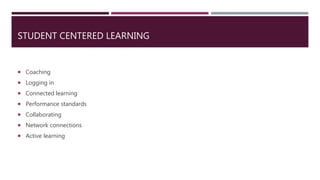
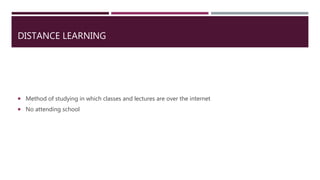
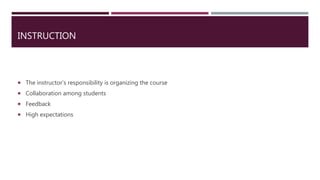


The document discusses key aspects of distance education including student-centered learning through coaching, collaboration, and active learning. It outlines distance learning as studying over the internet without attending school in person. Instruction is organized by the instructor and involves collaboration, feedback, and high expectations. Course management systems provide benefits like calendars, announcements, assignments, and discussions to aid communication. Student support, instructor enthusiasm, organization, and technological familiarity are critical elements for successful distance teaching.


