GOAL SETTING AND
PLANNING
BY RAJIV KATARIA
AGENDA
 Planning meaning and definition
 Importance of planning
 Process of planning
 Goal setting
 Need for Goal setting
 Types of Goals
 Importance of goal setting for an employee
 Procedure of goal setting
PLANNING
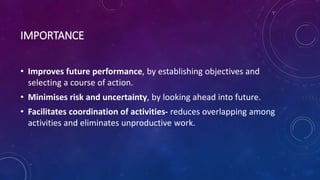
• Planning is to think in advance
• What to do
• Who to do
• When to do
• How to do
IMPORTANCE
• Improves future performance, by establishing objectives and
selecting a course of action.
• Minimises risk and uncertainty, by looking ahead into future.
• Facilitates coordination of activities- reduces overlapping among
activities and eliminates unproductive work.
• It Provides direction.
• Identifies future opportunities and threats.
• Compares actual performance with the standard performance and
efforts are made to correct the actual performance.
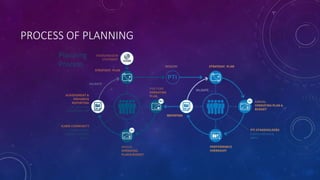
PROCESS OF PLANNING
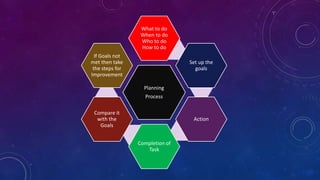
Planning
Process
What to do
When to do
Who to do
How to do
Set up the
goals
Action
Completion of
Task
Compare it
with the
Goals
If Goals not
met then take
the steps for
Improvement
GOAL SETTING
GOAL SETTING
• Goal setting is a powerful process for thinking about your ideal
future, and for motivating yourself to turn your vision of this
future into reality.
• Goal setting is to set up a target that we want to achieve.
• It is a time based concept.
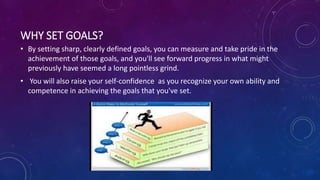
WHY SET GOALS?
• By setting sharp, clearly defined goals, you can measure and take pride in the
achievement of those goals, and you'll see forward progress in what might
previously have seemed a long pointless grind.
• You will also raise your self-confidence as you recognize your own ability and
competence in achieving the goals that you've set.
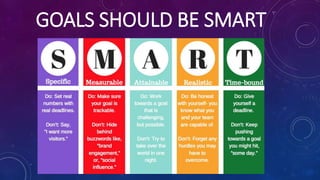
GOALS SHOULD BE SMART
TYPES OF GOALS
LONG TERM GOALS
• A long-term goal is something you want to accomplish in the future. Long-
term goals requiretime and planning. They are not something you can do this
a day or even two. Long-term goals are usually at least several months or
year.
• For Example Open 500 branch across the country” is a suitable long-term goal
for a bank
SHORT TERM GOALS
• A short-term goal is something you want to do in the near future. The near future can mean today, this
week or this month.
• Daily Goals
• Weekly Goals
• Monthly goals
• Example will make the 5 units by the end of the day in manufacturing concern
IMPORTANCE OF GOAL SETTINGS AND PLANNING
• The organizational goals can be met easily
• Provides direction
• Clear focus what is important
• Clarity in decision making
• Gives you control over future
• Provides Motivation
• Gives you personal satisfaction
• Gives you sense of purpose in life
• Planning provides competitive edge
THE ORGANIZATIONAL GOALS CAN BE MET EASILY
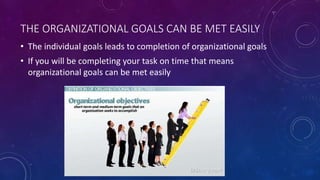
• The individual goals leads to completion of organizational goals
• If you will be completing your task on time that means
organizational goals can be met easily
PROVIDES DIRECTION
• Goals settings actually tells you that
what you need to do
• It provides you the direction for work
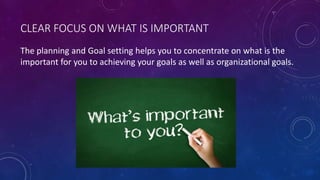
CLEAR FOCUS ON WHAT IS IMPORTANT
The planning and Goal setting helps you to concentrate on what is the
important for you to achieving your goals as well as organizational goals.

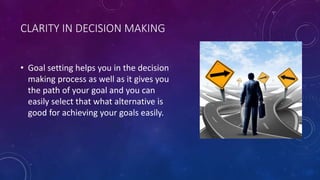
CLARITY IN DECISION MAKING
• Goal setting helps you in the decision
making process as well as it gives you
the path of your goal and you can
easily select that what alternative is
good for achieving your goals easily.
GIVES YOU CONTROL OVER FUTURE
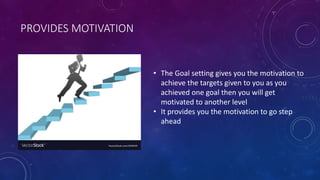
PROVIDES MOTIVATION
• The Goal setting gives you the motivation to
achieve the targets given to you as you
achieved one goal then you will get
motivated to another level
• It provides you the motivation to go step
ahead
GIVES YOU SENSE OF PURPOSE IN LIFE
• Goal setting gives you the purpose in life that what you actually need to do
• For Example in manufacturing concern that you want to produce the 500 unit
by this month so it gives you the purpose for your professional life
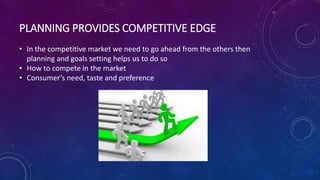
PLANNING PROVIDES COMPETITIVE EDGE
• In the competitive market we need to go ahead from the others then
planning and goals setting helps us to do so
• How to compete in the market
• Consumer’s need, taste and preference
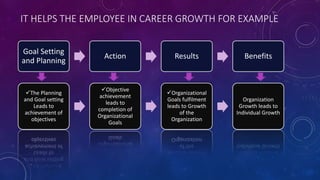
IT HELPS THE EMPLOYEE IN CAREER GROWTH FOR EXAMPLE
The Planning
and Goal setting
Leads to
achievement of
objectives
Objective
achievement
leads to
completion of
Organizational
Goals
Organizational
Goals fulfilment
leads to Growth
of the
Organization
Organization
Growth leads to
Individual Growth
Goal Setting
and Planning
Action Results Benefits
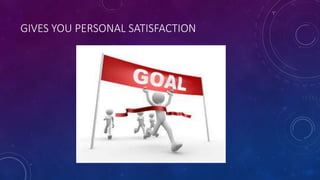
GIVES YOU PERSONAL SATISFACTION
HOW TO SET GOALS
• First you create your "big picture" of what you want to do
• Just target that you want to produce 500 units in a month
STEP 2 SETTING SHORT TERM GOALS
• Then set up the per day goals that I will make the 20 units
per day
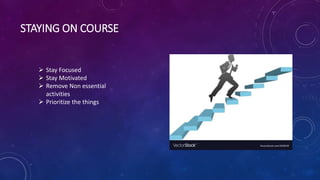
STAYING ON COURSE
 Stay Focused
 Stay Motivated
 Remove Non essential
activities
 Prioritize the things
ACHIEVING GOALS
 to accomplish a goal or to do something you set out to do.
 An example of achieve is when you win a race you were running and
wanted to win.
ANY QUESTION
THANK YOU
• Presented By: Rajiv Kataria
MBA (Finance & HR)
rajivkataria19@gmail.com

Goal setting and planning

  • 1.
  • 2.
    AGENDA  Planning meaningand definition  Importance of planning  Process of planning  Goal setting  Need for Goal setting  Types of Goals  Importance of goal setting for an employee  Procedure of goal setting
  • 4.
    PLANNING • Planning isto think in advance • What to do • Who to do • When to do • How to do
  • 5.
    IMPORTANCE • Improves futureperformance, by establishing objectives and selecting a course of action. • Minimises risk and uncertainty, by looking ahead into future. • Facilitates coordination of activities- reduces overlapping among activities and eliminates unproductive work.
  • 6.
    • It Providesdirection. • Identifies future opportunities and threats. • Compares actual performance with the standard performance and efforts are made to correct the actual performance.
  • 7.
  • 8.
    Planning Process What to do Whento do Who to do How to do Set up the goals Action Completion of Task Compare it with the Goals If Goals not met then take the steps for Improvement
  • 9.
  • 10.
    GOAL SETTING • Goalsetting is a powerful process for thinking about your ideal future, and for motivating yourself to turn your vision of this future into reality. • Goal setting is to set up a target that we want to achieve. • It is a time based concept.
  • 11.
    WHY SET GOALS? •By setting sharp, clearly defined goals, you can measure and take pride in the achievement of those goals, and you'll see forward progress in what might previously have seemed a long pointless grind. • You will also raise your self-confidence as you recognize your own ability and competence in achieving the goals that you've set.
  • 12.
  • 13.
  • 14.
    LONG TERM GOALS •A long-term goal is something you want to accomplish in the future. Long- term goals requiretime and planning. They are not something you can do this a day or even two. Long-term goals are usually at least several months or year. • For Example Open 500 branch across the country” is a suitable long-term goal for a bank
  • 15.
    SHORT TERM GOALS •A short-term goal is something you want to do in the near future. The near future can mean today, this week or this month. • Daily Goals • Weekly Goals • Monthly goals • Example will make the 5 units by the end of the day in manufacturing concern
  • 16.
    IMPORTANCE OF GOALSETTINGS AND PLANNING • The organizational goals can be met easily • Provides direction • Clear focus what is important • Clarity in decision making • Gives you control over future • Provides Motivation • Gives you personal satisfaction • Gives you sense of purpose in life • Planning provides competitive edge
  • 17.
    THE ORGANIZATIONAL GOALSCAN BE MET EASILY • The individual goals leads to completion of organizational goals • If you will be completing your task on time that means organizational goals can be met easily
  • 18.
    PROVIDES DIRECTION • Goalssettings actually tells you that what you need to do • It provides you the direction for work
  • 19.
    CLEAR FOCUS ONWHAT IS IMPORTANT The planning and Goal setting helps you to concentrate on what is the important for you to achieving your goals as well as organizational goals.
  • 20.
    CLARITY IN DECISIONMAKING • Goal setting helps you in the decision making process as well as it gives you the path of your goal and you can easily select that what alternative is good for achieving your goals easily.
  • 21.
    GIVES YOU CONTROLOVER FUTURE
  • 22.
    PROVIDES MOTIVATION • TheGoal setting gives you the motivation to achieve the targets given to you as you achieved one goal then you will get motivated to another level • It provides you the motivation to go step ahead
  • 23.
    GIVES YOU SENSEOF PURPOSE IN LIFE • Goal setting gives you the purpose in life that what you actually need to do • For Example in manufacturing concern that you want to produce the 500 unit by this month so it gives you the purpose for your professional life
  • 24.
    PLANNING PROVIDES COMPETITIVEEDGE • In the competitive market we need to go ahead from the others then planning and goals setting helps us to do so • How to compete in the market • Consumer’s need, taste and preference
  • 25.
    IT HELPS THEEMPLOYEE IN CAREER GROWTH FOR EXAMPLE The Planning and Goal setting Leads to achievement of objectives Objective achievement leads to completion of Organizational Goals Organizational Goals fulfilment leads to Growth of the Organization Organization Growth leads to Individual Growth Goal Setting and Planning Action Results Benefits
  • 26.
    GIVES YOU PERSONALSATISFACTION
  • 27.
    HOW TO SETGOALS • First you create your "big picture" of what you want to do • Just target that you want to produce 500 units in a month
  • 28.
    STEP 2 SETTINGSHORT TERM GOALS • Then set up the per day goals that I will make the 20 units per day
  • 29.
    STAYING ON COURSE Stay Focused  Stay Motivated  Remove Non essential activities  Prioritize the things
  • 30.
    ACHIEVING GOALS  toaccomplish a goal or to do something you set out to do.  An example of achieve is when you win a race you were running and wanted to win.
  • 31.
  • 32.
    THANK YOU • PresentedBy: Rajiv Kataria MBA (Finance & HR) rajivkataria19@gmail.com