Media Camera Shots 
By Leanne Seddon
Bird’s Eye View 
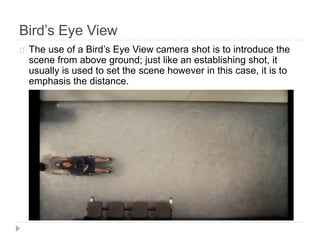
The use of a Bird’s Eye View camera shot is to introduce the 
scene from above ground; just like an establishing shot, it 
usually is used to set the scene however in this case, it is to 
emphasis the distance.
Mid Shot 
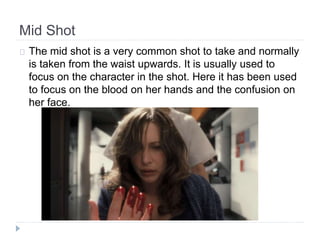
The mid shot is a very common shot to take and normally 
is taken from the waist upwards. It is usually used to 
focus on the character in the shot. Here it has been used 
to focus on the blood on her hands and the confusion on 
her face.
Low Angle 
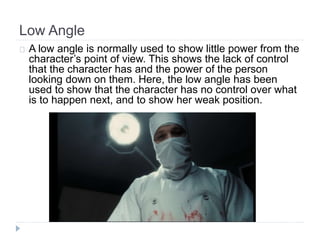
A low angle is normally used to show little power from the 
character’s point of view. This shows the lack of control 
that the character has and the power of the person 
looking down on them. Here, the low angle has been 
used to show that the character has no control over what 
is to happen next, and to show her weak position.
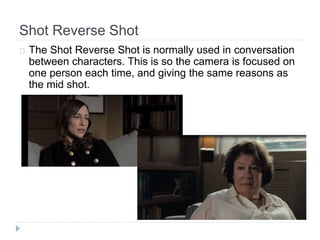
Shot Reverse Shot 
The Shot Reverse Shot is normally used in conversation 
between characters. This is so the camera is focused on 
one person each time, and giving the same reasons as 
the mid shot.
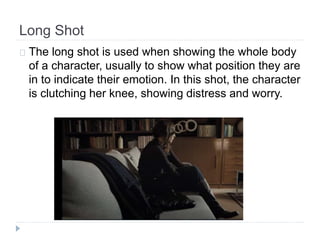
Long Shot 
The long shot is used when showing the whole body 
of a character, usually to show what position they are 
in to indicate their emotion. In this shot, the character 
is clutching her knee, showing distress and worry.
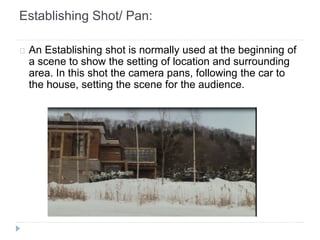
Establishing Shot/ Pan: 
An Establishing shot is normally used at the beginning of 
a scene to show the setting of location and surrounding 
area. In this shot the camera pans, following the car to 
the house, setting the scene for the audience.
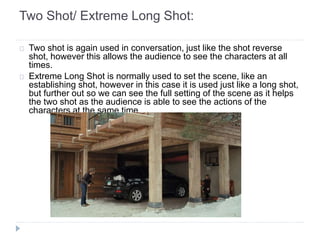
Two Shot/ Extreme Long Shot: 
Two shot is again used in conversation, just like the shot reverse 
shot, however this allows the audience to see the characters at all 
times. 
Extreme Long Shot is normally used to set the scene, like an 
establishing shot, however in this case it is used just like a long shot, 
but further out so we can see the full setting of the scene as it helps 
the two shot as the audience is able to see the actions of the 
characters at the same time.
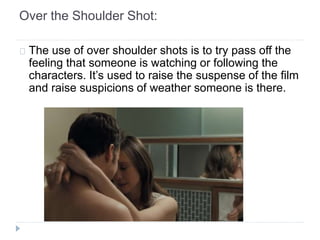
Over the Shoulder Shot: 
The use of over shoulder shots is to try pass off the 
feeling that someone is watching or following the 
characters. It’s used to raise the suspense of the film 
and raise suspicions of weather someone is there.
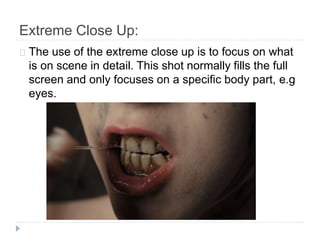
Extreme Close Up: 
The use of the extreme close up is to focus on what 
is on scene in detail. This shot normally fills the full 
screen and only focuses on a specific body part, e.g 
eyes.

Media camera shots

  • 1.
    Media Camera Shots By Leanne Seddon
  • 2.
    Bird’s Eye View The use of a Bird’s Eye View camera shot is to introduce the scene from above ground; just like an establishing shot, it usually is used to set the scene however in this case, it is to emphasis the distance.
  • 3.
    Mid Shot Themid shot is a very common shot to take and normally is taken from the waist upwards. It is usually used to focus on the character in the shot. Here it has been used to focus on the blood on her hands and the confusion on her face.
  • 4.
    Low Angle Alow angle is normally used to show little power from the character’s point of view. This shows the lack of control that the character has and the power of the person looking down on them. Here, the low angle has been used to show that the character has no control over what is to happen next, and to show her weak position.
  • 5.
    Shot Reverse Shot The Shot Reverse Shot is normally used in conversation between characters. This is so the camera is focused on one person each time, and giving the same reasons as the mid shot.
  • 6.
    Long Shot Thelong shot is used when showing the whole body of a character, usually to show what position they are in to indicate their emotion. In this shot, the character is clutching her knee, showing distress and worry.
  • 7.
    Establishing Shot/ Pan: An Establishing shot is normally used at the beginning of a scene to show the setting of location and surrounding area. In this shot the camera pans, following the car to the house, setting the scene for the audience.
  • 8.
    Two Shot/ ExtremeLong Shot: Two shot is again used in conversation, just like the shot reverse shot, however this allows the audience to see the characters at all times. Extreme Long Shot is normally used to set the scene, like an establishing shot, however in this case it is used just like a long shot, but further out so we can see the full setting of the scene as it helps the two shot as the audience is able to see the actions of the characters at the same time.
  • 9.
    Over the ShoulderShot: The use of over shoulder shots is to try pass off the feeling that someone is watching or following the characters. It’s used to raise the suspense of the film and raise suspicions of weather someone is there.
  • 10.
    Extreme Close Up: The use of the extreme close up is to focus on what is on scene in detail. This shot normally fills the full screen and only focuses on a specific body part, e.g eyes.