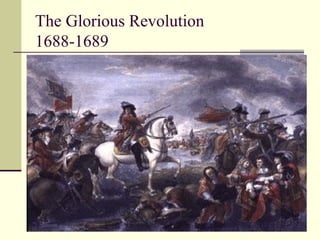
The Glorious Revolution
1688-1689
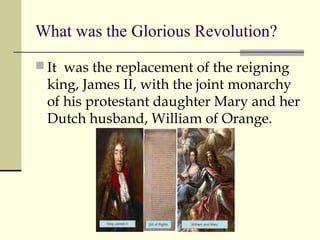
What was the Glorious Revolution?
 It was the replacement of the reigning
king, James II, with the joint monarchy
of his protestant daughter Mary and her
Dutch husband, William of Orange.
Causes
 After the accession of
James II in 1685, his overt
Roman Catholicism
alienated the majority of
the population.
 In 1687 he issued a
Declaration of Indulgence,
suspending the penal laws
against dissenters and
recusants.
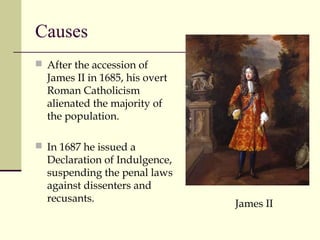
James II
Causes
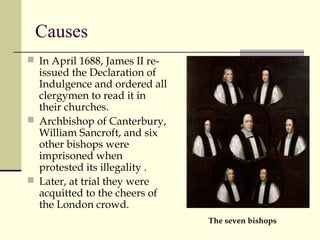
 In April 1688, James II re-
issued the Declaration of
Indulgence and ordered all
clergymen to read it in
their churches.
 Archbishop of Canterbury,
William Sancroft, and six
other bishops were
imprisoned when
protested its illegality .
 Later, at trial they were
acquitted to the cheers of
the London crowd.
The seven bishops
Causes
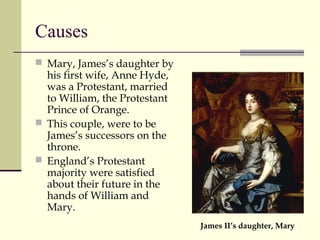
 Mary, James’s daughter by
his first wife, Anne Hyde,
was a Protestant, married
to William, the Protestant
Prince of Orange.
 This couple, were to be
James’s successors on the
throne.
 England’s Protestant
majority were satisfied
about their future in the
hands of William and
Mary.
James II’s daughter, Mary
Causes
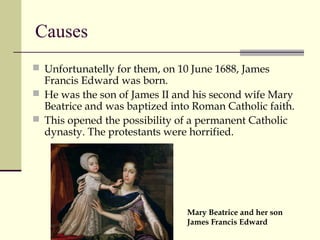
 Unfortunatelly for them, on 10 June 1688, James
Francis Edward was born.
 He was the son of James II and his second wife Mary
Beatrice and was baptized into Roman Catholic faith.
 This opened the possibility of a permanent Catholic
dynasty. The protestants were horrified.
Mary Beatrice and her son
James Francis Edward
Reactions
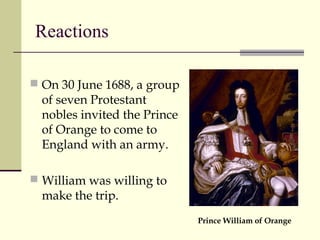
 On 30 June 1688, a group
of seven Protestant
nobles invited the Prince
of Orange to come to
England with an army.
 William was willing to
make the trip.
Prince William of Orange
The revolution
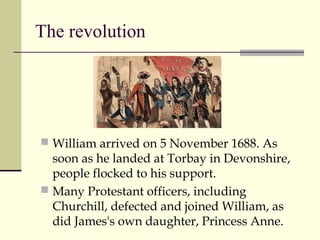
 William arrived on 5 November 1688. As
soon as he landed at Torbay in Devonshire,
people flocked to his support.
 Many Protestant officers, including
Churchill, defected and joined William, as
did James's own daughter, Princess Anne.
The revolution
 James lost his nerve and declined to attack the
invading army, despite his army's numerical
superiority
 Later, he got away to France, where his wife,
their newly-born son James and the generous
hospitality of the court of King Louis the
Fourteenth awaited him.
Consequences
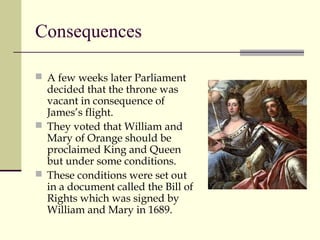
 A few weeks later Parliament
decided that the throne was
vacant in consequence of
James’s flight.
 They voted that William and
Mary of Orange should be
proclaimed King and Queen
but under some conditions.
 These conditions were set out
in a document called the Bill of
Rights which was signed by
William and Mary in 1689.
Consequences
 Bill of Rights: This document limits on the
powers of the monarch and sets out the rights
of Parliament
 These new laws changed England from an
absolute monarchy (where the monarch has
power) to a constitutional monarchy (where
they have not much more than a ceremonial
role).
 The British system of government has
remained a constitutional monarchy ever
since this time.

Glorious revolution

  • 1.
  • 2.
    What was theGlorious Revolution?  It was the replacement of the reigning king, James II, with the joint monarchy of his protestant daughter Mary and her Dutch husband, William of Orange.
  • 3.
    Causes  After theaccession of James II in 1685, his overt Roman Catholicism alienated the majority of the population.  In 1687 he issued a Declaration of Indulgence, suspending the penal laws against dissenters and recusants. James II
  • 4.
    Causes  In April1688, James II re- issued the Declaration of Indulgence and ordered all clergymen to read it in their churches.  Archbishop of Canterbury, William Sancroft, and six other bishops were imprisoned when protested its illegality .  Later, at trial they were acquitted to the cheers of the London crowd. The seven bishops
  • 5.
    Causes  Mary, James’sdaughter by his first wife, Anne Hyde, was a Protestant, married to William, the Protestant Prince of Orange.  This couple, were to be James’s successors on the throne.  England’s Protestant majority were satisfied about their future in the hands of William and Mary. James II’s daughter, Mary
  • 6.
    Causes  Unfortunatelly forthem, on 10 June 1688, James Francis Edward was born.  He was the son of James II and his second wife Mary Beatrice and was baptized into Roman Catholic faith.  This opened the possibility of a permanent Catholic dynasty. The protestants were horrified. Mary Beatrice and her son James Francis Edward
  • 7.
    Reactions  On 30June 1688, a group of seven Protestant nobles invited the Prince of Orange to come to England with an army.  William was willing to make the trip. Prince William of Orange
  • 8.
    The revolution  Williamarrived on 5 November 1688. As soon as he landed at Torbay in Devonshire, people flocked to his support.  Many Protestant officers, including Churchill, defected and joined William, as did James's own daughter, Princess Anne.
  • 9.
    The revolution  Jameslost his nerve and declined to attack the invading army, despite his army's numerical superiority  Later, he got away to France, where his wife, their newly-born son James and the generous hospitality of the court of King Louis the Fourteenth awaited him.
  • 10.
    Consequences  A fewweeks later Parliament decided that the throne was vacant in consequence of James’s flight.  They voted that William and Mary of Orange should be proclaimed King and Queen but under some conditions.  These conditions were set out in a document called the Bill of Rights which was signed by William and Mary in 1689.
  • 11.
    Consequences  Bill ofRights: This document limits on the powers of the monarch and sets out the rights of Parliament  These new laws changed England from an absolute monarchy (where the monarch has power) to a constitutional monarchy (where they have not much more than a ceremonial role).  The British system of government has remained a constitutional monarchy ever since this time.