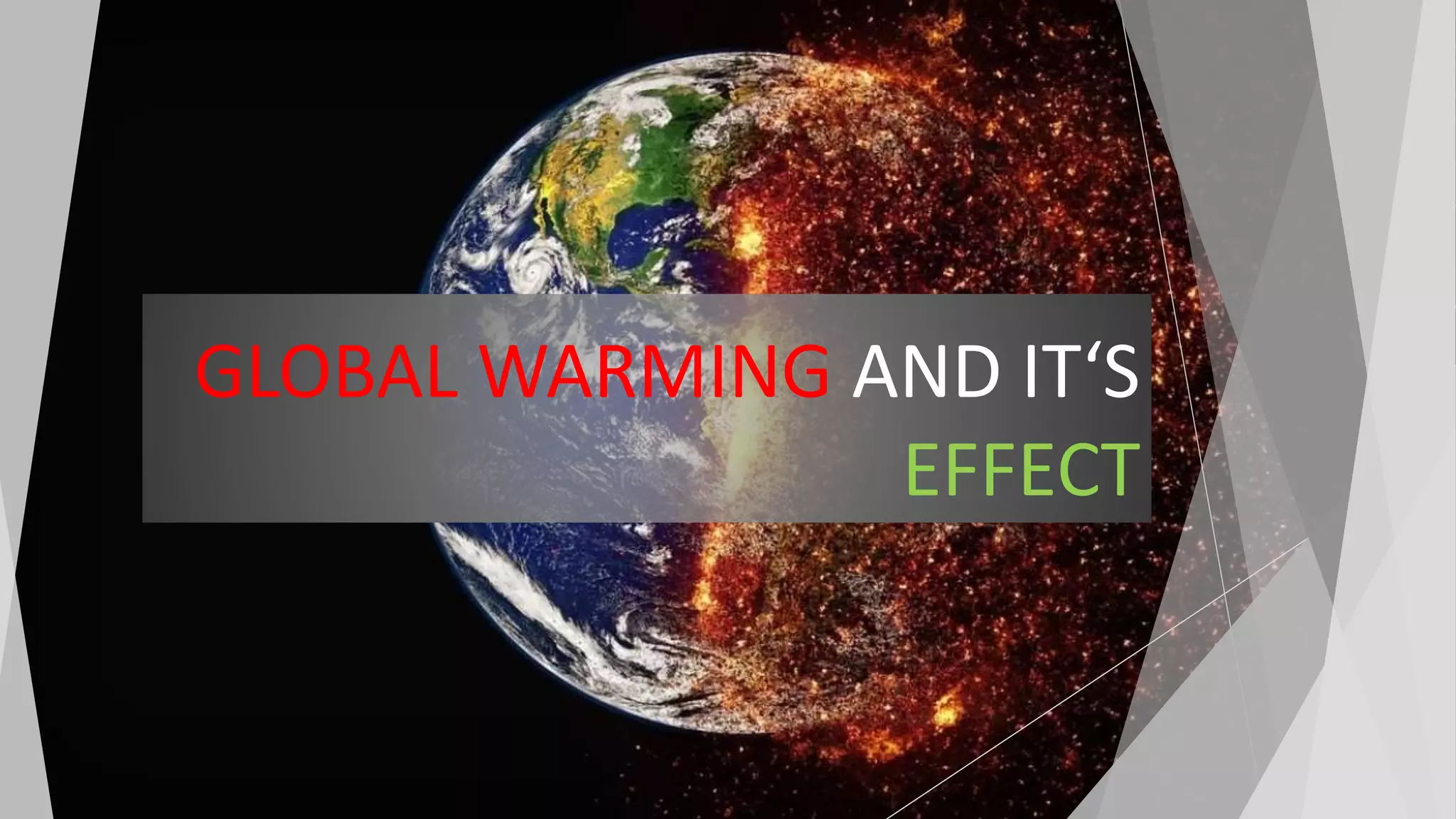
GLOBAL WARMING AND IT‘S
EFFECT
CONTENT
 Introduction of Global Warming
 Causes Of Global Warming
 Impacts Of Global Warming
 Droughts
 Floods
 Level Rising Temperature Of Oceans/sea
 Tornados
 Hurricanes
 The Melting Of Mountain Glacier
 The Reduction Of Snow Cover
 Coastal Erosion
INTRODUCTION
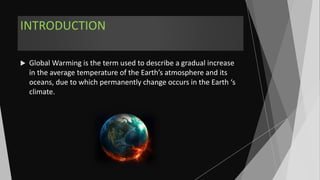
 Global Warming is the term used to describe a gradual increase
in the average temperature of the Earth’s atmosphere and its
oceans, due to which permanently change occurs in the Earth ‘s
climate.
CAUSES OF GLOBAL WARMING
 Most of the climate scientists are agree that the main cause of the Global
Warming is due to the “green house effect”.
 They may be other cause like
 Respiration
 Mining activities
 Rapid industrialization
 Increased in auto mobile use
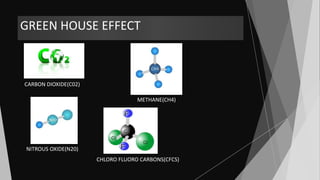
GREEN HOUSE EFFECT
CARBON DIOXIDE(C02)
METHANE(CH4)
NITROUS OXIDE(N20)
CHLORO FLUORO CARBONS(CFCS)
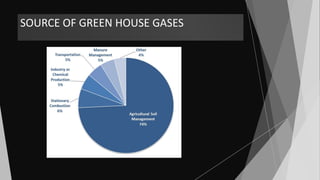
SOURCE OF GREEN HOUSE GASES
FLOODS & DROUGHTS
CAUSED BY
GLOBAL WARMING
DROUGHTS CAUSED BY
GLOBAL WARMING
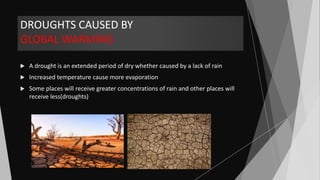
 A drought is an extended period of dry whether caused by a lack of rain
 Increased temperature cause more evaporation
 Some places will receive greater concentrations of rain and other places will
receive less(droughts)
HOW FLOOD IS CAUSED BY
GLOBAL WARMING
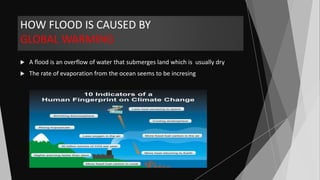
 A flood is an overflow of water that submerges land which is usually dry
 The rate of evaporation from the ocean seems to be incresing
EFFECT OF FLOOD TO IRRIGATION
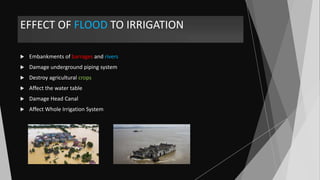
 Embankments of barrages and rivers
 Damage underground piping system
 Destroy agricultural crops
 Affect the water table
 Damage Head Canal
 Affect Whole Irrigation System
LEVEL RISING
TEMPERATURE OF OCEAN
&SEA
RISING TEMPERATURE OF OCEAN&SEA
 Rising temperature of ocean and sea may be more significant than the direct
effect of higher temperature.
Because….
 The world's agricultural output is heavily dependent on irrigation.
 Out of a global cropped area of 1500 million ha, 16% is irrigated.
 Global warming is likely to have a major impact on the hydrological cycle and
consequently on irrigated agriculture.
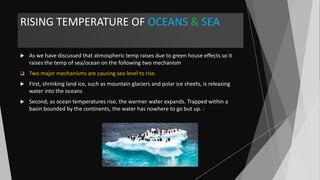
RISING TEMPERATURE OF OCEANS & SEA
 As we have discussed that atmospheric temp raises due to green house effects so it
raises the temp of sea/ocean on the following two mechanism
 Two major mechanisms are causing sea level to rise.
 First, shrinking land ice, such as mountain glaciers and polar ice sheets, is releasing
water into the oceans
 Second, as ocean temperatures rise, the warmer water expands. Trapped within a
basin bounded by the continents, the water has nowhere to go but up. :
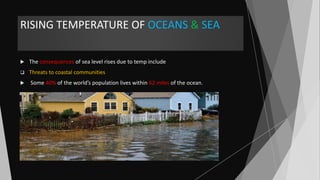
RISING TEMPERATURE OF OCEANS & SEA
 The consequences of sea level rises due to temp include
 Threats to coastal communities
 Some 40% of the world’s population lives within 62 miles of the ocean.
TORNADOES AND HURRICANES
CAUSED BY GLOBAL WARMING
TORNADOES
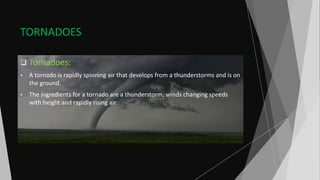
 Tornadoes:
 A tornado is rapidly spinning air that develops from a thunderstorms and is on
the ground.
 The ingredients for a tornado are a thunderstorm, winds changing speeds
with height and rapidly rising air.
HURRICANES
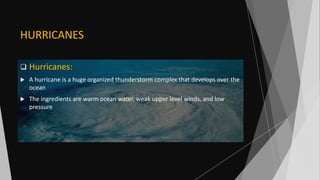
 Hurricanes:
 A hurricane is a huge organized thunderstorm complex that develops over the
ocean
 The ingredients are warm ocean water, weak upper level winds, and low
pressure
IMPACTS OF TORNADOES & HURRICANES
 Flooding:
 Heavy rains and ocean waters brought ashore by strong winds can caus
 e flooding in excess of 50 cm (20 in) over a 24 hour period.
 Impacts to Agriculture
 As hurricane winds, rainfall, and storm surge cause direct and indirect effects on the
environment, this can also impact agriculture.
 Storm Surge:
 An abnormal increase in the ocean's level, sometimes in excess of several meters high.
MELTING OF GLACIERS CAUSED BY
GLOBAL WARMING
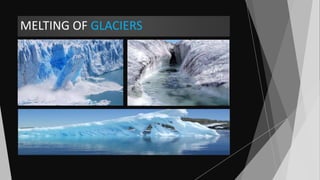
MELTING OF GLACIERS
MELTING OF GLACIERS
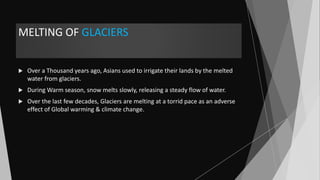
 Over a Thousand years ago, Asians used to irrigate their lands by the melted
water from glaciers.
 During Warm season, snow melts slowly, releasing a steady flow of water.
 Over the last few decades, Glaciers are melting at a torrid pace as an adverse
effect of Global warming & climate change.
MELTING OF GLACIERS
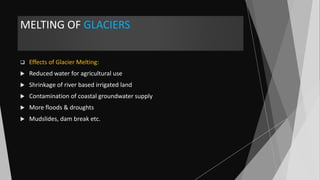
 Effects of Glacier Melting:
 Reduced water for agricultural use
 Shrinkage of river based irrigated land
 Contamination of coastal groundwater supply
 More floods & droughts
 Mudslides, dam break etc.
THANK YOU
EACHOFUSMUSTTAKESTEPSTOPROTECTOUR
EARTHFROMGLOBALWARMING

Global warming and_its_effect

  • 1.
    GLOBAL WARMING ANDIT‘S EFFECT
  • 2.
    CONTENT  Introduction ofGlobal Warming  Causes Of Global Warming  Impacts Of Global Warming  Droughts  Floods  Level Rising Temperature Of Oceans/sea  Tornados  Hurricanes  The Melting Of Mountain Glacier  The Reduction Of Snow Cover  Coastal Erosion
  • 3.
    INTRODUCTION  Global Warmingis the term used to describe a gradual increase in the average temperature of the Earth’s atmosphere and its oceans, due to which permanently change occurs in the Earth ‘s climate.
  • 4.
    CAUSES OF GLOBALWARMING  Most of the climate scientists are agree that the main cause of the Global Warming is due to the “green house effect”.  They may be other cause like  Respiration  Mining activities  Rapid industrialization  Increased in auto mobile use
  • 5.
    GREEN HOUSE EFFECT CARBONDIOXIDE(C02) METHANE(CH4) NITROUS OXIDE(N20) CHLORO FLUORO CARBONS(CFCS)
  • 6.
    SOURCE OF GREENHOUSE GASES
  • 7.
    FLOODS & DROUGHTS CAUSEDBY GLOBAL WARMING
  • 8.
    DROUGHTS CAUSED BY GLOBALWARMING  A drought is an extended period of dry whether caused by a lack of rain  Increased temperature cause more evaporation  Some places will receive greater concentrations of rain and other places will receive less(droughts)
  • 9.
    HOW FLOOD ISCAUSED BY GLOBAL WARMING  A flood is an overflow of water that submerges land which is usually dry  The rate of evaporation from the ocean seems to be incresing
  • 10.
    EFFECT OF FLOODTO IRRIGATION  Embankments of barrages and rivers  Damage underground piping system  Destroy agricultural crops  Affect the water table  Damage Head Canal  Affect Whole Irrigation System
  • 11.
  • 12.
    RISING TEMPERATURE OFOCEAN&SEA  Rising temperature of ocean and sea may be more significant than the direct effect of higher temperature. Because….  The world's agricultural output is heavily dependent on irrigation.  Out of a global cropped area of 1500 million ha, 16% is irrigated.  Global warming is likely to have a major impact on the hydrological cycle and consequently on irrigated agriculture.
  • 13.
    RISING TEMPERATURE OFOCEANS & SEA  As we have discussed that atmospheric temp raises due to green house effects so it raises the temp of sea/ocean on the following two mechanism  Two major mechanisms are causing sea level to rise.  First, shrinking land ice, such as mountain glaciers and polar ice sheets, is releasing water into the oceans  Second, as ocean temperatures rise, the warmer water expands. Trapped within a basin bounded by the continents, the water has nowhere to go but up. :
  • 14.
    RISING TEMPERATURE OFOCEANS & SEA  The consequences of sea level rises due to temp include  Threats to coastal communities  Some 40% of the world’s population lives within 62 miles of the ocean.
  • 15.
  • 16.
    TORNADOES  Tornadoes:  Atornado is rapidly spinning air that develops from a thunderstorms and is on the ground.  The ingredients for a tornado are a thunderstorm, winds changing speeds with height and rapidly rising air.
  • 17.
    HURRICANES  Hurricanes:  Ahurricane is a huge organized thunderstorm complex that develops over the ocean  The ingredients are warm ocean water, weak upper level winds, and low pressure
  • 18.
    IMPACTS OF TORNADOES& HURRICANES  Flooding:  Heavy rains and ocean waters brought ashore by strong winds can caus  e flooding in excess of 50 cm (20 in) over a 24 hour period.  Impacts to Agriculture  As hurricane winds, rainfall, and storm surge cause direct and indirect effects on the environment, this can also impact agriculture.  Storm Surge:  An abnormal increase in the ocean's level, sometimes in excess of several meters high.
  • 19.
    MELTING OF GLACIERSCAUSED BY GLOBAL WARMING
  • 20.
  • 21.
    MELTING OF GLACIERS Over a Thousand years ago, Asians used to irrigate their lands by the melted water from glaciers.  During Warm season, snow melts slowly, releasing a steady flow of water.  Over the last few decades, Glaciers are melting at a torrid pace as an adverse effect of Global warming & climate change.
  • 22.
    MELTING OF GLACIERS Effects of Glacier Melting:  Reduced water for agricultural use  Shrinkage of river based irrigated land  Contamination of coastal groundwater supply  More floods & droughts  Mudslides, dam break etc.
  • 23.