Made By : Dinesh Garhwal
Class :
Roll no. :
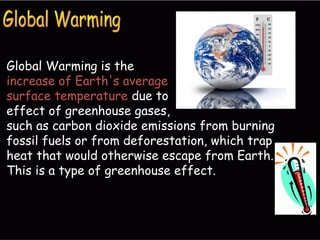
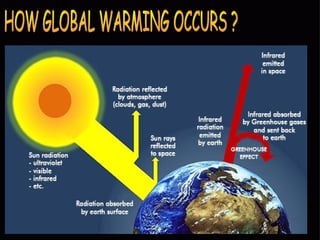
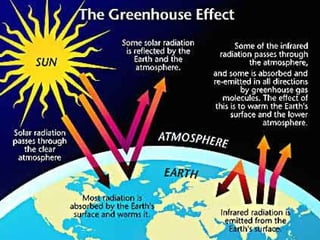
Global Warming is the
increase of Earth's average
surface temperature due to
effect of greenhouse gases,
such as carbon dioxide emissions from burning
fossil fuels or from deforestation, which trap
heat that would otherwise escape from Earth.
This is a type of greenhouse effect.
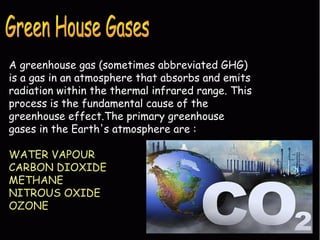
A greenhouse gas (sometimes abbreviated GHG)
is a gas in an atmosphere that absorbs and emits
radiation within the thermal infrared range. This
process is the fundamental cause of the
greenhouse effect.The primary greenhouse
gases in the Earth's atmosphere are :
WATER VAPOUR
CARBON DIOXIDE
METHANE
NITROUS OXIDE
OZONE
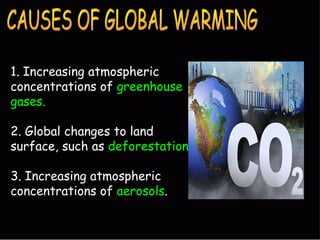
1. Increasing atmospheric
concentrations of greenhouse
gases.
2. Global changes to land
surface, such as deforestation.
3. Increasing atmospheric
concentrations of aerosols.
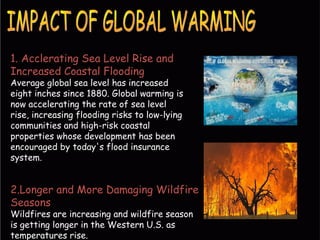
1. Acclerating Sea Level Rise and
Increased Coastal Flooding
Average global sea level has increased
eight inches since 1880. Global warming is
now accelerating the rate of sea level
rise, increasing flooding risks to low-lying
communities and high-risk coastal
properties whose development has been
encouraged by today's flood insurance
system.
2.Longer and More Damaging Wildfire
Seasons
Wildfires are increasing and wildfire season
is getting longer in the Western U.S. as
temperatures rise.
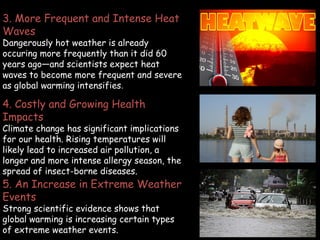
4. Costly and Growing Health
Impacts
Climate change has significant implications
for our health. Rising temperatures will
likely lead to increased air pollution, a
longer and more intense allergy season, the
spread of insect-borne diseases.
5. An Increase in Extreme Weather
Events
Strong scientific evidence shows that
global warming is increasing certain types
of extreme weather events.
3. More Frequent and Intense Heat
Waves
Dangerously hot weather is already
occuring more frequently than it did 60
years ago—and scientists expect heat
waves to become more frequent and severe
as global warming intensifies.
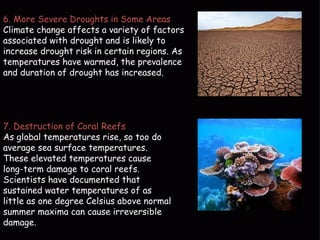
6. More Severe Droughts in Some Areas
Climate change affects a variety of factors
associated with drought and is likely to
increase drought risk in certain regions. As
temperatures have warmed, the prevalence
and duration of drought has increased.
7. Destruction of Coral Reefs
As global temperatures rise, so too do
average sea surface temperatures.
These elevated temperatures cause
long-term damage to coral reefs.
Scientists have documented that
sustained water temperatures of as
little as one degree Celsius above normal
summer maxima can cause irreversible
damage.
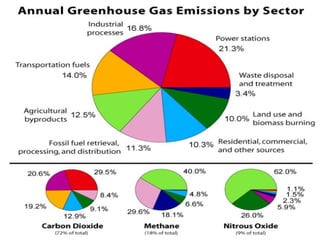
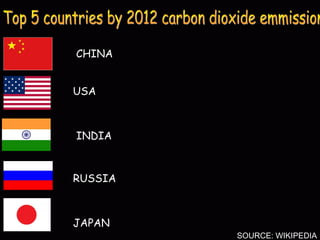
CHINA
USA
INDIA
RUSSIA
JAPAN
SOURCE: WIKIPEDIA
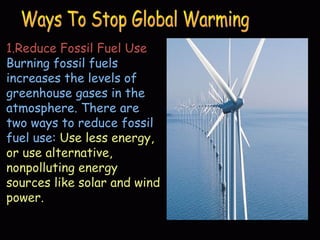
1.Reduce Fossil Fuel Use
Burning fossil fuels
increases the levels of
greenhouse gases in the
atmosphere. There are
two ways to reduce fossil
fuel use: Use less energy,
or use alternative,
nonpolluting energy
sources like solar and wind
power.
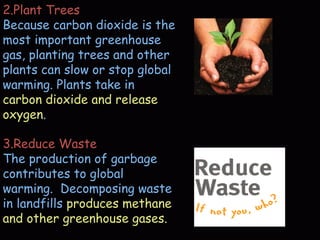
2.Plant Trees
Because carbon dioxide is the
most important greenhouse
gas, planting trees and other
plants can slow or stop global
warming. Plants take in
carbon dioxide and release
oxygen.
3.Reduce Waste
The production of garbage
contributes to global
warming. Decomposing waste
in landfills produces methane
and other greenhouse gases.
4. Conserve Water
Cities consume significant amounts of
energy when purifying and distributing
water, which contributes to greenhouse
gas emissions. Saving water reduces the
amount of energy used.
Make Earth Green And Stop Global Warming
Global warming ppt

Global warming ppt

  • 1.
    Made By :Dinesh Garhwal Class : Roll no. :
  • 2.
    Global Warming isthe increase of Earth's average surface temperature due to effect of greenhouse gases, such as carbon dioxide emissions from burning fossil fuels or from deforestation, which trap heat that would otherwise escape from Earth. This is a type of greenhouse effect.
  • 3.
    A greenhouse gas(sometimes abbreviated GHG) is a gas in an atmosphere that absorbs and emits radiation within the thermal infrared range. This process is the fundamental cause of the greenhouse effect.The primary greenhouse gases in the Earth's atmosphere are : WATER VAPOUR CARBON DIOXIDE METHANE NITROUS OXIDE OZONE
  • 4.
    1. Increasing atmospheric concentrationsof greenhouse gases. 2. Global changes to land surface, such as deforestation. 3. Increasing atmospheric concentrations of aerosols.
  • 8.
    1. Acclerating SeaLevel Rise and Increased Coastal Flooding Average global sea level has increased eight inches since 1880. Global warming is now accelerating the rate of sea level rise, increasing flooding risks to low-lying communities and high-risk coastal properties whose development has been encouraged by today's flood insurance system. 2.Longer and More Damaging Wildfire Seasons Wildfires are increasing and wildfire season is getting longer in the Western U.S. as temperatures rise.
  • 9.
    4. Costly andGrowing Health Impacts Climate change has significant implications for our health. Rising temperatures will likely lead to increased air pollution, a longer and more intense allergy season, the spread of insect-borne diseases. 5. An Increase in Extreme Weather Events Strong scientific evidence shows that global warming is increasing certain types of extreme weather events. 3. More Frequent and Intense Heat Waves Dangerously hot weather is already occuring more frequently than it did 60 years ago—and scientists expect heat waves to become more frequent and severe as global warming intensifies.
  • 10.
    6. More SevereDroughts in Some Areas Climate change affects a variety of factors associated with drought and is likely to increase drought risk in certain regions. As temperatures have warmed, the prevalence and duration of drought has increased. 7. Destruction of Coral Reefs As global temperatures rise, so too do average sea surface temperatures. These elevated temperatures cause long-term damage to coral reefs. Scientists have documented that sustained water temperatures of as little as one degree Celsius above normal summer maxima can cause irreversible damage.
  • 11.
  • 13.
    1.Reduce Fossil FuelUse Burning fossil fuels increases the levels of greenhouse gases in the atmosphere. There are two ways to reduce fossil fuel use: Use less energy, or use alternative, nonpolluting energy sources like solar and wind power.
  • 14.
    2.Plant Trees Because carbondioxide is the most important greenhouse gas, planting trees and other plants can slow or stop global warming. Plants take in carbon dioxide and release oxygen. 3.Reduce Waste The production of garbage contributes to global warming. Decomposing waste in landfills produces methane and other greenhouse gases.
  • 15.
    4. Conserve Water Citiesconsume significant amounts of energy when purifying and distributing water, which contributes to greenhouse gas emissions. Saving water reduces the amount of energy used.
  • 16.
    Make Earth GreenAnd Stop Global Warming