Getting Agreement
in Six (not so) Easy Steps
PDMA Product Camp Twin Cities 2016
Brian Eshult – PMP, CSM, CSPO
§ Team leader for over 9 years
§ Specializing in helping high-tech teams
deliver results.
Six Steps to Buy-in
§ Comes from Theory of Constraints
- Thinking Process
§ Amazing process for clarifying solutions
and executing organizational changes
Session Goal
§ At the end of this session you should:
§ Have some new tactics for communicating your
next idea/proposal
§ Have some new tactics on how to get an existing
idea/proposal unstuck
Getting agreement is hard on
complex issues.
§ How many of you have failed to convince
someone of an idea you really thought was
great?
Are people inherently resistant to
change and new things?
§ Either way – we need to take resistance
into account
§ Work on what we can control
§ Remember we don’t always communicate
as well as we think
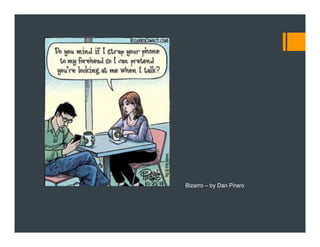
Bizarro – by Dan Piraro
How The Steps Help
§ Forces YOU to think through your idea
§ Prepares you to deal with resistance
§ Helps ensure real buy-in, not just
agreement
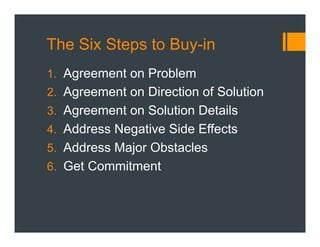
The Six Steps to Buy-in
1.  Agreement on Problem
2.  Agreement on Direction of Solution
3.  Agreement on Solution Details
4.  Address Negative Side Effects
5.  Address Major Obstacles
6.  Get Commitment
Step 1:
Agreement on the Problem
§ Don’t waste time on solutions for the
wrong problem.
§ Resistance to details might really be
something more – disagreement on
the problem.
Step 1: The “Core” Problem
§ Dig down into root causes
§ Which problem should you address?
Step 1: The “Core” Problem
§ Example scenario for explaining the steps:
Taking a Trip
Step 1: The “Core” Problem
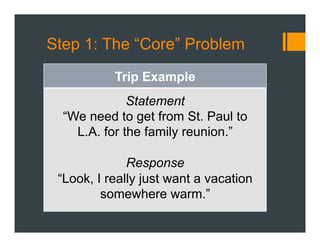
Trip Example
Statement
“We need to get from St. Paul to
L.A. for the family reunion.”
Response
“Look, I really just want a vacation
somewhere warm.”
Practice Step 1
§ 1 minute
§ Pick an idea you need buy-in on
§ Identify what you see as the core problem
§ Identify what other people might see
Step 2:
Agreement on Direction of Solution
§ Don’t rush to detailed solutions.
§ Get agreement on the high-level approach
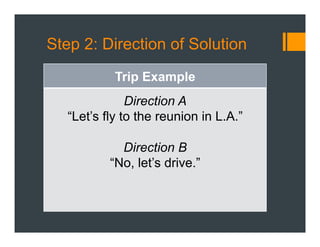
Step 2: Direction of Solution
Trip Example
Direction A
“Let’s fly to the reunion in L.A.”
Direction B
“No, let’s drive.”
Delivery Advice
§ Be ready to advocate for your position
AND
§ Listen and be open to better ideas
§ Collaborative attitude
§ Helps build buy-in
§ Gets better results
Practice Step 2
§ 1 minutes
§ Your high-level strategy, method
§ Alternatives others might suggest
§ Jot down key points that support your position
§ 3 minutes
§ Find a partner
§ Discuss problem and direction of solution
Step 3:
Agreement on Solution Details
§ NOW get into the details
§ Show how your proposal solves
the problem you agreed on.
§ Who, what, when, how?
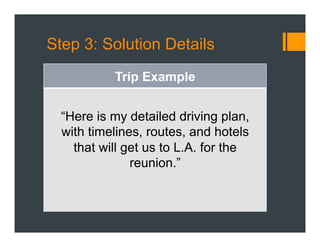
Step 3: Solution Details
Trip Example
“Here is my detailed driving plan,
with timelines, routes, and hotels
that will get us to L.A. for the
reunion.”
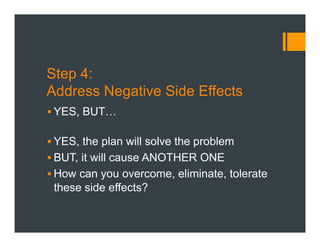
Step 4:
Address Negative Side Effects
§ YES, BUT…
§ YES, the plan will solve the problem
§ BUT, it will cause ANOTHER ONE
§ How can you overcome, eliminate, tolerate
these side effects?
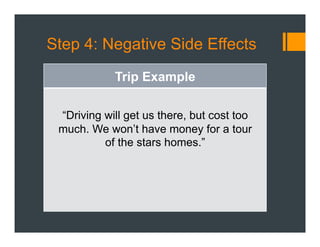
Step 4: Negative Side Effects
Trip Example
“Driving will get us there, but cost too
much. We won’t have money for a tour
of the stars homes.”
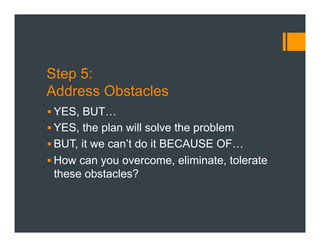
Step 5:
Address Obstacles
§ YES, BUT…
§ YES, the plan will solve the problem
§ BUT, it we can’t do it BECAUSE OF…
§ How can you overcome, eliminate, tolerate
these obstacles?
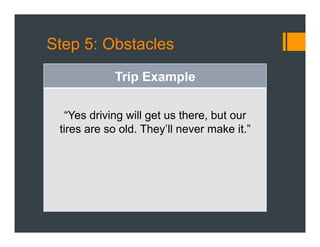
Step 5: Obstacles
Trip Example
“Yes driving will get us there, but our
tires are so old. They’ll never make it.”
Delivery Advice
§ Don’t get defensive when people bring up
obstacles or side effects.
§ Engage their expertise to help with
solutions
§ You (and your solution) are not perfect
§ It becomes “our” plan
§ Increases buy-in
Practice Steps 3, 4, 5
§ 1 minute to jot down:
§ A few key details of your plan
§ Potential negative side effects
§ Potential obstacles
§ 3 minutes
§ Discuss with a partner
Step 6: Get Commitment
§ DO NOT assume commitment to action
§ Confirm Commitment
§ Get promises, signatures, etc.
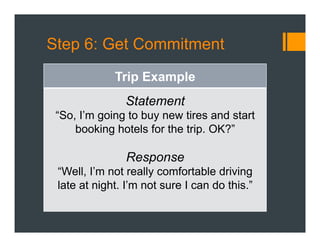
Step 6: Get Commitment
Trip Example
Statement
“So, I’m going to buy new tires and start
booking hotels for the trip. OK?”
Response
“Well, I’m not really comfortable driving
late at night. I’m not sure I can do this.”
Practice Step 6
§ 1 minute
§ Make a list of key people/stakeholders
§ How will you know they are committed?
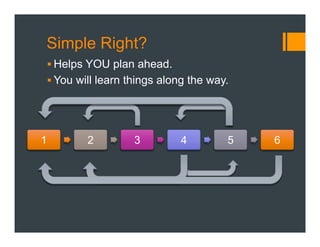
1 2 3 4 5 6
Simple Right?
§ Helps YOU plan ahead.
§ You will learn things along the way.
Questions
§ Now
§ Later
§ brian@eshult.com
Session Goal - Survey
§ New tactics for communicating your next
idea/proposal?
§ New tactics on how to get an existing idea/
proposal unstuck?
Feedback Welcome
§ Please send me feedback on this session!
§ @beshult
§ brian@eshult.com
Sources
§ AGI – Theory of Constraints Thinking
Process (Jonah) Training Course
www.goldratt.com
§ Goldratt TOC Satellite Program, 1999
Thank you !

Getting Agreement in Six (not so) Easy Steps

  • 1.
    Getting Agreement in Six(not so) Easy Steps PDMA Product Camp Twin Cities 2016
  • 2.
    Brian Eshult –PMP, CSM, CSPO § Team leader for over 9 years § Specializing in helping high-tech teams deliver results.
  • 3.
    Six Steps toBuy-in § Comes from Theory of Constraints - Thinking Process § Amazing process for clarifying solutions and executing organizational changes
  • 4.
    Session Goal § At theend of this session you should: § Have some new tactics for communicating your next idea/proposal § Have some new tactics on how to get an existing idea/proposal unstuck
  • 5.
    Getting agreement ishard on complex issues. § How many of you have failed to convince someone of an idea you really thought was great?
  • 6.
    Are people inherentlyresistant to change and new things? § Either way – we need to take resistance into account § Work on what we can control § Remember we don’t always communicate as well as we think
  • 7.
    Bizarro – byDan Piraro
  • 8.
    How The StepsHelp § Forces YOU to think through your idea § Prepares you to deal with resistance § Helps ensure real buy-in, not just agreement
  • 9.
    The Six Stepsto Buy-in 1.  Agreement on Problem 2.  Agreement on Direction of Solution 3.  Agreement on Solution Details 4.  Address Negative Side Effects 5.  Address Major Obstacles 6.  Get Commitment
  • 10.
    Step 1: Agreement onthe Problem § Don’t waste time on solutions for the wrong problem. § Resistance to details might really be something more – disagreement on the problem.
  • 11.
    Step 1: The“Core” Problem § Dig down into root causes § Which problem should you address?
  • 12.
    Step 1: The“Core” Problem § Example scenario for explaining the steps: Taking a Trip
  • 13.
    Step 1: The“Core” Problem Trip Example Statement “We need to get from St. Paul to L.A. for the family reunion.” Response “Look, I really just want a vacation somewhere warm.”
  • 14.
    Practice Step 1 § 1minute § Pick an idea you need buy-in on § Identify what you see as the core problem § Identify what other people might see
  • 15.
    Step 2: Agreement onDirection of Solution § Don’t rush to detailed solutions. § Get agreement on the high-level approach
  • 16.
    Step 2: Directionof Solution Trip Example Direction A “Let’s fly to the reunion in L.A.” Direction B “No, let’s drive.”
  • 17.
    Delivery Advice § Be readyto advocate for your position AND § Listen and be open to better ideas § Collaborative attitude § Helps build buy-in § Gets better results
  • 18.
    Practice Step 2 § 1minutes § Your high-level strategy, method § Alternatives others might suggest § Jot down key points that support your position § 3 minutes § Find a partner § Discuss problem and direction of solution
  • 19.
    Step 3: Agreement onSolution Details § NOW get into the details § Show how your proposal solves the problem you agreed on. § Who, what, when, how?
  • 20.
    Step 3: SolutionDetails Trip Example “Here is my detailed driving plan, with timelines, routes, and hotels that will get us to L.A. for the reunion.”
  • 21.
    Step 4: Address NegativeSide Effects § YES, BUT… § YES, the plan will solve the problem § BUT, it will cause ANOTHER ONE § How can you overcome, eliminate, tolerate these side effects?
  • 22.
    Step 4: NegativeSide Effects Trip Example “Driving will get us there, but cost too much. We won’t have money for a tour of the stars homes.”
  • 23.
    Step 5: Address Obstacles § YES,BUT… § YES, the plan will solve the problem § BUT, it we can’t do it BECAUSE OF… § How can you overcome, eliminate, tolerate these obstacles?
  • 24.
    Step 5: Obstacles TripExample “Yes driving will get us there, but our tires are so old. They’ll never make it.”
  • 25.
    Delivery Advice § Don’t getdefensive when people bring up obstacles or side effects. § Engage their expertise to help with solutions § You (and your solution) are not perfect § It becomes “our” plan § Increases buy-in
  • 26.
    Practice Steps 3,4, 5 § 1 minute to jot down: § A few key details of your plan § Potential negative side effects § Potential obstacles § 3 minutes § Discuss with a partner
  • 27.
    Step 6: GetCommitment § DO NOT assume commitment to action § Confirm Commitment § Get promises, signatures, etc.
  • 28.
    Step 6: GetCommitment Trip Example Statement “So, I’m going to buy new tires and start booking hotels for the trip. OK?” Response “Well, I’m not really comfortable driving late at night. I’m not sure I can do this.”
  • 29.
    Practice Step 6 § 1minute § Make a list of key people/stakeholders § How will you know they are committed?
  • 30.
    1 2 34 5 6 Simple Right? § Helps YOU plan ahead. § You will learn things along the way.
  • 31.
  • 32.
    Session Goal -Survey § New tactics for communicating your next idea/proposal? § New tactics on how to get an existing idea/ proposal unstuck?
  • 33.
    Feedback Welcome § Please sendme feedback on this session! § @beshult § brian@eshult.com
  • 34.
    Sources § AGI – Theoryof Constraints Thinking Process (Jonah) Training Course www.goldratt.com § Goldratt TOC Satellite Program, 1999
  • 35.