Verbs + to infinitive
Verbs + infinitive without to
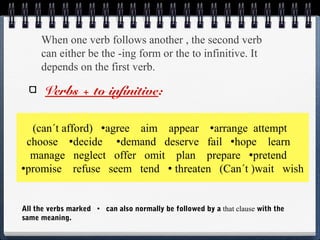
When one verb follows another , the second verb
can either be the -ing form or the to infinitive. It
depends on the first verb.
Verbs + to infinitive:
(can´t afford) agree aim appear arrange attempt
choose decide demand deserve fail hope learn
manage neglect offer omit plan prepare pretend
promise refuse seem tend  threaten (Can´t )wait wish
All the verbs marked  can also normally be followed by a that clause with the
same meaning.
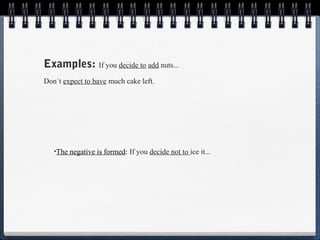
•The negative is formed: If you decide not to ice it...
Examples: If you decide to add nuts...
Don´t expect to have much cake left.
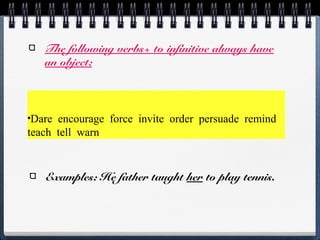
The following verbs+ to infinitive always have
an object:
•Dare encourage force invite order persuade remind
teach tell warn
Examples: He father taught her to play tennis.
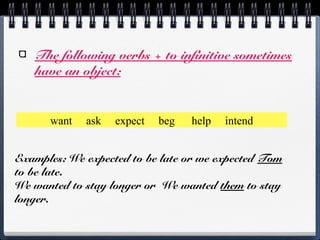
The following verbs + to infinitive sometimes
have an object:
want ask expect beg help intend
Examples: We expected to be late or we expected Tom
to be late.
We wanted to stay longer or We wanted them to stay
longer.
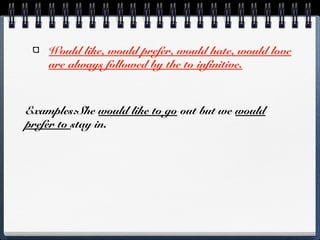
Would like, would prefer, would hate, would love
are always followed by the to infinitive.
Examples:She would like to go out but we would
prefer to stay in.
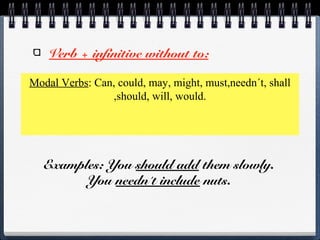
Verb + infinitive without to:
Modal Verbs: Can, could, may, might, must,needn´t, shall
,should, will, would.
Examples: You should add them slowly.
You needn´t include nuts.
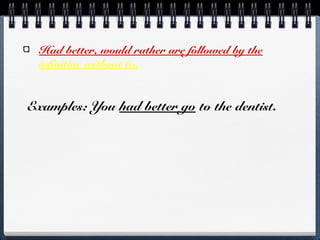
Had better, would rather are followed by the
infinitive without to.
Examples: You had better go to the dentist.
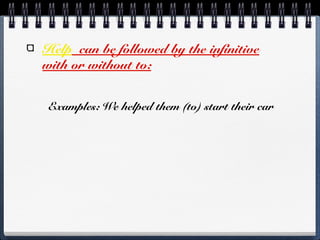
Help can be followed by the infinitive
with or without to:
Examples: We helped them (to) start their car
Make and let (always with an object) are
followed by the infinitive without to:
Examples: Let the cake cool for half an hour.
I made my sister help with the cooking.
✓The passivve form of make is followed by the to infinitive:
I was made to do my homework.

Verb+ infinitive; verb + infinitive without to

  • 1.
    Verbs + toinfinitive Verbs + infinitive without to
  • 2.
    When one verbfollows another , the second verb can either be the -ing form or the to infinitive. It depends on the first verb. Verbs + to infinitive: (can´t afford) agree aim appear arrange attempt choose decide demand deserve fail hope learn manage neglect offer omit plan prepare pretend promise refuse seem tend  threaten (Can´t )wait wish All the verbs marked  can also normally be followed by a that clause with the same meaning.
  • 3.
    •The negative isformed: If you decide not to ice it... Examples: If you decide to add nuts... Don´t expect to have much cake left.
  • 4.
    The following verbs+to infinitive always have an object: •Dare encourage force invite order persuade remind teach tell warn Examples: He father taught her to play tennis.
  • 5.
    The following verbs+ to infinitive sometimes have an object: want ask expect beg help intend Examples: We expected to be late or we expected Tom to be late. We wanted to stay longer or We wanted them to stay longer.
  • 6.
    Would like, wouldprefer, would hate, would love are always followed by the to infinitive. Examples:She would like to go out but we would prefer to stay in.
  • 7.
    Verb + infinitivewithout to: Modal Verbs: Can, could, may, might, must,needn´t, shall ,should, will, would. Examples: You should add them slowly. You needn´t include nuts.
  • 8.
    Had better, wouldrather are followed by the infinitive without to. Examples: You had better go to the dentist.
  • 9.
    Help can befollowed by the infinitive with or without to: Examples: We helped them (to) start their car
  • 10.
    Make and let(always with an object) are followed by the infinitive without to: Examples: Let the cake cool for half an hour. I made my sister help with the cooking. ✓The passivve form of make is followed by the to infinitive: I was made to do my homework.