1	


MAPPING	
  YOUR	
  
CAREERS	
  WITH	
  
GEOSPATIAL	
  
TECHNOLOGY	
  
2	


Foreword
BCC students have the twin objectives of completing their studies with excellent grades but also to secure
jobs in a competitive environment that demands cutting-edge skills. Geospatial Technology is an
emerging field of study that includes Geographic Information System or GIS, Remote Sensing and Global
Positioning System or GPS. Geospatial technology enables us to acquire data that is referenced to the
earth and use it for analysis, modeling, simulations and visualization. Geospatial technology allows us to
make informed decisions based on the importance and priority of resources most of which are limited in
nature. Geospatial technology may be used to create intelligent maps and models that may be interactively
queried to get the desired results in a STEM application or may be used to advocate social investigations
and policy based research. It may be used to reveal spatial patterns that are embedded in large volumes of
data that may not be accessed collectively or mapped otherwise.
Several BCC faculty and students participated in scholarly activities since 2010 which helped in the
dissemination of geospatial technology on campus and enabled the college to form a central core that is
essential to build a reputation of excellence in emerging technologies. I am delighted to announce that the
BCC Geospatial Center was launched on the 3rd
October, 2015. The center was formed under the
umbrella of NOAA-CREST institute, which is also known as CUNY CREST Institute. The center
promotes education and research in geospatial technology and is a unique space for BCC students and
faculty to learn and acquire hands-on skills at the state-of-the-art Geospatial Computing Center. The
center has received numerous awards and grants from federal and private agencies apart from funding by
the CUNY Workforce development initiatives.
Two new courses (Introduction to Geographic Information System and Introduction to Remote Sensing)
were designed and approved by the University. These courses offered in fall 2015 provide BCC students a
rare opportunity to learn concepts and acquire hands-on training in using industry standard software for
analyzing and modeling different types of data. Lab manuals written by professor/s were published and
made available to students are subsidized prices. The lab manuals consist of customized exercises and
training materials that were prepared by using a place-based approach that fostered intuitive spatial
thinking and cognition.
A new Associate of Applied Sciences in Geospatial Technology is being designed. This A.A.S Geospatial
Technology program will enable BCC students to acquire cutting-edge skills in geospatial technology.
The program is designed to be a terminal degree which will enable students to seek jobs in the high-
growth geospatial sector that is also facing serious shortage in skilled labor. Internship programs with
NASA (Climate Change), NOAA-CREST, Long Island Rail Road, MTA, EPA, DEP etc. will provide
BCC students insight into geospatial applications in the realm world and professional environment.
International collaborations with the City of Townsville, Australia and IBM – Smarter Cities project will
provide much needed exposure to BCC students into sustainable energy initiatives and innovative
approaches to managing smoother transition to new clean energy around the world.
Sunil Bhaskaran
Founding Director – BCC Geospatial Center of the CUNY CREST Institute
Geospatial Center Website: www.bcc.cuny.edu/geospatial/
3	


Table of Contents
• What is Geospatial Technology?
• New Courses in Geospatial Technology
• Associate of Applied Sciences
• Geospatial Newsletters
• Text Books, Lab Manuals
• Applications of Geospatial Technology - STEM
• Applications of Geospatial Technology – Social Sciences
• Peer-reviewed publications
• Special feature on a Journal Article – Most Cited
• Sustenance of the Center by Grant Funding
• Summer Interns at the Geospatial Center - Profiles
• Geospatial Technology – High Growth Industry – US.
• Geospatial Technology – Job Descriptions
• Geospatial Technology – Company Profiles
• Sample Job at a Leading Geospatial Company
• The BCC Geospatial Center – World of Opportunity
• Internships and pipelines to geospatial careers
• International Collaborations – Townsville, Australia


4	


What is Geospatial Technology?
Geospatial	
   technologies	
   is	
   an	
   umbrella	
   phrase	
   associated	
   with	
   a	
   suite	
   of	
   technologies	
  
including	
  remote	
  sensing,	
  Global	
  Positioning	
  System	
  (GPS),	
  Geographic	
  Information	
  System	
  
(GIS),	
   information	
   technologies,	
   and	
   field	
   sensors,	
   that	
   help	
   in	
  
capturing/storing/processing/	
   displaying/disseminating	
   information	
   tied	
   to	
   a	
   particular	
  
location.	
  It	
  is	
  therefore	
  a	
  set	
  of	
  technological	
  approaches,	
  such	
  as	
  GIS,	
  photogrammetry,	
  and	
  
remote	
  sensing,	
  for	
  acquiring	
  and	
  manipulating	
  geographic	
  data.	


Geographic	
   Information	
   System	
   or	
   GIS:	
   A	
  geographic	
  information	
  system	
  (GIS)	
  lets	
  us	
  
visualize,	
  question,	
  analyze,	
  and	
  interpret	
  data	
  to	
  understand	
  relationships,	
  patterns,	
  and	
  
trends.	
   GIS	
   benefits	
   organizations	
   of	
   all	
   sizes	
   and	
   in	
   almost	
   every	
   industry.	
   There	
   is	
   a	
  
growing	
  interest	
  in	
  and	
  awareness	
  of	
  the	
  economic	
  and	
  strategic	
  value	
  of	
  GIS.	
  A	
  geographic	
  
information	
   system	
   (GIS)	
   is	
   a	
   system	
   designed	
   to	
   capture,	
   store,	
   manipulate,	
   analyze,	
  
manage,	
   and	
   present	
   all	
   types	
   of	
   spatial	
   or	
   geographical	
   data.	
   Data	
   is	
   the	
   fundamental	
  
component	
  of	
  any	
  GIS	
  and	
  the	
  power	
  of	
  a	
  GIS	
  is	
  determined	
  by	
  its	
  ability	
  to	
  relate	
  different	
  
data	
  in	
  a	
  spatial	
  context	
  and	
  to	
  reach	
  a	
  conclusion	
  about	
  this	
  relationship.	
  A	
  combination	
  of	
  
two	
   data	
   types:	
   spatial	
   (location	
   data)	
   and	
   attributes	
   (descriptive	
   data)	
   are	
   related	
   and	
  
presented	
  visually	
  by	
  means	
  of	
  an	
  interactive	
  user	
  interface,	
  GIS	
  software,	
  using	
  raster	
  and	
  
vector	
  graphics.	


Sources	
   of	
   data	
   are	
   vast	
   (i.e.	
   weather	
   bureaus,	
   NASA,	
   municipalities,	
   etc.)	
   and	
   the	
  
combination	
   of	
   sources	
   often	
   leads	
   to	
   more	
   revealing	
   and	
   descriptive	
   data	
   analysis	
   via	
  
spatial	
  modelling	
  and	
  statistical	
  methods.	
  Given	
  the	
  availability	
  of	
  GIS	
  components	
  and	
  that	
  
80%	
   of	
   data	
   can	
   be	
   geographically	
   referenced,	
   building	
   your	
   own	
   GIS	
   represents	
   an	
  
increasingly	
   viable	
   and	
   useful	
   Management	
   Information	
   System	
   (MIS)	
   across	
   many	
  
applications.	


Remote	
  Sensing:	
  Remote	
  sensing	
  can	
  be	
  defined	
  as	
  the	
  collection	
  of	
  data	
  about	
  an	
  object	
  
from	
  a	
  distance.	
  Humans	
  and	
  many	
  other	
  types	
  of	
  animals	
  accomplish	
  this	
  task	
  with	
  aid	
  of	
  
eyes	
   or	
   by	
   the	
   sense	
   of	
   smell	
   or	
   hearing.	
   Earth	
   scientists	
   use	
   the	
   technique	
   of	
   remote	
  
sensing	
   to	
   monitor	
   or	
   measure	
   phenomena	
   found	
   in	
   the	
   Earth's	
   lithosphere,	
   biosphere,	
  
hydrosphere,	
   and	
   atmosphere.	
   Remote	
   sensing	
   of	
   the	
   environment	
   by	
   geographers	
   is	
  
usually	
  done	
  with	
  the	
  help	
  of	
  mechanical	
  devices	
  known	
  as	
  remote	
  sensors.	
  These	
  gadgets	
  
have	
   a	
   greatly	
   improved	
   the	
   ability	
   to	
   receive	
   and	
   record	
   information	
   about	
   an	
   object	
  
without	
  any	
  physical	
  contact.	
  Often,	
  these	
  sensors	
  are	
  positioned	
  away	
  from	
  the	
  object	
  of	
  
interest	
   by	
   using	
   helicopters,	
   planes,	
   and	
   satellites.	
   Most	
   sensing	
   devices	
   record	
  
information	
   about	
   an	
   object	
   by	
   measuring	
   an	
   object's	
   transmission	
   of	
   electromagnetic	
  
energy	
  from	
  reflecting	
  and	
  radiating	
  surfaces.	
  These	
  sensors	
  are	
  either	
  passive	
  or	
  active.	
  
Passive	
  sensors	
  detect	
  energy	
  when	
  the	
  naturally	
  occurring	
  energy	
  is	
  available	
  such	
  as	
  sun	
  
energy.	
   Active	
   sensors	
   provide	
   their	
   own	
   energy	
   source	
   as	
   radar	
   waves	
   and	
   record	
   its	
  
reflection	
  on	
  the	
  target.	
  Remote	
  sensing	
  imagery	
  has	
  many	
  applications	
  in	
  mapping	
  land-­‐
use	
   and	
   cover,	
   agriculture,	
   soils	
   mapping,	
   forestry,	
   city	
   planning,	
   archaeological	
  
investigations,	
   military	
   observation,	
   and	
   geomorphological	
   surveying,	
   among	
   other	
   uses.	
  
5	


For	
   example,	
   foresters	
   use	
   aerial	
   photographs	
   for	
   preparing	
   forest	
   cover	
   maps,	
   locating	
  
possible	
   access	
   roads,	
   and	
   measuring	
   quantities	
   of	
   trees	
   harvested.	
   Specialized	
  
photography	
   using	
   color	
   infrared	
   film	
   has	
   also	
   been	
   used	
   to	
   detect	
   disease	
   and	
   insect	
  
damage	
  in	
  forest	
  trees.	


Global	
   Positioning	
   System:	
   The	
   Global	
   Positioning	
   System	
   (GPS)	
   is	
   a	
   satellite-­‐based	
  
navigation	
   system	
   made	
   up	
   of	
   a	
   network	
   of	
   24	
   satellites	
   placed	
   into	
   orbit	
   by	
   the	
   U.S.	
  
Department	
  of	
  Defense.	
  GPS	
  satellites	
  circle	
  the	
  earth	
  twice	
  a	
  day	
  in	
  a	
  very	
  precise	
  orbit	
  
and	
   transmit	
   signal	
   information	
   to	
   earth.	
   GPS	
   receivers	
   take	
   this	
   information	
   and	
   use	
  
trilateration	
  to	
  calculate	
  the	
  user's	
  exact	
  location.	
  Essentially,	
  the	
  GPS	
  receiver	
  compares	
  
the	
   time	
   a	
   signal	
   was	
   transmitted	
   by	
   a	
   satellite	
   with	
   the	
   time	
   it	
   was	
   received.	
   The	
   time	
  
difference	
   tells	
   the	
   GPS	
   receiver	
   how	
   far	
   away	
   the	
   satellite	
   is.	
   Now,	
   with	
   distance	
  
measurements	
  from	
  a	
  few	
  more	
  satellites,	
  the	
  receiver	
  can	
  determine	
  the	
  user's	
  position	
  
and	
  display	
  it	
  on	
  the	
  unit's	
  electronic	
  map.	


6	


GEOSPATIAL	
  INDUSTRY	
  
• A	
  HIGH	
  GROWTH	
  INDUSTRY	
  
• FACING	
  CRITICAL	
  SHORTAGE	
  OF	
  SKILLED	
  LABOR	
  
• MANY	
  JOB	
  OPPORTUNITIES	
  
7	


Contact:	
  Director	
  of	
  BGCCCI	
  -­‐	
  Prof	
  Sunil	
  Bhaskaran	
  
Meister	
  Hall	
  Room	
  No:	
  807	
  	
  
Tel:	
  1.718.289.5566/5233;	
  Fax:	
  1.718.289.6448	
  
Sunil_director.bgccci@bcc.cuny.edu	
  
www.bcc.cuny.edu/geospatial/	


ASK A QUESTION ABOUT
GEOSPATIAL TECHNOLOGY
If	
  you	
  are	
  satisfied	
  enroll	
  in	
  course/s	
  by	
  
browsing	
  CUNY	
  FIRST	


Seek	
  the	
  help	
  of	
  a	
  success	
  coach	
  at	
  BCC!	
  
Learn	
  about	
  professional	
  environments	
  and	
  job	
  opportunities	
  in	
  
the	
  Geospatial	
  Sector	


Enroll	
  in	
  one	
  of	
  the	
  many	
  Internship	
  opportunities	


Check	
  your	
  Blackboard	
  and	
  with	
  the	
  Instructor	
  for	
  more	
  
information	
  about	
  these	
  Internships	
  
Transition	
  successfully	
  into	
  the	
  work	
  
environment	
  	
  
&	
  	
  
Launch	
  your	
  career!	
  	
  
8	


GIS	
  11	
  –	
  Introduction	
  to	
  Geographic	
  Information	
  
Systems	
  
GIS	
  12	
  –	
  Introduction	
  to	
  Remote	
  Sensing	


We	
  offered	
  two	
  sections	
  in	
  fall	
  2015	
  and	
  all	
  the	
  
open	
  seats	
  were	
  taken!	


D01W	
  –	
  22	
  students	
  
DO3W	
  –	
  15	
  students	


We have designed new
courses in Geospatial
Technology at BCC
9	


10	


11	


We are also designing a new
Associate of Applied Sciences
in Geospatial Technology
The A.A.S. Geospatial
Technology will be your
terminal degree for securing
employment
Or
If you wish you may transfer
the program credits (60) to
York College and complete
your B.S. Environmental
Health (60)
12	


Associate	
  of	
  Applied	
  Sciences	
  –	
  Geospatial	
  Technology	


York	
  College	
  held	
  a	
  meeting	
  with	
  BCC	
  Faculty	
  from	
  Physics,	
  Chemistry	
  and	
  Environmental	
  
Sciences	
  and	
  informally	
  agreed	
  to	
  transfer	
  A.A.S.	
  curriculum	
  to	
  the	
  Environmental	
  Health	
  
Bachelor	
  of	
  Science	
  (B.S.)	
  program.	
  The	
  B.S.	
  in	
  Environmental	
  Health	
  at	
  York	
  draws	
  heavily	
  
on	
  geospatial	
  technology.	
  Therefore	
  under	
  the	
  articulation	
  agreement	
  (soon	
  to	
  be	
  finalized)	
  
the	
  proposed	
  A.A.S	
  degree	
  at	
  BCC	
  will	
  enable	
  students	
  to	
  transfer	
  to	
  York	
  and	
  successfully	
  
complete	
   their	
   B.S.	
   in	
   Environmental	
   Health.	
   Of	
   the	
   required	
   120	
   credits	
   60	
   would	
   be	
  
transferred	
  from	
  BCC	
  to	
  York.	
  
GIS 11 – Introduction to Geographic Information
System
GIS 12 – Introduction to Remote Sensing
Associate of Applied Science in Geospatial
Technology
60 Credits
Enter geospatial industry
with competitive skills
Pursue Advanced Studies
MS à PhD
BS 4-year college 120
credits (60 from A.A.S. at
BCC)*
Terminal Degree
13	


OUR CRUSADE TO BRING
GEOSPATIAL TECHNOLOGY AT BCC
BEGAN IN 2010
• We delivered seminars
&
Workshop to students,
faculty and staff
• We trained students to use
geospatial software
• We mentored them in
focused cutting-edge
research
• We inspired and trained
them to present at
conferences
14	


1. Fall 2013 Caribbean F
2. Fall 2013 Hispanic F
3. Fall 2013 Asian M
4. Fall 2013 Caribbean M
5. Fall 2013 Hispanic M
6. Fall 2013 African F
7. Fall 2013 Afro-American F
8. Fall 2013 Hispanic F
9. Fall 2013 Hispanic F
10. Fall 2013 Hispanic F
11. Fall 2013 Hispanic F
12. Fall 2013 African F
13. Spring 2014 Hispanic F
14. Spring 2014 Afro-American F
15. Spring 2014 Caribbean F
16. Spring 2014 Hispanic F
17. Spring 2014 Hispanic F
18. Spring 2014 Hispanic F
19. Spring 2014 Hispanic F
20. Spring 2014 African M
21. Spring 2014 Afro-American M
22. Spring 2014 Hispanic F
23. Fall 2013 Afro-American M
24. Spring 2014 Hispanic F
25. Spring-Fall
2015
African M
26. Spring-Fall
2015
African M
27. Fall-2015 Hispanic F
28. Spring-Fall
2015
Hispanic F
29. Fall-2015 African M
30. Fall-2015 Hispanic F
31. Fall-2015 African M
32. Spring-Fall
2015
African M
33. Fall-2015 African F
34. Fall-2015 African M
35. Summer-2015 Asian M
36. Fall 2015 African M
37. Fall 2015 Hispanic F
38. Fall 2015 Hispanic M
39. Fall 2015 Hispanic F
40. Fall 2015 Black M
41. Fall 2015 Black F
42. Fall 2015 Hispanic F
15	


43. Fall 2015 Black M
44. Summer 2015 Asian M
45. Summer 2015 Asian M
46. Summer 2015 Asian F
47. Summer 2015 Asian M
48. Summer 2015 Asian M


FOLLOWING	
  GRANTS	
  WERE	
  AWARDED	
  TO	
  6	
  STUDENTS	


• 	
  (RECEIVED	
  GRANT	
  FROM	
  NSF	
  à	
  BARUCH	
  COLLEGE	
  
• 	
  (RECEIVED	
  GRANT	
  FROM	
  NOAA-­‐CREST	
  à	
  CITY	
  COLLEGE	
  
• 	
  (WAS	
  COORDINATOR	
  FOR	
  THE	
  NATIONAL	
  SUMMER	
  
TRANSPORTATION	
  INSTITUTE	
  à	
  CITY	
  COLLEGE	
  
• 	
  (DEANS	
  LIST	
  à	
  NOW	
  MAJOR	
  IN	
  ENVIRONMENTAL	
  
TECHNOLOGY	
  AT	
  YORK	
  
• 	
  (REU-­‐NSF	
  SCHOLAR	
  à	
  CITY	
  COLLEGE	
  OF	
  NEW	
  YORK	
  
• 	
  (REU-­‐NSF	
  SCHOLAR	
  à	
  CITY	
  COLLEGE	
  OF	
  NEW	
  YORK	
  
48 STUDENTS PARTICIPATED IN
FOCUSED UNDERGRADUATE RESARCH
AND SOME OF THEM WERE AWARDED
SCHOLARSHIPS AND ARE NOW AT 4-
YEAR COLLEGES PURSUING HIGHER
EDUCATION
	
  
16	


DIVERSITY AND GENDER DISTRIBUTION OF
BCC UNDERGRADUATES WHO PARTICPATED
IN GEOSPATIAL PROJECTS SINCE 2010
15%	
  
15%	
  
21%	
  6%	
  
43%	
  
Ethnicity	
  of	
  Geospatial	
  Participants	
  
Asian	
  
African	
  American	
  
African	
  
Carribean	
  	
  
Hispanic	
  
44%	
  
56%	
  
Genders	
  of	
  Geospatial	
  Participants	
  
Male	
  	
  
Female	
  
17	


-­‐	
  Ipsum	
  
Geospatial Newsletters – They
describe our achievements
www.bcc.cuny.edu/geospatial/
18	


GEOSPATIAL
December 2010 Issue No. 1
N E W S L E T T E R
Editor:
Dr. Sunil Bhaskaran
Sunil.Bhaskaran@bcc.cuny.edu
Associate Editor:
Prof. Neal Phillip
Neal.Phillip@bcc.cuny.edu
Circulation Manager:
Ms. Maribel Donado
Maribel.Donado@bcc.cuny.edu
THE GEOSPATIAL MOVEMENT AT BCC!
Welcome to this first ever edition of Geospatial
Newsletter. BCC is now geospatially
enabled! We now have state of the art geospatial
software that is housed in the Department of
Chemistry and Chemical Technology. The ArcGIS
version10 software is state of the art software that
will enable scholars including students, faculty and
staff from BCC to use it to their own advantage.
Since August 2010 there have been many initiatives
related to bringing in much needed geospatial
awareness to BCC. These initiatives were driven by
Dr. Sunil Bhaskaran and Prof. Neal Phillip from the
Department of Chemistry and Chemical
Technology. We are grateful to Senior Vice
President George Sanchez for his constant
encouragement and guidance throughout these
developments.
We are proud to list these events:
1. Dr. Sunil Bhaskaran and Prof. Neal Phillip
coordinated with Ms. Gina Moore (CUNY
Central IT Office and coordinator of ESRI
licenses) and Ms. Wanda Santiago (IT director,
BCC) in securing licenses for ArcGIS software.
2. The ArcGIS software was installed over a period
of two weeks at the Chemistry and Chemical
Technology computer lab. We thank Kim (CLT)
for his support in the installation of the software.
3. A presentation on geospatial technology
was delivered to Senior Vice President
George Sanchez.
4. Dr. Sunil Bhaskaran was invited by WEAS
international remote sensing and GIS
conference in Japan to deliver the Keynote
address. (http://www.wseas.us/conferences/2010/
japan/remote/Plenary1.htm)
5. Dr. Sunil Bhaskaran presented a paper at the 6th
International Remote Sensing Conference. One
chapter was published in the WEAS Book and
one peer reviewed paper was published in the
proceedings of the conference.
6. A seminar was delivered to students, faculty
and staff at BCC by Dr. Sunil Bhaskaran on
October 28, 2010. This seminar was organized
by the Chemistry 2 and Chemical Technology
department. This event was successful and
we thank Prof. Neal Philip and Ms. Maribel
Donado for their support.
7. Dr. Sunil Bhaskaran and Prof. Neal Phillip were
invited by the Mayor’s Office of Long Term
Planning and Sustainability to participate in a
meeting for potential collaboration in GIS and
remote sensing research projects.
8. A GIS demonstration was organized for
Geospatial workshop for multidisciplinary BCC faculty and students on October 28, 2010.
19	


GEOSPATIAL
April 2011 Issue No. 2
N E W S L E T T E R
Editor:
Dr. Sunil Bhaskaran
Sunil.Bhaskaran@bcc.cuny.edu
Associate Editor:
Prof. Neal Phillip
Neal.Phillip@bcc.cuny.edu
Circulation Manager:
Ms. Maribel Donado
Maribel.Donado@bcc.cuny.edu
THE GEOSPATIAL MOVEMENT AT BCC!
Welcome to the second edition of the Geospatial Newsletter! Geospatial Newsletter
reports on all activities related to geospatial sciences at BCC and each issue covers 3-4
months of activities (e.g., this issue covers activities from March, April, and May 2011. BCC
has made several developments since August 2010. We are delighted to bring a list of events
and the most recent developments in geospatial technology at BCC.
1. The Geospatial Newsletters may be accessed
at the Chemistry and Chemical Technology
website. The link is: http://www.bcc.cuny.edu/
chemistry/? page=SpatialTechnology.
2. Dr. Sunil Bhaskaran was invited to deliver a
presentation at the Provost Lecture Series at York
College of CUNY on March 16, 2011. Youtube
link to the presentation: http://www.youtube.
com/watch?v=lrYTjn9zIa8.
3. Link to Prof. James Watson’s paper on GIS:
http://www.hostos.cuny.edu/departments/
math/MTRJ/archives/volume4/issue3/watson.
pdf. The title of the paper is “Introducing
Geographic Information Systems to General
Math Students.”
4. Dr. Sunil Bhaskaran has been invited by
NYView to represent BCC. The first official
website of NY View is online and available for
general viewing. NewYorkView, representing
New York State, is one of the StateView
members of AmericaView. NewYorkView
became an affiliate (non-funded) member of
AmericaView on January 27, 2009. SUNY
ESF led the proposal effort resulting in affiliate
status. SUNY ESF is the official “member of
record” and point of contact for NewYorkView.
In 2011, NewYorkView will apply for associate
membership status in AmericaView. Website:
http://nyview.esf.edu/index.php?q=members.
5. Undergraduate student Julissa Lora has
been accepted into NCAR’s Undergraduate
Leadership Workshop to be held in Boulder,
Colorado, June 13–17, 2011. MODIS satellite
data will be used to calibrate and map data
collected at NCAR. This is great news for the
department. Congratulations to Julissa Lora
who is also active as a Student Senator and
chairperson of the Public Relations committee.
If you wish to know more about NCAR please
visit its website at http://www.ucar.edu/educ_
outreach/ulw/.
6. ENV 11 students Karolyn Jiminez, Yamileth
Hernandez, Marilisa Gomez, Danielle Prince
and Luigy Luciano presented findings from a
research project using GIS at the BCC Science
Fair on April 7, 2011.
Third prize winners of the 2011 BCC Science Fair:ENV11andGISstudents Marilisa
Gomez,YamilethHernandez,andKarolynJiminezwiththeircertificates.
20	


If you have any interesting facts and achievements related to geospatial technology or applications of
geospatial technology to your specialized study area, please contact us. You may email your stories to
Dr. Sunil Bhaskaran (Sunil.Bhaskaran@bcc.cuny.edu) with a copy to Ms. Maribel Donado
(Maribel.Donado@bcc.cuny.edu).
GEOSPATIALN E W S L E T T E R
Editor:
Dr. Sunil Bhaskaran
Sunil.Bhaskaran@bcc.cuny.edu
Associate Editor:
Ms. Maribel Donado
Maribel.Donado@bcc.cuny.edu
THE GEOSPATIAL MOVEMENT AT BCC!
Welcome to the third edition of the Geospatial Newsletter!
We are delighted to welcome the new president of BCC,
Dr. Carole Berotte Joseph. Geospatial Newsletter reports
on all activities related to geospatial sciences at BCC and
each issue covers three to four months of activities (e.g.,
this issue covers activities from June to August 2011).
Under the guidance and constant encouragement of
Senior Vice President George Sanchez, since August 2010,
the Department of Chemistry and Chemical Technology
has taken the lead in bringing geospatial awareness to
BCC. This was achieved over a period of time by delivering
information sessions, workshops for students and faculty,
international speakers programs, international research
collaborations, and publications in peer-reviewed journals.
All these efforts, since August 2010, have brought the
concept and applications of geospatial technology to
students and faculty at BCC. Efforts from the past three
to four months have led to a potential MOU that is ready
to be signed off between the federally funded NOAA-
CREST ($7.5 Million) and BCC. Under the stewardship
of Dr. George Sanchez, Prof. Neal Phillip (chair of the
Chemistry Department), and Dr. Sunil Bhaskaran, BCC
is now well poised to form a Geospatial Center that will
cater to teaching, training and supervised research in
geospatial technology. This will pave the way for new
career opportunities, internships with federal and private
agencies, and advanced research in geospatial technology
list of events and most recent developments in geospatial
technology at BCC. All newsletters may be accessed at the
Chemistry and Chemical Technology website
(www.bcc.cuny.edu/chemistry/?page=SpatialTechnol
ogy).
1. CUNY Grant Awarded
grant will facilitate the purchase of a
major instrument, a Picarro Greenhouse
of measuring three greenhouse gases—
), water vapor (H O),
4
)—at trace levels. It is
being proposed to house the greenhouse
weather station room that sits on the roof
course and it changed my life! I discovered I had a passion for the Earth and our environment and the science behind
it. After putting everything in perspective, I chose the Liberal Arts and Sciences (Earth Systems and Environment
science with a minor in sociology, and then go to grad school. Attaining a Ph.D. has always been my ultimate
educational goal. I want to be a scientist specializing in climate change, combining my passion for the human
environment with the welfare of society.
impacts of severe weather and climate change on societies around the world. Also, I gained valuable information
about graduate and postdoctoral studies. But perhaps one of the most important factors of the workshop was the
students as interested in atmospheric science research as I am.
Julissa Lora
Student Julissa Lora Presented
Testimony to the CUNY Board of Trustees
If you have any interesting facts and achievements related to geospatial technology or applications of
geospatial technology to your specialized study area, please contact us. You may email your stories to
Dr. Sunil Bhaskaran (Sunil.Bhaskaran@bcc.cuny.edu) with a copy to Ms. Maribel Donado
(Maribel.Donado@bcc.cuny.edu).
GEOSPATIALN E W S L E T T E R
Editor:
Dr. Sunil Bhaskaran
Sunil.Bhaskaran@bcc.cuny.edu
Associate Editor:
Ms. Maribel Donado
Maribel.Donado@bcc.cuny.edu
THE GEOSPATIAL MOVEMENT AT BCC!
Welcome to the fourth edition of the Geospatial Newsletter! Geospatial Newsletter reports on all activities related to
geospatial technology at BCC. Each issue covers three to four months of activities (e.g., this issue covers activities from
September to December 2011). Once again, we are delighted to bring a list of events and the most recent developments
in geospatial technology at BCC. All newsletters may be accessed at the Department of Chemistry and Chemical
Technology website at www.bcc.cuny.edu/chemistry/?page=SpatialTechnology.
1. NOAA-CREST Scholarship Awarded to
Karolyn Jiminez
Karolyn Jiminez has been awarded
recently renewed their commitment
for collaborative research and training
in geospatial technology. Jiminez is the
a report, “Impact of Urban Development
Methodology Using Satellite and GIS
Both Jiminez and Kaba are conducting
research under the guidance of Dr. Sunil Bhaskaran.
2. National Science Foundation Scholarship Awarded to Aboubaker Kaba
following:
SQL (must be able to perform attribute and spatial
Microsoft Access
Be able to work alone with little direction, as well as in a
group setting
Bachelor’s degree in GIS, geography, statistics,
graduates preferred.) Please send resume and cover letter to
kshackford@boedc.org.
21	


GEOSPATIALN E W S L E T T E R
THE GEOSPATIAL MOVEMENT AT BCC!
.
1. President of BCC presides
over BCC - NOAA-CREST
meeting
Website
2. CUNY Vice Chancellor’s
expresses support for the
Geospatial Center
3. First geospatial course
at BCC
4. Talk on Geospatial
Technology and Careers:
5. Student projects in
geospatial technology
Julissa Lora
Geospatial Grants Activity and Submissions – 2011-2012
Student and Faculty Geospatial Research Publications Peer-Reviewed
Journals (2011-2012)
Geospatial Research Publications In Peer-Reviewed Journals (Including papers in-press and under preparation)


Volume 1, Issue No 8
September 2013
1
GEOSPATIAL NEWSLETTER
Welcome to the eighth issue of the Geospatial Newsletter, reporting on all
activities related to geospatial technology at BCC. In this issue we focus on
geospatial projects, grant awards, and international collaborations, covering spring
2013 and summer 2013 activities. We extend a warm welcome to Dr. Claudia
Schrader, who was recently appointed as BCC’s   Vice President of Academic
Affairs and Provost.
1. BCC STUDENT PRESENTATIONS AT THE CUNY REMOTE
SENSING AND EARTH SYSTEM (CREST) CONFERENCE.
The CREST conference was held at Steinmann Hall, City College of New York on
the 16th
April, Spring 2013. The CREST Institute promotes education and training
of students in geospatial technologies. CREST vision is to contribute to the
development of world-class cadre of faculty, students and researchers that will gain
knowledge and expertise in cutting-edge research in science; engineering and
technology with special emphasis on satellites and remote sensing of the Earth.
CREST focuses on all aspects of remote sensing - sensor development, satellite
remote sensing, ground-based field measurements, data processing and analysis,
modeling, and forecasting. CREST recruits and train undergraduate, masters and
doctoral students with a main focus on unrepresented minorities in National
Oceanic and Atmospheric Administration (NOAA) related sciences and thus help
increase the diversity in NOAA workforce. The program includes seminars,
summer internships with NOAA, and with industrial partners, and school-year
research assistantships. The overarching goal of CREST is to conduct research
consistent   with   NOAA’s   interests   of   environmental   assessment,   prediction   and  
environmental stewardship. This research creates a framework to recruit and train
undergraduate and graduate students especially from underrepresented
communities for professional opportunities.
BCC fielded a strong contingent of 7 students and a faculty at the event. They
delivered poster presentations on various applications of geospatial technology to
Science Engineering Technology and Math (STEM) disciplines. The BCC
contingent was led by Prof. Therese Soosairaj a faculty from the Chemistry
department. Student presenters at the event were Ms. Shakera Pringle, Mr.
Mohammad Rahman, Ms Laura Risik, Ms. Elisa Bruno, Ms. Vielka Irizarry and
Ms. Diamond Babbs. The students were excited with this opportunity and mad the
most by interacting with scientists, researchers and academics form different
Editor: Sunil
Bhaskaran.
Email:
Sunil.Bhaskaran@bcc.
cuny.edu
Associate Editor: Neal
Phillip
Web Site:
http://www.bcc.cuny.
edu/chemistry/?page
=SpatialTechnology


We wrote Books and Manuals
with a Place-Based Approach by
using examples from the Bronx
or New York City
We made sure that the costs of
the manuals were affordable to
all!
We used the grants from Federal
Agencies, Corporate Companies
and CUNY Workforce
Development Initiative (WDI) to
create the learning materials
that were used in the manuals


Introduction to Geographic Information System
A lab manual for STEM and Non-STEM disciplines
Sunil Bhaskaran
SPATIAL QUESTIONS
Where am I?
Where is the College?
How far am I from the subway?
How many people were affected
by the Cyclone?
Where are the water hydrants?
Which street is blocked?


We are proud to show case
some geospatial
applications & STEM projects
that were created or
completed by our own BCC
Students!


Dr. Sunil Bhaskaran
Director, BCC Geospatial Center
of the CUNY CREST Institute
T: 718.289.5233/5566
F: 718.289.6448/6075
Bronx Community College
of The City University of New York
2155 University Avenue
Bronx, New York 10453
E: Sunil_Director.Bgccci@bcc.cuny.edu
Automated extraction of Land Cover Land Use from high-res Satellite data
Introduction: Remote sensing is the science of extracting information about the earth and its processes by
satellites, aircrafts etc. It is a non-destructive mode of observing, monitoring and recording details about the
earth without coming into direct contact with any of the features on the earth.
Objective: Study aims to develop classification techniques to map the land cover over section of New York
City (Bronx). Different per-pixel mapping techniques were employed over a high-resolution World-View 2 (8
Band) satellite data set.
False Color Composite Imagery
of Bronx, New York City
Results: The image was classified using a supervised classification technique. The classes created clearly define
areas of water, grass, trees, roads, building structures, etc. This information can then be used to answer
Questions related to urbanization patterns, population growth,
Natural disasters, or a variety of other aplications.
Accuracy Assessment &
Image Classification Results
BGCCCI WEB SITE - www.bcc.cuny.edu/geospatial
ResearchStudent–Mr.PupelBarua(NYSGCCPP)FacultyMentor–Dr.SunilBhaskaran


Left: The Navigation Screen for
General Navigation and
Waypoints
Right: The Feature Map that
shows the point, line, and area
features that were made.
Dr. Sunil Bhaskaran
Director, BCC Geospatial Center
of the CUNY CREST Institute
T: 718.289.5233/5566
F: 718.289.6448/6075
Bronx Community College
of The City University of New York
2155 University Avenue
Bronx, New York 10453
E: Sunil_Director.Bgccci@bcc.cuny.edu
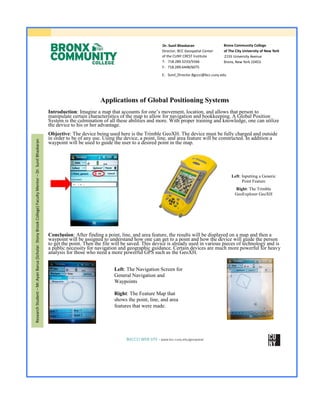
Applications of Global Positioning Systems
Introduction:  Imagine  a  map  that  accounts  for  one’s  movement,  location,  and  allows  that  person  to  
manipulate certain characteristics of the map to allow for navigation and bookkeeping. A Global Position
System is the culmination of all these abilities and more. With proper training and knowledge, one can utilize
the device to his or her advantage.
Objective: The device being used here is the Trimble GeoXH. The device must be fully charged and outside
in order to be of any use. Using the device, a point, line, and area feature will be constructed. In addition a
waypoint will be used to guide the user to a desired point in the map.
Conclusion: After finding a point, line, and area feature, the results will be displayed on a map and then a
waypoint will be assigned to understand how one can get to a point and how the device will guide the person
to get the point. Then the file will be saved. This device is already used in various pieces of technology and is
a public necessity for navigation and geographic guidance. Certain devices are much more powerful for heavy
analysis for those who need a more powerful GPS such as the GeoXH.
BGCCCI WEB SITE - www.bcc.cuny.edu/geospatial
ResearchStudent–Mr.AyanBarua(Scholar.StonyBrookCollege)FacultyMentor–Dr.SunilBhaskaran
Left: Inputting a Generic
Point Feature
Right: The Trimble
GeoExplorer GeoXH
Shot Put


Dr. Sunil Bhaskaran
Director, BCC Geospatial Center
of the CUNY CREST Institute
T: 718.289.5233/5566
F: 718.289.6448/6075
Bronx Community College
of The City University of New York
2155 University Avenue
Bronx, New York 10453
E: Sunil_Director.Bgccci@bcc.cuny.edu
Applications of Imaging Spectrometry
Introduction: Hyperspectral analysis is the collection of data from a satellite image that is used to determine
the mineral composition of the surface that the image was taken from. This, as opposed to procedures like soil
sampling, will not require any contact with the surface that is under analysis. In addition, fewer tests are
needed to determine composition of multiple locations in proximity of each other.
Objective: The aim is to analyze the composition of the ground in Cuprite, Nevada, USA. Using high-quality
images of Cuprite from AVIRIS and ENVI geospatial analysis software, the emission of light from the photo
was corrected and then analyzed to determine the composition of the surface of each pixel that the image has.
Conclusion: By accounting for atmospheric and other types of interference in addition to techniques used to
combine groups that contain similar properties, a confident mapping of different material types in the region
was acquired. Such data can now be used for mining, agriculture, and environmental analysis.
BGCCCI WEB SITE - www.bcc.cuny.edu/geospatial
Above: How Imaging Spectrometry analyses the
ground.
Right: A Black and White image of Cuprite, Nevada
Specific Regions of Interest with the same properties.
ResearchStudent–Mr.AyanBarua(Scholar.StonyBrookCollege)FacultyMentor–Dr.SunilBhaskaran
A visualization of the regions on the map.


We are proud to show case
some geospatial
applications & projects for
Social Sciences,
Archaeology, History,
that were created or
completed by our own BCC
Students!


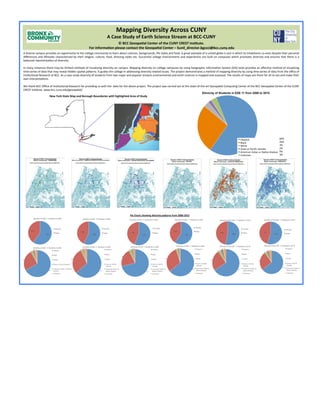
Mapping Diversity Across CUNY
A Case Study of Environmental Science Stream at BCC-CUNY
© BCC Geospatial Center of the CUNY CREST Institute
!For!informa*on!please!contact!the!Geospa*al!Center!–!Sunil_director.bgccci@bcc.cuny.edu!
!
61%$
39%$
Genders of the ENV 11 Students in 2000
Female$
Male$
68%$
26%$
2%$
2%$
1%$
2%$
Enthicities of ENV 11 Students in 2000
Hispanic$
Black$
White$
Asian$or$Pacific$
Islander$
American$Indian$or$
NaBve$Alaskan$
Unknown$
59%$
41%$
Genders of ENV 11 Students in 2003
Female$
Male$
69%$
24%$
3%$ 2%$0%$2%$
Ethnicities of ENV 11 Students in 2003
Hispanic$
Black$
White$
Asian$or$Pacific$
Islander$
American$Indian$or$
NaBve$Alaskan$
Unknown$
61%$
39%$
Genders of ENV 11 Students in 2006
Female$
Male$
69%$
25%$
3%$
2%$0%$
1%$
Ethnicities of ENV 11 Students in 2006
Hispanic$
Black$
White$
Asian$or$Pacific$
Islander$
American$Indian$or$
NaBve$Alaskan$
Unknown$
61%$
39%$
Gender of ENV 11 Students in 2010
Female$
Male$
62%$
31%$
2%$
2%$
0%$
3%$
Ethnicities of ENV 11 Students in 2010
Hispanic$
Black$
White$
Asian$or$Pacific$
Islander$
American$Indian$or$
NaBve$Alaskan$
Unknown$
63%$
37%$
Genders of the ENV 11 Students in 2015
Female$
Male$
52%$
36%$
5%$
4%$
1%$
2%$
Ethnicities of the ENV 11 Students in 2015
Hispanic$
Black$
White$
Asian$or$Pacific$
Islander$
American$Indian$or$
NaBve$Alaskan$
Unknown$
Ethnicity of All ENV 11 Students
Hispanic$
Black$
White$
Asian$or$Pacific$Islander$
American$Indian$or$NaBve$Alaskan$
Unknown$
67%$
27%$
2%$
2%$
0%$
3%$
A$diverse$campus$provides$an$opportunity$to$the$college$community$to$learn$about$cultures,$backgrounds,$life$styles$and$food.$A$great$example$of$a$united$globe$is$one$in$which$its$inhabitants$coRexist$despite$their$personal$
differences$and$lifestyles$characterized$by$their$religion,$culture,$food,$dressing$styles$etc.$Successful$college$environments$and$experiences$are$built$on$campuses$which$promotes$diversity$and$ensures$that$there$is$a$
balanced$representaBon$of$diversity.$$
$
In$many$instances$there$may$be$limited$methods$of$visualizing$diversity$on$campus.$Mapping$diversity$on$college$campuses$by$using$Geographic$InformaBon$System$(GIS)$tools$provides$an$effecBve$method$of$visualizing$
BmeRseries$of$data$that$may$reveal$hidden$spaBal$paYerns.$It$guides$the$college$in$addressing$diversity$related$issues.$The$project$demonstrates$a$method$of$mapping$diversity$by$using$BmeRseries$of$data$from$the$office$of$
InsBtuBonal$Research$at$BCC.$As$a$case$study$diversity$of$students$from$two$major$and$popular$streams$environmental$and$earth$sciences$is$mapped$and$assessed.$The$results$of$maps$are$there$for$all$to$see$and$make$their$
own$interpretaBons.$$
$
We$thank$BCCROffice$of$InsBtuBonal$Research$for$providing$us$with$the$$data$for$the$above$project.$The$project$was$carried$out$at$the$stateRofRtheRart$GeospaBal$CompuBng$Center$of$the$BCC$GeospaBal$Center$of$the$CUNY$
CREST$InsBtute.$www.bcc.cuny.edu/geospaBal/$$
New!York!State!Map!and!Borough!Boundaries!with!Highlighted!Area!of!
Study!
Pie!Charts!showing!diversity!paHerns!from!2000K2015!


Geospatial Applications – Social, Policy Based Research
Legend
-1016.00 - -395.00
-394.99 - -94.00
-93.99 - 110.00
110.01 - 354.00
354.01 - 897.00
Projects:-
Gentrification of population,
community and diversity mapping,
environmental justice,
green index in cities
Urban Heat Island
New Clean Energy Initiatives – Impact on social and economic policy
Social behavior – Harlem River Pollution


Mapping'Diversity'Across'CUNY''
A'Case'Study'of'Earth'Science'Stream'at'BCC>CUNY''
©'BCC'GeospaAal'Center'of'the'CUNY'CREST'InsAtute.'
'For'informaAon'please'contact'the'GeospaAal'Center'–'Sunil_director.bgccci@bcc.cuny.edu'
Ethnicity of Students in ESE 11 from 2000 to 2015
Hispanic(
Black(
White(
Asian(or(Pacific(Islander(
American(Indian(or(Na9ve(Alaskan(
Unknown(
66%(
26%(
3%(
2%(
0%(
3%(
67%(
25%(
3%(
2%(0%(3%(
Ethnicity of ESE 11 Students in 2000
Hispanic(
Black(
White(
Asian(or(Pacific(Islander(
American(Indian(or(Na9ve(
Alaskan(
Unknown(
59%(
41%(
Genders of ESE 11 Students in 2000
Female(
Male(
63%(
30%(
3%(
1%(0%( 3%(
Ethnicity of ESE 11 Students in 2003
Hispanic(
Black(
White(
Asian(or(Pacific(
Islander(
American(Indian(or(
Na9ve(Alaskan(
Unknown(
57%(
43%(
Genders of ESE 11 Students in 2003
Female(
Male(
71%(
21%(
3%(
2%(0%(3%(
Ethnicity of ESE 11 Students in 2006
Hispanic(
Black(
White(
Asian(or(Pacific(
Islander(
American(Indian(or(
Na9ve(Alaskan(
Unknown(
56%(
44%(
Genders of ESE 11 Students in 2006
Female(
Male(
64%(
31%(
2%(1%(0%(2%(
Ethnicity of ESE 11 Students in 2009
Hispanic(
Black(
White(
Asian(or(Pacific(
Islander(
American(Indian(or(
Na9ve(Alaskan(
Unknown(
59%(
41%(
Genders of ESE 11 Students in 2009
Female(
Male(
66%(
25%(
3%(
3%(0%( 3%(
Ethnicity of the ESE 11 Students in 2012
Hispanic(
Black(
White(
Asian(or(Pacific(
Islander(
American(Indian(or(
Na9ve(Alaskan(
Unknown(
53%(
47%(
Genders of the ESE 11 Students in 2012
Female(
Male( 55%(
45%(
Genders of the ESE 11 Students in 2015
Female(
Male(
64%(
26%(
3%(
3%(0%( 4%(
Ethnicity of the ESE 11 Students in 2015
Hispanic(
Black(
White(
Asian(or(Pacific(
Islander(
American(Indian(or(
Na9ve(Alaskan(
Unknown(
A(diverse(campus(provides(an(opportunity(to(the(college(community(to(learn(about(cultures,(backgrounds,(life(styles(and(food.(A(great(example(of(a(united(globe(is(one(in(which(its(inhabitants(coQexist(despite(their(personal(
differences(and(lifestyles(characterized(by(their(religion,(culture,(food,(dressing(styles(etc.(Successful(college(environments(and(experiences(are(built(on(campuses(which(promotes(diversity(and(ensures(that(there(is(a(
balanced(representa9on(of(diversity.((
(
In(many(instances(there(may(be(limited(methods(of(visualizing(diversity(on(campus.(Mapping(diversity(on(college(campuses(by(using(Geographic(Informa9on(System((GIS)(tools(provides(an(effec9ve(method(of(visualizing(
9meQseries(of(data(that(may(reveal(hidden(spa9al(paXerns.(It(guides(the(college(in(addressing(diversity(related(issues.(The(project(demonstrates(a(method(of(mapping(diversity(by(using(9meQseries(of(data(from(the(office(of(
Ins9tu9onal(Research(at(BCC.(As(a(case(study(diversity(of(students(from(two(major(and(popular(streams(environmental(and(earth(sciences(is(mapped(and(assessed.(The(results(of(maps(are(there(for(all(to(see(and(make(their(
own(interpreta9ons.((
(
We(thank(BCCQOffice(of(Ins9tu9onal(Research(for(providing(us(with(the((data(for(the(above(project.(The(project(was(carried(out(at(the(stateQofQtheQart(Geospa9al(Compu9ng(Center(of(the(BCC(Geospa9al(Center(of(the(CUNY(
CREST(Ins9tute.(www.bcc.cuny.edu/geospa9al/((
New'York'State'Map'and'Borough'Boundaries'with'highlighted'Area'of'Study'
Pie'Charts'showing'diversity'paOerns'from'2000>2015'


We are proud to show case
some peer-reviewed journal
articles co-authored by BCC
students!
This achievement is a Jewel
in the Crown of all our
achievements simply
because it takes a lot of
analytical skills, patience,
perseverance and time
commitment to publish in
peer-reviewed journals


Md. Ejaz Alam., Javed Mallick, Sunil Bhaskaran, Atiqur Rahman and D. Dutta., Spatio-
temporal assessment of vegetation covers in the upper catchment of Kosi River basin using
MODIS data., International Journal of Remote Sensing and Geoscience (IJRSG), Volume 2,
Issue 6, Nov. 2013.
Bhaskaran, S., Devi, S., Bhatia, S., Samal, A, and Brown Leroy (2013), Mapping shadows
from very high resolution satellite data using HSV and edge detection techniques. Applied
Geomatics. DOI 10.1007/s12518-013-0118-4.
Jimenez, K., Aboubaker Kaba, Leroy Brown, Mohammad Rahman and Bhaskaran, S., (2012),
Undergraduate research and faculty supervision – Research Experiences in Geospatial Science
and Technology Projects at the Bronx Community College, Perspectives on Undergraduate
Research and Mentoring (PURM, Issue 3-1, pp. 1-9).
Sunil Bhaskaran , Eric Nez , Karolyn Jimenez &Sanjiv K. Bhatia (2012):Rule-based
classification of high-resolution imagery over urban areas in New York City, Geocarto
International, DOI:10.1080/10106049.2012.726278ifirst articlepp: 1-19.
Javed Mallick, Atiqur Rahman, Maik Netzband and Sunil Bhaskaran, (2011) Thermal satellite
data for assessment and monitoring of surface temperature changes and its impact on micro-
climate of Delhi. Urbanization and Global Environmental Change, UGEC Viewpoints,
International Human Dimensions Programme (IHDP) on Global Climate Change, Arizona State
University, USA Vol. No 6, pp:18-23, November, 2011.
Atiqur Rahman, Yogesh Kumar, Shahab Fazal & Sunil Bhaskaran, (2011). Urbanization and
Quality of Urban Environment Using Remote Sensing and GIS Techniques in East Delhi-India.
Journal of Geographic Information System, 2011, 3, 61-83, doi:10.436/jgis.2011.31005.
Bhaskaran, S., Phillip, N., Rahman, A, Mallick, J (2011), Applications of satellite data for
Aerosol Optical Depth (AOD) retrievals and validation with AERONET data. Atmospheric and
Climate Sciences, 2011, 4, 47-53 doi:10.4236/acs.2011.12006.


Per-pixel and object-oriented classification methods for mapping
urban features using Ikonos satellite data
Volume 30, Issue 4, December 2010, Pages 650-665. Authors: Sunil Bhaskaran | Shanka
Paramananda | Maria Ramnarayan
Urban planning requires timely acquisition and analysis of spatial and temporal information for making
informed decisions. Whilst spectral analysis of images has yielded satisfactory results, they may not be enough
to extract urban features from very high resolution (VHR) satellite data such as Ikonos. A combined spectral
and spatial approach may be useful to map urban features particularly those with low spectral separability. The
paper describes an approach using both per-pixel and object-based classification methods for mapping urban
features from VHR satellite data. We tested the suitability of Ikonos satellite data for mapping urban features at
a planning scale in near-real time. Parametric per-pixel supervised (maximum likelihood) classification methods
are used in combination with object-based classification methods to map urban features over New York
City.We employed a combination of spectral, spatial attributes and membership functions for mapping urban
features. Accuracy assessment was carried out using ground truth data acquired from field surveys and from
other reliable secondary data sources. Whilst the per-pixel approach produced reasonable overall accuracy,
specific classes such as white roof and vegetation registered low user's accuracy (79.82 and 70.07) respectively.
We were able to improve the accuracy of these two classes by using an object-oriented classification method
further to 89% and 97%. The combined approach using per-pixel and object-oriented classification methods
may prove useful in the analysis of VHR satellite data like Ikonos, Quickbird, since it results in higher per class
accuracy. In this study different urban classes were extracted that can be exported into GIS for further analysis
and modeling. Mapping output generated in this study may be beneficial to planning, environmental and
emergency services that depend on current geospatial information either for mapping land use changes, or for
rapid updating of current maps and spatial information, and management of resources in near real-time. Given
the high spatial accuracy, but limited spectral resolution of Ikonos data, we recommend a combined
classification approach for extracting sub-pixel urban features. © 2010.
Bhaskaran, S., Paramananda, S., Ramnarayan, M., Per-pixel and object-oriented classification methods for
mapping urban features using Ikonos satellite data, Applied Geography, 30 (2010), 650–665.	


A Journal Article by the Director of
Geospatial Center is one of the most
downloaded and Cited Journals in Applied
Geography – a high Impact Journal since
2010 [Source - Scopus]


Starting any Center at a College
and University requires a self-
sustainable model that is based
on external grant support and
funding.
The Geospatial Center has received
several grant awards and funding.


2015 à Digital Globe Foundation Grant (Funding for Global Cities Project with WorldView
-2 MSS imagery) (Grant from the Industry) $25,000
2015	
  	
  à	


  BCC Environmental Technology Program NYCDEP Internship Program. $13,500
2015 à BCC STEM Majors participation in the 2015 Black Engineer of the year award
(BEYA) Conference, Washington, DC ($5,500) (Grant from NOAA-CREST)
2013 -2015 à Workforce Development Initiative Grant – CUNY ($48,000)
2013 à Grant from Federal Highway Administration (FHWA) to host Summer Transport
Institute at BCC. ($15,000) (Grant from Federal Government)
2013 à Faculty Travel Grant ($500)
2013 à Environmental System Research Institute (ESRI) & PCI Geomatics Natural resources
imagery grant award. ($100,000) (Grant from the Industry)
2011-2013 à Exelis curriculum development software grant award ($20,000) (Grant from the
Industry)
2012/2013 à GeoEye Foundation Award, GeoEye, Colorado, USA ($15,000). GeoEye
Foundation Imagery Grant Award. Mapping land cover and land Megacities. (PIs: Sunil
Bhaskaran and K. Jimenez) (Grant from the Industry)
2010/2011 à GeoEye Foundation Award, GeoEye, Colorado, USA ($15,000). Grant award
from GeoEye Foundation, Colorado, USA. The grant provides high resolution IKONOS satellite
imagery over 3 major cities – New Delhi, Sydney and New York. (Grant from the Industry)
2011 à BCC Foundation Faculty Scholarship Support Grant ($500)
2011à BCC Global Initiative - Faculty Presidential Grant Award ($4,000)
2009 à Graduate Research Technology Initiative (GRTI) CUNY Grant ($50,000)


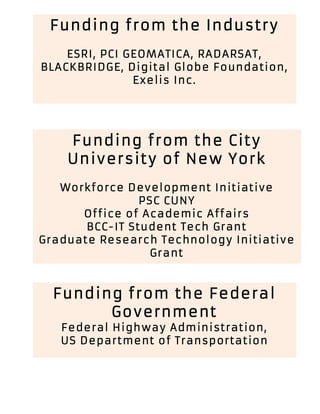
Funding from the Industry
ESRI, PCI GEOMATICA, RADARSAT,
BLACKBRIDGE, Digital Globe Foundation,
Exelis Inc.
Funding from the Federal
Government
Federal Highway Administration,
US Department of Transportation
Funding from the City
University of New York
Workforce Development Initiative
PSC CUNY
Office of Academic Affairs
BCC-IT Student Tech Grant
Graduate Research Technology Initiative
Grant


  We have grown in stature also
because of talented Interns
from
University of Maryland,
Stony Brook,
York College
and
LaGuardia
We present selected profile/s
of past and current Interns
since (2014 onwards)


Intern 1 (2014-2015): completed a Masters of professional studies in GIS from University of Maryland
Baltimore County. His research interests are in Urbanization, Climate Change and Hydrology. He also has a
Master’s degree from India in Geo-informatics from Birla Institute of Technology, India. His background in
environmental science and remote sensing makes me capable enough for working on various RS and GIS
problems. Dhruv has worked as an GIS Engineer in Nascent Infotech, Ahmedabad, India where he used to do
the outsourcing work for Indian Space Research Organization (ISRO), Ahmedabad, India. Dhruv completed a 2
month internship at Bronx Community College of City University of New York where he worked on Optical
and Microwave data. While interning at the BCC Geospatial Center of the CUNY CREST Institute (BGCCCI)
Dhruv participated on a project called "Global Urbanization Patterns" where he attempted to classify major
urban cities.
Intern 2 (2015 onwards): is a first-generation college student from Bangladesh currently pursuing my A.S.
degree in Computer Science in hopes of entering the Data Science field. He believes working at the Bronx
Community College Geospatial Center of the CUNY CREST Institute (BGCCCI) will develop my analytical,
research, and problem-solving skills needed to succeed in my future. Learning how to manage Big Data can
help him conduct more effective research by learning how to analyze different streams of data and make
significant connections that can help businesses and people make more well-informed decisions. Traditionally
coming from a business background, he believes working in technology and being an engineer will put me in a
position to innovate and create, potentially helping people throughout the world.
Intern 3 (2015 onwards): is an upcoming graduate at Stony Brook University. His degree is in Engineering
Chemistry and will be complete by this August. His degree centralizes in Chemistry, but focuses on topics such
as Thermodynamics, Material Properties, and Materials Geometry. He has experience in lab courses dealing
with circuitry and LabView. He has an interest in the formation and structure of materials and the purposes of
such materials in everyday life and the potential uses of the materials in the future.
Intern 4 (2015): is an upcoming graduate at York College, the City University of New York (CUNY). Gurdeep
is currently pursuing his Bachelors in Computer Science (CS) and also minoring in Business Administration,
which will be completed by December, 2015. The field of Computer Science is pretty vast. Many different
topics related to the world of computers fall into this field. The topics/areas that interest Gurdeep are
Networking and Communications, Computer Hardware, Data Analysis, and Natural Language Processing
(NLP). Gurdeep believes that working at the Bronx Community College (BCC) Geospatial Center will give him
an opportunity to put his computer skills and knowledge to use. He believes that working with huge amounts of
data at the center will help him build a stronger background in his field and also get a chance to take what he
has learned over the years and apply it towards a very different, interesting, and upcoming field of study.
Intern 5 (2012 onwards): is a Baccalaureate student at York College the City University of New York
(YC-CUNY) Queen, New York (Ba in Environmental Science Major and Psychology Minor)-Leroy Brown is a
student who is currently pursuing his Bachelor Degree in Environmental Health Science and Psychology
at (YCCUNY). He earned an Associate Degree in Psychology from Bronx Community College. He is mentored
by Professor Sunil Bhaskaran since 2011 and has published 3 peer review journals and presented at
various conferences in New York City. His research interests include the analysis of satellite
data for climate change, hydrology, environmental impact assessment and disaster management.


• Did you know that
Geospatial Technology is a
High-Growth Industry Sector
In the US.
• According to the
Department of Labor, the
Industry is growing at a
staggering 35% rate.
• It is also an industry that
is facing severe shortage
of skilled labor!
• This means that there is no
better time to acquire
skills in geospatial
technologies!!!


High Growth Industry Profile - Geospatial
Technology	
  
• Revenues from the public sector lead geospatial market growth and account for more than one-third of
total revenue. While federal governments were among the early adopters of GIS technology, recent
trends toward devolving more responsibilities to states and localities have spurred those entities to
become important consumers of GIS. While industries in the regulated sector, such as utilities,
telecommunications, transportation and education, are the largest consumers of GIS/geospatial solutions,
private-sector growth remains dependent upon business adoption based on the added-value these
technologies provide. (Daratech, GIS/Geospatial Markets and Opportunities)
• Geospatial products and specialists are expected to play a large role in homeland security activities.
Information gathering needs to protect critical infrastructure have resulted in an enormous increase in
the demand for such skills and jobs. (Lorraine Castro, NIMA Human Resources Department)
• Because the uses for geospatial technology are so widespread and diverse, the market is growing at an
annual rate of almost 35 percent, with the commercial subsection of the market expanding at the rate of
100 percent each year. (Geospatial Information & Technology Association)
Skills, Competencies, and Training
• Emerging occupations within the geospatial technology industry require developing competency models
for new applications of geospatial technology. Aligning training in geospatial applications with industry
developed competency models is essential to developing the necessary pipeline of skilled workers. This
approach is necessary for preparing entry-level workers with basic skills to ensure career success.
• Increasing demand for readily available, consistent, accurate, complete and current geographic
information and the widespread availability and use of advanced technologies offer great job
opportunities for people with many different talents and educational backgrounds. (U.S. Geological
Survey and U.S. Bureau of Labor Statistics)
Image and Outreach to the Public
• The public is not aware of the necessary skill sets and competencies needed to prepare for the diverse
career opportunities available within the geospatial technology industry. Reaching an industry-wide
consensus that defines "geospatial," its technologies and its applications is of utmost importance. There
is also a need for better industry promotion by creating a national image campaign that raises awareness
about the industry and dispels stereotypes and misperceptions.
Pipeline
• In order to meet industry growth requirements employers need to examine alternatives to the traditional
pipeline. These alternatives include recruiting young workers through apprenticeship and high
school/college dual-enrollment-dual-credit agreements as well as tapping nontraditional labor pools to
diversify the workforce.


(Source: ASPRS: The Imaging and Geospatial Information Society)
• College preparatory courses that emphasize the sciences are suggested for individuals interested in
pursuing careers in photogrammetry, remote sensing and geographic information systems (GIS).
• For individuals who do not wish to pursue an advanced degree, there is a substantial demand for
technicians in geospatial information technology. Many 2-year academic and technical institutions offer
education and training in photogrammetry, remote sensing and GIS and related fields. Associate degree
and certificate programs in GIS, surveying, photogrammetry and similar curricula provide a sound
foundation for work experience or for transfer to other academic institutions for further education.
• It is highly recommended that any individual wishing to pursue a career in photogrammetry, remote
sensing and GIS participate in an internship program to obtain hands-on experience as part of their
preparation for employment, in addition to formal education.
In June 2003, ETA announced the High Growth Job Training Initiative to engage businesses with local
education providers and the local/regional workforce investment system to find solutions that address changing
talent development needs in various industries.
In October 2005, the Community-Based Job Training Grants were announced to improve the role of community
colleges in providing affordable, flexible and accessible education for the nation's workforce.
ETA is investing more than $260 million in 26 different regions across the United States in support of the
WIRED (Workforce Innovation in Regional Economic Development) Initiative. Through WIRED, local leaders
design and implement strategic approaches to regional economic development and job growth. WIRED focuses
on catalyzing the creation of high skill, high wage opportunities for American workers through an integrated
approach to economic and talent development.
These initiatives reinforce ETA's commitment to transform the workforce system through engaging business,
education, state and local governments, and other federal agencies with the goal of creating a skilled workforce
to meet the dynamic needs of today's economy.
ETA has invested over $8,367,110 in the geospatial industry. This includes six High Growth Job Training
Initiative grants totaling $6,438,653 and one multi-industry Community-Based Job Training Grant totaling
$1,928,457. Leveraged resources from all of the grantees total $7,132,543.


HAVE A LOOK AT SOME OF THE
GEOSPATIAL TECHNOLOGY
JOB DESCRIPTIONS
&
COMPANY PROFILES


1. GIS Remote Sensing
A GIS remote sensing professional analyzes data from digital and analog aerial photographs, global
positioning systems (GPS), and space or airborne sensors. Working closely with field personnel and the
chief GIS unit, the remote sensing specialist plans, develops, and operates GIS-related functions such as
image processing, mapping, and other applications. The position requires at least 2 years' extensive
experience, in-depth knowledge of GIS software, and fluency in written and spoken English.
2. GIS Cartographer
A GIS cartographer is the person responsible for researching, designing, and producing digital
geographical maps for use in intelligence, presentations, and interactive applications. Its responsibilities
also include writing comprehensive reports on project findings and recommendations. Applicants must
have at least one year's experience and be knowledgeable in map projections, data formatting, and
geographic coordinate systems.
3. GIS Mapping
The job involves creating and maintaining printable maps for internet and other applications using ESRI
mapping software. The position is responsible for evaluating and recommending appropriate hardware
and software for producing maps and other GIS outputs. Candidates must have at least 3 year's
experience in GIS applications and demonstrate strong project management skills.
4. Geomatics
A geomatics specialist makes ground measurements; conducts digital mapping; and utilizes data from
various sources such as aerial photography, satellites, and laser measuring systems. The data is then
interpreted using computer-aided design and other software. Geographic information system jobs in
geomatics require at least 2 years' experience, preferably in the oil and gas industry.
5. GIS Photogrammetry
One of the most challenging geographic information system careers, photogammetry involves the
operation of a softcopy stereo plotter using AutoCAD software to accurately collect 3D mapping detail
from satellite imagery or aerial photography. Other responsibilities include volumetric analysis, aerial
triangulation, and photo rectification and color balancing. To find geographic information system
employment in photogammetry, you must have strong interpersonal skills and more than 4 years'
experience in software engineering.


6. Geospatial
A geospatial is one of the most in-demand geographic information system jobs. It involves researching,
extracting, manipulating, analyzing, and integrating digital data and imagery from geospatial and
research databases related to biodiversity. It is also responsible for processing digital imagery and
performing customer information analysis. To start a geographic information system career in
geospatial, you must have a minimum of 2 years' experience and knowledge of biodiversity.
7. GIS Digitizer
A GIS digitizer involves the preparation and maintenance of cartographic layouts, assembling maps, and
performing digital data revisions and updates. Other responsibilities include the development and
maintenance of GIS manuals and other continuity documents. Applicants must have an associate's
degree with a major in computer science or a GIS-related field.
8. GIS Technician
The job requires collecting data through GPS equipment, manual mapping methods, and mobile
terminals for inputting into the geographic information system. Part of the job is to produce exhibits and
reports using graphic and non-graphic tools. Finding geographic information system employment as a
technician requires knowledge in GIS map reading and superb time management skills. Two years'
experience or training in GIS applications is also essential.
9. GIS Manager
The position involves planning, implementation, and coordination of central geographic information
systems. It has the authority to specify, acquire, operate, prioritize, and maintain major GIS systems
including aerial photography, remote sensing, and digital mapping. To be considered for the job, you
must have extensive experience in staff management as well as a high level of knowledge in language
programming.
10. GIS Specialist
The GIS specialist heads a task force formed by the geographic information officer (GIO) to manage
specific projects and exercise oversight responsibility over any ongoing development program. The job
also involves developing a strategic plan, assisting in budget preparation, and conducting business
development activities. To be a GIS specialist, you must have at least 8 years' experience in enterprise
GIS as well as excellent verbal and written skills in the English language.
If you can combine technical aptitude with great interpersonal skills, the world of GIS is waiting for you.
If you're interested to pursue a career in geographic information systems, here are the top 10 job
opportunities in the field:


WANT TO TAKE A LOOK AT A
LEADING GEOSPATIAL
COMPANY’S JOB DESCRIPTION?
THIS COMPANY IS A MEMBER ON
THE ADVISORY BOARD OF THE
BCC GEOSPATIAL CENTER


Associate	
  Geospatial	
  Analyst	
  
About	
  the	
  Company	
  
Digital	
  Globe	
  is	
  a	
  leading	
  provider	
  of	
  commercial	
  high-­‐resolution	
  earth	
  observation	
  and	
  advanced	
  geospatial	
  
solutions	
  that	
  help	
  decision	
  makers	
  better	
  understand	
  our	
  changing	
  planet	
  in	
  order	
  to	
  save	
  lives,	
  resources	
  and	
  
time.	
  	
  Sourced	
  from	
  the	
  world’s	
  leading	
  constellation,	
  our	
  imagery	
  solutions	
  deliver	
  unmatched	
  coverage	
  and	
  
capacity	
  to	
  meet	
  our	
  customers’	
  most	
  demanding	
  mission	
  requirements.	
  	
  	
  Each	
  day	
  customers	
  in	
  defense	
  and	
  
intelligence,	
  public	
  safety,	
  civil	
  agencies,	
  map	
  making	
  and	
  analysis,	
  environmental	
  monitoring,	
  oil	
  and	
  gas	
  
exploration,	
  infrastructure	
  management,	
  navigation	
  technology,	
  and	
  providers	
  of	
  location-­‐based	
  services	
  depend	
  
on	
  Digital	
  Globe	
  data,	
  information,	
  technology	
  and	
  expertise	
  to	
  gain	
  actionable	
  insight.	
  	
  Digital	
  Globe	
  is	
  a	
  public	
  
company	
  listed	
  on	
  the	
  NYSE	
  as	
  DGI,	
  and	
  is	
  headquartered	
  in	
  Westminster,	
  Colorado.	
  
Summary	
  	
  
The	
  Geospatial	
  Analyst	
  will	
  be	
  responsible	
  for	
  providing	
  technical	
  support	
  to	
  customer	
  projects	
  involving	
  dynamic	
  
geospatial	
  information	
  to	
  include	
  social	
  media	
  and	
  foundational	
  intelligence	
  data.	
  Key	
  types	
  of	
  analytics	
  expected	
  
will	
  be	
  fusing	
  multiple	
  sources	
  of	
  information	
  into	
  key	
  findings,	
  and	
  geotemporal	
  pattern-­‐of-­‐life	
  analysis	
  to	
  provide	
  
insight	
  to	
  customer	
  requirements.	
  Additionally,	
  the	
  candidate	
  will	
  possess	
  excellent	
  research	
  skills	
  to	
  find	
  
meaningful	
  information	
  in	
  unstructured	
  data.	
  All	
  research	
  and	
  analysis	
  will	
  be	
  aggregated	
  into	
  finished	
  products	
  
that	
  will	
  be	
  published	
  to	
  a	
  diverse	
  audience-­‐-­‐therefore	
  good	
  writing	
  and	
  publishing	
  skills	
  are	
  highly	
  desired.	
  
He/She	
  will	
  ensure	
  all	
  of	
  the	
  products	
  created	
  meet	
  quality	
  and	
  material	
  specifications	
  in	
  accordance	
  with	
  
customer	
  needs.	
  This	
  position	
  will	
  assist	
  in	
  the	
  implementation	
  of	
  emerging	
  capabilities,	
  using	
  leading	
  edge	
  
technologies	
  to	
  perform	
  analysis	
  and	
  derive	
  information	
  from	
  large	
  geospatial	
  data	
  sets.	
  	
  
Responsibilities	
  	
  
The	
  Geospatial	
  Analyst	
  will:	
  	
  
• Gather	
  requirements,	
  determine	
  scope,	
  and	
  estimate	
  hours	
  needed	
  to	
  develop	
  and	
  deliver	
  custom	
  
geospatial	
  analytic	
  solutions	
  to	
  our	
  government	
  customer	
  
• Produce	
  custom	
  information	
  layers	
  derived	
  from	
  social	
  media	
  and	
  other	
  open-­‐source	
  data	
  sources	
  using	
  
COTS	
  and	
  proprietary	
  software	
  
• Collaborate	
  daily	
  with	
  cross-­‐functional	
  internal	
  and	
  external	
  team	
  members	
  and	
  occasionally	
  third	
  party	
  
vendors,	
  sometimes	
  as	
  project	
  lead,	
  and	
  other	
  times	
  under	
  other	
  team	
  member	
  leadership	
  
• Identify	
  and	
  implement	
  improvements	
  to	
  system	
  designs	
  and	
  processing	
  methodologies	
  to	
  improve	
  
efficiency,	
  scale,	
  reliability,	
  and	
  mitigate	
  operational	
  risk	
  
• Maintain	
  production	
  line	
  operations	
  and	
  other	
  tasks	
  as	
  needed	
  to	
  satisfy	
  customers	
  and	
  fulfill	
  contractual	
  
commitments	
  
• Advise,	
  train,	
  mentor,	
  and	
  learn	
  from	
  other	
  team	
  members	
  on	
  technical	
  topics	
  
• Write	
  procedures,	
  methods,	
  workflow	
  documents	
  and	
  standard	
  operating	
  processes	


Job	
  Requirements	
  	
  
This	
  person	
  must	
  possess	
  a	
  strong	
  client	
  focus	
  and	
  have	
  the	
  following	
  experience:	
  	
  
• A	
  Bachelor’s	
  Degree	
  in	
  Information	
  Technology,	
  Geographic	
  Information	
  Science	
  (GIS)	
  or	
  related	
  field	
  
preferred	
  or	
  the	
  equivalent	
  combination	
  education	
  and	
  experience.	
  Master's	
  degree	
  preferred.	
  	
  
Preferred	
  Skills	
  	
  
• 1-­‐5	
  years	
  work	
  experience	
  in	
  GIS,	
  remote	
  sensing,	
  and/or	
  photogrammetry	
  
• 1-­‐3	
  years	
  scripting	
  experience	
  with	
  Python,	
  GDAL,	
  ENVI	
  IDL,	
  and/or	
  ArcGIS	
  Model	
  Builder.	
  
• Ability	
  to	
  thrive	
  in	
  a	
  fast-­‐paced	
  environment	
  as	
  an	
  individual	
  contributor	
  on	
  a	
  transparent,	
  agile	
  team	
  
Location:	
  	
  
Tampa,	
  FL	
  	
  
Compensation	
  	
  
DigitalGlobe	
  offers	
  a	
  generous	
  compensation	
  package	
  including	
  a	
  competitive	
  salary;	
  choice	
  of	
  medical	
  plan;	
  
dental,	
  life,	
  and	
  disability	
  insurance;	
  a	
  401(K)	
  plan	
  with	
  competitive	
  company	
  match;	
  paid	
  holidays	
  and	
  paid	
  time	
  
off	
  	
  
Applicants	
  for	
  this	
  position	
  will	
  be	
  required	
  to	
  take	
  and	
  pass	
  a	
  drug	
  test.	
  	
  
DigitalGlobe	
  is	
  an	
  equal	
  opportunity	
  employer	
  and	
  considers	
  qualified	
  applicants	
  for	
  employment	
  without	
  regard	
  
to	
  race,	
  color,	
  sex,	
  sexual	
  orientation,	
  gender	
  identity	
  or	
  expression,	
  religion,	
  national	
  origin,	
  marital	
  or	
  familial	
  
status,	
  age,	
  disability,	
  veteran	
  status,	
  military	
  service	
  or	
  application	
  for	
  military	
  service,	
  status	
  with	
  regard	
  to	
  
public	
  assistance,	
  genetic	
  information	
  or	
  any	
  other	
  characteristic	
  protected	
  by	
  law.	


THE BCC GEOSPATIAL CENTER IS A ONE
OF A KIND CENTER IN THE CUNY SYSTEM
IT IS A COLLABORATION WITH THE NOAA-
CREST INSTITUTE THAT IS ADMINISTERED
BY THE CITY COLLEGE OF NEW YORK
VISIT THE CENTER AT
WWW.BCC.CUNY.EDU/GEOSPATIAL/
IT HAS A STATE-OF-THE-ART-
GEOSPATIAL COMPUTING CENTER
IT HAS A HUGE GEOSPATIAL DATA
ARCHIVE
IT HAS CUTTING-EDGE GEOSPATIAL
SOFTWARE THAT IS ALSO USED BY A
NASA, EPA, USGS, NATIONAL GEOSPATIAL
INTELLIGENCE AGENCY, US DEFENSE AND
OTHER LEADING AGENCIES


BCC	
  GEOSPATIAL	
  CENTER	
  OF	
  THE	
  CREST	
  
INSTITUTE	
  (BGCCCI)	


Meister	
  Hall	
  Room	
  #	
  330,	
  2155	
  University	
  Avenue	
  
Bronx	
  Community	
  College	
  of	
  the	
  City	
  University	
  of	
  New	
  York	
  
Bronx,	
  NY	
  10453	
  
Tel:	
  1-­‐718.289.5566/5233;	
  Fax:	
  1-­‐718.289.6448	
  
www.bcc.cuny.edu/geospatial/	


MAPPING	
  WHAT	
  MATTERS	


‘Training	
  Geospatial	
  Technicians	
  of	
  the	
  Future’	


Geospatial technology is an invaluable tool for visualizing monitoring and modeling different phenomena
and processes of the earth. The BCC Geospatial of the CREST Institute promotes education, training and
cutting-edge research in the emerging field of geospatial technology. It supports the mission of NOAA-
CREST center and aims to deliver excellence in education, research and outreach activities. The center
will engage its multidisciplinary team of expert faculty and ethnically diverse group of talented students
for developing spatial solutions. It will collaborate with institutions, federal and private agencies for
developing internships, articulation programs and pathways to geospatial careers and advanced studies.
The geospatial laboratory consists of State-Of-The-Art facilities. It has the latest versions of image and
spatial analysis software that is used in almost all federal and private agencies around the world. From
conventional classification methods to new object based approaches the lab is equipped with software to
train any BCC student in geospatial technology. The software is partially funded from CUNY’s Work
Force Development Initiative (WDI) Grant Award (2013-2015). The lab also has a sophisticated ink-jet
44” wide format plotter and a color printer for producing superior cartographic output.
These tools will give BCC students, faculty and staff a great opportunity to learn new skills at a time
when the geospatial industry is growing exponentially but also facing a critical shortage of skilled labor.


BGCCCI	
  –	
  PROMOTING	
  GEOSPATIAL	
  TECHNOLOGY	


Delivering	
  skilled	
  geospatial	
  technicians	
  of	
  the	
  future	
  	
  
(left)	
  state-­‐of-­‐the-­‐art	
  Geospatial	
  Computing	
  
Center	
  and	
  (above)	
  BCC’s	
  students	
  presenting	
  
geospatial	
  project	
  outcomes	
  at	
  the	
  2012	
  annual	
  
BCC	
  science	
  Fair	


GEOSPATIAL	
  TECHNOLOGY	
  
	
  Endless	
  possibilities	
  in	
  education	
  and	
  research	
  
Develop	
  models	
  to	
  monitor	
  phenomena	
  and	
  
processes	
  remotely:	
  Ground	
  based	
  data	
  may	
  
be	
  calibrated	
  to	
  satellite	
  data	
  for	
  regular	
  
monitoring	
  of	
  pollution.	
  Develop	
  satellite	
  
monitoring	
  stations	
  in	
  the	
  Bronx	
  
Develop	
  simulation	
  models:	
  
‘What	
  if’	
  scenarios	
  are	
  critical	
  to	
  
plan	
  resources	
  and	
  manage	
  the	
  
environment.	
  Very	
  high	
  resolution	
  
(VHR)	
  data	
  and	
  3-­‐D	
  capabilities	
  
permit	
  simulations	
  of	
  data	


Model	
  disparate	
  datasets:	
  Complex	
  
processes	
  involving	
  large	
  volumes	
  of	
  
data	
  have	
  to	
  be	
  integrated	
  and	
  
modeled	
  to	
  formulate	
  decisions.	
  A	
  
Geographic	
  Information	
  System	
  
provides	
  an	
  ideal	
  environment	
  to	
  
model	
  complex	
  data	
  
Develop	
  models	
  to	
  visualize	
  
social	
  behavior:	
  Socio-­‐economic	
  
characteristics	
  need	
  to	
  mapped	
  to	
  
better	
  understand	
  pollution,	
  crime,	
  
migration,	
  tourism,	
  solid	
  waste,	
  and	
  
transformation	
  into	
  smarter	
  cities	
  	
  
Design	
  new	
  Curriculum:	
  
Designing	
  new	
  curriculum	
  and	
  
collaborative	
  projects	
  with	
  
multidisciplinary	
  faculty.	
  
Formulating	
  of	
  articulation	
  
agreements	
  with	
  4-­‐year	
  
colleges	
  and	
  pathways	
  to	
  
careers	
  
Tools	
  to	
  map	
  spatial	
  patterns	
  of	
  land	
  
processes	
  and	
  resources:	
  Land	
  cover	
  /Land	
  use	
  
changes,	
  urbanization	
  trends,	
  need	
  to	
  be	
  
visualized	
  and	
  understood	
  at	
  all	
  scales	
  	
  	
  for	
  
sustainable	
  development.	
  Image	
  analysis	
  of	
  time-­‐
series	
  of	
  satellite	
  data	
  provides	
  a	
  tool	
  to	
  perform	
  
such	
  analyses	
  due	
  to	
  its	
  synoptic,	
  spectral	
  and	
  
temporal	
  properties.	
  
BGCCCI	
  Activities	


Contact:	
  Dr.	
  Sunil	
  Bhaskaran	
  (Founding	
  Director).	
  
The	
  BCC	
  Geospatial	
  Center	
  of	
  the	
  CUNY	
  CREST	
  Institute	
  (BGCCCI).	


Office:	
  807,	
  Meister	
  Hall,	
  Bronx	
  Community	
  College	
  –	
  City	
  University	
  of	
  New	
  
York;	
  2155,	
  University	
  Avenue,	
  Bronx,	
  NY	
  10453.	


Tel:	
  +1	
  (718)	
  289	
  5566/5233;	
  	
  
Fax:	
  +1	
  (718)	
  289	
  6448;	
  
Email:	
  Sunil.Bhaskaran@bcc.cuny.edu	
  or	
  Sunil_director.bgccci@bcc.cuny.edu	


Geospatial	
  Computing	
  Center	
  –	
  330,	
  Meister	
  Hall;	
  	
  
Tel:	
  +1	
  (718)	
  289	
  5233;	
  	
  
Fax:	
  +1	
  (718)	
  289	
  6448.	


YOU CAN APPLY FOR INTERNSHIPS
AT
NASA, LIRR, NGIA, EPA, MTA AND
SEVERAL LEADING AGENCIES WHO
USE GEOSPATIAL TECHNOLOGY IN
THEIR DAILY BUSINESS
IF YOU PERFORM WELL THEY MAY
ABSORB TALENTED AND
HARDWORKING INTERNS AS FULL
TIME EMPLOYEES!
MOST OF THE INTERNSHIPS ARE
FOR UNDERREPRESENTED
COMMUNITIES BY FEDERAL
MANDATE


New York Space Grant Community College Partnership Program
We’re  looking  for  Community  College  students  up  to  the  challenge  to  join  this  
exciting new network of NASA scientists and engineers in New York State.
The NYSG CCPP:
 Involves you in real research right now
 Introduces you to this exciting field & the people at its frontier – your new peers
 Matches you with a career and research mentor
 Trains you to prepare for summer research and to graduate to a four-year college
 Organizes summer opportunities at your college, a four-year college, or NASA
Center
 Provides fellowships to defray tuition for an academic semester
 Provides summer research fellowships
 Supports travel and lodging for summer internships as needed
Apply today!
Students should be enrolled in a 2-year or technical college, be a US citizen, and have an
interest in pursuing a career in Science, Technology, Engineering, or Mathematics as
evidenced by their application essays, and choice of courses and major. Students from
groups underrepresented in the sciences – e.g., African Americans, Hispanics, Native
Americans, and women – are particularly encouraged to apply. Please complete your
application by Oct 16, 2015.
Visit the NYSG CCPP page at http://astro.cornell.edu/spacegrant/ccprogram.html for
more information and the link to the application, or also email paglione@york.cuny.edu.


DID YOU KNOW THAT THE BCC
GEOSPATIAL CENTER IS
COLLABORATING WITH THE CITY
OF TOWNSVILLE, CITY OF
DUBUQUE AND
IBM SUPPORTED SMARTER CITIES
PROJECT IN AUSTRALIA SINCE
2013?


THE SMARTER CITIES PROJECT WITH
AUSTRALIA


FOSTERING INTERNATIONAL COLLABORATIONS –
BCC TEAM VISIT TO AUSTRALIA
Team of professors led by Prof Neal Phillip were invited to the Land Down Under to visit the City of Townsville. The main focus of the visit was to see
new clean energy projects in a real-world context and understand the issues that a city has to grapple with in their transition to an alternate form
of energy. The visit was sponsored by the Office of the President of BCC and the City of Townsville lead by Mayor Jenny Hill and Greg Bruce (Chief
Sustainability Officer). Highlights of the trip was the visit to the James Cook University, Hermit Park State School and Queensland Emergency Service


DID YOU KNOW THAT
GEOSPATIAL TECHNOLOGIES
PLAY A LEADING ROLE IN THE
CREATION OF A
SUSTAINABLE EARTH?


CREATE	
  A	
  SUSTAINABLE	
  EARTH	
  WITH	
  GEOSPATIAL	
  TECHNOLOGY	
  
The	
  BCC	
  Geospatial	
  Center	
  of	
  the	
  CUNY	
  CREST	
  Institute	
  
(BGCCCI)	
  
City	
  University	
  of	
  New	
  York	
  
2155,	
  University	
  Avenue,	
  Bronx	
  
New	
  York	
  -­‐	
  10453	
  
Tel:	
  1-­‐718-­‐289-­‐5523;	
  Fax:	
  1-­‐718-­‐289-­‐6448	
  
Email:	
  Sunil_director.bgccci@bcc.cuny.edu	
  
Facebook:	
  https://www.facebook.com/bccgeospatial/	


Geospatial_Center_Brochure_2016

  • 1.
    1     MAPPING  YOUR   CAREERS  WITH   GEOSPATIAL   TECHNOLOGY  
  • 2.
    2     Foreword BCCstudents have the twin objectives of completing their studies with excellent grades but also to secure jobs in a competitive environment that demands cutting-edge skills. Geospatial Technology is an emerging field of study that includes Geographic Information System or GIS, Remote Sensing and Global Positioning System or GPS. Geospatial technology enables us to acquire data that is referenced to the earth and use it for analysis, modeling, simulations and visualization. Geospatial technology allows us to make informed decisions based on the importance and priority of resources most of which are limited in nature. Geospatial technology may be used to create intelligent maps and models that may be interactively queried to get the desired results in a STEM application or may be used to advocate social investigations and policy based research. It may be used to reveal spatial patterns that are embedded in large volumes of data that may not be accessed collectively or mapped otherwise. Several BCC faculty and students participated in scholarly activities since 2010 which helped in the dissemination of geospatial technology on campus and enabled the college to form a central core that is essential to build a reputation of excellence in emerging technologies. I am delighted to announce that the BCC Geospatial Center was launched on the 3rd October, 2015. The center was formed under the umbrella of NOAA-CREST institute, which is also known as CUNY CREST Institute. The center promotes education and research in geospatial technology and is a unique space for BCC students and faculty to learn and acquire hands-on skills at the state-of-the-art Geospatial Computing Center. The center has received numerous awards and grants from federal and private agencies apart from funding by the CUNY Workforce development initiatives. Two new courses (Introduction to Geographic Information System and Introduction to Remote Sensing) were designed and approved by the University. These courses offered in fall 2015 provide BCC students a rare opportunity to learn concepts and acquire hands-on training in using industry standard software for analyzing and modeling different types of data. Lab manuals written by professor/s were published and made available to students are subsidized prices. The lab manuals consist of customized exercises and training materials that were prepared by using a place-based approach that fostered intuitive spatial thinking and cognition. A new Associate of Applied Sciences in Geospatial Technology is being designed. This A.A.S Geospatial Technology program will enable BCC students to acquire cutting-edge skills in geospatial technology. The program is designed to be a terminal degree which will enable students to seek jobs in the high- growth geospatial sector that is also facing serious shortage in skilled labor. Internship programs with NASA (Climate Change), NOAA-CREST, Long Island Rail Road, MTA, EPA, DEP etc. will provide BCC students insight into geospatial applications in the realm world and professional environment. International collaborations with the City of Townsville, Australia and IBM – Smarter Cities project will provide much needed exposure to BCC students into sustainable energy initiatives and innovative approaches to managing smoother transition to new clean energy around the world. Sunil Bhaskaran Founding Director – BCC Geospatial Center of the CUNY CREST Institute Geospatial Center Website: www.bcc.cuny.edu/geospatial/
  • 3.
    3     Tableof Contents • What is Geospatial Technology? • New Courses in Geospatial Technology • Associate of Applied Sciences • Geospatial Newsletters • Text Books, Lab Manuals • Applications of Geospatial Technology - STEM • Applications of Geospatial Technology – Social Sciences • Peer-reviewed publications • Special feature on a Journal Article – Most Cited • Sustenance of the Center by Grant Funding • Summer Interns at the Geospatial Center - Profiles • Geospatial Technology – High Growth Industry – US. • Geospatial Technology – Job Descriptions • Geospatial Technology – Company Profiles • Sample Job at a Leading Geospatial Company • The BCC Geospatial Center – World of Opportunity • Internships and pipelines to geospatial careers • International Collaborations – Townsville, Australia    
  • 4.
    4     Whatis Geospatial Technology? Geospatial   technologies   is   an   umbrella   phrase   associated   with   a   suite   of   technologies   including  remote  sensing,  Global  Positioning  System  (GPS),  Geographic  Information  System   (GIS),   information   technologies,   and   field   sensors,   that   help   in   capturing/storing/processing/   displaying/disseminating   information   tied   to   a   particular   location.  It  is  therefore  a  set  of  technological  approaches,  such  as  GIS,  photogrammetry,  and   remote  sensing,  for  acquiring  and  manipulating  geographic  data.       Geographic   Information   System   or   GIS:   A  geographic  information  system  (GIS)  lets  us   visualize,  question,  analyze,  and  interpret  data  to  understand  relationships,  patterns,  and   trends.   GIS   benefits   organizations   of   all   sizes   and   in   almost   every   industry.   There   is   a   growing  interest  in  and  awareness  of  the  economic  and  strategic  value  of  GIS.  A  geographic   information   system   (GIS)   is   a   system   designed   to   capture,   store,   manipulate,   analyze,   manage,   and   present   all   types   of   spatial   or   geographical   data.   Data   is   the   fundamental   component  of  any  GIS  and  the  power  of  a  GIS  is  determined  by  its  ability  to  relate  different   data  in  a  spatial  context  and  to  reach  a  conclusion  about  this  relationship.  A  combination  of   two   data   types:   spatial   (location   data)   and   attributes   (descriptive   data)   are   related   and   presented  visually  by  means  of  an  interactive  user  interface,  GIS  software,  using  raster  and   vector  graphics.     Sources   of   data   are   vast   (i.e.   weather   bureaus,   NASA,   municipalities,   etc.)   and   the   combination   of   sources   often   leads   to   more   revealing   and   descriptive   data   analysis   via   spatial  modelling  and  statistical  methods.  Given  the  availability  of  GIS  components  and  that   80%   of   data   can   be   geographically   referenced,   building   your   own   GIS   represents   an   increasingly   viable   and   useful   Management   Information   System   (MIS)   across   many   applications.     Remote  Sensing:  Remote  sensing  can  be  defined  as  the  collection  of  data  about  an  object   from  a  distance.  Humans  and  many  other  types  of  animals  accomplish  this  task  with  aid  of   eyes   or   by   the   sense   of   smell   or   hearing.   Earth   scientists   use   the   technique   of   remote   sensing   to   monitor   or   measure   phenomena   found   in   the   Earth's   lithosphere,   biosphere,   hydrosphere,   and   atmosphere.   Remote   sensing   of   the   environment   by   geographers   is   usually  done  with  the  help  of  mechanical  devices  known  as  remote  sensors.  These  gadgets   have   a   greatly   improved   the   ability   to   receive   and   record   information   about   an   object   without  any  physical  contact.  Often,  these  sensors  are  positioned  away  from  the  object  of   interest   by   using   helicopters,   planes,   and   satellites.   Most   sensing   devices   record   information   about   an   object   by   measuring   an   object's   transmission   of   electromagnetic   energy  from  reflecting  and  radiating  surfaces.  These  sensors  are  either  passive  or  active.   Passive  sensors  detect  energy  when  the  naturally  occurring  energy  is  available  such  as  sun   energy.   Active   sensors   provide   their   own   energy   source   as   radar   waves   and   record   its   reflection  on  the  target.  Remote  sensing  imagery  has  many  applications  in  mapping  land-­‐ use   and   cover,   agriculture,   soils   mapping,   forestry,   city   planning,   archaeological   investigations,   military   observation,   and   geomorphological   surveying,   among   other   uses.  
  • 5.
    5     For   example,   foresters   use   aerial   photographs   for   preparing   forest   cover   maps,   locating   possible   access   roads,   and   measuring   quantities   of   trees   harvested.   Specialized   photography   using   color   infrared   film   has   also   been   used   to   detect   disease   and   insect   damage  in  forest  trees.       Global   Positioning   System:   The   Global   Positioning   System   (GPS)   is   a   satellite-­‐based   navigation   system   made   up   of   a   network   of   24   satellites   placed   into   orbit   by   the   U.S.   Department  of  Defense.  GPS  satellites  circle  the  earth  twice  a  day  in  a  very  precise  orbit   and   transmit   signal   information   to   earth.   GPS   receivers   take   this   information   and   use   trilateration  to  calculate  the  user's  exact  location.  Essentially,  the  GPS  receiver  compares   the   time   a   signal   was   transmitted   by   a   satellite   with   the   time   it   was   received.   The   time   difference   tells   the   GPS   receiver   how   far   away   the   satellite   is.   Now,   with   distance   measurements  from  a  few  more  satellites,  the  receiver  can  determine  the  user's  position   and  display  it  on  the  unit's  electronic  map.        
  • 6.
    6       GEOSPATIAL  INDUSTRY   • A  HIGH  GROWTH  INDUSTRY   • FACING  CRITICAL  SHORTAGE  OF  SKILLED  LABOR   • MANY  JOB  OPPORTUNITIES  
  • 7.
    7       Contact:  Director  of  BGCCCI  -­‐  Prof  Sunil  Bhaskaran   Meister  Hall  Room  No:  807     Tel:  1.718.289.5566/5233;  Fax:  1.718.289.6448   Sunil_director.bgccci@bcc.cuny.edu   www.bcc.cuny.edu/geospatial/     ASK A QUESTION ABOUT GEOSPATIAL TECHNOLOGY If  you  are  satisfied  enroll  in  course/s  by   browsing  CUNY  FIRST     Seek  the  help  of  a  success  coach  at  BCC!   Learn  about  professional  environments  and  job  opportunities  in   the  Geospatial  Sector     Enroll  in  one  of  the  many  Internship  opportunities     Check  your  Blackboard  and  with  the  Instructor  for  more   information  about  these  Internships   Transition  successfully  into  the  work   environment     &     Launch  your  career!    
  • 8.
    8       GIS  11  –  Introduction  to  Geographic  Information   Systems   GIS  12  –  Introduction  to  Remote  Sensing     We  offered  two  sections  in  fall  2015  and  all  the   open  seats  were  taken!     D01W  –  22  students   DO3W  –  15  students             We have designed new courses in Geospatial Technology at BCC
  • 9.
    9              
  • 10.
    10            
  • 11.
    11       We are also designing a new Associate of Applied Sciences in Geospatial Technology The A.A.S. Geospatial Technology will be your terminal degree for securing employment Or If you wish you may transfer the program credits (60) to York College and complete your B.S. Environmental Health (60)
  • 12.
    12     Associate  of  Applied  Sciences  –  Geospatial  Technology                                                                         York  College  held  a  meeting  with  BCC  Faculty  from  Physics,  Chemistry  and  Environmental   Sciences  and  informally  agreed  to  transfer  A.A.S.  curriculum  to  the  Environmental  Health   Bachelor  of  Science  (B.S.)  program.  The  B.S.  in  Environmental  Health  at  York  draws  heavily   on  geospatial  technology.  Therefore  under  the  articulation  agreement  (soon  to  be  finalized)   the  proposed  A.A.S  degree  at  BCC  will  enable  students  to  transfer  to  York  and  successfully   complete   their   B.S.   in   Environmental   Health.   Of   the   required   120   credits   60   would   be   transferred  from  BCC  to  York.   GIS 11 – Introduction to Geographic Information System GIS 12 – Introduction to Remote Sensing Associate of Applied Science in Geospatial Technology 60 Credits Enter geospatial industry with competitive skills Pursue Advanced Studies MS à PhD BS 4-year college 120 credits (60 from A.A.S. at BCC)* Terminal Degree
  • 13.
    13         OUR CRUSADE TO BRING GEOSPATIAL TECHNOLOGY AT BCC BEGAN IN 2010 • We delivered seminars & Workshop to students, faculty and staff • We trained students to use geospatial software • We mentored them in focused cutting-edge research • We inspired and trained them to present at conferences
  • 14.
    14     1.Fall 2013 Caribbean F 2. Fall 2013 Hispanic F 3. Fall 2013 Asian M 4. Fall 2013 Caribbean M 5. Fall 2013 Hispanic M 6. Fall 2013 African F 7. Fall 2013 Afro-American F 8. Fall 2013 Hispanic F 9. Fall 2013 Hispanic F 10. Fall 2013 Hispanic F 11. Fall 2013 Hispanic F 12. Fall 2013 African F 13. Spring 2014 Hispanic F 14. Spring 2014 Afro-American F 15. Spring 2014 Caribbean F 16. Spring 2014 Hispanic F 17. Spring 2014 Hispanic F 18. Spring 2014 Hispanic F 19. Spring 2014 Hispanic F 20. Spring 2014 African M 21. Spring 2014 Afro-American M 22. Spring 2014 Hispanic F 23. Fall 2013 Afro-American M 24. Spring 2014 Hispanic F 25. Spring-Fall 2015 African M 26. Spring-Fall 2015 African M 27. Fall-2015 Hispanic F 28. Spring-Fall 2015 Hispanic F 29. Fall-2015 African M 30. Fall-2015 Hispanic F 31. Fall-2015 African M 32. Spring-Fall 2015 African M 33. Fall-2015 African F 34. Fall-2015 African M 35. Summer-2015 Asian M 36. Fall 2015 African M 37. Fall 2015 Hispanic F 38. Fall 2015 Hispanic M 39. Fall 2015 Hispanic F 40. Fall 2015 Black M 41. Fall 2015 Black F 42. Fall 2015 Hispanic F
  • 15.
    15     43.Fall 2015 Black M 44. Summer 2015 Asian M 45. Summer 2015 Asian M 46. Summer 2015 Asian F 47. Summer 2015 Asian M 48. Summer 2015 Asian M           FOLLOWING  GRANTS  WERE  AWARDED  TO  6  STUDENTS     •  (RECEIVED  GRANT  FROM  NSF  à  BARUCH  COLLEGE   •  (RECEIVED  GRANT  FROM  NOAA-­‐CREST  à  CITY  COLLEGE   •  (WAS  COORDINATOR  FOR  THE  NATIONAL  SUMMER   TRANSPORTATION  INSTITUTE  à  CITY  COLLEGE   •  (DEANS  LIST  à  NOW  MAJOR  IN  ENVIRONMENTAL   TECHNOLOGY  AT  YORK   •  (REU-­‐NSF  SCHOLAR  à  CITY  COLLEGE  OF  NEW  YORK   •  (REU-­‐NSF  SCHOLAR  à  CITY  COLLEGE  OF  NEW  YORK   48 STUDENTS PARTICIPATED IN FOCUSED UNDERGRADUATE RESARCH AND SOME OF THEM WERE AWARDED SCHOLARSHIPS AND ARE NOW AT 4- YEAR COLLEGES PURSUING HIGHER EDUCATION  
  • 16.
    16             DIVERSITY AND GENDER DISTRIBUTION OF BCC UNDERGRADUATES WHO PARTICPATED IN GEOSPATIAL PROJECTS SINCE 2010 15%   15%   21%  6%   43%   Ethnicity  of  Geospatial  Participants   Asian   African  American   African   Carribean     Hispanic   44%   56%   Genders  of  Geospatial  Participants   Male     Female  
  • 17.
    17       -­‐  Ipsum   Geospatial Newsletters – They describe our achievements www.bcc.cuny.edu/geospatial/
  • 18.
    18     GEOSPATIAL December2010 Issue No. 1 N E W S L E T T E R Editor: Dr. Sunil Bhaskaran Sunil.Bhaskaran@bcc.cuny.edu Associate Editor: Prof. Neal Phillip Neal.Phillip@bcc.cuny.edu Circulation Manager: Ms. Maribel Donado Maribel.Donado@bcc.cuny.edu THE GEOSPATIAL MOVEMENT AT BCC! Welcome to this first ever edition of Geospatial Newsletter. BCC is now geospatially enabled! We now have state of the art geospatial software that is housed in the Department of Chemistry and Chemical Technology. The ArcGIS version10 software is state of the art software that will enable scholars including students, faculty and staff from BCC to use it to their own advantage. Since August 2010 there have been many initiatives related to bringing in much needed geospatial awareness to BCC. These initiatives were driven by Dr. Sunil Bhaskaran and Prof. Neal Phillip from the Department of Chemistry and Chemical Technology. We are grateful to Senior Vice President George Sanchez for his constant encouragement and guidance throughout these developments. We are proud to list these events: 1. Dr. Sunil Bhaskaran and Prof. Neal Phillip coordinated with Ms. Gina Moore (CUNY Central IT Office and coordinator of ESRI licenses) and Ms. Wanda Santiago (IT director, BCC) in securing licenses for ArcGIS software. 2. The ArcGIS software was installed over a period of two weeks at the Chemistry and Chemical Technology computer lab. We thank Kim (CLT) for his support in the installation of the software. 3. A presentation on geospatial technology was delivered to Senior Vice President George Sanchez. 4. Dr. Sunil Bhaskaran was invited by WEAS international remote sensing and GIS conference in Japan to deliver the Keynote address. (http://www.wseas.us/conferences/2010/ japan/remote/Plenary1.htm) 5. Dr. Sunil Bhaskaran presented a paper at the 6th International Remote Sensing Conference. One chapter was published in the WEAS Book and one peer reviewed paper was published in the proceedings of the conference. 6. A seminar was delivered to students, faculty and staff at BCC by Dr. Sunil Bhaskaran on October 28, 2010. This seminar was organized by the Chemistry 2 and Chemical Technology department. This event was successful and we thank Prof. Neal Philip and Ms. Maribel Donado for their support. 7. Dr. Sunil Bhaskaran and Prof. Neal Phillip were invited by the Mayor’s Office of Long Term Planning and Sustainability to participate in a meeting for potential collaboration in GIS and remote sensing research projects. 8. A GIS demonstration was organized for Geospatial workshop for multidisciplinary BCC faculty and students on October 28, 2010.
  • 19.
    19     GEOSPATIAL April2011 Issue No. 2 N E W S L E T T E R Editor: Dr. Sunil Bhaskaran Sunil.Bhaskaran@bcc.cuny.edu Associate Editor: Prof. Neal Phillip Neal.Phillip@bcc.cuny.edu Circulation Manager: Ms. Maribel Donado Maribel.Donado@bcc.cuny.edu THE GEOSPATIAL MOVEMENT AT BCC! Welcome to the second edition of the Geospatial Newsletter! Geospatial Newsletter reports on all activities related to geospatial sciences at BCC and each issue covers 3-4 months of activities (e.g., this issue covers activities from March, April, and May 2011. BCC has made several developments since August 2010. We are delighted to bring a list of events and the most recent developments in geospatial technology at BCC. 1. The Geospatial Newsletters may be accessed at the Chemistry and Chemical Technology website. The link is: http://www.bcc.cuny.edu/ chemistry/? page=SpatialTechnology. 2. Dr. Sunil Bhaskaran was invited to deliver a presentation at the Provost Lecture Series at York College of CUNY on March 16, 2011. Youtube link to the presentation: http://www.youtube. com/watch?v=lrYTjn9zIa8. 3. Link to Prof. James Watson’s paper on GIS: http://www.hostos.cuny.edu/departments/ math/MTRJ/archives/volume4/issue3/watson. pdf. The title of the paper is “Introducing Geographic Information Systems to General Math Students.” 4. Dr. Sunil Bhaskaran has been invited by NYView to represent BCC. The first official website of NY View is online and available for general viewing. NewYorkView, representing New York State, is one of the StateView members of AmericaView. NewYorkView became an affiliate (non-funded) member of AmericaView on January 27, 2009. SUNY ESF led the proposal effort resulting in affiliate status. SUNY ESF is the official “member of record” and point of contact for NewYorkView. In 2011, NewYorkView will apply for associate membership status in AmericaView. Website: http://nyview.esf.edu/index.php?q=members. 5. Undergraduate student Julissa Lora has been accepted into NCAR’s Undergraduate Leadership Workshop to be held in Boulder, Colorado, June 13–17, 2011. MODIS satellite data will be used to calibrate and map data collected at NCAR. This is great news for the department. Congratulations to Julissa Lora who is also active as a Student Senator and chairperson of the Public Relations committee. If you wish to know more about NCAR please visit its website at http://www.ucar.edu/educ_ outreach/ulw/. 6. ENV 11 students Karolyn Jiminez, Yamileth Hernandez, Marilisa Gomez, Danielle Prince and Luigy Luciano presented findings from a research project using GIS at the BCC Science Fair on April 7, 2011. Third prize winners of the 2011 BCC Science Fair:ENV11andGISstudents Marilisa Gomez,YamilethHernandez,andKarolynJiminezwiththeircertificates.
  • 20.
    20     Ifyou have any interesting facts and achievements related to geospatial technology or applications of geospatial technology to your specialized study area, please contact us. You may email your stories to Dr. Sunil Bhaskaran (Sunil.Bhaskaran@bcc.cuny.edu) with a copy to Ms. Maribel Donado (Maribel.Donado@bcc.cuny.edu). GEOSPATIALN E W S L E T T E R Editor: Dr. Sunil Bhaskaran Sunil.Bhaskaran@bcc.cuny.edu Associate Editor: Ms. Maribel Donado Maribel.Donado@bcc.cuny.edu THE GEOSPATIAL MOVEMENT AT BCC! Welcome to the third edition of the Geospatial Newsletter! We are delighted to welcome the new president of BCC, Dr. Carole Berotte Joseph. Geospatial Newsletter reports on all activities related to geospatial sciences at BCC and each issue covers three to four months of activities (e.g., this issue covers activities from June to August 2011). Under the guidance and constant encouragement of Senior Vice President George Sanchez, since August 2010, the Department of Chemistry and Chemical Technology has taken the lead in bringing geospatial awareness to BCC. This was achieved over a period of time by delivering information sessions, workshops for students and faculty, international speakers programs, international research collaborations, and publications in peer-reviewed journals. All these efforts, since August 2010, have brought the concept and applications of geospatial technology to students and faculty at BCC. Efforts from the past three to four months have led to a potential MOU that is ready to be signed off between the federally funded NOAA- CREST ($7.5 Million) and BCC. Under the stewardship of Dr. George Sanchez, Prof. Neal Phillip (chair of the Chemistry Department), and Dr. Sunil Bhaskaran, BCC is now well poised to form a Geospatial Center that will cater to teaching, training and supervised research in geospatial technology. This will pave the way for new career opportunities, internships with federal and private agencies, and advanced research in geospatial technology list of events and most recent developments in geospatial technology at BCC. All newsletters may be accessed at the Chemistry and Chemical Technology website (www.bcc.cuny.edu/chemistry/?page=SpatialTechnol ogy). 1. CUNY Grant Awarded grant will facilitate the purchase of a major instrument, a Picarro Greenhouse of measuring three greenhouse gases— ), water vapor (H O), 4 )—at trace levels. It is being proposed to house the greenhouse weather station room that sits on the roof course and it changed my life! I discovered I had a passion for the Earth and our environment and the science behind it. After putting everything in perspective, I chose the Liberal Arts and Sciences (Earth Systems and Environment science with a minor in sociology, and then go to grad school. Attaining a Ph.D. has always been my ultimate educational goal. I want to be a scientist specializing in climate change, combining my passion for the human environment with the welfare of society. impacts of severe weather and climate change on societies around the world. Also, I gained valuable information about graduate and postdoctoral studies. But perhaps one of the most important factors of the workshop was the students as interested in atmospheric science research as I am. Julissa Lora Student Julissa Lora Presented Testimony to the CUNY Board of Trustees If you have any interesting facts and achievements related to geospatial technology or applications of geospatial technology to your specialized study area, please contact us. You may email your stories to Dr. Sunil Bhaskaran (Sunil.Bhaskaran@bcc.cuny.edu) with a copy to Ms. Maribel Donado (Maribel.Donado@bcc.cuny.edu). GEOSPATIALN E W S L E T T E R Editor: Dr. Sunil Bhaskaran Sunil.Bhaskaran@bcc.cuny.edu Associate Editor: Ms. Maribel Donado Maribel.Donado@bcc.cuny.edu THE GEOSPATIAL MOVEMENT AT BCC! Welcome to the fourth edition of the Geospatial Newsletter! Geospatial Newsletter reports on all activities related to geospatial technology at BCC. Each issue covers three to four months of activities (e.g., this issue covers activities from September to December 2011). Once again, we are delighted to bring a list of events and the most recent developments in geospatial technology at BCC. All newsletters may be accessed at the Department of Chemistry and Chemical Technology website at www.bcc.cuny.edu/chemistry/?page=SpatialTechnology. 1. NOAA-CREST Scholarship Awarded to Karolyn Jiminez Karolyn Jiminez has been awarded recently renewed their commitment for collaborative research and training in geospatial technology. Jiminez is the a report, “Impact of Urban Development Methodology Using Satellite and GIS Both Jiminez and Kaba are conducting research under the guidance of Dr. Sunil Bhaskaran. 2. National Science Foundation Scholarship Awarded to Aboubaker Kaba following: SQL (must be able to perform attribute and spatial Microsoft Access Be able to work alone with little direction, as well as in a group setting Bachelor’s degree in GIS, geography, statistics, graduates preferred.) Please send resume and cover letter to kshackford@boedc.org.
  • 21.
    21     GEOSPATIALNE W S L E T T E R THE GEOSPATIAL MOVEMENT AT BCC! . 1. President of BCC presides over BCC - NOAA-CREST meeting Website 2. CUNY Vice Chancellor’s expresses support for the Geospatial Center 3. First geospatial course at BCC 4. Talk on Geospatial Technology and Careers: 5. Student projects in geospatial technology Julissa Lora Geospatial Grants Activity and Submissions – 2011-2012 Student and Faculty Geospatial Research Publications Peer-Reviewed Journals (2011-2012) Geospatial Research Publications In Peer-Reviewed Journals (Including papers in-press and under preparation)
  • 22.
          Volume1, Issue No 8 September 2013 1 GEOSPATIAL NEWSLETTER Welcome to the eighth issue of the Geospatial Newsletter, reporting on all activities related to geospatial technology at BCC. In this issue we focus on geospatial projects, grant awards, and international collaborations, covering spring 2013 and summer 2013 activities. We extend a warm welcome to Dr. Claudia Schrader, who was recently appointed as BCC’s   Vice President of Academic Affairs and Provost. 1. BCC STUDENT PRESENTATIONS AT THE CUNY REMOTE SENSING AND EARTH SYSTEM (CREST) CONFERENCE. The CREST conference was held at Steinmann Hall, City College of New York on the 16th April, Spring 2013. The CREST Institute promotes education and training of students in geospatial technologies. CREST vision is to contribute to the development of world-class cadre of faculty, students and researchers that will gain knowledge and expertise in cutting-edge research in science; engineering and technology with special emphasis on satellites and remote sensing of the Earth. CREST focuses on all aspects of remote sensing - sensor development, satellite remote sensing, ground-based field measurements, data processing and analysis, modeling, and forecasting. CREST recruits and train undergraduate, masters and doctoral students with a main focus on unrepresented minorities in National Oceanic and Atmospheric Administration (NOAA) related sciences and thus help increase the diversity in NOAA workforce. The program includes seminars, summer internships with NOAA, and with industrial partners, and school-year research assistantships. The overarching goal of CREST is to conduct research consistent   with   NOAA’s   interests   of   environmental   assessment,   prediction   and   environmental stewardship. This research creates a framework to recruit and train undergraduate and graduate students especially from underrepresented communities for professional opportunities. BCC fielded a strong contingent of 7 students and a faculty at the event. They delivered poster presentations on various applications of geospatial technology to Science Engineering Technology and Math (STEM) disciplines. The BCC contingent was led by Prof. Therese Soosairaj a faculty from the Chemistry department. Student presenters at the event were Ms. Shakera Pringle, Mr. Mohammad Rahman, Ms Laura Risik, Ms. Elisa Bruno, Ms. Vielka Irizarry and Ms. Diamond Babbs. The students were excited with this opportunity and mad the most by interacting with scientists, researchers and academics form different Editor: Sunil Bhaskaran. Email: Sunil.Bhaskaran@bcc. cuny.edu Associate Editor: Neal Phillip Web Site: http://www.bcc.cuny. edu/chemistry/?page =SpatialTechnology
  • 23.
                We wrote Books and Manuals with a Place-Based Approach by using examples from the Bronx or New York City We made sure that the costs of the manuals were affordable to all! We used the grants from Federal Agencies, Corporate Companies and CUNY Workforce Development Initiative (WDI) to create the learning materials that were used in the manuals
  • 24.
                  Introduction to Geographic Information System A lab manual for STEM and Non-STEM disciplines Sunil Bhaskaran SPATIAL QUESTIONS Where am I? Where is the College? How far am I from the subway? How many people were affected by the Cyclone? Where are the water hydrants? Which street is blocked?
  • 25.
                                           
  • 26.
              We are proud to show case some geospatial applications & STEM projects that were created or completed by our own BCC Students!
  • 27.
  • 28.
             
  • 29.
            Dr. Sunil Bhaskaran Director, BCC Geospatial Center of the CUNY CREST Institute T: 718.289.5233/5566 F: 718.289.6448/6075 Bronx Community College of The City University of New York 2155 University Avenue Bronx, New York 10453 E: Sunil_Director.Bgccci@bcc.cuny.edu Automated extraction of Land Cover Land Use from high-res Satellite data Introduction: Remote sensing is the science of extracting information about the earth and its processes by satellites, aircrafts etc. It is a non-destructive mode of observing, monitoring and recording details about the earth without coming into direct contact with any of the features on the earth. Objective: Study aims to develop classification techniques to map the land cover over section of New York City (Bronx). Different per-pixel mapping techniques were employed over a high-resolution World-View 2 (8 Band) satellite data set. False Color Composite Imagery of Bronx, New York City Results: The image was classified using a supervised classification technique. The classes created clearly define areas of water, grass, trees, roads, building structures, etc. This information can then be used to answer Questions related to urbanization patterns, population growth, Natural disasters, or a variety of other aplications. Accuracy Assessment & Image Classification Results BGCCCI WEB SITE - www.bcc.cuny.edu/geospatial ResearchStudent–Mr.PupelBarua(NYSGCCPP)FacultyMentor–Dr.SunilBhaskaran
  • 30.
          Left:The Navigation Screen for General Navigation and Waypoints Right: The Feature Map that shows the point, line, and area features that were made. Dr. Sunil Bhaskaran Director, BCC Geospatial Center of the CUNY CREST Institute T: 718.289.5233/5566 F: 718.289.6448/6075 Bronx Community College of The City University of New York 2155 University Avenue Bronx, New York 10453 E: Sunil_Director.Bgccci@bcc.cuny.edu Applications of Global Positioning Systems Introduction:  Imagine  a  map  that  accounts  for  one’s  movement,  location,  and  allows  that  person  to   manipulate certain characteristics of the map to allow for navigation and bookkeeping. A Global Position System is the culmination of all these abilities and more. With proper training and knowledge, one can utilize the device to his or her advantage. Objective: The device being used here is the Trimble GeoXH. The device must be fully charged and outside in order to be of any use. Using the device, a point, line, and area feature will be constructed. In addition a waypoint will be used to guide the user to a desired point in the map. Conclusion: After finding a point, line, and area feature, the results will be displayed on a map and then a waypoint will be assigned to understand how one can get to a point and how the device will guide the person to get the point. Then the file will be saved. This device is already used in various pieces of technology and is a public necessity for navigation and geographic guidance. Certain devices are much more powerful for heavy analysis for those who need a more powerful GPS such as the GeoXH. BGCCCI WEB SITE - www.bcc.cuny.edu/geospatial ResearchStudent–Mr.AyanBarua(Scholar.StonyBrookCollege)FacultyMentor–Dr.SunilBhaskaran Left: Inputting a Generic Point Feature Right: The Trimble GeoExplorer GeoXH Shot Put
  • 31.
            Dr. Sunil Bhaskaran Director, BCC Geospatial Center of the CUNY CREST Institute T: 718.289.5233/5566 F: 718.289.6448/6075 Bronx Community College of The City University of New York 2155 University Avenue Bronx, New York 10453 E: Sunil_Director.Bgccci@bcc.cuny.edu Applications of Imaging Spectrometry Introduction: Hyperspectral analysis is the collection of data from a satellite image that is used to determine the mineral composition of the surface that the image was taken from. This, as opposed to procedures like soil sampling, will not require any contact with the surface that is under analysis. In addition, fewer tests are needed to determine composition of multiple locations in proximity of each other. Objective: The aim is to analyze the composition of the ground in Cuprite, Nevada, USA. Using high-quality images of Cuprite from AVIRIS and ENVI geospatial analysis software, the emission of light from the photo was corrected and then analyzed to determine the composition of the surface of each pixel that the image has. Conclusion: By accounting for atmospheric and other types of interference in addition to techniques used to combine groups that contain similar properties, a confident mapping of different material types in the region was acquired. Such data can now be used for mining, agriculture, and environmental analysis. BGCCCI WEB SITE - www.bcc.cuny.edu/geospatial Above: How Imaging Spectrometry analyses the ground. Right: A Black and White image of Cuprite, Nevada Specific Regions of Interest with the same properties. ResearchStudent–Mr.AyanBarua(Scholar.StonyBrookCollege)FacultyMentor–Dr.SunilBhaskaran A visualization of the regions on the map.
  • 32.
            We are proud to show case some geospatial applications & projects for Social Sciences, Archaeology, History, that were created or completed by our own BCC Students!
  • 33.
              Mapping Diversity Across CUNY A Case Study of Environmental Science Stream at BCC-CUNY © BCC Geospatial Center of the CUNY CREST Institute !For!informa*on!please!contact!the!Geospa*al!Center!–!Sunil_director.bgccci@bcc.cuny.edu! ! 61%$ 39%$ Genders of the ENV 11 Students in 2000 Female$ Male$ 68%$ 26%$ 2%$ 2%$ 1%$ 2%$ Enthicities of ENV 11 Students in 2000 Hispanic$ Black$ White$ Asian$or$Pacific$ Islander$ American$Indian$or$ NaBve$Alaskan$ Unknown$ 59%$ 41%$ Genders of ENV 11 Students in 2003 Female$ Male$ 69%$ 24%$ 3%$ 2%$0%$2%$ Ethnicities of ENV 11 Students in 2003 Hispanic$ Black$ White$ Asian$or$Pacific$ Islander$ American$Indian$or$ NaBve$Alaskan$ Unknown$ 61%$ 39%$ Genders of ENV 11 Students in 2006 Female$ Male$ 69%$ 25%$ 3%$ 2%$0%$ 1%$ Ethnicities of ENV 11 Students in 2006 Hispanic$ Black$ White$ Asian$or$Pacific$ Islander$ American$Indian$or$ NaBve$Alaskan$ Unknown$ 61%$ 39%$ Gender of ENV 11 Students in 2010 Female$ Male$ 62%$ 31%$ 2%$ 2%$ 0%$ 3%$ Ethnicities of ENV 11 Students in 2010 Hispanic$ Black$ White$ Asian$or$Pacific$ Islander$ American$Indian$or$ NaBve$Alaskan$ Unknown$ 63%$ 37%$ Genders of the ENV 11 Students in 2015 Female$ Male$ 52%$ 36%$ 5%$ 4%$ 1%$ 2%$ Ethnicities of the ENV 11 Students in 2015 Hispanic$ Black$ White$ Asian$or$Pacific$ Islander$ American$Indian$or$ NaBve$Alaskan$ Unknown$ Ethnicity of All ENV 11 Students Hispanic$ Black$ White$ Asian$or$Pacific$Islander$ American$Indian$or$NaBve$Alaskan$ Unknown$ 67%$ 27%$ 2%$ 2%$ 0%$ 3%$ A$diverse$campus$provides$an$opportunity$to$the$college$community$to$learn$about$cultures,$backgrounds,$life$styles$and$food.$A$great$example$of$a$united$globe$is$one$in$which$its$inhabitants$coRexist$despite$their$personal$ differences$and$lifestyles$characterized$by$their$religion,$culture,$food,$dressing$styles$etc.$Successful$college$environments$and$experiences$are$built$on$campuses$which$promotes$diversity$and$ensures$that$there$is$a$ balanced$representaBon$of$diversity.$$ $ In$many$instances$there$may$be$limited$methods$of$visualizing$diversity$on$campus.$Mapping$diversity$on$college$campuses$by$using$Geographic$InformaBon$System$(GIS)$tools$provides$an$effecBve$method$of$visualizing$ BmeRseries$of$data$that$may$reveal$hidden$spaBal$paYerns.$It$guides$the$college$in$addressing$diversity$related$issues.$The$project$demonstrates$a$method$of$mapping$diversity$by$using$BmeRseries$of$data$from$the$office$of$ InsBtuBonal$Research$at$BCC.$As$a$case$study$diversity$of$students$from$two$major$and$popular$streams$environmental$and$earth$sciences$is$mapped$and$assessed.$The$results$of$maps$are$there$for$all$to$see$and$make$their$ own$interpretaBons.$$ $ We$thank$BCCROffice$of$InsBtuBonal$Research$for$providing$us$with$the$$data$for$the$above$project.$The$project$was$carried$out$at$the$stateRofRtheRart$GeospaBal$CompuBng$Center$of$the$BCC$GeospaBal$Center$of$the$CUNY$ CREST$InsBtute.$www.bcc.cuny.edu/geospaBal/$$ New!York!State!Map!and!Borough!Boundaries!with!Highlighted!Area!of! Study! Pie!Charts!showing!diversity!paHerns!from!2000K2015!
  • 34.
            Geospatial Applications – Social, Policy Based Research Legend -1016.00 - -395.00 -394.99 - -94.00 -93.99 - 110.00 110.01 - 354.00 354.01 - 897.00 Projects:- Gentrification of population, community and diversity mapping, environmental justice, green index in cities Urban Heat Island New Clean Energy Initiatives – Impact on social and economic policy Social behavior – Harlem River Pollution
  • 35.
            Mapping'Diversity'Across'CUNY'' A'Case'Study'of'Earth'Science'Stream'at'BCC>CUNY'' ©'BCC'GeospaAal'Center'of'the'CUNY'CREST'InsAtute.' 'For'informaAon'please'contact'the'GeospaAal'Center'–'Sunil_director.bgccci@bcc.cuny.edu' Ethnicity of Students in ESE 11 from 2000 to 2015 Hispanic( Black( White( Asian(or(Pacific(Islander( American(Indian(or(Na9ve(Alaskan( Unknown( 66%( 26%( 3%( 2%( 0%( 3%( 67%( 25%( 3%( 2%(0%(3%( Ethnicity of ESE 11 Students in 2000 Hispanic( Black( White( Asian(or(Pacific(Islander( American(Indian(or(Na9ve( Alaskan( Unknown( 59%( 41%( Genders of ESE 11 Students in 2000 Female( Male( 63%( 30%( 3%( 1%(0%( 3%( Ethnicity of ESE 11 Students in 2003 Hispanic( Black( White( Asian(or(Pacific( Islander( American(Indian(or( Na9ve(Alaskan( Unknown( 57%( 43%( Genders of ESE 11 Students in 2003 Female( Male( 71%( 21%( 3%( 2%(0%(3%( Ethnicity of ESE 11 Students in 2006 Hispanic( Black( White( Asian(or(Pacific( Islander( American(Indian(or( Na9ve(Alaskan( Unknown( 56%( 44%( Genders of ESE 11 Students in 2006 Female( Male( 64%( 31%( 2%(1%(0%(2%( Ethnicity of ESE 11 Students in 2009 Hispanic( Black( White( Asian(or(Pacific( Islander( American(Indian(or( Na9ve(Alaskan( Unknown( 59%( 41%( Genders of ESE 11 Students in 2009 Female( Male( 66%( 25%( 3%( 3%(0%( 3%( Ethnicity of the ESE 11 Students in 2012 Hispanic( Black( White( Asian(or(Pacific( Islander( American(Indian(or( Na9ve(Alaskan( Unknown( 53%( 47%( Genders of the ESE 11 Students in 2012 Female( Male( 55%( 45%( Genders of the ESE 11 Students in 2015 Female( Male( 64%( 26%( 3%( 3%(0%( 4%( Ethnicity of the ESE 11 Students in 2015 Hispanic( Black( White( Asian(or(Pacific( Islander( American(Indian(or( Na9ve(Alaskan( Unknown( A(diverse(campus(provides(an(opportunity(to(the(college(community(to(learn(about(cultures,(backgrounds,(life(styles(and(food.(A(great(example(of(a(united(globe(is(one(in(which(its(inhabitants(coQexist(despite(their(personal( differences(and(lifestyles(characterized(by(their(religion,(culture,(food,(dressing(styles(etc.(Successful(college(environments(and(experiences(are(built(on(campuses(which(promotes(diversity(and(ensures(that(there(is(a( balanced(representa9on(of(diversity.(( ( In(many(instances(there(may(be(limited(methods(of(visualizing(diversity(on(campus.(Mapping(diversity(on(college(campuses(by(using(Geographic(Informa9on(System((GIS)(tools(provides(an(effec9ve(method(of(visualizing( 9meQseries(of(data(that(may(reveal(hidden(spa9al(paXerns.(It(guides(the(college(in(addressing(diversity(related(issues.(The(project(demonstrates(a(method(of(mapping(diversity(by(using(9meQseries(of(data(from(the(office(of( Ins9tu9onal(Research(at(BCC.(As(a(case(study(diversity(of(students(from(two(major(and(popular(streams(environmental(and(earth(sciences(is(mapped(and(assessed.(The(results(of(maps(are(there(for(all(to(see(and(make(their( own(interpreta9ons.(( ( We(thank(BCCQOffice(of(Ins9tu9onal(Research(for(providing(us(with(the((data(for(the(above(project.(The(project(was(carried(out(at(the(stateQofQtheQart(Geospa9al(Compu9ng(Center(of(the(BCC(Geospa9al(Center(of(the(CUNY( CREST(Ins9tute.(www.bcc.cuny.edu/geospa9al/(( New'York'State'Map'and'Borough'Boundaries'with'highlighted'Area'of'Study' Pie'Charts'showing'diversity'paOerns'from'2000>2015'
  • 36.
                                  We are proud to show case some peer-reviewed journal articles co-authored by BCC students! This achievement is a Jewel in the Crown of all our achievements simply because it takes a lot of analytical skills, patience, perseverance and time commitment to publish in peer-reviewed journals
  • 37.
          Md.Ejaz Alam., Javed Mallick, Sunil Bhaskaran, Atiqur Rahman and D. Dutta., Spatio- temporal assessment of vegetation covers in the upper catchment of Kosi River basin using MODIS data., International Journal of Remote Sensing and Geoscience (IJRSG), Volume 2, Issue 6, Nov. 2013. Bhaskaran, S., Devi, S., Bhatia, S., Samal, A, and Brown Leroy (2013), Mapping shadows from very high resolution satellite data using HSV and edge detection techniques. Applied Geomatics. DOI 10.1007/s12518-013-0118-4. Jimenez, K., Aboubaker Kaba, Leroy Brown, Mohammad Rahman and Bhaskaran, S., (2012), Undergraduate research and faculty supervision – Research Experiences in Geospatial Science and Technology Projects at the Bronx Community College, Perspectives on Undergraduate Research and Mentoring (PURM, Issue 3-1, pp. 1-9). Sunil Bhaskaran , Eric Nez , Karolyn Jimenez &Sanjiv K. Bhatia (2012):Rule-based classification of high-resolution imagery over urban areas in New York City, Geocarto International, DOI:10.1080/10106049.2012.726278ifirst articlepp: 1-19. Javed Mallick, Atiqur Rahman, Maik Netzband and Sunil Bhaskaran, (2011) Thermal satellite data for assessment and monitoring of surface temperature changes and its impact on micro- climate of Delhi. Urbanization and Global Environmental Change, UGEC Viewpoints, International Human Dimensions Programme (IHDP) on Global Climate Change, Arizona State University, USA Vol. No 6, pp:18-23, November, 2011. Atiqur Rahman, Yogesh Kumar, Shahab Fazal & Sunil Bhaskaran, (2011). Urbanization and Quality of Urban Environment Using Remote Sensing and GIS Techniques in East Delhi-India. Journal of Geographic Information System, 2011, 3, 61-83, doi:10.436/jgis.2011.31005. Bhaskaran, S., Phillip, N., Rahman, A, Mallick, J (2011), Applications of satellite data for Aerosol Optical Depth (AOD) retrievals and validation with AERONET data. Atmospheric and Climate Sciences, 2011, 4, 47-53 doi:10.4236/acs.2011.12006.
  • 38.
        Per-pixel andobject-oriented classification methods for mapping urban features using Ikonos satellite data Volume 30, Issue 4, December 2010, Pages 650-665. Authors: Sunil Bhaskaran | Shanka Paramananda | Maria Ramnarayan Urban planning requires timely acquisition and analysis of spatial and temporal information for making informed decisions. Whilst spectral analysis of images has yielded satisfactory results, they may not be enough to extract urban features from very high resolution (VHR) satellite data such as Ikonos. A combined spectral and spatial approach may be useful to map urban features particularly those with low spectral separability. The paper describes an approach using both per-pixel and object-based classification methods for mapping urban features from VHR satellite data. We tested the suitability of Ikonos satellite data for mapping urban features at a planning scale in near-real time. Parametric per-pixel supervised (maximum likelihood) classification methods are used in combination with object-based classification methods to map urban features over New York City.We employed a combination of spectral, spatial attributes and membership functions for mapping urban features. Accuracy assessment was carried out using ground truth data acquired from field surveys and from other reliable secondary data sources. Whilst the per-pixel approach produced reasonable overall accuracy, specific classes such as white roof and vegetation registered low user's accuracy (79.82 and 70.07) respectively. We were able to improve the accuracy of these two classes by using an object-oriented classification method further to 89% and 97%. The combined approach using per-pixel and object-oriented classification methods may prove useful in the analysis of VHR satellite data like Ikonos, Quickbird, since it results in higher per class accuracy. In this study different urban classes were extracted that can be exported into GIS for further analysis and modeling. Mapping output generated in this study may be beneficial to planning, environmental and emergency services that depend on current geospatial information either for mapping land use changes, or for rapid updating of current maps and spatial information, and management of resources in near real-time. Given the high spatial accuracy, but limited spectral resolution of Ikonos data, we recommend a combined classification approach for extracting sub-pixel urban features. © 2010. Bhaskaran, S., Paramananda, S., Ramnarayan, M., Per-pixel and object-oriented classification methods for mapping urban features using Ikonos satellite data, Applied Geography, 30 (2010), 650–665.       A Journal Article by the Director of Geospatial Center is one of the most downloaded and Cited Journals in Applied Geography – a high Impact Journal since 2010 [Source - Scopus]
  • 39.
                      Starting any Center at a College and University requires a self- sustainable model that is based on external grant support and funding. The Geospatial Center has received several grant awards and funding.
  • 40.
          2015à Digital Globe Foundation Grant (Funding for Global Cities Project with WorldView -2 MSS imagery) (Grant from the Industry) $25,000 2015    à        BCC Environmental Technology Program NYCDEP Internship Program. $13,500 2015 à BCC STEM Majors participation in the 2015 Black Engineer of the year award (BEYA) Conference, Washington, DC ($5,500) (Grant from NOAA-CREST) 2013 -2015 à Workforce Development Initiative Grant – CUNY ($48,000) 2013 à Grant from Federal Highway Administration (FHWA) to host Summer Transport Institute at BCC. ($15,000) (Grant from Federal Government) 2013 à Faculty Travel Grant ($500) 2013 à Environmental System Research Institute (ESRI) & PCI Geomatics Natural resources imagery grant award. ($100,000) (Grant from the Industry) 2011-2013 à Exelis curriculum development software grant award ($20,000) (Grant from the Industry) 2012/2013 à GeoEye Foundation Award, GeoEye, Colorado, USA ($15,000). GeoEye Foundation Imagery Grant Award. Mapping land cover and land Megacities. (PIs: Sunil Bhaskaran and K. Jimenez) (Grant from the Industry) 2010/2011 à GeoEye Foundation Award, GeoEye, Colorado, USA ($15,000). Grant award from GeoEye Foundation, Colorado, USA. The grant provides high resolution IKONOS satellite imagery over 3 major cities – New Delhi, Sydney and New York. (Grant from the Industry) 2011 à BCC Foundation Faculty Scholarship Support Grant ($500) 2011à BCC Global Initiative - Faculty Presidential Grant Award ($4,000) 2009 à Graduate Research Technology Initiative (GRTI) CUNY Grant ($50,000)  
  • 41.
            Funding from the Industry ESRI, PCI GEOMATICA, RADARSAT, BLACKBRIDGE, Digital Globe Foundation, Exelis Inc. Funding from the Federal Government Federal Highway Administration, US Department of Transportation Funding from the City University of New York Workforce Development Initiative PSC CUNY Office of Academic Affairs BCC-IT Student Tech Grant Graduate Research Technology Initiative Grant
  • 42.
                   We have grown in stature also because of talented Interns from University of Maryland, Stony Brook, York College and LaGuardia We present selected profile/s of past and current Interns since (2014 onwards)
  • 43.
          Intern1 (2014-2015): completed a Masters of professional studies in GIS from University of Maryland Baltimore County. His research interests are in Urbanization, Climate Change and Hydrology. He also has a Master’s degree from India in Geo-informatics from Birla Institute of Technology, India. His background in environmental science and remote sensing makes me capable enough for working on various RS and GIS problems. Dhruv has worked as an GIS Engineer in Nascent Infotech, Ahmedabad, India where he used to do the outsourcing work for Indian Space Research Organization (ISRO), Ahmedabad, India. Dhruv completed a 2 month internship at Bronx Community College of City University of New York where he worked on Optical and Microwave data. While interning at the BCC Geospatial Center of the CUNY CREST Institute (BGCCCI) Dhruv participated on a project called "Global Urbanization Patterns" where he attempted to classify major urban cities. Intern 2 (2015 onwards): is a first-generation college student from Bangladesh currently pursuing my A.S. degree in Computer Science in hopes of entering the Data Science field. He believes working at the Bronx Community College Geospatial Center of the CUNY CREST Institute (BGCCCI) will develop my analytical, research, and problem-solving skills needed to succeed in my future. Learning how to manage Big Data can help him conduct more effective research by learning how to analyze different streams of data and make significant connections that can help businesses and people make more well-informed decisions. Traditionally coming from a business background, he believes working in technology and being an engineer will put me in a position to innovate and create, potentially helping people throughout the world. Intern 3 (2015 onwards): is an upcoming graduate at Stony Brook University. His degree is in Engineering Chemistry and will be complete by this August. His degree centralizes in Chemistry, but focuses on topics such as Thermodynamics, Material Properties, and Materials Geometry. He has experience in lab courses dealing with circuitry and LabView. He has an interest in the formation and structure of materials and the purposes of such materials in everyday life and the potential uses of the materials in the future. Intern 4 (2015): is an upcoming graduate at York College, the City University of New York (CUNY). Gurdeep is currently pursuing his Bachelors in Computer Science (CS) and also minoring in Business Administration, which will be completed by December, 2015. The field of Computer Science is pretty vast. Many different topics related to the world of computers fall into this field. The topics/areas that interest Gurdeep are Networking and Communications, Computer Hardware, Data Analysis, and Natural Language Processing (NLP). Gurdeep believes that working at the Bronx Community College (BCC) Geospatial Center will give him an opportunity to put his computer skills and knowledge to use. He believes that working with huge amounts of data at the center will help him build a stronger background in his field and also get a chance to take what he has learned over the years and apply it towards a very different, interesting, and upcoming field of study. Intern 5 (2012 onwards): is a Baccalaureate student at York College the City University of New York (YC-CUNY) Queen, New York (Ba in Environmental Science Major and Psychology Minor)-Leroy Brown is a student who is currently pursuing his Bachelor Degree in Environmental Health Science and Psychology at (YCCUNY). He earned an Associate Degree in Psychology from Bronx Community College. He is mentored by Professor Sunil Bhaskaran since 2011 and has published 3 peer review journals and presented at various conferences in New York City. His research interests include the analysis of satellite data for climate change, hydrology, environmental impact assessment and disaster management.
  • 44.
                                    • Did you know that Geospatial Technology is a High-Growth Industry Sector In the US. • According to the Department of Labor, the Industry is growing at a staggering 35% rate. • It is also an industry that is facing severe shortage of skilled labor! • This means that there is no better time to acquire skills in geospatial technologies!!!
  • 45.
        High GrowthIndustry Profile - Geospatial Technology   • Revenues from the public sector lead geospatial market growth and account for more than one-third of total revenue. While federal governments were among the early adopters of GIS technology, recent trends toward devolving more responsibilities to states and localities have spurred those entities to become important consumers of GIS. While industries in the regulated sector, such as utilities, telecommunications, transportation and education, are the largest consumers of GIS/geospatial solutions, private-sector growth remains dependent upon business adoption based on the added-value these technologies provide. (Daratech, GIS/Geospatial Markets and Opportunities) • Geospatial products and specialists are expected to play a large role in homeland security activities. Information gathering needs to protect critical infrastructure have resulted in an enormous increase in the demand for such skills and jobs. (Lorraine Castro, NIMA Human Resources Department) • Because the uses for geospatial technology are so widespread and diverse, the market is growing at an annual rate of almost 35 percent, with the commercial subsection of the market expanding at the rate of 100 percent each year. (Geospatial Information & Technology Association) Skills, Competencies, and Training • Emerging occupations within the geospatial technology industry require developing competency models for new applications of geospatial technology. Aligning training in geospatial applications with industry developed competency models is essential to developing the necessary pipeline of skilled workers. This approach is necessary for preparing entry-level workers with basic skills to ensure career success. • Increasing demand for readily available, consistent, accurate, complete and current geographic information and the widespread availability and use of advanced technologies offer great job opportunities for people with many different talents and educational backgrounds. (U.S. Geological Survey and U.S. Bureau of Labor Statistics) Image and Outreach to the Public • The public is not aware of the necessary skill sets and competencies needed to prepare for the diverse career opportunities available within the geospatial technology industry. Reaching an industry-wide consensus that defines "geospatial," its technologies and its applications is of utmost importance. There is also a need for better industry promotion by creating a national image campaign that raises awareness about the industry and dispels stereotypes and misperceptions. Pipeline • In order to meet industry growth requirements employers need to examine alternatives to the traditional pipeline. These alternatives include recruiting young workers through apprenticeship and high school/college dual-enrollment-dual-credit agreements as well as tapping nontraditional labor pools to diversify the workforce.
  • 46.
        (Source: ASPRS:The Imaging and Geospatial Information Society) • College preparatory courses that emphasize the sciences are suggested for individuals interested in pursuing careers in photogrammetry, remote sensing and geographic information systems (GIS). • For individuals who do not wish to pursue an advanced degree, there is a substantial demand for technicians in geospatial information technology. Many 2-year academic and technical institutions offer education and training in photogrammetry, remote sensing and GIS and related fields. Associate degree and certificate programs in GIS, surveying, photogrammetry and similar curricula provide a sound foundation for work experience or for transfer to other academic institutions for further education. • It is highly recommended that any individual wishing to pursue a career in photogrammetry, remote sensing and GIS participate in an internship program to obtain hands-on experience as part of their preparation for employment, in addition to formal education. In June 2003, ETA announced the High Growth Job Training Initiative to engage businesses with local education providers and the local/regional workforce investment system to find solutions that address changing talent development needs in various industries. In October 2005, the Community-Based Job Training Grants were announced to improve the role of community colleges in providing affordable, flexible and accessible education for the nation's workforce. ETA is investing more than $260 million in 26 different regions across the United States in support of the WIRED (Workforce Innovation in Regional Economic Development) Initiative. Through WIRED, local leaders design and implement strategic approaches to regional economic development and job growth. WIRED focuses on catalyzing the creation of high skill, high wage opportunities for American workers through an integrated approach to economic and talent development. These initiatives reinforce ETA's commitment to transform the workforce system through engaging business, education, state and local governments, and other federal agencies with the goal of creating a skilled workforce to meet the dynamic needs of today's economy. ETA has invested over $8,367,110 in the geospatial industry. This includes six High Growth Job Training Initiative grants totaling $6,438,653 and one multi-industry Community-Based Job Training Grant totaling $1,928,457. Leveraged resources from all of the grantees total $7,132,543.        
  • 47.
                                              HAVE A LOOK AT SOME OF THE GEOSPATIAL TECHNOLOGY JOB DESCRIPTIONS & COMPANY PROFILES
  • 48.
        1. GISRemote Sensing A GIS remote sensing professional analyzes data from digital and analog aerial photographs, global positioning systems (GPS), and space or airborne sensors. Working closely with field personnel and the chief GIS unit, the remote sensing specialist plans, develops, and operates GIS-related functions such as image processing, mapping, and other applications. The position requires at least 2 years' extensive experience, in-depth knowledge of GIS software, and fluency in written and spoken English. 2. GIS Cartographer A GIS cartographer is the person responsible for researching, designing, and producing digital geographical maps for use in intelligence, presentations, and interactive applications. Its responsibilities also include writing comprehensive reports on project findings and recommendations. Applicants must have at least one year's experience and be knowledgeable in map projections, data formatting, and geographic coordinate systems. 3. GIS Mapping The job involves creating and maintaining printable maps for internet and other applications using ESRI mapping software. The position is responsible for evaluating and recommending appropriate hardware and software for producing maps and other GIS outputs. Candidates must have at least 3 year's experience in GIS applications and demonstrate strong project management skills. 4. Geomatics A geomatics specialist makes ground measurements; conducts digital mapping; and utilizes data from various sources such as aerial photography, satellites, and laser measuring systems. The data is then interpreted using computer-aided design and other software. Geographic information system jobs in geomatics require at least 2 years' experience, preferably in the oil and gas industry. 5. GIS Photogrammetry One of the most challenging geographic information system careers, photogammetry involves the operation of a softcopy stereo plotter using AutoCAD software to accurately collect 3D mapping detail from satellite imagery or aerial photography. Other responsibilities include volumetric analysis, aerial triangulation, and photo rectification and color balancing. To find geographic information system employment in photogammetry, you must have strong interpersonal skills and more than 4 years' experience in software engineering.
  • 49.
        6. Geospatial Ageospatial is one of the most in-demand geographic information system jobs. It involves researching, extracting, manipulating, analyzing, and integrating digital data and imagery from geospatial and research databases related to biodiversity. It is also responsible for processing digital imagery and performing customer information analysis. To start a geographic information system career in geospatial, you must have a minimum of 2 years' experience and knowledge of biodiversity. 7. GIS Digitizer A GIS digitizer involves the preparation and maintenance of cartographic layouts, assembling maps, and performing digital data revisions and updates. Other responsibilities include the development and maintenance of GIS manuals and other continuity documents. Applicants must have an associate's degree with a major in computer science or a GIS-related field. 8. GIS Technician The job requires collecting data through GPS equipment, manual mapping methods, and mobile terminals for inputting into the geographic information system. Part of the job is to produce exhibits and reports using graphic and non-graphic tools. Finding geographic information system employment as a technician requires knowledge in GIS map reading and superb time management skills. Two years' experience or training in GIS applications is also essential. 9. GIS Manager The position involves planning, implementation, and coordination of central geographic information systems. It has the authority to specify, acquire, operate, prioritize, and maintain major GIS systems including aerial photography, remote sensing, and digital mapping. To be considered for the job, you must have extensive experience in staff management as well as a high level of knowledge in language programming. 10. GIS Specialist The GIS specialist heads a task force formed by the geographic information officer (GIO) to manage specific projects and exercise oversight responsibility over any ongoing development program. The job also involves developing a strategic plan, assisting in budget preparation, and conducting business development activities. To be a GIS specialist, you must have at least 8 years' experience in enterprise GIS as well as excellent verbal and written skills in the English language. If you can combine technical aptitude with great interpersonal skills, the world of GIS is waiting for you. If you're interested to pursue a career in geographic information systems, here are the top 10 job opportunities in the field:
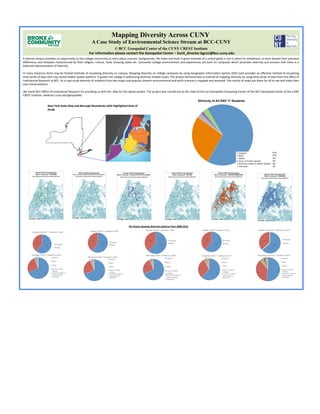
  • 50.
                                                             
  • 51.
                                                             
  • 52.
                                                         
  • 53.
                      WANT TO TAKE A LOOK AT A LEADING GEOSPATIAL COMPANY’S JOB DESCRIPTION? THIS COMPANY IS A MEMBER ON THE ADVISORY BOARD OF THE BCC GEOSPATIAL CENTER
  • 54.
            Associate  Geospatial  Analyst   About  the  Company   Digital  Globe  is  a  leading  provider  of  commercial  high-­‐resolution  earth  observation  and  advanced  geospatial   solutions  that  help  decision  makers  better  understand  our  changing  planet  in  order  to  save  lives,  resources  and   time.    Sourced  from  the  world’s  leading  constellation,  our  imagery  solutions  deliver  unmatched  coverage  and   capacity  to  meet  our  customers’  most  demanding  mission  requirements.      Each  day  customers  in  defense  and   intelligence,  public  safety,  civil  agencies,  map  making  and  analysis,  environmental  monitoring,  oil  and  gas   exploration,  infrastructure  management,  navigation  technology,  and  providers  of  location-­‐based  services  depend   on  Digital  Globe  data,  information,  technology  and  expertise  to  gain  actionable  insight.    Digital  Globe  is  a  public   company  listed  on  the  NYSE  as  DGI,  and  is  headquartered  in  Westminster,  Colorado.   Summary     The  Geospatial  Analyst  will  be  responsible  for  providing  technical  support  to  customer  projects  involving  dynamic   geospatial  information  to  include  social  media  and  foundational  intelligence  data.  Key  types  of  analytics  expected   will  be  fusing  multiple  sources  of  information  into  key  findings,  and  geotemporal  pattern-­‐of-­‐life  analysis  to  provide   insight  to  customer  requirements.  Additionally,  the  candidate  will  possess  excellent  research  skills  to  find   meaningful  information  in  unstructured  data.  All  research  and  analysis  will  be  aggregated  into  finished  products   that  will  be  published  to  a  diverse  audience-­‐-­‐therefore  good  writing  and  publishing  skills  are  highly  desired.   He/She  will  ensure  all  of  the  products  created  meet  quality  and  material  specifications  in  accordance  with   customer  needs.  This  position  will  assist  in  the  implementation  of  emerging  capabilities,  using  leading  edge   technologies  to  perform  analysis  and  derive  information  from  large  geospatial  data  sets.     Responsibilities     The  Geospatial  Analyst  will:     • Gather  requirements,  determine  scope,  and  estimate  hours  needed  to  develop  and  deliver  custom   geospatial  analytic  solutions  to  our  government  customer   • Produce  custom  information  layers  derived  from  social  media  and  other  open-­‐source  data  sources  using   COTS  and  proprietary  software   • Collaborate  daily  with  cross-­‐functional  internal  and  external  team  members  and  occasionally  third  party   vendors,  sometimes  as  project  lead,  and  other  times  under  other  team  member  leadership   • Identify  and  implement  improvements  to  system  designs  and  processing  methodologies  to  improve   efficiency,  scale,  reliability,  and  mitigate  operational  risk   • Maintain  production  line  operations  and  other  tasks  as  needed  to  satisfy  customers  and  fulfill  contractual   commitments   • Advise,  train,  mentor,  and  learn  from  other  team  members  on  technical  topics   • Write  procedures,  methods,  workflow  documents  and  standard  operating  processes  
  • 55.
        Job  Requirements     This  person  must  possess  a  strong  client  focus  and  have  the  following  experience:     • A  Bachelor’s  Degree  in  Information  Technology,  Geographic  Information  Science  (GIS)  or  related  field   preferred  or  the  equivalent  combination  education  and  experience.  Master's  degree  preferred.     Preferred  Skills     • 1-­‐5  years  work  experience  in  GIS,  remote  sensing,  and/or  photogrammetry   • 1-­‐3  years  scripting  experience  with  Python,  GDAL,  ENVI  IDL,  and/or  ArcGIS  Model  Builder.   • Ability  to  thrive  in  a  fast-­‐paced  environment  as  an  individual  contributor  on  a  transparent,  agile  team   Location:     Tampa,  FL     Compensation     DigitalGlobe  offers  a  generous  compensation  package  including  a  competitive  salary;  choice  of  medical  plan;   dental,  life,  and  disability  insurance;  a  401(K)  plan  with  competitive  company  match;  paid  holidays  and  paid  time   off     Applicants  for  this  position  will  be  required  to  take  and  pass  a  drug  test.     DigitalGlobe  is  an  equal  opportunity  employer  and  considers  qualified  applicants  for  employment  without  regard   to  race,  color,  sex,  sexual  orientation,  gender  identity  or  expression,  religion,  national  origin,  marital  or  familial   status,  age,  disability,  veteran  status,  military  service  or  application  for  military  service,  status  with  regard  to   public  assistance,  genetic  information  or  any  other  characteristic  protected  by  law.  
  • 56.
        THE BCCGEOSPATIAL CENTER IS A ONE OF A KIND CENTER IN THE CUNY SYSTEM IT IS A COLLABORATION WITH THE NOAA- CREST INSTITUTE THAT IS ADMINISTERED BY THE CITY COLLEGE OF NEW YORK VISIT THE CENTER AT WWW.BCC.CUNY.EDU/GEOSPATIAL/ IT HAS A STATE-OF-THE-ART- GEOSPATIAL COMPUTING CENTER IT HAS A HUGE GEOSPATIAL DATA ARCHIVE IT HAS CUTTING-EDGE GEOSPATIAL SOFTWARE THAT IS ALSO USED BY A NASA, EPA, USGS, NATIONAL GEOSPATIAL INTELLIGENCE AGENCY, US DEFENSE AND OTHER LEADING AGENCIES
  • 57.
        BCC  GEOSPATIAL  CENTER  OF  THE  CREST   INSTITUTE  (BGCCCI)     Meister  Hall  Room  #  330,  2155  University  Avenue   Bronx  Community  College  of  the  City  University  of  New  York   Bronx,  NY  10453   Tel:  1-­‐718.289.5566/5233;  Fax:  1-­‐718.289.6448   www.bcc.cuny.edu/geospatial/     MAPPING  WHAT  MATTERS     ‘Training  Geospatial  Technicians  of  the  Future’  
  • 58.
        Geospatial technologyis an invaluable tool for visualizing monitoring and modeling different phenomena and processes of the earth. The BCC Geospatial of the CREST Institute promotes education, training and cutting-edge research in the emerging field of geospatial technology. It supports the mission of NOAA- CREST center and aims to deliver excellence in education, research and outreach activities. The center will engage its multidisciplinary team of expert faculty and ethnically diverse group of talented students for developing spatial solutions. It will collaborate with institutions, federal and private agencies for developing internships, articulation programs and pathways to geospatial careers and advanced studies. The geospatial laboratory consists of State-Of-The-Art facilities. It has the latest versions of image and spatial analysis software that is used in almost all federal and private agencies around the world. From conventional classification methods to new object based approaches the lab is equipped with software to train any BCC student in geospatial technology. The software is partially funded from CUNY’s Work Force Development Initiative (WDI) Grant Award (2013-2015). The lab also has a sophisticated ink-jet 44” wide format plotter and a color printer for producing superior cartographic output. These tools will give BCC students, faculty and staff a great opportunity to learn new skills at a time when the geospatial industry is growing exponentially but also facing a critical shortage of skilled labor.         BGCCCI  –  PROMOTING  GEOSPATIAL  TECHNOLOGY       Delivering  skilled  geospatial  technicians  of  the  future     (left)  state-­‐of-­‐the-­‐art  Geospatial  Computing   Center  and  (above)  BCC’s  students  presenting   geospatial  project  outcomes  at  the  2012  annual   BCC  science  Fair    
  • 59.
        GEOSPATIAL  TECHNOLOGY    Endless  possibilities  in  education  and  research   Develop  models  to  monitor  phenomena  and   processes  remotely:  Ground  based  data  may   be  calibrated  to  satellite  data  for  regular   monitoring  of  pollution.  Develop  satellite   monitoring  stations  in  the  Bronx   Develop  simulation  models:   ‘What  if’  scenarios  are  critical  to   plan  resources  and  manage  the   environment.  Very  high  resolution   (VHR)  data  and  3-­‐D  capabilities   permit  simulations  of  data       Model  disparate  datasets:  Complex   processes  involving  large  volumes  of   data  have  to  be  integrated  and   modeled  to  formulate  decisions.  A   Geographic  Information  System   provides  an  ideal  environment  to   model  complex  data   Develop  models  to  visualize   social  behavior:  Socio-­‐economic   characteristics  need  to  mapped  to   better  understand  pollution,  crime,   migration,  tourism,  solid  waste,  and   transformation  into  smarter  cities     Design  new  Curriculum:   Designing  new  curriculum  and   collaborative  projects  with   multidisciplinary  faculty.   Formulating  of  articulation   agreements  with  4-­‐year   colleges  and  pathways  to   careers   Tools  to  map  spatial  patterns  of  land   processes  and  resources:  Land  cover  /Land  use   changes,  urbanization  trends,  need  to  be   visualized  and  understood  at  all  scales      for   sustainable  development.  Image  analysis  of  time-­‐ series  of  satellite  data  provides  a  tool  to  perform   such  analyses  due  to  its  synoptic,  spectral  and   temporal  properties.   BGCCCI  Activities    
  • 60.
                        Contact:  Dr.  Sunil  Bhaskaran  (Founding  Director).   The  BCC  Geospatial  Center  of  the  CUNY  CREST  Institute  (BGCCCI).     Office:  807,  Meister  Hall,  Bronx  Community  College  –  City  University  of  New   York;  2155,  University  Avenue,  Bronx,  NY  10453.       Tel:  +1  (718)  289  5566/5233;     Fax:  +1  (718)  289  6448;   Email:  Sunil.Bhaskaran@bcc.cuny.edu  or  Sunil_director.bgccci@bcc.cuny.edu     Geospatial  Computing  Center  –  330,  Meister  Hall;     Tel:  +1  (718)  289  5233;     Fax:  +1  (718)  289  6448.    
  • 61.
          YOUCAN APPLY FOR INTERNSHIPS AT NASA, LIRR, NGIA, EPA, MTA AND SEVERAL LEADING AGENCIES WHO USE GEOSPATIAL TECHNOLOGY IN THEIR DAILY BUSINESS IF YOU PERFORM WELL THEY MAY ABSORB TALENTED AND HARDWORKING INTERNS AS FULL TIME EMPLOYEES! MOST OF THE INTERNSHIPS ARE FOR UNDERREPRESENTED COMMUNITIES BY FEDERAL MANDATE
  • 62.
                    New York Space Grant Community College Partnership Program We’re  looking  for  Community  College  students  up  to  the  challenge  to  join  this   exciting new network of NASA scientists and engineers in New York State. The NYSG CCPP:  Involves you in real research right now  Introduces you to this exciting field & the people at its frontier – your new peers  Matches you with a career and research mentor  Trains you to prepare for summer research and to graduate to a four-year college  Organizes summer opportunities at your college, a four-year college, or NASA Center  Provides fellowships to defray tuition for an academic semester  Provides summer research fellowships  Supports travel and lodging for summer internships as needed Apply today! Students should be enrolled in a 2-year or technical college, be a US citizen, and have an interest in pursuing a career in Science, Technology, Engineering, or Mathematics as evidenced by their application essays, and choice of courses and major. Students from groups underrepresented in the sciences – e.g., African Americans, Hispanics, Native Americans, and women – are particularly encouraged to apply. Please complete your application by Oct 16, 2015. Visit the NYSG CCPP page at http://astro.cornell.edu/spacegrant/ccprogram.html for more information and the link to the application, or also email paglione@york.cuny.edu.
  • 63.
                 
  • 64.
                            DID YOU KNOW THAT THE BCC GEOSPATIAL CENTER IS COLLABORATING WITH THE CITY OF TOWNSVILLE, CITY OF DUBUQUE AND IBM SUPPORTED SMARTER CITIES PROJECT IN AUSTRALIA SINCE 2013?
  • 65.
              THE SMARTER CITIES PROJECT WITH AUSTRALIA  
  • 66.
            FOSTERING INTERNATIONAL COLLABORATIONS – BCC TEAM VISIT TO AUSTRALIA Team of professors led by Prof Neal Phillip were invited to the Land Down Under to visit the City of Townsville. The main focus of the visit was to see new clean energy projects in a real-world context and understand the issues that a city has to grapple with in their transition to an alternate form of energy. The visit was sponsored by the Office of the President of BCC and the City of Townsville lead by Mayor Jenny Hill and Greg Bruce (Chief Sustainability Officer). Highlights of the trip was the visit to the James Cook University, Hermit Park State School and Queensland Emergency Service
  • 67.
  • 68.
            DID YOU KNOW THAT GEOSPATIAL TECHNOLOGIES PLAY A LEADING ROLE IN THE CREATION OF A SUSTAINABLE EARTH?
  • 69.
                          CREATE  A  SUSTAINABLE  EARTH  WITH  GEOSPATIAL  TECHNOLOGY   The  BCC  Geospatial  Center  of  the  CUNY  CREST  Institute   (BGCCCI)   City  University  of  New  York   2155,  University  Avenue,  Bronx   New  York  -­‐  10453   Tel:  1-­‐718-­‐289-­‐5523;  Fax:  1-­‐718-­‐289-­‐6448   Email:  Sunil_director.bgccci@bcc.cuny.edu   Facebook:  https://www.facebook.com/bccgeospatial/