Geography Chapter 4
Air
Our atmosphere is surrounded by a huge blanket of
air called atmosphere.
Composition of the Atmosphere
Nitrogen and oxygen are the two gases which make
up the bulk of the atmosphere.
Nitrogen-78% Oxygen-21% CO2- 0.03%
Argon-0.93% All others-0.04%
Carbon dioxide, helium, ozone, argon and hydrogen
are found in lesser quantities.
Apart from these gases, tiny dust particles are also
present in the air.
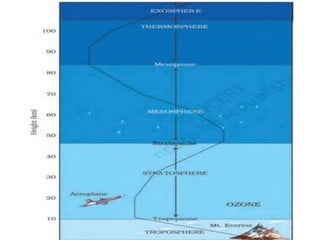
Our atmosphere is divided into five layers starting
from the earth’s surface.
Troposphere
Stratosphere
Mesosphere
Thermosphere
Exosphere
The first layer is the Troposphere whose average
height is 13 km.
The troposphere is the layer in which the air we
breathe exist.
Almost all weather phenomena occur here.
The second layer is the Stratosphere which extends
up to 50 km.
The third layer is the Mesosphere which extends up
to the height of 80 km.
The fourth layer is the Thermosphere which extends
from 80 km to 400 km.
The uppermost layer of the atmosphere is Exosphere
which has very thin air
Weather is hour-to-hour, day-to-day condition of the
atmosphere.
Climate is the average weather condition of a place
for a longer period of time.
The temperature of the atmosphere remains
changing. The degree of hotness and coldness of
the air is known as temperature.
Insolation is an important factor that influences the
distribution of temperature. The amount of
insolation decreases from the equator towards the
poles. Therefore, the temperature decreases in the
same way.
Air above us presses us from all directions with a
great force on our body and our body exerts a
counter pressure.
Air pressure is the pressure exerted by the weight of
air on the earth’s surface. As we go up the layers of
the atmosphere, the pressure falls rapidly.
Low pressure is associated with cloudy skies and wet
weather. High pressure is associated with clear and
sunny skies. The air always moves from high-
pressure areas to a low-pressure area.
Wind is the movement of air from the high-pressure
area to low pressure areas. Wind may be gentle. At
times it may be strong and devastating.
Winds are of three types
• Permanent winds
• Seasonal winds
• Local winds
Moisture means humidity. A humid day is one when
the air is the fall of water vapour. On a humid day,
clothes take longer to dry and sweat from our
body does not evaporate easily.
Clouds are masses of water droplets.
When these droplets of water become very heavy
they come down as precipitation.
Precipitation that comes down to the earth in liquid
form is called rain.
There are three types of rain on the basis of
mechanism—the conventional rainfall, the
orographic rainfall and the cyclonic rainfall.
Geography chapter air class 7 notes

Geography chapter air class 7 notes

  • 1.
  • 2.
    Our atmosphere issurrounded by a huge blanket of air called atmosphere. Composition of the Atmosphere Nitrogen and oxygen are the two gases which make up the bulk of the atmosphere. Nitrogen-78% Oxygen-21% CO2- 0.03% Argon-0.93% All others-0.04% Carbon dioxide, helium, ozone, argon and hydrogen are found in lesser quantities. Apart from these gases, tiny dust particles are also present in the air.
  • 5.
    Our atmosphere isdivided into five layers starting from the earth’s surface. Troposphere Stratosphere Mesosphere Thermosphere Exosphere The first layer is the Troposphere whose average height is 13 km. The troposphere is the layer in which the air we breathe exist. Almost all weather phenomena occur here.
  • 6.
    The second layeris the Stratosphere which extends up to 50 km. The third layer is the Mesosphere which extends up to the height of 80 km. The fourth layer is the Thermosphere which extends from 80 km to 400 km. The uppermost layer of the atmosphere is Exosphere which has very thin air
  • 8.
    Weather is hour-to-hour,day-to-day condition of the atmosphere. Climate is the average weather condition of a place for a longer period of time. The temperature of the atmosphere remains changing. The degree of hotness and coldness of the air is known as temperature. Insolation is an important factor that influences the distribution of temperature. The amount of insolation decreases from the equator towards the poles. Therefore, the temperature decreases in the same way.
  • 9.
    Air above uspresses us from all directions with a great force on our body and our body exerts a counter pressure. Air pressure is the pressure exerted by the weight of air on the earth’s surface. As we go up the layers of the atmosphere, the pressure falls rapidly. Low pressure is associated with cloudy skies and wet weather. High pressure is associated with clear and sunny skies. The air always moves from high- pressure areas to a low-pressure area. Wind is the movement of air from the high-pressure area to low pressure areas. Wind may be gentle. At times it may be strong and devastating.
  • 10.
    Winds are ofthree types • Permanent winds • Seasonal winds • Local winds Moisture means humidity. A humid day is one when the air is the fall of water vapour. On a humid day, clothes take longer to dry and sweat from our body does not evaporate easily. Clouds are masses of water droplets. When these droplets of water become very heavy they come down as precipitation. Precipitation that comes down to the earth in liquid form is called rain.
  • 11.
    There are threetypes of rain on the basis of mechanism—the conventional rainfall, the orographic rainfall and the cyclonic rainfall.