







GEOGRAPHY
GRADE-7
CHAPTER-3: OUR CHANGING EARTH
{13TH TO 18TH JULY 2020}
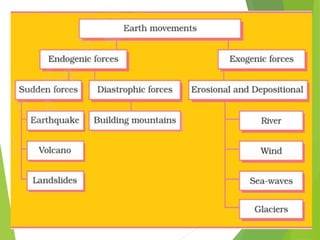
 TWO TYPES OF FORCES
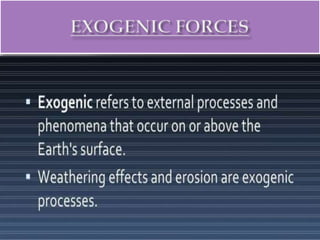
EXOGENIC (Exogenous) FORCE
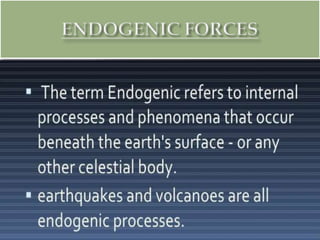
ENDOGENIC (Endogenous) FORCE -Earthquake, Volcano
 MAJOR LAND FORMS– weathering and erosion
 Work of a River
 Work of Sea Waves
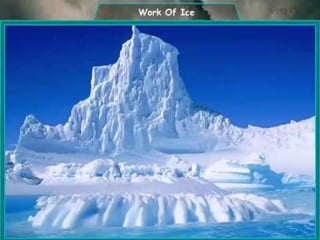
 Work of Ice
 Work of wind
CLASS -1
LEARNING OBJECTIVE FOR THIS CLASS
TWO TYPES OF FORCES:
• EXOGENIC (Exogenous) FORCE
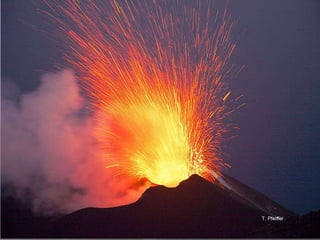
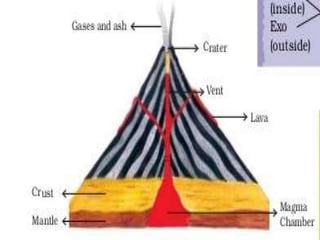
• ENDOGENIC (Endogenous) FORCE -Earthquake, Volcano
DATE: 13.07.2020
LETS RECALL……..
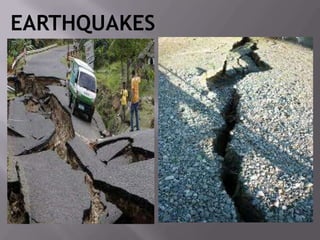
EARTHQUAKES
EARTHQUAKES
When the Lithospheric plates move, the surface of
the earth vibrates.
The vibrations can travel all round the earth. These
vibrations are called earthquakes.
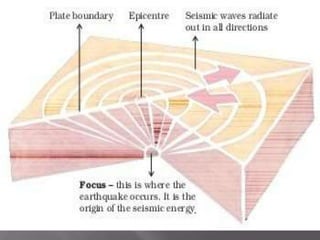
The place in the crust where the movement
starts is called the Focus.
The place on the surface above the focus is
called the Epicenter.
Vibrations travel outwards from the Epicenter
as waves.
Greatest damage is usually closest to the
Epicenter and the strength of the earth quake
decreases away from the centre
QUIZ TIME
 Which is caused by the sudden movements of the earth?
Volcano
Folding
Flood plain
 Why do the plates move?
 ___________ is the place on the crust where the movement
in an earthquake starts
CLASS -2
LEARNING OBJECTIVE FOR THIS CLASS
 MAJOR LAND FORMS– weathering and erosion
 Work of a River
DATE: .07.20
The landscape is being formed by two
processes:
Weathering
Erosion
The landscape is being formed by two
processes:
Weathering
Erosion
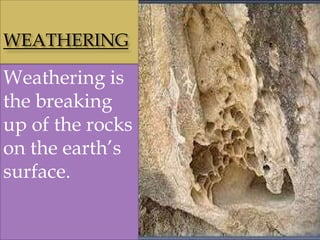
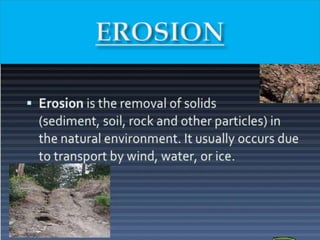
WEATHERING
Weathering is
the breaking
up of the rocks
on the earth’s
surface.
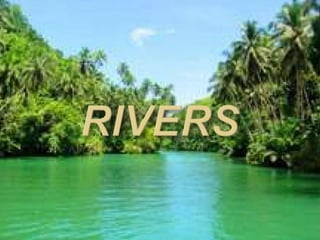
Following features are made by river are :
o Water fall
o Meanders
o Ox-bow lake
o Floodplain
o Levees
o Delta
Following features are made by river are :
o Water fall
o Meanders
o Ox-bow lake
o Floodplain
o Levees
o Delta
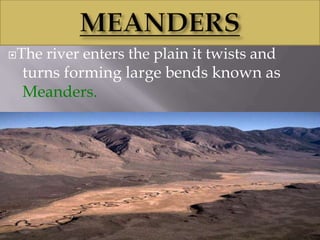
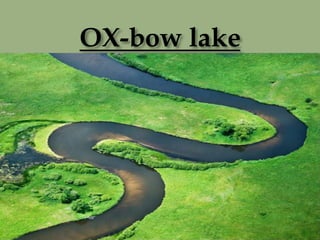
The river enters the plain it twists and
turns forming large bends known as
Meanders.
OX-bow lake
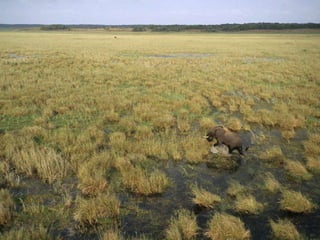
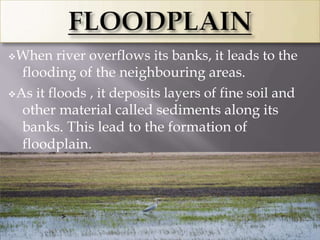
When river overflows its banks, it leads to the
flooding of the neighbouring areas.
As it floods , it deposits layers of fine soil and
other material called sediments along its
banks. This lead to the formation of
floodplain.
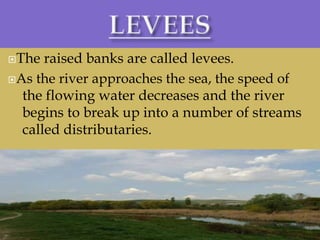
The raised banks are called levees.
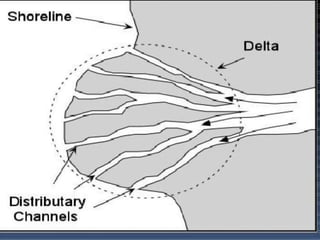
As the river approaches the sea, the speed of
the flowing water decreases and the river
begins to break up into a number of streams
called distributaries.
LETS REVISE……..
QUIZ TIME
a. Floodplains are ______
i. Flat
ii. Fertile
iii. Barren
iv. Both a and b
b. _____ is an odd one in the following
i. Waterfall
ii. Levees
iii. Delta
iv. Moraines
CLASS -3
LEARNING OBJECTIVE FOR THIS CLASS
 Work of Sea Waves
 Work of Ice
 Work of wind
DATE: .07.20
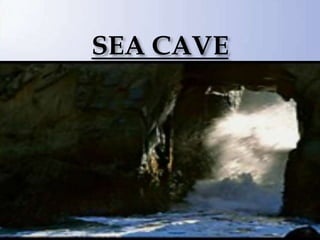
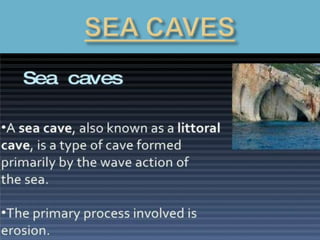
SEA CAVE
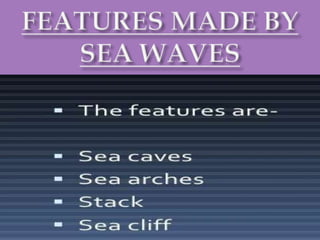
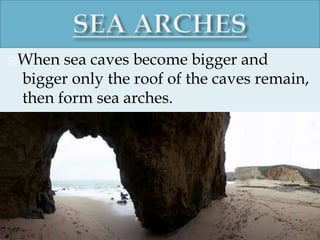
When sea caves become bigger and
bigger only the roof of the caves remain,
then form sea arches.
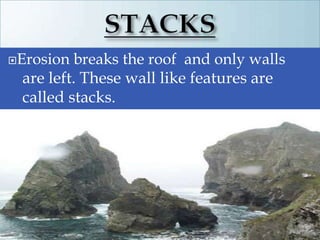
Erosion breaks the roof and only walls
are left. These wall like features are
called stacks.
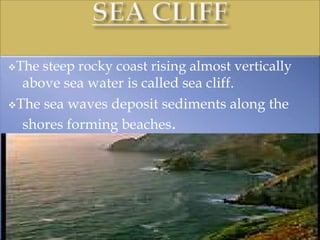
The steep rocky coast rising almost vertically
above sea water is called sea cliff.
The sea waves deposit sediments along the
shores forming beaches.
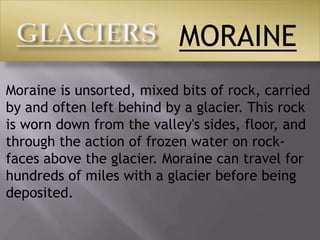
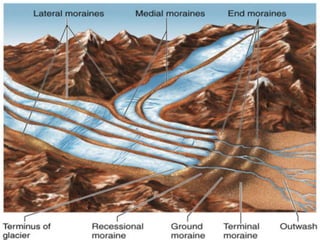
MORAINE
Moraine is unsorted, mixed bits of rock, carried
by and often left behind by a glacier. This rock
is worn down from the valley's sides, floor, and
through the action of frozen water on rock-
faces above the glacier. Moraine can travel for
hundreds of miles with a glacier before being
deposited.
MORAINE
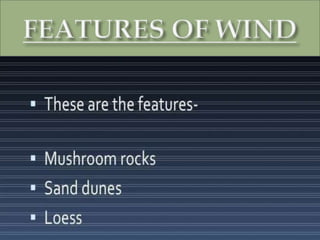
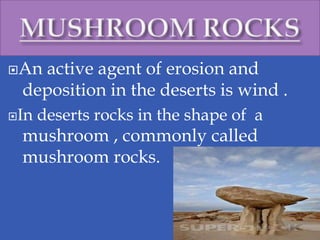
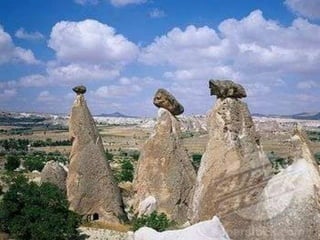
An active agent of erosion and
deposition in the deserts is wind .
In deserts rocks in the shape of a
mushroom , commonly called
mushroom rocks.
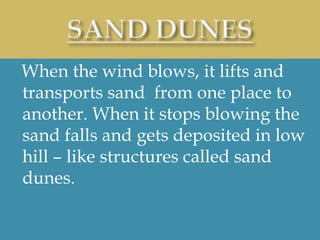
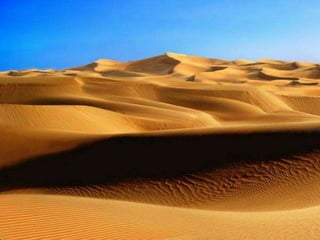
When the wind blows, it lifts and
transports sand from one place to
another. When it stops blowing the
sand falls and gets deposited in low
hill – like structures called sand
dunes.
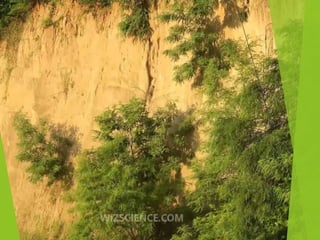
In some parts of the world, windblown
dust and silt blanket the land. This layer
of fine, mineral-rich material is
called loess. Loess is mostly created by
wind, but can also be formed by glaciers.
When glaciers grind rocks to a fine
powder, loess can form.
LOESS
QUIZ TIME
a. In deserts we see rocks in the shape of a _____
i. Cactus
ii. Mushroom
iii. Rose
iv. Lotus
b. ___________ are ‘rivers’ of ice
i. Moraines
ii. Glacier
iii. Igloo
iv. Loess
c. The hill-like structures in the desert are called ______.
d. Hollow like caves that are formed on the rocks are called _____.
e. Pick the odd one: mushroom rocks, sand dunes, sea caves.

G 7 CH-3 GEO NCERT full chapter

  • 1.
    GEOGRAPHY GRADE-7 CHAPTER-3: OUR CHANGINGEARTH {13TH TO 18TH JULY 2020}
  • 2.
     TWO TYPESOF FORCES EXOGENIC (Exogenous) FORCE ENDOGENIC (Endogenous) FORCE -Earthquake, Volcano  MAJOR LAND FORMS– weathering and erosion  Work of a River  Work of Sea Waves  Work of Ice  Work of wind
  • 3.
    CLASS -1 LEARNING OBJECTIVEFOR THIS CLASS TWO TYPES OF FORCES: • EXOGENIC (Exogenous) FORCE • ENDOGENIC (Endogenous) FORCE -Earthquake, Volcano DATE: 13.07.2020
  • 9.
  • 14.
  • 15.
  • 16.
    When the Lithosphericplates move, the surface of the earth vibrates. The vibrations can travel all round the earth. These vibrations are called earthquakes.
  • 17.
    The place inthe crust where the movement starts is called the Focus. The place on the surface above the focus is called the Epicenter. Vibrations travel outwards from the Epicenter as waves. Greatest damage is usually closest to the Epicenter and the strength of the earth quake decreases away from the centre
  • 19.
    QUIZ TIME  Whichis caused by the sudden movements of the earth? Volcano Folding Flood plain  Why do the plates move?  ___________ is the place on the crust where the movement in an earthquake starts
  • 20.
    CLASS -2 LEARNING OBJECTIVEFOR THIS CLASS  MAJOR LAND FORMS– weathering and erosion  Work of a River DATE: .07.20
  • 22.
    The landscape isbeing formed by two processes: Weathering Erosion
  • 23.
    The landscape isbeing formed by two processes: Weathering Erosion
  • 24.
    WEATHERING Weathering is the breaking upof the rocks on the earth’s surface.
  • 27.
    Following features aremade by river are : o Water fall o Meanders o Ox-bow lake o Floodplain o Levees o Delta
  • 29.
    Following features aremade by river are : o Water fall o Meanders o Ox-bow lake o Floodplain o Levees o Delta
  • 30.
    The river entersthe plain it twists and turns forming large bends known as Meanders.
  • 31.
  • 34.
    When river overflowsits banks, it leads to the flooding of the neighbouring areas. As it floods , it deposits layers of fine soil and other material called sediments along its banks. This lead to the formation of floodplain.
  • 35.
    The raised banksare called levees. As the river approaches the sea, the speed of the flowing water decreases and the river begins to break up into a number of streams called distributaries.
  • 38.
  • 39.
    QUIZ TIME a. Floodplainsare ______ i. Flat ii. Fertile iii. Barren iv. Both a and b b. _____ is an odd one in the following i. Waterfall ii. Levees iii. Delta iv. Moraines
  • 40.
    CLASS -3 LEARNING OBJECTIVEFOR THIS CLASS  Work of Sea Waves  Work of Ice  Work of wind DATE: .07.20
  • 44.
  • 46.
    When sea cavesbecome bigger and bigger only the roof of the caves remain, then form sea arches.
  • 47.
    Erosion breaks theroof and only walls are left. These wall like features are called stacks.
  • 48.
    The steep rockycoast rising almost vertically above sea water is called sea cliff. The sea waves deposit sediments along the shores forming beaches.
  • 51.
  • 54.
    Moraine is unsorted,mixed bits of rock, carried by and often left behind by a glacier. This rock is worn down from the valley's sides, floor, and through the action of frozen water on rock- faces above the glacier. Moraine can travel for hundreds of miles with a glacier before being deposited. MORAINE
  • 59.
    An active agentof erosion and deposition in the deserts is wind . In deserts rocks in the shape of a mushroom , commonly called mushroom rocks.
  • 61.
    When the windblows, it lifts and transports sand from one place to another. When it stops blowing the sand falls and gets deposited in low hill – like structures called sand dunes.
  • 63.
    In some partsof the world, windblown dust and silt blanket the land. This layer of fine, mineral-rich material is called loess. Loess is mostly created by wind, but can also be formed by glaciers. When glaciers grind rocks to a fine powder, loess can form. LOESS
  • 65.
    QUIZ TIME a. Indeserts we see rocks in the shape of a _____ i. Cactus ii. Mushroom iii. Rose iv. Lotus b. ___________ are ‘rivers’ of ice i. Moraines ii. Glacier iii. Igloo iv. Loess c. The hill-like structures in the desert are called ______. d. Hollow like caves that are formed on the rocks are called _____. e. Pick the odd one: mushroom rocks, sand dunes, sea caves.