TOPIC: AIR
BY M NANDA KUMAR
7th
Class.
INTRODUCTION
• Air is the invisible mixture of gases that surrounds earth.
• Air contains important substances, such as oxygen and
nitrogen.
• Sometimes, the word ‘’ATMOSPHERE’’ is used instead of
the word ‘’AIR’’.
Contents:
• Composition of the ATMOSPHERE
• Structure of the ATMOSPHERE
• Troposphere
• Stratosphere
• Mesosphere
• Thermosphere
• Exosphere
• Whether & Climate
• Temperature
• Air Pressure
• Wind :- Permanent, Seasonal & Local winds.
• Moisture:- Cyclonic, Orographic & Conventional.
Composition of the ATMOSPHERE
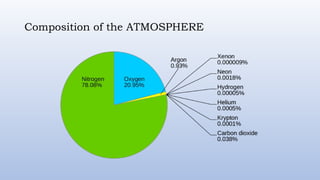
• Nitrogen and oxygen are two gases which make up the
bulk of the atmosphere.
• Carbon dioxide, helium, ozone, argon and hydrogen are
found in lesser quantities.
• Nitrogen is the most plentiful gas in the air.
• Oxygen is the second most plentiful gas in the air.
• Humans or animals take oxygen from the air as they
photosynthesis.
• Humans or animals release carbon dioxide.
• The amount of carbon dioxide released by humans or
animals seems to be equal to the amount used by the
plants which make a perfect balance.
Structure of the ATMOSPHERE
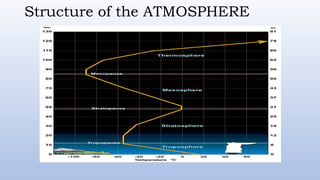
• Troposphere:
• The layer average height is 13 KM from the earth.
• The air we breathe exists here
• All the weather phenomena like rain fall, fog & hailstorm
occur in this layer.
• Stratosphere:
• Above Troposphere lies the Stratosphere up to 50 KM.
• It contains a layer of a Ozone gas which protects us from
sunrays.
Structure of the ATMOSPHERE
• Mesosphere :
• This is the third layer of the atmosphere.
• It lies above the Stratosphere up to 80 KM.
• Meteorites burn up in this layer on entering from the
space.
• Thermosphere:
• Temperature will rises very rapidly with increasing
height.
• It extends between 80 to400KM.
• This layer helps in radio transmission.
Structure of the ATMOSPHERE
• Exosphere:
• The upper most layer of the atmosphere.
• This layer has very thin air.
• light gases like helium and hydrogen float into
the space.
Weather and climate
• Weather is this hour–to-hour, day-to-day
condition of the atmosphere.
• The average weather condition of a place for a
long period of time represents the climate of a
place.
• Temparature:
• The degree of hotness and coldness of the air
is known as temperature.
• Temperature is not only between day and
night but also from season to season.
Weather and climate
• Temperature in cities is much higher than that of villages.
• The crowded high rise buildings of the cities trap the warm air and
raise the temperature of the cities.
• Air pressure:
• Air pressure is defined as the pressure exerted by the weight of air on
the earth’s surface.
• The air pressure is highest at sea level and decreases with height.
• Low pressure is associated with cloudy skies and wet weather.
• High pressure is associated with clear and sunny skies.
• Air always moves from high pressure areas to low pressure areas.
Weather and climate
• Wind:
• The movement of air from high pressure area to low pressure areas is
called wind.
• It blows dry leaves down the pavement or uproots trees during a
storm.
• Winds is divided into three types:
• Permanent winds:
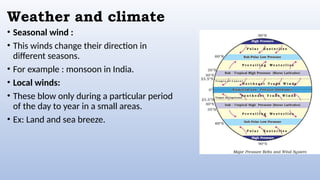
• The trade winds, westerlies and easterlies are the permanent winds.
• These blow constantly through out the year in a particular direction.
Weather and climate
• Seasonal wind :
• This winds change their direction in
different seasons.
• For example : monsoon in India.
• Local winds:
• These blow only during a particular period
of the day to year in a small areas.
• Ex: Land and sea breeze.
Weather and climate
• Moisture:
• Moisture in the air at any time, is known as humidity.
• The air is full of water vapor. we call it humid day.
• The water vapor condenses causing formation of droplets of water.
• Clouds are just masses of such a droplets of water.
• Droplets of water become too heavy to float in the air, they come down as
precipitation.
• Jet planes flying in the sky leave a white trail behind them.
• The moisture from their engines condenses.
• Precipitation that comes down to the earth in liquid form is called rain.
• Tress on hill side, rain water flows down and can cause flooding in areas.
Weather and climate
• Types of rain fall:
• They are three types of rainfall:
• 1) convectional rainfall
• 2)orographic rainfall
• 3)cyclonic rainfall
• Rainfall is very important for the survival of plants and animals.
• It brings fresh water to the earth’s surface.
• If rainfall is less –water scacity and drought occur.
•
thank you.

SOCIAL PPT GEO WATER 7TH CLASS A SECTION

  • 1.
    TOPIC: AIR BY MNANDA KUMAR 7th Class.
  • 2.
    INTRODUCTION • Air isthe invisible mixture of gases that surrounds earth. • Air contains important substances, such as oxygen and nitrogen. • Sometimes, the word ‘’ATMOSPHERE’’ is used instead of the word ‘’AIR’’.
  • 3.
    Contents: • Composition ofthe ATMOSPHERE • Structure of the ATMOSPHERE • Troposphere • Stratosphere • Mesosphere • Thermosphere • Exosphere • Whether & Climate • Temperature • Air Pressure • Wind :- Permanent, Seasonal & Local winds. • Moisture:- Cyclonic, Orographic & Conventional.
  • 4.
  • 5.
    Composition of theATMOSPHERE • Nitrogen and oxygen are two gases which make up the bulk of the atmosphere. • Carbon dioxide, helium, ozone, argon and hydrogen are found in lesser quantities. • Nitrogen is the most plentiful gas in the air. • Oxygen is the second most plentiful gas in the air. • Humans or animals take oxygen from the air as they photosynthesis. • Humans or animals release carbon dioxide. • The amount of carbon dioxide released by humans or animals seems to be equal to the amount used by the plants which make a perfect balance.
  • 6.
    Structure of theATMOSPHERE
  • 7.
    Structure of theATMOSPHERE • Troposphere: • The layer average height is 13 KM from the earth. • The air we breathe exists here • All the weather phenomena like rain fall, fog & hailstorm occur in this layer. • Stratosphere: • Above Troposphere lies the Stratosphere up to 50 KM. • It contains a layer of a Ozone gas which protects us from sunrays.
  • 8.
    Structure of theATMOSPHERE • Mesosphere : • This is the third layer of the atmosphere. • It lies above the Stratosphere up to 80 KM. • Meteorites burn up in this layer on entering from the space. • Thermosphere: • Temperature will rises very rapidly with increasing height. • It extends between 80 to400KM. • This layer helps in radio transmission.
  • 9.
    Structure of theATMOSPHERE • Exosphere: • The upper most layer of the atmosphere. • This layer has very thin air. • light gases like helium and hydrogen float into the space.
  • 10.
    Weather and climate •Weather is this hour–to-hour, day-to-day condition of the atmosphere. • The average weather condition of a place for a long period of time represents the climate of a place. • Temparature: • The degree of hotness and coldness of the air is known as temperature. • Temperature is not only between day and night but also from season to season.
  • 11.
    Weather and climate •Temperature in cities is much higher than that of villages. • The crowded high rise buildings of the cities trap the warm air and raise the temperature of the cities. • Air pressure: • Air pressure is defined as the pressure exerted by the weight of air on the earth’s surface. • The air pressure is highest at sea level and decreases with height. • Low pressure is associated with cloudy skies and wet weather. • High pressure is associated with clear and sunny skies. • Air always moves from high pressure areas to low pressure areas.
  • 12.
    Weather and climate •Wind: • The movement of air from high pressure area to low pressure areas is called wind. • It blows dry leaves down the pavement or uproots trees during a storm. • Winds is divided into three types: • Permanent winds: • The trade winds, westerlies and easterlies are the permanent winds. • These blow constantly through out the year in a particular direction.
  • 13.
    Weather and climate •Seasonal wind : • This winds change their direction in different seasons. • For example : monsoon in India. • Local winds: • These blow only during a particular period of the day to year in a small areas. • Ex: Land and sea breeze.
  • 14.
    Weather and climate •Moisture: • Moisture in the air at any time, is known as humidity. • The air is full of water vapor. we call it humid day. • The water vapor condenses causing formation of droplets of water. • Clouds are just masses of such a droplets of water. • Droplets of water become too heavy to float in the air, they come down as precipitation. • Jet planes flying in the sky leave a white trail behind them. • The moisture from their engines condenses. • Precipitation that comes down to the earth in liquid form is called rain. • Tress on hill side, rain water flows down and can cause flooding in areas.
  • 15.
    Weather and climate •Types of rain fall: • They are three types of rainfall: • 1) convectional rainfall • 2)orographic rainfall • 3)cyclonic rainfall • Rainfall is very important for the survival of plants and animals. • It brings fresh water to the earth’s surface. • If rainfall is less –water scacity and drought occur.
  • 16.