GEOGRAPHIC
INFORMATION
SYSTEM
Submitted By
Rahul Chahel (11610125)
Submitted to
Dr. S. M. GUPTA
 What is GIS?
 Parts of GIS
 DATA CAPTURE
 Primary geographic data capture
 Secondary geographic data capture
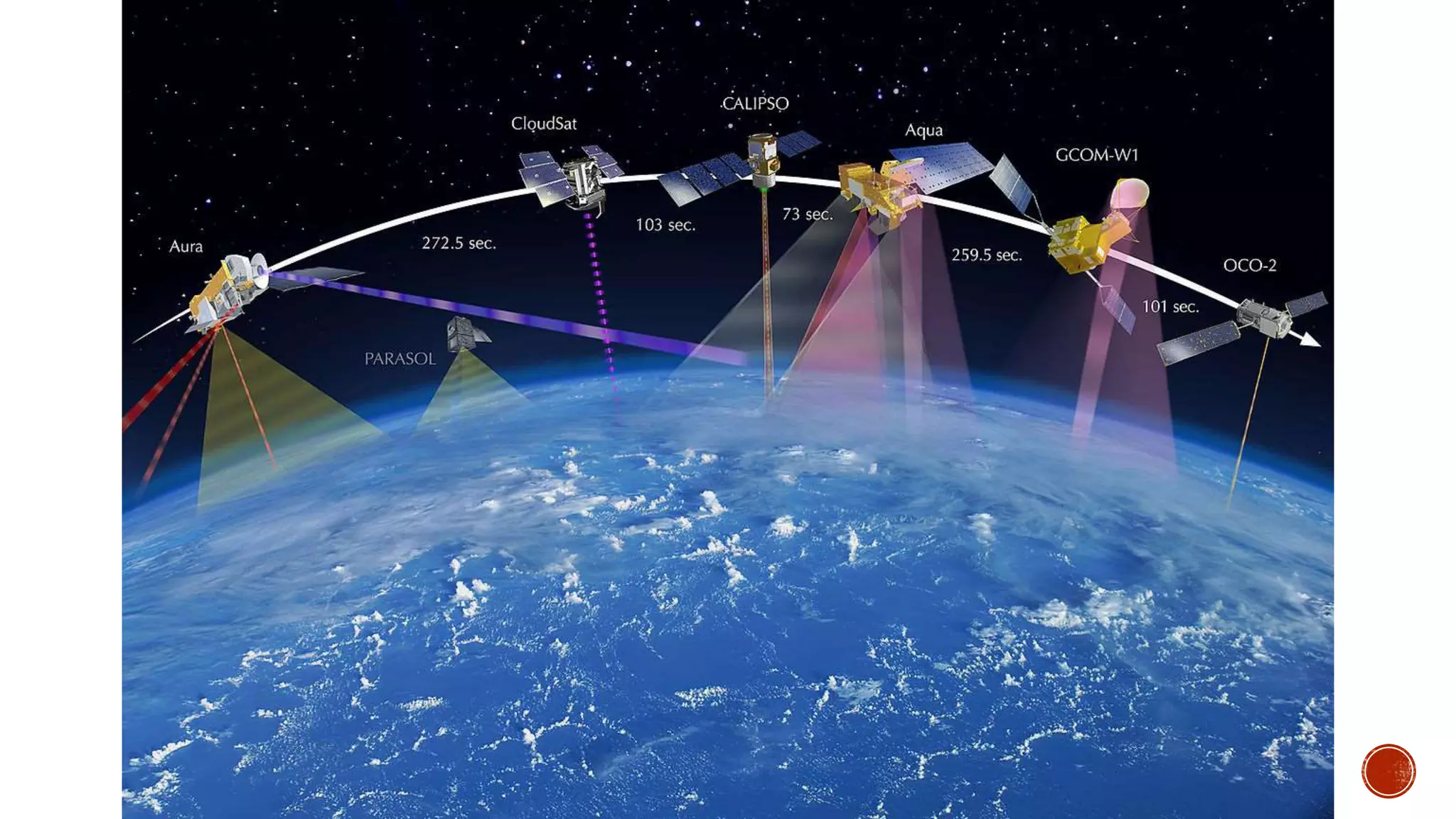
 Earth observation Satellites
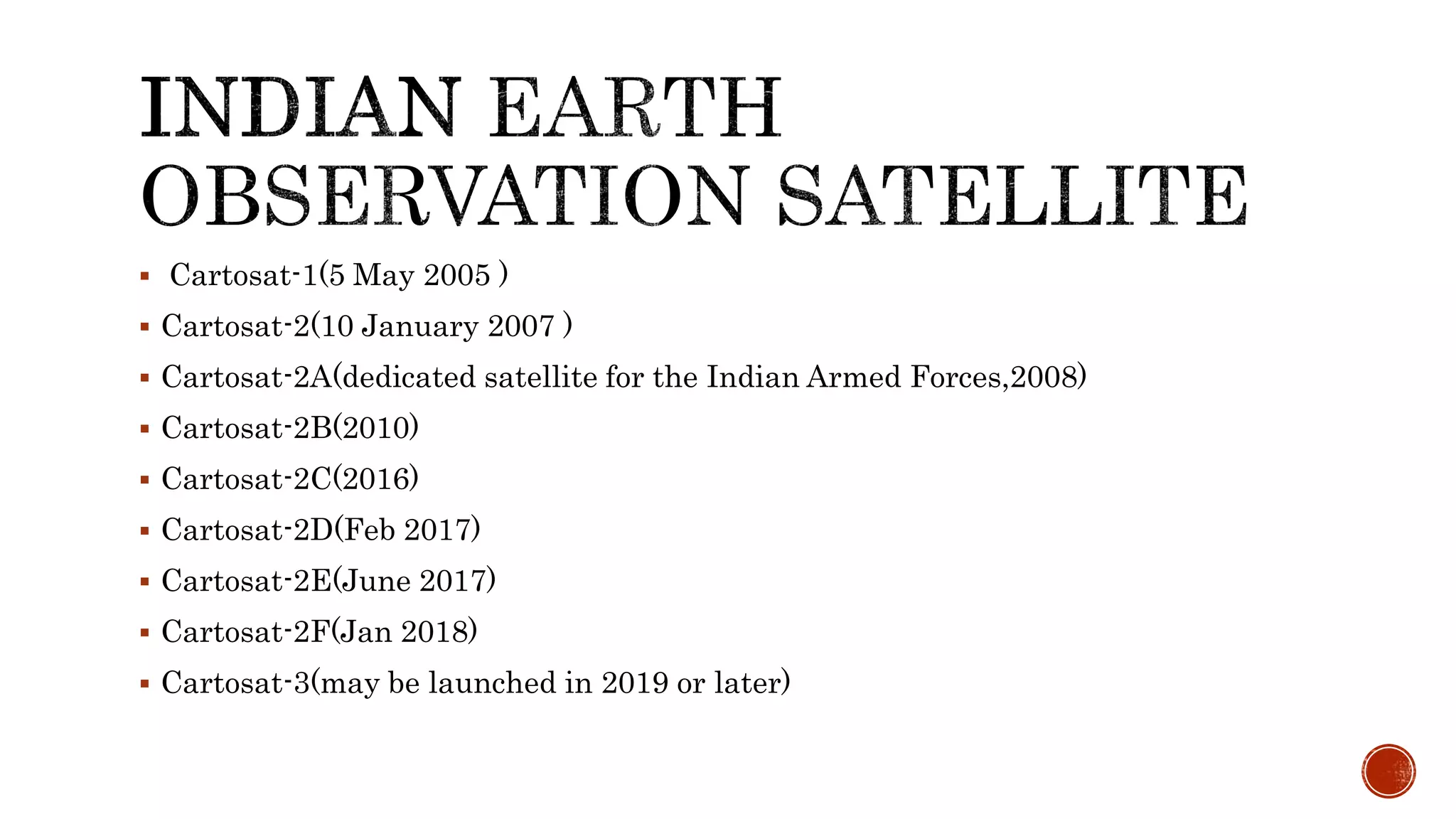
 Indian Earth observation Satellites
 Data Processing
 GEOGRAPHIC
 implies that locations of the data items are known, or can be
 calculated, in terms of Geographic coordinates (Latitude, Longitude)
 INFORMATION
 implies that the data in a GIS are organized to yield useful
 knowledge, often as colored maps and images, but also as statistical graphics, tables, and various
on-screen responses interactive queries.
SYSTEM
 implies that a GIS is made up from several inter-related and
 linked components with different functions. Thus, GIS have functional capabilities for data capture,
input, manipulation, transformation, visualization, combinations, query, analysis, modelling and
output.
GEOGRAPHICAL
INFORMATION SYSTEM
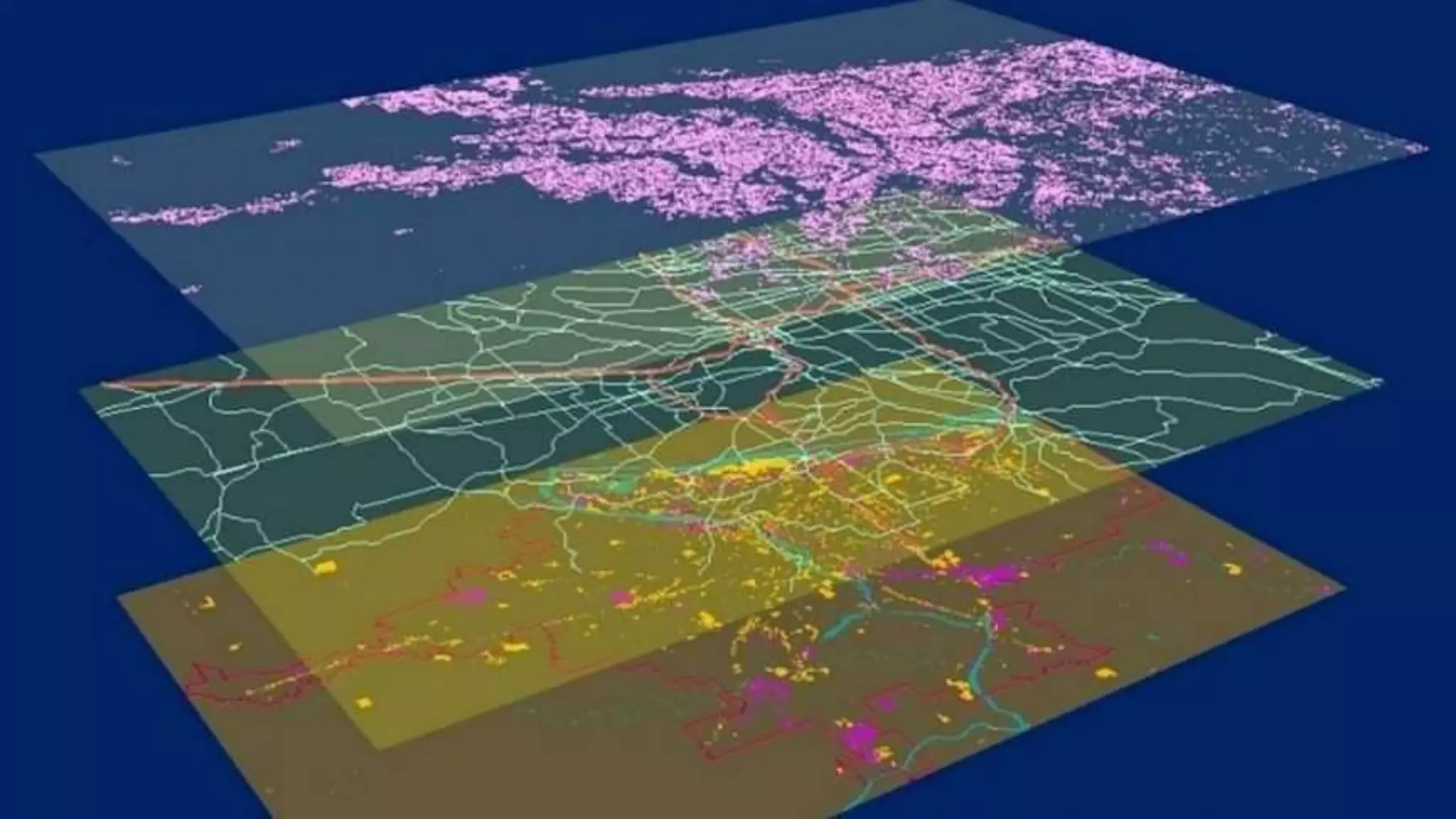
A set of tools for
o Data Collecting(Capture)
o Storing
o Manipulating
o Retrieving
o Transforming and Display of Spatial Data from the Real World
Two main types of data capture are
 Primary data sources are those collected in digital format specifically for use in a GIS
project.
 Secondary sources are digital and analog datasets that were originally captured for
another purpose and need to be converted into a suitable digital format for use in a GIS
project.
 Remote sensing
 Ground surveying
 LiDAR
 Data capture using scanners
 Photogrammetry
 COGO data entry (coordinate geometry)
Earth observation satellite or Earth remote sensing satellite is satellite specifically
designed for Earth observation from orbit, similar to spy satellites but intended for
non-military uses such as environmental monitoring, meteorology, map making etc.
The first occurrence of satellite remote sensing can be dated to the launch of the
first artificial satellite, Sputnik 1, by the Soviet Union on October 4, 1957.Sputnik 1
sent back radio signals, which scientists used to study the ionosphere.
 Cartosat-1(5 May 2005 )
 Cartosat-2(10 January 2007 )
 Cartosat-2A(dedicated satellite for the Indian Armed Forces,2008)
 Cartosat-2B(2010)
 Cartosat-2C(2016)
 Cartosat-2D(Feb 2017)
 Cartosat-2E(June 2017)
 Cartosat-2F(Jan 2018)
 Cartosat-3(may be launched in 2019 or later)
Digital Processing of different spectrums of light such as visible spectrum(Digital
Image Processing),Infrared,Radar/Radio etc
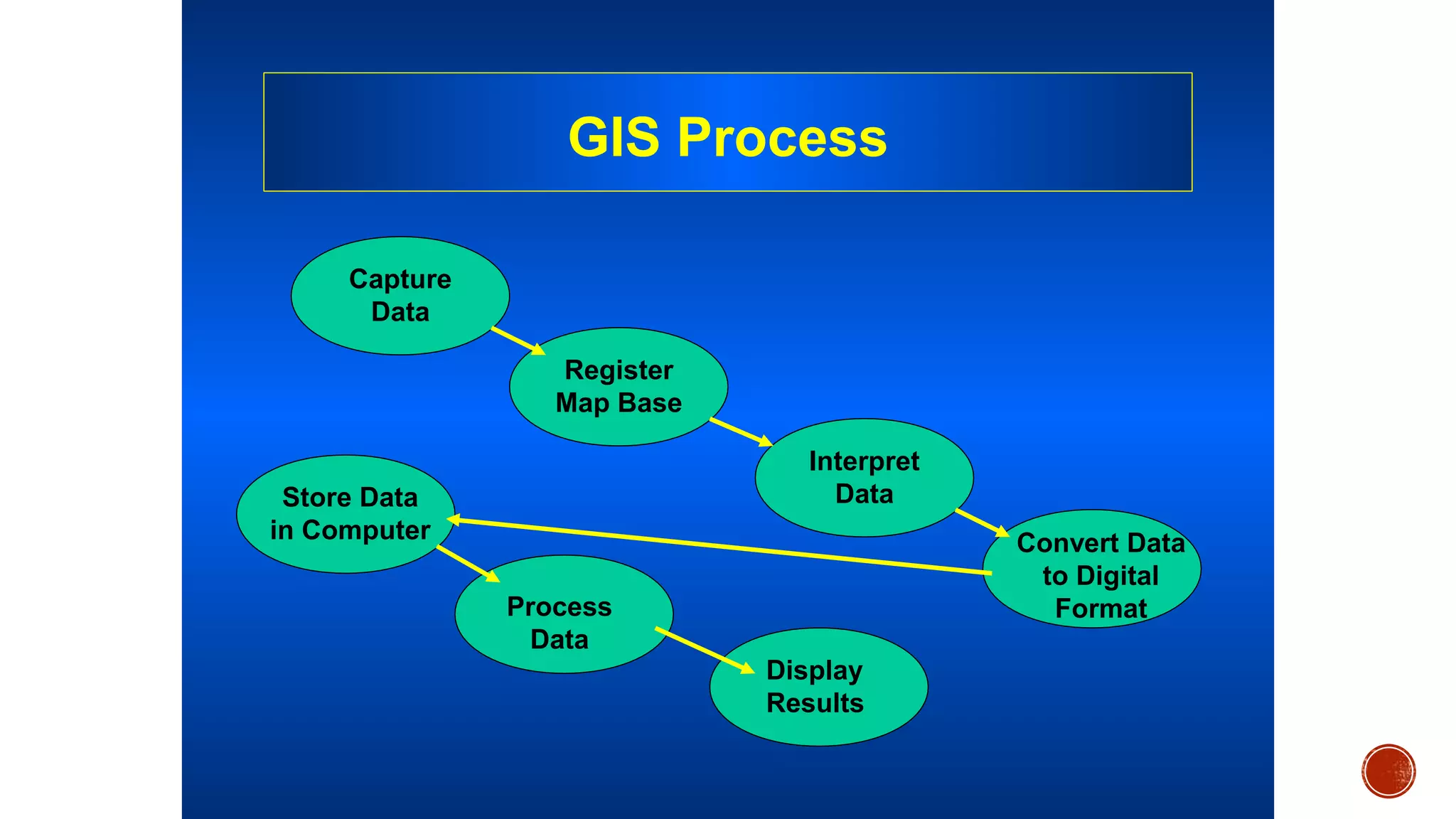
GIS Process
Capture
Data
Register
Map Base
Interpret
DataStore Data
in Computer Convert Data
to Digital
Process Format
Data
Display
Results
 Geographic Information System play the role as the backbone of the information
system for any country.
 Geographic Information System is used widely in civil as well as military
applications.
 The data interpretation play an important role in Geographic Information
System.
 Geographic Information System is combined effort by different Strems of
Engineering.
[1.] OpenCV-Python Tutorials
Documentation by Alexander Mordvintsev & Abid K :https://docs.opencv.org/3.0-
beta/doc/py_tutorials/py_tutorials.html
[2.] https://en.wikipedia.org/wiki/Cartosat
[3.] http://www.emrclub.in/pages/projectView.php
[4.] https://en.wikipedia.org/wiki/Earth_observation_satellite
[5.] https://en.wikipedia.org/wiki/Geographic_information_system
[6.] https://earth.google.com/web/
35
Geographic information system

Geographic information system

  • 1.
    GEOGRAPHIC INFORMATION SYSTEM Submitted By Rahul Chahel(11610125) Submitted to Dr. S. M. GUPTA
  • 2.
     What isGIS?  Parts of GIS  DATA CAPTURE  Primary geographic data capture  Secondary geographic data capture  Earth observation Satellites  Indian Earth observation Satellites  Data Processing
  • 3.
     GEOGRAPHIC  impliesthat locations of the data items are known, or can be  calculated, in terms of Geographic coordinates (Latitude, Longitude)  INFORMATION  implies that the data in a GIS are organized to yield useful  knowledge, often as colored maps and images, but also as statistical graphics, tables, and various on-screen responses interactive queries. SYSTEM  implies that a GIS is made up from several inter-related and  linked components with different functions. Thus, GIS have functional capabilities for data capture, input, manipulation, transformation, visualization, combinations, query, analysis, modelling and output.
  • 4.
    GEOGRAPHICAL INFORMATION SYSTEM A setof tools for o Data Collecting(Capture) o Storing o Manipulating o Retrieving o Transforming and Display of Spatial Data from the Real World
  • 5.
    Two main typesof data capture are  Primary data sources are those collected in digital format specifically for use in a GIS project.  Secondary sources are digital and analog datasets that were originally captured for another purpose and need to be converted into a suitable digital format for use in a GIS project.
  • 6.
     Remote sensing Ground surveying  LiDAR
  • 7.
     Data captureusing scanners  Photogrammetry  COGO data entry (coordinate geometry)
  • 8.
    Earth observation satelliteor Earth remote sensing satellite is satellite specifically designed for Earth observation from orbit, similar to spy satellites but intended for non-military uses such as environmental monitoring, meteorology, map making etc. The first occurrence of satellite remote sensing can be dated to the launch of the first artificial satellite, Sputnik 1, by the Soviet Union on October 4, 1957.Sputnik 1 sent back radio signals, which scientists used to study the ionosphere.
  • 10.
     Cartosat-1(5 May2005 )  Cartosat-2(10 January 2007 )  Cartosat-2A(dedicated satellite for the Indian Armed Forces,2008)  Cartosat-2B(2010)  Cartosat-2C(2016)  Cartosat-2D(Feb 2017)  Cartosat-2E(June 2017)  Cartosat-2F(Jan 2018)  Cartosat-3(may be launched in 2019 or later)
  • 11.
    Digital Processing ofdifferent spectrums of light such as visible spectrum(Digital Image Processing),Infrared,Radar/Radio etc
  • 13.
    GIS Process Capture Data Register Map Base Interpret DataStoreData in Computer Convert Data to Digital Process Format Data Display Results
  • 21.
     Geographic InformationSystem play the role as the backbone of the information system for any country.  Geographic Information System is used widely in civil as well as military applications.  The data interpretation play an important role in Geographic Information System.  Geographic Information System is combined effort by different Strems of Engineering.
  • 22.
    [1.] OpenCV-Python Tutorials Documentationby Alexander Mordvintsev & Abid K :https://docs.opencv.org/3.0- beta/doc/py_tutorials/py_tutorials.html [2.] https://en.wikipedia.org/wiki/Cartosat [3.] http://www.emrclub.in/pages/projectView.php [4.] https://en.wikipedia.org/wiki/Earth_observation_satellite [5.] https://en.wikipedia.org/wiki/Geographic_information_system [6.] https://earth.google.com/web/ 35