• To be able to identify generic conventions (Level 3) 
• To be able to apply genre theory to specific films (Level 4) 
• To understand uses and gratifications theory (Level 3) 
• To be able to apply uses and gratifications theory to genre 
(Level 4)
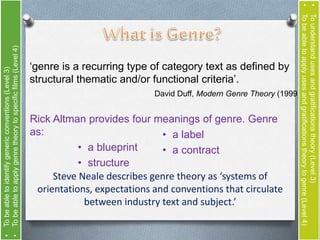
‘genre is a recurring type of category text as defined by 
structural thematic and/or functional criteria’. 
David Duff, Modern Genre Theory (1999) 
Rick Altman provides four meanings of genre. Genre 
as: 
• a blueprint 
• structure 
• a label 
• a contract 
Steve Neale describes genre theory as ‘systems of 
orientations, expectations and conventions that circulate 
between industry text and subject.’ 
• To be able to identify generic conventions (Level 3) 
• To be able to apply genre theory to specific films (Level 4) 
• To understand uses and gratifications theory (Level 3) 
• To be able to apply uses and gratifications theory to genre (Level 4)
• To be able to identify generic conventions (Level 3) 
• To be able to apply genre theory to specific films (Level 4) 
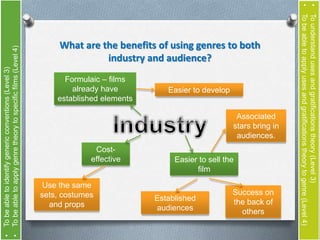
What are the benefits of using genres to both 
industry and audience? 
Cost-effective 
Use the same 
sets, costumes 
and props 
Easier to sell the 
film 
Established 
audiences 
Success on 
the back of 
others 
Formulaic – films 
already have 
established elements 
Easier to develop 
Associated 
stars bring in 
audiences. 
• To understand uses and gratifications theory (Level 3) 
• To be able to apply uses and gratifications theory to genre (Level 4)
• To be able to identify generic conventions (Level 3) 
• To be able to apply genre theory to specific films (Level 4) 
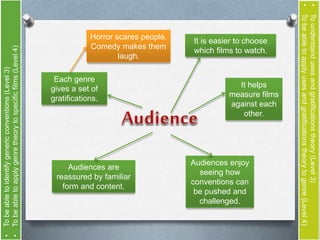
Each genre 
gives a set of 
gratifications. 
Horror scares people. 
Comedy makes them 
laugh. 
It is easier to choose 
which films to watch. 
Audiences are 
reassured by familiar 
form and content. 
Audiences enjoy 
seeing how 
conventions can 
be pushed and 
challenged. 
It helps 
measure films 
against each 
other. 
• To understand uses and gratifications theory (Level 3) 
• To be able to apply uses and gratifications theory to genre (Level 4)
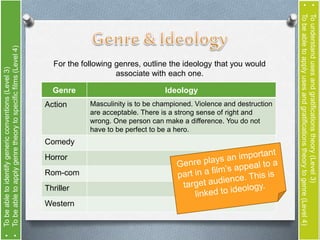
For the following genres, outline the ideology that you would 
associate with each one. 
Genre Ideology 
Action Masculinity is to be championed. Violence and destruction 
are acceptable. There is a strong sense of right and 
wrong. One person can make a difference. You do not 
have to be perfect to be a hero. 
Comedy 
Horror 
Rom-com 
Thriller 
Western 
• To understand uses and gratifications theory (Level 3) 
• To be able to apply uses and gratifications theory to genre (Level 4) 
• To be able to identify generic conventions (Level 3) 
• To be able to apply genre theory to specific films (Level 4)
 It is limiting for directors/writers as there 
must be certain criteria adhered to. 
 Some argue that films do not occupy 
specific genre’s and these labels are 
outdated for most modern films. 
 The organic nature of film’s form and 
content prohibits them from being 
categorised in any meaningful way. 
• To understand uses and gratifications theory (Level 3) 
• To be able to apply uses and gratifications theory to genre (Level 4) 
• To be able to identify generic conventions (Level 3) 
• To be able to apply genre theory to specific films (Level 4)
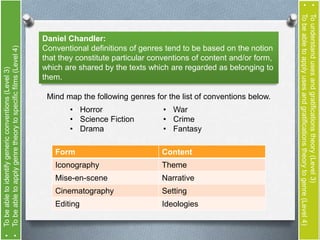
Daniel Chandler: 
Conventional definitions of genres tend to be based on the notion 
that they constitute particular conventions of content and/or form, 
which are shared by the texts which are regarded as belonging to 
them. 
Mind map the following genres for the list of conventions below. 
• Horror 
• Science Fiction 
• Drama 
• War 
• Crime 
• Fantasy 
Form Content 
Iconography Theme 
Mise-en-scene Narrative 
Cinematography Setting 
Editing Ideologies 
• To understand uses and gratifications theory (Level 3) 
• To be able to apply uses and gratifications theory to genre (Level 4) 
• To be able to identify generic conventions (Level 3) 
• To be able to apply genre theory to specific films (Level 4)
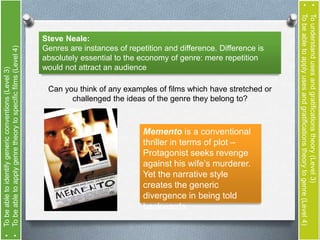
Steve Neale: 
Genres are instances of repetition and difference. Difference is 
absolutely essential to the economy of genre: mere repetition 
would not attract an audience 
Can you think of any examples of films which have stretched or 
challenged the ideas of the genre they belong to? 
Memento is a conventional 
thriller in terms of plot – 
Protagonist seeks revenge 
against his wife’s murderer. 
Yet the narrative style 
creates the generic 
divergence in being told 
backwards. 
• To understand uses and gratifications theory (Level 3) 
• To be able to apply uses and gratifications theory to genre (Level 4) 
• To be able to identify generic conventions (Level 3) 
• To be able to apply genre theory to specific films (Level 4)
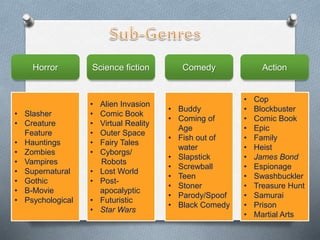
Horror Science fiction Comedy Action 
• Slasher 
• Creature 
Feature 
• Hauntings 
• Zombies 
• Vampires 
• Supernatural 
• Gothic 
• B-Movie 
• Psychological 
• Alien Invasion 
• Comic Book 
• Virtual Reality 
• Outer Space 
• Fairy Tales 
• Cyborgs/ 
Robots 
• Lost World 
• Post-apocalyptic 
• Futuristic 
• Star Wars 
• Buddy 
• Coming of 
Age 
• Fish out of 
water 
• Slapstick 
• Screwball 
• Teen 
• Stoner 
• Parody/Spoof 
• Black Comedy 
• Cop 
• Blockbuster 
• Comic Book 
• Epic 
• Family 
• Heist 
• James Bond 
• Espionage 
• Swashbuckler 
• Treasure Hunt 
• Samurai 
• Prison 
• Martial Arts
• To be able to identify generic conventions (Level 3) 
• To be able to apply genre theory to specific films (Level 4) 
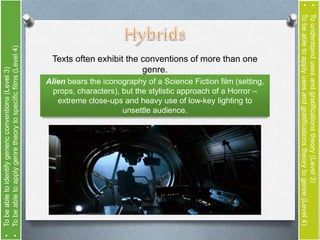
Texts often exhibit the conventions of more than one 
genre. 
Alien bears the iconography of a Science Fiction film (setting, 
props, characters), but the stylistic approach of a Horror – 
extreme close-ups and heavy use of low-key lighting to 
unsettle audience. 
• To understand uses and gratifications theory (Level 3) 
• To be able to apply uses and gratifications theory to genre (Level 4)
• To be able to identify generic conventions (Level 3) 
• To be able to apply genre theory to specific films (Level 4) 
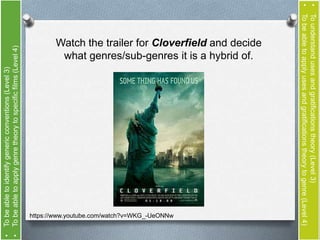
Watch the trailer for Cloverfield and decide 
what genres/sub-genres it is a hybrid of. 
https://www.youtube.com/watch?v=WKG_-UeONNw 
• To understand uses and gratifications theory (Level 3) 
• To be able to apply uses and gratifications theory to genre (Level 4)
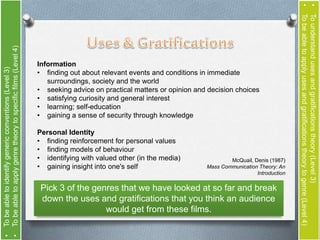
Information 
• finding out about relevant events and conditions in immediate 
surroundings, society and the world 
• seeking advice on practical matters or opinion and decision choices 
• satisfying curiosity and general interest 
• learning; self-education 
• gaining a sense of security through knowledge 
Personal Identity 
• finding reinforcement for personal values 
• finding models of behaviour 
• identifying with valued other (in the media) 
• gaining insight into one's self 
Pick 3 of the genres that we have looked at so far and break 
down the uses and gratifications that you think an audience 
would get from these films. 
McQuail, Denis (1987) 
Mass Communication Theory: An 
Introduction 
• To understand uses and gratifications theory (Level 3) 
• To be able to apply uses and gratifications theory to genre (Level 4) 
• To be able to identify generic conventions (Level 3) 
• To be able to apply genre theory to specific films (Level 4)
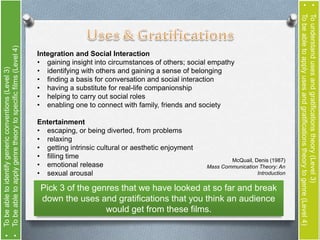
Integration and Social Interaction 
• gaining insight into circumstances of others; social empathy 
• identifying with others and gaining a sense of belonging 
• finding a basis for conversation and social interaction 
• having a substitute for real-life companionship 
• helping to carry out social roles 
• enabling one to connect with family, friends and society 
Entertainment 
• escaping, or being diverted, from problems 
• relaxing 
• getting intrinsic cultural or aesthetic enjoyment 
• filling time 
• emotional release 
• sexual arousal 
Pick 3 of the genres that we have looked at so far and break 
down the uses and gratifications that you think an audience 
would get from these films. 
McQuail, Denis (1987) 
Mass Communication Theory: An 
Introduction 
• To understand uses and gratifications theory (Level 3) 
• To be able to apply uses and gratifications theory to genre (Level 4) 
• To be able to identify generic conventions (Level 3) 
• To be able to apply genre theory to specific films (Level 4)

Introduction to Genre Thoery

  • 2.
    • To beable to identify generic conventions (Level 3) • To be able to apply genre theory to specific films (Level 4) • To understand uses and gratifications theory (Level 3) • To be able to apply uses and gratifications theory to genre (Level 4)
  • 3.
    ‘genre is arecurring type of category text as defined by structural thematic and/or functional criteria’. David Duff, Modern Genre Theory (1999) Rick Altman provides four meanings of genre. Genre as: • a blueprint • structure • a label • a contract Steve Neale describes genre theory as ‘systems of orientations, expectations and conventions that circulate between industry text and subject.’ • To be able to identify generic conventions (Level 3) • To be able to apply genre theory to specific films (Level 4) • To understand uses and gratifications theory (Level 3) • To be able to apply uses and gratifications theory to genre (Level 4)
  • 4.
    • To beable to identify generic conventions (Level 3) • To be able to apply genre theory to specific films (Level 4) What are the benefits of using genres to both industry and audience? Cost-effective Use the same sets, costumes and props Easier to sell the film Established audiences Success on the back of others Formulaic – films already have established elements Easier to develop Associated stars bring in audiences. • To understand uses and gratifications theory (Level 3) • To be able to apply uses and gratifications theory to genre (Level 4)
  • 5.
    • To beable to identify generic conventions (Level 3) • To be able to apply genre theory to specific films (Level 4) Each genre gives a set of gratifications. Horror scares people. Comedy makes them laugh. It is easier to choose which films to watch. Audiences are reassured by familiar form and content. Audiences enjoy seeing how conventions can be pushed and challenged. It helps measure films against each other. • To understand uses and gratifications theory (Level 3) • To be able to apply uses and gratifications theory to genre (Level 4)
  • 6.
    For the followinggenres, outline the ideology that you would associate with each one. Genre Ideology Action Masculinity is to be championed. Violence and destruction are acceptable. There is a strong sense of right and wrong. One person can make a difference. You do not have to be perfect to be a hero. Comedy Horror Rom-com Thriller Western • To understand uses and gratifications theory (Level 3) • To be able to apply uses and gratifications theory to genre (Level 4) • To be able to identify generic conventions (Level 3) • To be able to apply genre theory to specific films (Level 4)
  • 7.
     It islimiting for directors/writers as there must be certain criteria adhered to.  Some argue that films do not occupy specific genre’s and these labels are outdated for most modern films.  The organic nature of film’s form and content prohibits them from being categorised in any meaningful way. • To understand uses and gratifications theory (Level 3) • To be able to apply uses and gratifications theory to genre (Level 4) • To be able to identify generic conventions (Level 3) • To be able to apply genre theory to specific films (Level 4)
  • 8.
    Daniel Chandler: Conventionaldefinitions of genres tend to be based on the notion that they constitute particular conventions of content and/or form, which are shared by the texts which are regarded as belonging to them. Mind map the following genres for the list of conventions below. • Horror • Science Fiction • Drama • War • Crime • Fantasy Form Content Iconography Theme Mise-en-scene Narrative Cinematography Setting Editing Ideologies • To understand uses and gratifications theory (Level 3) • To be able to apply uses and gratifications theory to genre (Level 4) • To be able to identify generic conventions (Level 3) • To be able to apply genre theory to specific films (Level 4)
  • 9.
    Steve Neale: Genresare instances of repetition and difference. Difference is absolutely essential to the economy of genre: mere repetition would not attract an audience Can you think of any examples of films which have stretched or challenged the ideas of the genre they belong to? Memento is a conventional thriller in terms of plot – Protagonist seeks revenge against his wife’s murderer. Yet the narrative style creates the generic divergence in being told backwards. • To understand uses and gratifications theory (Level 3) • To be able to apply uses and gratifications theory to genre (Level 4) • To be able to identify generic conventions (Level 3) • To be able to apply genre theory to specific films (Level 4)
  • 10.
    Horror Science fictionComedy Action • Slasher • Creature Feature • Hauntings • Zombies • Vampires • Supernatural • Gothic • B-Movie • Psychological • Alien Invasion • Comic Book • Virtual Reality • Outer Space • Fairy Tales • Cyborgs/ Robots • Lost World • Post-apocalyptic • Futuristic • Star Wars • Buddy • Coming of Age • Fish out of water • Slapstick • Screwball • Teen • Stoner • Parody/Spoof • Black Comedy • Cop • Blockbuster • Comic Book • Epic • Family • Heist • James Bond • Espionage • Swashbuckler • Treasure Hunt • Samurai • Prison • Martial Arts
  • 11.
    • To beable to identify generic conventions (Level 3) • To be able to apply genre theory to specific films (Level 4) Texts often exhibit the conventions of more than one genre. Alien bears the iconography of a Science Fiction film (setting, props, characters), but the stylistic approach of a Horror – extreme close-ups and heavy use of low-key lighting to unsettle audience. • To understand uses and gratifications theory (Level 3) • To be able to apply uses and gratifications theory to genre (Level 4)
  • 12.
    • To beable to identify generic conventions (Level 3) • To be able to apply genre theory to specific films (Level 4) Watch the trailer for Cloverfield and decide what genres/sub-genres it is a hybrid of. https://www.youtube.com/watch?v=WKG_-UeONNw • To understand uses and gratifications theory (Level 3) • To be able to apply uses and gratifications theory to genre (Level 4)
  • 13.
    Information • findingout about relevant events and conditions in immediate surroundings, society and the world • seeking advice on practical matters or opinion and decision choices • satisfying curiosity and general interest • learning; self-education • gaining a sense of security through knowledge Personal Identity • finding reinforcement for personal values • finding models of behaviour • identifying with valued other (in the media) • gaining insight into one's self Pick 3 of the genres that we have looked at so far and break down the uses and gratifications that you think an audience would get from these films. McQuail, Denis (1987) Mass Communication Theory: An Introduction • To understand uses and gratifications theory (Level 3) • To be able to apply uses and gratifications theory to genre (Level 4) • To be able to identify generic conventions (Level 3) • To be able to apply genre theory to specific films (Level 4)
  • 14.
    Integration and SocialInteraction • gaining insight into circumstances of others; social empathy • identifying with others and gaining a sense of belonging • finding a basis for conversation and social interaction • having a substitute for real-life companionship • helping to carry out social roles • enabling one to connect with family, friends and society Entertainment • escaping, or being diverted, from problems • relaxing • getting intrinsic cultural or aesthetic enjoyment • filling time • emotional release • sexual arousal Pick 3 of the genres that we have looked at so far and break down the uses and gratifications that you think an audience would get from these films. McQuail, Denis (1987) Mass Communication Theory: An Introduction • To understand uses and gratifications theory (Level 3) • To be able to apply uses and gratifications theory to genre (Level 4) • To be able to identify generic conventions (Level 3) • To be able to apply genre theory to specific films (Level 4)