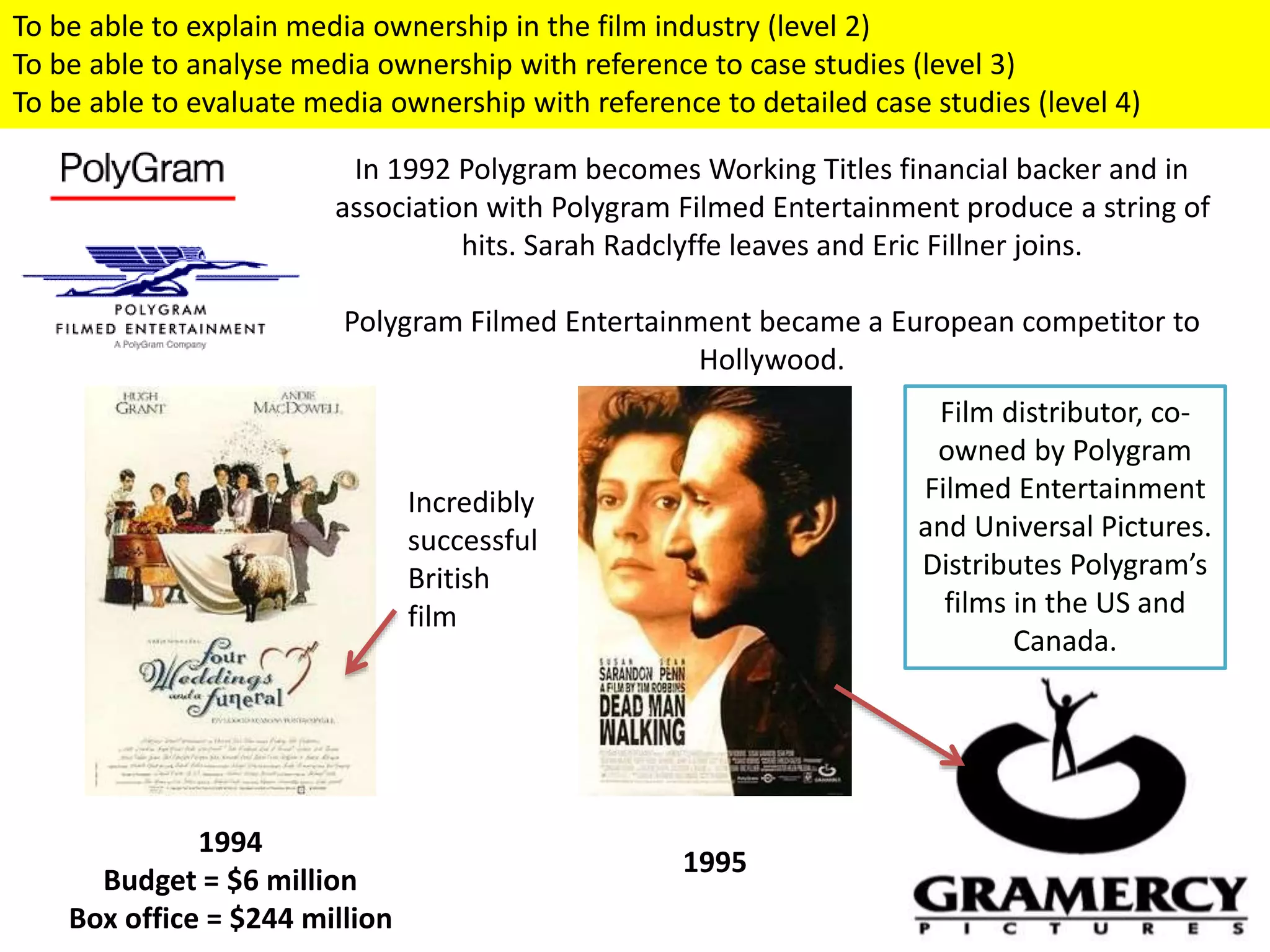
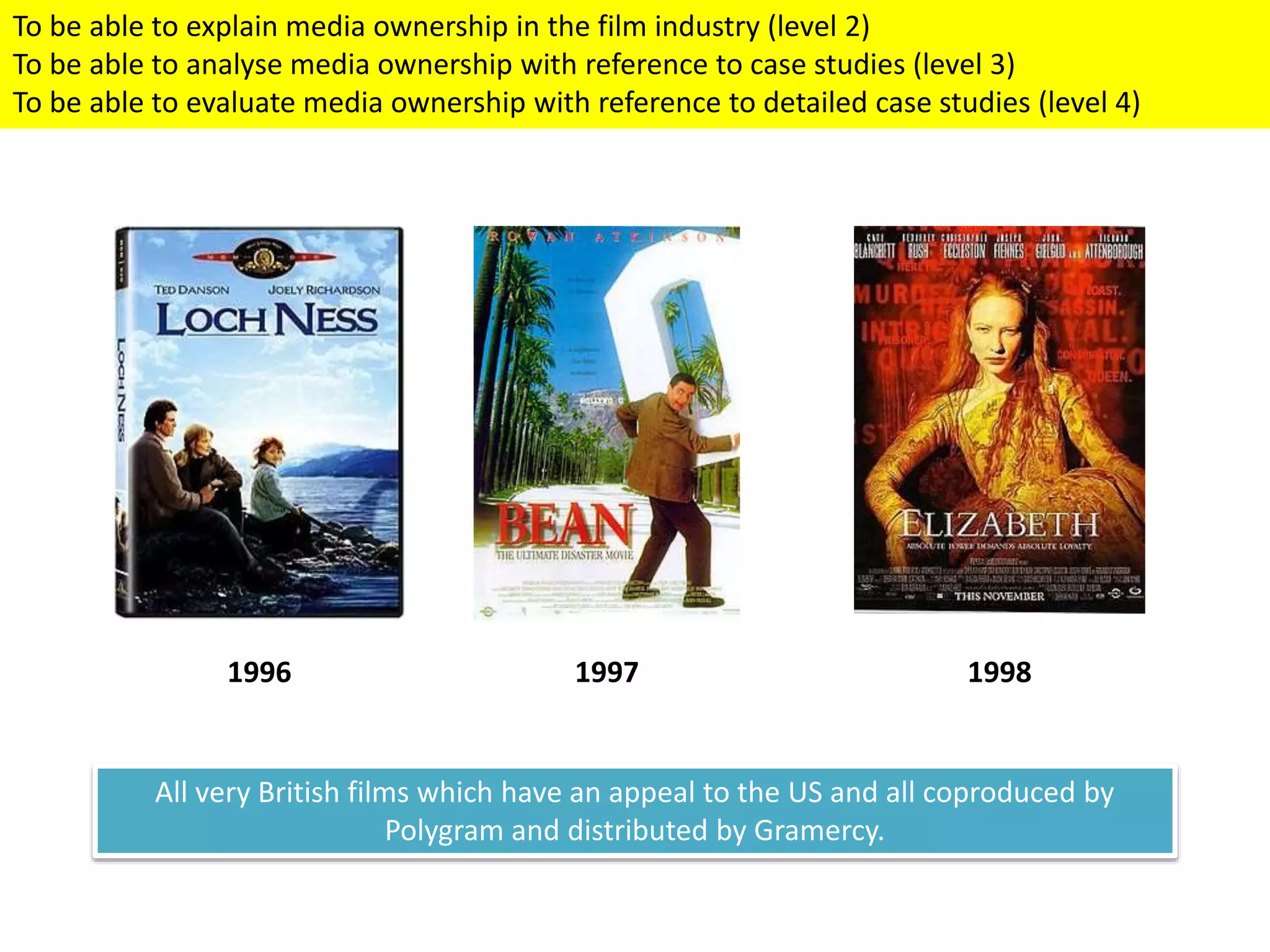
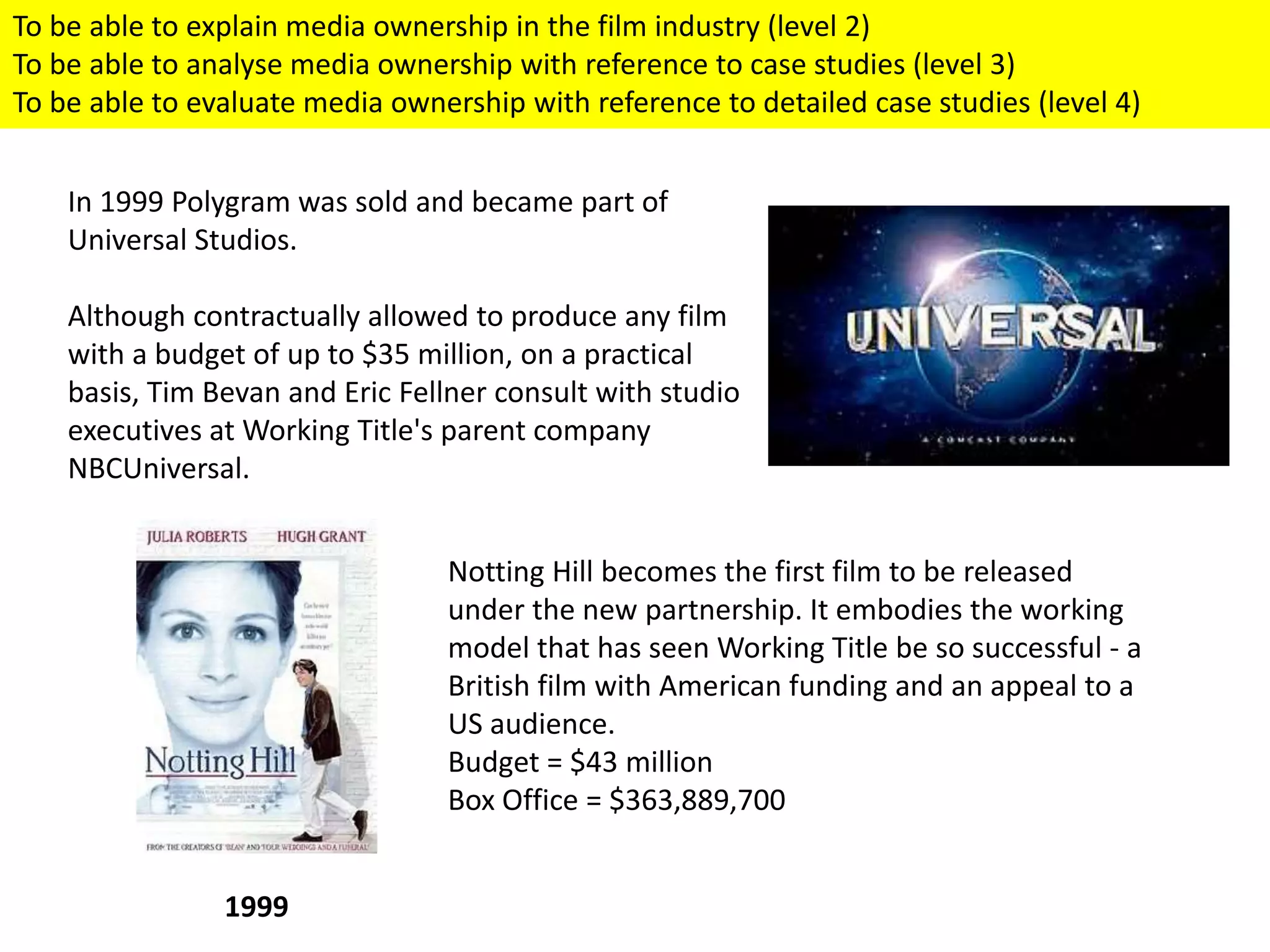
Working Title Films was co-founded by producers Tim Bevan and Sarah Radclyffe in
1983.
1985 1987 1989
Very British films, with mainly British cast. All films were successful.
To be able to explain media ownership in the film industry (level 2)
To be able to analyse media ownership with reference to case studies (level 3)
To be able to evaluate media ownership with reference to detailed case studies (level 4)
In 1992 Polygram becomes Working Titles financial backer and in
association with Polygram Filmed Entertainment produce a string of
hits. Sarah Radclyffe leaves and Eric Fillner joins.
Polygram Filmed Entertainment became a European competitor to
Hollywood.
1994
Budget = $6 million
Box office = $244 million
1995
Film distributor, co-
owned by Polygram
Filmed Entertainment
and Universal Pictures.
Distributes Polygram’s
films in the US and
Canada.
Incredibly
successful
British
film
To be able to explain media ownership in the film industry (level 2)
To be able to analyse media ownership with reference to case studies (level 3)
To be able to evaluate media ownership with reference to detailed case studies (level 4)
1996 1997 1998
All very British films which have an appeal to the US and all coproduced by
Polygram and distributed by Gramercy.
To be able to explain media ownership in the film industry (level 2)
To be able to analyse media ownership with reference to case studies (level 3)
To be able to evaluate media ownership with reference to detailed case studies (level 4)
In 1999 Polygram was sold and became part of
Universal Studios.
Although contractually allowed to produce any film
with a budget of up to $35 million, on a practical
basis, Tim Bevan and Eric Fellner consult with studio
executives at Working Title's parent company
NBCUniversal.
1999
Notting Hill becomes the first film to be released
under the new partnership. It embodies the working
model that has seen Working Title be so successful - a
British film with American funding and an appeal to a
US audience.
Budget = $43 million
Box Office = $363,889,700
To be able to explain media ownership in the film industry (level 2)
To be able to analyse media ownership with reference to case studies (level 3)
To be able to evaluate media ownership with reference to detailed case studies (level 4)
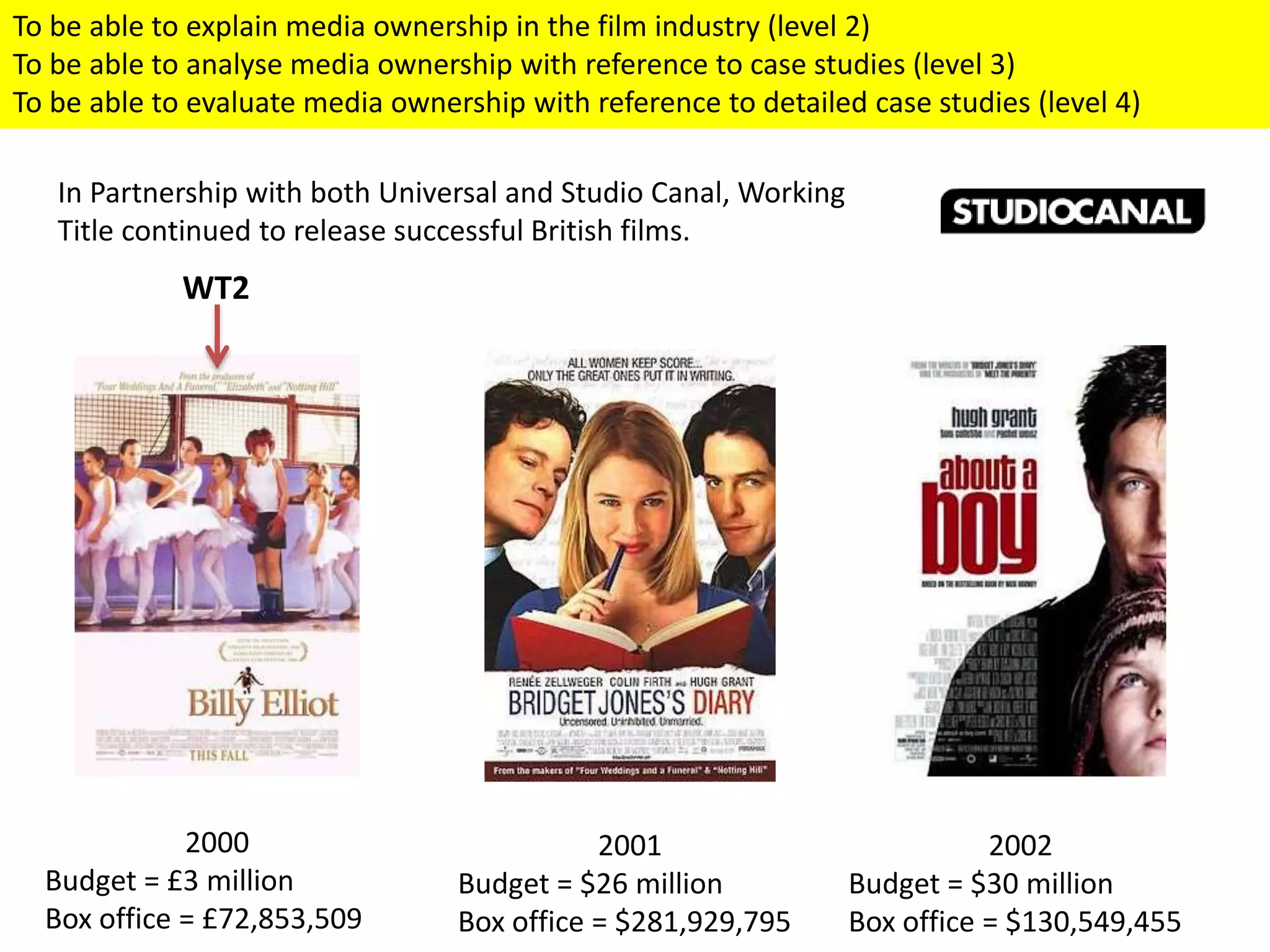
2001
Budget = $26 million
Box office = $281,929,795
2000
Budget = £3 million
Box office = £72,853,509
2002
Budget = $30 million
Box office = $130,549,455
WT2
In Partnership with both Universal and Studio Canal, Working
Title continued to release successful British films.
To be able to explain media ownership in the film industry (level 2)
To be able to analyse media ownership with reference to case studies (level 3)
To be able to evaluate media ownership with reference to detailed case studies (level 4)
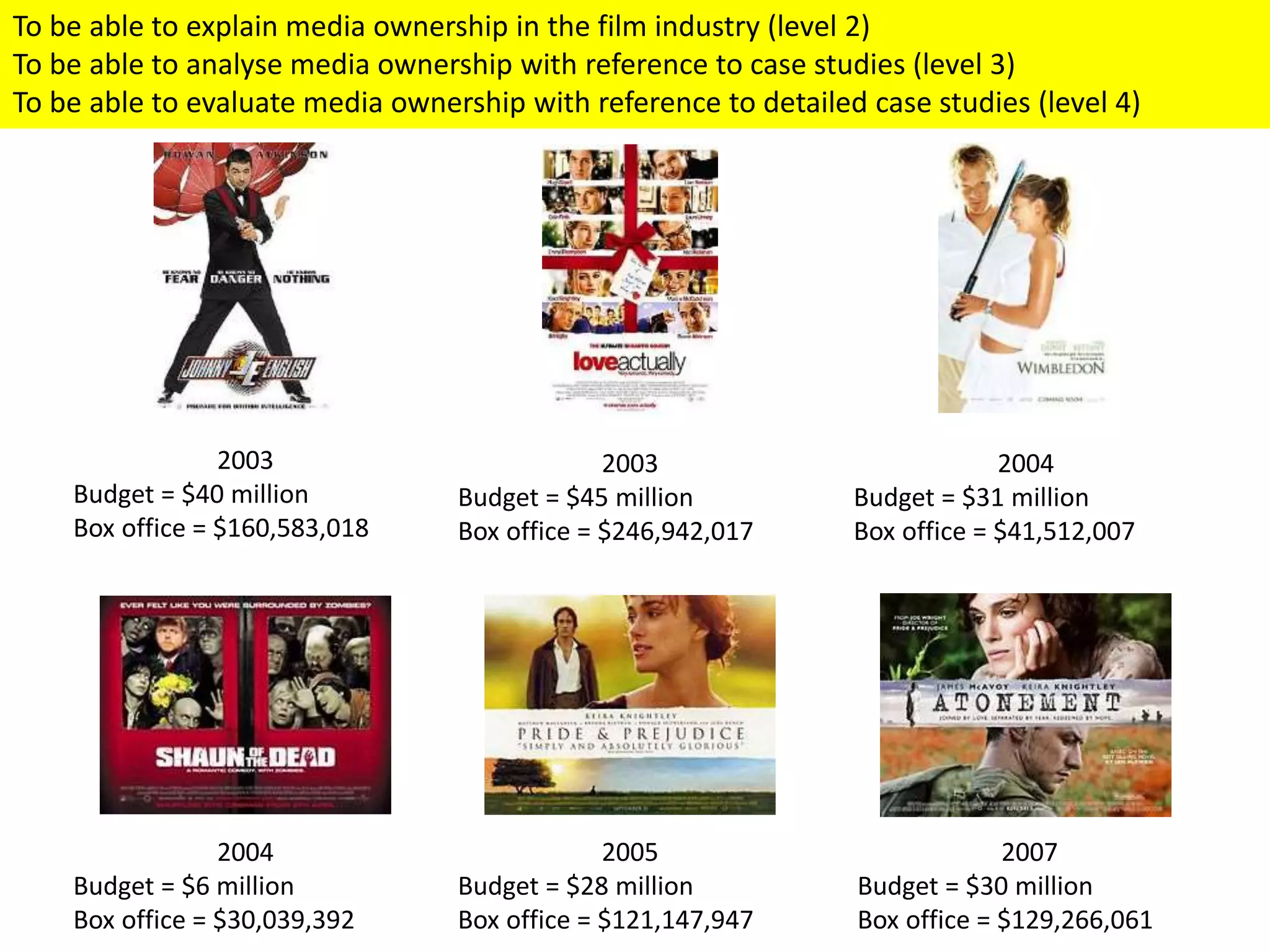
2003
Budget = $40 million
Box office = $160,583,018
2003
Budget = $45 million
Box office = $246,942,017
2004
Budget = $31 million
Box office = $41,512,007
2004
Budget = $6 million
Box office = $30,039,392
2005
Budget = $28 million
Box office = $121,147,947
2007
Budget = $30 million
Box office = $129,266,061
To be able to explain media ownership in the film industry (level 2)
To be able to analyse media ownership with reference to case studies (level 3)
To be able to evaluate media ownership with reference to detailed case studies (level 4)
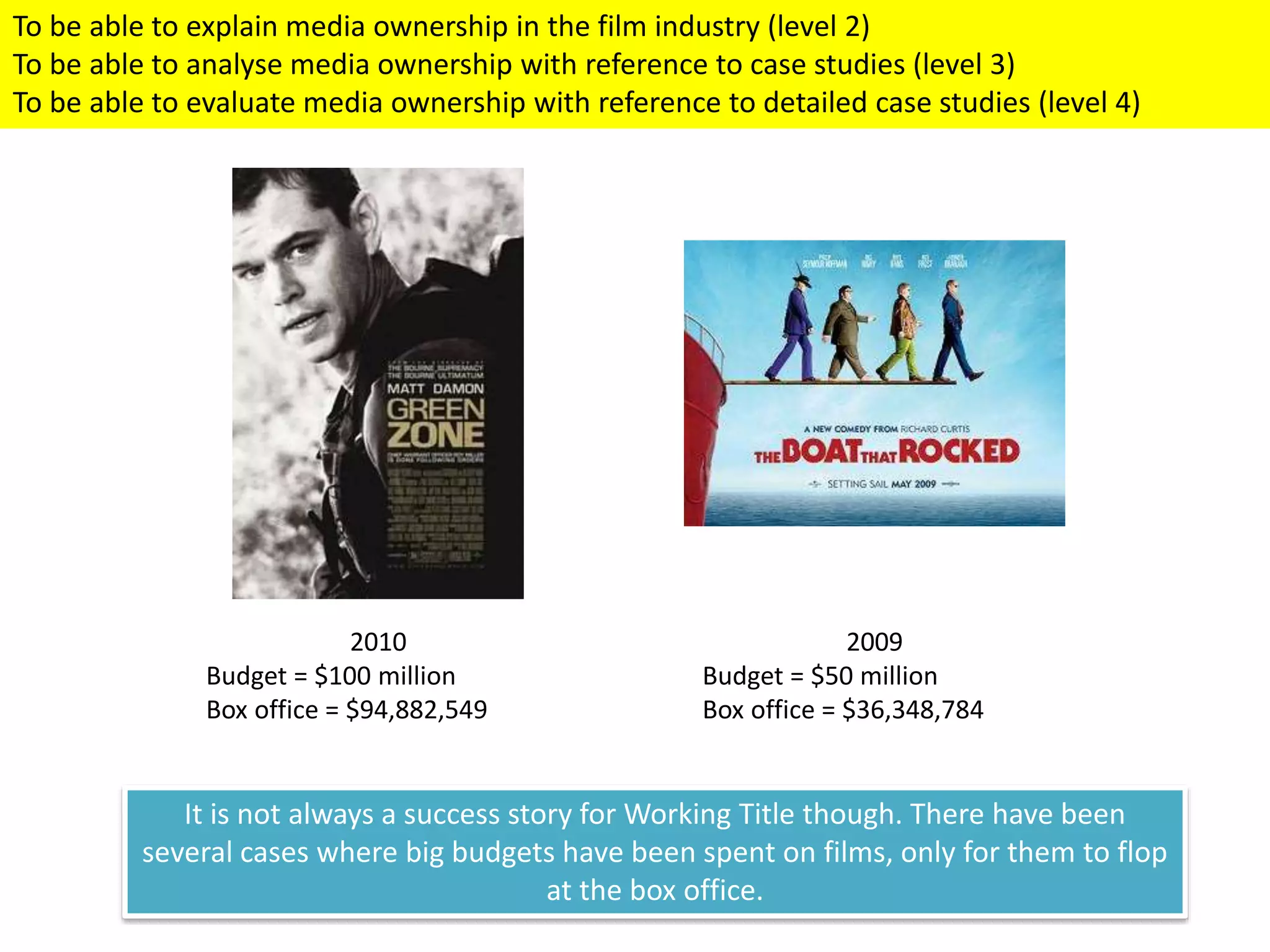
2010
Budget = $100 million
Box office = $94,882,549
2009
Budget = $50 million
Box office = $36,348,784
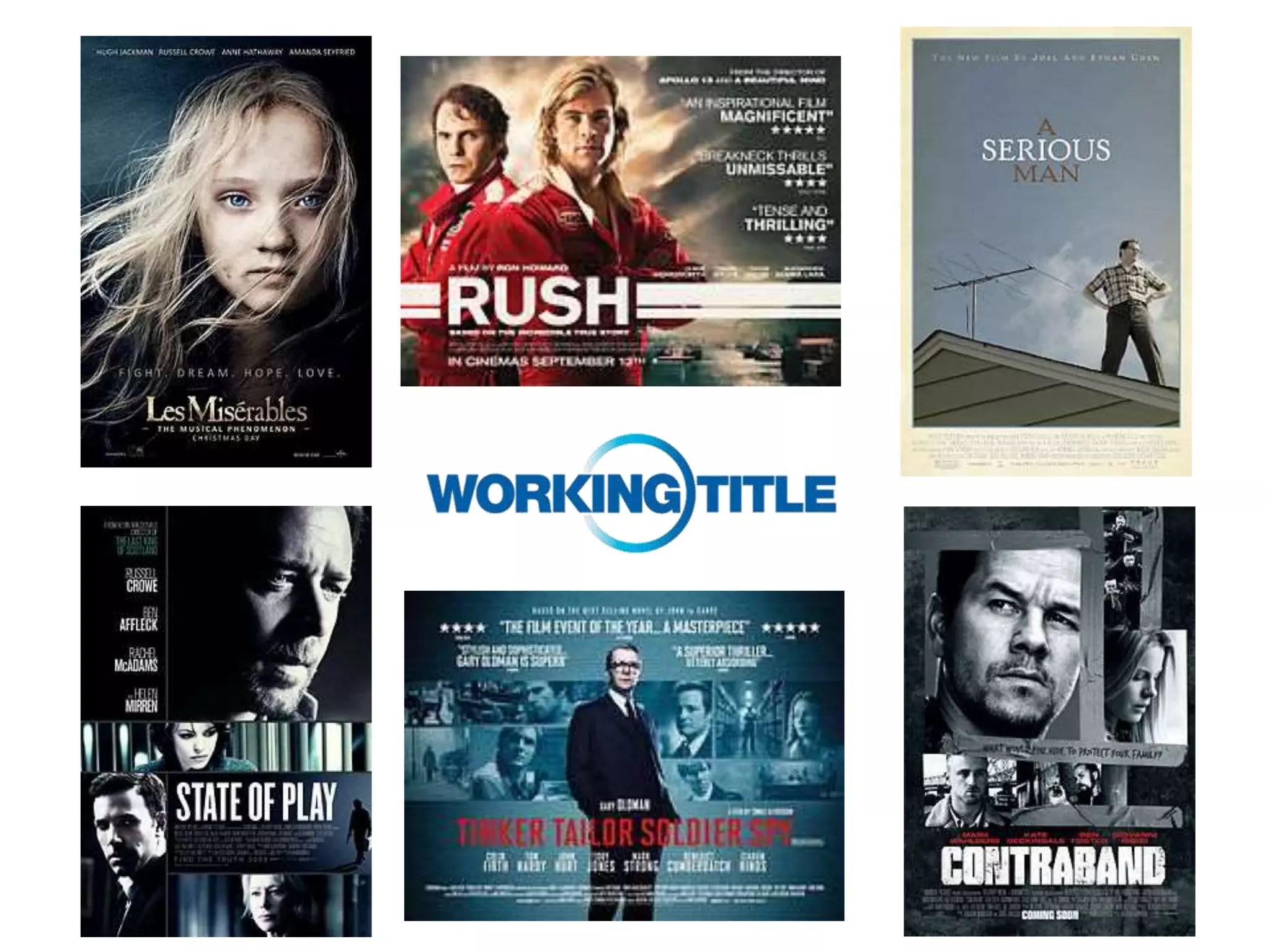
It is not always a success story for Working Title though. There have been
several cases where big budgets have been spent on films, only for them to flop
at the box office.
To be able to explain media ownership in the film industry (level 2)
To be able to analyse media ownership with reference to case studies (level 3)
To be able to evaluate media ownership with reference to detailed case studies (level 4)
To be able to explain media ownership in the film industry (level 2)
To be able to analyse media ownership with reference to case studies (level 3)
To be able to evaluate media ownership with reference to detailed case studies (level 4)
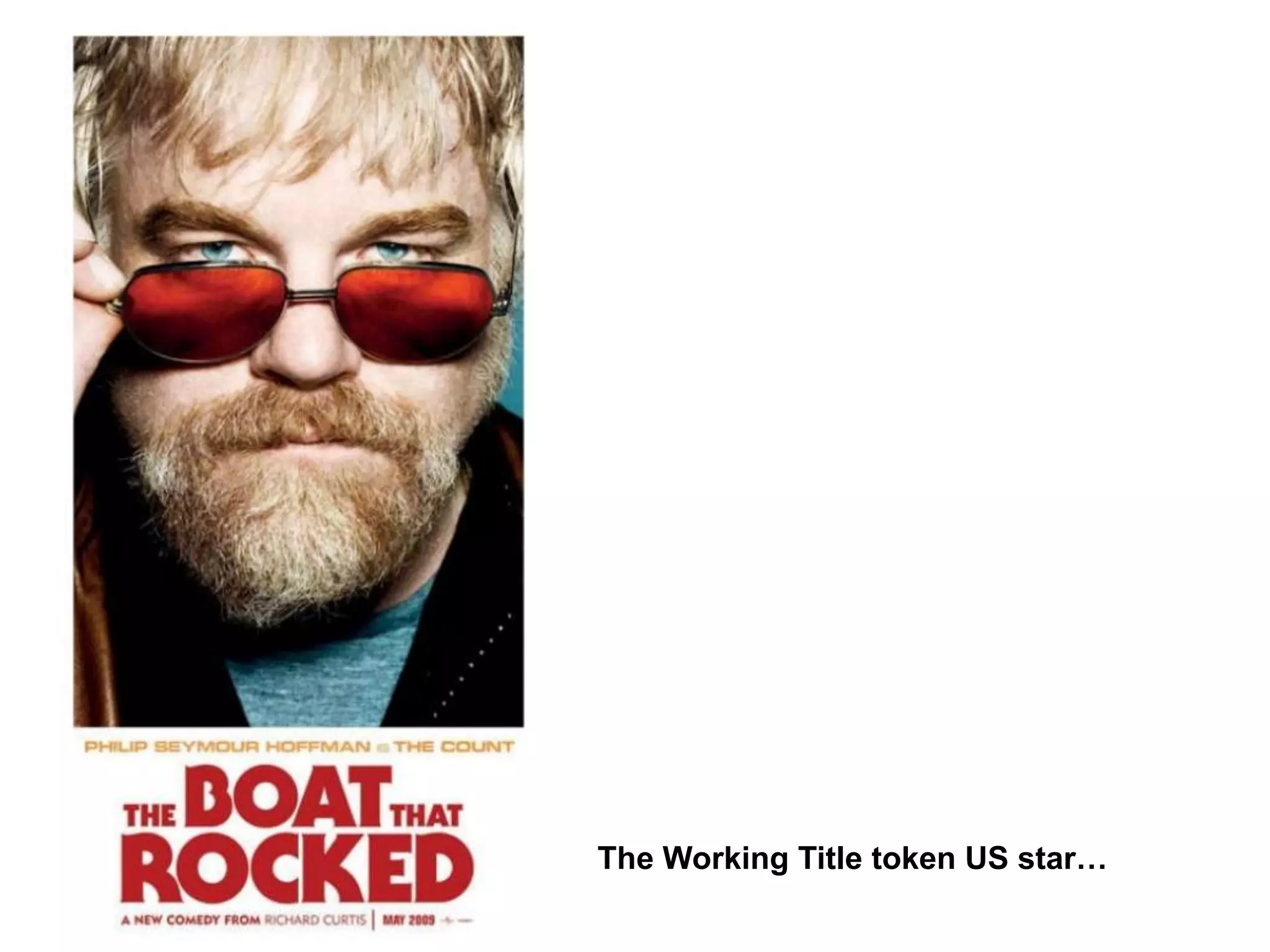
The Working Title token US star…
To be able to explain media ownership in the film industry (level 2)
To be able to analyse media ownership with reference to case studies (level 3)
To be able to evaluate media ownership with reference to detailed case studies (level 4)
To be able to explain media ownership in the film industry (level 2)
To be able to analyse media ownership with reference to case studies (level 3)
To be able to evaluate media ownership with reference to detailed case studies (level 4)
To be able to explain media ownership in the film industry (level 2)
To be able to analyse media ownership with reference to case studies (level 3)
To be able to evaluate media ownership with reference to detailed case studies (level 4)
To be able to explain media ownership in the film industry (level 2)
To be able to analyse media ownership with reference to case studies (level 3)
To be able to evaluate media ownership with reference to detailed case studies (level 4)
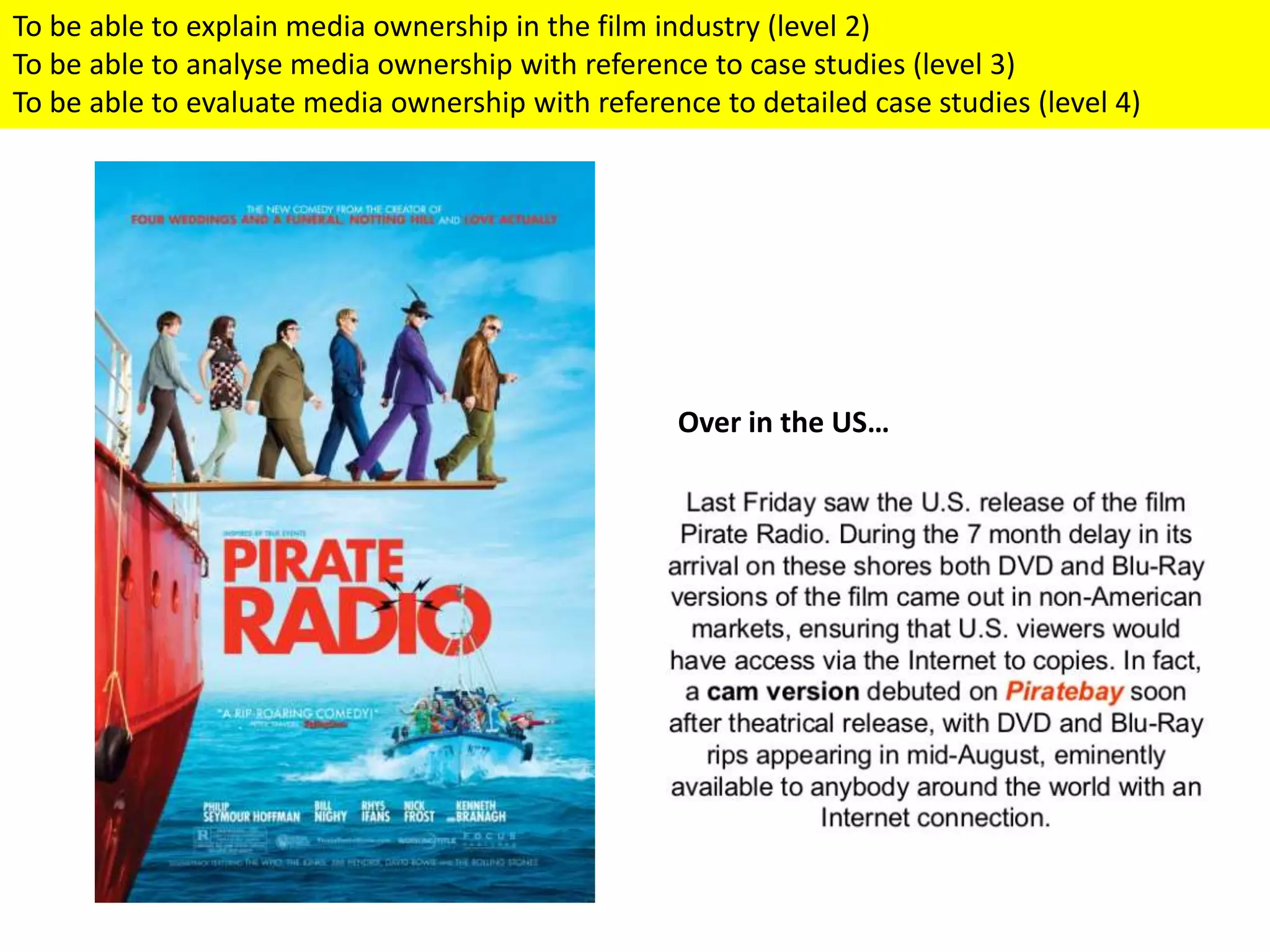
Over in the US…
To be able to explain media ownership in the film industry (level 2)
To be able to analyse media ownership with reference to case studies (level 3)
To be able to evaluate media ownership with reference to detailed case studies (level 4)
To be able to explain media ownership in the film industry (level 2)
To be able to analyse media ownership with reference to case studies (level 3)
To be able to evaluate media ownership with reference to detailed case studies (level 4)
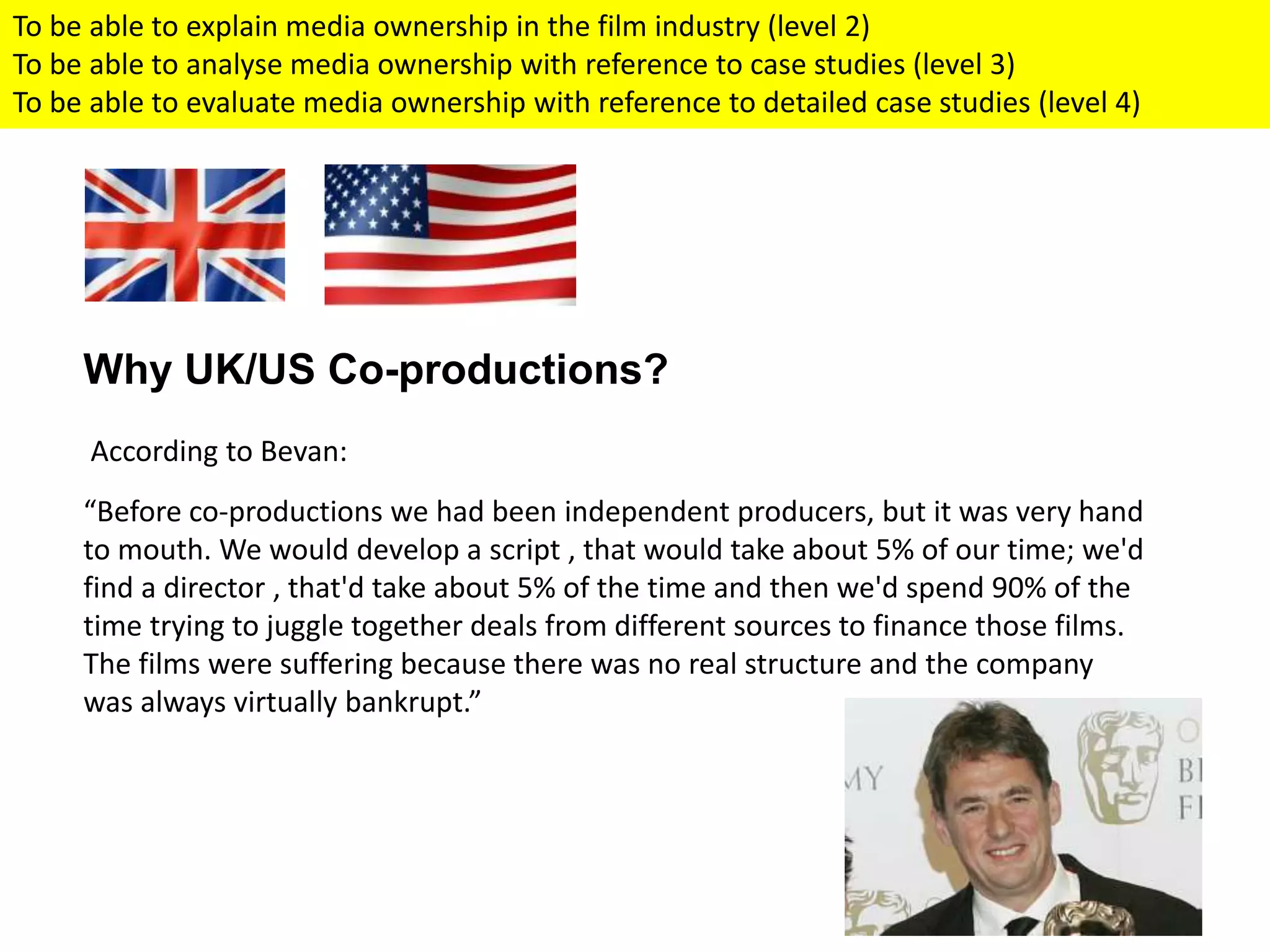
Why UK/US Co-productions?
According to Bevan:
“Before co-productions we had been independent producers, but it was very hand
to mouth. We would develop a script , that would take about 5% of our time; we'd
find a director , that'd take about 5% of the time and then we'd spend 90% of the
time trying to juggle together deals from different sources to finance those films.
The films were suffering because there was no real structure and the company
was always virtually bankrupt.”
To be able to explain media ownership in the film industry (level 2)
To be able to analyse media ownership with reference to case studies (level 3)
To be able to evaluate media ownership with reference to detailed case studies (level 4)
The British film industry dilemma:
Do you:
Make culturally specific films which appeal to a national (limited) audience?
OR
Make broader, generic films with an international (wider) appeal?
Working Title want to make European films for a worldwide audience. They want
to imbue them with European ideas and influences and they can’t do these things
without the backing of a major Hollywood studio.
To be able to explain media ownership in the film industry (level 2)
To be able to analyse media ownership with reference to case studies (level 3)
To be able to evaluate media ownership with reference to detailed case studies (level 4)
Working Title do have a stigma attached to them. They are often seen as romantic
comedy/British heritage film makers, who use American actors and stereotypical
images of Britain to appeal to a mass market. This has lead to them being labelled as
mid-Atlantic producers of films and not British.
“ The Working Title philosophy has always been to make films for an audience - by
that I mean play in a multiplex. We totally believe in this because we know it is the
only hope we have of sustaining the UK film industry. ”
Working Titles ideology is to make character driven films, with engaging
narratives that would appeal to all, not just packaging for certain territories.
They want to work with home grown material and utilise others to distribute and
market.
A different notion of British Cinema?
To be able to explain media ownership in the film industry (level 2)
To be able to analyse media ownership with reference to case studies (level 3)
To be able to evaluate media ownership with reference to detailed case studies (level 4)
Working Title Case Study

Working Title Case Study

  • 1.
    Working Title Filmswas co-founded by producers Tim Bevan and Sarah Radclyffe in 1983. 1985 1987 1989 Very British films, with mainly British cast. All films were successful. To be able to explain media ownership in the film industry (level 2) To be able to analyse media ownership with reference to case studies (level 3) To be able to evaluate media ownership with reference to detailed case studies (level 4)
  • 2.
    In 1992 Polygrambecomes Working Titles financial backer and in association with Polygram Filmed Entertainment produce a string of hits. Sarah Radclyffe leaves and Eric Fillner joins. Polygram Filmed Entertainment became a European competitor to Hollywood. 1994 Budget = $6 million Box office = $244 million 1995 Film distributor, co- owned by Polygram Filmed Entertainment and Universal Pictures. Distributes Polygram’s films in the US and Canada. Incredibly successful British film To be able to explain media ownership in the film industry (level 2) To be able to analyse media ownership with reference to case studies (level 3) To be able to evaluate media ownership with reference to detailed case studies (level 4)
  • 3.
    1996 1997 1998 Allvery British films which have an appeal to the US and all coproduced by Polygram and distributed by Gramercy. To be able to explain media ownership in the film industry (level 2) To be able to analyse media ownership with reference to case studies (level 3) To be able to evaluate media ownership with reference to detailed case studies (level 4)
  • 4.
    In 1999 Polygramwas sold and became part of Universal Studios. Although contractually allowed to produce any film with a budget of up to $35 million, on a practical basis, Tim Bevan and Eric Fellner consult with studio executives at Working Title's parent company NBCUniversal. 1999 Notting Hill becomes the first film to be released under the new partnership. It embodies the working model that has seen Working Title be so successful - a British film with American funding and an appeal to a US audience. Budget = $43 million Box Office = $363,889,700 To be able to explain media ownership in the film industry (level 2) To be able to analyse media ownership with reference to case studies (level 3) To be able to evaluate media ownership with reference to detailed case studies (level 4)
  • 5.
    2001 Budget = $26million Box office = $281,929,795 2000 Budget = £3 million Box office = £72,853,509 2002 Budget = $30 million Box office = $130,549,455 WT2 In Partnership with both Universal and Studio Canal, Working Title continued to release successful British films. To be able to explain media ownership in the film industry (level 2) To be able to analyse media ownership with reference to case studies (level 3) To be able to evaluate media ownership with reference to detailed case studies (level 4)
  • 6.
    2003 Budget = $40million Box office = $160,583,018 2003 Budget = $45 million Box office = $246,942,017 2004 Budget = $31 million Box office = $41,512,007 2004 Budget = $6 million Box office = $30,039,392 2005 Budget = $28 million Box office = $121,147,947 2007 Budget = $30 million Box office = $129,266,061 To be able to explain media ownership in the film industry (level 2) To be able to analyse media ownership with reference to case studies (level 3) To be able to evaluate media ownership with reference to detailed case studies (level 4)
  • 7.
    2010 Budget = $100million Box office = $94,882,549 2009 Budget = $50 million Box office = $36,348,784 It is not always a success story for Working Title though. There have been several cases where big budgets have been spent on films, only for them to flop at the box office. To be able to explain media ownership in the film industry (level 2) To be able to analyse media ownership with reference to case studies (level 3) To be able to evaluate media ownership with reference to detailed case studies (level 4)
  • 8.
    To be ableto explain media ownership in the film industry (level 2) To be able to analyse media ownership with reference to case studies (level 3) To be able to evaluate media ownership with reference to detailed case studies (level 4)
  • 9.
    The Working Titletoken US star…
  • 10.
    To be ableto explain media ownership in the film industry (level 2) To be able to analyse media ownership with reference to case studies (level 3) To be able to evaluate media ownership with reference to detailed case studies (level 4)
  • 11.
    To be ableto explain media ownership in the film industry (level 2) To be able to analyse media ownership with reference to case studies (level 3) To be able to evaluate media ownership with reference to detailed case studies (level 4)
  • 12.
    To be ableto explain media ownership in the film industry (level 2) To be able to analyse media ownership with reference to case studies (level 3) To be able to evaluate media ownership with reference to detailed case studies (level 4)
  • 13.
    To be ableto explain media ownership in the film industry (level 2) To be able to analyse media ownership with reference to case studies (level 3) To be able to evaluate media ownership with reference to detailed case studies (level 4)
  • 14.
    Over in theUS… To be able to explain media ownership in the film industry (level 2) To be able to analyse media ownership with reference to case studies (level 3) To be able to evaluate media ownership with reference to detailed case studies (level 4)
  • 15.
    To be ableto explain media ownership in the film industry (level 2) To be able to analyse media ownership with reference to case studies (level 3) To be able to evaluate media ownership with reference to detailed case studies (level 4)
  • 16.
    Why UK/US Co-productions? Accordingto Bevan: “Before co-productions we had been independent producers, but it was very hand to mouth. We would develop a script , that would take about 5% of our time; we'd find a director , that'd take about 5% of the time and then we'd spend 90% of the time trying to juggle together deals from different sources to finance those films. The films were suffering because there was no real structure and the company was always virtually bankrupt.” To be able to explain media ownership in the film industry (level 2) To be able to analyse media ownership with reference to case studies (level 3) To be able to evaluate media ownership with reference to detailed case studies (level 4)
  • 17.
    The British filmindustry dilemma: Do you: Make culturally specific films which appeal to a national (limited) audience? OR Make broader, generic films with an international (wider) appeal? Working Title want to make European films for a worldwide audience. They want to imbue them with European ideas and influences and they can’t do these things without the backing of a major Hollywood studio. To be able to explain media ownership in the film industry (level 2) To be able to analyse media ownership with reference to case studies (level 3) To be able to evaluate media ownership with reference to detailed case studies (level 4)
  • 18.
    Working Title dohave a stigma attached to them. They are often seen as romantic comedy/British heritage film makers, who use American actors and stereotypical images of Britain to appeal to a mass market. This has lead to them being labelled as mid-Atlantic producers of films and not British. “ The Working Title philosophy has always been to make films for an audience - by that I mean play in a multiplex. We totally believe in this because we know it is the only hope we have of sustaining the UK film industry. ” Working Titles ideology is to make character driven films, with engaging narratives that would appeal to all, not just packaging for certain territories. They want to work with home grown material and utilise others to distribute and market. A different notion of British Cinema? To be able to explain media ownership in the film industry (level 2) To be able to analyse media ownership with reference to case studies (level 3) To be able to evaluate media ownership with reference to detailed case studies (level 4)