Conventions used in
horror films
By Meagan, Jovinnie, Keira and Debo
Convention
• Convention is the generally accepted way of
conveying something and in media they’re
mainly gender specific.
• For example as we are tasked to create a film
containing horror genre we will show the ways
which horror is typically conveyed to the
audiences.
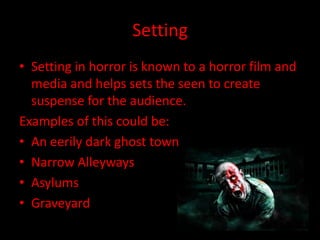
Setting
• Setting in horror is known to a horror film and
media and helps sets the seen to create
suspense for the audience.
Examples of this could be:
• An eerily dark ghost town
• Narrow Alleyways
• Asylums
• Graveyard
Narrative Structure
• Narrative structure in horror does not usually allow much room for
deviation because of how they present the protagonists and
antagonists however recently there has been a few films which
break off from the classic horror structure and try a different
approach.
In classic horror narratives there is are
• Protagonists (who is there to keep the suspense going) and
antagonists ( who usually invulnerable and all powerful)
• Side characters who inevitably die- careless teenagers(scream
series), delusional scientist
• Sudden attacks from behind• Helpless victims
• An animal or insect that causes suspense
• Narrative structure is one great way in which producers allow room
for audience to question if there will be a sequel
Character types
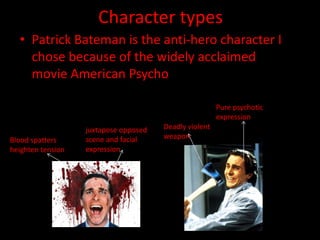
• Patrick Bateman is the anti-hero character I
chose because of the widely acclaimed
movie American Psycho
Pure psychotic
expression
Blood spatters
heighten tension

juxtapose opposed
scene and facial
expression

Deadly violent
weapon
Example: Todorov’s perspective to
narrative
• Tzetan Todorov, an influential structural
linguist came up with a theory that is used in
every story-telling media.
He suggested that
• Stories start with a state of equilibrium where
opposing forces are threatening to disrupt this
balance. Inevitably the balance is ruined
creating a sequence of events that lead to the
balance being restored.
Iconography
• Iconography is the way in which directors and
writers uses different techniques to imply an
type of effect on the viewers.
• Camera: POV shots, Sudden camera changes, High/ Low
angled shots

• Lighting: Darkened rooms, Undistinguishable movements,
• Sounds and effect: A disturbing inhumane sound, heavy
breathing, silence

• Props: Bloodied knife, Rotting corpses, Cult symbols,
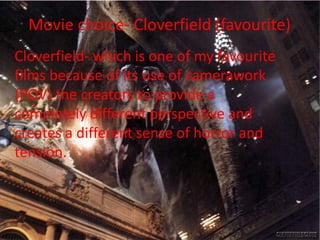
Movie choice- Cloverfield (favourite)
Cloverfield- which is one of my favourite
films because of its use of camerawork
(POV) the creators to provide a
completely different perspective and
creates a different sense of horror and
tension.
Typical themes and their themes
Common themes that have been used in prestigious
horror films.
• Zombie Apocalyptic theme- Survival, beyond
death
• Murder helpless themes- Haunted
House, Supernatural, Childhood issues
• Detective investigation- Good VS Evil
• Overrun Mental Asylum- Madness, Insanity,
• Unleashed supernatural/alien monster- Science
gone bad, Curiosity gone wrong

Conventions used in horror films

  • 1.
    Conventions used in horrorfilms By Meagan, Jovinnie, Keira and Debo
  • 2.
    Convention • Convention isthe generally accepted way of conveying something and in media they’re mainly gender specific. • For example as we are tasked to create a film containing horror genre we will show the ways which horror is typically conveyed to the audiences.
  • 3.
    Setting • Setting inhorror is known to a horror film and media and helps sets the seen to create suspense for the audience. Examples of this could be: • An eerily dark ghost town • Narrow Alleyways • Asylums • Graveyard
  • 4.
    Narrative Structure • Narrativestructure in horror does not usually allow much room for deviation because of how they present the protagonists and antagonists however recently there has been a few films which break off from the classic horror structure and try a different approach. In classic horror narratives there is are • Protagonists (who is there to keep the suspense going) and antagonists ( who usually invulnerable and all powerful) • Side characters who inevitably die- careless teenagers(scream series), delusional scientist • Sudden attacks from behind• Helpless victims • An animal or insect that causes suspense • Narrative structure is one great way in which producers allow room for audience to question if there will be a sequel
  • 5.
    Character types • PatrickBateman is the anti-hero character I chose because of the widely acclaimed movie American Psycho Pure psychotic expression Blood spatters heighten tension juxtapose opposed scene and facial expression Deadly violent weapon
  • 6.
    Example: Todorov’s perspectiveto narrative • Tzetan Todorov, an influential structural linguist came up with a theory that is used in every story-telling media. He suggested that • Stories start with a state of equilibrium where opposing forces are threatening to disrupt this balance. Inevitably the balance is ruined creating a sequence of events that lead to the balance being restored.
  • 7.
    Iconography • Iconography isthe way in which directors and writers uses different techniques to imply an type of effect on the viewers. • Camera: POV shots, Sudden camera changes, High/ Low angled shots • Lighting: Darkened rooms, Undistinguishable movements, • Sounds and effect: A disturbing inhumane sound, heavy breathing, silence • Props: Bloodied knife, Rotting corpses, Cult symbols,
  • 8.
    Movie choice- Cloverfield(favourite) Cloverfield- which is one of my favourite films because of its use of camerawork (POV) the creators to provide a completely different perspective and creates a different sense of horror and tension.
  • 9.
    Typical themes andtheir themes Common themes that have been used in prestigious horror films. • Zombie Apocalyptic theme- Survival, beyond death • Murder helpless themes- Haunted House, Supernatural, Childhood issues • Detective investigation- Good VS Evil • Overrun Mental Asylum- Madness, Insanity, • Unleashed supernatural/alien monster- Science gone bad, Curiosity gone wrong