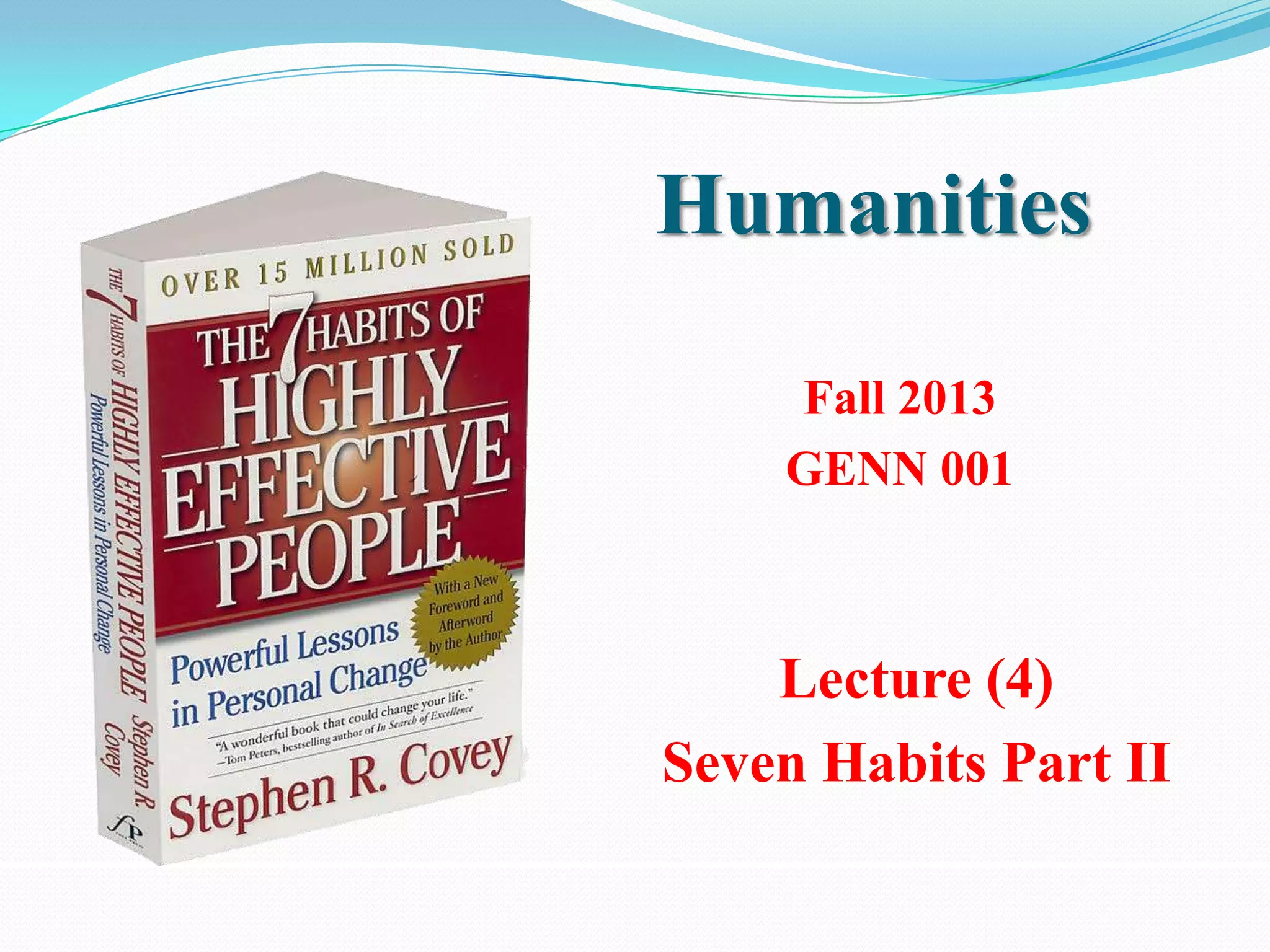
Humanities

    Fall 2013
    GENN 001


    Lecture (4)
Seven Habits Part II
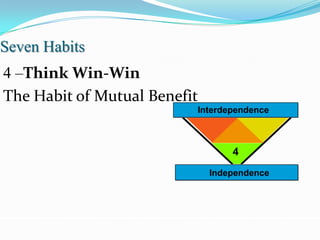
Seven Habits
4 –Think Win-Win
The Habit of Mutual Benefit
                          Interdependence


                                  4
                              Independence
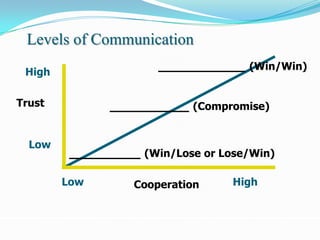
Levels of Communication
 High
                       ___________ (Win/Win)

Trust          __________ (Compromise)


  Low
         _________ (Win/Lose or Lose/Win)

        Low        Cooperation    High
Nash equilibrium

  The practical and general implication is that when players act

in the interests of the group, then they are better off than if they

acted in the their individual interests alone.

  Beautiful Mind
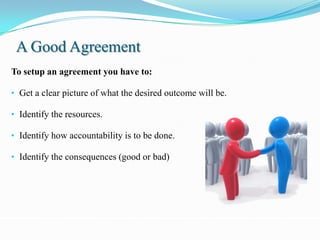
A Good Agreement
To setup an agreement you have to:

• Get a clear picture of what the desired outcome will be.

• Identify the resources.

• Identify how accountability is to be done.

• Identify the consequences (good or bad)
Six Paradigms of human interaction:
1- Win/Win: People seek mutual benefit in all human interactions.Win-win
              means that agreements or solutions are mutually beneficial,
              mutually satisfying.
2- Win/Lose: The competitive paradigm. If I win, you lose. In relationships,
              If both people aren’t wining, both are losing.
3- Lose/Win: The “ Doormat” paradigm. The individual seeks strength
              from popularity based on acceptance.
4- Lose/Lose: when people become obsessed with making the other person
              lose, even at their own expense.
5- Win... Focusing solely on getting what one wants. A person with the win
             mentality thinks in terms of securing his own ends and leaving
             it to others to secure theirs.
6- Win/ Win or No Deal. If we can’t find a mutually benefficial solution,
             we agree to disagree agreeably.
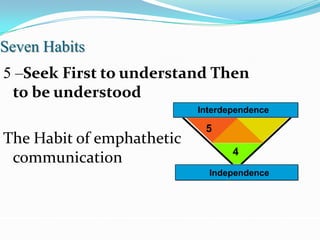
Seven Habits
5 –Seek First to understand Then
 to be understood
                           Interdependence

                            5
The Habit of emphathetic
                                  4
 communication
                             Independence
We usually listen at one of four levels: Ignoring, pretending,

selective listening, or attentive listening. We should be using the

fifth, highest form of listening... Empathic listening.

  You must listen with your ears, your eyes and your heart.

  This habit is important as it extends your circle of influence. You

are focusing on building your understanding. As you appriciate

people more, they will appreciate you more.
Listen !!!
• The whole key is in the sequence.

• Do not listen with intend to reply, rather, with the intend to

 understand.

• You need to be influenced to be able to influence.

• You need to diagnose before prescribing the medicine.
Understand !!!
• It requires patience and openness

• It requires alot of time, but it saves alot of time on the long run

• Understanding doesnot mean that you agree… it means that you

  accept the other.

• Relationships are more important than efficiency
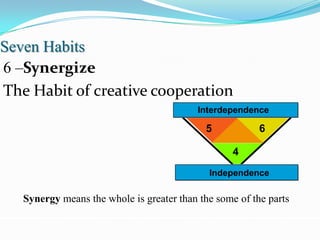
Seven Habits
6 –Synergize
The Habit of creative cooperation
                                           Interdependence

                                            5            6

                                                   4
                                             Independence

   Synergy means the whole is greater than the some of the parts
Differences !!!
• Don’t respect differences!

• Don’t accept differences!

• Don’t tolerate differences!

• CELEBRATE differences!
• Respect them, build on strengths, and compensate for
  weaknesses.

• Synergistic communication is opening your mind and heart to
  new possibilities
• Think win-win is the root

• Seek first to understand is the route

• Synergize is the fruit
Seven Habits
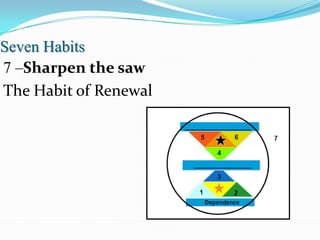
7 –Sharpen the saw
The Habit of Renewal
• “I’m busy sawing, stupid!

• Keep the balance between productivity and productive

 capability
You must renew your four
        dimensions of your nature !!!
The Physical Dimension:
The physical dimension involves caring for your physical body
eating the right foods, getting enough rest and relaxation, and
exercising on a regular basis.

The Spiritual Dimension
The spiritual dimension is your center, your commitment to your
value system. It draws upon the sources that inspire and uplift you
and tie you to timeless truths of humanity.
The Mental Dimension:
It's important to keep your mind sharp by reading, writing,
organizing and planning. Read broadly and expose yourself to great
minds.

The Social/Emotional Dimension:
Our emotional life is primarily developed out and manifested in our
relationships with others. Renewing our social/emotional
dimension requires focus and exercise in our interaction with
others.
The 7 Habits...and what they'll
   do to help your group
• Be Proactive provides courage to take risks and accept new
challenges to achieve goals.
• Begin with the End in Mind brings projects to completion and
unites teams and organizations under a shared vision, mission, and
purpose.
• Put First Things First Promotes getting the most important
things done first and encourages direct effectiveness.
• Think Win/Win Encourages conflict resolution and helps
individuals seek mutual benefit, increasing group momentum.
The 7 Habits...and what they'll
   do to help your group
• Seek First to Understand, Then to Be Understood Helps people
understand problems, resulting in targeted solutions; and promotes
better communications, leading to successful problemsolving.

• Synergize Ensures greater "buyin“ from team members and
leverages the diversity of individuals to increase levels of success.

• Sharpen the Saw Promotes continuous improvements and
safeguards against "burnout“ and subsequent nonproductivity.
GENN001 Fall2013 Session #4 seven habits cont

GENN001 Fall2013 Session #4 seven habits cont

  • 1.
    Humanities Fall 2013 GENN 001 Lecture (4) Seven Habits Part II
  • 2.
    Seven Habits 4 –ThinkWin-Win The Habit of Mutual Benefit Interdependence 4 Independence
  • 3.
    Levels of Communication High ___________ (Win/Win) Trust __________ (Compromise) Low _________ (Win/Lose or Lose/Win) Low Cooperation High
  • 4.
    Nash equilibrium The practical and general implication is that when players act in the interests of the group, then they are better off than if they acted in the their individual interests alone. Beautiful Mind
  • 5.
    A Good Agreement Tosetup an agreement you have to: • Get a clear picture of what the desired outcome will be. • Identify the resources. • Identify how accountability is to be done. • Identify the consequences (good or bad)
  • 6.
    Six Paradigms ofhuman interaction: 1- Win/Win: People seek mutual benefit in all human interactions.Win-win means that agreements or solutions are mutually beneficial, mutually satisfying. 2- Win/Lose: The competitive paradigm. If I win, you lose. In relationships, If both people aren’t wining, both are losing. 3- Lose/Win: The “ Doormat” paradigm. The individual seeks strength from popularity based on acceptance. 4- Lose/Lose: when people become obsessed with making the other person lose, even at their own expense. 5- Win... Focusing solely on getting what one wants. A person with the win mentality thinks in terms of securing his own ends and leaving it to others to secure theirs. 6- Win/ Win or No Deal. If we can’t find a mutually benefficial solution, we agree to disagree agreeably.
  • 7.
    Seven Habits 5 –SeekFirst to understand Then to be understood Interdependence 5 The Habit of emphathetic 4 communication Independence
  • 8.
    We usually listenat one of four levels: Ignoring, pretending, selective listening, or attentive listening. We should be using the fifth, highest form of listening... Empathic listening. You must listen with your ears, your eyes and your heart. This habit is important as it extends your circle of influence. You are focusing on building your understanding. As you appriciate people more, they will appreciate you more.
  • 9.
    Listen !!! • Thewhole key is in the sequence. • Do not listen with intend to reply, rather, with the intend to understand. • You need to be influenced to be able to influence. • You need to diagnose before prescribing the medicine.
  • 10.
    Understand !!! • Itrequires patience and openness • It requires alot of time, but it saves alot of time on the long run • Understanding doesnot mean that you agree… it means that you accept the other. • Relationships are more important than efficiency
  • 11.
    Seven Habits 6 –Synergize TheHabit of creative cooperation Interdependence 5 6 4 Independence Synergy means the whole is greater than the some of the parts
  • 12.
    Differences !!! • Don’trespect differences! • Don’t accept differences! • Don’t tolerate differences! • CELEBRATE differences! • Respect them, build on strengths, and compensate for weaknesses. • Synergistic communication is opening your mind and heart to new possibilities
  • 13.
    • Think win-winis the root • Seek first to understand is the route • Synergize is the fruit
  • 14.
    Seven Habits 7 –Sharpenthe saw The Habit of Renewal
  • 15.
    • “I’m busysawing, stupid! • Keep the balance between productivity and productive capability
  • 16.
    You must renewyour four dimensions of your nature !!! The Physical Dimension: The physical dimension involves caring for your physical body eating the right foods, getting enough rest and relaxation, and exercising on a regular basis. The Spiritual Dimension The spiritual dimension is your center, your commitment to your value system. It draws upon the sources that inspire and uplift you and tie you to timeless truths of humanity.
  • 17.
    The Mental Dimension: It'simportant to keep your mind sharp by reading, writing, organizing and planning. Read broadly and expose yourself to great minds. The Social/Emotional Dimension: Our emotional life is primarily developed out and manifested in our relationships with others. Renewing our social/emotional dimension requires focus and exercise in our interaction with others.
  • 18.
    The 7 Habits...andwhat they'll do to help your group • Be Proactive provides courage to take risks and accept new challenges to achieve goals. • Begin with the End in Mind brings projects to completion and unites teams and organizations under a shared vision, mission, and purpose. • Put First Things First Promotes getting the most important things done first and encourages direct effectiveness. • Think Win/Win Encourages conflict resolution and helps individuals seek mutual benefit, increasing group momentum.
  • 19.
    The 7 Habits...andwhat they'll do to help your group • Seek First to Understand, Then to Be Understood Helps people understand problems, resulting in targeted solutions; and promotes better communications, leading to successful problemsolving. • Synergize Ensures greater "buyin“ from team members and leverages the diversity of individuals to increase levels of success. • Sharpen the Saw Promotes continuous improvements and safeguards against "burnout“ and subsequent nonproductivity.