GENES AND HERIDITY
ASIF NAWAZ KHAN
Mpill(Microbiology)
AUST
CONTENTS
 WHAT IS HEREIDTY
 WHAT IS A GENE
 WHAT IS DNA
 LOCATION OF DNA
 WHAT IS CHROMOSOMES
 TYPES OF CHROMOSOMES
 GENOTYPE AND PHENOTYPE
 DOMINANT AND RECESSIVE GENES
 MENDEL’S LAWS OF INHERITANCE
WHAT IS HEREDITY?
 Heredity means the passing on of traits from parents to their offspring , the
offspring cells or organisms acquire the genetic information of their parents.
 EXAMPLES:
Eye colour
Ear lobes attached or detached
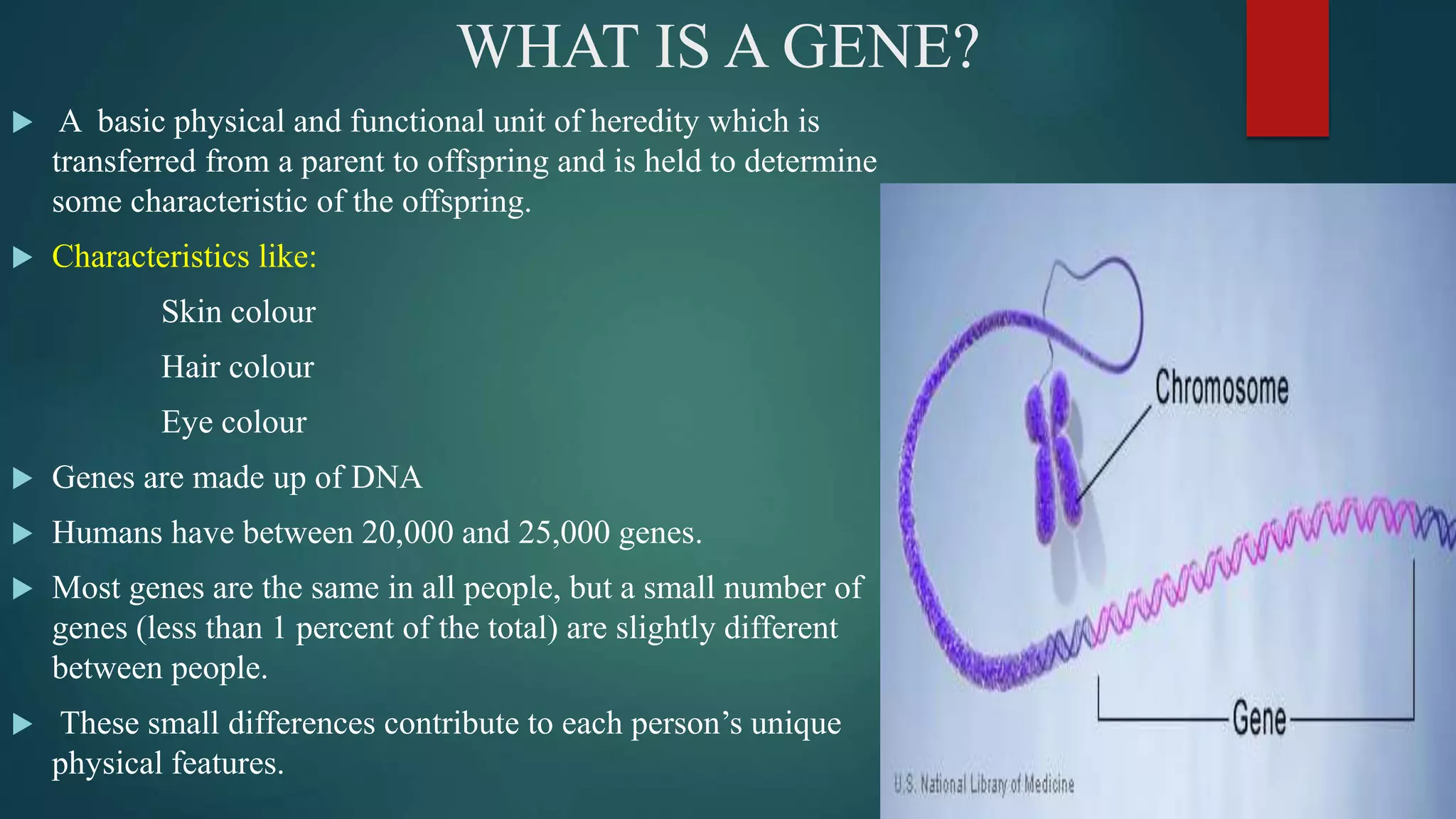
WHAT IS A GENE?
 A basic physical and functional unit of heredity which is
transferred from a parent to offspring and is held to determine
some characteristic of the offspring.
 Characteristics like:
Skin colour
Hair colour
Eye colour
 Genes are made up of DNA
 Humans have between 20,000 and 25,000 genes.
 Most genes are the same in all people, but a small number of
genes (less than 1 percent of the total) are slightly different
between people.
 These small differences contribute to each person’s unique
physical features.
WHAT IS DNA ? DNA, or deoxyribonucleic acid, is the hereditary material in humans and
almost all other organisms.
 DNA is a double-stranded helix, with the two strands connected by
hydrogen bonds.
 Nearly every cell in a person’s body has the same DNA.
 Most DNA is located in the cell nucleus (where it is called nuclear DNA),.
 But a small amount of DNA can also be found in the mitochondria (where it
is called mitochondrial DNA or mtDNA).
 The information in DNA is stored as a code made up of four chemical bases:
Adenine (A) ,Guanine (G)
Cytosine (C),Thymine (T)
 Human DNA consists of about 3 billion bases, and more than 99 percent of
those bases are the same in all people.
 American biologist James Watson and English physicist Francis Crick
discovered DNA in the 1950s.
LOCATION OF DNA
WHAT IS A CHOROMOSOMES?
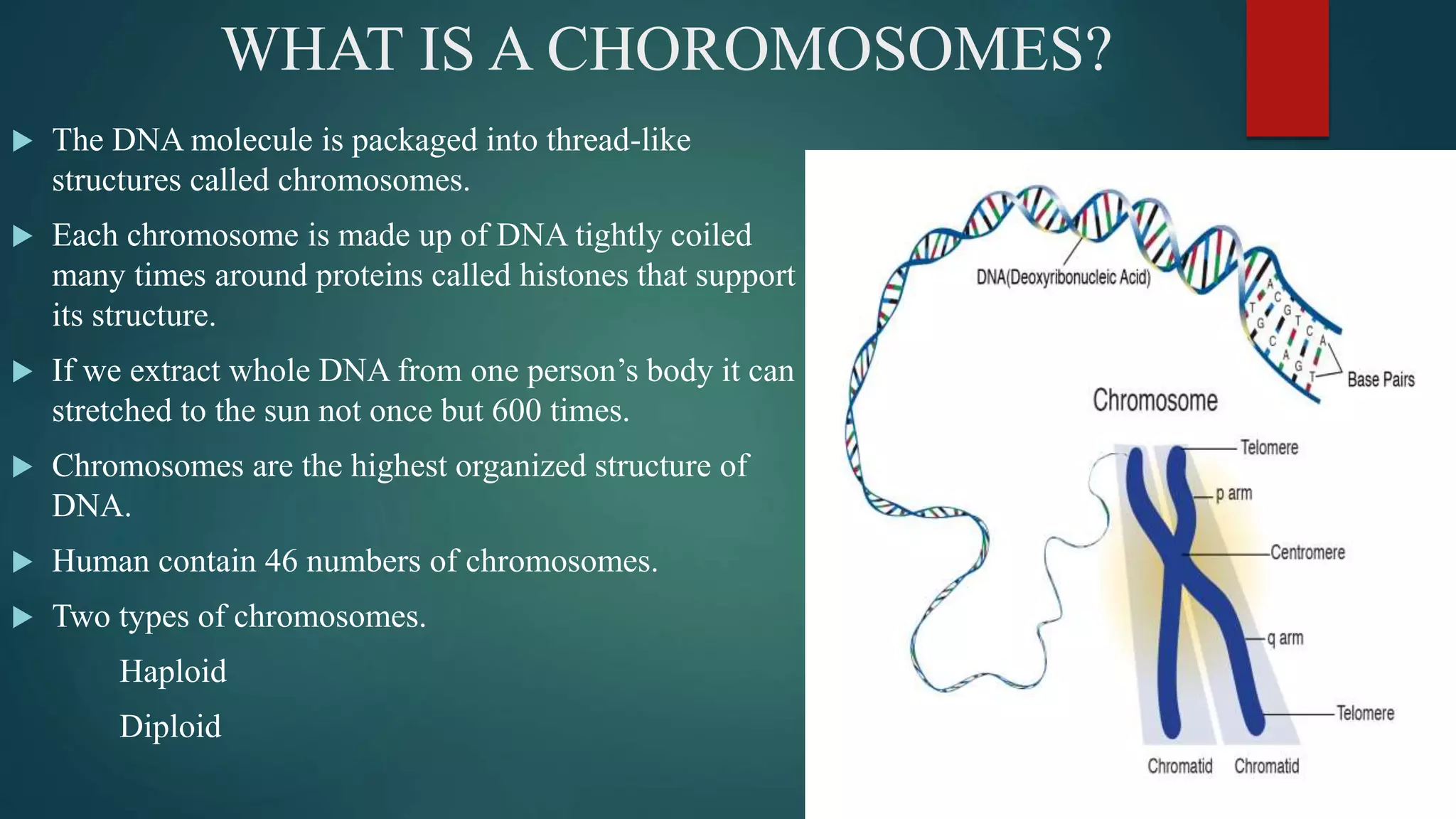
 The DNA molecule is packaged into thread-like
structures called chromosomes.
 Each chromosome is made up of DNA tightly coiled
many times around proteins called histones that support
its structure.
 If we extract whole DNA from one person’s body it can
stretched to the sun not once but 600 times.
 Chromosomes are the highest organized structure of
DNA.
 Human contain 46 numbers of chromosomes.
 Two types of chromosomes.
Haploid
Diploid
TYPES OF CHROMOSOMES
 In males the chromosomes are XY.
 In females the chromosomes are XX
 Two types of chromosomes.
Haploid
Diploid
 Haploid cells have half the number of
chromosomes (n) - i.e. a haploid cell contains
only one complete set of chromosomes.
 Cells used in sexual reproduction, sperm and ova
(also known as Gametes).
 Diploid cells contain two complete sets (2n) of
chromosomes.
PHENOTYPE AND GENO TYPE
 PHENOTYPES:
The sum of an organism’s physical appearance is their
phenotype.
Environmental factors that may influence the
phenotype include nutrition,
temperature, humidity and stress.
 GENOTYPE:
The entire genetic makeup of an organism.
Genotype controls Phenotype but environmental
factors that may
influence the phenotype
DOMINANT AND RECESSIVES GENE
 DOMINANT GENES:
The genes which express themselves are dominant genes.
 RECESSIVE GENE:
The genes which is not expressed but still present in
body are called recessive genes.
Gene Gene
GREGOR MENDEL’s LAW OF INHERITANCE
 Gregor Mendel was known as Father of Modern
Genetics.
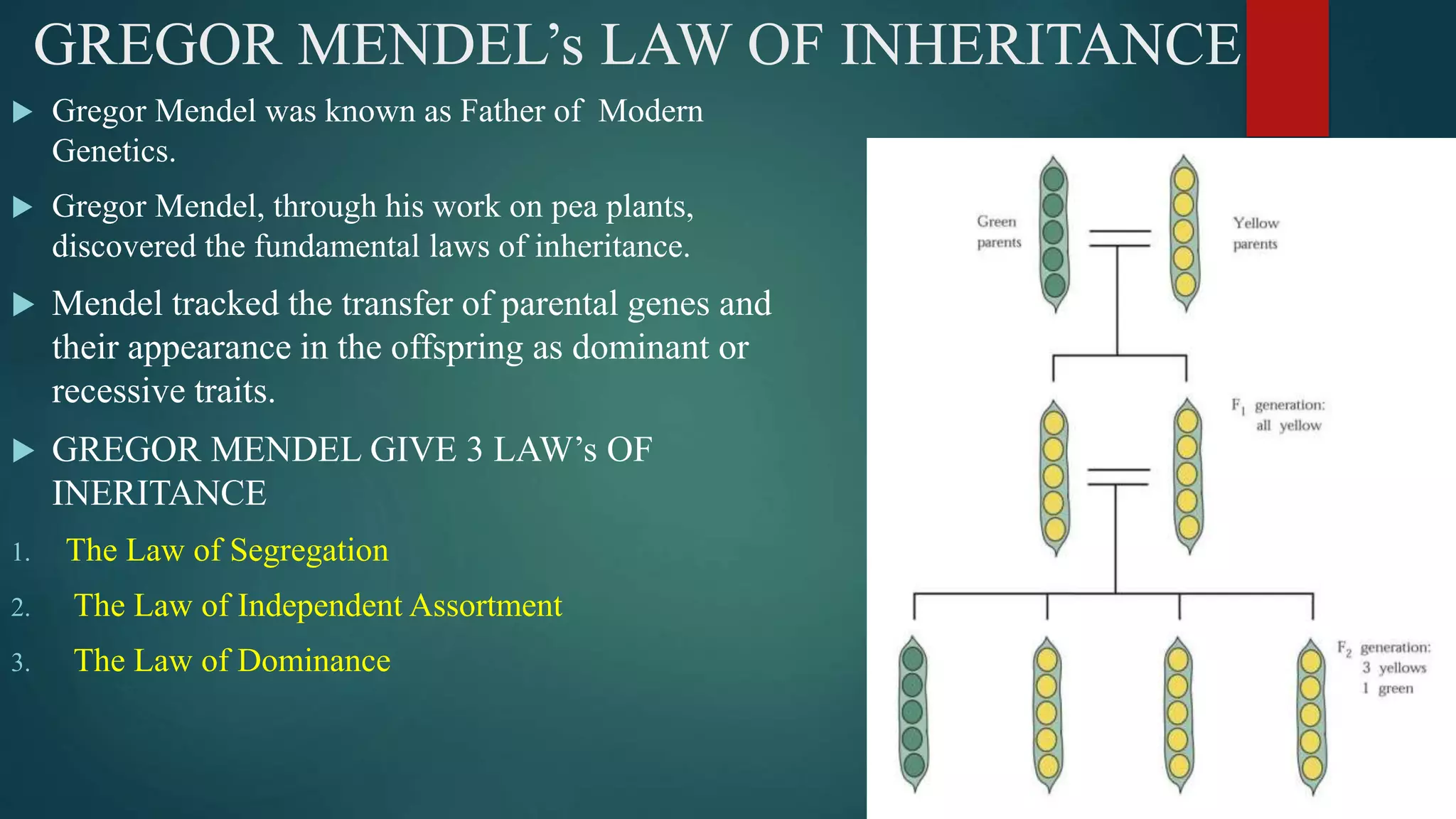
 Gregor Mendel, through his work on pea plants,
discovered the fundamental laws of inheritance.
 Mendel tracked the transfer of parental genes and
their appearance in the offspring as dominant or
recessive traits.
 GREGOR MENDEL GIVE 3 LAW’s OF
INERITANCE
1. The Law of Segregation
2. The Law of Independent Assortment
3. The Law of Dominance
Genes and heredity for class 9th

Genes and heredity for class 9th

  • 2.
    GENES AND HERIDITY ASIFNAWAZ KHAN Mpill(Microbiology) AUST
  • 3.
    CONTENTS  WHAT ISHEREIDTY  WHAT IS A GENE  WHAT IS DNA  LOCATION OF DNA  WHAT IS CHROMOSOMES  TYPES OF CHROMOSOMES  GENOTYPE AND PHENOTYPE  DOMINANT AND RECESSIVE GENES  MENDEL’S LAWS OF INHERITANCE
  • 4.
    WHAT IS HEREDITY? Heredity means the passing on of traits from parents to their offspring , the offspring cells or organisms acquire the genetic information of their parents.  EXAMPLES: Eye colour Ear lobes attached or detached
  • 5.
    WHAT IS AGENE?  A basic physical and functional unit of heredity which is transferred from a parent to offspring and is held to determine some characteristic of the offspring.  Characteristics like: Skin colour Hair colour Eye colour  Genes are made up of DNA  Humans have between 20,000 and 25,000 genes.  Most genes are the same in all people, but a small number of genes (less than 1 percent of the total) are slightly different between people.  These small differences contribute to each person’s unique physical features.
  • 6.
    WHAT IS DNA? DNA, or deoxyribonucleic acid, is the hereditary material in humans and almost all other organisms.  DNA is a double-stranded helix, with the two strands connected by hydrogen bonds.  Nearly every cell in a person’s body has the same DNA.  Most DNA is located in the cell nucleus (where it is called nuclear DNA),.  But a small amount of DNA can also be found in the mitochondria (where it is called mitochondrial DNA or mtDNA).  The information in DNA is stored as a code made up of four chemical bases: Adenine (A) ,Guanine (G) Cytosine (C),Thymine (T)  Human DNA consists of about 3 billion bases, and more than 99 percent of those bases are the same in all people.  American biologist James Watson and English physicist Francis Crick discovered DNA in the 1950s.
  • 7.
  • 8.
    WHAT IS ACHOROMOSOMES?  The DNA molecule is packaged into thread-like structures called chromosomes.  Each chromosome is made up of DNA tightly coiled many times around proteins called histones that support its structure.  If we extract whole DNA from one person’s body it can stretched to the sun not once but 600 times.  Chromosomes are the highest organized structure of DNA.  Human contain 46 numbers of chromosomes.  Two types of chromosomes. Haploid Diploid
  • 9.
    TYPES OF CHROMOSOMES In males the chromosomes are XY.  In females the chromosomes are XX  Two types of chromosomes. Haploid Diploid  Haploid cells have half the number of chromosomes (n) - i.e. a haploid cell contains only one complete set of chromosomes.  Cells used in sexual reproduction, sperm and ova (also known as Gametes).  Diploid cells contain two complete sets (2n) of chromosomes.
  • 11.
    PHENOTYPE AND GENOTYPE  PHENOTYPES: The sum of an organism’s physical appearance is their phenotype. Environmental factors that may influence the phenotype include nutrition, temperature, humidity and stress.  GENOTYPE: The entire genetic makeup of an organism. Genotype controls Phenotype but environmental factors that may influence the phenotype
  • 12.
    DOMINANT AND RECESSIVESGENE  DOMINANT GENES: The genes which express themselves are dominant genes.  RECESSIVE GENE: The genes which is not expressed but still present in body are called recessive genes. Gene Gene
  • 13.
    GREGOR MENDEL’s LAWOF INHERITANCE  Gregor Mendel was known as Father of Modern Genetics.  Gregor Mendel, through his work on pea plants, discovered the fundamental laws of inheritance.  Mendel tracked the transfer of parental genes and their appearance in the offspring as dominant or recessive traits.  GREGOR MENDEL GIVE 3 LAW’s OF INERITANCE 1. The Law of Segregation 2. The Law of Independent Assortment 3. The Law of Dominance

Editor's Notes

  • #8 Histon proteins pakages Dna . DNA is negative charge and histones are positively chargeS