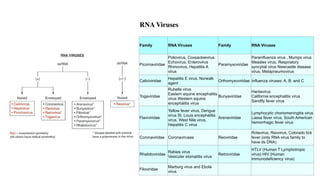
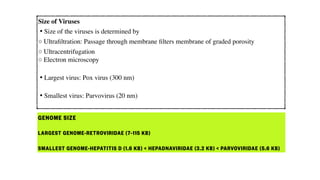
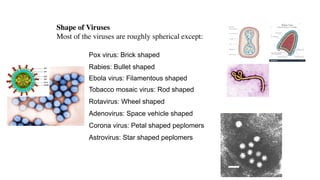
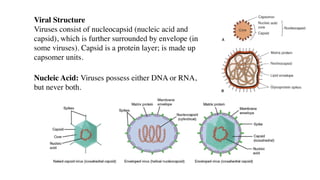
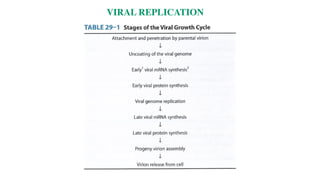
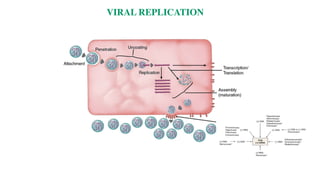
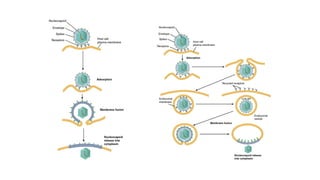
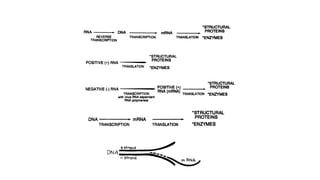
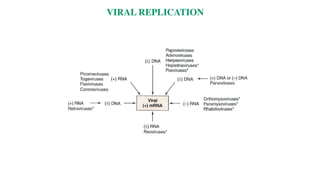
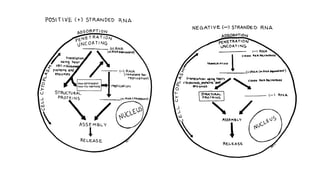
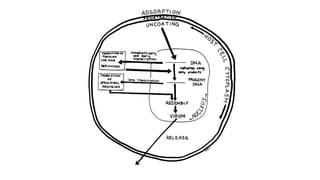
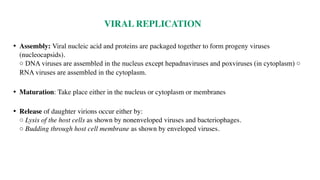
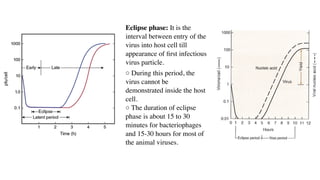
Viruses are the smallest infectious agents that are obligate intracellular parasites. They contain either DNA or RNA, but not both, and are surrounded by a protein coat. Viruses replicate inside host cells using the cell's machinery. The viral replication cycle involves adsorption, penetration, uncoating, biosynthesis of viral components, assembly, maturation, and release. Viruses do not undergo binary fission like bacteria but instead use a complex replication process within the host cell.