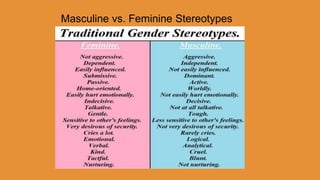
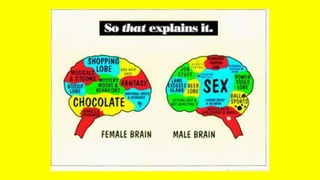
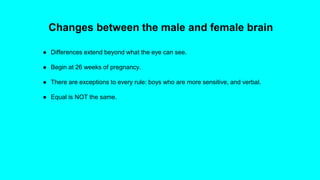
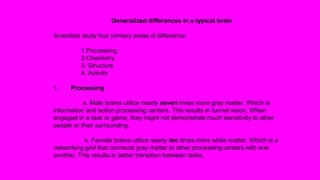
Gender role stereotyping occurs when a person is expected to behave in a certain way based on their sex. Gender is a social construct, and many societies expect males to behave masculinely and females to behave less masculinely. Stereotypes in schools can limit what students can learn by expecting certain behaviors from them based on gender. The male and female brains differ in areas like processing, chemistry, structure and activity levels. Gender stereotyping affects both men and women by influencing behaviors and judgments of those who conform and do not conform to stereotypical roles. Social theories like social role theory and role congruity theory help explain how expectations based on gender roles lead to stereotyping.





![Socialization[1].ppt](https://cdn.slidesharecdn.com/ss_thumbnails/socialization1-ppt-120131084221-phpapp01-thumbnail.jpg?width=640&height=640&fit=bounds)


