1
Training university instructors to use
online communication tools in their
courses
Emtinan Alqurashi, Edward Kocher, Marcia Rapchak, Chunhua Xiong
December, 2014
Final Project
2

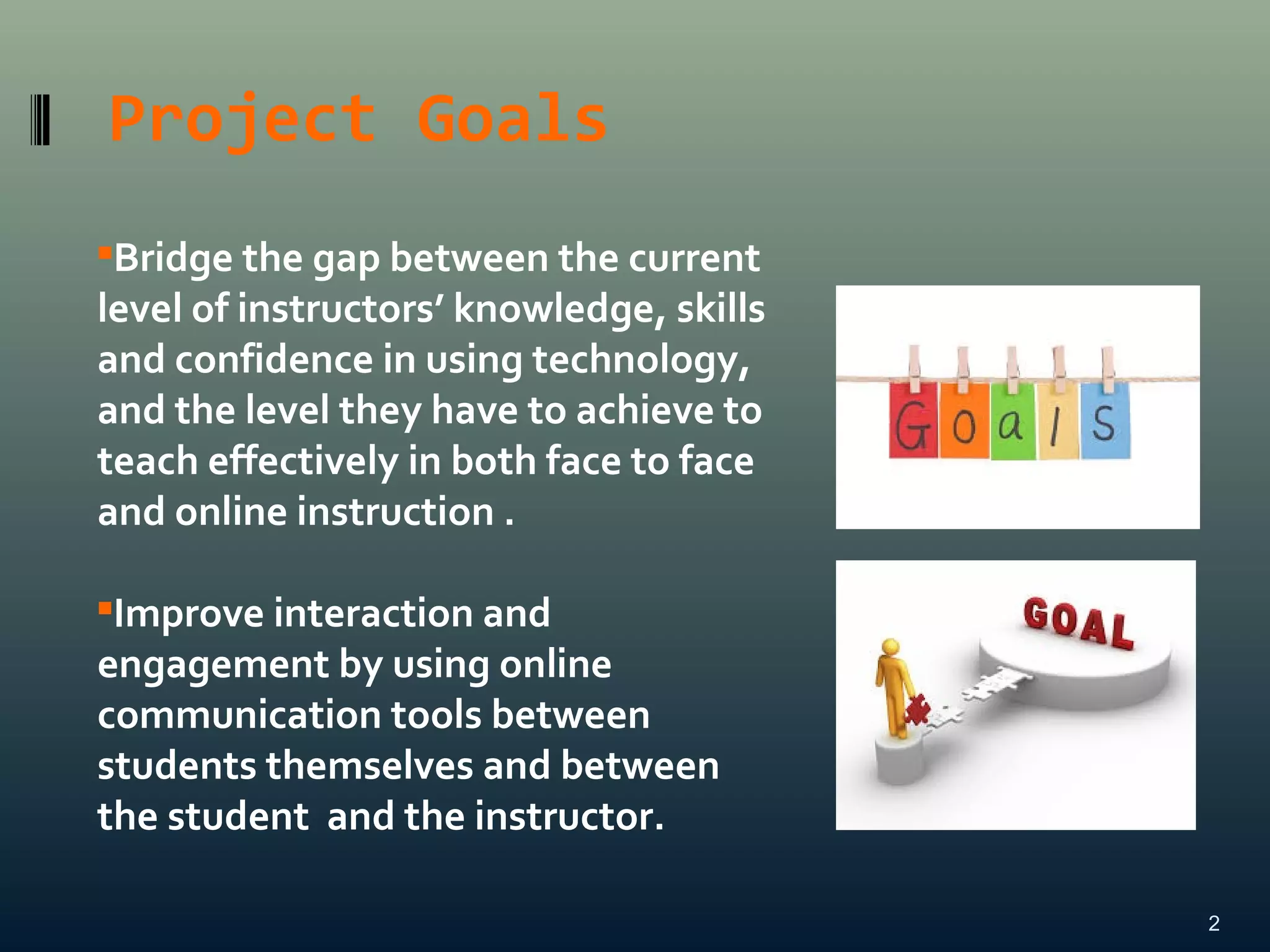
Bridge the gap between the current
level of instructors’ knowledge, skills
and confidence in using technology,
and the level they have to achieve to
teach effectively in both face to face
and online instruction .

Improve interaction and
engagement by using online
communication tools between
students themselves and between
the student and the instructor.
Project Goals
Instructional Objectives
By the end of this course, learners will be able to:
Create voice emails and announcements to
effectively communicate with students.
Use the assignment feedback tools in Blackboard to
effectively provide feedback on course performance
to students.
Create discussion boards and voice boards to engage
in conversation with students.
Use Collaborate to effectively communicate with
students.
3
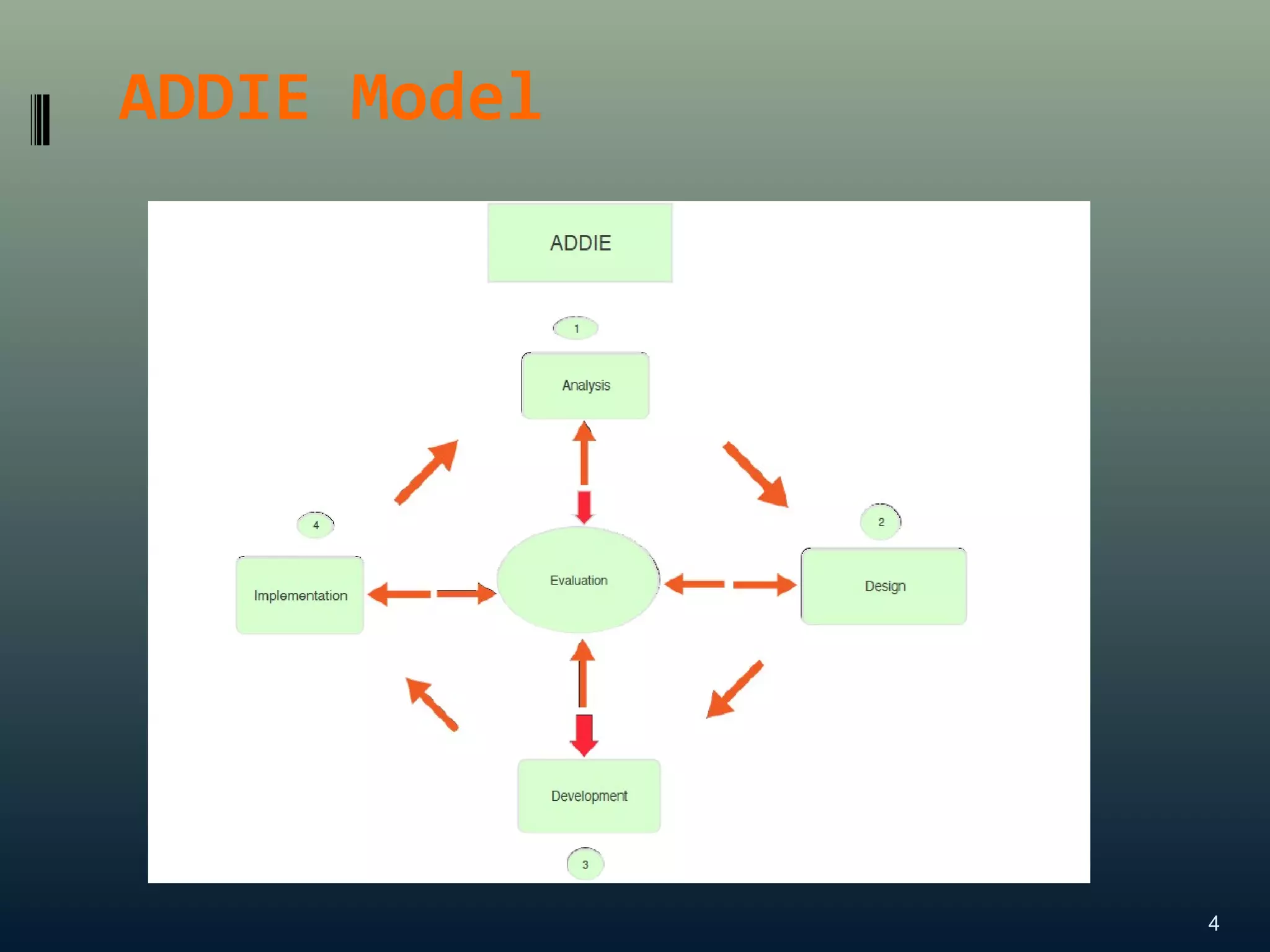
ADDIE Model
4
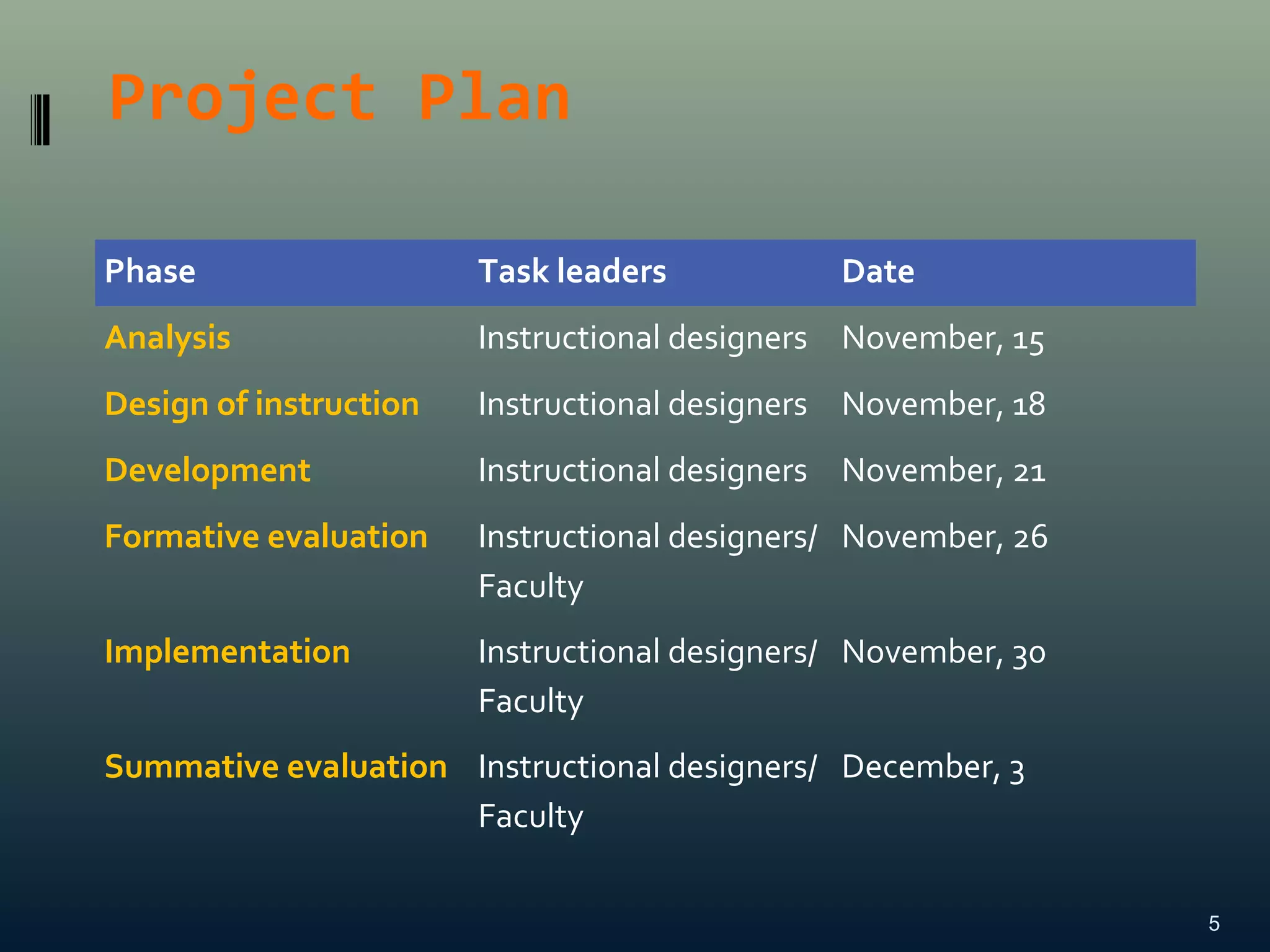
Project Plan
5
Phase Task leaders Date
Analysis Instructional designers November, 15
Design of instruction Instructional designers November, 18
Development Instructional designers November, 21
Formative evaluation Instructional designers/
Faculty
November, 26
Implementation Instructional designers/
Faculty
November, 30
Summative evaluation Instructional designers/
Faculty
December, 3
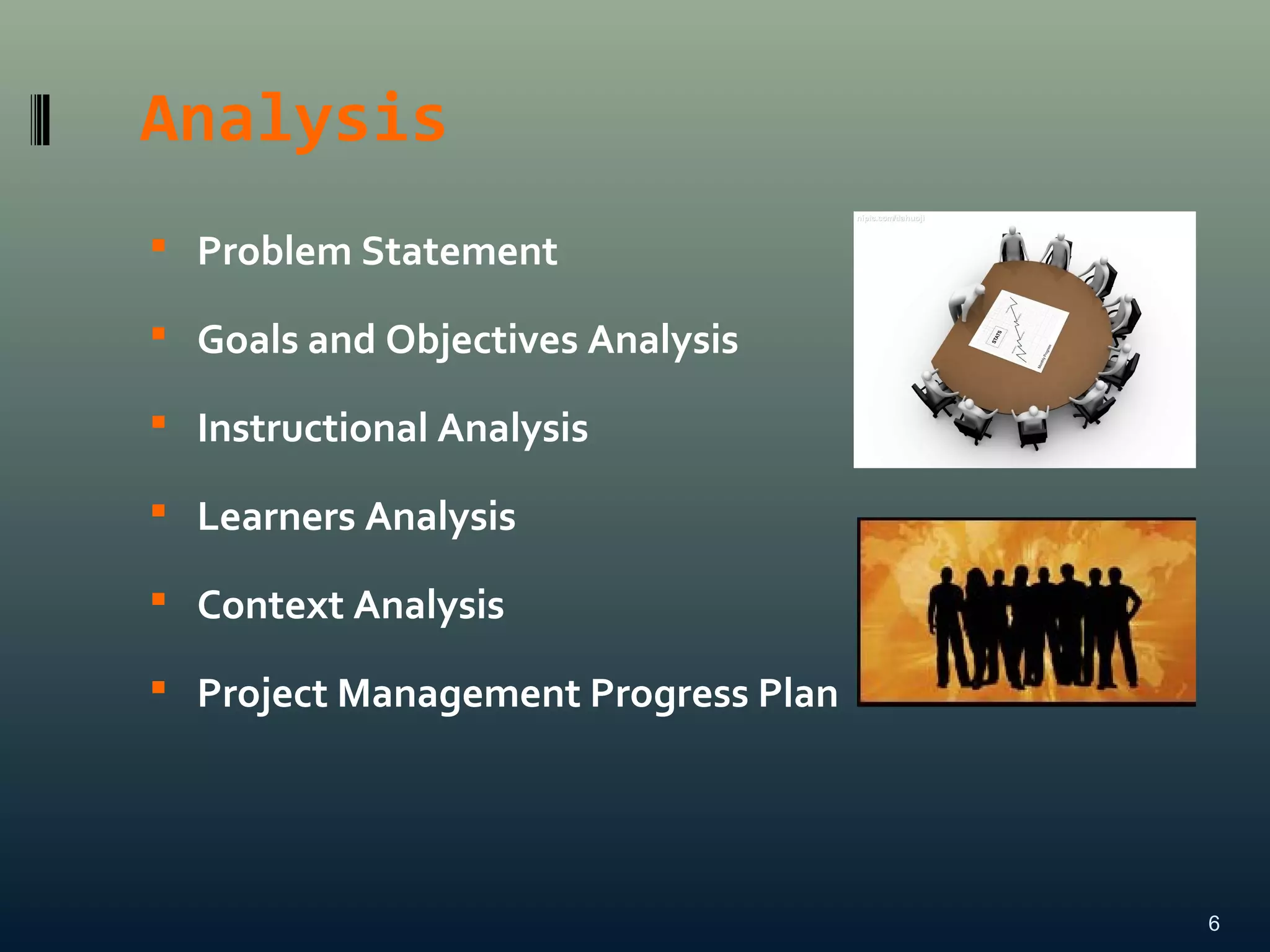
Analysis
 Problem Statement
 Goals and Objectives Analysis
 Instructional Analysis
 Learners Analysis
 Context Analysis
 Project Management Progress Plan
6
Design
 Create inventory of course lesson and
objectives
 Design tasks for Four Lessons and Units
1. Announcements and Voice Emails
2. Discussion Board and Voice Board
3. Assignment Feedback Tools
4. Collaborate
 Instructional Strategy Design
7
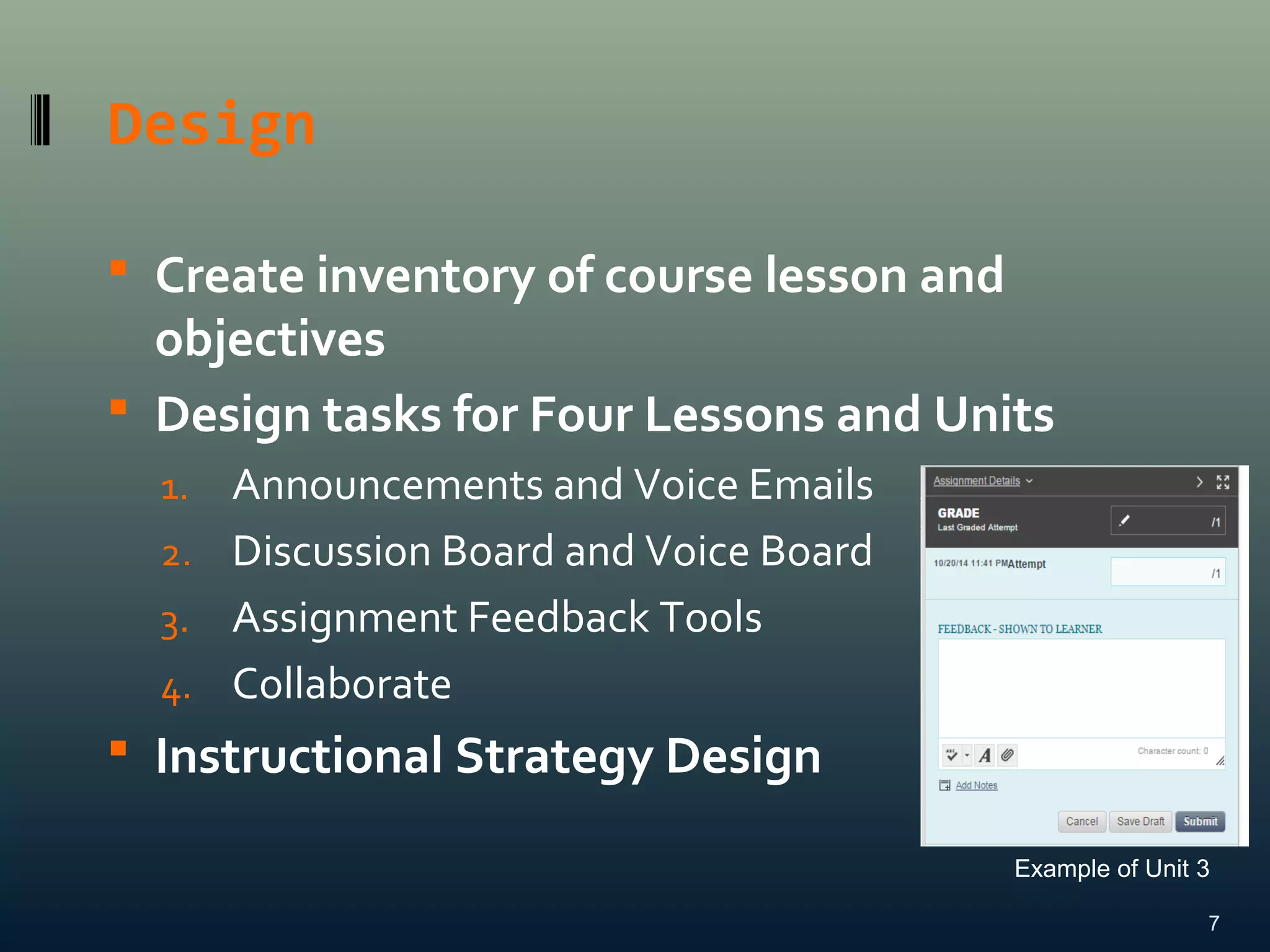
Example of Unit 3
Development
 Create and validate selected learning
resources
 Sample Lesson Development
 Learning Objectives
 AECT standards
 Learning strategy
 Assessment
8
Formative Evaluation
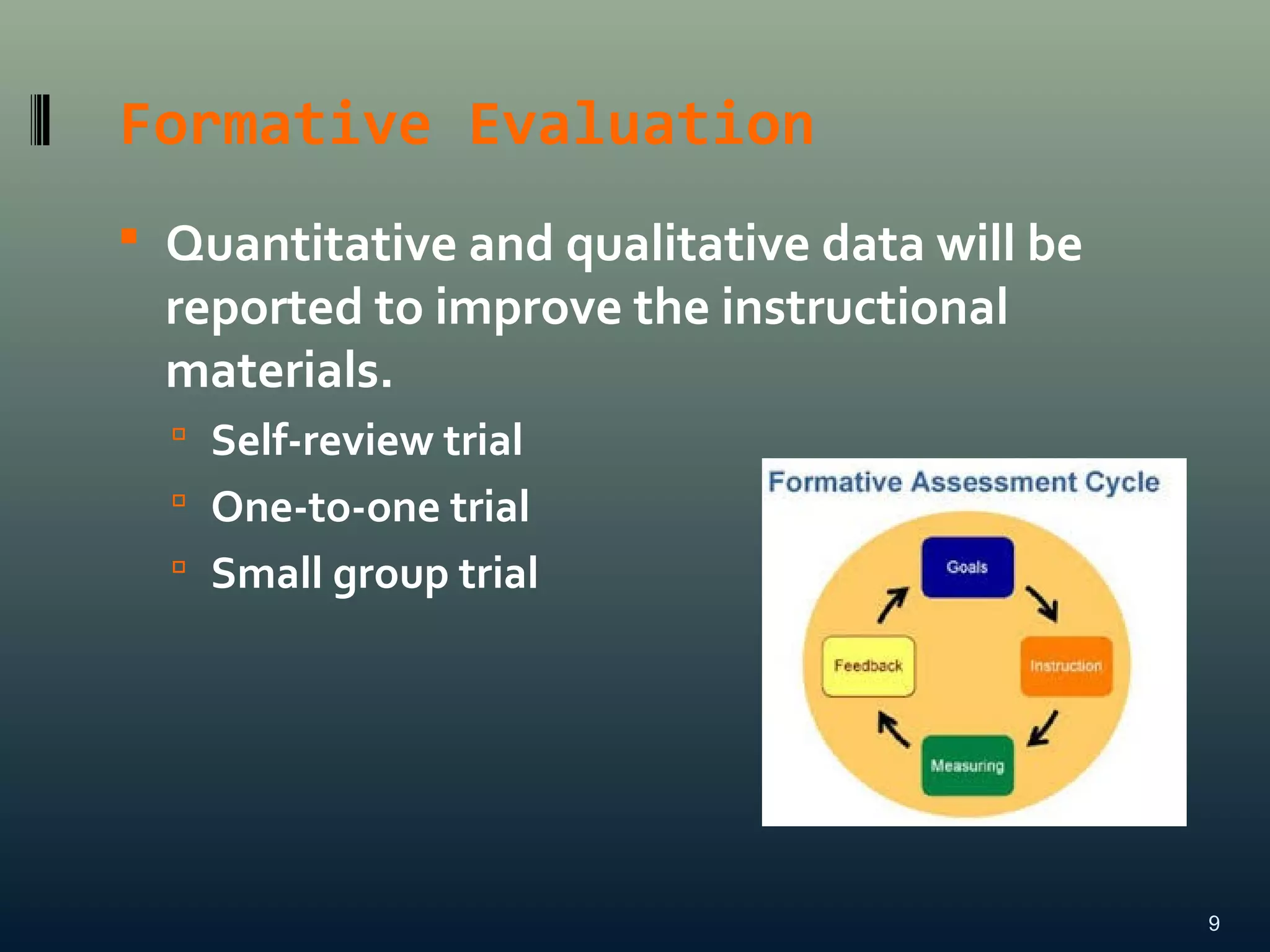
 Quantitative and qualitative data will be
reported to improve the instructional
materials.
 Self-review trial
 One-to-one trial
 Small group trial
9
Implementation
 Testing of course software and launching of the
course site within Blackboard.
 Enroll interested university faculty into the
course.
 Test links, videos, and Blackboard tests
throughout the duration of the course to make
sure these are functioning properly.
 Facilitate the course by monitoring discussion
boards, providing additional materials where
needed, and providing feedback on assignments.
10
Summative Evaluation
11

The final phase in this project: It aims to
evaluate and assess the quality of the instruction
after implementation.

Two main phases: expert judgment and field
trial.

Content Analysis

Design Analysis

Instructional effectiveness

Instructional efficiency

Benefits of instruction
Project Team
12
Emtinan Alqurashi, Edward Kocher, Marcia Rapchak, Chunhua Xiong
Working collaboratively
Working effectively
13
Questions?
Thank you!

GDIT 715 final project

  • 1.
    1 Training university instructorsto use online communication tools in their courses Emtinan Alqurashi, Edward Kocher, Marcia Rapchak, Chunhua Xiong December, 2014 Final Project
  • 2.
    2  Bridge the gapbetween the current level of instructors’ knowledge, skills and confidence in using technology, and the level they have to achieve to teach effectively in both face to face and online instruction .  Improve interaction and engagement by using online communication tools between students themselves and between the student and the instructor. Project Goals
  • 3.
    Instructional Objectives By theend of this course, learners will be able to: Create voice emails and announcements to effectively communicate with students. Use the assignment feedback tools in Blackboard to effectively provide feedback on course performance to students. Create discussion boards and voice boards to engage in conversation with students. Use Collaborate to effectively communicate with students. 3
  • 4.
  • 5.
    Project Plan 5 Phase Taskleaders Date Analysis Instructional designers November, 15 Design of instruction Instructional designers November, 18 Development Instructional designers November, 21 Formative evaluation Instructional designers/ Faculty November, 26 Implementation Instructional designers/ Faculty November, 30 Summative evaluation Instructional designers/ Faculty December, 3
  • 6.
    Analysis  Problem Statement Goals and Objectives Analysis  Instructional Analysis  Learners Analysis  Context Analysis  Project Management Progress Plan 6
  • 7.
    Design  Create inventoryof course lesson and objectives  Design tasks for Four Lessons and Units 1. Announcements and Voice Emails 2. Discussion Board and Voice Board 3. Assignment Feedback Tools 4. Collaborate  Instructional Strategy Design 7 Example of Unit 3
  • 8.
    Development  Create andvalidate selected learning resources  Sample Lesson Development  Learning Objectives  AECT standards  Learning strategy  Assessment 8
  • 9.
    Formative Evaluation  Quantitativeand qualitative data will be reported to improve the instructional materials.  Self-review trial  One-to-one trial  Small group trial 9
  • 10.
    Implementation  Testing ofcourse software and launching of the course site within Blackboard.  Enroll interested university faculty into the course.  Test links, videos, and Blackboard tests throughout the duration of the course to make sure these are functioning properly.  Facilitate the course by monitoring discussion boards, providing additional materials where needed, and providing feedback on assignments. 10
  • 11.
    Summative Evaluation 11  The finalphase in this project: It aims to evaluate and assess the quality of the instruction after implementation.  Two main phases: expert judgment and field trial.  Content Analysis  Design Analysis  Instructional effectiveness  Instructional efficiency  Benefits of instruction
  • 12.
    Project Team 12 Emtinan Alqurashi,Edward Kocher, Marcia Rapchak, Chunhua Xiong Working collaboratively Working effectively
  • 13.

Editor's Notes

  • #5 Point of slide is that goals and objectives are not the same.