Start Building Better Online CoursesHow to awaken the active learner and other stuff.Oneita Burgess
In the world of online courses…Where to start?Start with what you know best YOU!
 Teaching style
 Course content, objectives
 Technology comfort zone
 Target audienceIn the world of online courses…Where is the teacher? In the words, images
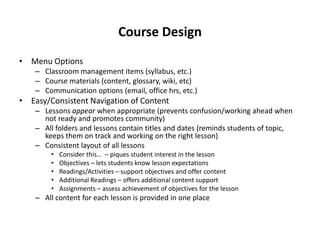
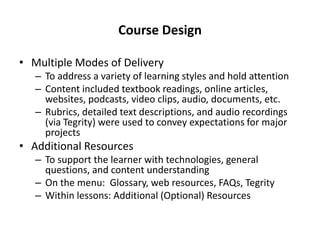
 Course design
 Interactivities
 Communications
 Courseware tools
 Technology choicesIn the world of online courses…Where is the student? Learner-centered approach
 “Through the student’s eyes”
 Proactive, creative
 Interactive
 Build redundancy, Rule of Three
Put it in 3 different places
Say it in 3 different ways
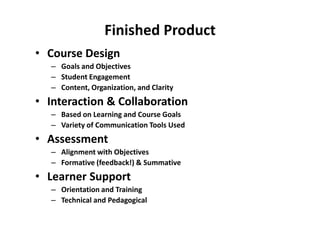
???Finished Product Course DesignGoals and ObjectivesStudent EngagementContent, Organization, and ClarityInteraction & CollaborationBased on Learning and Course GoalsVariety of Communication Tools Used AssessmentAlignment with ObjectivesFormative (feedback!) & SummativeLearner SupportOrientation and TrainingTechnical and Pedagogical
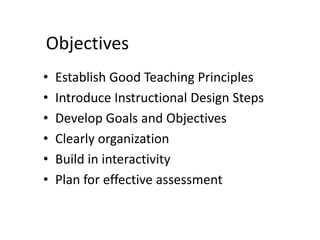
ObjectivesEstablish Good Teaching PrinciplesIntroduce Instructional Design StepsDevelop Goals and ObjectivesClearly organizationBuild in interactivityPlan for effective assessment
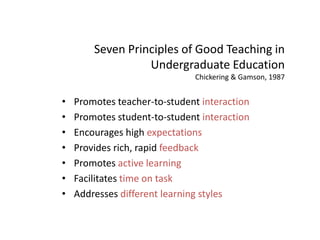
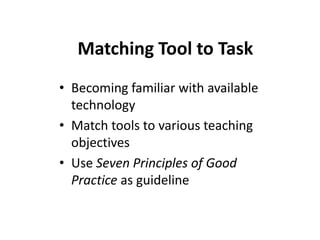
Seven Principles of Good Teaching in Undergraduate Education Chickering & Gamson, 1987Promotes teacher-to-student interactionPromotes student-to-student interactionEncourages high expectationsProvides rich, rapid feedbackPromotes active learningFacilitates time on taskAddresses different learning styles
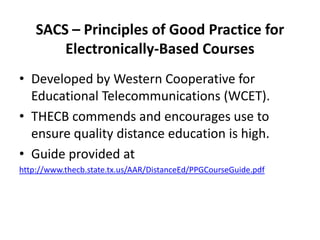
SACS – Principles of Good Practice for Electronically-Based CoursesDeveloped by Western Cooperative for Educational Telecommunications (WCET).THECB commends and encourages use to ensure quality distance education is high.Guide provided at http://www.thecb.state.tx.us/AAR/DistanceEd/PPGCourseGuide.pdf
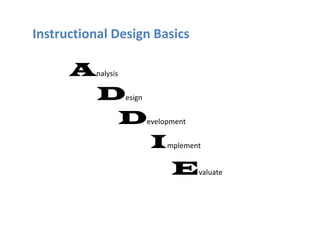
Instructional Design BasicsAnalysisDesignDevelopmentImplementEvaluate
Analysis – Needs Assessment Identify audience
Defining the problem through a needs    or job/task analysis
 Maintain offline teaching style online
 Establish goals and objectivesA vision of Students TodayYouTubehttp://www.youtube.com/watch?v=BArOImjtG2M
Millennial Behaviors and Higher Education Focus Groups ResultsHow are Millennials different from previous generations at the same age?Handout: http://library1.njit.edu/staff-folders/sweeney/Millennials/Millennial-Summary-Handout.doc
Design Identify course by goals and objectives
 Gather current course materials
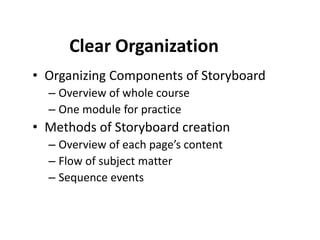
 Develop course outline, storyboard
 Organize materials into modules/units/lessons
 Matching tool to the task
 Determine online presentation style
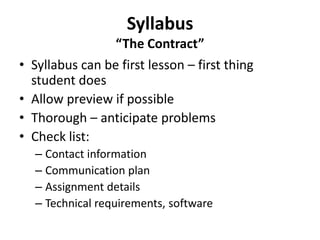
 Familiarity with technologySyllabus“The Contract”Syllabus can be first lesson – first thing student doesAllow preview if possibleThorough – anticipate problemsCheck list:Contact informationCommunication planAssignment detailsTechnical requirements, software
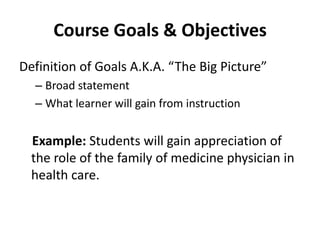
Course Goals & ObjectivesDefinition of Goals A.K.A. “The Big Picture”Broad statementWhat learner will gain from instructionExample: Students will gain appreciation of the role of the family of medicine physician in health care.
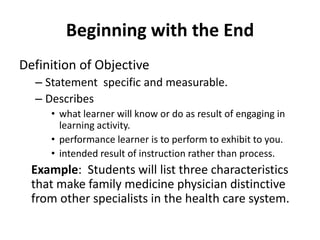
Definition of ObjectiveStatement  specific and measurable.Describes what learner will know or do as result of engaging in learning activity.performance learner is to perform to exhibit to you.intended result of instruction rather than process.Example:  Students will list three characteristics that make family medicine physician distinctive from other specialists in the health care system. Beginning with the End
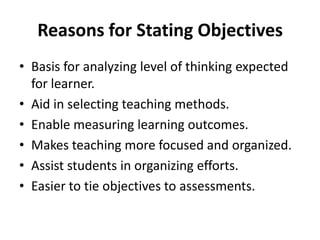
Reasons for Stating ObjectivesBasis for analyzing level of thinking expected for learner.Aid in selecting teaching methods.Enable measuring learning outcomes.Makes teaching more focused and organized.Assist students in organizing efforts.Easier to tie objectives to assessments.
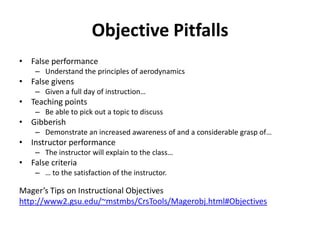
Objective PitfallsFalse performanceUnderstand the principles of aerodynamicsFalse givensGiven a full day of instruction…Teaching pointsBe able to pick out a topic to discussGibberishDemonstrate an increased awareness of and a considerable grasp of…Instructor performanceThe instructor will explain to the class…False criteria… to the satisfaction of the instructor.Mager’s Tips on Instructional Objectiveshttp://www2.gsu.edu/~mstmbs/CrsTools/Magerobj.html#Objectives
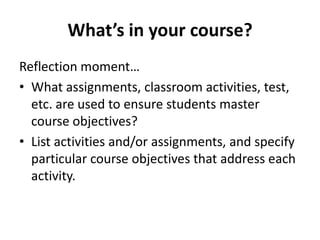
What’s in your course?Reflection moment…What assignments, classroom activities, test, etc. are used to ensure students master course objectives?List activities and/or assignments, and specify particular course objectives that address each activity.
Building Better

  • 1.
    Start Building BetterOnline CoursesHow to awaken the active learner and other stuff.Oneita Burgess
  • 2.
    In the worldof online courses…Where to start?Start with what you know best YOU!
  • 3.
  • 4.
  • 5.
  • 6.
    Target audienceInthe world of online courses…Where is the teacher? In the words, images
  • 7.
  • 8.
  • 9.
  • 10.
  • 11.
    Technology choicesInthe world of online courses…Where is the student? Learner-centered approach
  • 12.
    “Through thestudent’s eyes”
  • 13.
  • 14.
  • 15.
    Build redundancy,Rule of Three
  • 16.
    Put it in3 different places
  • 17.
    Say it in3 different ways
  • 18.
    ???Finished Product CourseDesignGoals and ObjectivesStudent EngagementContent, Organization, and ClarityInteraction & CollaborationBased on Learning and Course GoalsVariety of Communication Tools Used AssessmentAlignment with ObjectivesFormative (feedback!) & SummativeLearner SupportOrientation and TrainingTechnical and Pedagogical
  • 19.
    ObjectivesEstablish Good TeachingPrinciplesIntroduce Instructional Design StepsDevelop Goals and ObjectivesClearly organizationBuild in interactivityPlan for effective assessment
  • 20.
    Seven Principles ofGood Teaching in Undergraduate Education Chickering & Gamson, 1987Promotes teacher-to-student interactionPromotes student-to-student interactionEncourages high expectationsProvides rich, rapid feedbackPromotes active learningFacilitates time on taskAddresses different learning styles
  • 21.
    SACS – Principlesof Good Practice for Electronically-Based CoursesDeveloped by Western Cooperative for Educational Telecommunications (WCET).THECB commends and encourages use to ensure quality distance education is high.Guide provided at http://www.thecb.state.tx.us/AAR/DistanceEd/PPGCourseGuide.pdf
  • 22.
  • 23.
    Analysis – NeedsAssessment Identify audience
  • 24.
    Defining the problemthrough a needs or job/task analysis
  • 25.
    Maintain offlineteaching style online
  • 26.
    Establish goalsand objectivesA vision of Students TodayYouTubehttp://www.youtube.com/watch?v=BArOImjtG2M
  • 27.
    Millennial Behaviors andHigher Education Focus Groups ResultsHow are Millennials different from previous generations at the same age?Handout: http://library1.njit.edu/staff-folders/sweeney/Millennials/Millennial-Summary-Handout.doc
  • 28.
    Design Identify courseby goals and objectives
  • 29.
    Gather currentcourse materials
  • 30.
    Develop courseoutline, storyboard
  • 31.
    Organize materialsinto modules/units/lessons
  • 32.
    Matching toolto the task
  • 33.
    Determine onlinepresentation style
  • 34.
    Familiarity withtechnologySyllabus“The Contract”Syllabus can be first lesson – first thing student doesAllow preview if possibleThorough – anticipate problemsCheck list:Contact informationCommunication planAssignment detailsTechnical requirements, software
  • 35.
    Course Goals &ObjectivesDefinition of Goals A.K.A. “The Big Picture”Broad statementWhat learner will gain from instructionExample: Students will gain appreciation of the role of the family of medicine physician in health care.
  • 36.
    Definition of ObjectiveStatement specific and measurable.Describes what learner will know or do as result of engaging in learning activity.performance learner is to perform to exhibit to you.intended result of instruction rather than process.Example: Students will list three characteristics that make family medicine physician distinctive from other specialists in the health care system. Beginning with the End
  • 37.
    Reasons for StatingObjectivesBasis for analyzing level of thinking expected for learner.Aid in selecting teaching methods.Enable measuring learning outcomes.Makes teaching more focused and organized.Assist students in organizing efforts.Easier to tie objectives to assessments.
  • 38.
    Objective PitfallsFalse performanceUnderstandthe principles of aerodynamicsFalse givensGiven a full day of instruction…Teaching pointsBe able to pick out a topic to discussGibberishDemonstrate an increased awareness of and a considerable grasp of…Instructor performanceThe instructor will explain to the class…False criteria… to the satisfaction of the instructor.Mager’s Tips on Instructional Objectiveshttp://www2.gsu.edu/~mstmbs/CrsTools/Magerobj.html#Objectives
  • 40.
    What’s in yourcourse?Reflection moment…What assignments, classroom activities, test, etc. are used to ensure students master course objectives?List activities and/or assignments, and specify particular course objectives that address each activity.