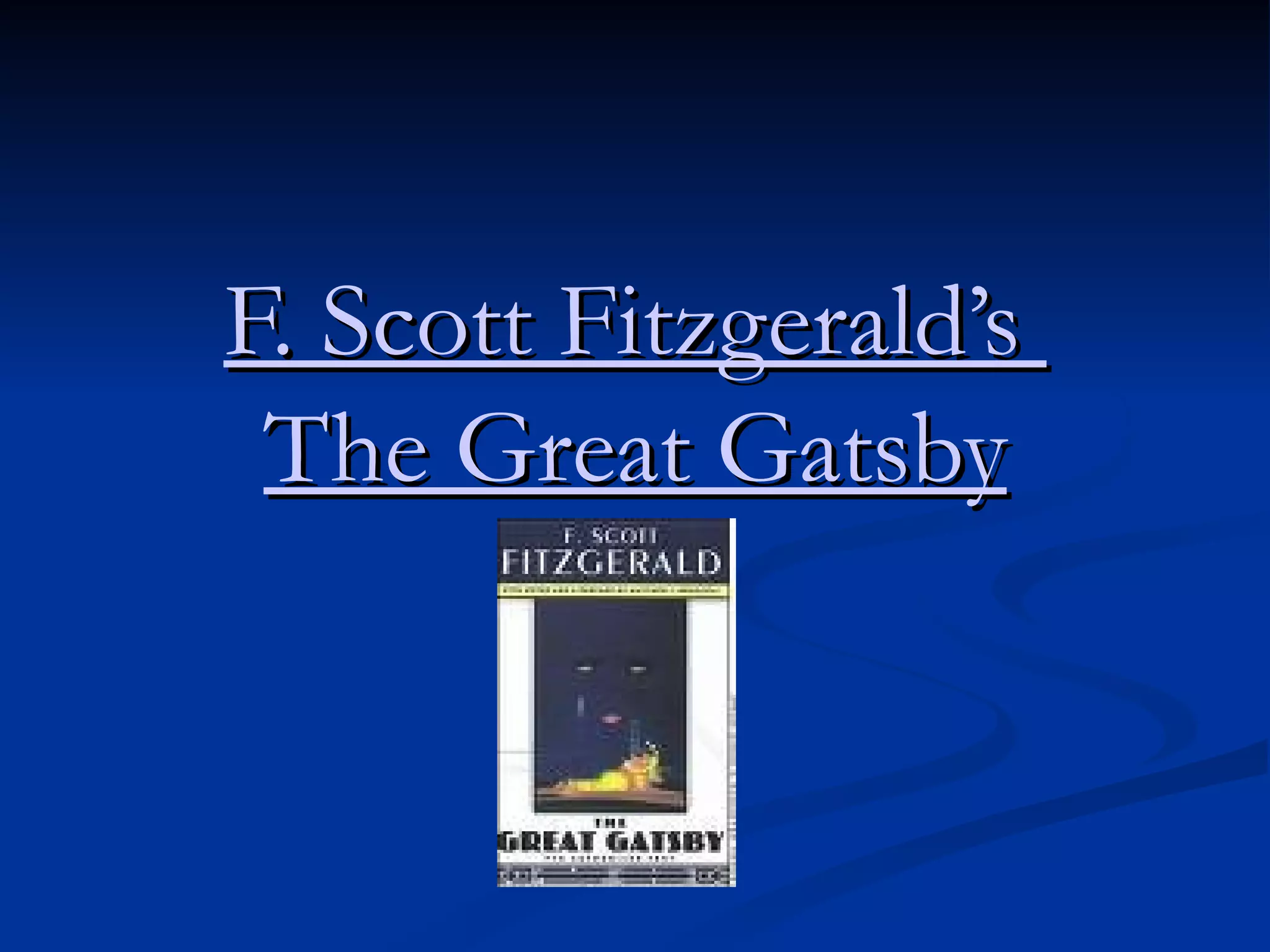
F. Scott Fitzgerald’s
 The Great Gatsby
About the Author
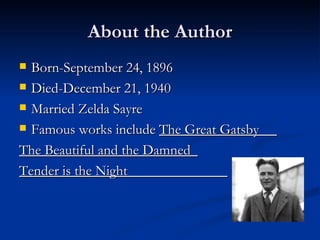
 Born-September 24, 1896
 Died-December 21, 1940

 Married Zelda Sayre

 Famous works include The Great Gatsby

The Beautiful and the Damned
Tender is the Night
F. Scott Fitzgerald’s Impact on
                   Society
   Fitzgerald named the
    1920’s “The Jazz Age”
   Wrote screenplays for
    Metro-Goldwyn-Mayer
   Created the The Great
    Gatsby which is said to
    be the most accurate
    description of the 1920’s
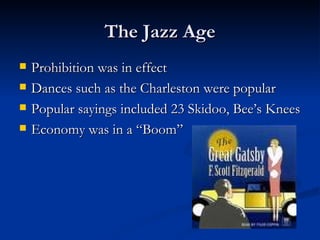
The Jazz Age
   Prohibition was in effect
   Dances such as the Charleston were popular
   Popular sayings included 23 Skidoo, Bee’s Knees
   Economy was in a “Boom”
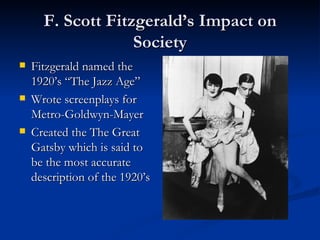
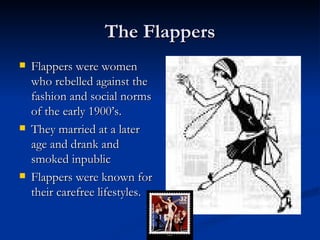
The Flappers
   Flappers were women
    who rebelled against the
    fashion and social norms
    of the early 1900’s.
   They married at a later
    age and drank and
    smoked inpublic
   Flappers were known for
    their carefree lifestyles.
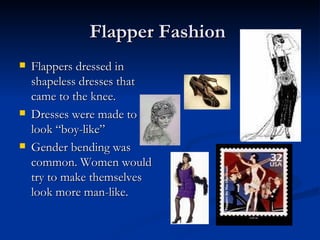
Flapper Fashion
   Flappers dressed in
    shapeless dresses that
    came to the knee.
   Dresses were made to
    look “boy-like”
   Gender bending was
    common. Women would
    try to make themselves
    look more man-like.
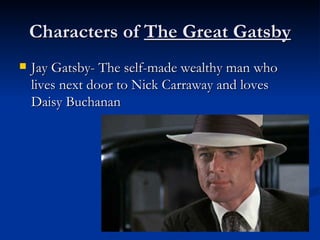
Characters of The Great Gatsby
   Jay Gatsby- The self-made wealthy man who
    lives next door to Nick Carraway and loves
    Daisy Buchanan
Characters of The Great Gatsby
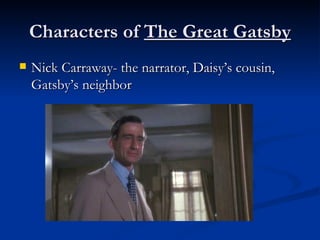
   Nick Carraway- the narrator, Daisy’s cousin,
    Gatsby’s neighbor
Characters in The Great Gatsby
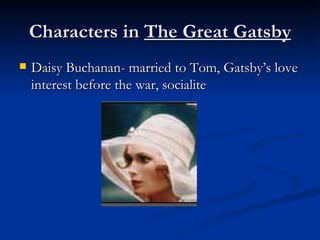
   Daisy Buchanan- married to Tom, Gatsby’s love
    interest before the war, socialite
Characters in The Great Gatsby
   Tom Buchanan- Daisy’s husband, has an affair
    with Myrtle
   Myrtle Wilson- Tom’s woman in the city,
    married to George
   George Wilson- owns the gas station
   Jordan Baker- Daisy’s friend, professional golfer
Settings in The Great Gatsby
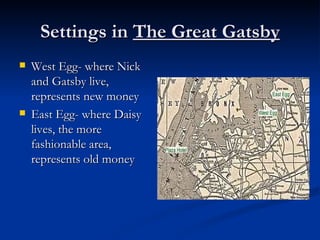
   West Egg- where Nick
    and Gatsby live,
    represents new money
   East Egg- where Daisy
    lives, the more
    fashionable area,
    represents old money
Settings in The Great Gatsby
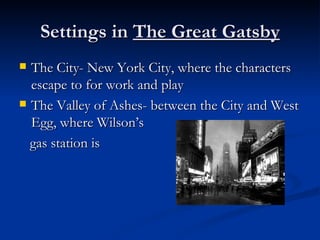
 The City- New York City, where the characters
  escape to for work and play
 The Valley of Ashes- between the City and West
  Egg, where Wilson’s
  gas station is
Symbols in The Great Gatsby
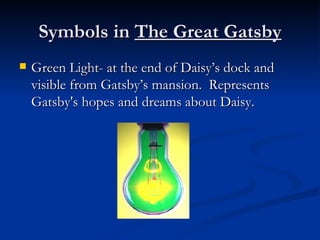
   Green Light- at the end of Daisy’s dock and
    visible from Gatsby’s mansion. Represents
    Gatsby's hopes and dreams about Daisy.
Symbols in The Great Gatsby
   The Valley of Ashes- the area between West Egg
    and New York City. It is a desolate area filled
    with industrial waste. It represents the social
    and moral decay of society during the 1920’s. It
    also shows the negative effects of greed.
Symbols in The Great Gatsby
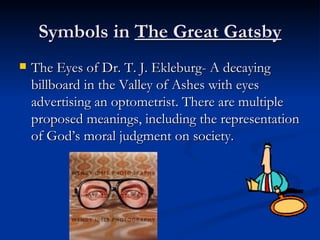
   The Eyes of Dr. T. J. Ekleburg- A decaying
    billboard in the Valley of Ashes with eyes
    advertising an optometrist. There are multiple
    proposed meanings, including the representation
    of God’s moral judgment on society.
Important Quotes
   “I hope she’ll be a fool- that’s the best thing a
    girl can be in this world, a beautiful little fool.”
    Daisy’s description of her daughter
   “So we beat on, boats against the current, borne
    back ceaselessly into the past.” –the last line of
    the novel
Important Quotes
   "They were careless people, Tom and Daisy-
    they smashed up things and creatures and then
    retreated back into their money or their vast
    carelessness or whatever it was that kept them
    together, and let other people clean up the mess
    they had made." – Nick’s description of Tom
    and Daisy
The American Dream
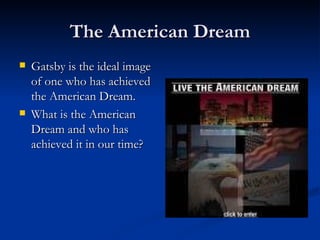
   Gatsby is the ideal image
    of one who has achieved
    the American Dream.
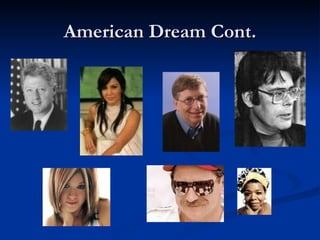
   What is the American
    Dream and who has
    achieved it in our time?
American Dream Cont.
Old Money Vs. New Money
   New Money:                   Old Money
   Someone who has              Money from family
    achieved the American         wealth
    Dream                        Born rich
   Not as respected in the      Not earned through
    1920’s                        work done by yourself
                                 Respected above all in
                                  the 1920’s

Gatsbyreview

  • 1.
    F. Scott Fitzgerald’s The Great Gatsby
  • 2.
    About the Author Born-September 24, 1896  Died-December 21, 1940  Married Zelda Sayre  Famous works include The Great Gatsby The Beautiful and the Damned Tender is the Night
  • 3.
    F. Scott Fitzgerald’sImpact on Society  Fitzgerald named the 1920’s “The Jazz Age”  Wrote screenplays for Metro-Goldwyn-Mayer  Created the The Great Gatsby which is said to be the most accurate description of the 1920’s
  • 4.
    The Jazz Age  Prohibition was in effect  Dances such as the Charleston were popular  Popular sayings included 23 Skidoo, Bee’s Knees  Economy was in a “Boom”
  • 5.
    The Flappers  Flappers were women who rebelled against the fashion and social norms of the early 1900’s.  They married at a later age and drank and smoked inpublic  Flappers were known for their carefree lifestyles.
  • 6.
    Flapper Fashion  Flappers dressed in shapeless dresses that came to the knee.  Dresses were made to look “boy-like”  Gender bending was common. Women would try to make themselves look more man-like.
  • 7.
    Characters of TheGreat Gatsby  Jay Gatsby- The self-made wealthy man who lives next door to Nick Carraway and loves Daisy Buchanan
  • 8.
    Characters of TheGreat Gatsby  Nick Carraway- the narrator, Daisy’s cousin, Gatsby’s neighbor
  • 9.
    Characters in TheGreat Gatsby  Daisy Buchanan- married to Tom, Gatsby’s love interest before the war, socialite
  • 10.
    Characters in TheGreat Gatsby  Tom Buchanan- Daisy’s husband, has an affair with Myrtle  Myrtle Wilson- Tom’s woman in the city, married to George  George Wilson- owns the gas station  Jordan Baker- Daisy’s friend, professional golfer
  • 11.
    Settings in TheGreat Gatsby  West Egg- where Nick and Gatsby live, represents new money  East Egg- where Daisy lives, the more fashionable area, represents old money
  • 12.
    Settings in TheGreat Gatsby  The City- New York City, where the characters escape to for work and play  The Valley of Ashes- between the City and West Egg, where Wilson’s gas station is
  • 13.
    Symbols in TheGreat Gatsby  Green Light- at the end of Daisy’s dock and visible from Gatsby’s mansion. Represents Gatsby's hopes and dreams about Daisy.
  • 14.
    Symbols in TheGreat Gatsby  The Valley of Ashes- the area between West Egg and New York City. It is a desolate area filled with industrial waste. It represents the social and moral decay of society during the 1920’s. It also shows the negative effects of greed.
  • 15.
    Symbols in TheGreat Gatsby  The Eyes of Dr. T. J. Ekleburg- A decaying billboard in the Valley of Ashes with eyes advertising an optometrist. There are multiple proposed meanings, including the representation of God’s moral judgment on society.
  • 16.
    Important Quotes  “I hope she’ll be a fool- that’s the best thing a girl can be in this world, a beautiful little fool.” Daisy’s description of her daughter  “So we beat on, boats against the current, borne back ceaselessly into the past.” –the last line of the novel
  • 17.
    Important Quotes  "They were careless people, Tom and Daisy- they smashed up things and creatures and then retreated back into their money or their vast carelessness or whatever it was that kept them together, and let other people clean up the mess they had made." – Nick’s description of Tom and Daisy
  • 18.
    The American Dream  Gatsby is the ideal image of one who has achieved the American Dream.  What is the American Dream and who has achieved it in our time?
  • 19.
  • 20.
    Old Money Vs.New Money  New Money:  Old Money  Someone who has  Money from family achieved the American wealth Dream  Born rich  Not as respected in the  Not earned through 1920’s work done by yourself  Respected above all in the 1920’s