Objectives for Chapter 18:
The Integrated Gaps Model of
Service Quality
• To overview the framework of the course and
the gaps model of service quality
• To identify the factors responsible for each
of the gaps.
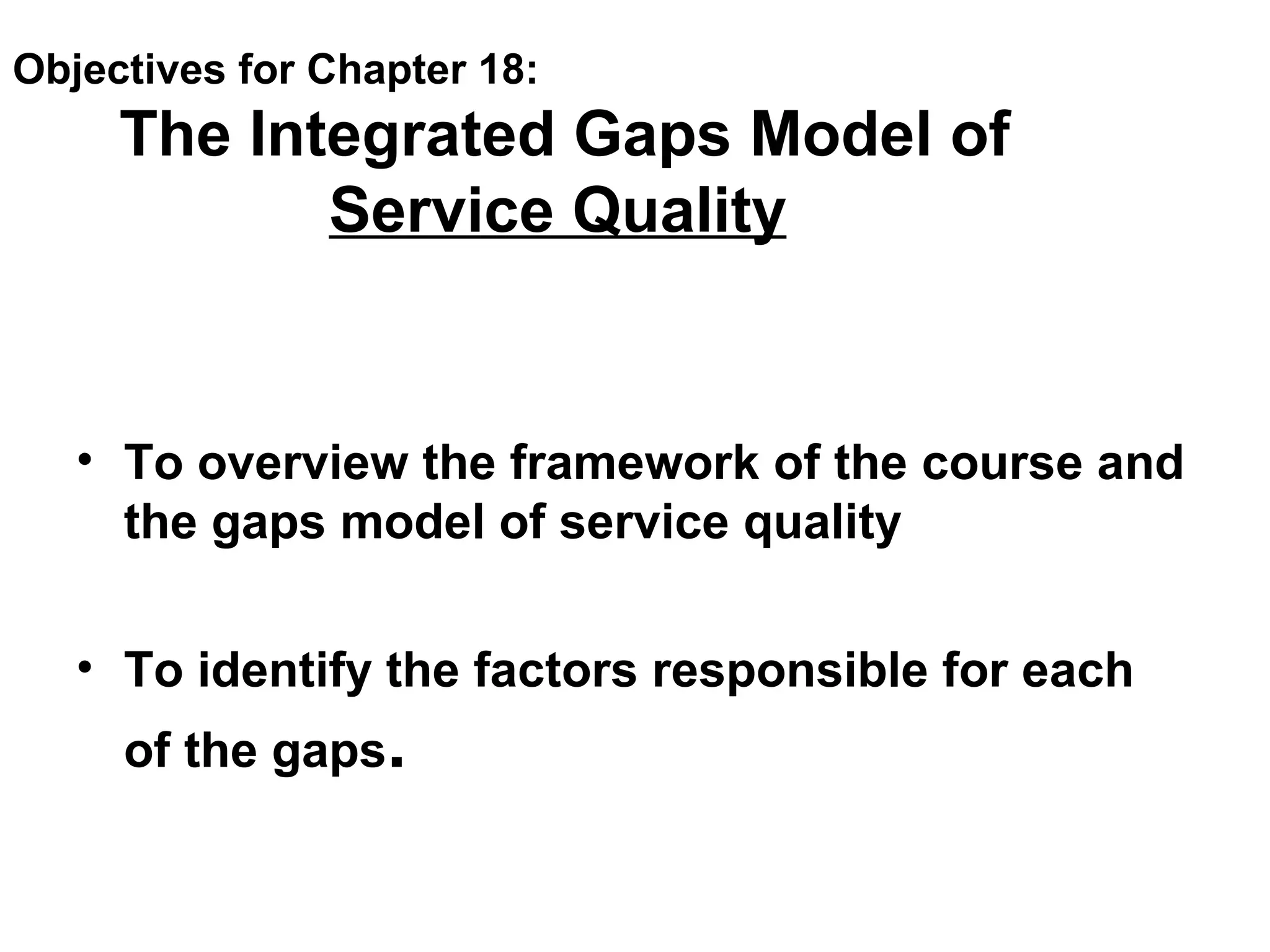
Perceived
Service
Expected
Service
CUSTOMER
COMPANY
Customer
Gap
GAP 1
GAP 2
GAP 3
External
Communications
to CustomersGAP 4
Service
Delivery
Customer-Driven
Service Designs and
Standards
Company Perceptions
of Consumer
Expectations
Figure 18.1
Gaps Model of Service Quality
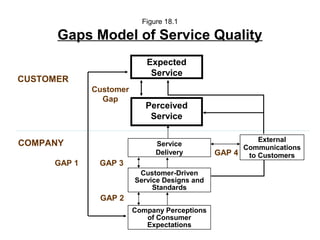
Provider Gap 1: Not knowing what customers expect
Provider Gap 2: Not selecting the right service designs and standards
Provider Gap 3: Not delivering to service standards
Provider Gap 4: Not matching performance to promises
Customer
Expectations
Customer
Perceptions
Figure 18.2
Key Factors Leading to the Customer Gap
Customer
GAP
Customer
Expectations
Company Perceptions of
Customer Expectations
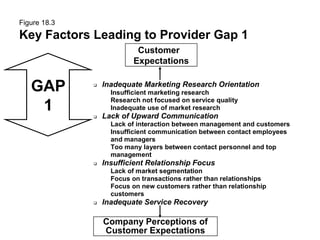
 Inadequate Marketing Research Orientation
Insufficient marketing research
Research not focused on service quality
Inadequate use of market research
 Lack of Upward Communication
Lack of interaction between management and customers
Insufficient communication between contact employees
and managers
Too many layers between contact personnel and top
management
 Insufficient Relationship Focus
Lack of market segmentation
Focus on transactions rather than relationships
Focus on new customers rather than relationship
customers
 Inadequate Service Recovery
Figure 18.3
Key Factors Leading to Provider Gap 1
GAP
1
Customer-Driven Service
Designs and Standards
Management Perceptions of
Customer Expectations
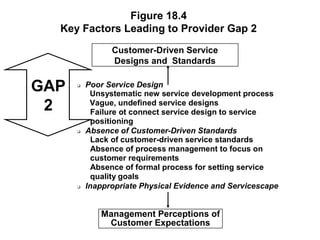
 Poor Service Design
Unsystematic new service development process
Vague, undefined service designs
Failure ot connect service design to service
positioning
 Absence of Customer-Driven Standards
Lack of customer-driven service standards
Absence of process management to focus on
customer requirements
Absence of formal process for setting service
quality goals
 Inappropriate Physical Evidence and Servicescape
Figure 18.4
Key Factors Leading to Provider Gap 2
GAP
2
Service Delivery
Customer-Driven Service
Designs and Standards
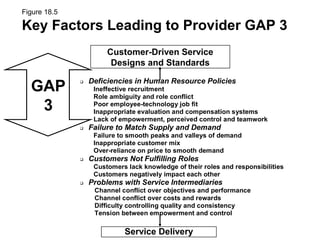
 Deficiencies in Human Resource Policies
Ineffective recruitment
Role ambiguity and role conflict
Poor employee-technology job fit
Inappropriate evaluation and compensation systems
Lack of empowerment, perceived control and teamwork
 Failure to Match Supply and Demand
Failure to smooth peaks and valleys of demand
Inappropriate customer mix
Over-reliance on price to smooth demand
 Customers Not Fulfilling Roles
Customers lack knowledge of their roles and responsibilities
Customers negatively impact each other
 Problems with Service Intermediaries
Channel conflict over objectives and performance
Channel conflict over costs and rewards
Difficulty controlling quality and consistency
Tension between empowerment and control
Figure 18.5
Key Factors Leading to Provider GAP 3
GAP
3
Service Delivery
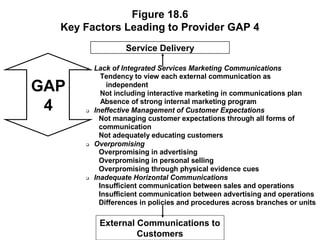
 Lack of Integrated Services Marketing Communications
Tendency to view each external communication as
independent
Not including interactive marketing in communications plan
Absence of strong internal marketing program
 Ineffective Management of Customer Expectations
Not managing customer expectations through all forms of
communication
Not adequately educating customers
 Overpromising
Overpromising in advertising
Overpromising in personal selling
Overpromising through physical evidence cues
 Inadequate Horizontal Communications
Insufficient communication between sales and operations
Insufficient communication between advertising and operations
Differences in policies and procedures across branches or units
External Communications to
Customers
Figure 18.6
Key Factors Leading to Provider GAP 4
GAP
4

Gap solutions

  • 1.
    Objectives for Chapter18: The Integrated Gaps Model of Service Quality • To overview the framework of the course and the gaps model of service quality • To identify the factors responsible for each of the gaps.
  • 2.
    Perceived Service Expected Service CUSTOMER COMPANY Customer Gap GAP 1 GAP 2 GAP3 External Communications to CustomersGAP 4 Service Delivery Customer-Driven Service Designs and Standards Company Perceptions of Consumer Expectations Figure 18.1 Gaps Model of Service Quality
  • 3.
    Provider Gap 1:Not knowing what customers expect Provider Gap 2: Not selecting the right service designs and standards Provider Gap 3: Not delivering to service standards Provider Gap 4: Not matching performance to promises Customer Expectations Customer Perceptions Figure 18.2 Key Factors Leading to the Customer Gap Customer GAP
  • 4.
    Customer Expectations Company Perceptions of CustomerExpectations  Inadequate Marketing Research Orientation Insufficient marketing research Research not focused on service quality Inadequate use of market research  Lack of Upward Communication Lack of interaction between management and customers Insufficient communication between contact employees and managers Too many layers between contact personnel and top management  Insufficient Relationship Focus Lack of market segmentation Focus on transactions rather than relationships Focus on new customers rather than relationship customers  Inadequate Service Recovery Figure 18.3 Key Factors Leading to Provider Gap 1 GAP 1
  • 5.
    Customer-Driven Service Designs andStandards Management Perceptions of Customer Expectations  Poor Service Design Unsystematic new service development process Vague, undefined service designs Failure ot connect service design to service positioning  Absence of Customer-Driven Standards Lack of customer-driven service standards Absence of process management to focus on customer requirements Absence of formal process for setting service quality goals  Inappropriate Physical Evidence and Servicescape Figure 18.4 Key Factors Leading to Provider Gap 2 GAP 2
  • 6.
    Service Delivery Customer-Driven Service Designsand Standards  Deficiencies in Human Resource Policies Ineffective recruitment Role ambiguity and role conflict Poor employee-technology job fit Inappropriate evaluation and compensation systems Lack of empowerment, perceived control and teamwork  Failure to Match Supply and Demand Failure to smooth peaks and valleys of demand Inappropriate customer mix Over-reliance on price to smooth demand  Customers Not Fulfilling Roles Customers lack knowledge of their roles and responsibilities Customers negatively impact each other  Problems with Service Intermediaries Channel conflict over objectives and performance Channel conflict over costs and rewards Difficulty controlling quality and consistency Tension between empowerment and control Figure 18.5 Key Factors Leading to Provider GAP 3 GAP 3
  • 7.
    Service Delivery  Lackof Integrated Services Marketing Communications Tendency to view each external communication as independent Not including interactive marketing in communications plan Absence of strong internal marketing program  Ineffective Management of Customer Expectations Not managing customer expectations through all forms of communication Not adequately educating customers  Overpromising Overpromising in advertising Overpromising in personal selling Overpromising through physical evidence cues  Inadequate Horizontal Communications Insufficient communication between sales and operations Insufficient communication between advertising and operations Differences in policies and procedures across branches or units External Communications to Customers Figure 18.6 Key Factors Leading to Provider GAP 4 GAP 4