Human Resource Practices
GAMMA
Gary Wheeler, SPHR, GPHR, CCP, CBP
DiscussionTopics
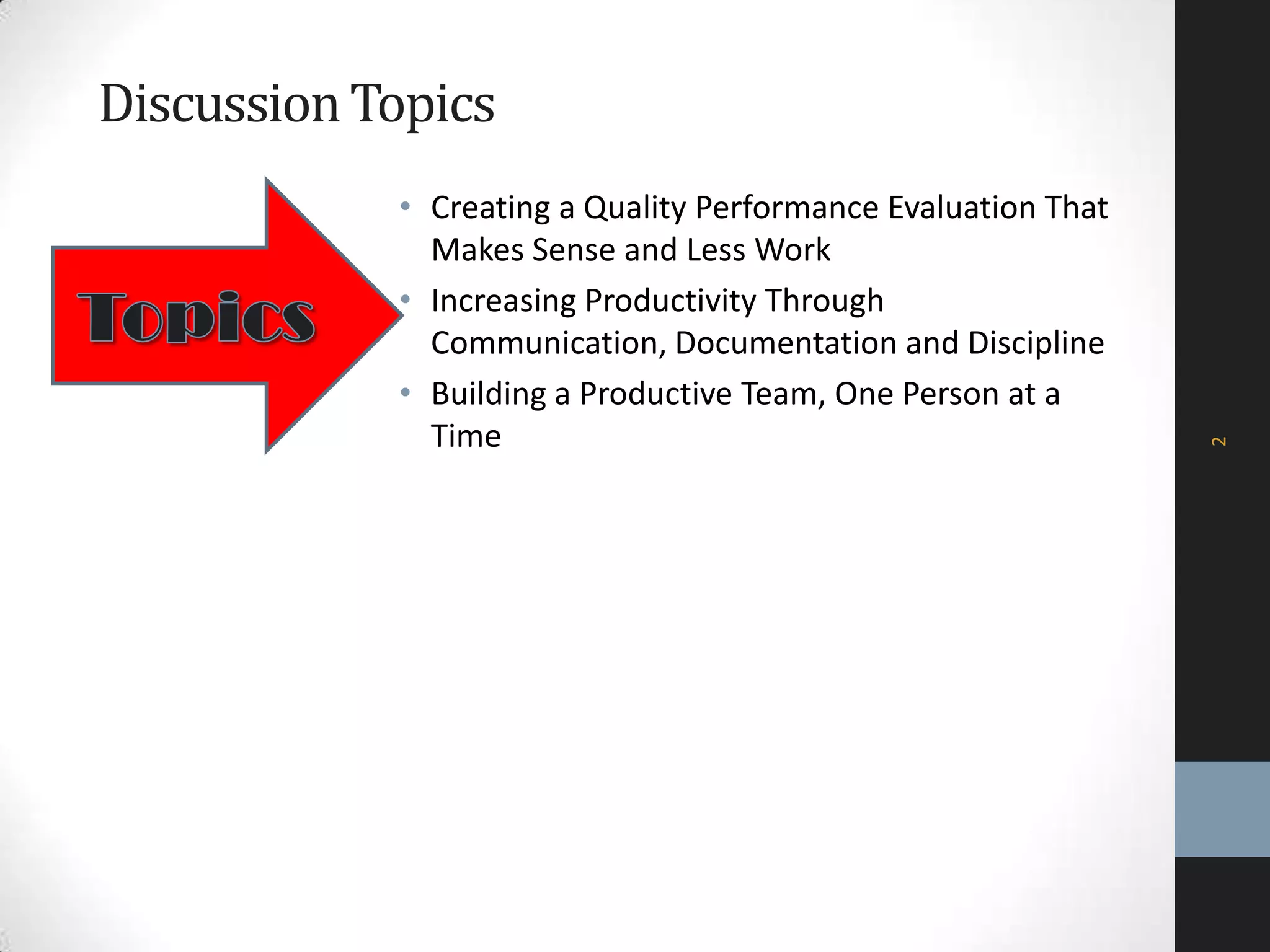
• Creating a Quality Performance Evaluation That
Makes Sense and Less Work
• Increasing Productivity Through
Communication, Documentation and Discipline
• Building a Productive Team, One Person at a
Time
2
WARM UP
ACTIVITY
3
StandUp
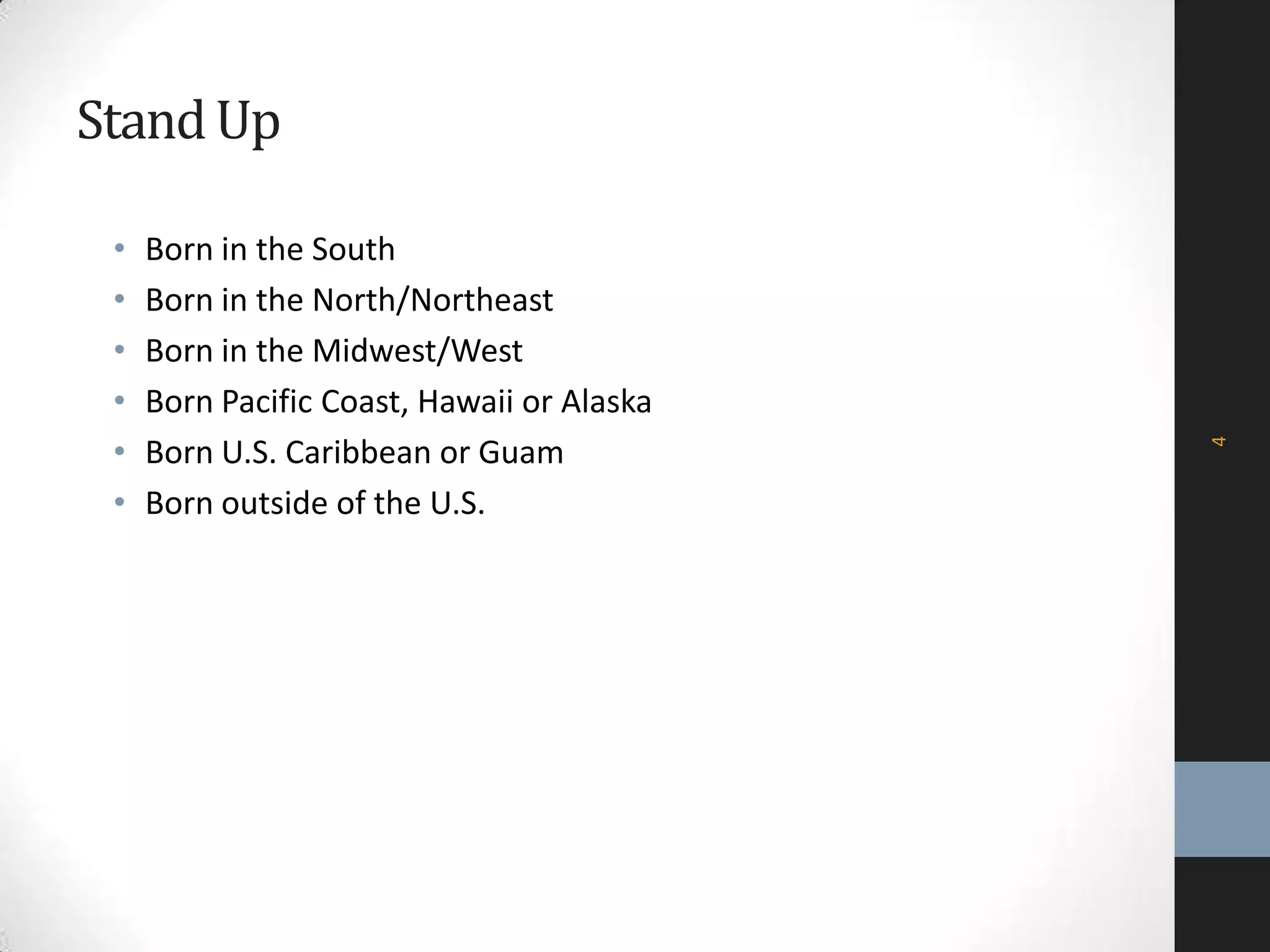
• Born in the South
• Born in the North/Northeast
• Born in the Midwest/West
• Born Pacific Coast, Hawaii or Alaska
• Born U.S. Caribbean or Guam
• Born outside of the U.S.
4
StandUp
• Have traveled outside of the U.S.
• Have lived outside of the U.S.
• Would like to travel outside of the U.S.
• Would like to live outside of the U.S.
5
StandUp
• Single
• Single and would like to be married
• Single and feel like you are married
• Married
• Married and feel like you are single
• Married and would like to be single
6
StandUp
• Would like to have kids
• Have kids under 13
• Have teenage kids
• Have young adult kids who have left home
• Have kids who left and came back
• Can’t wait until kids leave
7
StandUp
• Played an instrument growing up
• Still play an instrument
• Played sports growing up
• Still play sports
• Like to dance
• Like to watch dancing with the stars
8
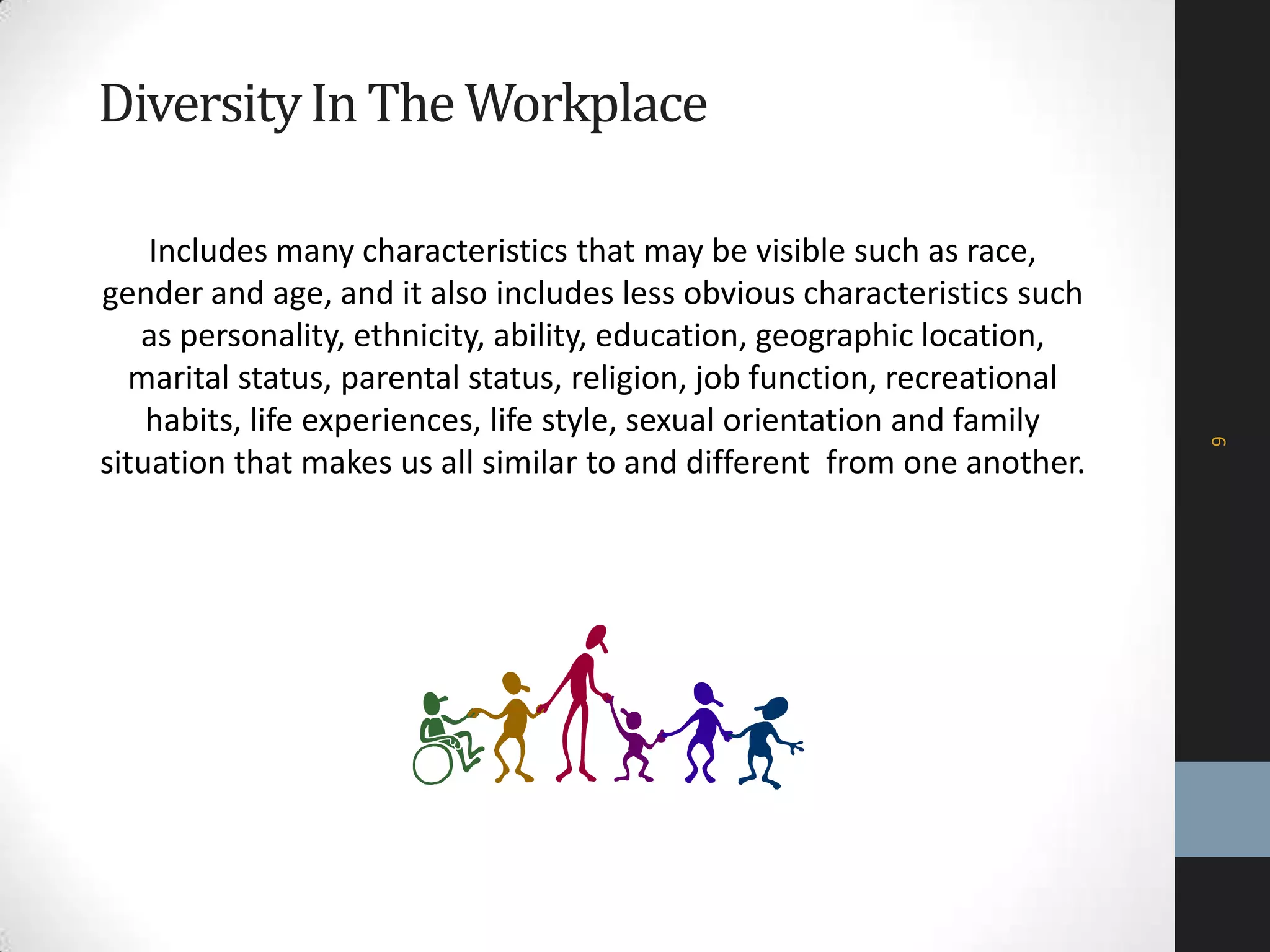
DiversityIn The Workplace
Includes many characteristics that may be visible such as race,
gender and age, and it also includes less obvious characteristics such
as personality, ethnicity, ability, education, geographic location,
marital status, parental status, religion, job function, recreational
habits, life experiences, life style, sexual orientation and family
situation that makes us all similar to and different from one another.
9
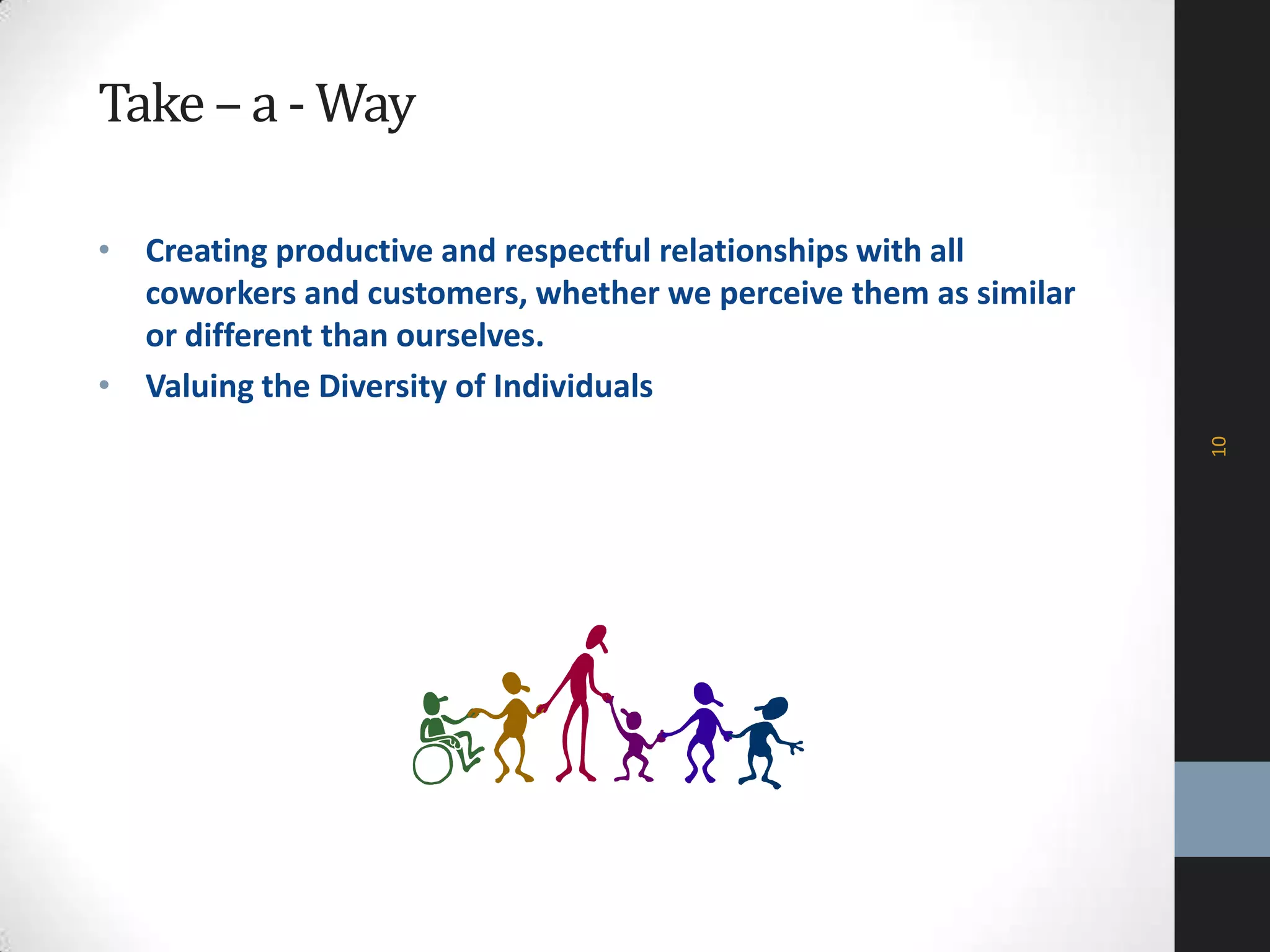
Take – a - Way
• Creating productive and respectful relationships with all
coworkers and customers, whether we perceive them as similar
or different than ourselves.
• Valuing the Diversity of Individuals
10
PerformanceEvaluations
Creating a Quality Performance Evaluation
That Makes Sense and Less Work
• Who completes your performance evaluations?
• How long does it take?
• What do they look like?
11
PerformanceEvaluations
• QUANTITY ................................................................................. 1 2 3 4 5
• Meets productivity standards ...................................................... 1 2 3 4 5
• Completes work in timely manner ................................................ 1 2 3 4 5
• QUALITY …................................................................................. 1 2 3 4 5
• Demonstrates accuracy and thoroughness .................................. 1 2 3 4 5
• Displays commitment to excellence ............................................. 1 2 3 4 5
• JOB KNOWLEDGE ...................................................................... 1 2 3 4 5
• Competent in required job skills and knowledge ......................... 1 2 3 4 5
12
BARS
Behaviorally Anchored Rating Scales
5 – Superior
4 – Exceeds Expectations
3 – Meets Expectations
2 – Needs Improvement
1 – Unsatisfactory Performance
13
Key PerformanceIndicators (KPI’s)
• What are the key elements for the success of the practice?
• What will improve the efficiency and effectiveness of the
practice?
• What will drive patient satisfaction?
• What will put more money on the bottom line?
• How can we tie team to the practice?
• What elements can staff track on their own?
14
Ideas
• Customer Satisfaction Index
• Customer comment cards
• Wait times
• Follow up calls
• Insurance adjustments
• Scheduling
• Expenses
• Accounts receivables
• Median total accounts receivable per Full-time equivalent (FTE)
15
WhatOtherElements?
•
16
Summary
• Tie individual performance to the practice
• Align individual goals to your goals which should be aligned
to the practice
• Use more objective data than subjective data
• Staff should be able to track some elements
• Create a weekly or monthly dashboard for staff
• Parts of your goal strategy should be team related that
impact the performance of the practice
• Note: If the practice is not on target, there should be very
few superstars. If the practice is exceeding goals, there
should be excellent performers on the team
17
COMMUNICATION, DOCUMENTATION
AND DISCIPLINE
Increasing Productivity
Productivity
• Where is productivity loss in the office?
• What do you recommend we do to increase productivity?
• What about lack of discipline?
19
SupervisionGoneBad
• Video Deposition
20
LessonsLearned
• Communicate, Communicate, Communicate
• Document, Document, Document
• If not written, it doesn’t exist
• If not signed, it doesn’t exist
• Never write anything derogatory, especially in an email
• Never get upset
• Talk directly with the person
• You are there to help
21
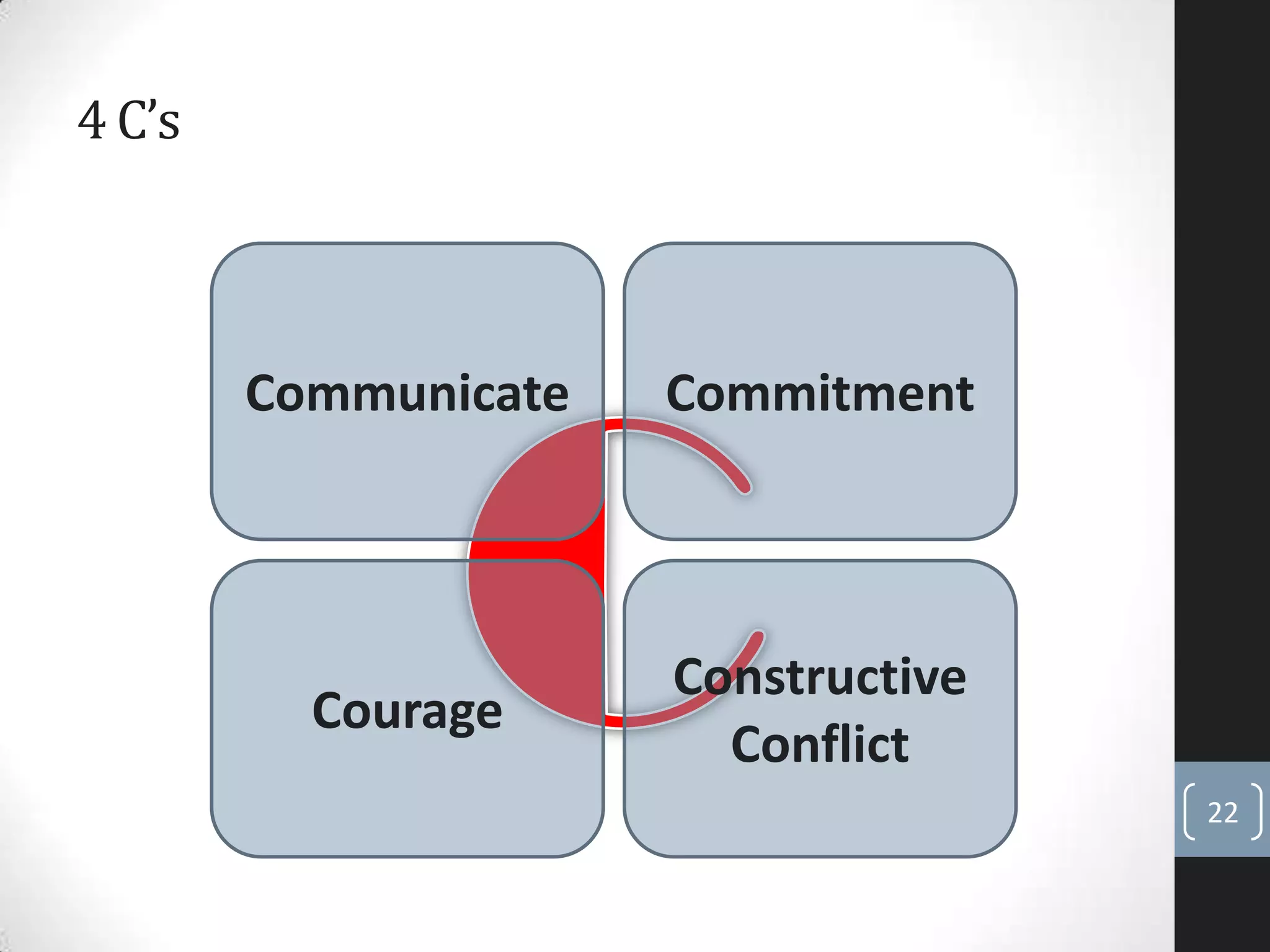
4 C’s
22
Communicate
Constructive
Conflict
Courage
Commitment
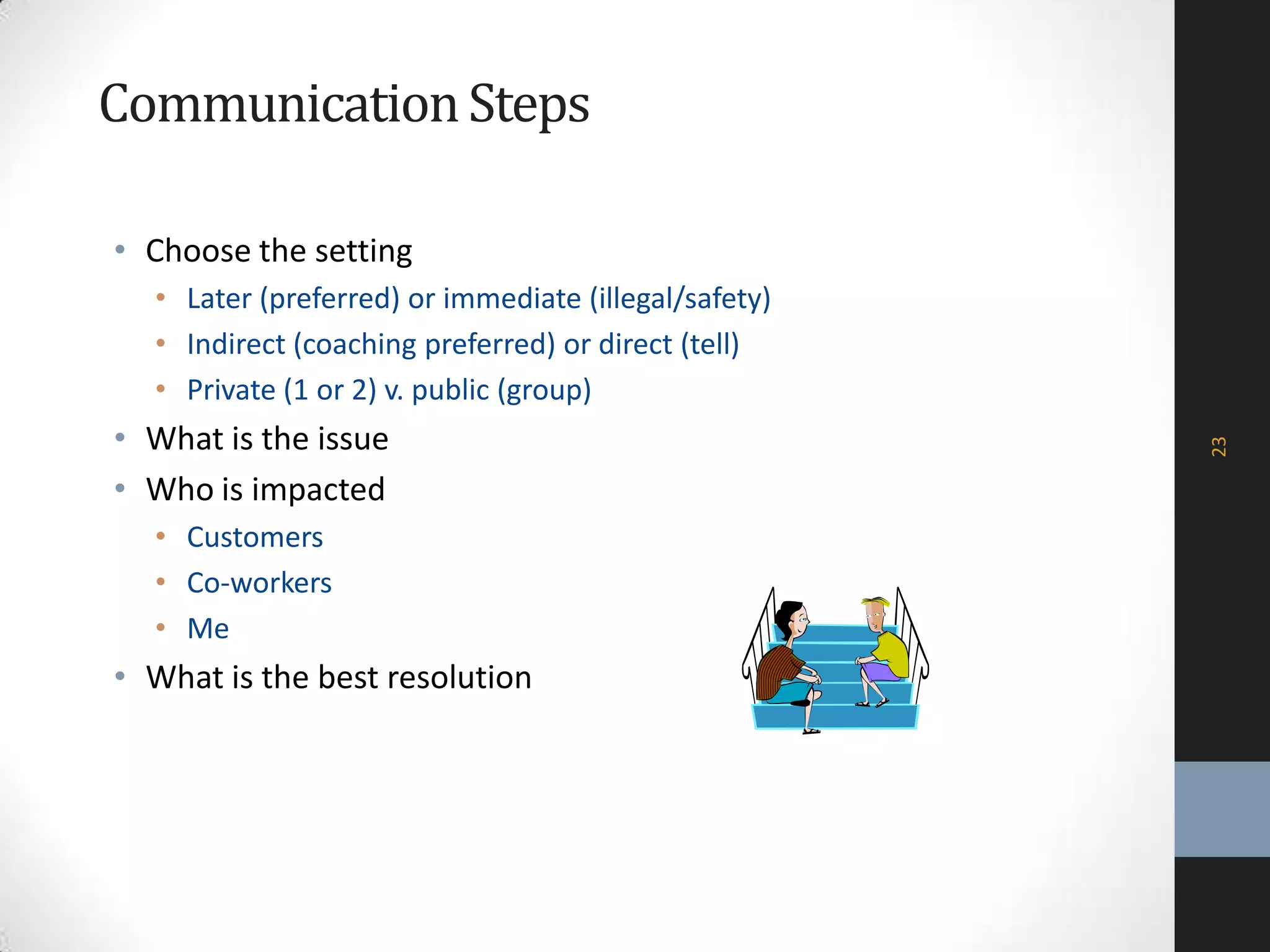
CommunicationSteps
• Choose the setting
• Later (preferred) or immediate (illegal/safety)
• Indirect (coaching preferred) or direct (tell)
• Private (1 or 2) v. public (group)
• What is the issue
• Who is impacted
• Customers
• Co-workers
• Me
• What is the best resolution
23
Summary
• Talk with your people not at your people
• Communicate, Communicate, Communicate
• Document, Document, Document
• Never get emotionally upset
• Never take it personally
• Your goal is to help your people be successful
• Tip: It doesn’t have to be fancy
24
Building aProductiveTeam,
One Personat a Time
• Talk Listen and Commit
• Enhance Employee Relations and Customer
Relations
25
Communication
• Talk, Listen and Commit
• Employee talks
• Supervisor listens
• We commit to work together
• Keys to Positive
Communication
• Maintain and
enhance self-esteem
• Listen and respond with
empathy
• Ask for help in solving the
problem
26
Planningthe Talk
• Notify the employee in advance
• Choose a private place free of distractions
• Allow 15 to 30-minutes
• Plan to take notes
• Be prepared to follow up promptly after the talk
27
Duringthe Talk
• Greet your employee professionally
• Set the person at ease with small talk
• Review the purpose of the discussion
• Ask permission to take notes
• Ask open ended questions
• Ask for help in solving problems
• Let the employee know when you will follow up
28
FollowUp
• The most important part of the discussion is to follow up on issues,
questions and concerns
• Sending a thank you note or thank you email aids in building productive
relationships
29
CriticalPoints
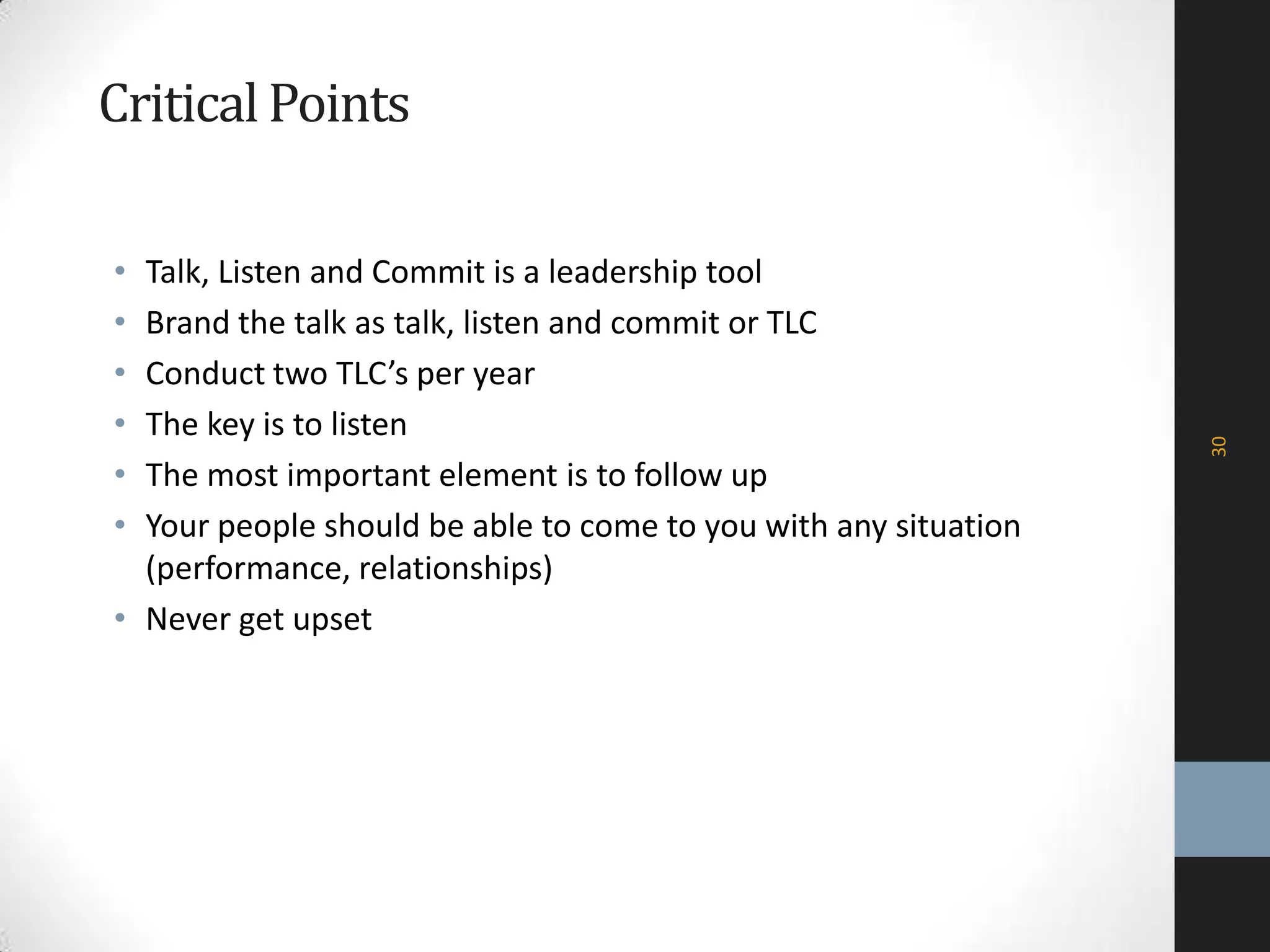
• Talk, Listen and Commit is a leadership tool
• Brand the talk as talk, listen and commit or TLC
• Conduct two TLC’s per year
• The key is to listen
• The most important element is to follow up
• Your people should be able to come to you with any situation
(performance, relationships)
• Never get upset
30
CriticalPointscont.
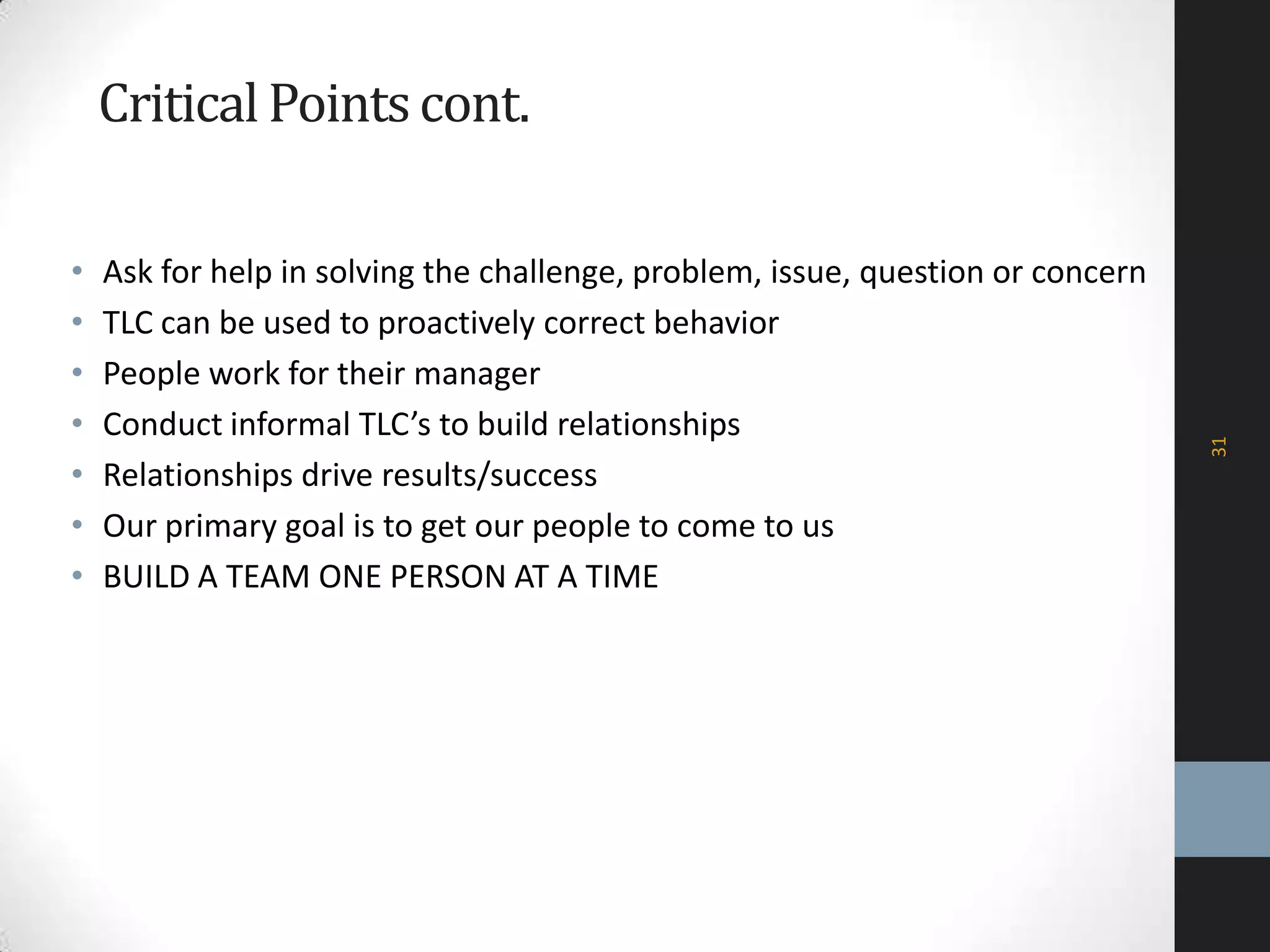
• Ask for help in solving the challenge, problem, issue, question or concern
• TLC can be used to proactively correct behavior
• People work for their manager
• Conduct informal TLC’s to build relationships
• Relationships drive results/success
• Our primary goal is to get our people to come to us
• BUILD A TEAM ONE PERSON AT A TIME
31
RolePlay
32
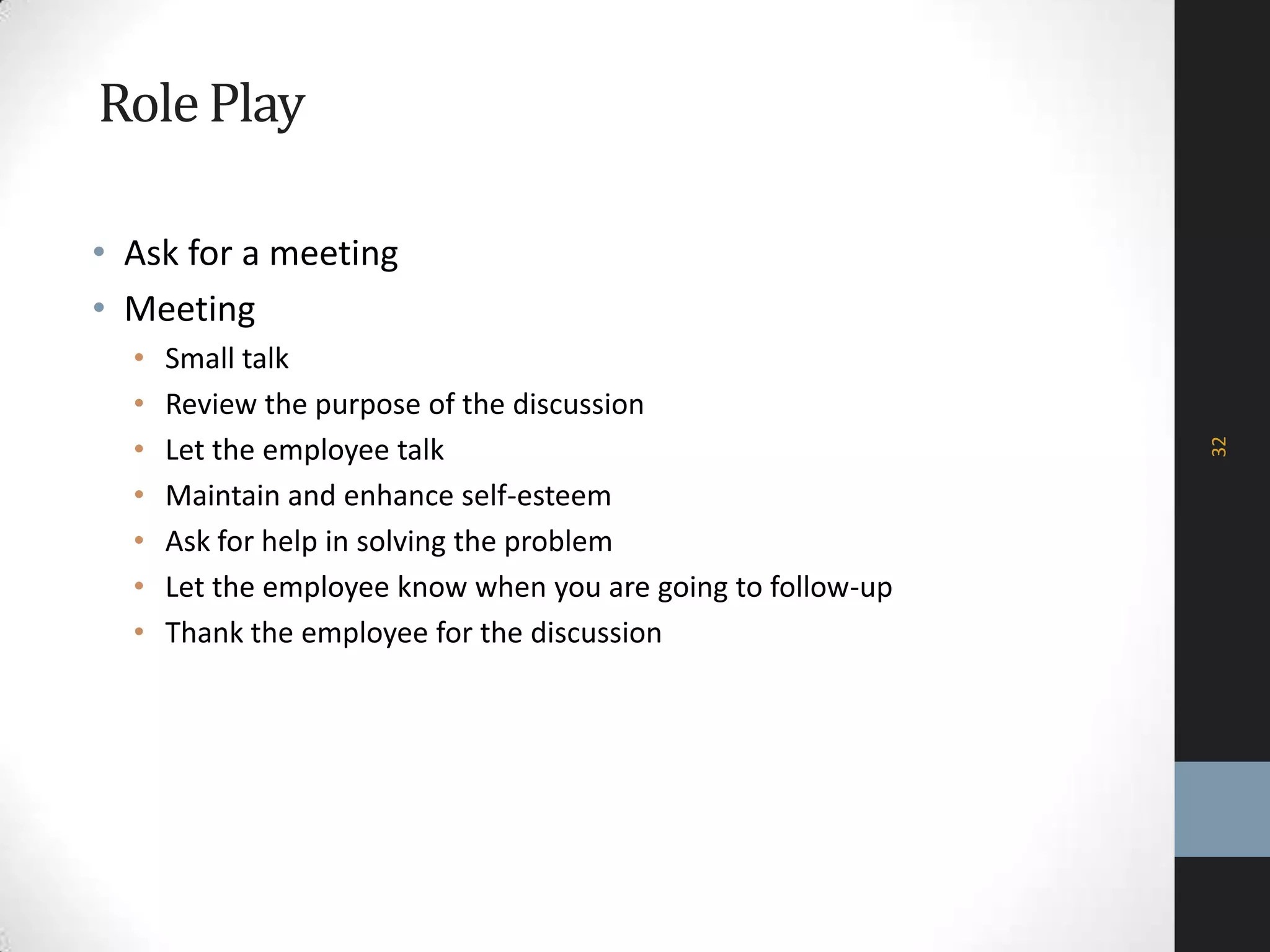
• Ask for a meeting
• Meeting
• Small talk
• Review the purpose of the discussion
• Let the employee talk
• Maintain and enhance self-esteem
• Ask for help in solving the problem
• Let the employee know when you are going to follow-up
• Thank the employee for the discussion
Summary
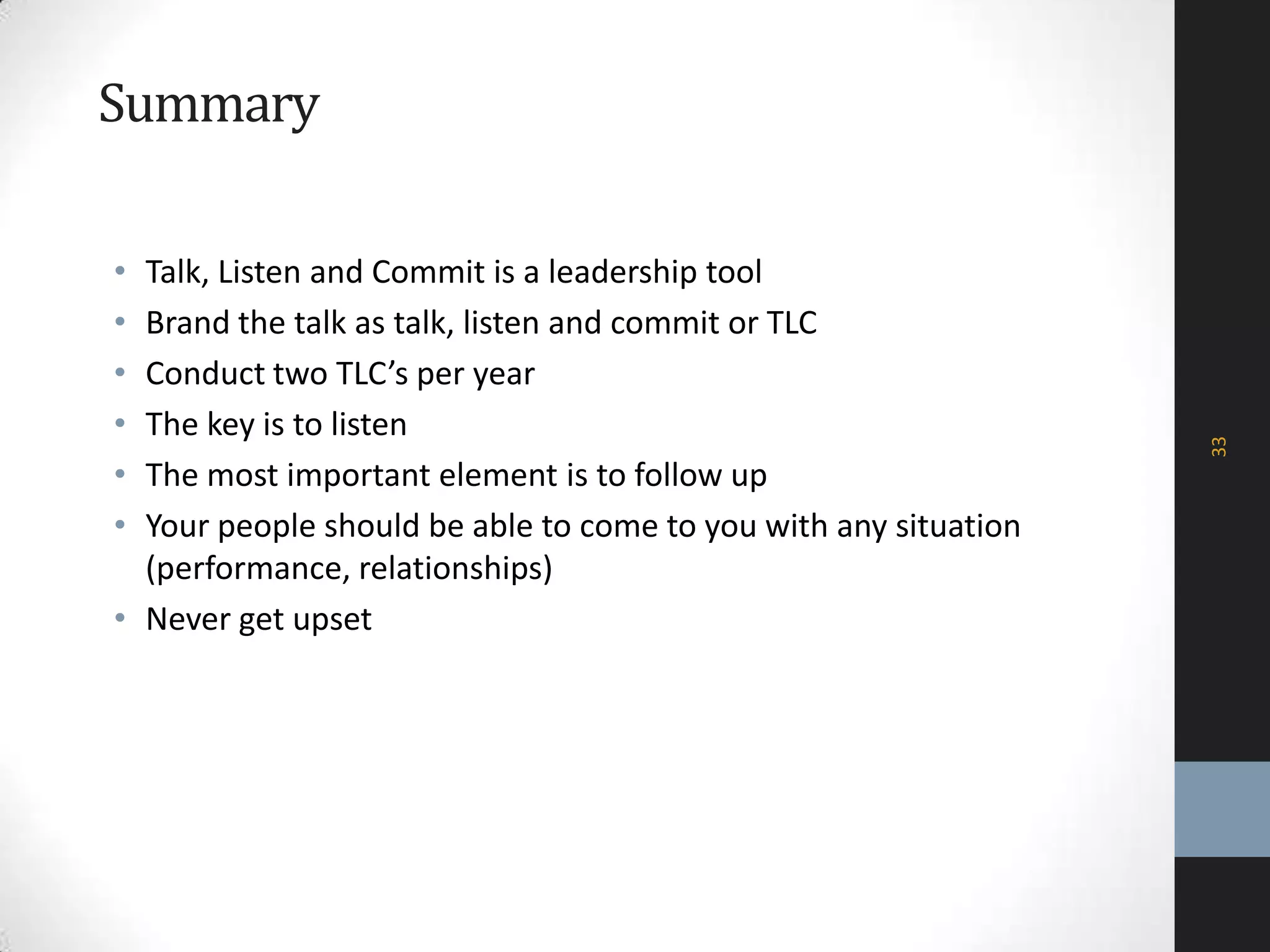
• Talk, Listen and Commit is a leadership tool
• Brand the talk as talk, listen and commit or TLC
• Conduct two TLC’s per year
• The key is to listen
• The most important element is to follow up
• Your people should be able to come to you with any situation
(performance, relationships)
• Never get upset
33
Summarycont.
• Ask for help in solving the challenge, problem, issue, question or concern
• TLC can be used to proactively correct behavior
• People work for their manager
• Conduct informal TLC’s to build relationships
• Relationships drive results/success
• Our primary goal is to get our people to come to us
• BUILD A TEAM ONE PERSON AT A TIME
34
Q & A
Gary Wheeler
The Virtual HR Director, LLC
678-997-0017
gary@thevirtualhrdirector.com
http://www.thevirtualhrdirector.com
Thank You
• What we do
• Provide strategic and tactical HR solutions for small business
• Part-time HR Director
• Starting at $1,000 per month
• Annual Membership Program
• $500 per year
• SUPER VALUE FOR SMALL BUSINESS
• Specific HR Projects
• $50 per hour
Our Company
• An HR Compliance Audit
• A standard application form
• An interview template for consistent interviews
• List of interview do’s and don’ts
• Contractor v. Employee Checklist
• Exempt v. Non-exempt Checklist
• I-9 Training
• A Onboarding / Orientation Checklist
• OSHA 301, OSHA 300, OSHA 300A Forms
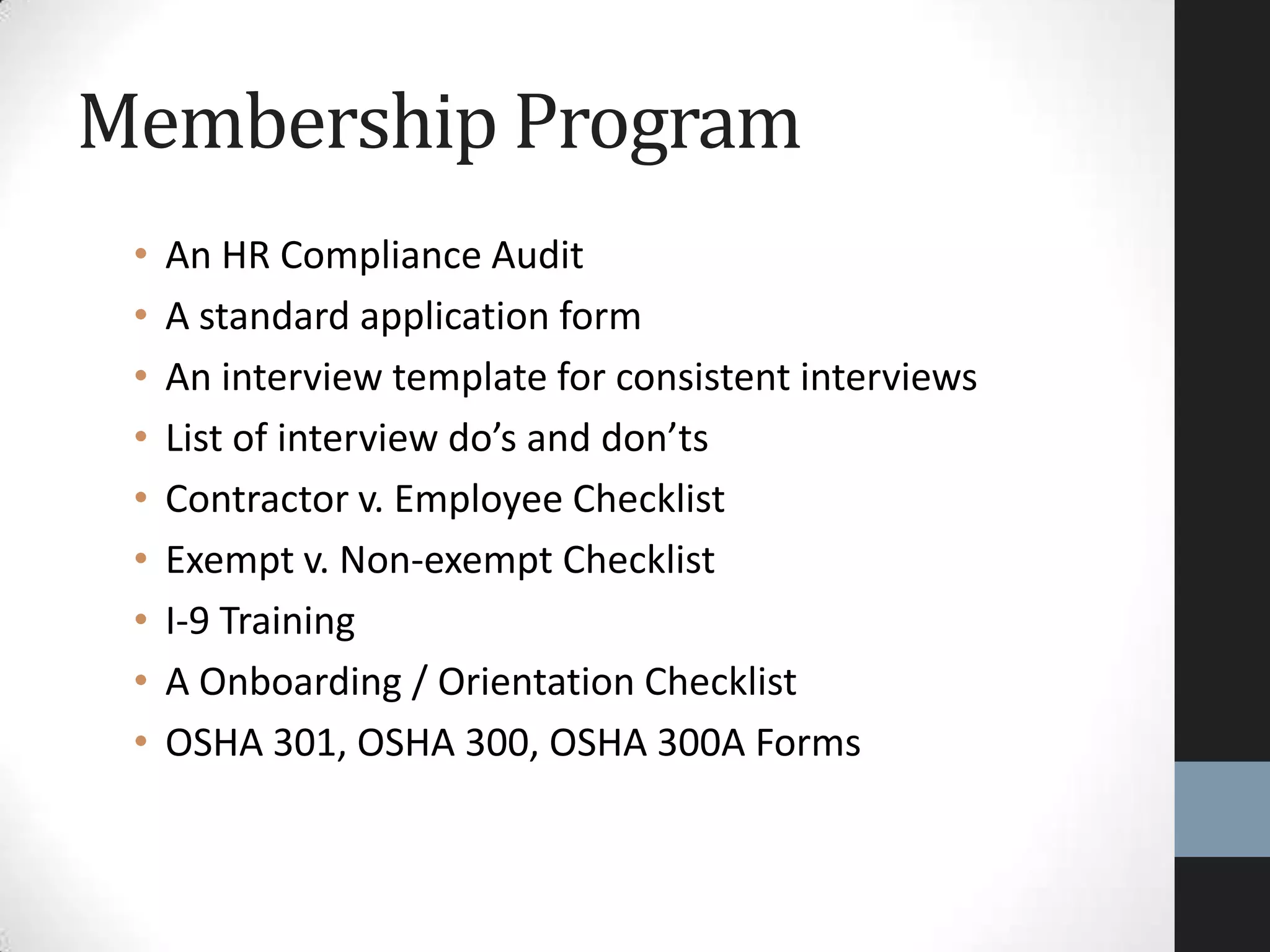
Membership Program
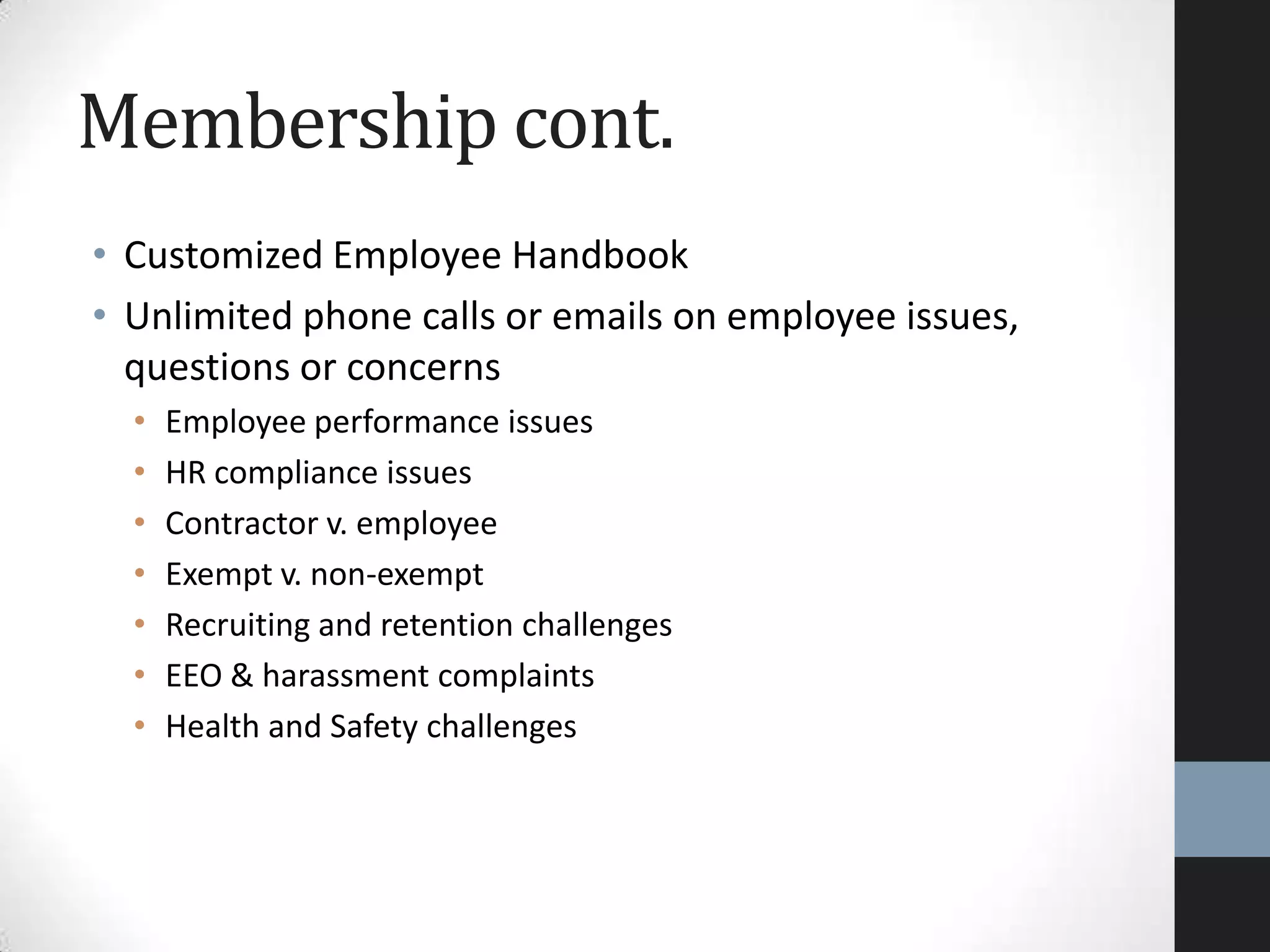
• Customized Employee Handbook
• Unlimited phone calls or emails on employee issues,
questions or concerns
• Employee performance issues
• HR compliance issues
• Contractor v. employee
• Exempt v. non-exempt
• Recruiting and retention challenges
• EEO & harassment complaints
• Health and Safety challenges
Membership cont.
• Up to eight (8) job descriptions
• Up to eight (8) performance evaluations
• Hazardous Material Right to Know Power Point
Training
• Online sexual harassment video training
• Online management communication, accountability
and documentation video training
Membership cont.

Human Resources Practices at Atlanta's GAMMA by Gary Wheeler

  • 1.
    Human Resource Practices GAMMA GaryWheeler, SPHR, GPHR, CCP, CBP
  • 2.
    DiscussionTopics • Creating aQuality Performance Evaluation That Makes Sense and Less Work • Increasing Productivity Through Communication, Documentation and Discipline • Building a Productive Team, One Person at a Time 2
  • 3.
  • 4.
    StandUp • Born inthe South • Born in the North/Northeast • Born in the Midwest/West • Born Pacific Coast, Hawaii or Alaska • Born U.S. Caribbean or Guam • Born outside of the U.S. 4
  • 5.
    StandUp • Have traveledoutside of the U.S. • Have lived outside of the U.S. • Would like to travel outside of the U.S. • Would like to live outside of the U.S. 5
  • 6.
    StandUp • Single • Singleand would like to be married • Single and feel like you are married • Married • Married and feel like you are single • Married and would like to be single 6
  • 7.
    StandUp • Would liketo have kids • Have kids under 13 • Have teenage kids • Have young adult kids who have left home • Have kids who left and came back • Can’t wait until kids leave 7
  • 8.
    StandUp • Played aninstrument growing up • Still play an instrument • Played sports growing up • Still play sports • Like to dance • Like to watch dancing with the stars 8
  • 9.
    DiversityIn The Workplace Includesmany characteristics that may be visible such as race, gender and age, and it also includes less obvious characteristics such as personality, ethnicity, ability, education, geographic location, marital status, parental status, religion, job function, recreational habits, life experiences, life style, sexual orientation and family situation that makes us all similar to and different from one another. 9
  • 10.
    Take – a- Way • Creating productive and respectful relationships with all coworkers and customers, whether we perceive them as similar or different than ourselves. • Valuing the Diversity of Individuals 10
  • 11.
    PerformanceEvaluations Creating a QualityPerformance Evaluation That Makes Sense and Less Work • Who completes your performance evaluations? • How long does it take? • What do they look like? 11
  • 12.
    PerformanceEvaluations • QUANTITY .................................................................................1 2 3 4 5 • Meets productivity standards ...................................................... 1 2 3 4 5 • Completes work in timely manner ................................................ 1 2 3 4 5 • QUALITY …................................................................................. 1 2 3 4 5 • Demonstrates accuracy and thoroughness .................................. 1 2 3 4 5 • Displays commitment to excellence ............................................. 1 2 3 4 5 • JOB KNOWLEDGE ...................................................................... 1 2 3 4 5 • Competent in required job skills and knowledge ......................... 1 2 3 4 5 12
  • 13.
    BARS Behaviorally Anchored RatingScales 5 – Superior 4 – Exceeds Expectations 3 – Meets Expectations 2 – Needs Improvement 1 – Unsatisfactory Performance 13
  • 14.
    Key PerformanceIndicators (KPI’s) •What are the key elements for the success of the practice? • What will improve the efficiency and effectiveness of the practice? • What will drive patient satisfaction? • What will put more money on the bottom line? • How can we tie team to the practice? • What elements can staff track on their own? 14
  • 15.
    Ideas • Customer SatisfactionIndex • Customer comment cards • Wait times • Follow up calls • Insurance adjustments • Scheduling • Expenses • Accounts receivables • Median total accounts receivable per Full-time equivalent (FTE) 15
  • 16.
  • 17.
    Summary • Tie individualperformance to the practice • Align individual goals to your goals which should be aligned to the practice • Use more objective data than subjective data • Staff should be able to track some elements • Create a weekly or monthly dashboard for staff • Parts of your goal strategy should be team related that impact the performance of the practice • Note: If the practice is not on target, there should be very few superstars. If the practice is exceeding goals, there should be excellent performers on the team 17
  • 18.
  • 19.
    Productivity • Where isproductivity loss in the office? • What do you recommend we do to increase productivity? • What about lack of discipline? 19
  • 20.
  • 21.
    LessonsLearned • Communicate, Communicate,Communicate • Document, Document, Document • If not written, it doesn’t exist • If not signed, it doesn’t exist • Never write anything derogatory, especially in an email • Never get upset • Talk directly with the person • You are there to help 21
  • 22.
  • 23.
    CommunicationSteps • Choose thesetting • Later (preferred) or immediate (illegal/safety) • Indirect (coaching preferred) or direct (tell) • Private (1 or 2) v. public (group) • What is the issue • Who is impacted • Customers • Co-workers • Me • What is the best resolution 23
  • 24.
    Summary • Talk withyour people not at your people • Communicate, Communicate, Communicate • Document, Document, Document • Never get emotionally upset • Never take it personally • Your goal is to help your people be successful • Tip: It doesn’t have to be fancy 24
  • 25.
    Building aProductiveTeam, One Personata Time • Talk Listen and Commit • Enhance Employee Relations and Customer Relations 25
  • 26.
    Communication • Talk, Listenand Commit • Employee talks • Supervisor listens • We commit to work together • Keys to Positive Communication • Maintain and enhance self-esteem • Listen and respond with empathy • Ask for help in solving the problem 26
  • 27.
    Planningthe Talk • Notifythe employee in advance • Choose a private place free of distractions • Allow 15 to 30-minutes • Plan to take notes • Be prepared to follow up promptly after the talk 27
  • 28.
    Duringthe Talk • Greetyour employee professionally • Set the person at ease with small talk • Review the purpose of the discussion • Ask permission to take notes • Ask open ended questions • Ask for help in solving problems • Let the employee know when you will follow up 28
  • 29.
    FollowUp • The mostimportant part of the discussion is to follow up on issues, questions and concerns • Sending a thank you note or thank you email aids in building productive relationships 29
  • 30.
    CriticalPoints • Talk, Listenand Commit is a leadership tool • Brand the talk as talk, listen and commit or TLC • Conduct two TLC’s per year • The key is to listen • The most important element is to follow up • Your people should be able to come to you with any situation (performance, relationships) • Never get upset 30
  • 31.
    CriticalPointscont. • Ask forhelp in solving the challenge, problem, issue, question or concern • TLC can be used to proactively correct behavior • People work for their manager • Conduct informal TLC’s to build relationships • Relationships drive results/success • Our primary goal is to get our people to come to us • BUILD A TEAM ONE PERSON AT A TIME 31
  • 32.
    RolePlay 32 • Ask fora meeting • Meeting • Small talk • Review the purpose of the discussion • Let the employee talk • Maintain and enhance self-esteem • Ask for help in solving the problem • Let the employee know when you are going to follow-up • Thank the employee for the discussion
  • 33.
    Summary • Talk, Listenand Commit is a leadership tool • Brand the talk as talk, listen and commit or TLC • Conduct two TLC’s per year • The key is to listen • The most important element is to follow up • Your people should be able to come to you with any situation (performance, relationships) • Never get upset 33
  • 34.
    Summarycont. • Ask forhelp in solving the challenge, problem, issue, question or concern • TLC can be used to proactively correct behavior • People work for their manager • Conduct informal TLC’s to build relationships • Relationships drive results/success • Our primary goal is to get our people to come to us • BUILD A TEAM ONE PERSON AT A TIME 34
  • 35.
  • 36.
    Gary Wheeler The VirtualHR Director, LLC 678-997-0017 gary@thevirtualhrdirector.com http://www.thevirtualhrdirector.com Thank You
  • 37.
    • What wedo • Provide strategic and tactical HR solutions for small business • Part-time HR Director • Starting at $1,000 per month • Annual Membership Program • $500 per year • SUPER VALUE FOR SMALL BUSINESS • Specific HR Projects • $50 per hour Our Company
  • 38.
    • An HRCompliance Audit • A standard application form • An interview template for consistent interviews • List of interview do’s and don’ts • Contractor v. Employee Checklist • Exempt v. Non-exempt Checklist • I-9 Training • A Onboarding / Orientation Checklist • OSHA 301, OSHA 300, OSHA 300A Forms Membership Program
  • 39.
    • Customized EmployeeHandbook • Unlimited phone calls or emails on employee issues, questions or concerns • Employee performance issues • HR compliance issues • Contractor v. employee • Exempt v. non-exempt • Recruiting and retention challenges • EEO & harassment complaints • Health and Safety challenges Membership cont.
  • 40.
    • Up toeight (8) job descriptions • Up to eight (8) performance evaluations • Hazardous Material Right to Know Power Point Training • Online sexual harassment video training • Online management communication, accountability and documentation video training Membership cont.