



Scrum and Personal Agility:
Simple frameworks for more Impact
Peter Stevens
www.MyPersonalAgility.org
(c)focalpointwww.fotosearch.com
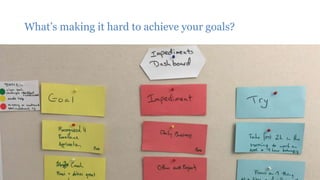
What’s making it hard to achieve your goals?
Identify issues
• 1. What is your most important goal?
• 2. What is making difficult to achieve this goal?
Your customers have the same challenges
• Missing shared goal or purpose
• Missing mindset
• Inability to create alignment
• Inability to get things done
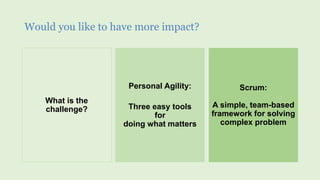
Would you like to have more impact?
What is the
challenge?
Personal Agility:
Three easy tools
for
doing what matters
Scrum:
A simple, team-based
framework for solving
complex problem
Introducing… Me, Myself and I!
What really matters?
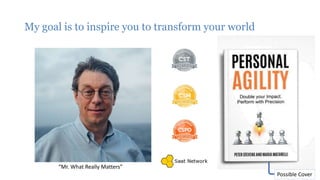
My goal is to inspire you to transform your world
peter@saat-network.net
@peterstev
“Mr. What Really Matters”
Possible Cover
Source: © fotolia.com
I
have
three
bosses
None
can tell
me
what to
do next!
I
have so
much
to do
I
don’t
know
where
to start
Source: © fotolia.com
Source: https://imgflip.com/memegenerator/57445655/Juggling-Meme
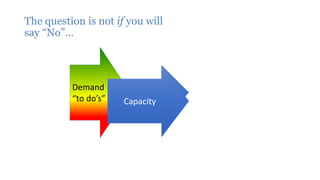
The question is not if you will
say “No”…
Demand
“to do’s”
Capacity
Capacity
Demand
“to do’s”
Capacity
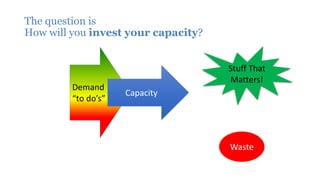
The question is
How will you invest your capacity?
Waste
Stuff That
Matters!
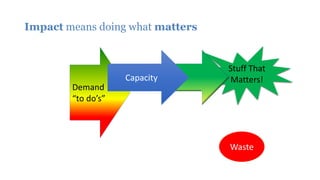
Impact means doing what matters
Demand
“to do’s”
Stuff That
Matters!
Waste
Capacity
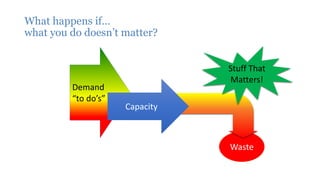
What happens if…
what you do doesn’t matter?
Demand
“to do’s”
Waste
Capacity
Stuff That
Matters!
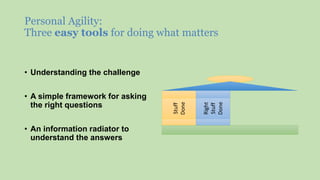
Personal Agility:
Three easy tools for doing what matters
• Understanding the challenge
• A simple framework for asking
the right questions
• An information radiator to
understand the answers
Stuff
Done
Right
Stuff
Done
Do
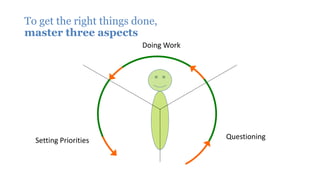
To get the right things done,
master three aspects
Doing Work
QuestioningSetting Priorities
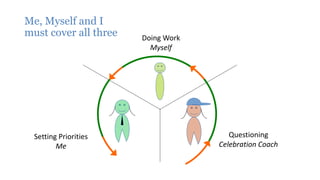
Me, Myself and I
must cover all three Doing Work
Myself
Questioning
Celebration Coach
Setting Priorities
Me
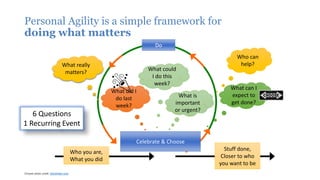
Personal Agility is a simple framework for
doing what matters
Stuff done,
Closer to who
you want to be
Celebrate & Choose
Who you are,
What you did
What could
I do this
week?
What can I
expect to
get done?
What really
matters?
Do
What is
important
or urgent?
Who can
help?
6 Questions
1 Recurring Event
What did I
do last
week?
🎉
Choose photo credit: Stockfresh.com
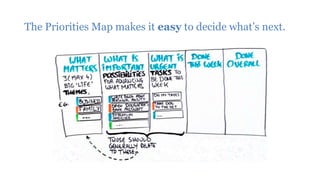
The Priorities Map makes it easy to decide what’s next.
“This really works”
Hartmuth Gieldanowski
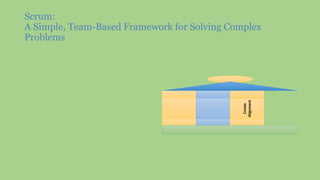
Scrum:
A Simple, Team-Based Framework for Solving Complex
Problems
Do
Create
Alignment
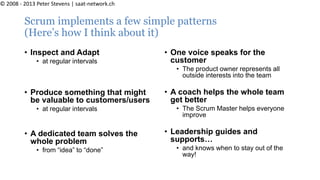
Scrum implements a few simple patterns
(Here’s how I think about it)
• Inspect and Adapt
• at regular intervals
• Produce something that might
be valuable to customers/users
• at regular intervals
• A dedicated team solves the
whole problem
• from “idea” to “done”
• One voice speaks for the
customer
• The product owner represents all
outside interests into the team
• A coach helps the whole team
get better
• The Scrum Master helps everyone
improve
• Leadership guides and
supports…
• and knows when to stay out of the
way!
© 2008 - 2013 Peter Stevens | saat-network.ch
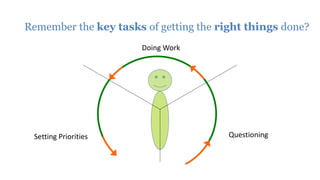
Remember the key tasks of getting the right things done?
Doing Work
QuestioningSetting Priorities
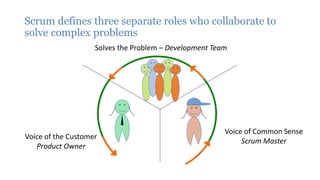
Scrum defines three separate roles who collaborate to
solve complex problems
Solves the Problem – Development Team
Voice of Common Sense
Scrum Master
Voice of the Customer
Product Owner
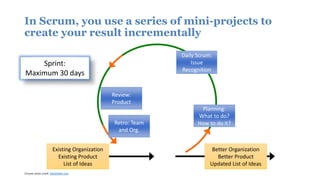
In Scrum, you use a series of mini-projects to
create your result incrementally
Planning:
What to do?
How to do it?
Existing Organization
Existing Product
List of Ideas
Daily Scrum:
Issue
Recognition
Sprint:
Maximum 30 days
Choose photo credit: Stockfresh.com
Better Organization
Better Product
Updated List of Ideas
Review:
Product
Retro: Team
and Org.
Scrum is easy, but Scrum is hard
• Simple framework
• Few roles, artefacts and
constraints
• Technical: Many organizations
cannot deliver customer value
every month
• Organizational: Bringing the
people together crosses
organization boundaries
• Decision Making: Delegated into
the Scrum Team
• Conversation and Alignment:
more from what to why
Summary: How to do more that matters
• Every week:
• Ask yourself the 6 questions of Personal Agility
• Visualize the answers on your Priorities Map
• To have more impact at work
• Ask your stakeholders – what really matters?
• Share Personal Agility and support the people around you
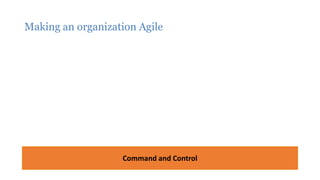
Making an organization Agile
Trust, Transparency and Frequent Interaction
Shared Values & Principles => Mindset
Command and Control
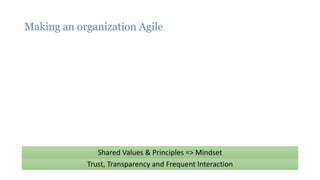
Making an organization Agile
Trust, Transparency and Frequent Interaction
Shared Values & Principles => Mindset
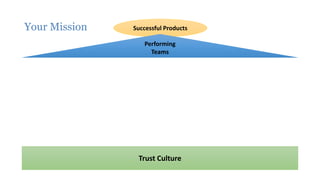
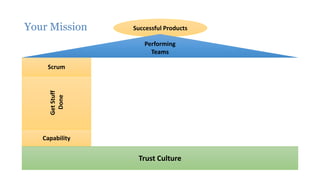
Your Mission Successful Products
Performing
Teams
Trust, Transparency and Frequent Interaction
Shared Values & Principles => Mindset
Trust Culture
Your Mission
Scrum
GetStuff
Done
Capability
Successful Products
Performing
Teams
Trust, Transparency and Frequent Interaction
Shared Values & Principles => Mindset
Trust Culture
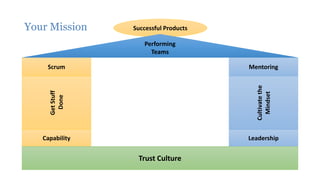
Your Mission
Scrum
GetStuff
Done
Capability
Mentoring
Cultivatethe
Mindset
Leadership
Successful Products
Performing
Teams
Trust, Transparency and Frequent Interaction
Shared Values & Principles => Mindset
Trust Culture
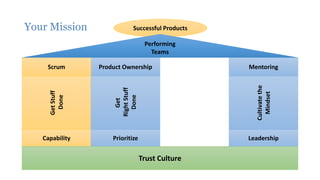
Your Mission
Product OwnershipScrum
GetStuff
Done
Capability
Mentoring
Cultivatethe
Mindset
Leadership
Successful Products
Get
RightStuff
Done
Prioritize
Performing
Teams
Trust, Transparency and Frequent Interaction
Shared Values & Principles => Mindset
Trust Culture
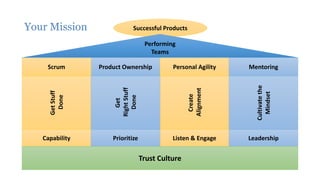
Your Mission
Product Ownership Personal Agility
Create
Alignment
Scrum
GetStuff
Done
Capability Listen & Engage
Mentoring
Cultivatethe
Mindset
Leadership
Successful Products
Get
RightStuff
Done
Prioritize
Performing
Teams
Trust, Transparency and Frequent Interaction
Shared Values & Principles => Mindset
Trust Culture
• Contact me:
• linkedIn
• twitter @peterstev
• peter@saat-network.ch
• Join the early readers club at
www.MyPersonalAgility.com
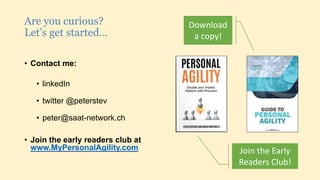
Are you curious?
Let’s get started…
Download
a copy!
Join the Early
Readers Club!

Scrum, Personal Agility and Impact

  • 1.
    Scrum and PersonalAgility: Simple frameworks for more Impact Peter Stevens www.MyPersonalAgility.org (c)focalpointwww.fotosearch.com
  • 2.
    What’s making ithard to achieve your goals?
  • 3.
    Identify issues • 1.What is your most important goal? • 2. What is making difficult to achieve this goal?
  • 4.
    Your customers havethe same challenges • Missing shared goal or purpose • Missing mindset • Inability to create alignment • Inability to get things done
  • 5.
    Would you liketo have more impact? What is the challenge? Personal Agility: Three easy tools for doing what matters Scrum: A simple, team-based framework for solving complex problem
  • 6.
  • 7.
  • 8.
    My goal isto inspire you to transform your world peter@saat-network.net @peterstev “Mr. What Really Matters” Possible Cover
  • 9.
  • 10.
  • 11.
  • 12.
    The question isnot if you will say “No”… Demand “to do’s” Capacity Capacity
  • 13.
    Demand “to do’s” Capacity The questionis How will you invest your capacity? Waste Stuff That Matters!
  • 14.
    Impact means doingwhat matters Demand “to do’s” Stuff That Matters! Waste Capacity
  • 15.
    What happens if… whatyou do doesn’t matter? Demand “to do’s” Waste Capacity Stuff That Matters!
  • 16.
    Personal Agility: Three easytools for doing what matters • Understanding the challenge • A simple framework for asking the right questions • An information radiator to understand the answers Stuff Done Right Stuff Done Do
  • 17.
    To get theright things done, master three aspects Doing Work QuestioningSetting Priorities
  • 18.
    Me, Myself andI must cover all three Doing Work Myself Questioning Celebration Coach Setting Priorities Me
  • 19.
    Personal Agility isa simple framework for doing what matters Stuff done, Closer to who you want to be Celebrate & Choose Who you are, What you did What could I do this week? What can I expect to get done? What really matters? Do What is important or urgent? Who can help? 6 Questions 1 Recurring Event What did I do last week? 🎉 Choose photo credit: Stockfresh.com
  • 20.
    The Priorities Mapmakes it easy to decide what’s next.
  • 21.
  • 22.
    Scrum: A Simple, Team-BasedFramework for Solving Complex Problems Do Create Alignment
  • 23.
    Scrum implements afew simple patterns (Here’s how I think about it) • Inspect and Adapt • at regular intervals • Produce something that might be valuable to customers/users • at regular intervals • A dedicated team solves the whole problem • from “idea” to “done” • One voice speaks for the customer • The product owner represents all outside interests into the team • A coach helps the whole team get better • The Scrum Master helps everyone improve • Leadership guides and supports… • and knows when to stay out of the way! © 2008 - 2013 Peter Stevens | saat-network.ch
  • 24.
    Remember the keytasks of getting the right things done? Doing Work QuestioningSetting Priorities
  • 25.
    Scrum defines threeseparate roles who collaborate to solve complex problems Solves the Problem – Development Team Voice of Common Sense Scrum Master Voice of the Customer Product Owner
  • 26.
    In Scrum, youuse a series of mini-projects to create your result incrementally Planning: What to do? How to do it? Existing Organization Existing Product List of Ideas Daily Scrum: Issue Recognition Sprint: Maximum 30 days Choose photo credit: Stockfresh.com Better Organization Better Product Updated List of Ideas Review: Product Retro: Team and Org.
  • 27.
    Scrum is easy,but Scrum is hard • Simple framework • Few roles, artefacts and constraints • Technical: Many organizations cannot deliver customer value every month • Organizational: Bringing the people together crosses organization boundaries • Decision Making: Delegated into the Scrum Team • Conversation and Alignment: more from what to why
  • 28.
    Summary: How todo more that matters • Every week: • Ask yourself the 6 questions of Personal Agility • Visualize the answers on your Priorities Map • To have more impact at work • Ask your stakeholders – what really matters? • Share Personal Agility and support the people around you
  • 29.
    Making an organizationAgile Trust, Transparency and Frequent Interaction Shared Values & Principles => Mindset Command and Control
  • 30.
    Making an organizationAgile Trust, Transparency and Frequent Interaction Shared Values & Principles => Mindset
  • 31.
    Your Mission SuccessfulProducts Performing Teams Trust, Transparency and Frequent Interaction Shared Values & Principles => Mindset Trust Culture
  • 32.
    Your Mission Scrum GetStuff Done Capability Successful Products Performing Teams Trust,Transparency and Frequent Interaction Shared Values & Principles => Mindset Trust Culture
  • 33.
    Your Mission Scrum GetStuff Done Capability Mentoring Cultivatethe Mindset Leadership Successful Products Performing Teams Trust,Transparency and Frequent Interaction Shared Values & Principles => Mindset Trust Culture
  • 34.
    Your Mission Product OwnershipScrum GetStuff Done Capability Mentoring Cultivatethe Mindset Leadership SuccessfulProducts Get RightStuff Done Prioritize Performing Teams Trust, Transparency and Frequent Interaction Shared Values & Principles => Mindset Trust Culture
  • 35.
    Your Mission Product OwnershipPersonal Agility Create Alignment Scrum GetStuff Done Capability Listen & Engage Mentoring Cultivatethe Mindset Leadership Successful Products Get RightStuff Done Prioritize Performing Teams Trust, Transparency and Frequent Interaction Shared Values & Principles => Mindset Trust Culture
  • 36.
    • Contact me: •linkedIn • twitter @peterstev • peter@saat-network.ch • Join the early readers club at www.MyPersonalAgility.com Are you curious? Let’s get started… Download a copy! Join the Early Readers Club!

Editor's Notes

  • #20  It’s really quite simple, Every week, celebrate what you’ve accomplished, and choose what you want to do next week. Of all the things you could do, what’s important, and what’s urgent? Of all those things, what can you expect to get done? That’s your choice!
  • #27  It’s really quite simple, Every week, celebrate what you’ve accomplished, and choose what you want to do next week. Of all the things you could do, what’s important, and what’s urgent? Of all those things, what can you expect to get done? That’s your choice!