



Christian Buckley
CMO at Beezy + Office Servers and Services MVP
www.beezy.net
@buckleyplanet
cbuck@beezy.net
www.buckleyplanet.com
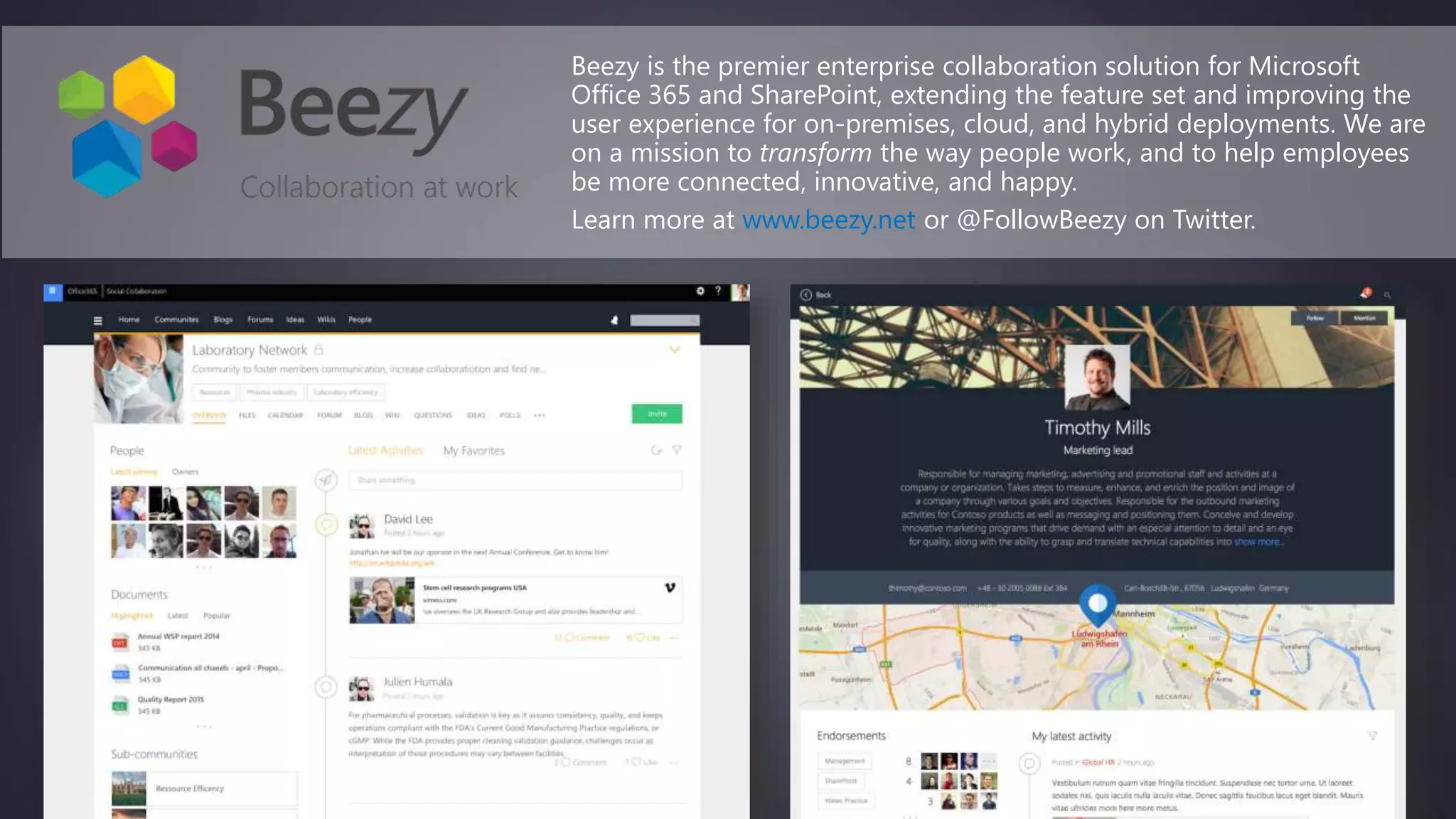
Beezy is the premier enterprise collaboration solution for Microsoft
Office 365 and SharePoint, extending the feature set and improving the
user experience for on-premises, cloud, and hybrid deployments. We are
on a mission to transform the way people work, and to help employees
be more connected, innovative, and happy.
Learn more at www.beezy.net or @FollowBeezy on Twitter.
Jussi Mori
at Peaches Industries
www.peachesindustries.com
j.mori@peachesindustries.ch
@JussiMori
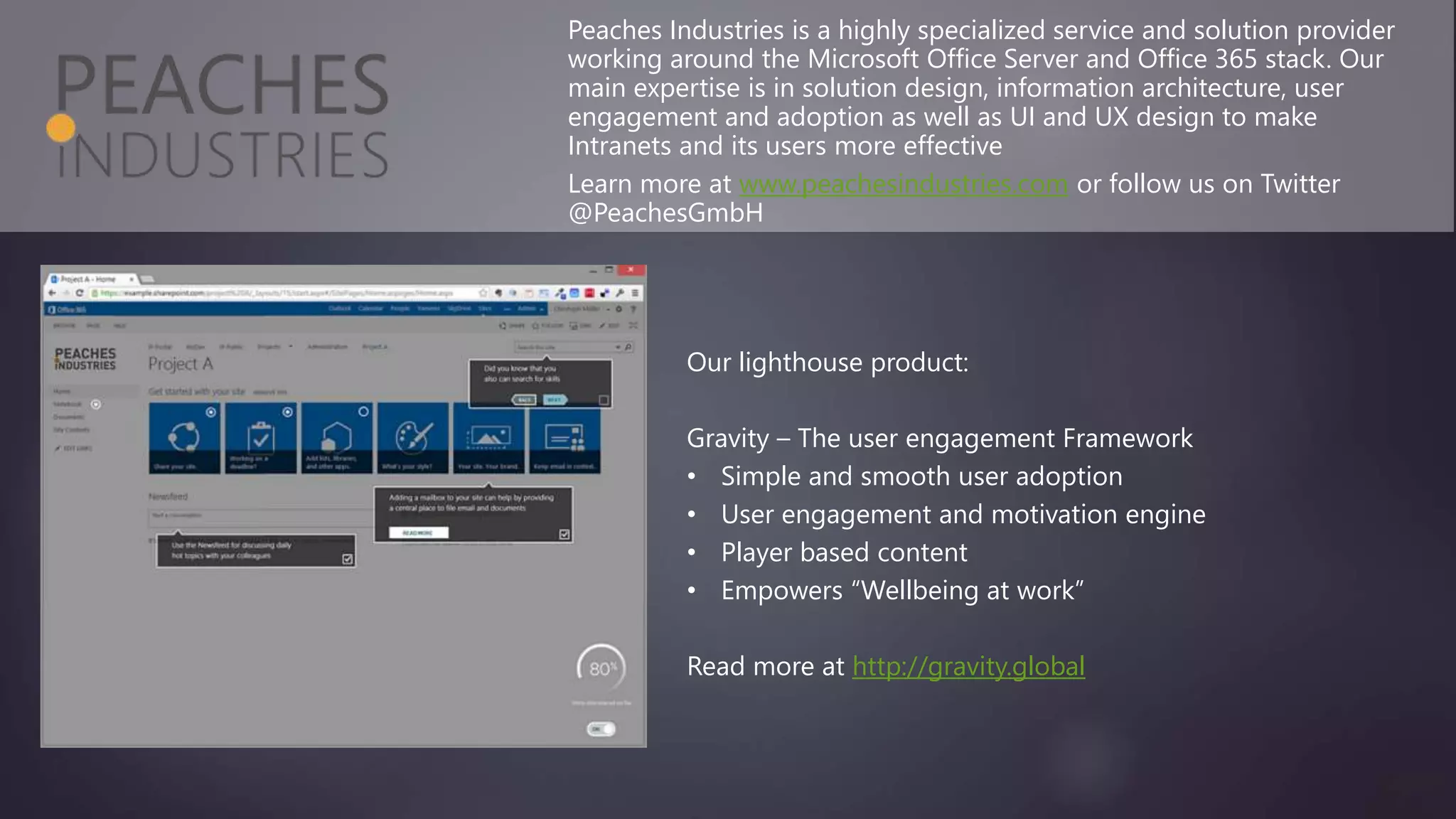
Peaches Industries is a highly specialized service and solution provider
working around the Microsoft Office Server and Office 365 stack. Our
main expertise is in solution design, information architecture, user
engagement and adoption as well as UI and UX design to make
Intranets and its users more effective
Learn more at www.peachesindustries.com or follow us on Twitter
@PeachesGmbH
Our lighthouse product:
Gravity – The user engagement Framework
• Simple and smooth user adoption
• User engagement and motivation engine
• Player based content
• Empowers “Wellbeing at work”
Read more at http://gravity.global
Tal Ben-David
Alliance and Partner Manager at CardioLog Analytics
www.intlock.com
Tal.ben-david@intlock.com
@cardiolog
Blog.intlock.com
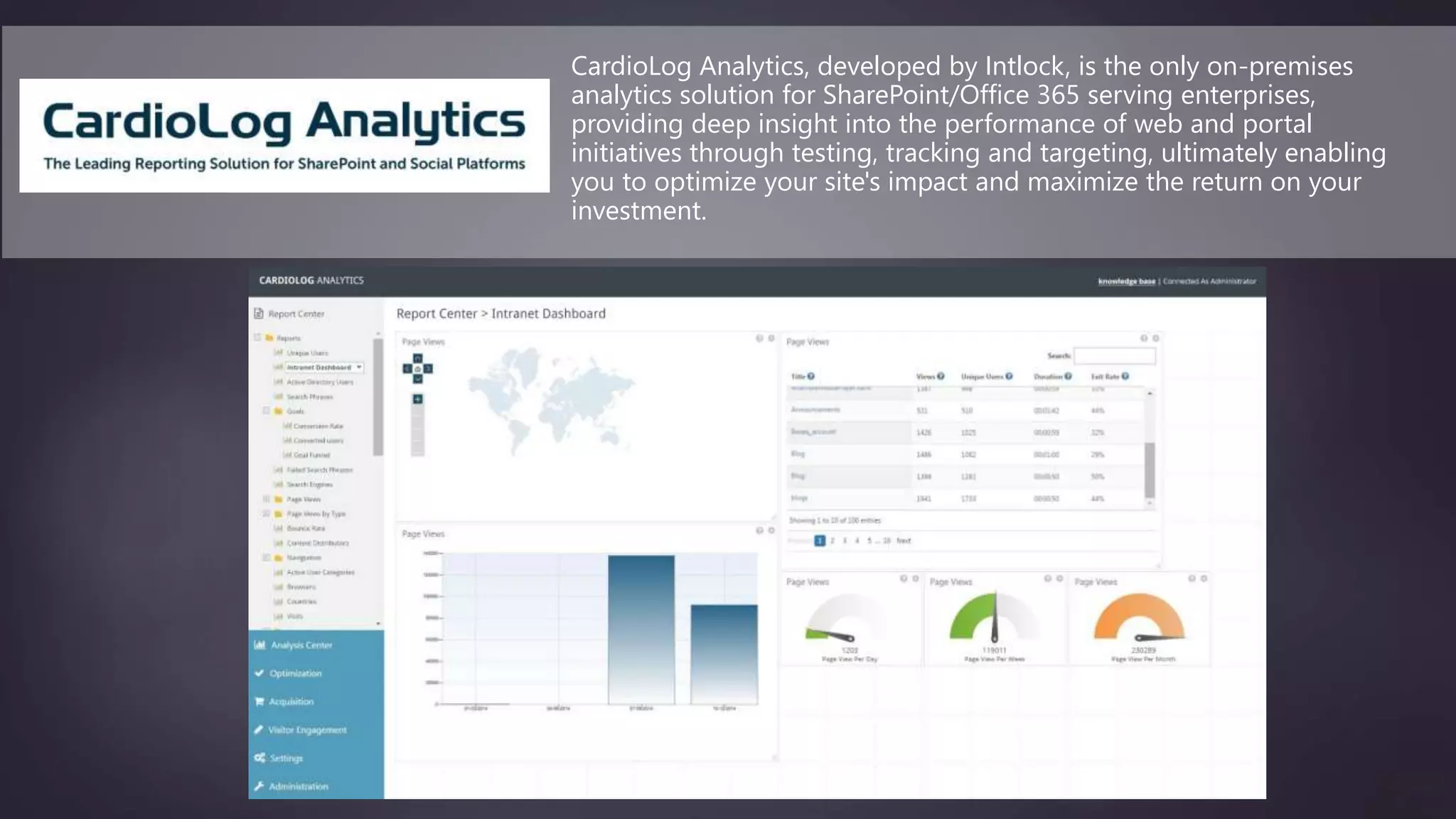
CardioLog Analytics, developed by Intlock, is the only on-premises
analytics solution for SharePoint/Office 365 serving enterprises,
providing deep insight into the performance of web and portal
initiatives through testing, tracking and targeting, ultimately enabling
you to optimize your site's impact and maximize the return on your
investment.
Business and IT shouldn’t be fighting
10
When IT and business stakeholders join forces,
the possibilities for increased productivity and
connectedness grow exponentially.
The alliance of IT and Business will not only lead
to an enhanced user-centric experience, but also
ensures that bridges are built and roadmaps
aligned between business goals and IT objectives.
1. The most common failure in
SharePoint implementation has
nothing to do with the technology
2. Few organizations have taken the time
to understand the measurable value
that SharePoint creates
3. You cannot claim success if
• You cannot monitor it
• You cannot measure it
• You do not have mechanisms in place
to manage change
 Every SharePoint deployment begins as a business analyst activity
 You need to begin with a clear picture of what you are trying to
achieve – before you attempt to achieve it
 There are no bad ideas
 Don’t jump to solutions until you can agree on what is to be solved
 Prioritization can be hard
 Leverage data from your system
 How are people using the system today?
 How are they leveraging alternate technologies and systems today?
 What is the request backlog?
Develop a shared understanding
 Need to establish core reporting, so you can monitor usage patterns
 What the data shows you today will change your priorities for tomorrow
 Develop dashboards for your leadership, but be prepared to change
based on what you see
 As you iterate and refine based on what you learn, there will be less
change – and more innovation
 Change = course correction, adaptation, refining what you know
 Innovation = leveraging what you know to do something new that pushes the
business forward
Collaborate and Iterate
The Next Step: Shaping User Behavior
Get your workforce engaged
through the power of games
Enterprise user adoption
and training is broken!
Training and learning environments are disconnected from
the ”real” work
Enterprise software is still percieved as very difficult to use
70% of the workforce is not engaged, or is actively
disengaged at work
There is a low return on investment (ROI) on current
training and change management spend
How can we fix this?
What’s the proplem?
Let’s look at a concept called
Motivational Hacking
... or also called Gamification
FoldIt Minecraft
Play is the highest form of research – Albert Einstein
The power of games
What is Motivational Hacking or Gamification?
Gamification is the utilization of Game-Like
motivational elements in a non-game context.
Gamifcation allows the paradigm shift from process or
function focused design towards human focused design.
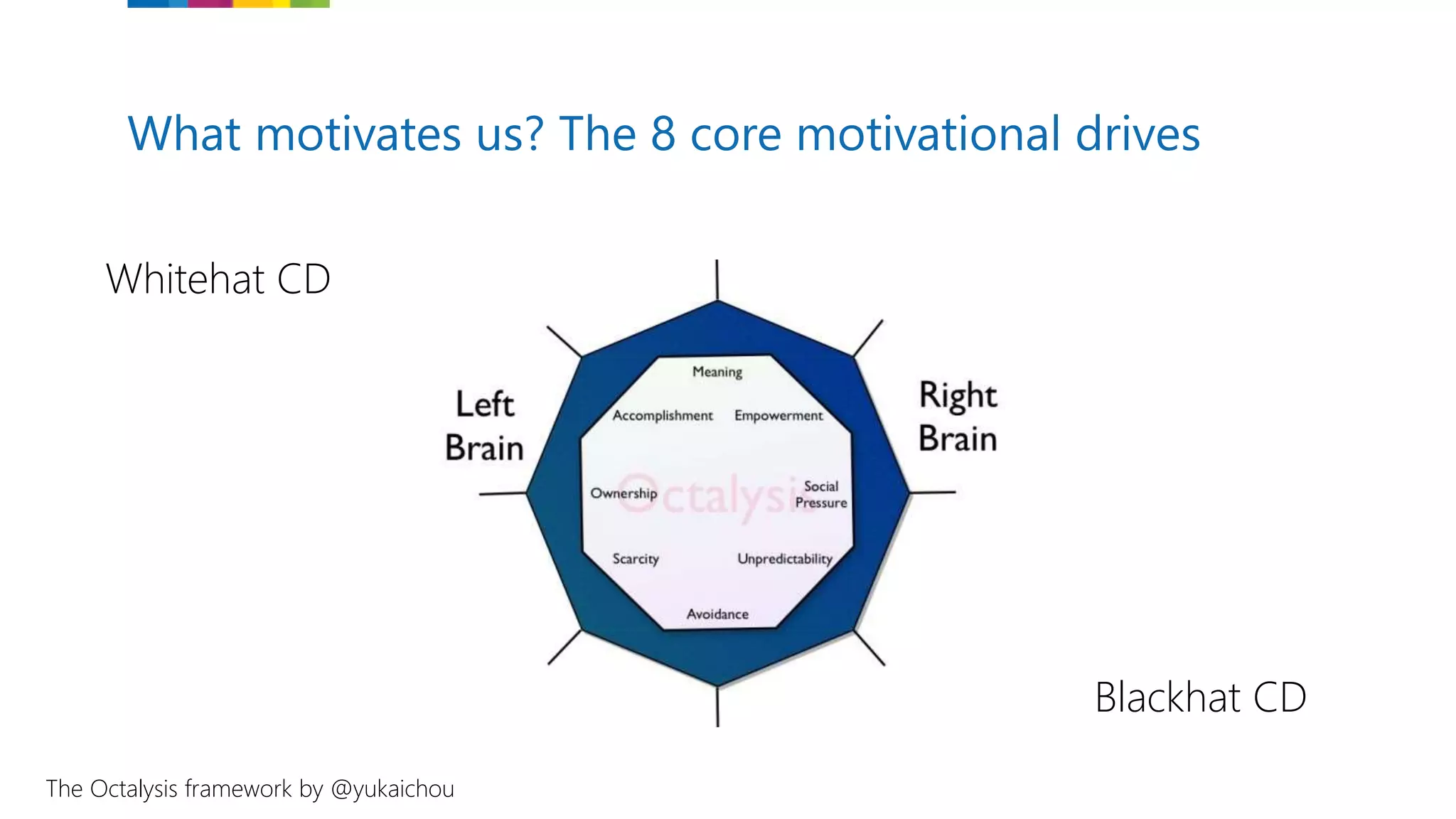
What motivates us? The 8 core motivational drives
Whitehat CD
Blackhat CD
The Octalysis framework by @yukaichou
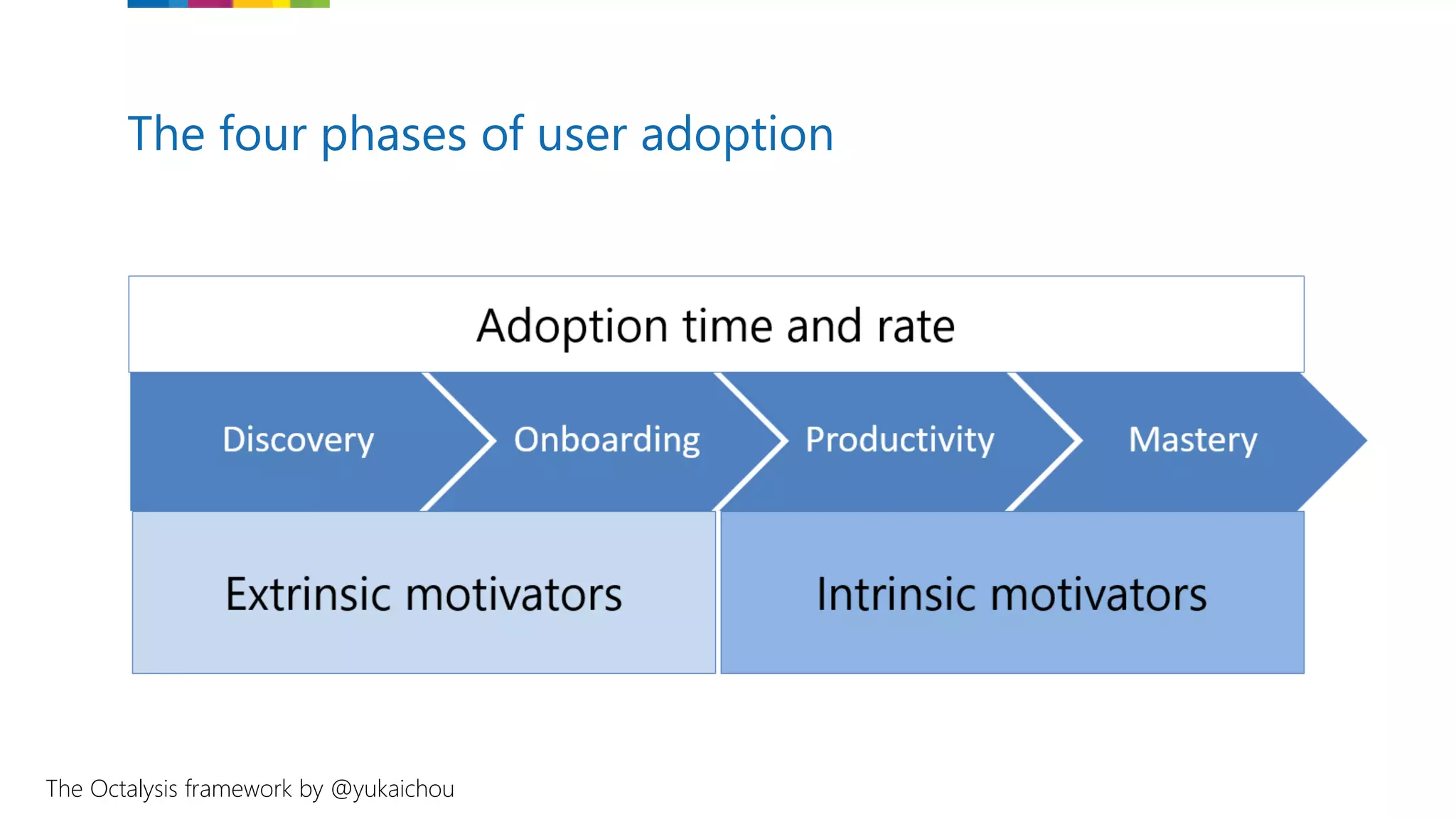
The four phases of user adoption
The Octalysis framework by @yukaichou
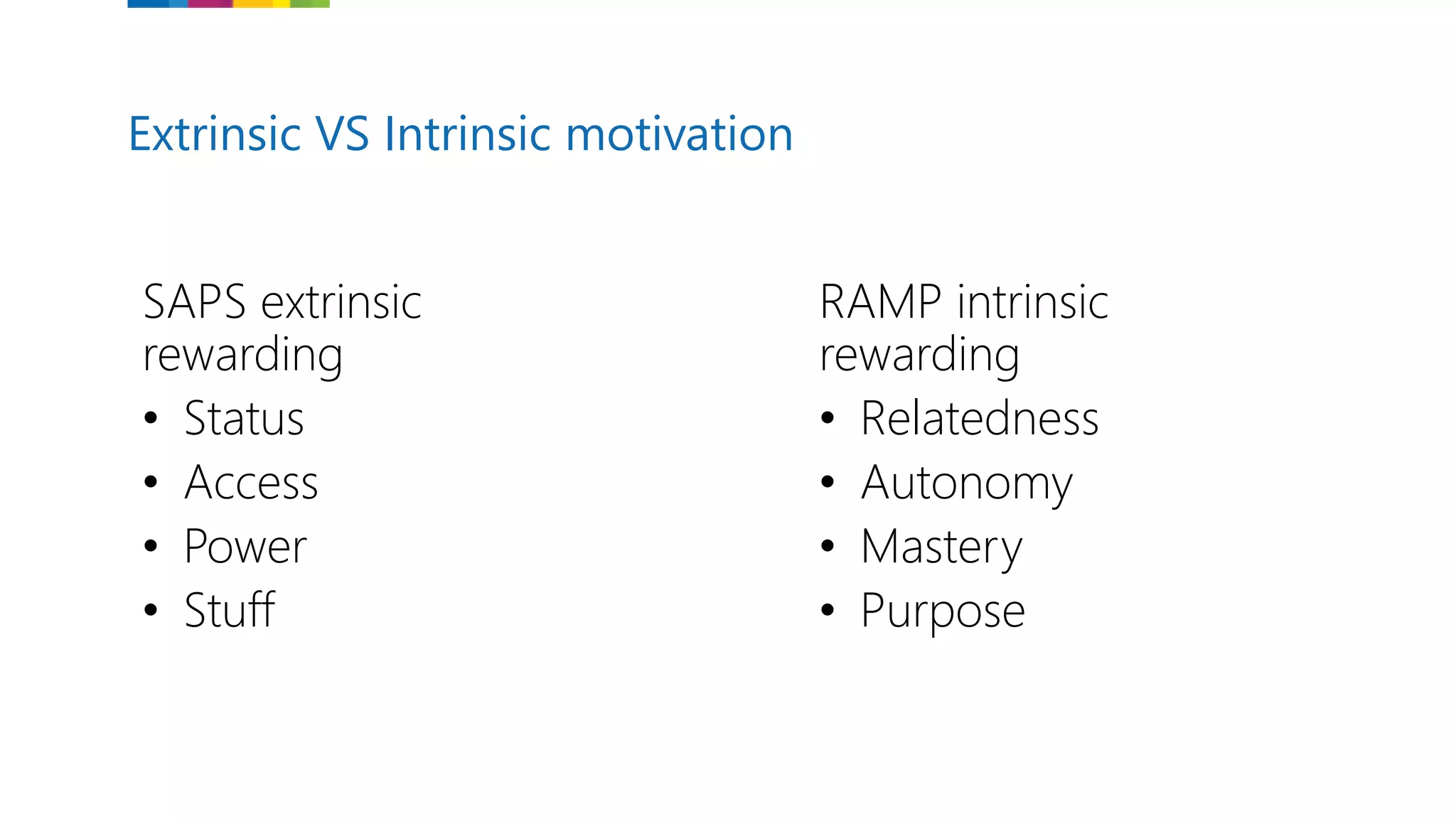
Extrinsic VS Intrinsic motivation
SAPS extrinsic
rewarding
• Status
• Access
• Power
• Stuff
RAMP intrinsic
rewarding
• Relatedness
• Autonomy
• Mastery
• Purpose
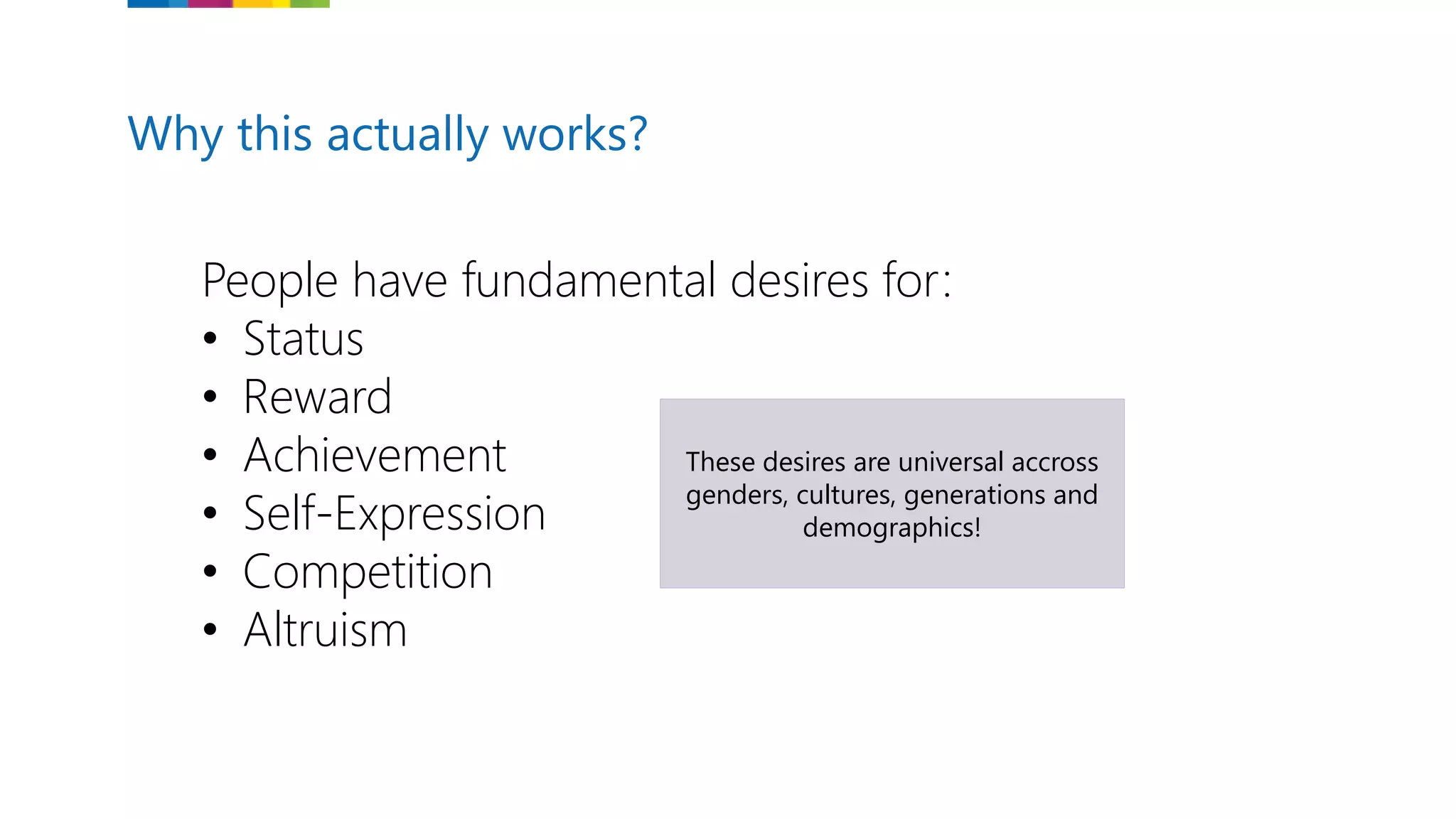
Why this actually works?
People have fundamental desires for:
• Status
• Reward
• Achievement
• Self-Expression
• Competition
• Altruism
These desires are universal accross
genders, cultures, generations and
demographics!
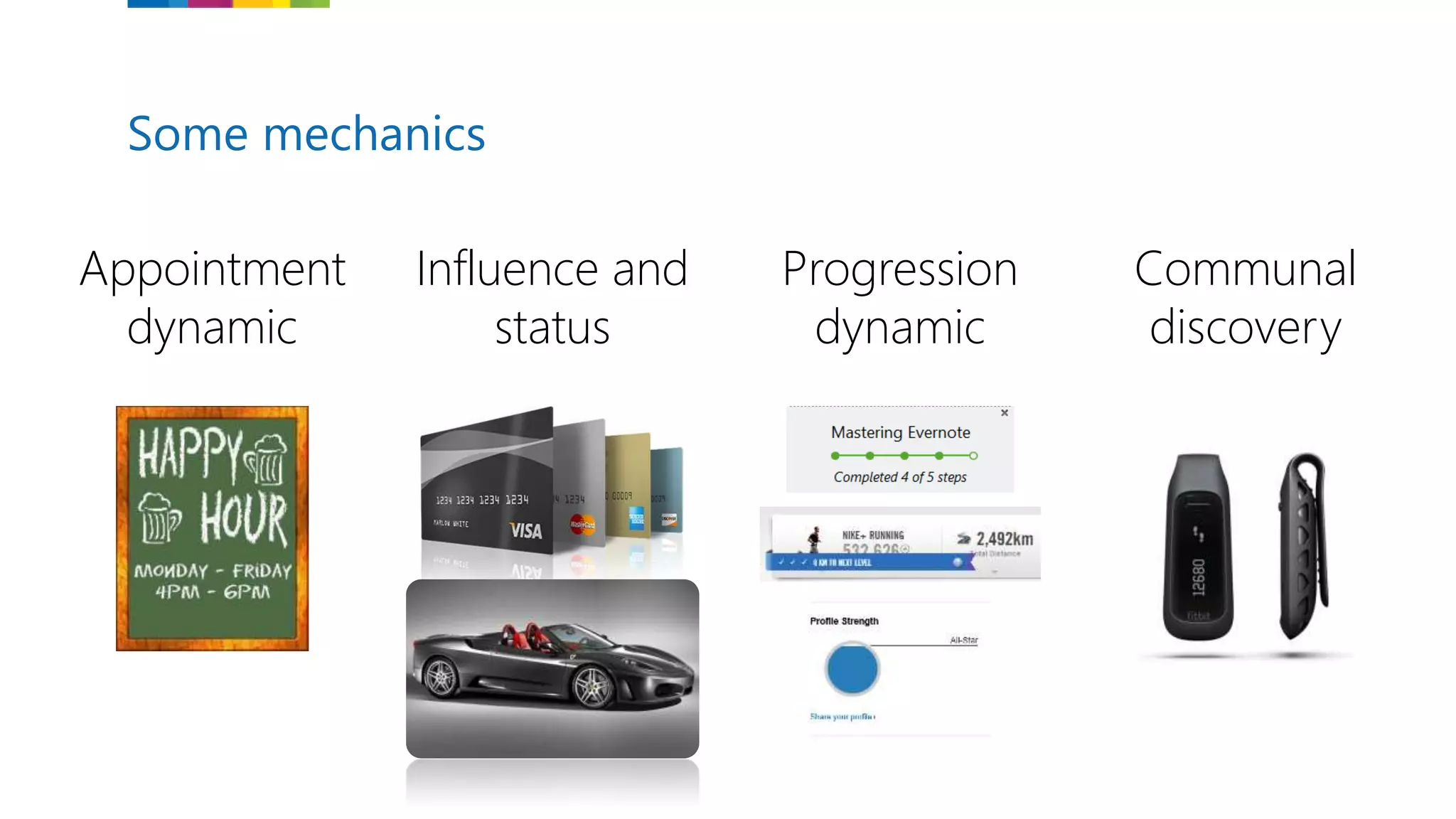
Some mechanics
Appointment
dynamic
Influence and
status
Progression
dynamic
Communal
discovery
You cannot manage what you cannot measure.
Leveraging Advanced Analytics in your
Gamification Strategy
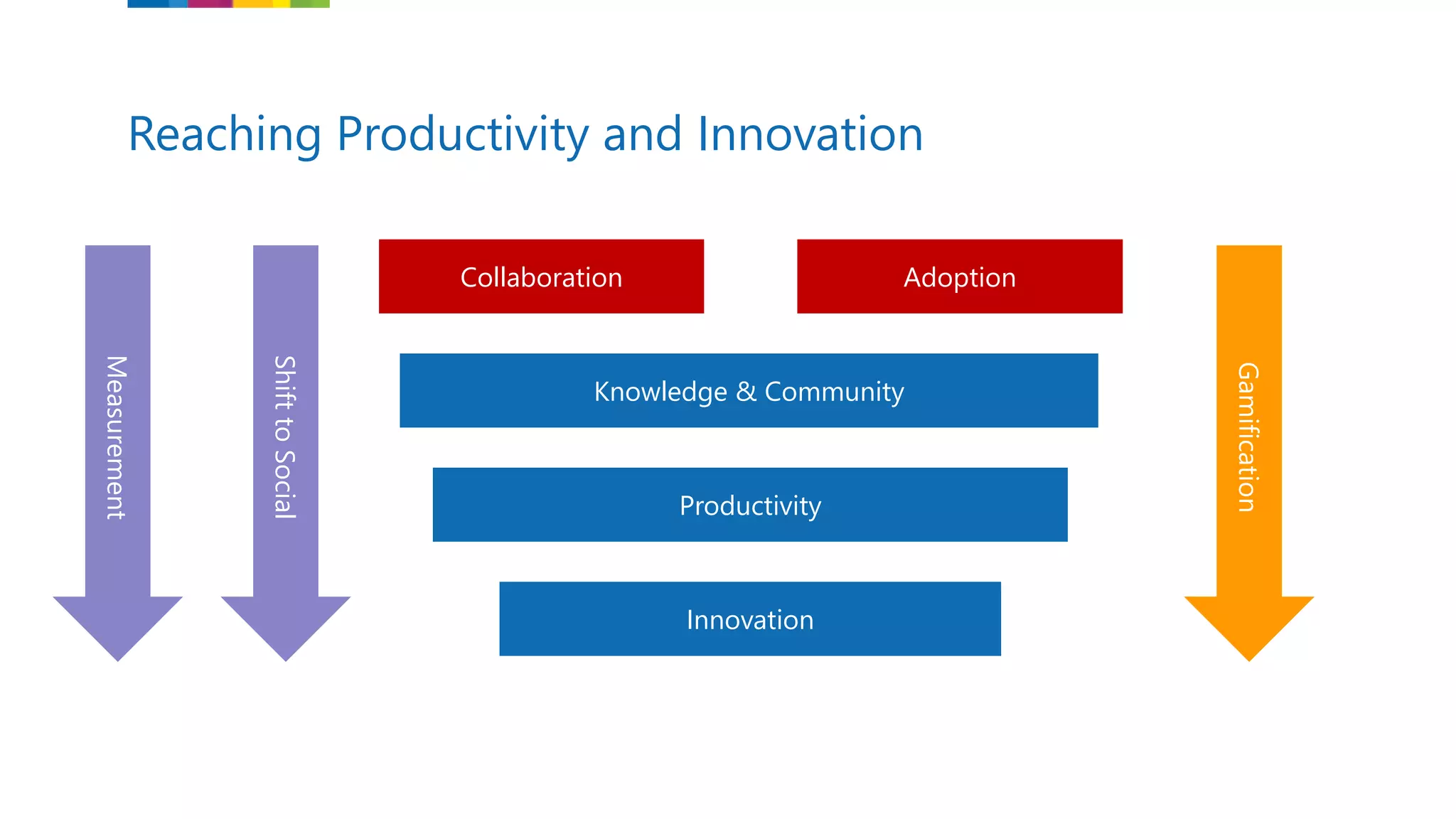
Reaching Productivity and Innovation
Collaboration Adoption
Productivity
Innovation
ShifttoSocial
Measurement
Gamification
Knowledge & Community
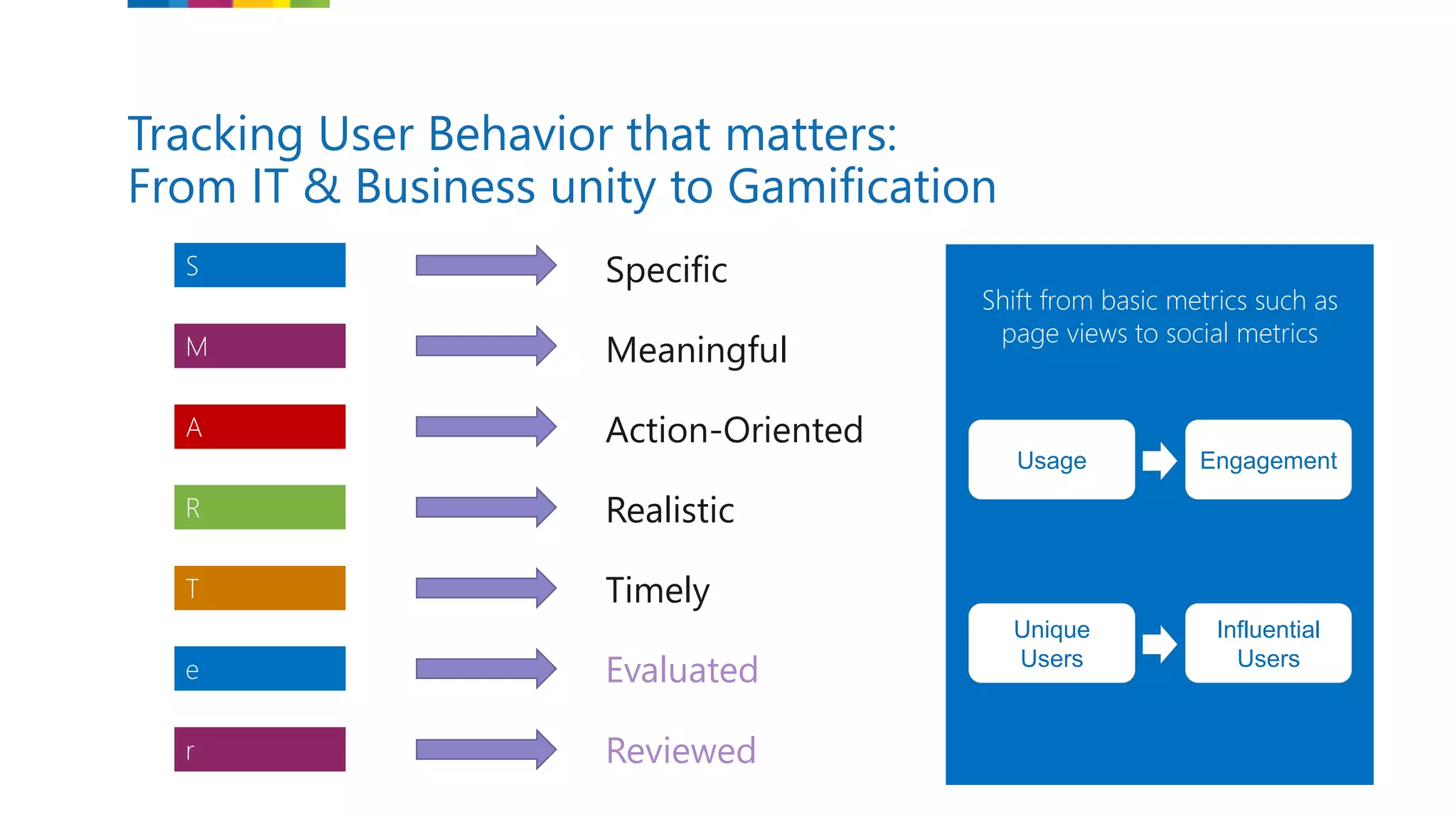
Tracking User Behavior that matters:
From IT & Business unity to Gamification
Specific
Meaningful
Action-Oriented
Realistic
Timely
S
M
A
R
T
e
r
Evaluated
Reviewed
Shift from basic metrics such as
page views to social metrics
Usage Engagement
Unique
Users
Influential
Users
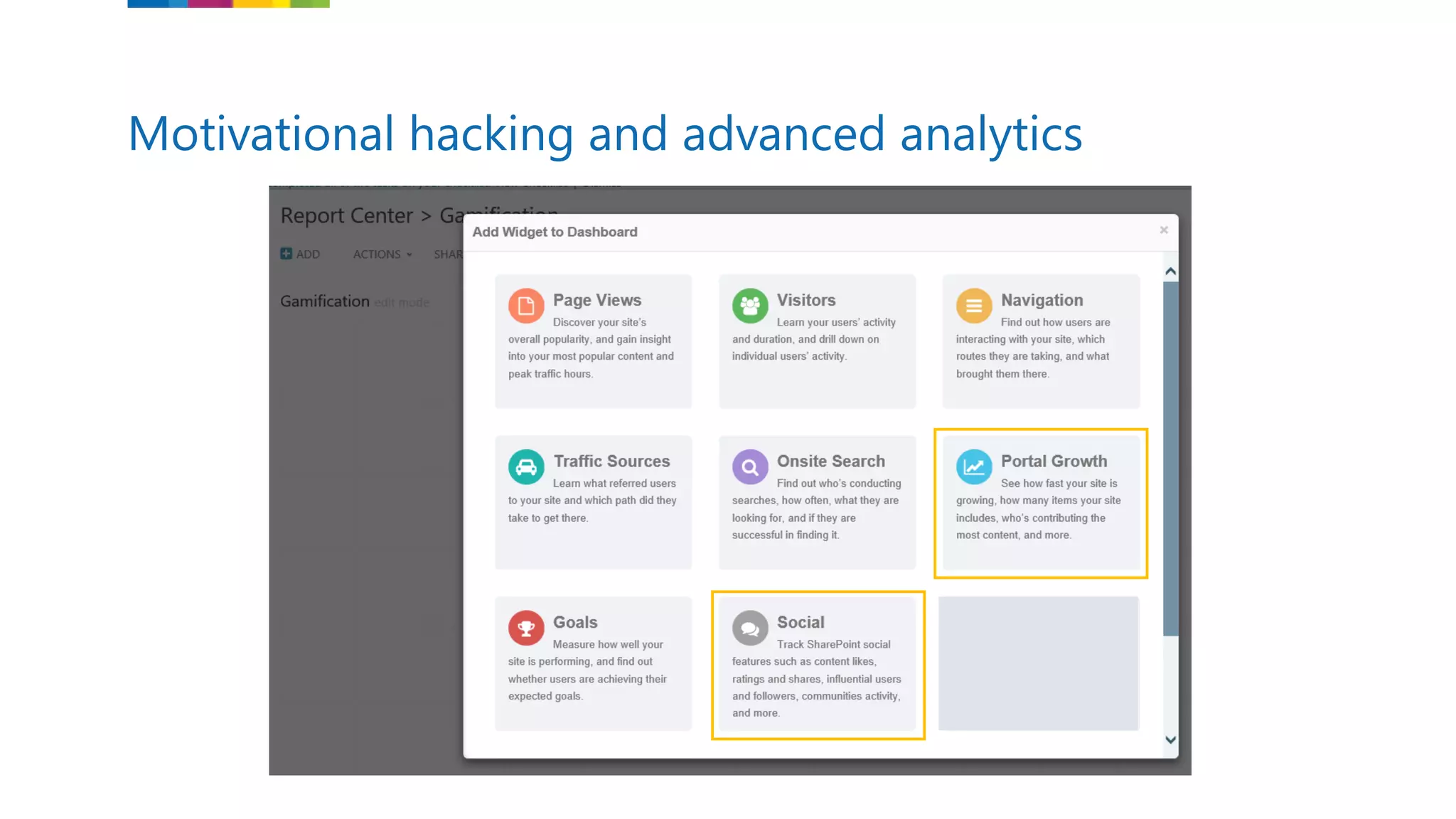
Motivational hacking and advanced analytics
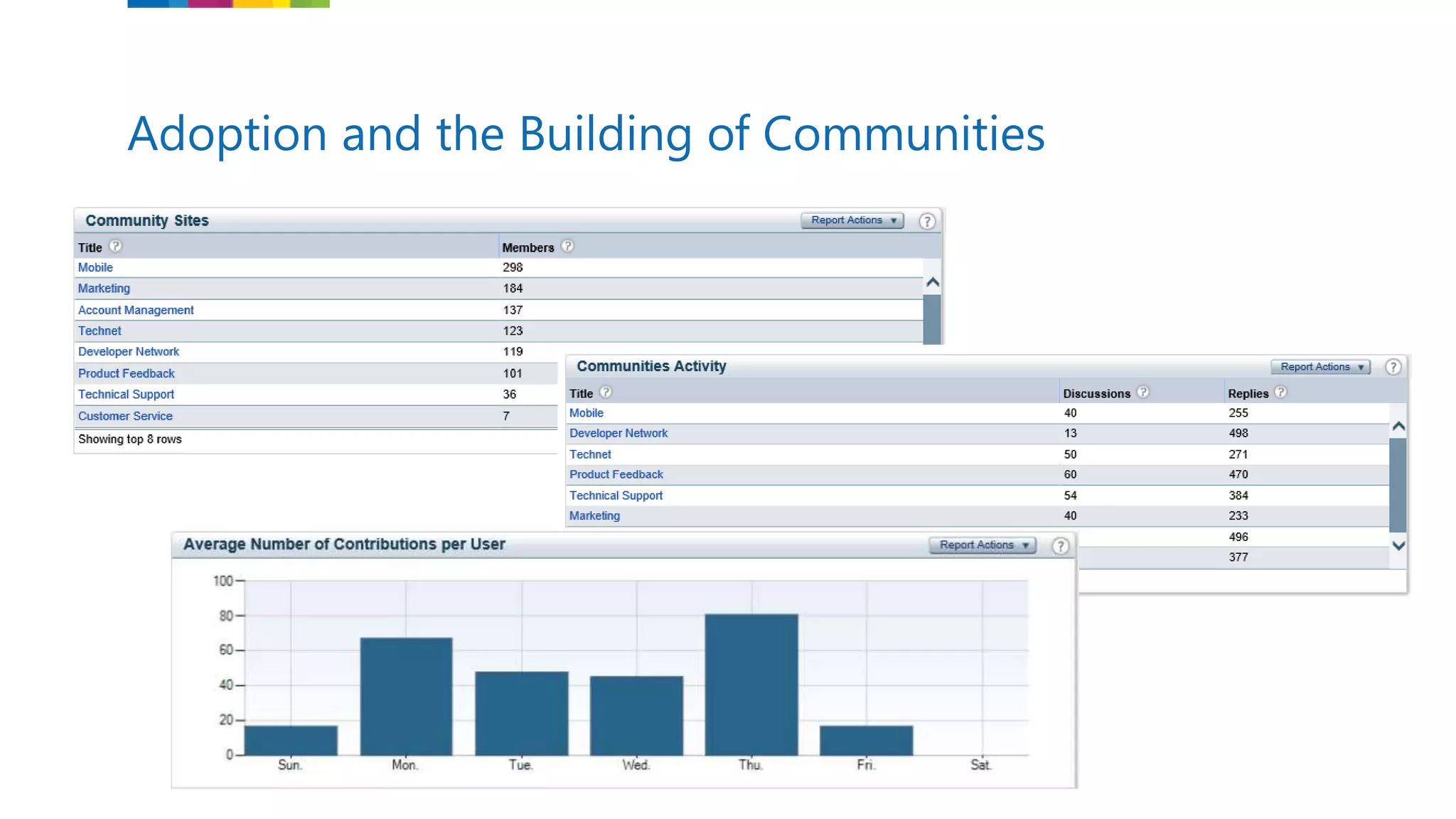
Adoption and the Building of Communities
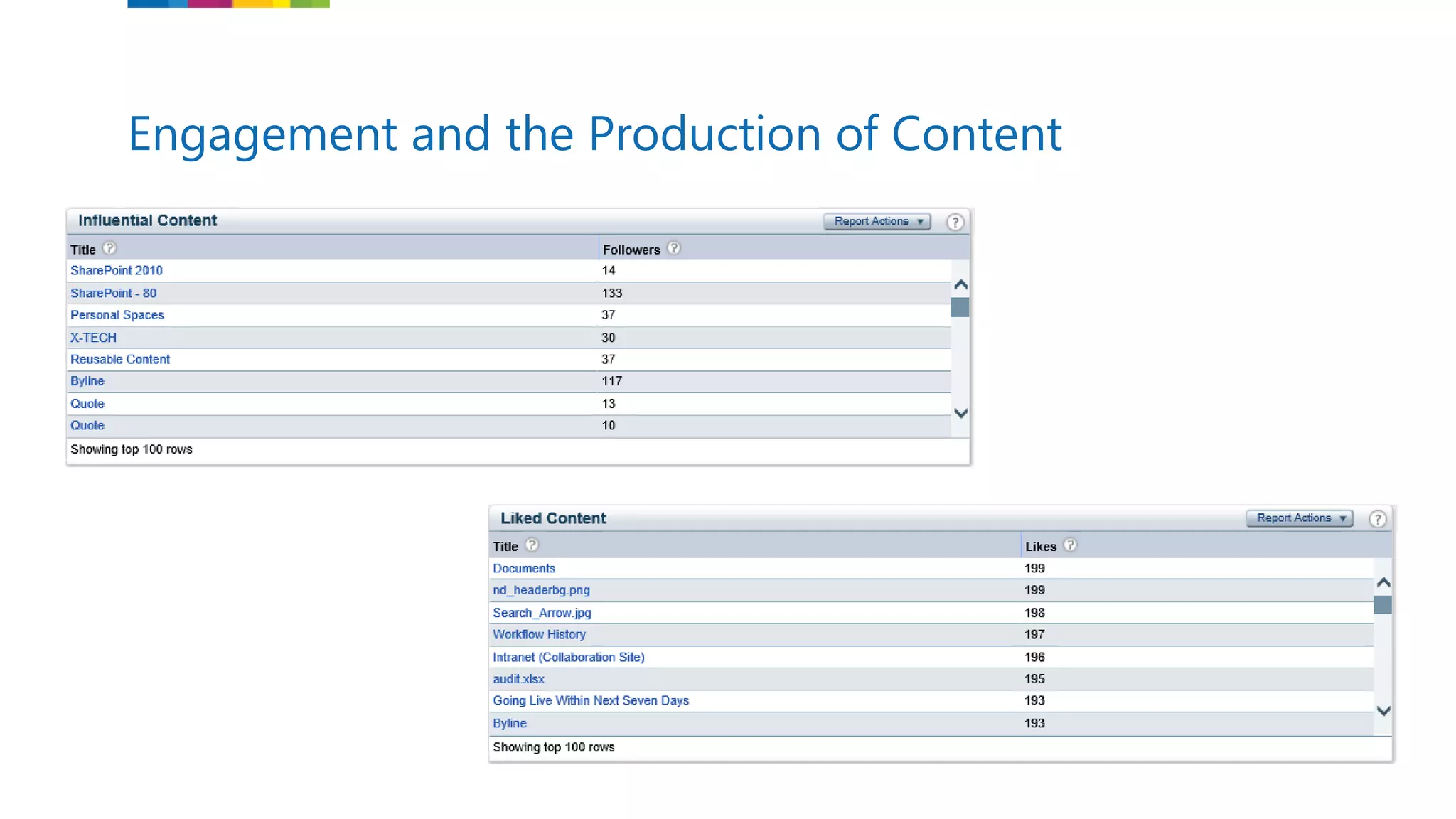
Engagement and the Production of Content
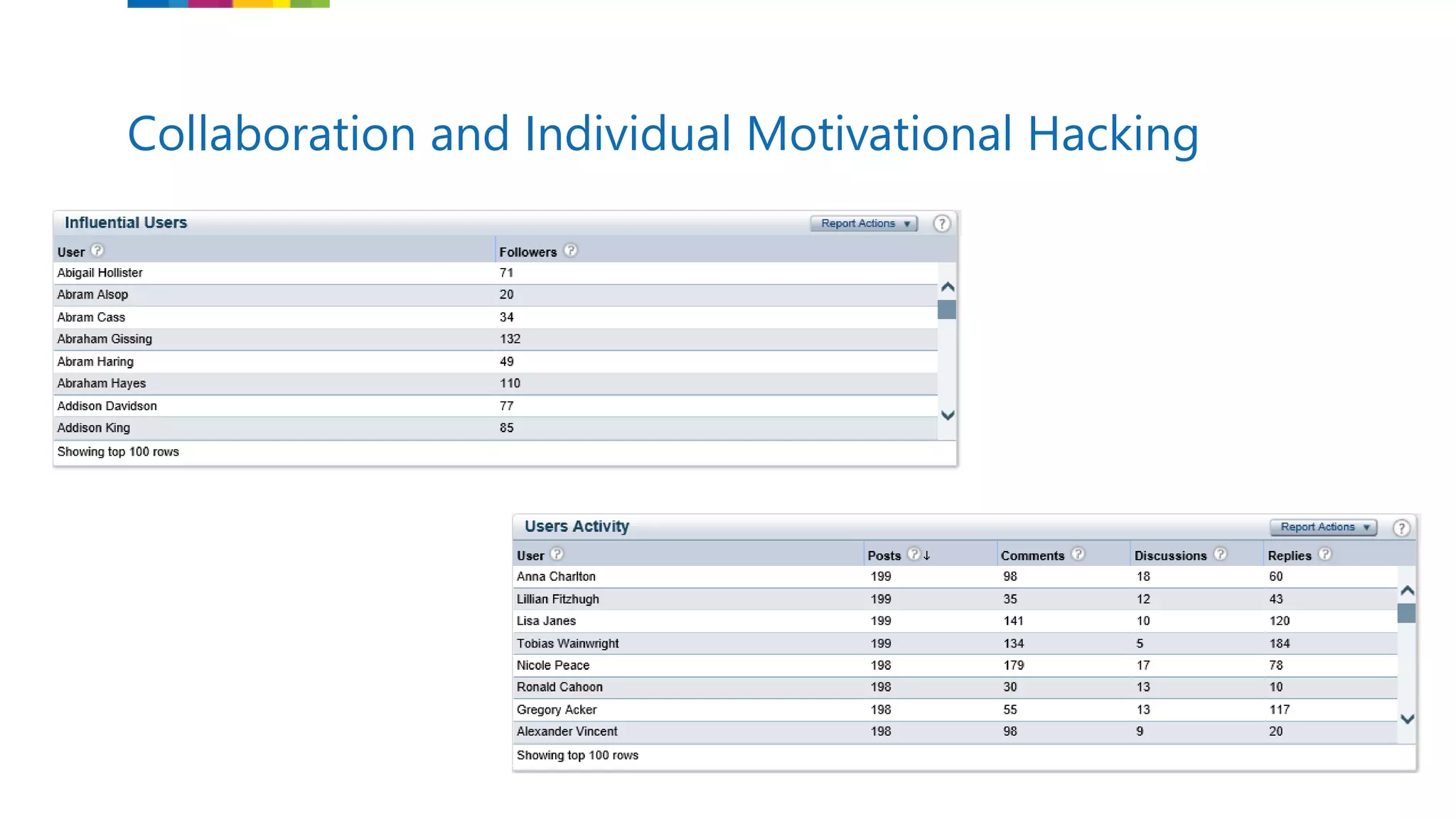
Collaboration and Individual Motivational Hacking
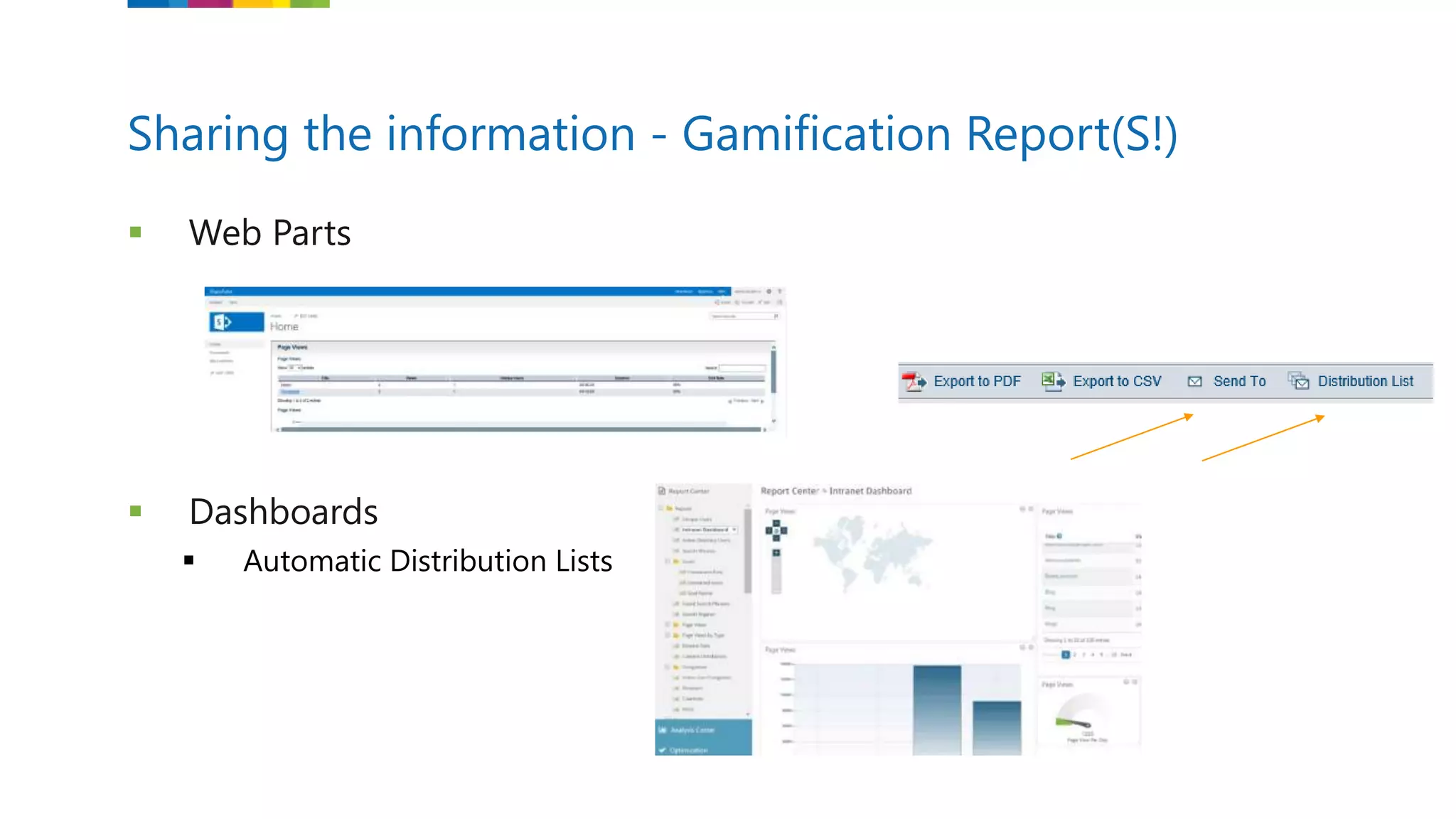
 Web Parts
 Dashboards
 Automatic Distribution Lists
Sharing the information - Gamification Report(S!)
• Try to avoid getting your users lost. They will not come back
once they feel ”stupid”. Even better, create a win-state!
• Feedback, feedback, feedback, feedback, feedback!
• Build products for humans and not to only serve a business
process or goal
• Content AND Context is King. Deliver the right stuff at the right
time and place to your end-users
• Try to reduce ”noise”. Keep stuff simple but not too simple
Conclusion
 Begin by bringing everyone together to create a shared
understanding of what the system should look like
 Always pilot first
 Iterate as you learn
 Review the data, expand the pilot, validate what you’ve learned
 Throughout this process, watch usage patterns very closely, and
discuss what Business users and IT are experiencing, improving
upon what we’ve built
Conclusion
Christian Buckley
cbuck@beezy.net
@buckleyplanet
Thank you!
Tal Ben-David
Tal.ben-david@intlock.com
@cardiolog
Jussi Mori
j.mori@peachesindustries.ch
@jussimori

Gamification: Motivational Hacking for SharePoint

  • 2.
    Christian Buckley CMO atBeezy + Office Servers and Services MVP www.beezy.net @buckleyplanet cbuck@beezy.net www.buckleyplanet.com
  • 3.
    Beezy is thepremier enterprise collaboration solution for Microsoft Office 365 and SharePoint, extending the feature set and improving the user experience for on-premises, cloud, and hybrid deployments. We are on a mission to transform the way people work, and to help employees be more connected, innovative, and happy. Learn more at www.beezy.net or @FollowBeezy on Twitter.
  • 4.
    Jussi Mori at PeachesIndustries www.peachesindustries.com j.mori@peachesindustries.ch @JussiMori
  • 5.
    Peaches Industries isa highly specialized service and solution provider working around the Microsoft Office Server and Office 365 stack. Our main expertise is in solution design, information architecture, user engagement and adoption as well as UI and UX design to make Intranets and its users more effective Learn more at www.peachesindustries.com or follow us on Twitter @PeachesGmbH Our lighthouse product: Gravity – The user engagement Framework • Simple and smooth user adoption • User engagement and motivation engine • Player based content • Empowers “Wellbeing at work” Read more at http://gravity.global
  • 6.
    Tal Ben-David Alliance andPartner Manager at CardioLog Analytics www.intlock.com Tal.ben-david@intlock.com @cardiolog Blog.intlock.com
  • 7.
    CardioLog Analytics, developedby Intlock, is the only on-premises analytics solution for SharePoint/Office 365 serving enterprises, providing deep insight into the performance of web and portal initiatives through testing, tracking and targeting, ultimately enabling you to optimize your site's impact and maximize the return on your investment.
  • 8.
    Business and ITshouldn’t be fighting 10
  • 9.
    When IT andbusiness stakeholders join forces, the possibilities for increased productivity and connectedness grow exponentially.
  • 10.
    The alliance ofIT and Business will not only lead to an enhanced user-centric experience, but also ensures that bridges are built and roadmaps aligned between business goals and IT objectives.
  • 11.
    1. The mostcommon failure in SharePoint implementation has nothing to do with the technology 2. Few organizations have taken the time to understand the measurable value that SharePoint creates 3. You cannot claim success if • You cannot monitor it • You cannot measure it • You do not have mechanisms in place to manage change
  • 12.
     Every SharePointdeployment begins as a business analyst activity  You need to begin with a clear picture of what you are trying to achieve – before you attempt to achieve it  There are no bad ideas  Don’t jump to solutions until you can agree on what is to be solved  Prioritization can be hard  Leverage data from your system  How are people using the system today?  How are they leveraging alternate technologies and systems today?  What is the request backlog? Develop a shared understanding
  • 13.
     Need toestablish core reporting, so you can monitor usage patterns  What the data shows you today will change your priorities for tomorrow  Develop dashboards for your leadership, but be prepared to change based on what you see  As you iterate and refine based on what you learn, there will be less change – and more innovation  Change = course correction, adaptation, refining what you know  Innovation = leveraging what you know to do something new that pushes the business forward Collaborate and Iterate
  • 14.
    The Next Step:Shaping User Behavior
  • 15.
    Get your workforceengaged through the power of games
  • 16.
    Enterprise user adoption andtraining is broken!
  • 17.
    Training and learningenvironments are disconnected from the ”real” work Enterprise software is still percieved as very difficult to use 70% of the workforce is not engaged, or is actively disengaged at work There is a low return on investment (ROI) on current training and change management spend How can we fix this? What’s the proplem?
  • 18.
    Let’s look ata concept called Motivational Hacking ... or also called Gamification
  • 20.
    FoldIt Minecraft Play isthe highest form of research – Albert Einstein The power of games
  • 21.
    What is MotivationalHacking or Gamification? Gamification is the utilization of Game-Like motivational elements in a non-game context. Gamifcation allows the paradigm shift from process or function focused design towards human focused design.
  • 22.
    What motivates us?The 8 core motivational drives Whitehat CD Blackhat CD The Octalysis framework by @yukaichou
  • 23.
    The four phasesof user adoption The Octalysis framework by @yukaichou
  • 24.
    Extrinsic VS Intrinsicmotivation SAPS extrinsic rewarding • Status • Access • Power • Stuff RAMP intrinsic rewarding • Relatedness • Autonomy • Mastery • Purpose
  • 25.
    Why this actuallyworks? People have fundamental desires for: • Status • Reward • Achievement • Self-Expression • Competition • Altruism These desires are universal accross genders, cultures, generations and demographics!
  • 26.
  • 27.
    You cannot managewhat you cannot measure.
  • 28.
    Leveraging Advanced Analyticsin your Gamification Strategy
  • 29.
    Reaching Productivity andInnovation Collaboration Adoption Productivity Innovation ShifttoSocial Measurement Gamification Knowledge & Community
  • 30.
    Tracking User Behaviorthat matters: From IT & Business unity to Gamification Specific Meaningful Action-Oriented Realistic Timely S M A R T e r Evaluated Reviewed Shift from basic metrics such as page views to social metrics Usage Engagement Unique Users Influential Users
  • 31.
    Motivational hacking andadvanced analytics
  • 32.
    Adoption and theBuilding of Communities
  • 33.
    Engagement and theProduction of Content
  • 34.
    Collaboration and IndividualMotivational Hacking
  • 35.
     Web Parts Dashboards  Automatic Distribution Lists Sharing the information - Gamification Report(S!)
  • 36.
    • Try toavoid getting your users lost. They will not come back once they feel ”stupid”. Even better, create a win-state! • Feedback, feedback, feedback, feedback, feedback! • Build products for humans and not to only serve a business process or goal • Content AND Context is King. Deliver the right stuff at the right time and place to your end-users • Try to reduce ”noise”. Keep stuff simple but not too simple Conclusion
  • 37.
     Begin bybringing everyone together to create a shared understanding of what the system should look like  Always pilot first  Iterate as you learn  Review the data, expand the pilot, validate what you’ve learned  Throughout this process, watch usage patterns very closely, and discuss what Business users and IT are experiencing, improving upon what we’ve built Conclusion
  • 38.
    Christian Buckley cbuck@beezy.net @buckleyplanet Thank you! TalBen-David Tal.ben-david@intlock.com @cardiolog Jussi Mori j.mori@peachesindustries.ch @jussimori

Editor's Notes

  • #23 Foldit: Mason-Pfitzer Monkey Virus / Crystal Structure Proteine, Took players 10 days to crack the structure. Scientists could not do for 15 years.
  • #32 Improving Collaboration & Adoption still the secret to a successful intranet, one that serves as a detailed knowledge hub but also leads to increased employee productivity and all the good stuff that comes with increased employee productivity. In our previous webinars in this series we spent time drilling down into how you can only improve what you can measure and (2) while this still holds true there needs to be a shift to a more social mindset, be it in your analytics strategy or improving out of the box social capabilities. We have now introduced the exciting gamification element that in a way can be seen as the secret fuel in the mechanism of driving increased productivity and individual employee innovation.
  • #33 It is important to recap the measurement pillar, the fact that any analytics strategy needs to be underpinned by SMART goals. In our last webinar we spoke about how SMARTER goals (1) (2) is infact the more correct term for a working analytics strategy. We focused on giving some examples of what is meant by the “shift to social” (3)…. And really whats important to stress here is that what has been focused on previous webinars is still a foundation for when we speak of Gamification and looking back to trying to improve IT and Business collaboration. So really no matter what topic we are speaking of increasing and tracking user behavior that matters is always going to be at the core. Of course this is often easier said then done, because for every organization and every intranet, strategies and behavior differs…
  • #34 So lets refine how we can focus some of our gamification initiatives when it comes to our Intranet using advanced analytics. We really want to try ensure that we use metrics that fall into categories that can be linked to clear KPI’s (or SMARTER goals) and also ensure that Social is still at the heart of our metrics. (1) This is why it is likely that the focus will be on more portal growth metrics, things like community activity and social metrics that can be clearly tied back to individual employee engagement and adoption.
  • #35 If we drill down into what I will call “portal growth” metrics, we start to get an idea of community development. These metrics can be more targeted to team leaders, site owners or even company divisions. Are people contributing and which ones are active and leading to discussion? Once we know this we can drill down deeper into who these influential users, leverage them to help spread ideas. Also what is the influential content, can we pick out something innovative in the highly discussed topics, lets make more of this content available on portal etc.
  • #36 Speaking of drilling down and Surfacing the content ….. We can see how easy it is to drill down to a content level and pick out something innovative in the highly discussed topics, lets make more of this content available on portal, lets publicly recognize communities and content that generated activity. - What I did not show here is how easy it is to tie back this content to a specific contributor, and this is where the gamification (i.e. self fulfillment) becomes interesting. Perhaps adding a column of content contributor could make these winning metrics when thinking of motivational hacking.
  • #37 If we now focus on the second box, of Social activity, we can directly focus on the user and his/her social activity. Who are the interesting employees that others want to follow. Who are the employees that spend time browsing content, learning, re using, contributing, improving and motivating other employees through all this activity. Again lets recognize these employees.
  • #38 I think those metrics give a clear idea of how we can easily use analytics within and intranet environment and give employees ‘stature’, ensure they see a link between collaboration and PERSONAL growth. If we focus on distribution, once we have created reports in the context of gamification. How do we ensure the information is visible to whoever needs to see it… Web parts Distribution Lists NB: Not every approach to gamification is going to work. Some employees may find certain ratings/tasks trivial while others may not. Often the trick is to follow a lean method, pilot reports and initiatives, often multiple pilots at the same time (reportS). - Having a report centre to organize these reports is crucial.