Giant Viruses
The recent discovery of really big viruses is changing views about
the nature of viruses and the history of life
Outlines
• The Discovery of Giant Viruses
• Size of viruses and Giant viruses
• Comparison of genome sizes
• Common Features and Habitat
• The role of Giant viruses in ecology and medicine
The Discovery of Giant Viruses
• During a study following a pneumonia (that causes by Legionella
Bacteria) outbreaking in 1992 in England.
• During that research, A strange microorganism observed by gram
stain and mistakenly thought to be a Gram positive bacterium. As
a consequence it was named Bradford coccus.
• In 2003 in Marseille(France) they observed it was A virus not
Bacteria they renamed (Mimivirus). Acanthamoeba polyphaga
mimivirus (APMV).
* Acanthamoeba is a genus of amoebae that are commonly recovered from soil, fresh water
Mimivirus
• Mimivirus is one of the largest virus ever discovered. Giant viruses
had been known for a few years.
• Many of them in a group termed nucleo-cytoplasmic large DNA
viruses (NCLDVs).
• Because they are often able to replicate in both the host's cell
nucleus and cytoplasm.
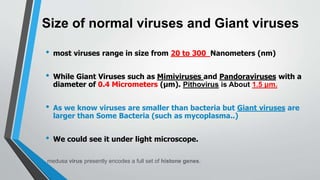
Size of normal viruses and Giant viruses
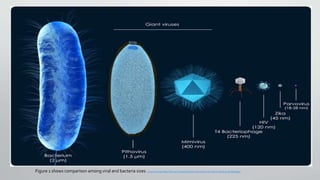
• most viruses range in size from 20 to 300 Nanometers (nm)
• While Giant Viruses such as Mimiviruses and Pandoraviruses with a
diameter of 0.4 Micrometers (µm). Pithovirus is About 1.5 μm.
• As we know viruses are smaller than bacteria but Giant viruses are
larger than Some Bacteria (such as mycoplasma..)
• We could see it under light microscope.
medusa virus presently encodes a full set of histone genes.
Figure 1 shows comparison among viral and bacteria sizes .Giant Viruses May Play an Intriguing Role in Evolution of Life on Earth | Lab Manager
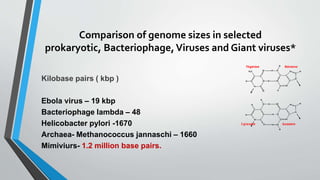
Comparison of genome sizes in selected
prokaryotic, Bacteriophage,Viruses and Giant viruses*
Kilobase pairs ( kbp )
Ebola virus – 19 kbp
Bacteriophage lambda – 48
Helicobacter pylori -1670
Archaea- Methanococcus jannaschi – 1660
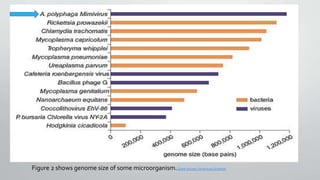
Mimiviurs- 1.2 million base pairs.
Figure 2 shows genome size of some microorganism.Giant Viruses | American Scientist
Common Features And habitat
• All giant viruses belong to the dsDNA group.
• Almost all have been detected they are living inside Amoeba.
• Now, researchers have found entire giant virus genomes embedded in
the genomes of several common algae.
• These giant viruses are classified into several families:
Mimiviridae, Pithoviridae, Pandoraviridae,Phycodnaviridae.
Virus Infect another Virus !
• As we know viruses are infecting Human, Plant, Bacteria(Bacteriophage)..
But Virus-infecting viruses ( virophage ) it is seems Strange!
• In 2008 A group of researchers they discover small virus infect giant virus.
• The virophage was named Sputnik (50 nm in diameter)and its replication relied
entirely on the giant virus.
• co-infection of ACMV and its cytoplasmic replication machinery. Sputnik was
also discovered to have an inhibitory effect on ACMV and improved the
survival of the host.
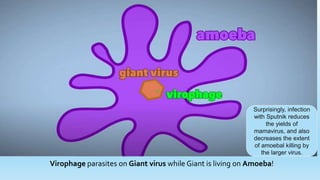
Virophage parasites on Giant virus while Giant is living on Amoeba!
Surprisingly, infection
with Sputnik reduces
the yields of
mamavirus, and also
decreases the extent
of amoebal killing by
the larger virus.
The role of GiantViruses ecology and
Medicine
• Despite their prevalence, the impact of giant viruses on human health deserves
further investigation.
• Some initial reports show that APMV giant virus is able to replicate in human
peripheral blood cells and to induce the interferon system.
• Also they determined many of giant viruses in Gut microbiome, but they do not
know their compositions and roles.
• Reports are accumulating on the presence of giant viral sequences in human
blood, as well as antibodies against giant viral proteins.
• The researchers are ongoing to know their rule in ecology..
Evolutionary History of Mimivirus
• Until now there are No evidence to show us the origin of Giant viruses
some thought may have evolved from a more independent ancestor.
• Also they argue, Mimivirus lost some genes associated with translation
as it became more dependent on its host.
• even some researchers argue that we should reclassify all biological
entities into two major groups:
• the ribosome-encoding organisms (archaea, bacteria, and eukaryotes)
and
• the capsid-encoding organisms (viruses).
Thank you

Giant viruses.pptx

  • 1.
    Giant Viruses The recentdiscovery of really big viruses is changing views about the nature of viruses and the history of life
  • 2.
    Outlines • The Discoveryof Giant Viruses • Size of viruses and Giant viruses • Comparison of genome sizes • Common Features and Habitat • The role of Giant viruses in ecology and medicine
  • 3.
    The Discovery ofGiant Viruses • During a study following a pneumonia (that causes by Legionella Bacteria) outbreaking in 1992 in England. • During that research, A strange microorganism observed by gram stain and mistakenly thought to be a Gram positive bacterium. As a consequence it was named Bradford coccus. • In 2003 in Marseille(France) they observed it was A virus not Bacteria they renamed (Mimivirus). Acanthamoeba polyphaga mimivirus (APMV). * Acanthamoeba is a genus of amoebae that are commonly recovered from soil, fresh water
  • 4.
    Mimivirus • Mimivirus isone of the largest virus ever discovered. Giant viruses had been known for a few years. • Many of them in a group termed nucleo-cytoplasmic large DNA viruses (NCLDVs). • Because they are often able to replicate in both the host's cell nucleus and cytoplasm.
  • 5.
    Size of normalviruses and Giant viruses • most viruses range in size from 20 to 300 Nanometers (nm) • While Giant Viruses such as Mimiviruses and Pandoraviruses with a diameter of 0.4 Micrometers (µm). Pithovirus is About 1.5 μm. • As we know viruses are smaller than bacteria but Giant viruses are larger than Some Bacteria (such as mycoplasma..) • We could see it under light microscope. medusa virus presently encodes a full set of histone genes.
  • 6.
    Figure 1 showscomparison among viral and bacteria sizes .Giant Viruses May Play an Intriguing Role in Evolution of Life on Earth | Lab Manager
  • 7.
    Comparison of genomesizes in selected prokaryotic, Bacteriophage,Viruses and Giant viruses* Kilobase pairs ( kbp ) Ebola virus – 19 kbp Bacteriophage lambda – 48 Helicobacter pylori -1670 Archaea- Methanococcus jannaschi – 1660 Mimiviurs- 1.2 million base pairs.
  • 8.
    Figure 2 showsgenome size of some microorganism.Giant Viruses | American Scientist
  • 9.
    Common Features Andhabitat • All giant viruses belong to the dsDNA group. • Almost all have been detected they are living inside Amoeba. • Now, researchers have found entire giant virus genomes embedded in the genomes of several common algae. • These giant viruses are classified into several families: Mimiviridae, Pithoviridae, Pandoraviridae,Phycodnaviridae.
  • 10.
    Virus Infect anotherVirus ! • As we know viruses are infecting Human, Plant, Bacteria(Bacteriophage).. But Virus-infecting viruses ( virophage ) it is seems Strange! • In 2008 A group of researchers they discover small virus infect giant virus. • The virophage was named Sputnik (50 nm in diameter)and its replication relied entirely on the giant virus. • co-infection of ACMV and its cytoplasmic replication machinery. Sputnik was also discovered to have an inhibitory effect on ACMV and improved the survival of the host.
  • 11.
    Virophage parasites onGiant virus while Giant is living on Amoeba! Surprisingly, infection with Sputnik reduces the yields of mamavirus, and also decreases the extent of amoebal killing by the larger virus.
  • 12.
    The role ofGiantViruses ecology and Medicine • Despite their prevalence, the impact of giant viruses on human health deserves further investigation. • Some initial reports show that APMV giant virus is able to replicate in human peripheral blood cells and to induce the interferon system. • Also they determined many of giant viruses in Gut microbiome, but they do not know their compositions and roles. • Reports are accumulating on the presence of giant viral sequences in human blood, as well as antibodies against giant viral proteins. • The researchers are ongoing to know their rule in ecology..
  • 13.
    Evolutionary History ofMimivirus • Until now there are No evidence to show us the origin of Giant viruses some thought may have evolved from a more independent ancestor. • Also they argue, Mimivirus lost some genes associated with translation as it became more dependent on its host. • even some researchers argue that we should reclassify all biological entities into two major groups: • the ribosome-encoding organisms (archaea, bacteria, and eukaryotes) and • the capsid-encoding organisms (viruses).
  • 14.