Question 1B
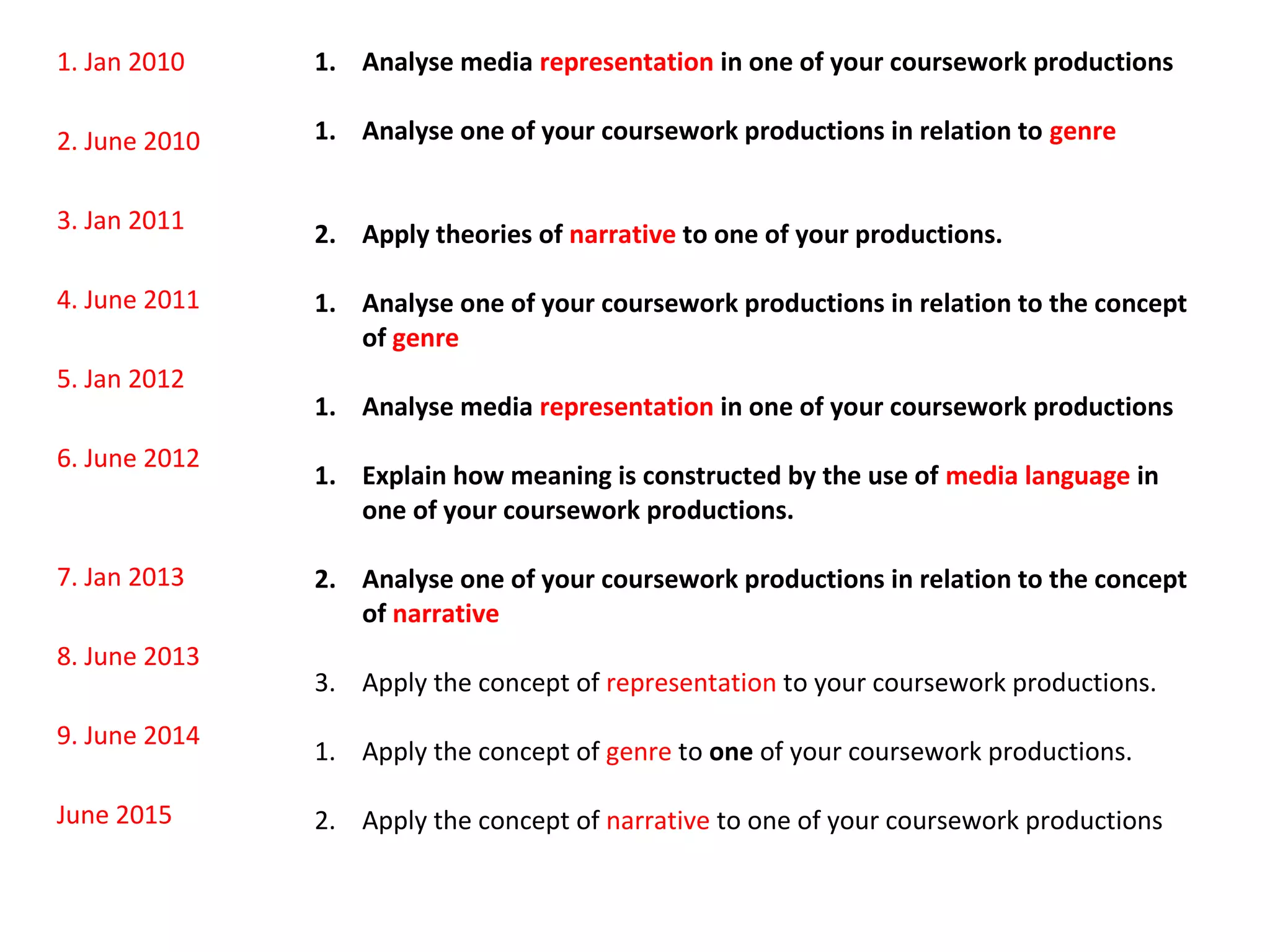
1. Jan 2010
2. June 2010
3. Jan 2011
4. June 2011
5. Jan 2012
6. June 2012
7. Jan 2013
8. June 2013
9. June 2014
June 2015
1. Analyse media representation in one of your coursework productions
1. Analyse one of your coursework productions in relation to genre
2. Apply theories of narrative to one of your productions.
1. Analyse one of your coursework productions in relation to the concept
of genre
1. Analyse media representation in one of your coursework productions
1. Explain how meaning is constructed by the use of media language in
one of your coursework productions.
2. Analyse one of your coursework productions in relation to the concept
of narrative
3. Apply the concept of representation to your coursework productions.
1. Apply the concept of genre to one of your coursework productions.
2. Apply the concept of narrative to one of your coursework productions
1(b)
• In this question you will be asked to apply one of the
following theoretical concepts to either your AS or A2
coursework:
– Representation
– Audience
– Narrative
– Genre
– Media Language
For this question you
choose either your AS
or A2 coursework to
discuss.
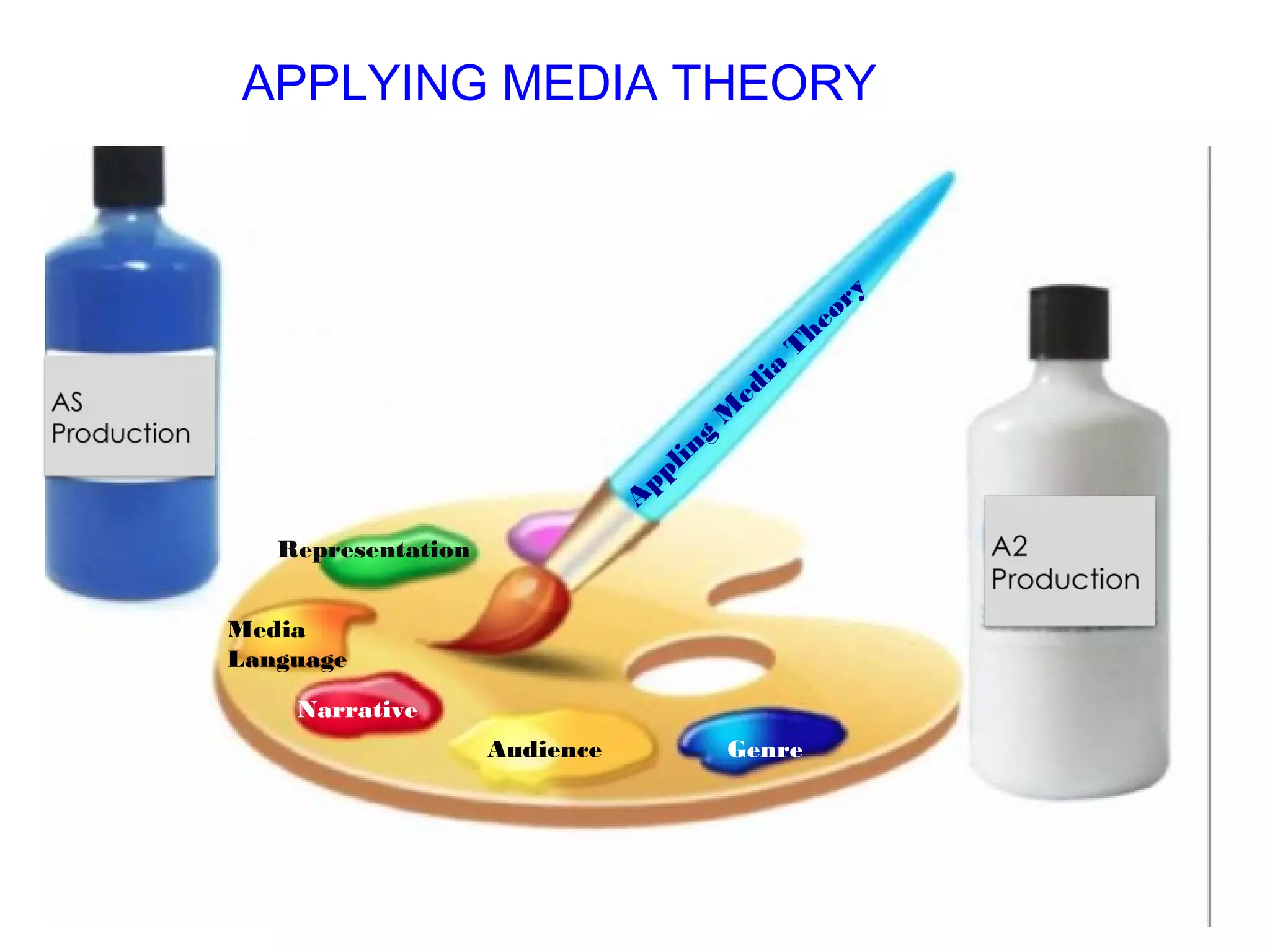
APPLYING MEDIA THEORY
GenreAudience
Narrative
Media
Language
Representation
A
ppling
M
edia
T
heory
1(b) Examiner’s Advice
Stronger answers do 3 things well:
 Outline the concept for discussion with
reference to relevant theorists
 Apply these ideas to a range of specific
elements from your coursework
 Discuss how well the concept/theories
relate to your product
Poor answers will lack reference to theory and
specific answers.
Choice of text is important.
1(b) Examiner’s Checklist- What They
Looking For
 Understanding of concept
 Relate concept to examples from your coursework
 Range of specific, clear relevant examples
 Use conceptual language and media terminology
throughout
 Reference to theorists
 Evaluation of usefulness of concept/theory to your
production
 This question is worth 25 marks. You should spend 30
minutes answering it.
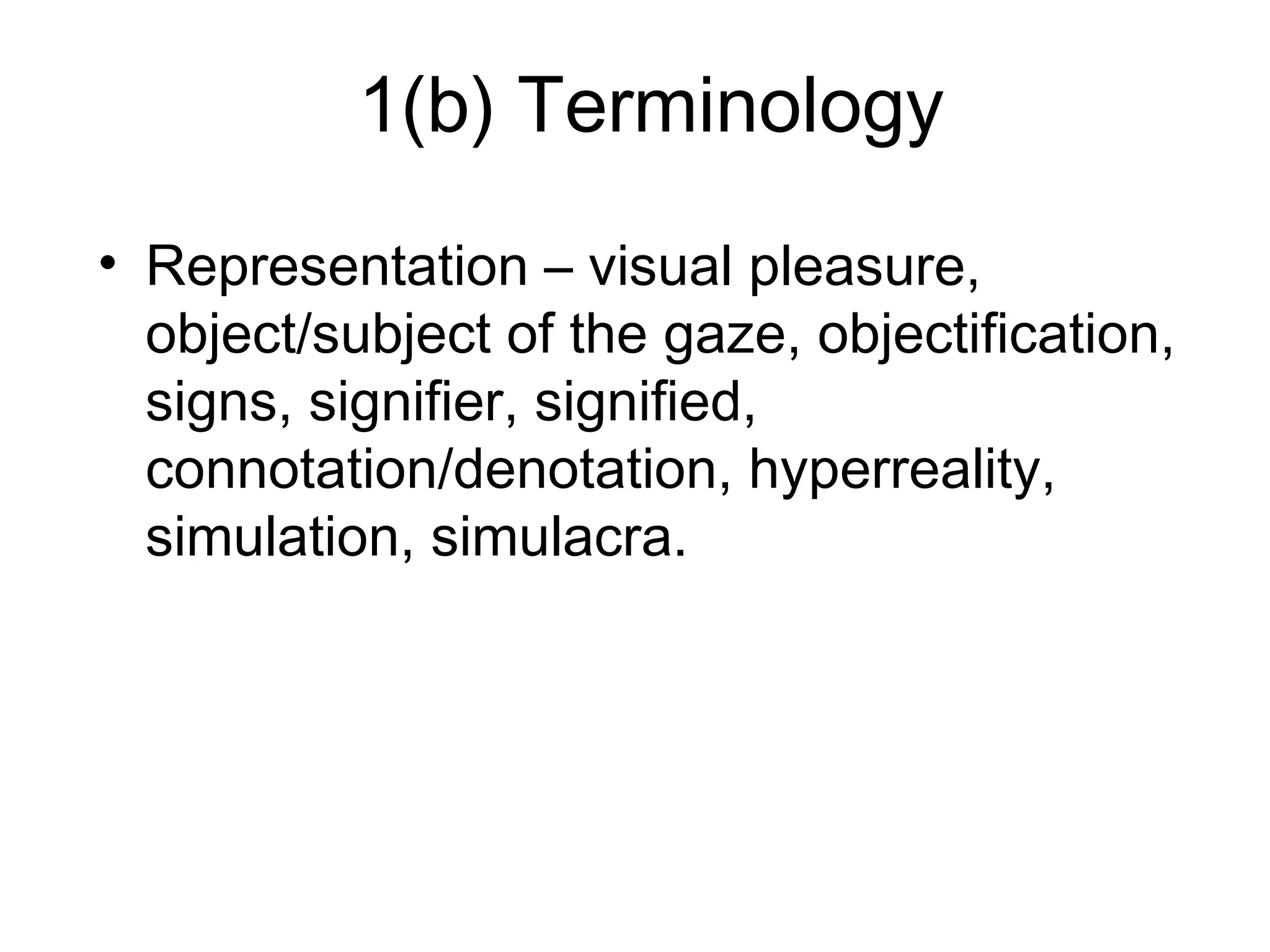
1(b) Terminology
• Representation – visual pleasure,
object/subject of the gaze, objectification,
signs, signifier, signified,
connotation/denotation, hyperreality,
simulation, simulacra.
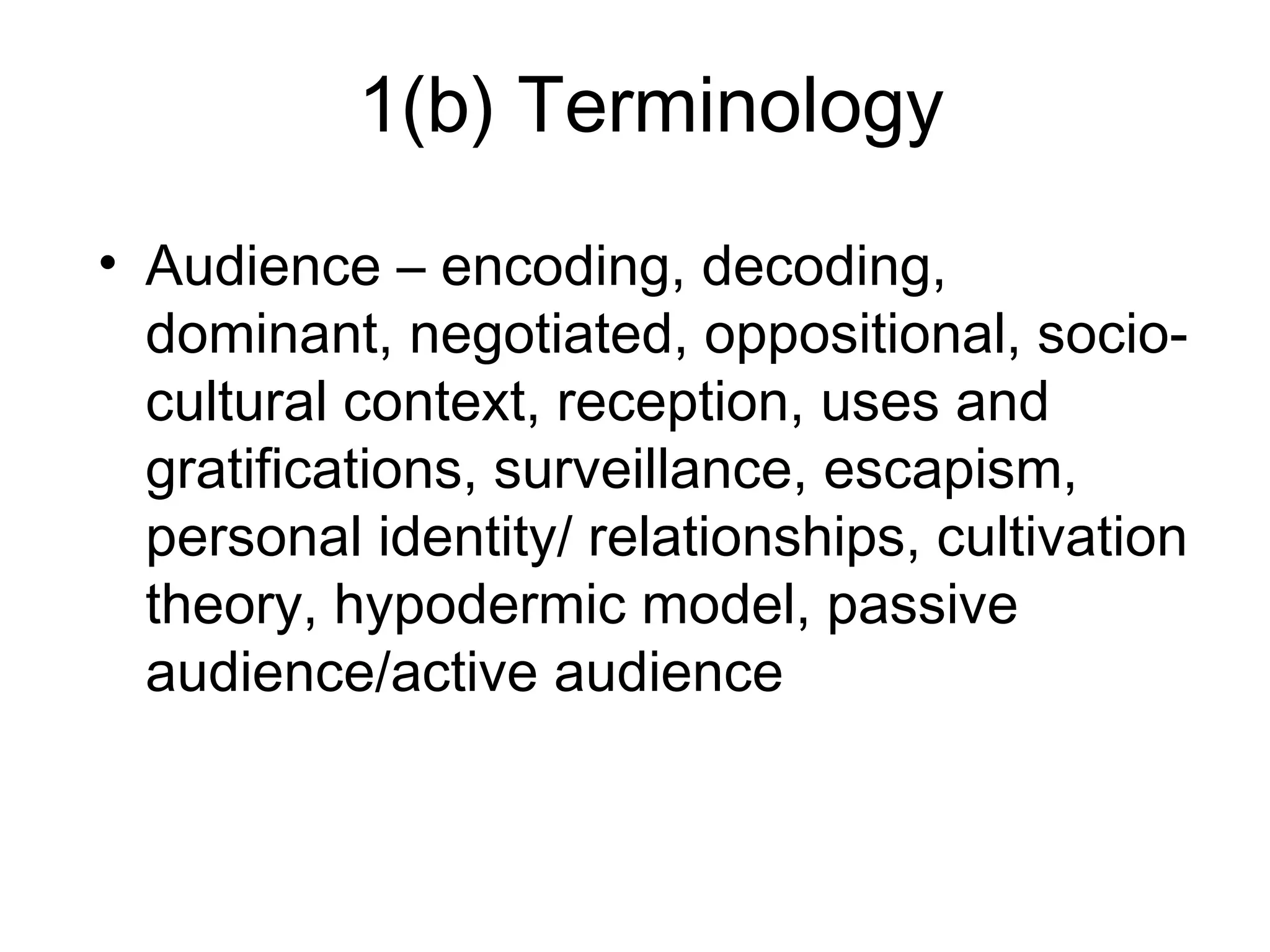
1(b) Terminology
• Audience – encoding, decoding,
dominant, negotiated, oppositional, socio-
cultural context, reception, uses and
gratifications, surveillance, escapism,
personal identity/ relationships, cultivation
theory, hypodermic model, passive
audience/active audience
1(b) Terminology
• Narrative – character types, hero, villain,
princess, etc., equilibrium, disequilibrium,
resolution, binary oppositions, narrative
codes, action, enigma, semic, symbolic,
cultural.
1(b) Terminology
• Genre – convention, iconography, codes,
product differentiation, capitalist, systems
of expectation and intelligibility, socio-
cultural, myths, genre supervises the
relationship between producer and
audience
1(b) Media Language
Production Terminology - effect of technical
choices
 Print Media
 Moving Image
 Online Media
Use of genre conventions
Use of narrative structures/codes
Encoding of meaning- using varying processes of
signification including camera movement, angles
and framing of shots, editing, mise en scene and
sound.
1(b) Terminology
• You may be able to link terminology from
other concepts into your discussion, e.g.:
– Encoding of representations
– Use of iconography to encode meaning, and
communicate narrative information
– Use of character types in representation
– Signifer, signified, dennotation, connotation,
creation of desired readings, mediation and
ideology etc.
– Accurate use of production terms (think of your
AS exams).

G325 Q1 B INTRO

  • 1.
  • 2.
    1. Jan 2010 2.June 2010 3. Jan 2011 4. June 2011 5. Jan 2012 6. June 2012 7. Jan 2013 8. June 2013 9. June 2014 June 2015 1. Analyse media representation in one of your coursework productions 1. Analyse one of your coursework productions in relation to genre 2. Apply theories of narrative to one of your productions. 1. Analyse one of your coursework productions in relation to the concept of genre 1. Analyse media representation in one of your coursework productions 1. Explain how meaning is constructed by the use of media language in one of your coursework productions. 2. Analyse one of your coursework productions in relation to the concept of narrative 3. Apply the concept of representation to your coursework productions. 1. Apply the concept of genre to one of your coursework productions. 2. Apply the concept of narrative to one of your coursework productions
  • 3.
    1(b) • In thisquestion you will be asked to apply one of the following theoretical concepts to either your AS or A2 coursework: – Representation – Audience – Narrative – Genre – Media Language For this question you choose either your AS or A2 coursework to discuss.
  • 4.
  • 5.
    1(b) Examiner’s Advice Strongeranswers do 3 things well:  Outline the concept for discussion with reference to relevant theorists  Apply these ideas to a range of specific elements from your coursework  Discuss how well the concept/theories relate to your product Poor answers will lack reference to theory and specific answers. Choice of text is important.
  • 6.
    1(b) Examiner’s Checklist-What They Looking For  Understanding of concept  Relate concept to examples from your coursework  Range of specific, clear relevant examples  Use conceptual language and media terminology throughout  Reference to theorists  Evaluation of usefulness of concept/theory to your production  This question is worth 25 marks. You should spend 30 minutes answering it.
  • 7.
    1(b) Terminology • Representation– visual pleasure, object/subject of the gaze, objectification, signs, signifier, signified, connotation/denotation, hyperreality, simulation, simulacra.
  • 8.
    1(b) Terminology • Audience– encoding, decoding, dominant, negotiated, oppositional, socio- cultural context, reception, uses and gratifications, surveillance, escapism, personal identity/ relationships, cultivation theory, hypodermic model, passive audience/active audience
  • 9.
    1(b) Terminology • Narrative– character types, hero, villain, princess, etc., equilibrium, disequilibrium, resolution, binary oppositions, narrative codes, action, enigma, semic, symbolic, cultural.
  • 10.
    1(b) Terminology • Genre– convention, iconography, codes, product differentiation, capitalist, systems of expectation and intelligibility, socio- cultural, myths, genre supervises the relationship between producer and audience
  • 11.
    1(b) Media Language ProductionTerminology - effect of technical choices  Print Media  Moving Image  Online Media Use of genre conventions Use of narrative structures/codes Encoding of meaning- using varying processes of signification including camera movement, angles and framing of shots, editing, mise en scene and sound.
  • 12.
    1(b) Terminology • Youmay be able to link terminology from other concepts into your discussion, e.g.: – Encoding of representations – Use of iconography to encode meaning, and communicate narrative information – Use of character types in representation – Signifer, signified, dennotation, connotation, creation of desired readings, mediation and ideology etc. – Accurate use of production terms (think of your AS exams).