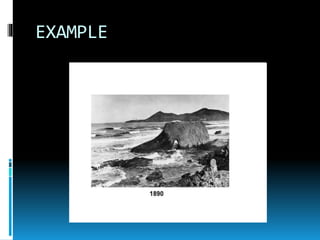
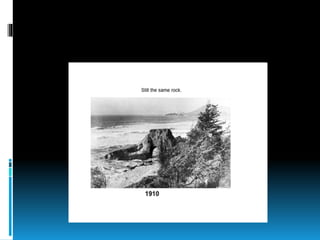
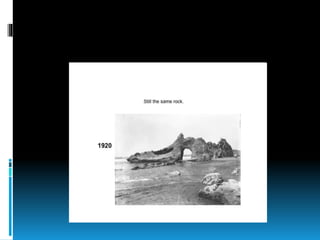




TRUE OR FALSE: The Earth’s surface
has stayed the same for thousands of years
 FALSE: the Earth’s surface is always
changing
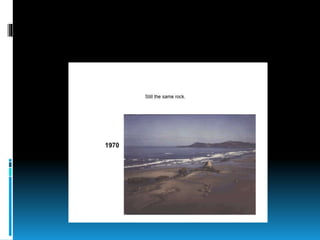
EXAMPLE
EROSION &
DEPOSITION
EROSION
 Is the process by which natural forces move
weathered rock and soil from one place to
another.
 Sediment – material moved by erosion .
DEPOSITION
 Occurs where the agents of erosion lay down
sediment.
Mass Movement
 Any one of several processes that move
sediment downhill.
Different types of Mass Movement
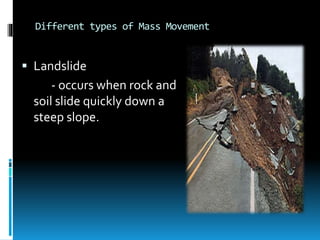
 Landslide
- occurs when rock and
soil slide quickly down a
steep slope.
Different types of Mass Movement
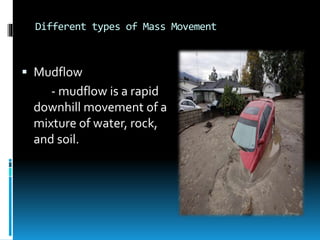
 Mudflow
- mudflow is a rapid
downhill movement of a
mixture of water, rock,
and soil.
Different types of Mass Movement
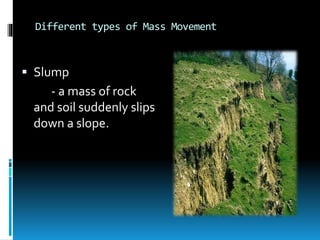
 Slump
- a mass of rock
and soil suddenly slips
down a slope.
Different types of Mass Movement
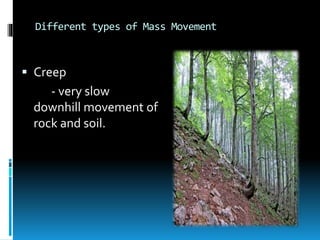
 Creep
- very slow
downhill movement of
rock and soil.
Water Erosion
Runoff – all the remaining
water that moves the
Earth’s surface.
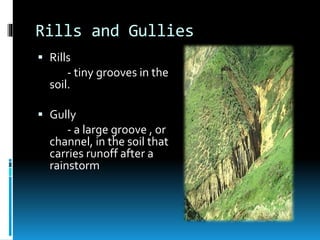
Rills and Gullies
 Rills
- tiny grooves in the
soil.
 Gully
- a large groove , or
channel, in the soil that
carries runoff after a
rainstorm
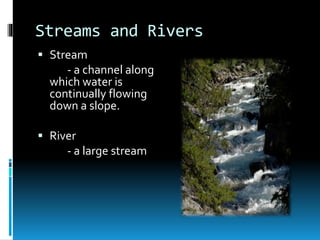
Streams and Rivers
 Stream
- a channel along
which water is
continually flowing
down a slope.
 River
- a large stream
Amount of Runoff
 In an area depends on five main factors:
 1st – amount of rain
 2nd – vegetation
 3rd – type of soil
 4th – shape of the land
 5th – how people use the land
Erosion by River
 Through erosion, a river creates a waterfalls,
flood plains, meanders, and oxbow lakes.
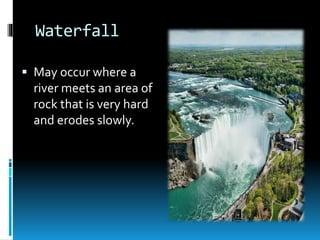
Waterfall
 May occur where a
river meets an area of
rock that is very hard
and erodes slowly.
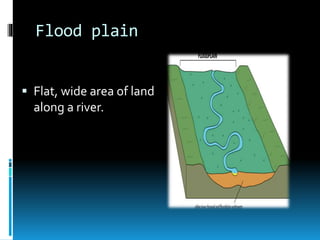
Flood plain
 Flat, wide area of land
along a river.
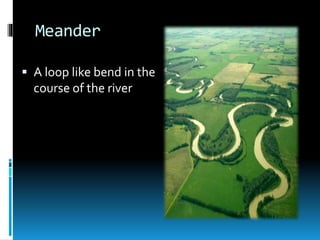
Meander
 A loop like bend in the
course of the river
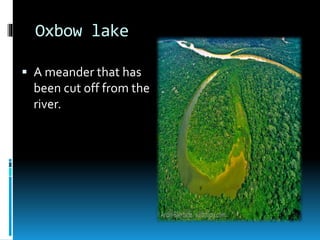
Oxbow lake
 A meander that has
been cut off from the
river.
Deposits by River
 Deposition creates landforms such as alluvial
fans and deltas. It can also add soil to a river’s
flood plain.
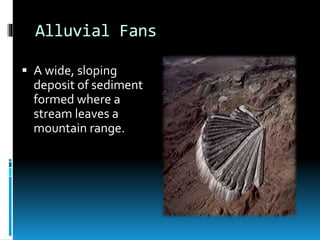
Alluvial Fans
 A wide, sloping
deposit of sediment
formed where a
stream leaves a
mountain range.
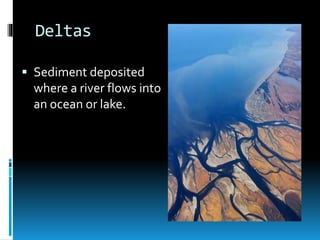
Deltas
 Sediment deposited
where a river flows into
an ocean or lake.
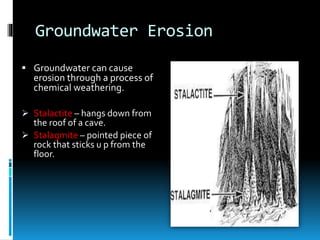
Groundwater Erosion
 Groundwater can cause
erosion through a process of
chemical weathering.
 Stalactite – hangs down from
the roof of a cave.
 Stalagmite – pointed piece of
rock that sticks u p from the
floor.
How Water Erode and Carries Sediment
 Most sediment washes or falls into the river as a
result of mass movement and runoff. Other
sediment erodes from the bottom or sides of the
river.
 Abrasion- is the wearing away of rock by grinding action.
- occurs when particles of sediment in flowing
water bumped into the steam again and again.
Erosion and Sediment Load
 A river’s slope, volume of flow, and the shape
of its trembled all affect how fast the river
flows and how much sediment it can erode.
Slope
 Is the amount the river drops toward sea level
over a give distance.
Volume of Flow
 A river’s flow is the volume of water that
moves past a point on the river on a given
time.
Streambed Shape
 Affects the amount of friction between the water
and the streambed.
 Friction – is the force that opposes the motion of one
surface as it moves another surface.
 Turbulence – water moves every which way in a
movement.
Glaciers
 Any large mass of ice that moves slowly over
land.
 There are 2 kinds of glaciers- valley and
continental glaciers.
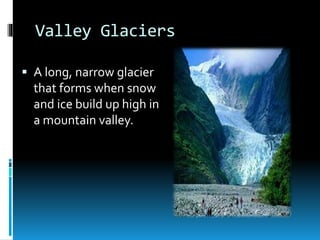
Valley Glaciers
 A long, narrow glacier
that forms when snow
and ice build up high in
a mountain valley.
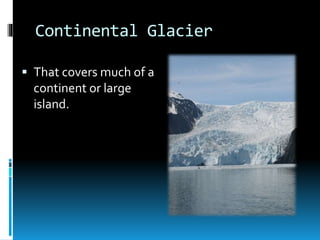
Continental Glacier
 That covers much of a
continent or large
island.
Glacial Erosion
 The movement of a glacier changes the land
beneath it.
 The 2 processes by which glaciers erode the land
are plucking and abrasion.
Plucking
 As a glacier flows over the land, it picks up
rock in a process.
Abrasion
 is the wearing away of rock by grinding
action.
Glacial Deposition
 When a glacier melts, it deposits the sediment it
eroded from the land, creating various
landforms.
 Till- mixture of sediments that a glacier deposits
directly on the surface.
 Moraine- is the ridge of till at the farthest point
reached by a glacier.
Waves
 HowWaves Form
the energy in waves come from wind that
blows across the waters surface.
 Erosion byWaves
Large waves hit rocks along the shore with
a great force.
Waves
 Deposits byWaves
waves shape the coast through both erosion
and deposition.
o Beach - Is an area of wave washed sediment along a
coast.
o Longshore drift – repeated waves hit the beach ,
some of the beach
Waves
o Longshore drift – repeated waves hit the
beach , some of the beach sediment moves
down the beach with the current.
o Spit – is a beach that projects like a finger out
into the water.
Wind
 HowWind Causes Erosion
the main way that wind causes erosion is
by deflation.
 Deflation – process by which wind removes
surface materials.
 Deposits Resulting fromWind Erosion
wind erosion and deposition may form sand
dunes and loess deposits.
 Sand dunes – a deposit of windblown sand.
 Loess – fine, wind deposit sediment.
END OF REPORT
Better to fail with
honor than succeed by
fraud.
- Sophocles
1-3. give at least 3 different types of mass
movement.
4. Is the process by which natural forces move
weathered rock and soil from one place to
another.
5. Is the wearing away of rock by a grinding
action.
6-7.What are the 2 kinds of glacier?
8. Deposit of windblown sand.
9. An area of wave-washed sediment along a
coast.
10. Fine, wind- deposited sediment.
Key Answers
1-3 .Landslides, mudflows, slump, creep
4. Erosion
5. Abrasion
6-7. continental and valley glacier
8. Sand dune
9. Beach
10. Loess
Reference
 http://www.slideshare.net/lovenaces60/weathering-and-erosion-
4851461?qid=5fe4fa68-57b4-4805-805a-
12c731c3137d&v=default&b=&from_search=12

Erosion and Deposition

  • 1.
    TRUE OR FALSE:The Earth’s surface has stayed the same for thousands of years  FALSE: the Earth’s surface is always changing
  • 2.
  • 6.
  • 7.
    EROSION  Is theprocess by which natural forces move weathered rock and soil from one place to another.  Sediment – material moved by erosion .
  • 8.
    DEPOSITION  Occurs wherethe agents of erosion lay down sediment.
  • 9.
    Mass Movement  Anyone of several processes that move sediment downhill.
  • 10.
    Different types ofMass Movement  Landslide - occurs when rock and soil slide quickly down a steep slope.
  • 11.
    Different types ofMass Movement  Mudflow - mudflow is a rapid downhill movement of a mixture of water, rock, and soil.
  • 12.
    Different types ofMass Movement  Slump - a mass of rock and soil suddenly slips down a slope.
  • 13.
    Different types ofMass Movement  Creep - very slow downhill movement of rock and soil.
  • 14.
    Water Erosion Runoff –all the remaining water that moves the Earth’s surface.
  • 15.
    Rills and Gullies Rills - tiny grooves in the soil.  Gully - a large groove , or channel, in the soil that carries runoff after a rainstorm
  • 16.
    Streams and Rivers Stream - a channel along which water is continually flowing down a slope.  River - a large stream
  • 17.
    Amount of Runoff In an area depends on five main factors:  1st – amount of rain  2nd – vegetation  3rd – type of soil  4th – shape of the land  5th – how people use the land
  • 18.
    Erosion by River Through erosion, a river creates a waterfalls, flood plains, meanders, and oxbow lakes.
  • 19.
    Waterfall  May occurwhere a river meets an area of rock that is very hard and erodes slowly.
  • 20.
    Flood plain  Flat,wide area of land along a river.
  • 21.
    Meander  A looplike bend in the course of the river
  • 22.
    Oxbow lake  Ameander that has been cut off from the river.
  • 23.
    Deposits by River Deposition creates landforms such as alluvial fans and deltas. It can also add soil to a river’s flood plain.
  • 24.
    Alluvial Fans  Awide, sloping deposit of sediment formed where a stream leaves a mountain range.
  • 25.
    Deltas  Sediment deposited wherea river flows into an ocean or lake.
  • 26.
    Groundwater Erosion  Groundwatercan cause erosion through a process of chemical weathering.  Stalactite – hangs down from the roof of a cave.  Stalagmite – pointed piece of rock that sticks u p from the floor.
  • 27.
    How Water Erodeand Carries Sediment  Most sediment washes or falls into the river as a result of mass movement and runoff. Other sediment erodes from the bottom or sides of the river.  Abrasion- is the wearing away of rock by grinding action. - occurs when particles of sediment in flowing water bumped into the steam again and again.
  • 28.
    Erosion and SedimentLoad  A river’s slope, volume of flow, and the shape of its trembled all affect how fast the river flows and how much sediment it can erode.
  • 29.
    Slope  Is theamount the river drops toward sea level over a give distance.
  • 30.
    Volume of Flow A river’s flow is the volume of water that moves past a point on the river on a given time.
  • 31.
    Streambed Shape  Affectsthe amount of friction between the water and the streambed.  Friction – is the force that opposes the motion of one surface as it moves another surface.  Turbulence – water moves every which way in a movement.
  • 32.
    Glaciers  Any largemass of ice that moves slowly over land.  There are 2 kinds of glaciers- valley and continental glaciers.
  • 33.
    Valley Glaciers  Along, narrow glacier that forms when snow and ice build up high in a mountain valley.
  • 34.
    Continental Glacier  Thatcovers much of a continent or large island.
  • 35.
    Glacial Erosion  Themovement of a glacier changes the land beneath it.  The 2 processes by which glaciers erode the land are plucking and abrasion.
  • 36.
    Plucking  As aglacier flows over the land, it picks up rock in a process.
  • 37.
    Abrasion  is thewearing away of rock by grinding action.
  • 38.
    Glacial Deposition  Whena glacier melts, it deposits the sediment it eroded from the land, creating various landforms.  Till- mixture of sediments that a glacier deposits directly on the surface.  Moraine- is the ridge of till at the farthest point reached by a glacier.
  • 39.
    Waves  HowWaves Form theenergy in waves come from wind that blows across the waters surface.  Erosion byWaves Large waves hit rocks along the shore with a great force.
  • 40.
    Waves  Deposits byWaves wavesshape the coast through both erosion and deposition. o Beach - Is an area of wave washed sediment along a coast. o Longshore drift – repeated waves hit the beach , some of the beach
  • 41.
    Waves o Longshore drift– repeated waves hit the beach , some of the beach sediment moves down the beach with the current. o Spit – is a beach that projects like a finger out into the water.
  • 42.
    Wind  HowWind CausesErosion the main way that wind causes erosion is by deflation.  Deflation – process by which wind removes surface materials.
  • 43.
     Deposits ResultingfromWind Erosion wind erosion and deposition may form sand dunes and loess deposits.  Sand dunes – a deposit of windblown sand.  Loess – fine, wind deposit sediment.
  • 44.
  • 45.
    Better to failwith honor than succeed by fraud. - Sophocles
  • 46.
    1-3. give atleast 3 different types of mass movement. 4. Is the process by which natural forces move weathered rock and soil from one place to another. 5. Is the wearing away of rock by a grinding action.
  • 47.
    6-7.What are the2 kinds of glacier? 8. Deposit of windblown sand. 9. An area of wave-washed sediment along a coast. 10. Fine, wind- deposited sediment.
  • 49.
    Key Answers 1-3 .Landslides,mudflows, slump, creep 4. Erosion 5. Abrasion 6-7. continental and valley glacier 8. Sand dune 9. Beach 10. Loess
  • 50.