Course Material
on
Fundamentals of Manufacturing Processes
Faculty: Dr. B.Venkateshwarlu, Associate Professor,
School of Mechanical Engineering
VIT University, Vellore
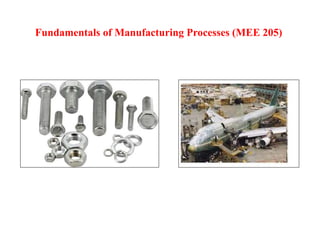
Fundamentals of Manufacturing Processes (MEE 205)
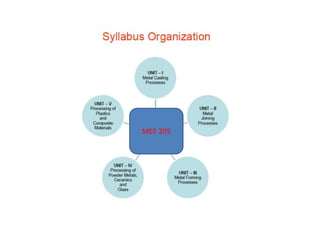
MEE 205
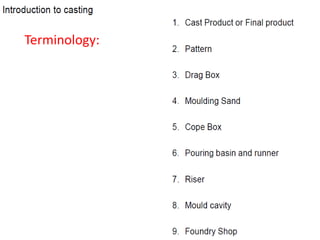
Terminology:
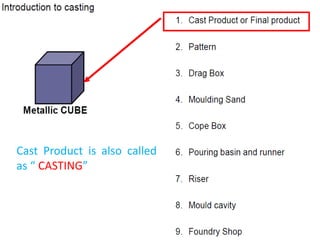
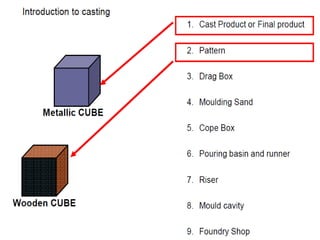
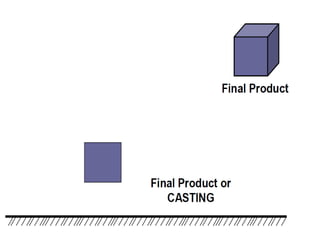
Cast Product is also called
as “ CASTING”
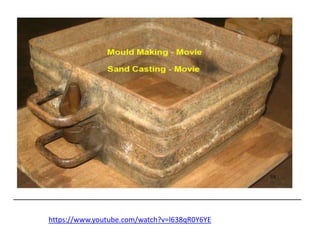
https://www.youtube.com/watch?v=l638qR0Y6YE
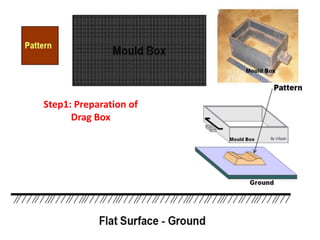
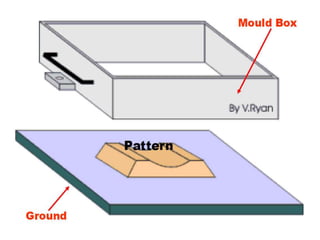
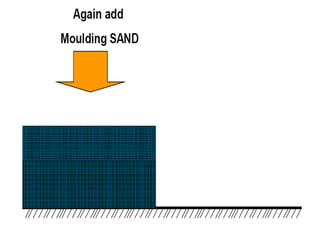
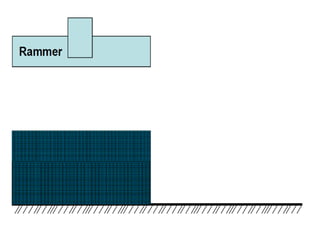
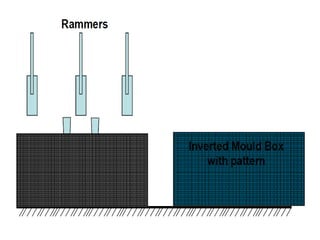
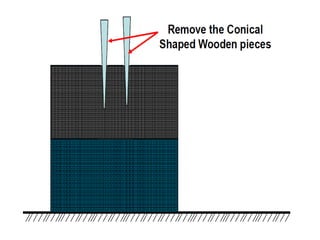
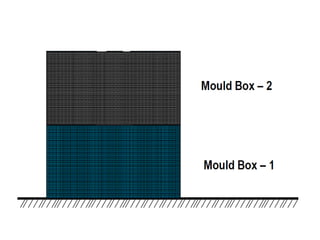
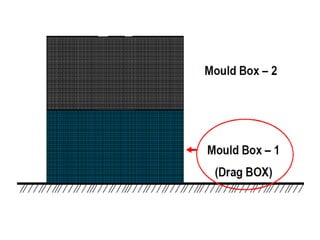
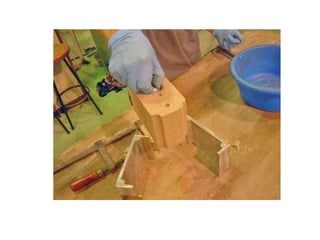
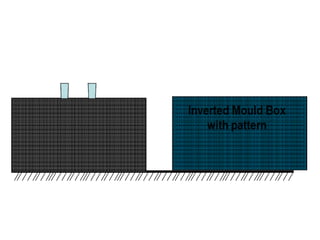
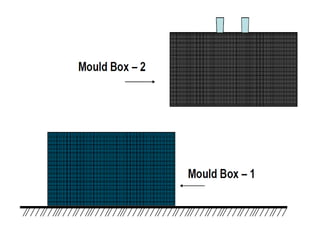
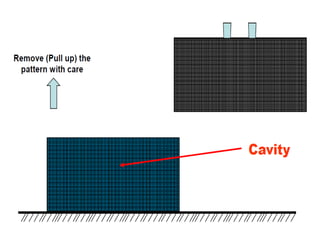
Step1: Preparation of
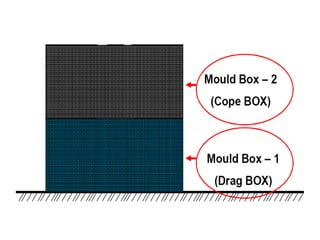
Drag Box
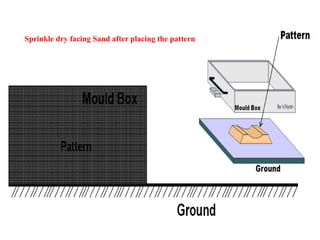
Sprinkle dry facing Sand after placing the pattern
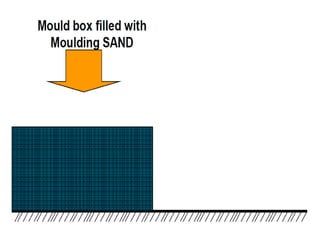
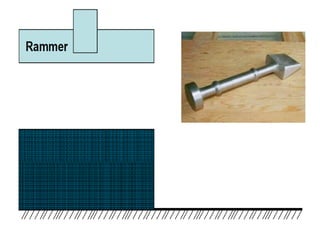
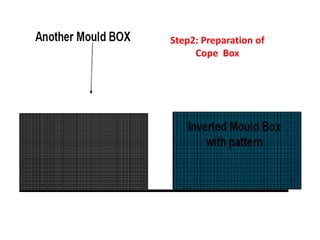
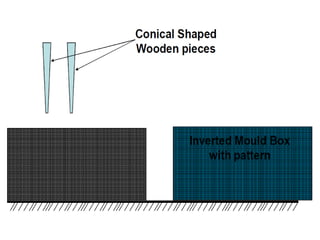
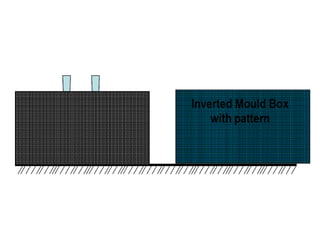
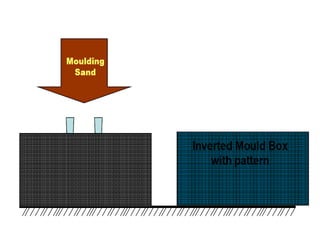
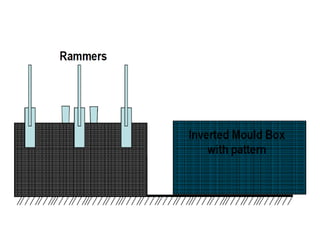
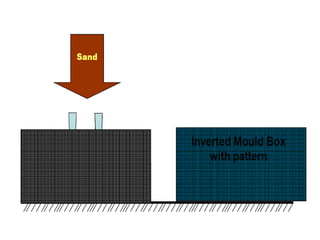
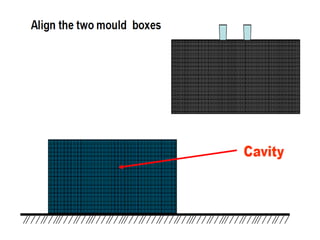
Step2: Preparation of
Cope Box
Lecture 4
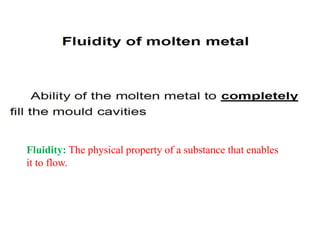
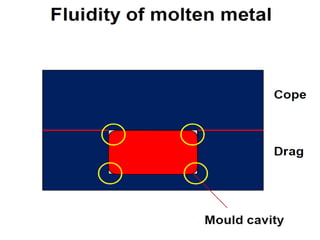
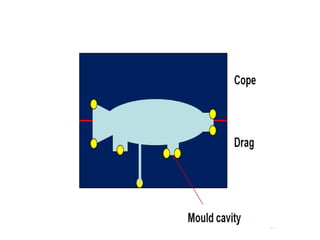
Fluidity: The physical property of a substance that enables
it to flow.
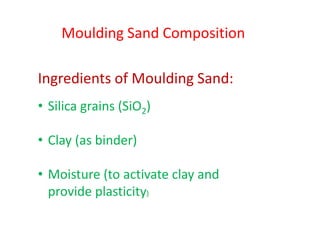
Moulding Sand Composition
Ingredients of Moulding Sand:
• Silica grains (SiO2)
• Clay (as binder)
• Moisture (to activate clay and
provide plasticity)
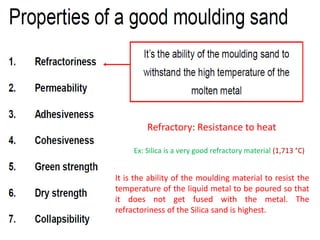
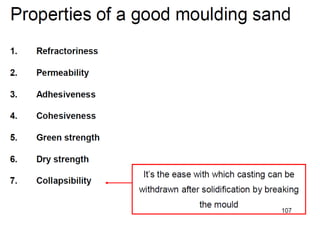
Refractory: Resistance to heat
Ex: Silica is a very good refractory material (1,713 °C)
It is the ability of the moulding material to resist the
temperature of the liquid metal to be poured so that
it does not get fused with the metal. The
refractoriness of the Silica sand is highest.
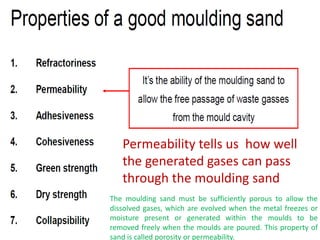
Permeability tells us how well
the generated gases can pass
through the moulding sand
The moulding sand must be sufficiently porous to allow the
dissolved gases, which are evolved when the metal freezes or
moisture present or generated within the moulds to be
removed freely when the moulds are poured. This property of
sand is called porosity or permeability.
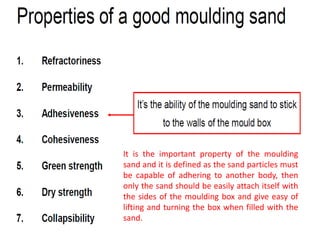
It is the important property of the moulding
sand and it is defined as the sand particles must
be capable of adhering to another body, then
only the sand should be easily attach itself with
the sides of the moulding box and give easy of
lifting and turning the box when filled with the
sand.
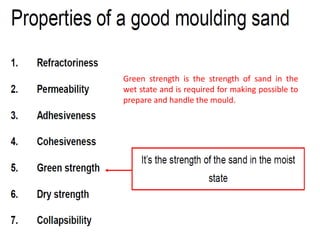
Green strength is the strength of sand in the
wet state and is required for making possible to
prepare and handle the mould.
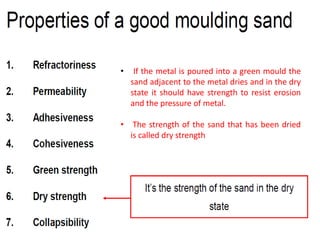
• If the metal is poured into a green mould the
sand adjacent to the metal dries and in the dry
state it should have strength to resist erosion
and the pressure of metal.
• The strength of the sand that has been dried
is called dry strength
At the time of pouring the molten metal the
mould must be able to withstand flow and
pressure of the metal at high temperature
otherwise the mould may enlarge, crack, get
washed or break
Hot Strength
The sand adjacent to the metal is suddenly
heated and undergoes expansion. If the
mould wall is not dimensionally stable under
rapid heating, cracks, buckling and flacking
off sand may occur.
Thermal stability
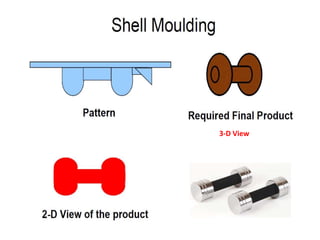
3-D View
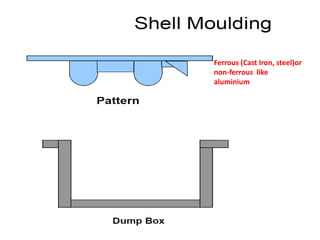
Ferrous (Cast Iron, steel)or
non-ferrous like
aluminium
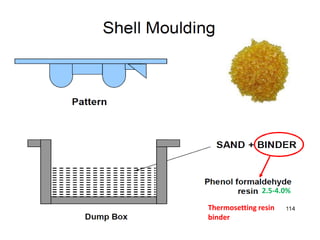
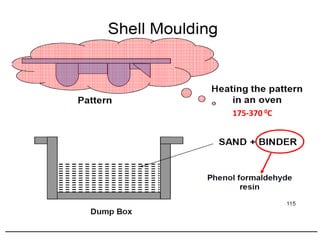
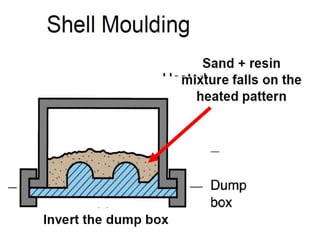
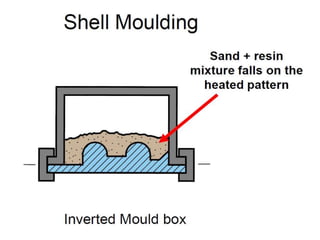
Thermosetting resin
binder
2.5-4.0%
175-370 0C
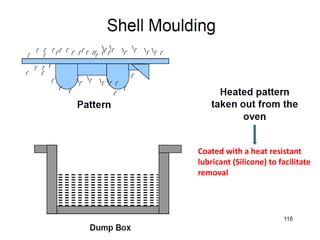
Coated with a heat resistant
lubricant (Silicone) to facilitate
removal
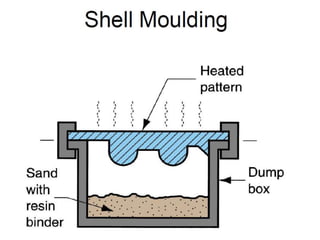
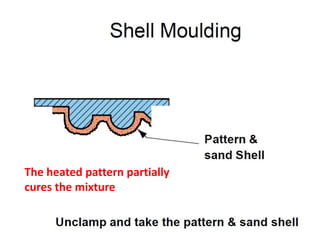
The heated pattern partially
cures the mixture
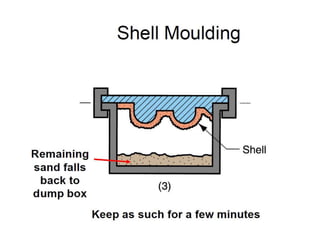
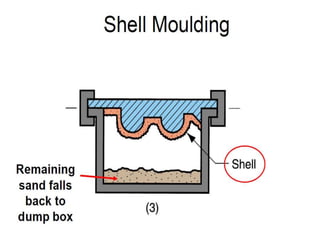
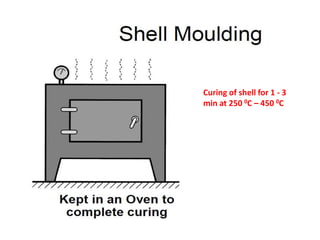
Curing of shell for 1 - 3
min at 250 0C – 450 0C
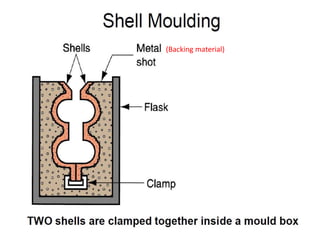
(Backing material)
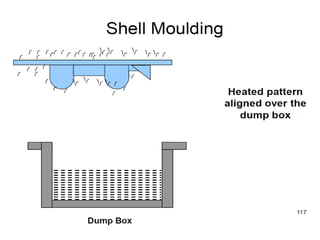
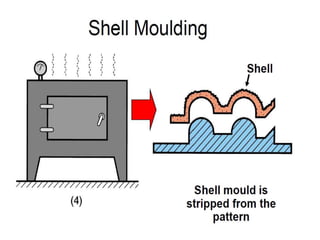
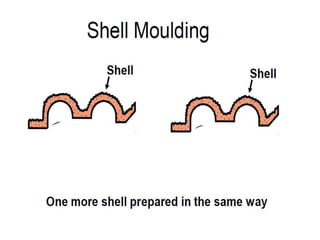
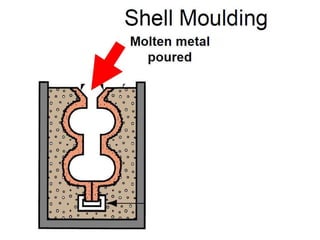
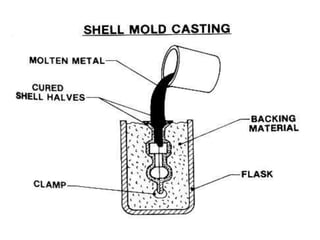
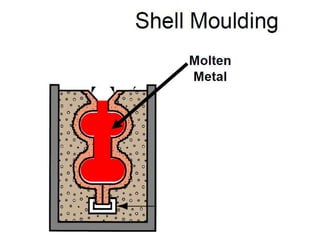
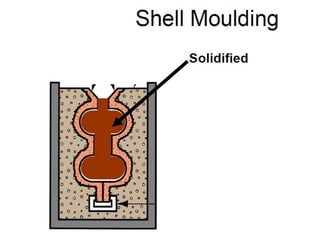
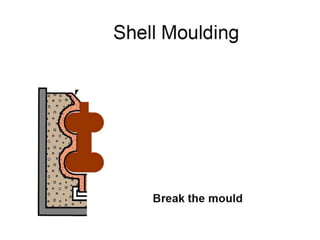
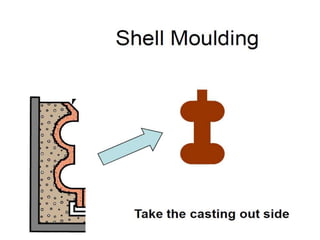
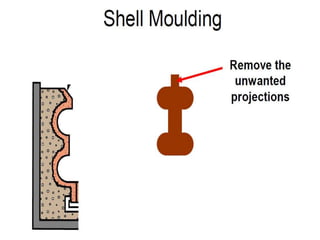
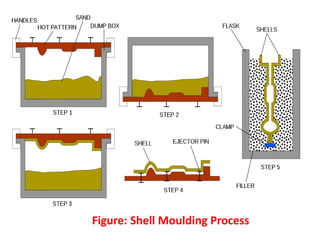
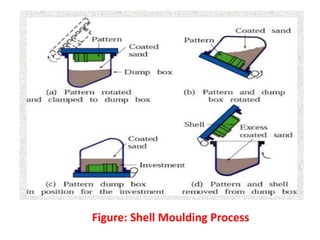
Figure: Shell Moulding Process
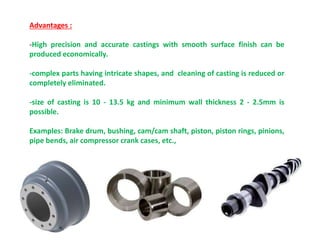
Advantages :
-High precision and accurate castings with smooth surface finish can be
produced economically.
-complex parts having intricate shapes, and cleaning of casting is reduced or
completely eliminated.
-size of casting is 10 - 13.5 kg and minimum wall thickness 2 - 2.5mm is
possible.
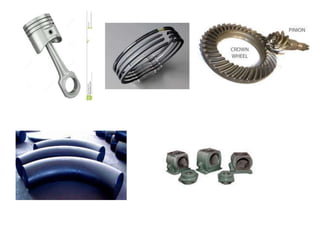
Examples: Brake drum, bushing, cam/cam shaft, piston, piston rings, pinions,
pipe bends, air compressor crank cases, etc.,
https://www.youtube.com/watch?v=Xa
r5r9Jm04g
https://www.youtube.com/watch?v
=UrUsaGussfc
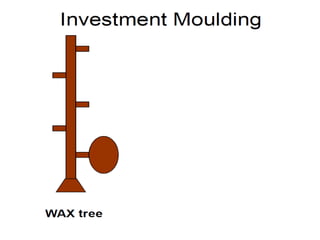
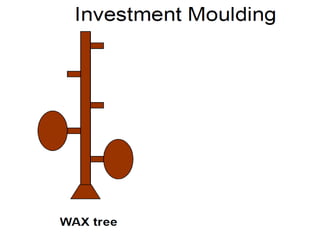
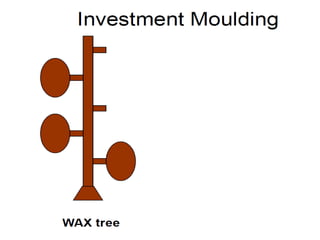
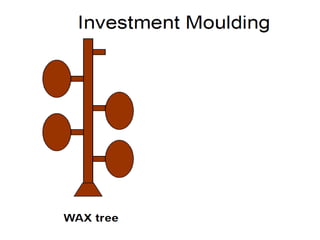
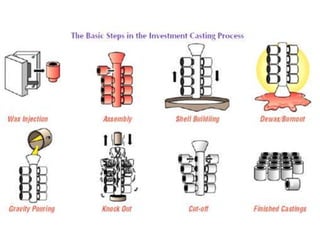
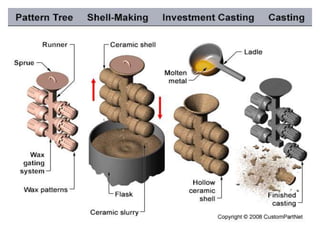
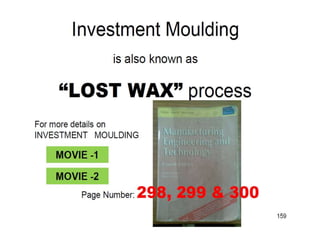
Animated Movie of Investment Casting Process
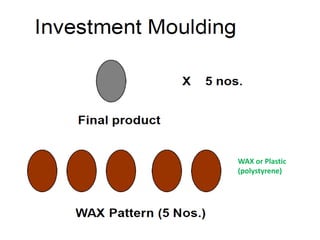
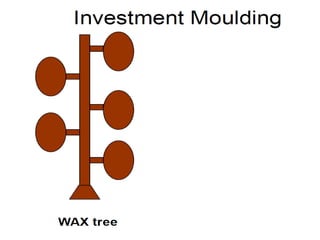
WAX or Plastic
(polystyrene)
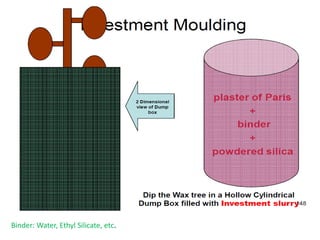
Binder: Water, Ethyl Silicate, etc.
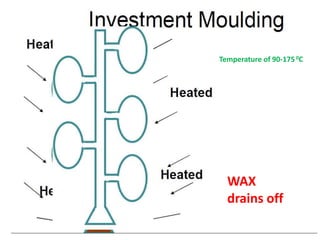
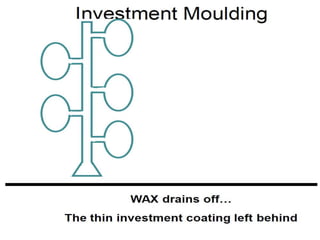
WAX
drains off
Temperature of 90-175 0C
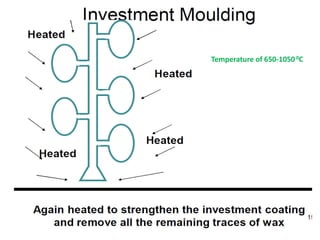
Temperature of 650-1050 0C
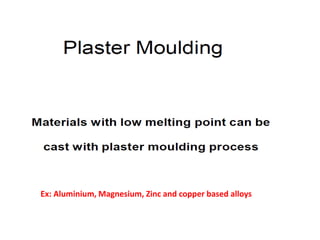
Ex: Aluminium, Magnesium, Zinc and copper based alloys
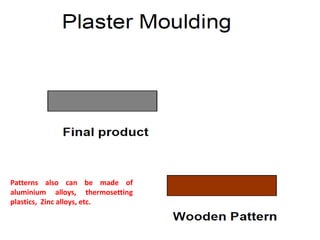
Patterns also can be made of
aluminium alloys, thermosetting
plastics, Zinc alloys, etc.
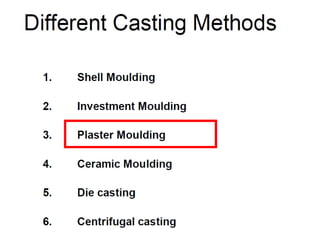
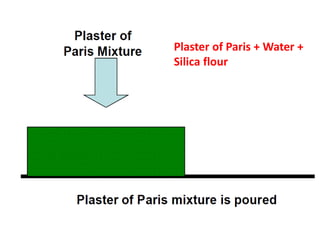
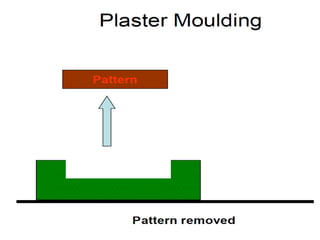
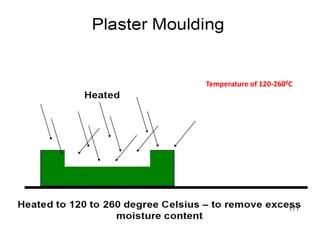
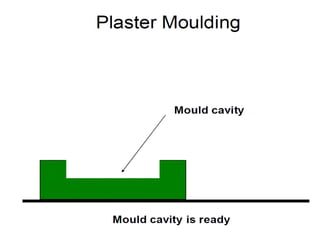
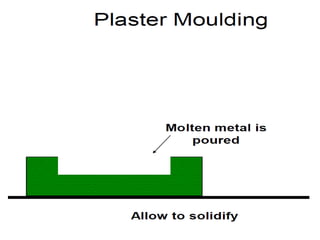
Plaster of Paris + Water +
Silica flour
Temperature of 120-2600C
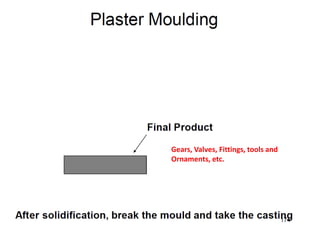
Gears, Valves, Fittings, tools and
Ornaments, etc.
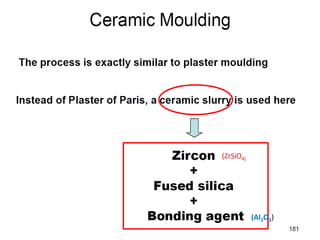
(ZrSiO4)
(Al2O3)
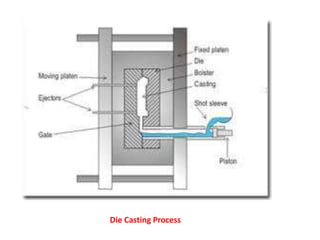
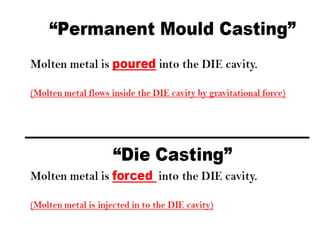
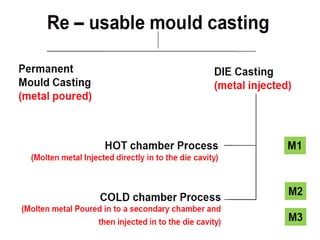
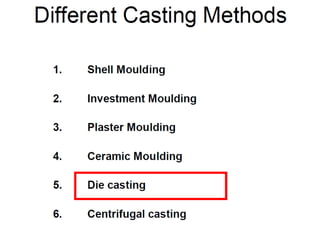
Die Casting Process
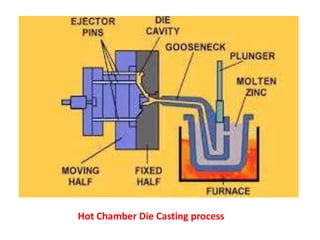
Hot Chamber Die Casting process
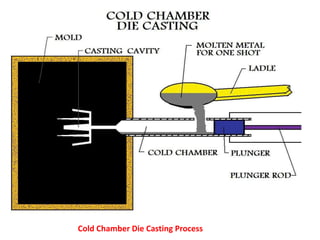
Cold Chamber Die Casting Process
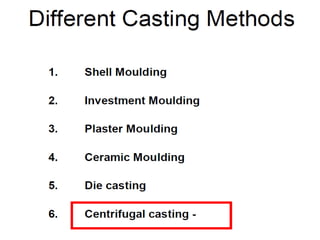
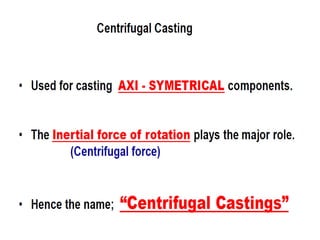
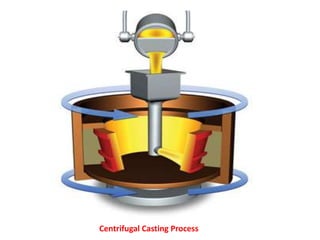
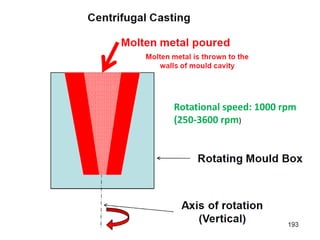
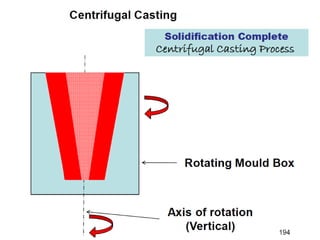
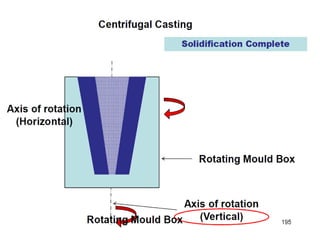
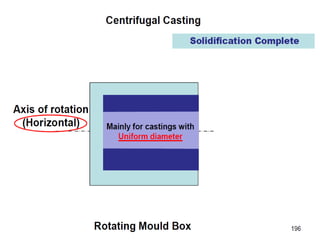
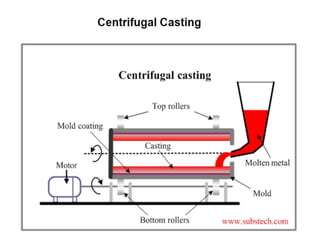
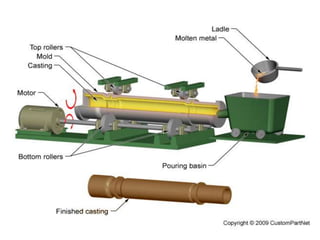
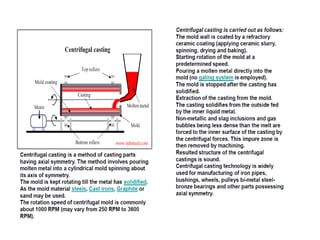
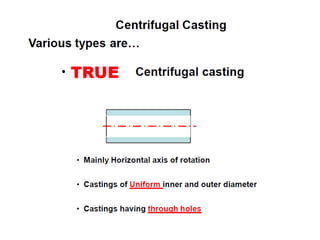
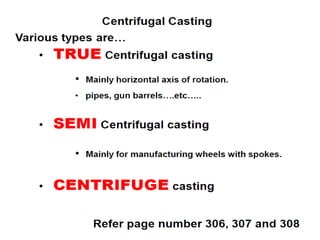
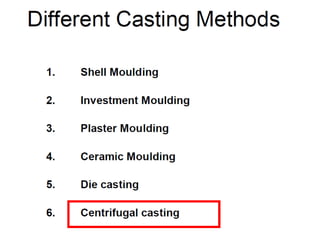
Centrifugal Casting Process
Rotational speed: 1000 rpm
(250-3600 rpm)
• Core may or may not be used
• Mostly used for making hollow objects
like pipes, tubes and bushes
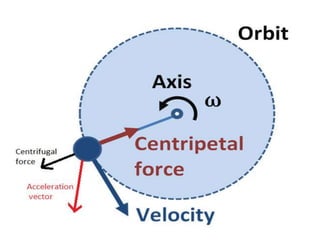
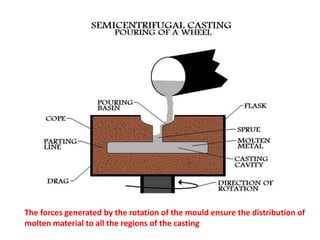
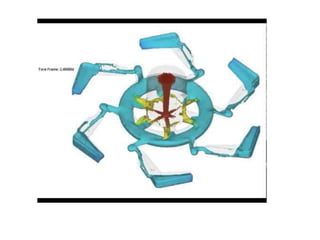
The forces generated by the rotation of the mould ensure the distribution of
molten material to all the regions of the casting
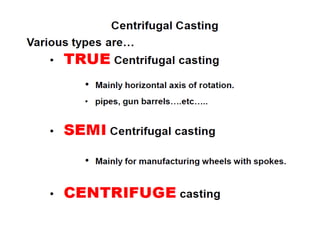
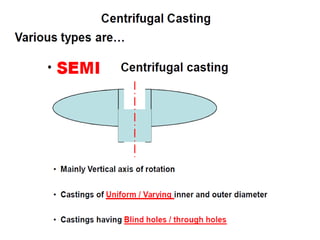
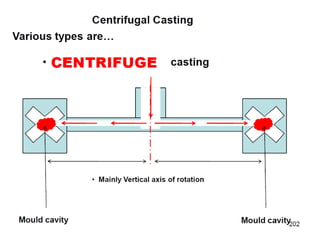
Semi centrifugal casting manufacture is a
variation of true centrifugal casting and uses
vertical axis with less rotational speeds.
The main difference is that in semi
centrifugal casting the mold is filled completely
with molten metal, which is supplied to
the casting through a central sprue.
Castings manufactured by this process will
possess rotational symmetry.
If a central bore is required in the casting, a dry
sand core is best suited.
Fundamentals of Manufacturing Processes-Casting Technology

Fundamentals of Manufacturing Processes-Casting Technology