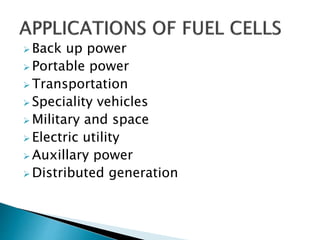
A fuel cell converts chemical energy from a fuel into electricity through a reaction with oxygen or another oxidizing agent. Hydrogen is commonly used as a fuel but other fuels like natural gas can also be used. Fuel cells provide continuous power as long as fuel is supplied, unlike batteries which have a limited storage capacity. They produce water, heat, and small amounts of pollution as byproducts. Individual fuel cells produce low voltages so they are stacked to increase output. Fuel cells have efficiencies between 40-85% and are used in various applications including transportation, backup power, and utilities.


![BATTERY CHEMISTRY [Autosaved].pptx](https://cdn.slidesharecdn.com/ss_thumbnails/batterychemistryautosaved-230306095147-71e692f9-thumbnail.jpg?width=640&height=640&fit=bounds)


