Frog Metamorphosis


 The Life Cycle of Frogs
What is Metamorphosis?
 A typically marked or more or less abrupt
 developmental change in the form or
 structure of an animal occuring subsequent
 to birth or hatching
How does it Work?
 Metamorphosis in amphibians is regulated
 by thyroxin and prolactin
 Development is subject to many adaptations
 due to specific ecological circumstances
 They also make use of the lateral line organ
 Redundant organs are reabsorbed via
 apoptosis after metamorphosis
A Frog’s Life Cycle
The Egg
 The egg begins as a single cell
 It becomes surrounded by a jellylike
 covering, which protects the egg
 The female may or may not stay with the
 eggs to take care of the young after she had
 laid them
The Embyo
 The mass of cells in the egg come to form
 an embryo
 Organs and gills begin to form, and the
 embryo lives off the internal yolk
 This supplies it with nutrients for 21 days
The Tadpole
 After its 21 day development period, the
 embryo leaves its jelly shell, and attaches
 itself to a weed in the water
 It has external gills like a fish to absorb
 oxygen and feeds on algae
 It is extremely vulnerable, and must rely on
 its camouflage to protect it
The Changing Tadpole
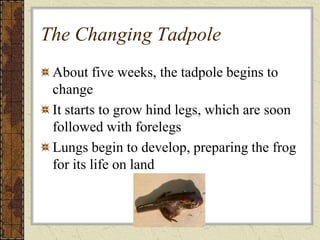
 About five weeks, the tadpole begins to
 change
 It starts to grow hind legs, which are soon
 followed with forelegs
 Lungs begin to develop, preparing the frog
 for its life on land
The Froglet
 Over time, the tadpole becomes even more
 froglike
 Its mouth widens, it loses its horny
 jaws, gills are lost
 The tail becomes much smaller, and the legs
 grow
 The lungs are almost functioning at this
 point
The Frog
 Eleven weeks after the egg was laid, a fully
 developed frog with lungs, legs, and no tail
 emerges from the water
 Eventually, it finds a mate
 The female lays the eggs, the male fertilizes
 them, and the whole process begins again

Frog metamorphosis

  • 1.
    Frog Metamorphosis TheLife Cycle of Frogs
  • 2.
    What is Metamorphosis? A typically marked or more or less abrupt developmental change in the form or structure of an animal occuring subsequent to birth or hatching
  • 3.
    How does itWork? Metamorphosis in amphibians is regulated by thyroxin and prolactin Development is subject to many adaptations due to specific ecological circumstances They also make use of the lateral line organ Redundant organs are reabsorbed via apoptosis after metamorphosis
  • 4.
  • 5.
    The Egg Theegg begins as a single cell It becomes surrounded by a jellylike covering, which protects the egg The female may or may not stay with the eggs to take care of the young after she had laid them
  • 6.
    The Embyo Themass of cells in the egg come to form an embryo Organs and gills begin to form, and the embryo lives off the internal yolk This supplies it with nutrients for 21 days
  • 7.
    The Tadpole Afterits 21 day development period, the embryo leaves its jelly shell, and attaches itself to a weed in the water It has external gills like a fish to absorb oxygen and feeds on algae It is extremely vulnerable, and must rely on its camouflage to protect it
  • 8.
    The Changing Tadpole About five weeks, the tadpole begins to change It starts to grow hind legs, which are soon followed with forelegs Lungs begin to develop, preparing the frog for its life on land
  • 9.
    The Froglet Overtime, the tadpole becomes even more froglike Its mouth widens, it loses its horny jaws, gills are lost The tail becomes much smaller, and the legs grow The lungs are almost functioning at this point
  • 10.
    The Frog Elevenweeks after the egg was laid, a fully developed frog with lungs, legs, and no tail emerges from the water Eventually, it finds a mate The female lays the eggs, the male fertilizes them, and the whole process begins again