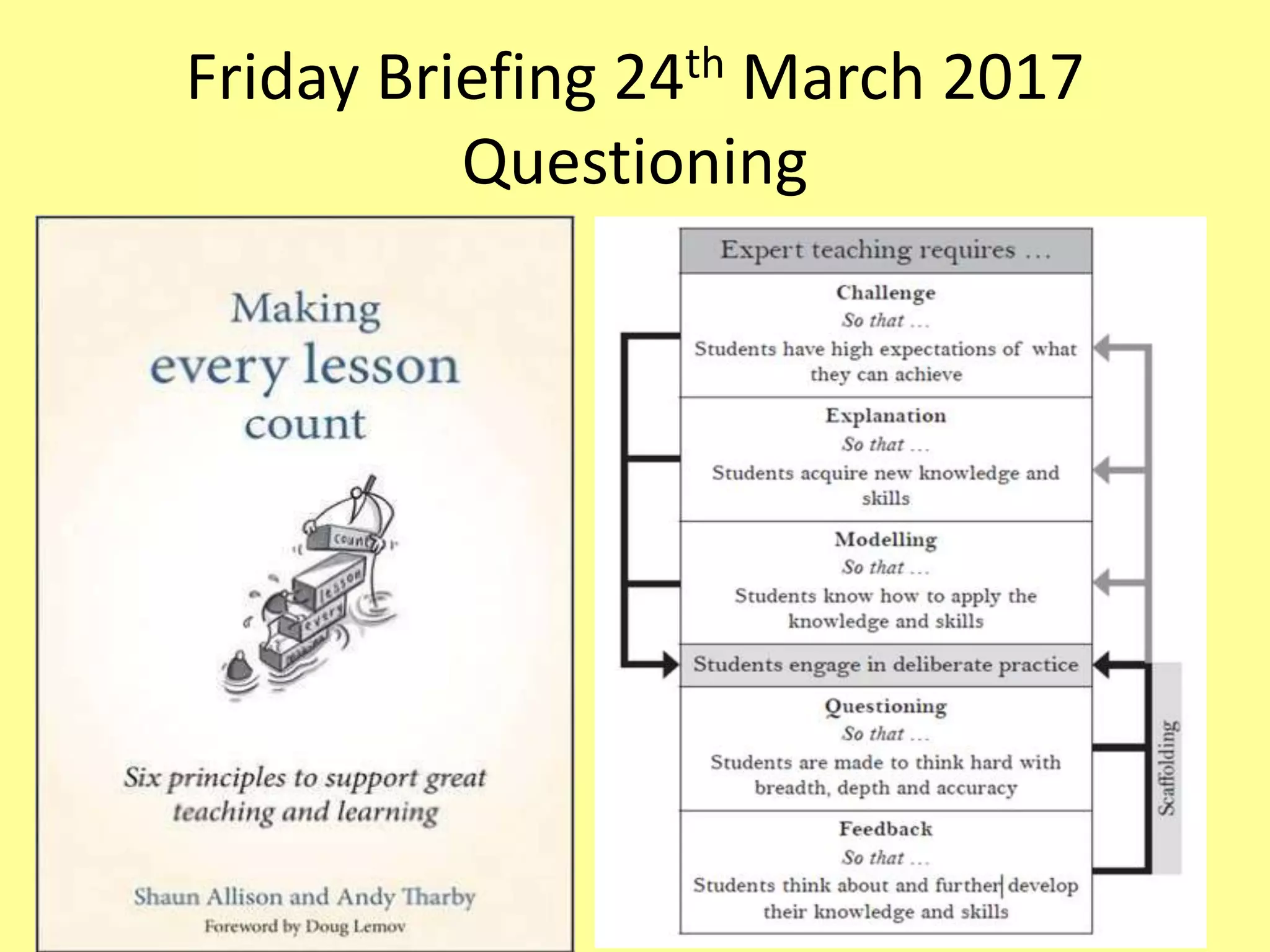
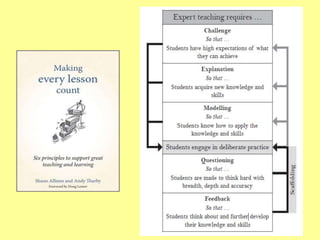
Friday Briefing 24th March 2017
Questioning
Coaching- focus on questioning
• Seating plan provided
• Observer notes/tallies:
Who is questioned
Who receives support
Types of questions asked, for example, open v
closed.
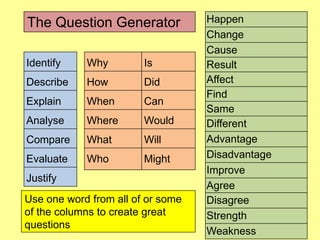
Identify
Describe
Explain
Analyse
Compare
Evaluate
Justify
Why Is
How Did
When Can
Where Would
What Will
Who Might
Happen
Change
Cause
Result
Affect
Find
Same
Different
Advantage
Disadvantage
Improve
Agree
Disagree
Strength
Weakness
Use one word from all of or some
of the columns to create great
questions
The Question Generator
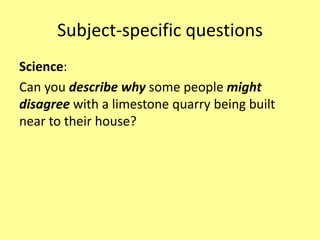
Subject-specific questions
Science:
Can you describe why some people might
disagree with a limestone quarry being built
near to their house?
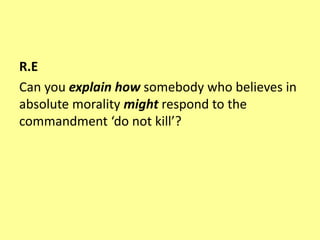
R.E
Can you explain how somebody who believes in
absolute morality might respond to the
commandment ‘do not kill’?
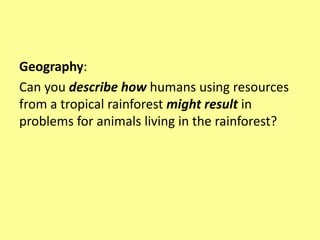
Geography:
Can you describe how humans using resources
from a tropical rainforest might result in
problems for animals living in the rainforest?
How to use it
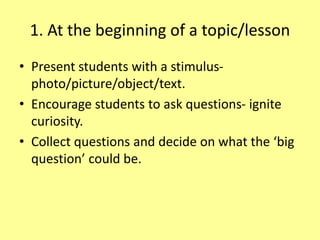
1. At the beginning of a topic/lesson
• Present students with a stimulus-
photo/picture/object/text.
• Encourage students to ask questions- ignite
curiosity.
• Collect questions and decide on what the ‘big
question’ could be.
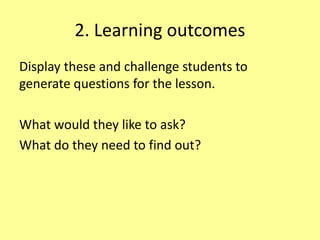
2. Learning outcomes
Display these and challenge students to
generate questions for the lesson.
What would they like to ask?
What do they need to find out?
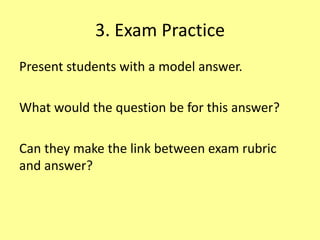
3. Exam Practice
Present students with a model answer.
What would the question be for this answer?
Can they make the link between exam rubric
and answer?
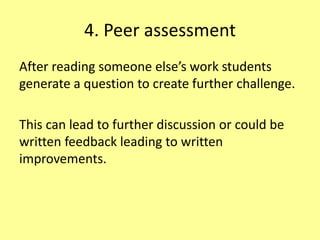
4. Peer assessment
After reading someone else’s work students
generate a question to create further challenge.
This can lead to further discussion or could be
written feedback leading to written
improvements.
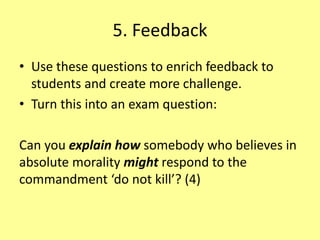
5. Feedback
• Use these questions to enrich feedback to
students and create more challenge.
• Turn this into an exam question:
Can you explain how somebody who believes in
absolute morality might respond to the
commandment ‘do not kill’? (4)
6. Challenge the teacher
• Invite difficult questions
• Question box
• Post-it notes/ mini-whiteboards- common
questions could inform the direction of the
lesson.

Friday briefing 24th march 2017 v2

  • 1.
    Friday Briefing 24thMarch 2017 Questioning
  • 2.
    Coaching- focus onquestioning • Seating plan provided • Observer notes/tallies: Who is questioned Who receives support Types of questions asked, for example, open v closed.
  • 4.
    Identify Describe Explain Analyse Compare Evaluate Justify Why Is How Did WhenCan Where Would What Will Who Might Happen Change Cause Result Affect Find Same Different Advantage Disadvantage Improve Agree Disagree Strength Weakness Use one word from all of or some of the columns to create great questions The Question Generator
  • 5.
    Subject-specific questions Science: Can youdescribe why some people might disagree with a limestone quarry being built near to their house?
  • 6.
    R.E Can you explainhow somebody who believes in absolute morality might respond to the commandment ‘do not kill’?
  • 7.
    Geography: Can you describehow humans using resources from a tropical rainforest might result in problems for animals living in the rainforest?
  • 8.
  • 9.
    1. At thebeginning of a topic/lesson • Present students with a stimulus- photo/picture/object/text. • Encourage students to ask questions- ignite curiosity. • Collect questions and decide on what the ‘big question’ could be.
  • 10.
    2. Learning outcomes Displaythese and challenge students to generate questions for the lesson. What would they like to ask? What do they need to find out?
  • 11.
    3. Exam Practice Presentstudents with a model answer. What would the question be for this answer? Can they make the link between exam rubric and answer?
  • 12.
    4. Peer assessment Afterreading someone else’s work students generate a question to create further challenge. This can lead to further discussion or could be written feedback leading to written improvements.
  • 13.
    5. Feedback • Usethese questions to enrich feedback to students and create more challenge. • Turn this into an exam question: Can you explain how somebody who believes in absolute morality might respond to the commandment ‘do not kill’? (4)
  • 14.
    6. Challenge theteacher • Invite difficult questions • Question box • Post-it notes/ mini-whiteboards- common questions could inform the direction of the lesson.

Editor's Notes

  • #3 Y10 focus on grammar-
  • #4 Research team- copies let me know
  • #11 Post-it notes