FRAUD DETECTION 
TECHNIQUES
FRAUD DETECTION TECHNIQUES 
• ACL (Audit Command Language) 
ACL was designed as a meta-language for auditors to access data 
stored in various digital formats and to test them comprehensively. In fact, 
many of the problems associated with accessing complex data structures 
have been solved by ACL’s Open Database Connectivity (ODBC) interface. 
• Fraud Profile 
To find the trail in the masses of data, the auditor first develops a 
“fraud profile” that identifies the data characteristics that one would expect 
to find in a specific type of fraud scheme.
Three Common Fraud Schemes: 
 Payments to Fictitious Vendors 
 Payroll Fraud 
 Lapping Accounts Receivable
Payments to Fictitious Vendors 
A preliminary step in this scheme requires the perpetrator to 
create a phony vendor organization and establish it in the victim 
organization’s record as a legitimate supplier. 
The fraud profile describing the false-vendor scheme and the 
audit procedures are described next. 
 Sequential Invoice Numbers 
 Vendors with P.O. Boxes 
 Vendors with Employee Addresses 
 Multiple Companies with the Same Address 
 Invoice Amounts Slightly below the Review Threshold
o Sequential Invoice Numbers 
The audit procedure is to use ACL to sort the records of the 
invoice file by invoice number and vendor number. This will highlight 
records that possess series characteristics, which can then be 
retrieved for further review. 
o Vendors with P.O. Boxes 
The audit procedure is this: Using ACL’s expression builder, 
create a filter to select vendor records from the invoice file that use 
P.O. box addresses.
o Vendors with Employee Addresses 
The audit procedure is to use ACL to join the employee file and the 
invoice file using the address fields as the common key for both files. Only 
records that match should be passed to the resulting combined file. These 
records can then be reviewed further. 
o Multiple Companies with the Same 
Address 
As an audit safeguard, use ACL’s Duplicates command to generate a 
listing of mailing addresses that are common to two or more vendors.
o Invoice Amounts Slightly below the 
Review Threshold 
The audit procedure for this situation is to use ACL’s expression 
builder to create a value range around the control threshold. To highlight 
suspicious activity that warrants further investigation, sort payments records 
that fall within this range by vendor.
Payroll Fraud 
• Test for Excessive Hours Worked 
Use ACL’s Expression Builder to select payroll records that reflect 
excessive hours worked. 
• Test for Duplicate Payments 
Use ACL’s Duplicates function to search payroll records for employees 
with the following characteristics: 
• Same employee number, same name, same address, etc. (duplicate payments) 
• Same name with different mailing addresses 
• Same name with different checking accounts 
• Same name with different Social Security numbers 
• Same mailing address with different employee names 
• Test for Nonexistent Employees 
Use ACL’s Join feature to link the payroll and employee files using 
Employee Number as the common attribute.
Lapping Accounts Receivable 
• Lapping was described earlier in the chapter as the theft of a 
customer’s check received in payment on his account. 
• The Balance Forward Method 
The balance forward method is used extensively for 
consumer accounts. Total sales to customers for the period are 
itemized and billed at the period end. Customers are required to pay 
only a minimum amount off the balance. The rest of the balance, 
plus interest, is carried forward to the next period.
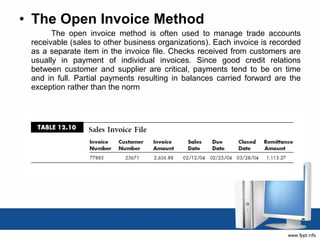
• The Open Invoice Method 
The open invoice method is often used to manage trade accounts 
receivable (sales to other business organizations). Each invoice is recorded 
as a separate item in the invoice file. Checks received from customers are 
usually in payment of individual invoices. Since good credit relations 
between customer and supplier are critical, payments tend to be on time 
and in full. Partial payments resulting in balances carried forward are the 
exception rather than the norm

Fraud Detection Techniques

  • 1.
  • 2.
    FRAUD DETECTION TECHNIQUES • ACL (Audit Command Language) ACL was designed as a meta-language for auditors to access data stored in various digital formats and to test them comprehensively. In fact, many of the problems associated with accessing complex data structures have been solved by ACL’s Open Database Connectivity (ODBC) interface. • Fraud Profile To find the trail in the masses of data, the auditor first develops a “fraud profile” that identifies the data characteristics that one would expect to find in a specific type of fraud scheme.
  • 3.
    Three Common FraudSchemes:  Payments to Fictitious Vendors  Payroll Fraud  Lapping Accounts Receivable
  • 4.
    Payments to FictitiousVendors A preliminary step in this scheme requires the perpetrator to create a phony vendor organization and establish it in the victim organization’s record as a legitimate supplier. The fraud profile describing the false-vendor scheme and the audit procedures are described next.  Sequential Invoice Numbers  Vendors with P.O. Boxes  Vendors with Employee Addresses  Multiple Companies with the Same Address  Invoice Amounts Slightly below the Review Threshold
  • 5.
    o Sequential InvoiceNumbers The audit procedure is to use ACL to sort the records of the invoice file by invoice number and vendor number. This will highlight records that possess series characteristics, which can then be retrieved for further review. o Vendors with P.O. Boxes The audit procedure is this: Using ACL’s expression builder, create a filter to select vendor records from the invoice file that use P.O. box addresses.
  • 6.
    o Vendors withEmployee Addresses The audit procedure is to use ACL to join the employee file and the invoice file using the address fields as the common key for both files. Only records that match should be passed to the resulting combined file. These records can then be reviewed further. o Multiple Companies with the Same Address As an audit safeguard, use ACL’s Duplicates command to generate a listing of mailing addresses that are common to two or more vendors.
  • 7.
    o Invoice AmountsSlightly below the Review Threshold The audit procedure for this situation is to use ACL’s expression builder to create a value range around the control threshold. To highlight suspicious activity that warrants further investigation, sort payments records that fall within this range by vendor.
  • 8.
    Payroll Fraud •Test for Excessive Hours Worked Use ACL’s Expression Builder to select payroll records that reflect excessive hours worked. • Test for Duplicate Payments Use ACL’s Duplicates function to search payroll records for employees with the following characteristics: • Same employee number, same name, same address, etc. (duplicate payments) • Same name with different mailing addresses • Same name with different checking accounts • Same name with different Social Security numbers • Same mailing address with different employee names • Test for Nonexistent Employees Use ACL’s Join feature to link the payroll and employee files using Employee Number as the common attribute.
  • 9.
    Lapping Accounts Receivable • Lapping was described earlier in the chapter as the theft of a customer’s check received in payment on his account. • The Balance Forward Method The balance forward method is used extensively for consumer accounts. Total sales to customers for the period are itemized and billed at the period end. Customers are required to pay only a minimum amount off the balance. The rest of the balance, plus interest, is carried forward to the next period.
  • 10.
    • The OpenInvoice Method The open invoice method is often used to manage trade accounts receivable (sales to other business organizations). Each invoice is recorded as a separate item in the invoice file. Checks received from customers are usually in payment of individual invoices. Since good credit relations between customer and supplier are critical, payments tend to be on time and in full. Partial payments resulting in balances carried forward are the exception rather than the norm