Downloaded 97 times


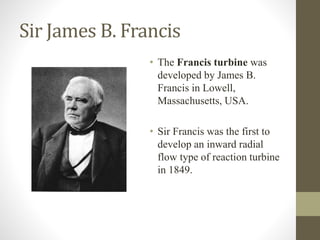
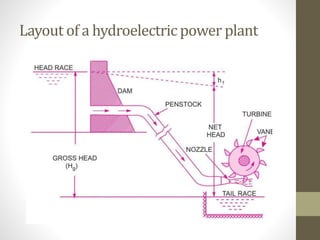
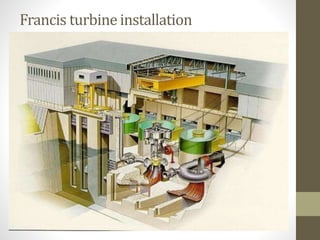
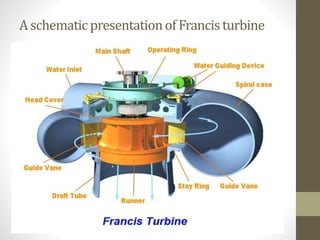
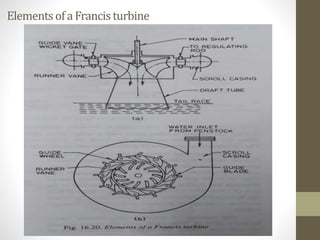
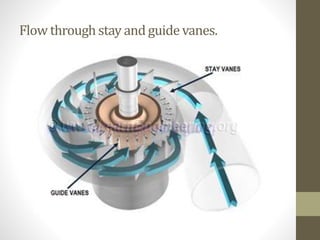
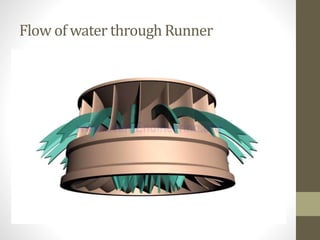
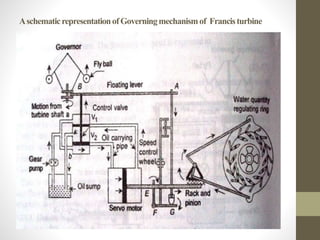
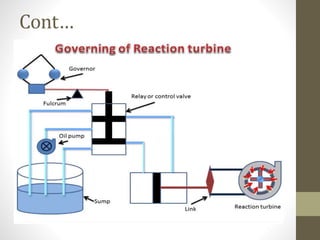
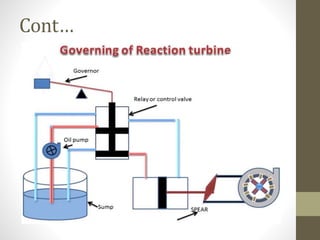
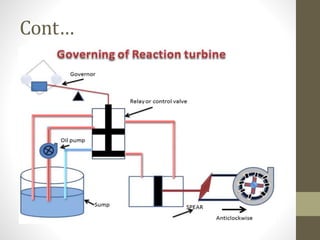


The Francis turbine is a mixed-flow reaction turbine that was developed by James B. Francis in 1849. It operates in a water head from 60 to 250 meters. Water enters the runner radially at the outer periphery and exits axially at the center. It uses both the kinetic and pressure energy of water to drive the turbine. Key components include a spiral casing, stay vanes, guide vanes, runner blades, and a draft tube. The guide vanes direct water onto the runner blades to efficiently convert the hydraulic energy of water into mechanical rotation of the shaft and electrical energy via a generator. The speed of the turbine is maintained constant via a governing mechanism that controls the guide vanes.


