







Belinda Griswold Sian Wu
How to Frame Your Campaign to Win
September 2010
About Resource Media
•  Communications Strategy
•  Execution and Outreach
•  Digital and Social Media
•  Environmental and Health Policy Focus
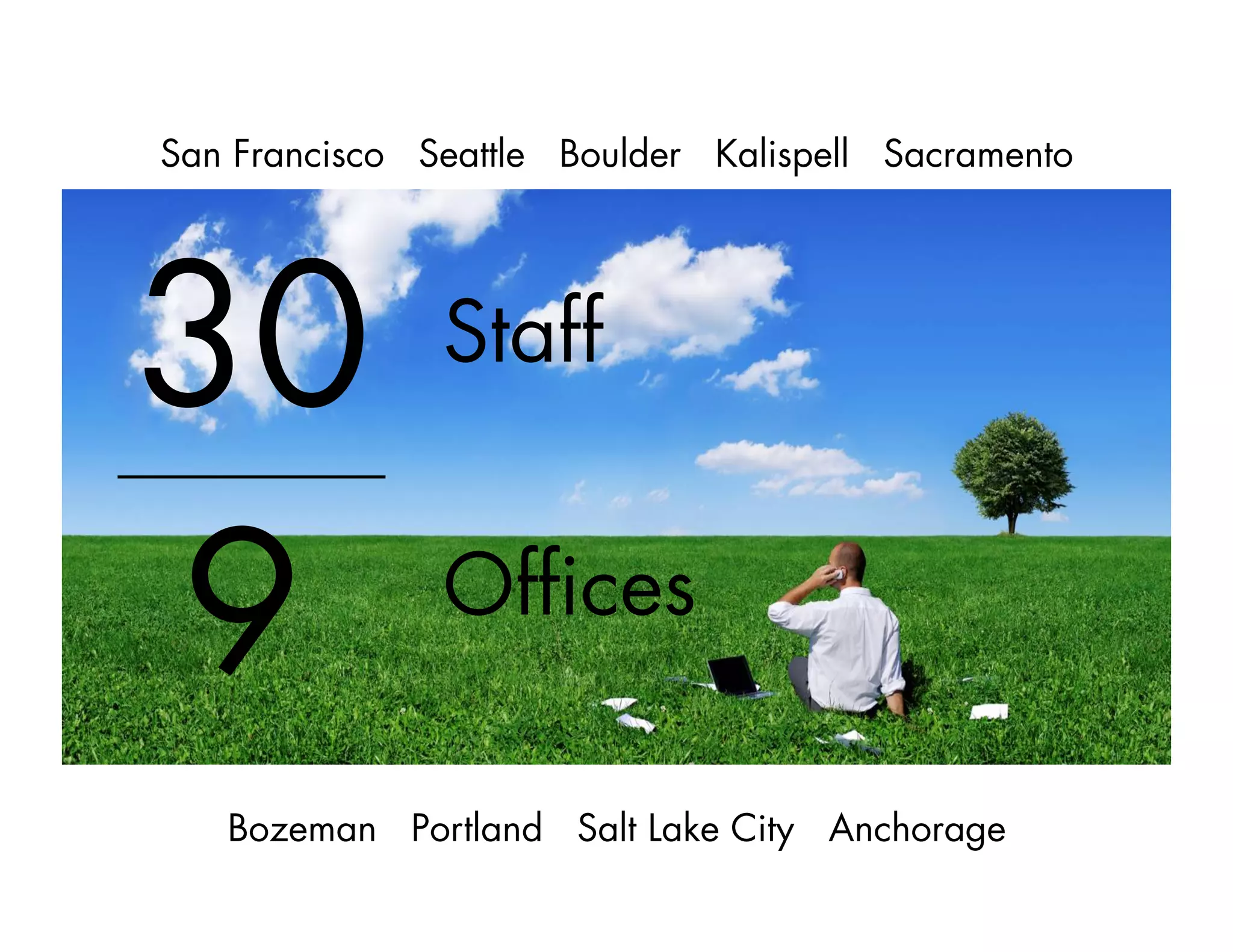
Staff
30
9 Offices
San Francisco Seattle Boulder Kalispell Sacramento
Bozeman Portland Salt Lake City Anchorage
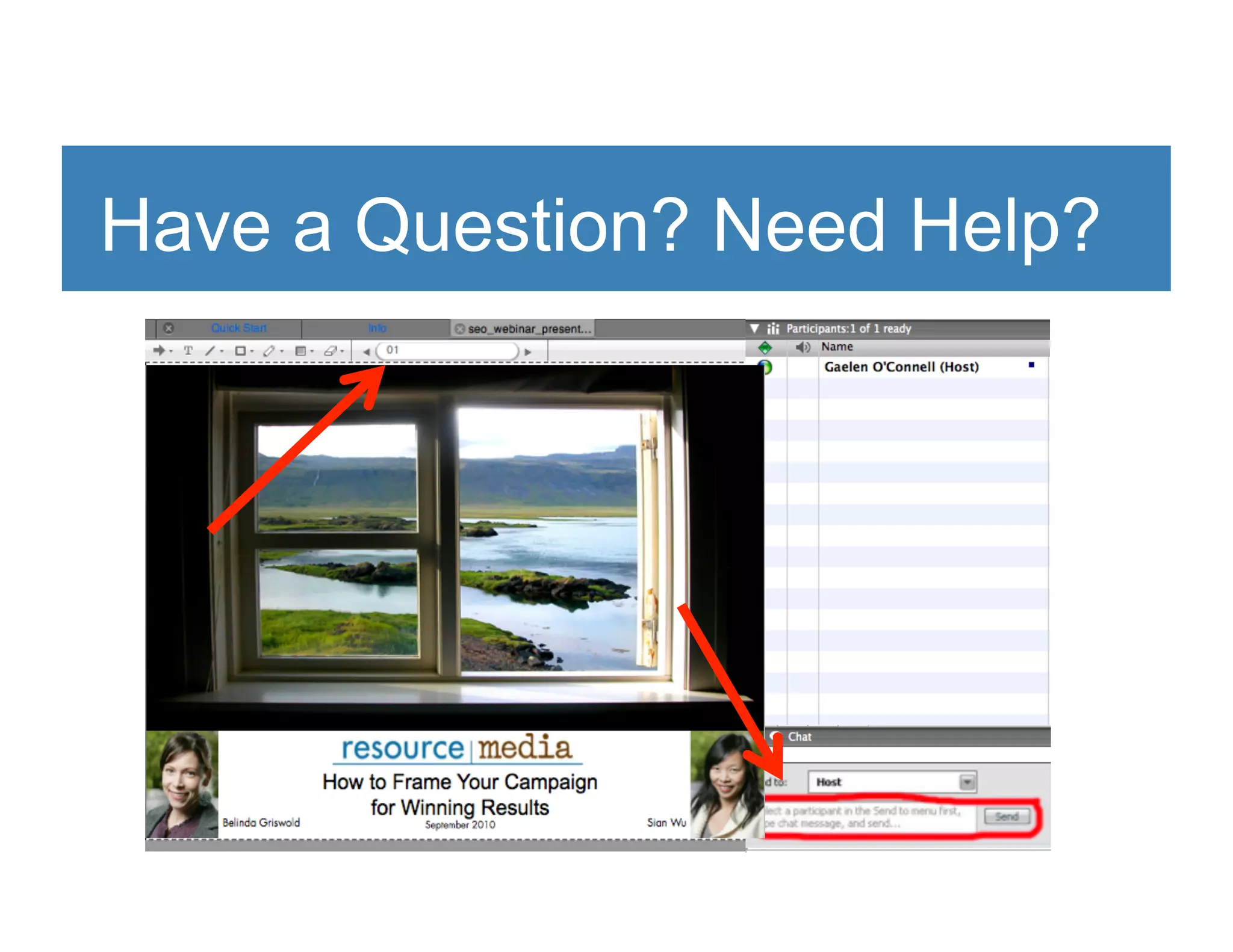
Have a Question? Need Help?
1. Understanding a frame
2. First steps to reframing
3. Creating a powerful, persuasive
message
4. Assembling your team of
messengers
What we’ll cover:
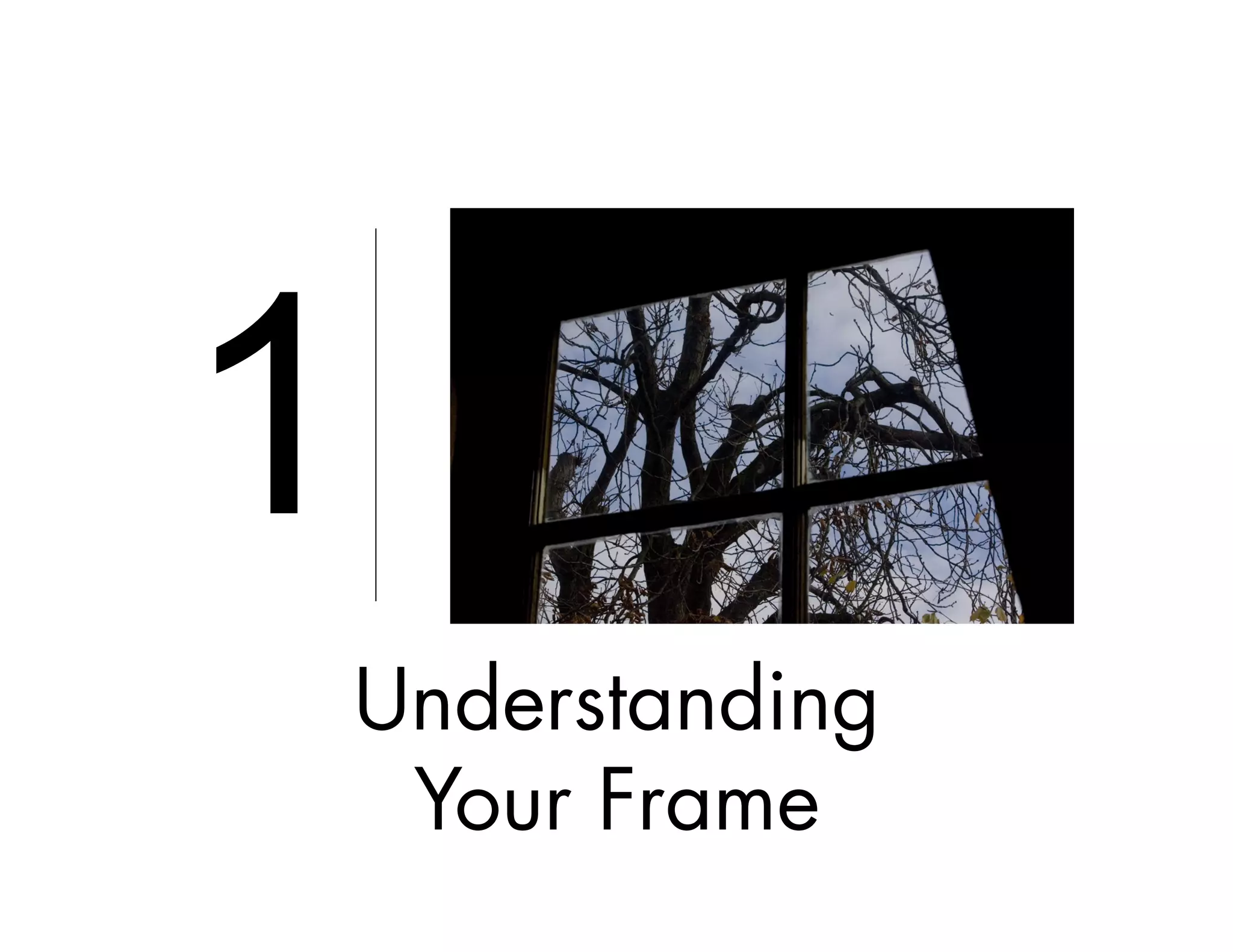
Understanding
Your Frame
1
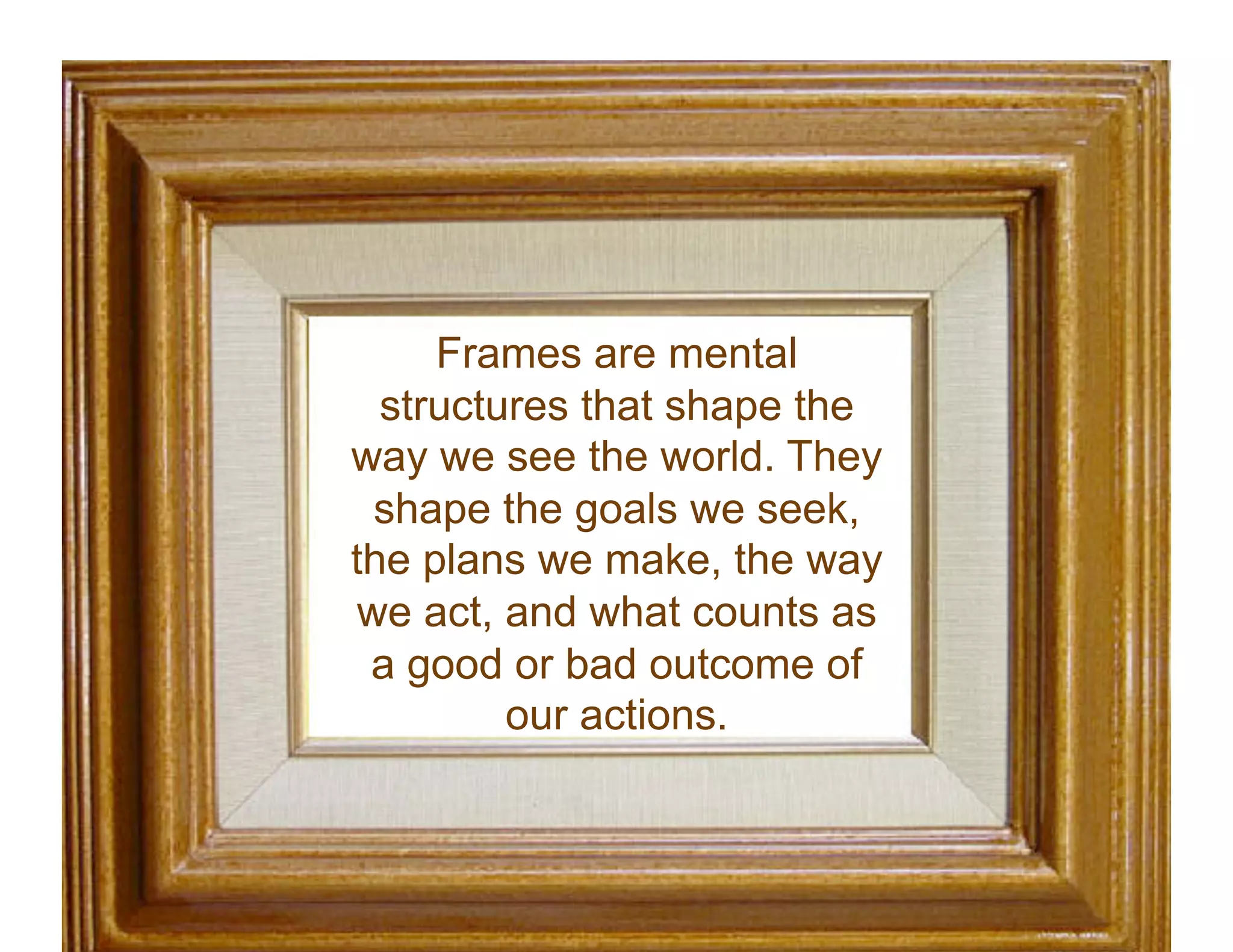
Frames are mental
structures that shape the
way we see the world. They
shape the goals we seek,
the plans we make, the way
we act, and what counts as
a good or bad outcome of
our actions.
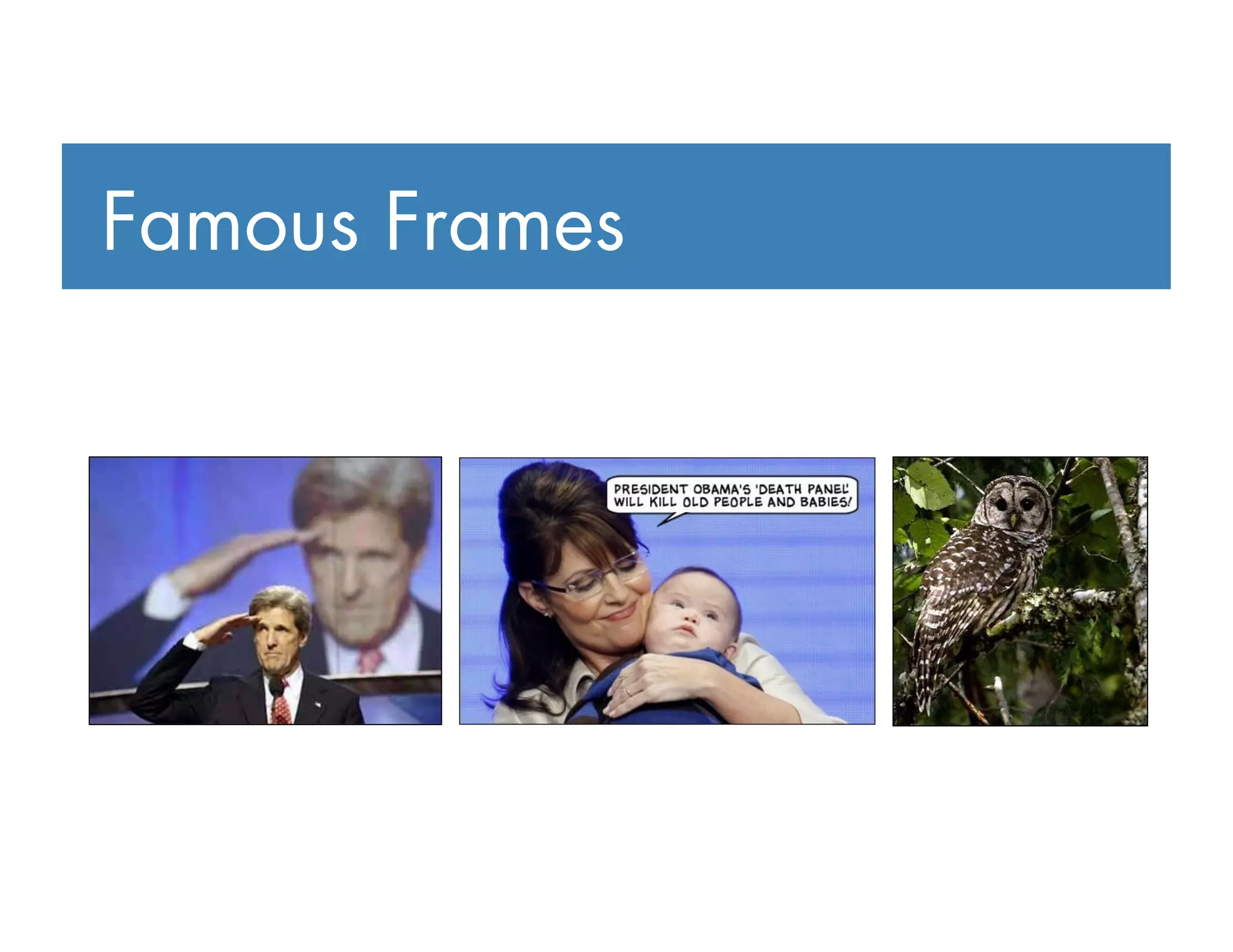
Famous Frames
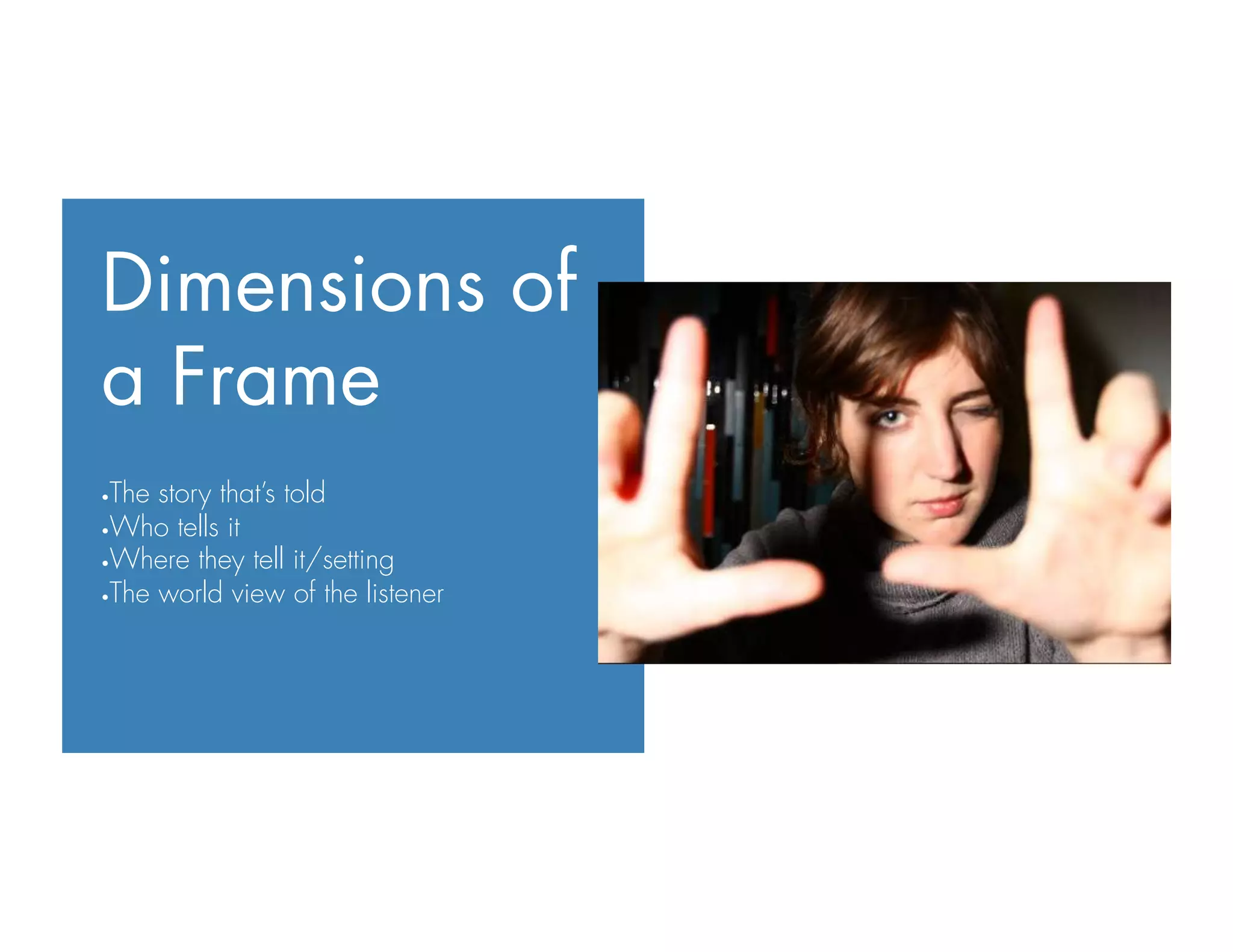
Dimensions of
a Frame
• The story that’s told
• Who tells it
• Where they tell it/setting
• The world view of the listener
Is the current
frame to
blame?
Case Study:
Energy vs.
Wilderness
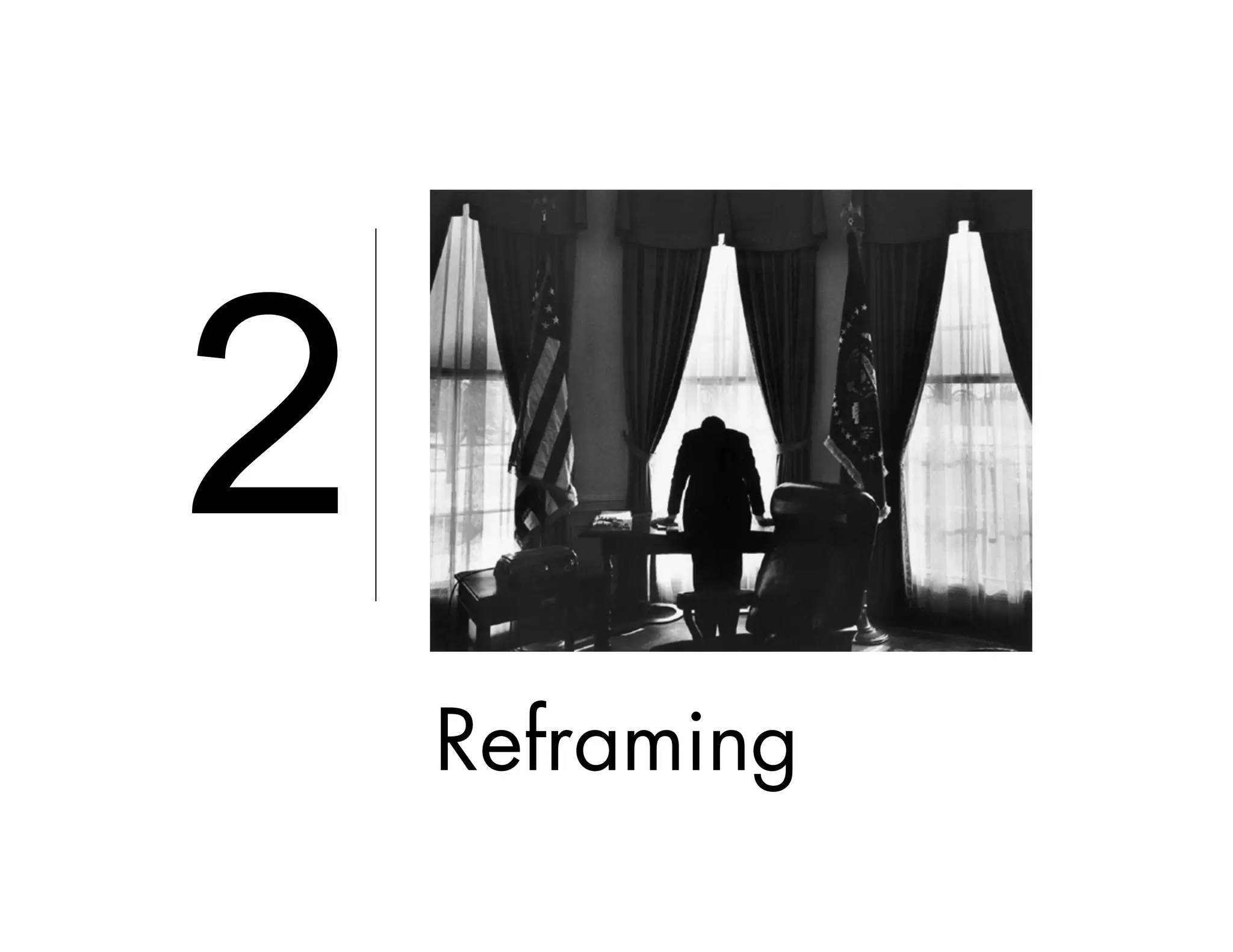
Reframing
2
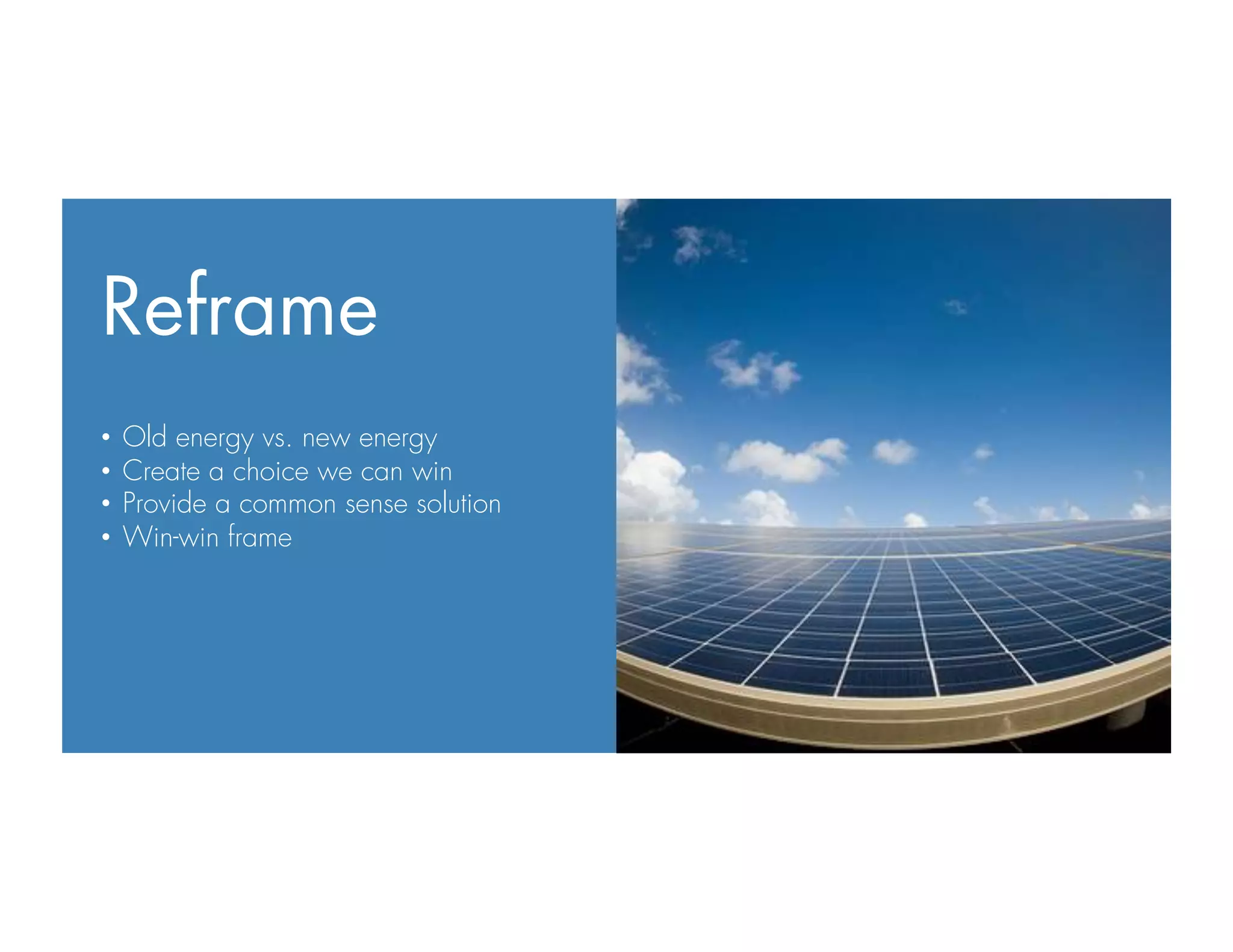
Reframe
•  Old energy vs. new energy
•  Create a choice we can win
•  Provide a common sense solution
•  Win-win frame
Key to
Reframing
•  Identify the problem
•  Substitute a better question
•  Reframe positively
Or this:
Solar and wind create
more jobs, better worker
health, study says
This:
Energy workers fight
for their jobs
Shoot your
movie
•  Follow these steps!
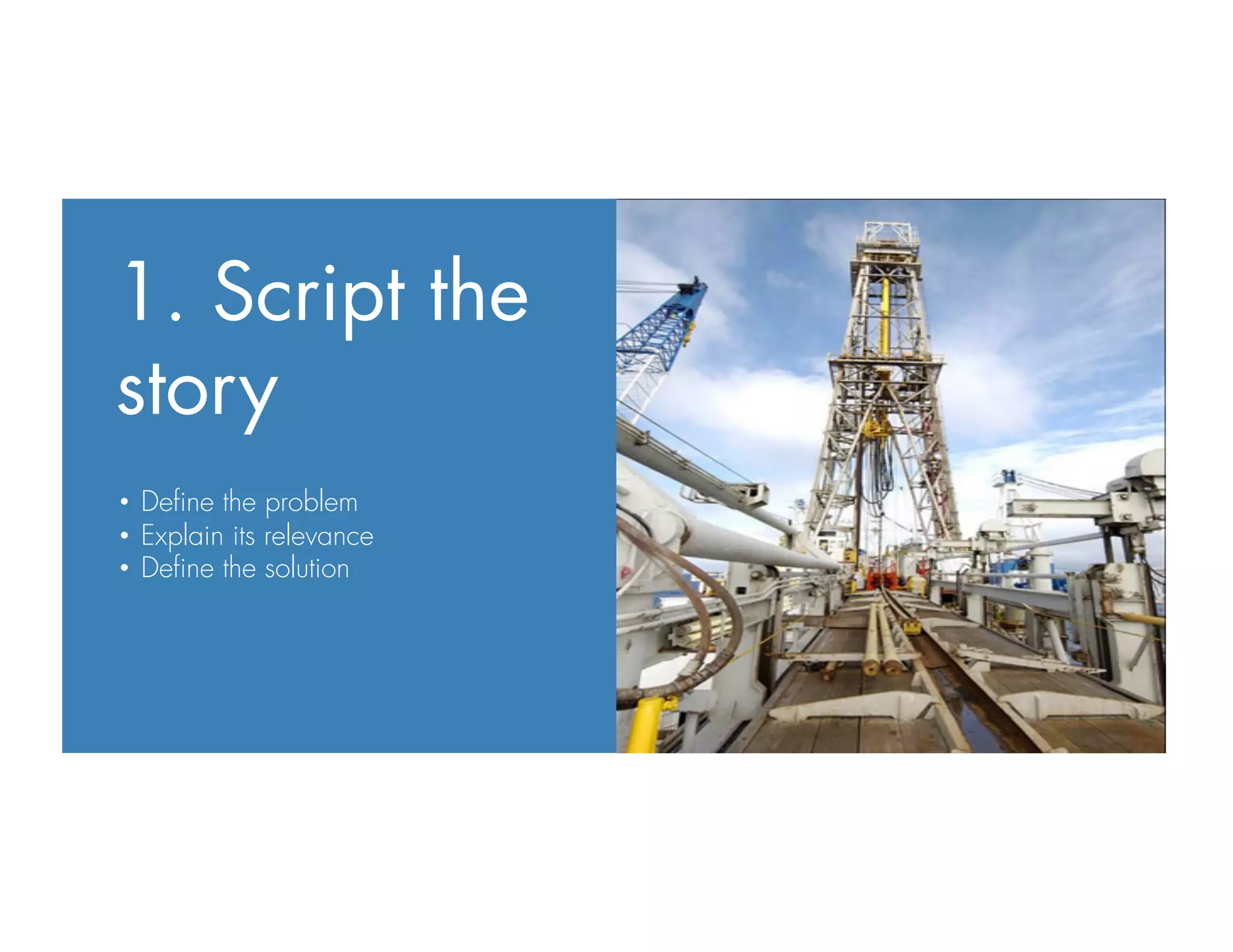
1. Script the
story
•  Define the problem
•  Explain its relevance
•  Define the solution
2. Cast the
Actors
•  Who’s your villain?
•  Who’s your hero? Think of real
people
•  Who would you rather ally yourself
with?
Vs.
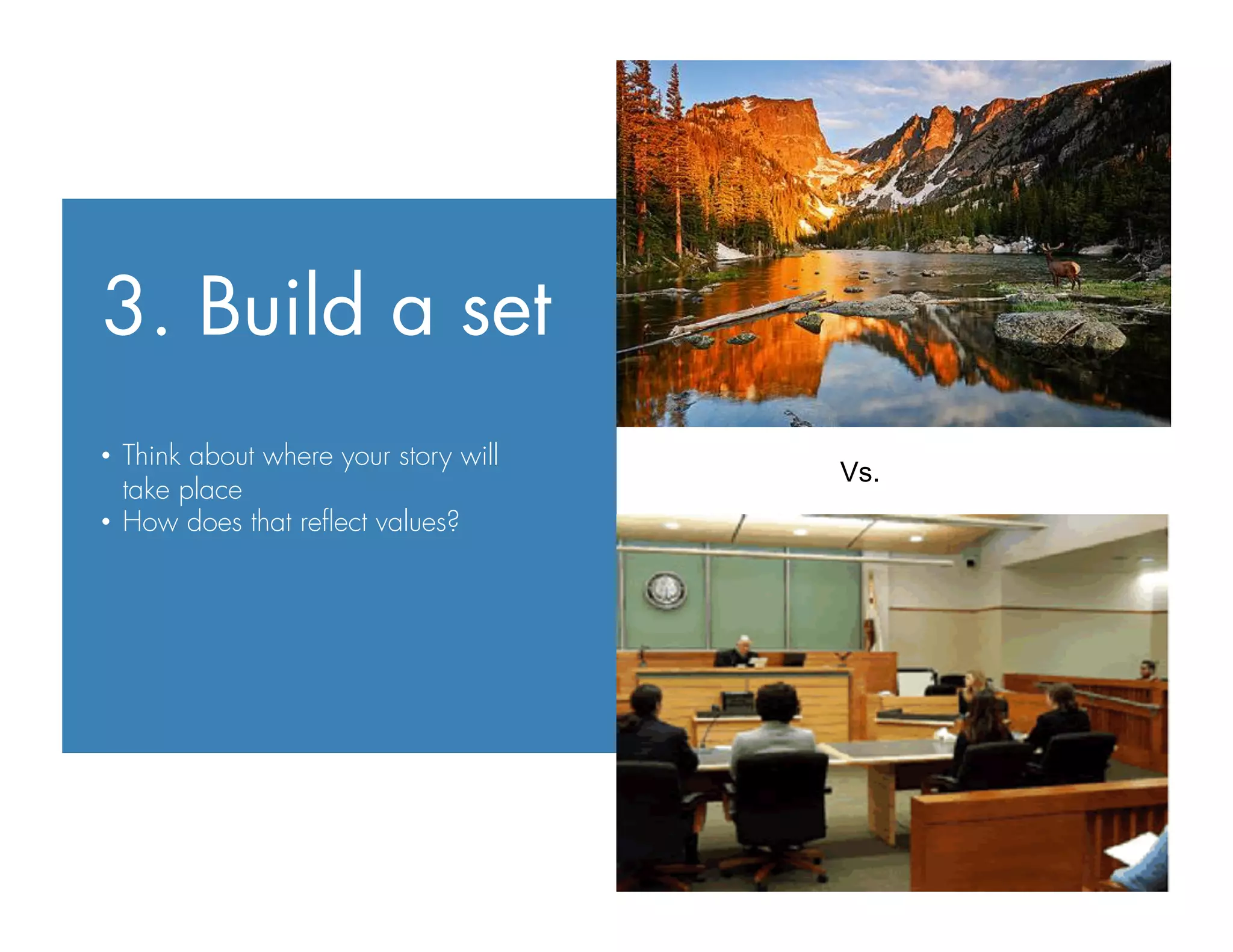
3. Build a set
•  Think about where your story will
take place
•  How does that reflect values?
Vs.
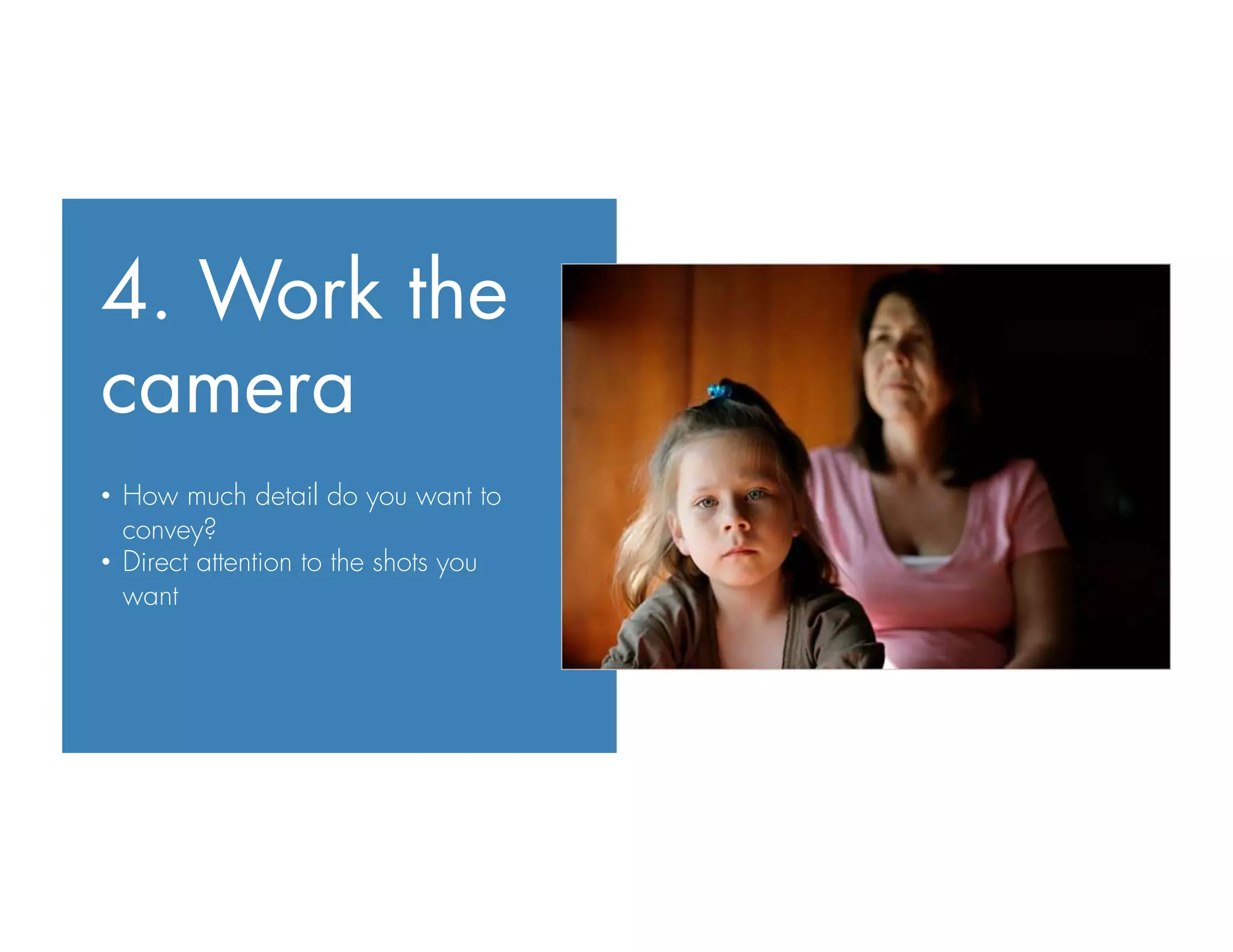
4. Work the
camera
•  How much detail do you want to
convey?
•  Direct attention to the shots you
want
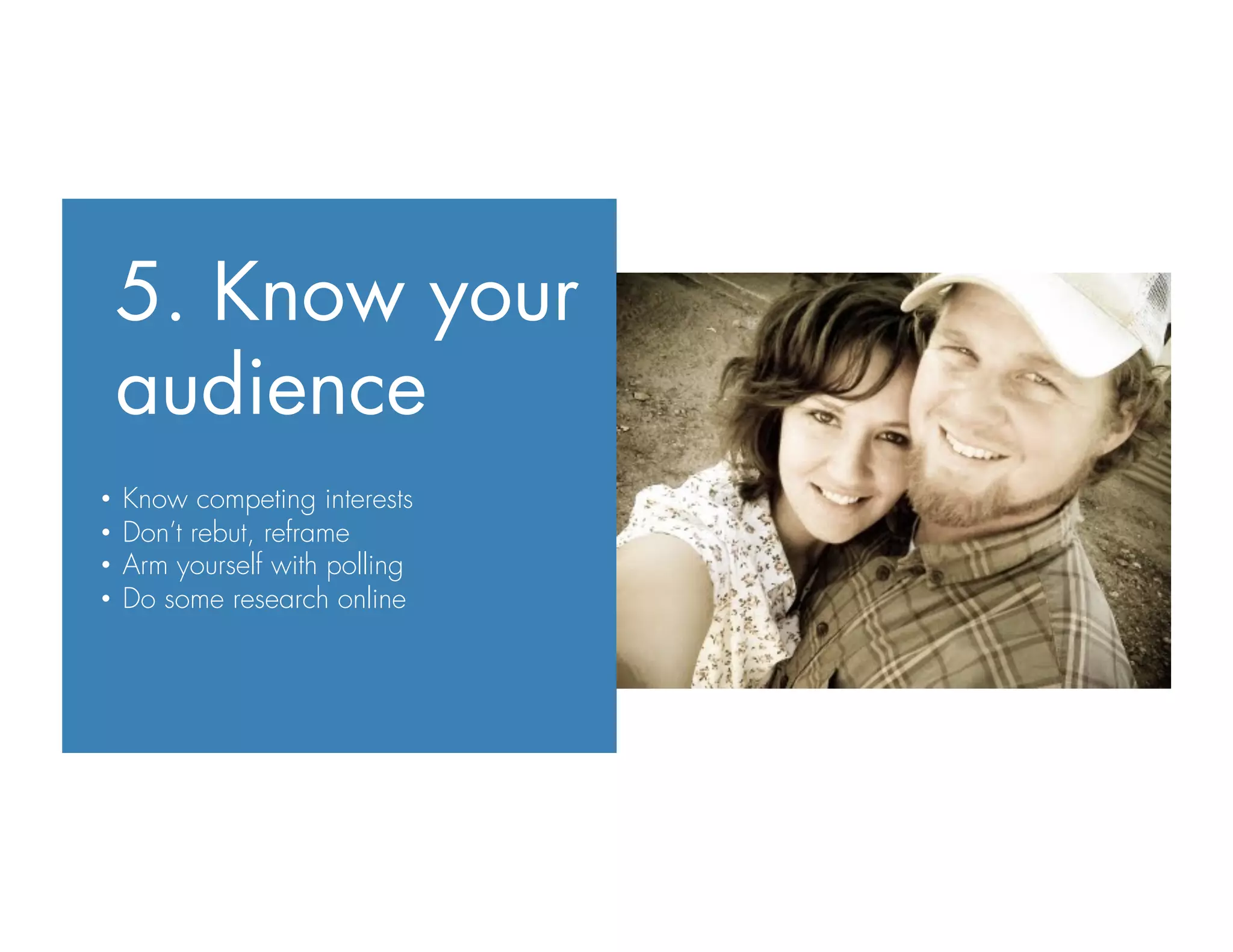
5. Know your
audience
•  Know competing interests
•  Don’t rebut, reframe
•  Arm yourself with polling
•  Do some research online
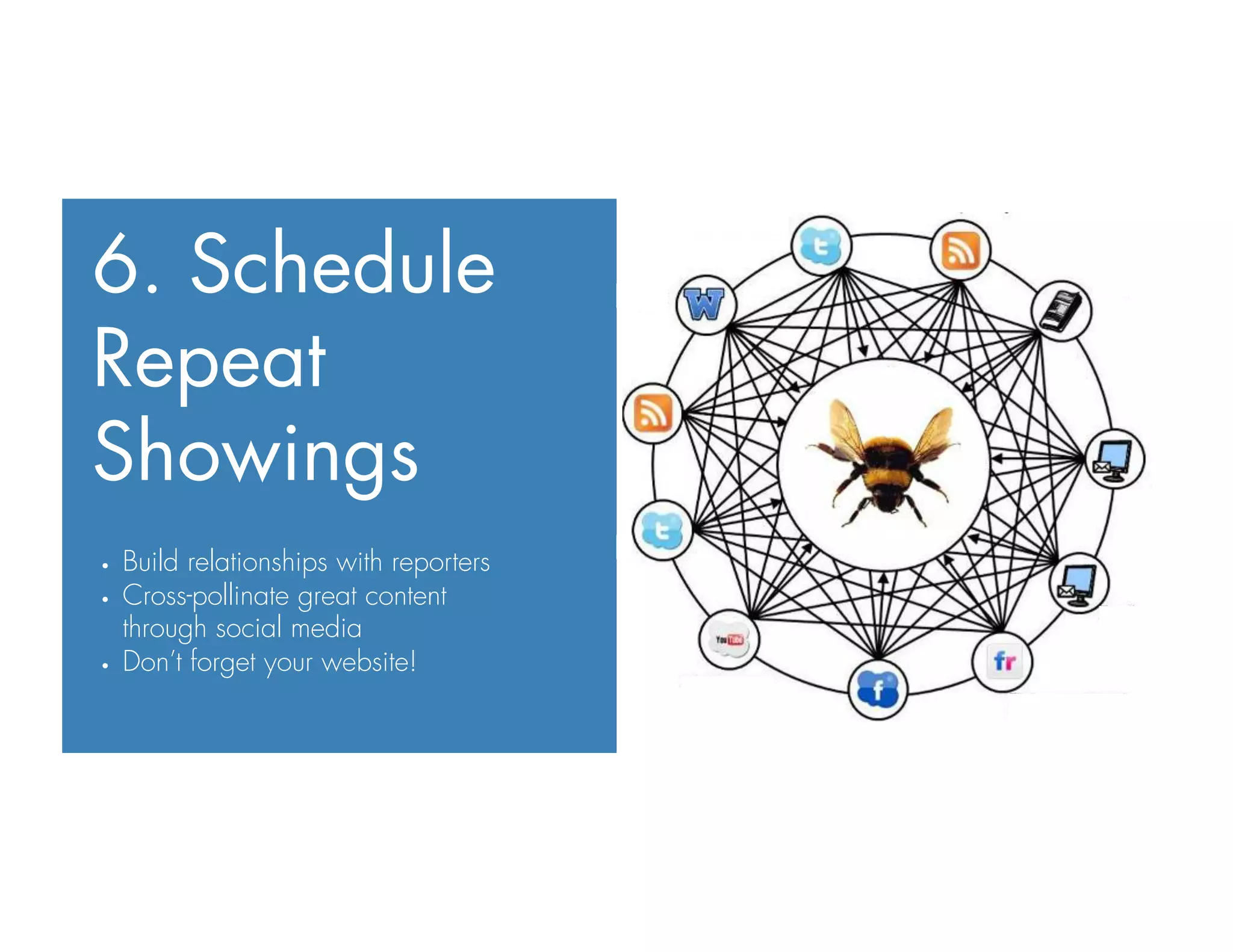
6. Schedule
Repeat
Showings
•  Build relationships with reporters
•  Cross-pollinate great content
through social media
•  Don’t forget your website!
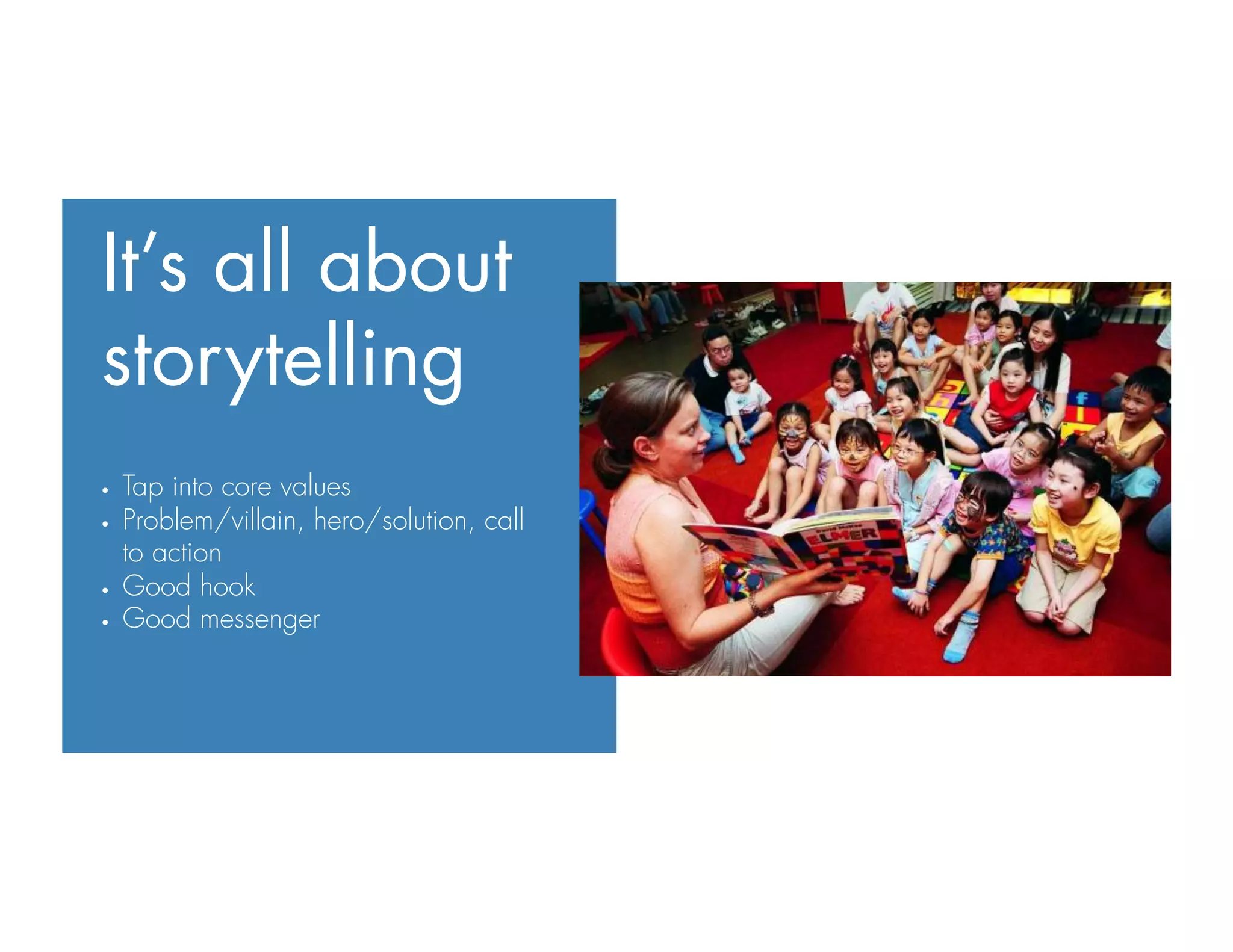
It’s all about
storytelling
•  Tap into core values
•  Problem/villain, hero/solution, call
to action
•  Good hook
•  Good messenger
Powerful Messages
3
Your Message
•  What are the values at stake?
•  What’s the threat?
•  What’s the solution?
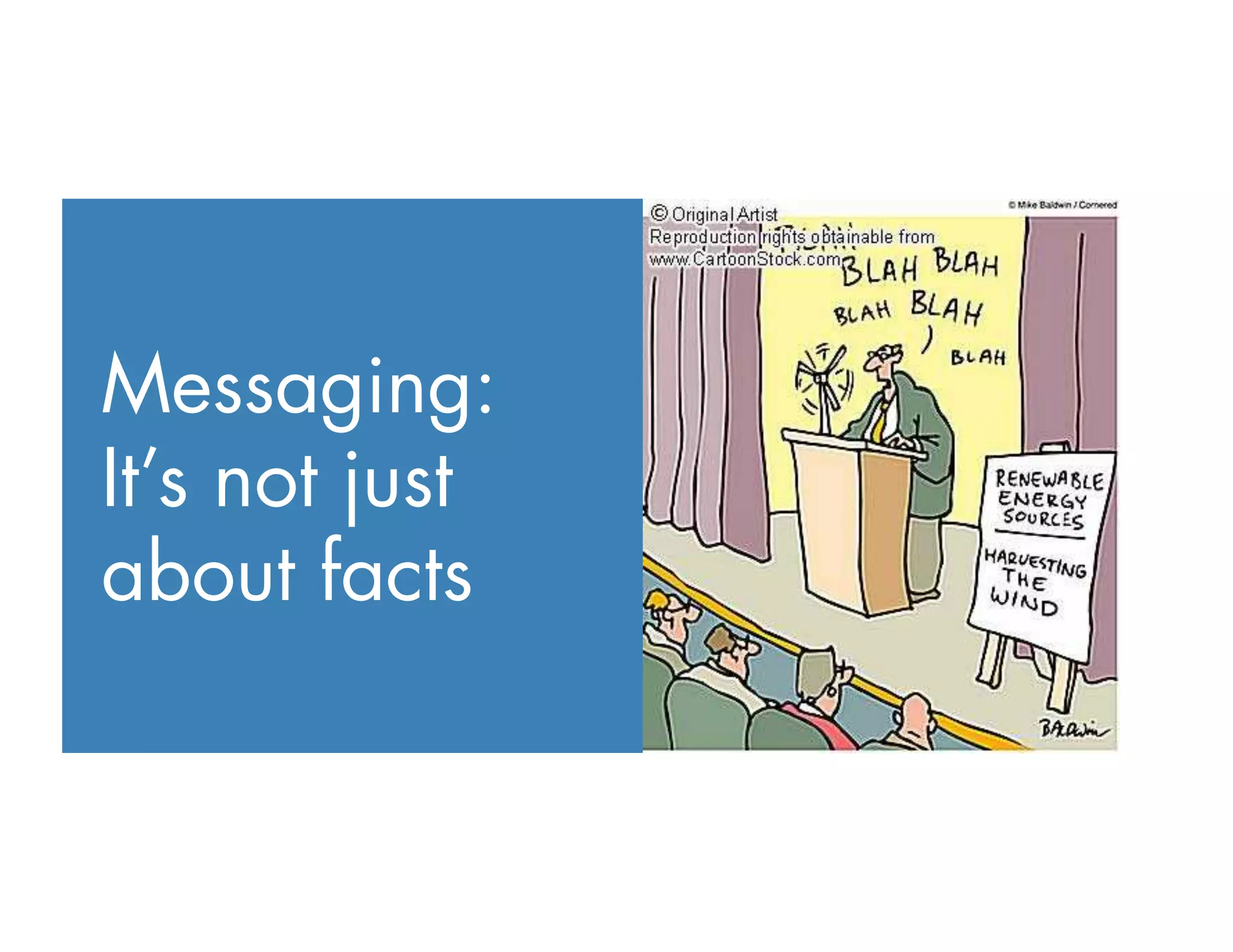
Messaging:
It’s not just
about facts
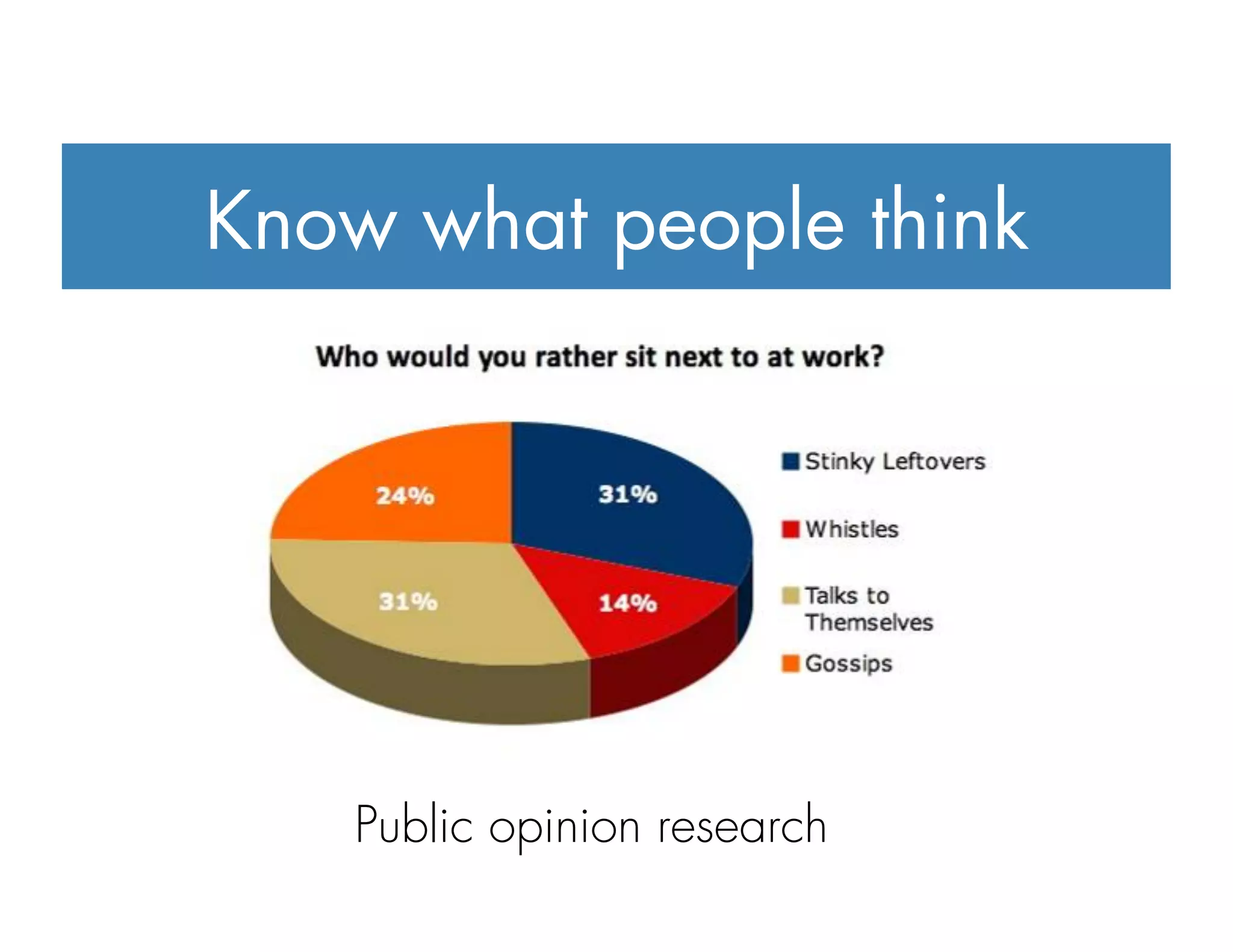
Know what people think
Public opinion research
No time or money?
Alternatives:
•  Gather existing polling
•  News audits
•  Social media monitoring
•  Informal testing with your
sample target audience
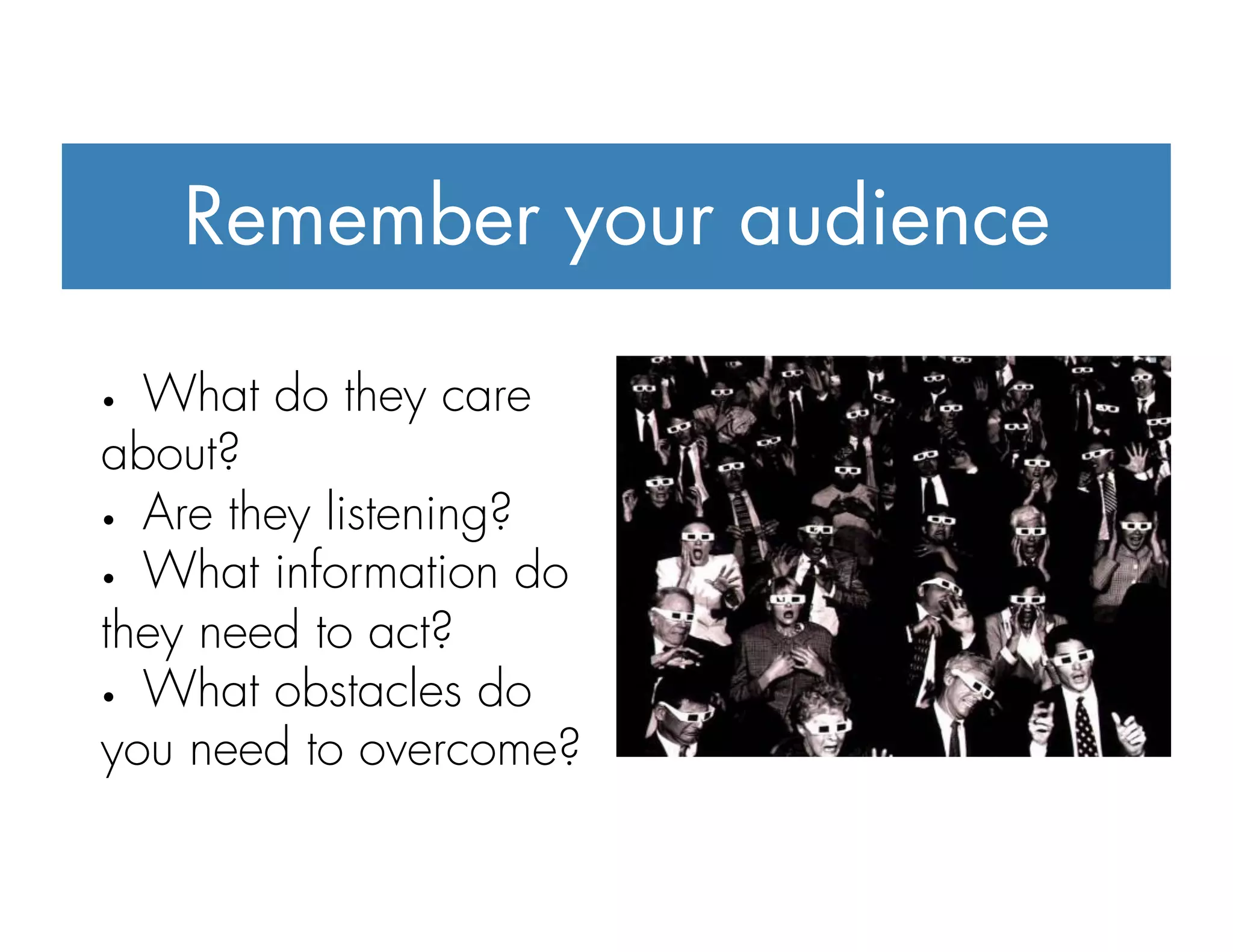
Remember your audience
•  What do they care
about?
•  Are they listening?
•  What information do
they need to act?
•  What obstacles do
you need to overcome?
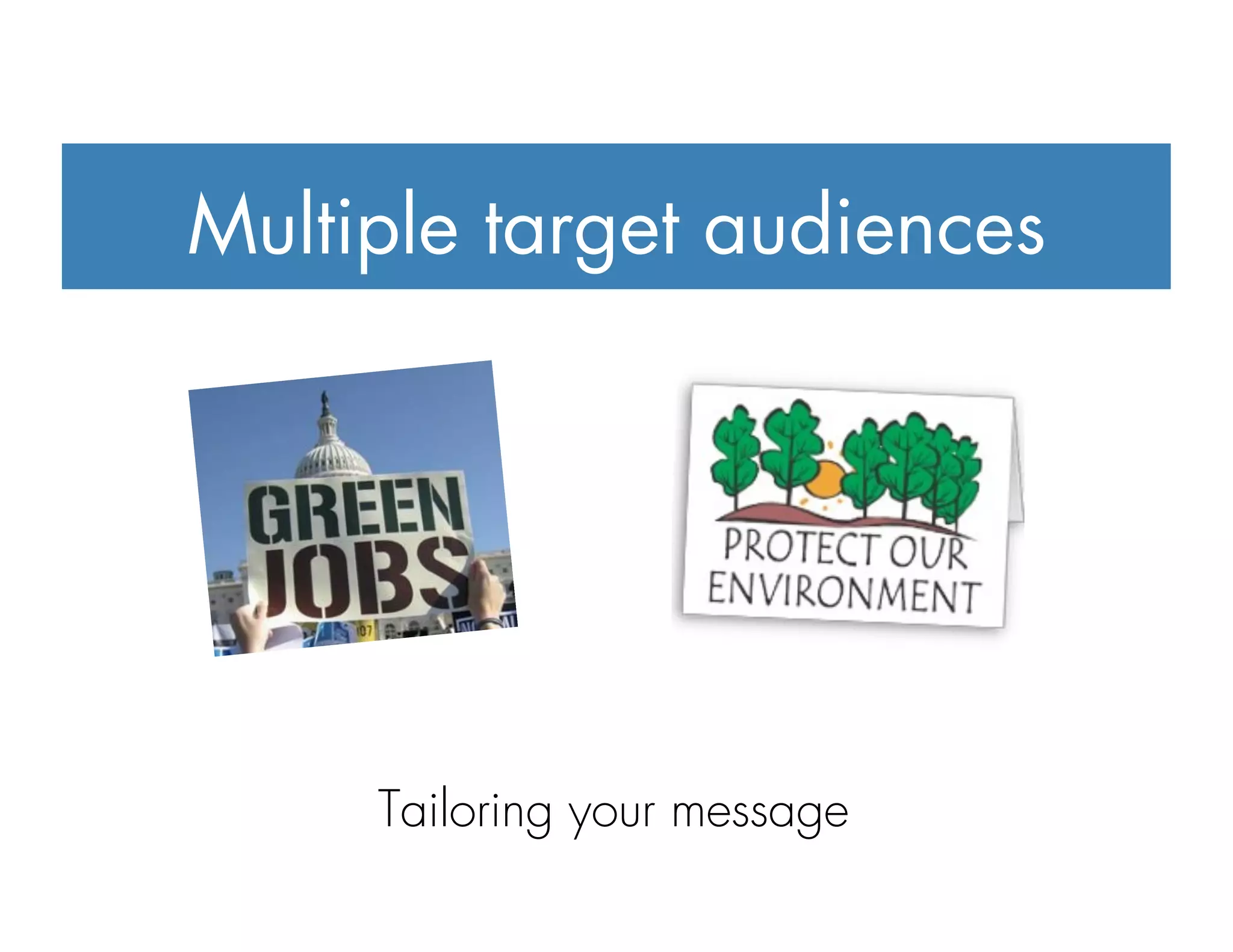
Multiple target audiences
Tailoring your message
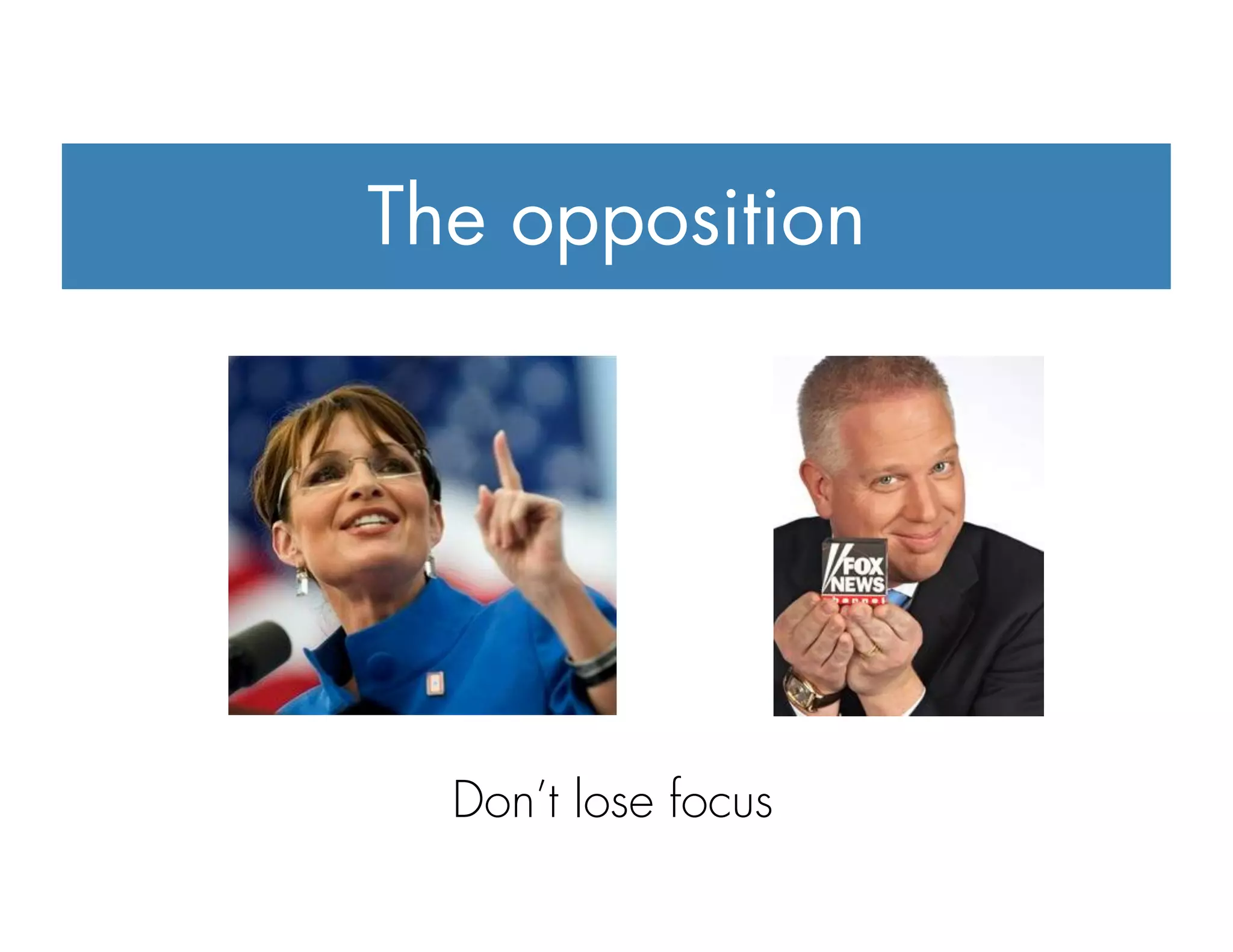
The opposition
Don’t lose focus
Values & core concerns
What Moves Your Audience?
•  Health & Safety
•  Prosperity
•  Family
•  Legacy
•  Freedom
What values
are at risk?
What Values Are at
Risk?
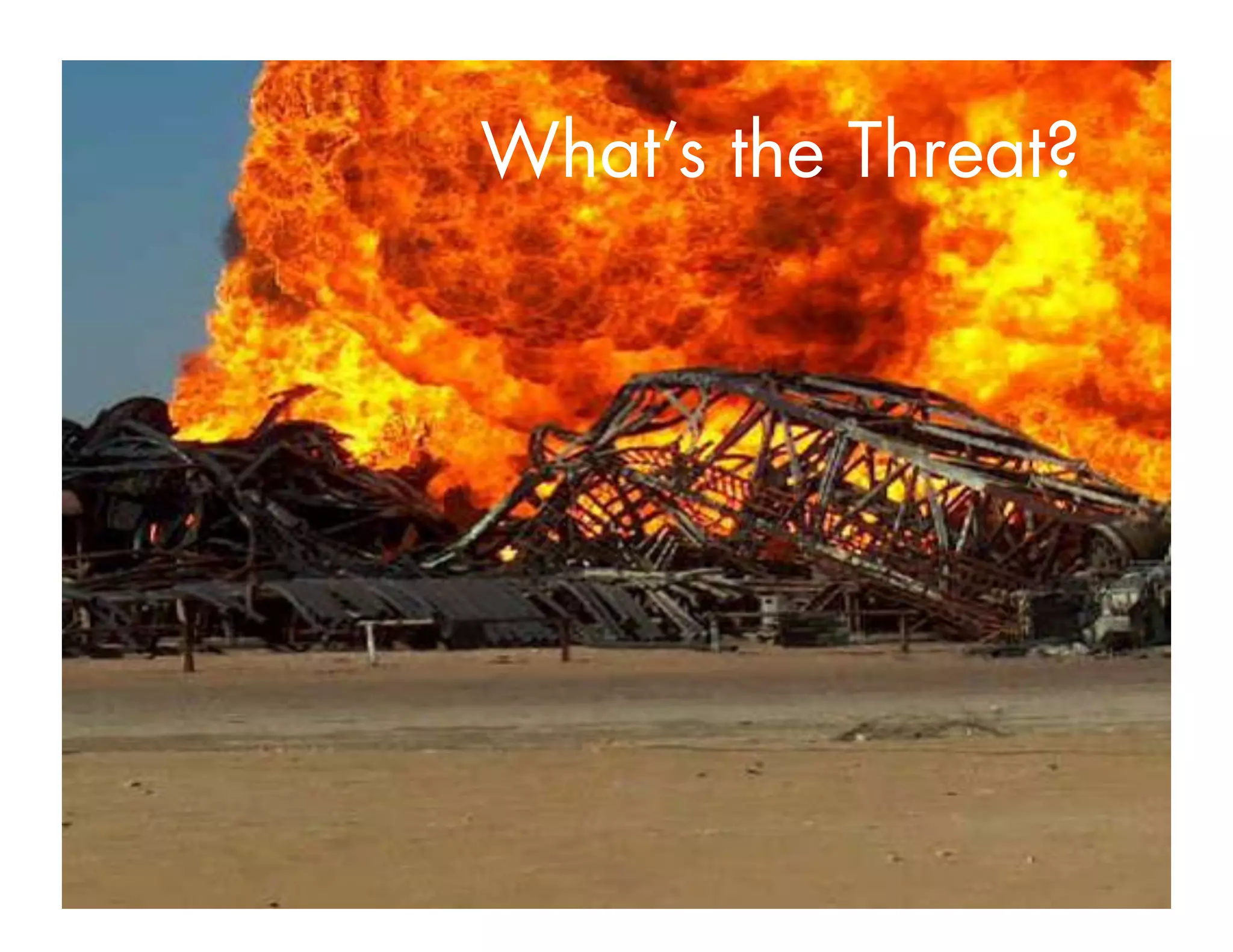
What’s the
threat?
What’s the Threat?
What’s the
solution?
What’s the Solution?
Judge your message
"  Are the core values clear?
"  Is the threat convincing?
"  Is the solution simple and “common sense”?
"  Is the language “plain English”?
"  Are the spokespeople credible?
"  Is the call to action compelling, without being shrill?
"  Is the message simple enough for a 13-year-old?
"  Is the message about results? (Rather than process)
"  Are you ready for…
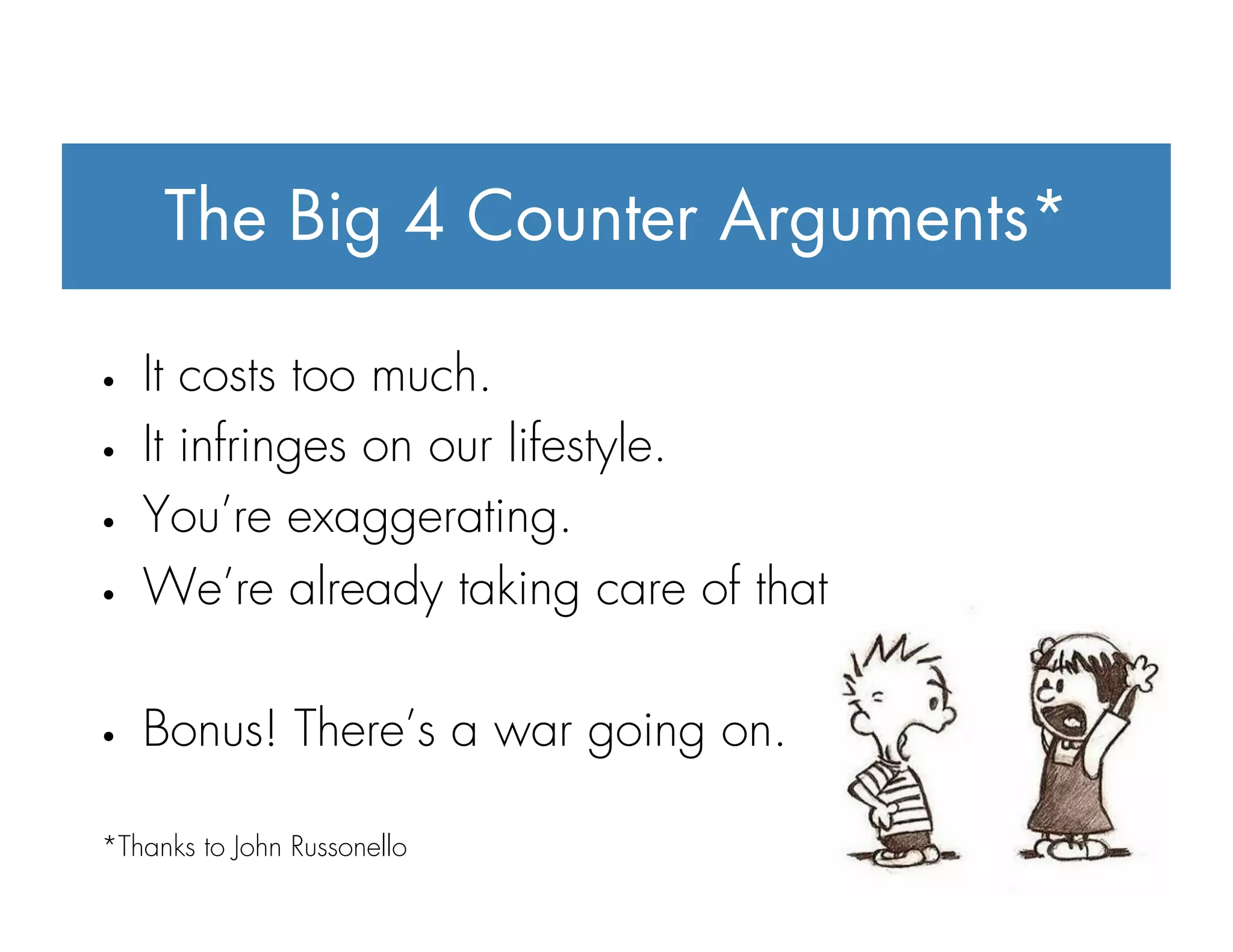
The Big 4 Counter Arguments*
•  It costs too much.
•  It infringes on our lifestyle.
•  You’re exaggerating.
•  We’re already taking care of that.
•  Bonus! There’s a war going on.
*Thanks to John Russonello
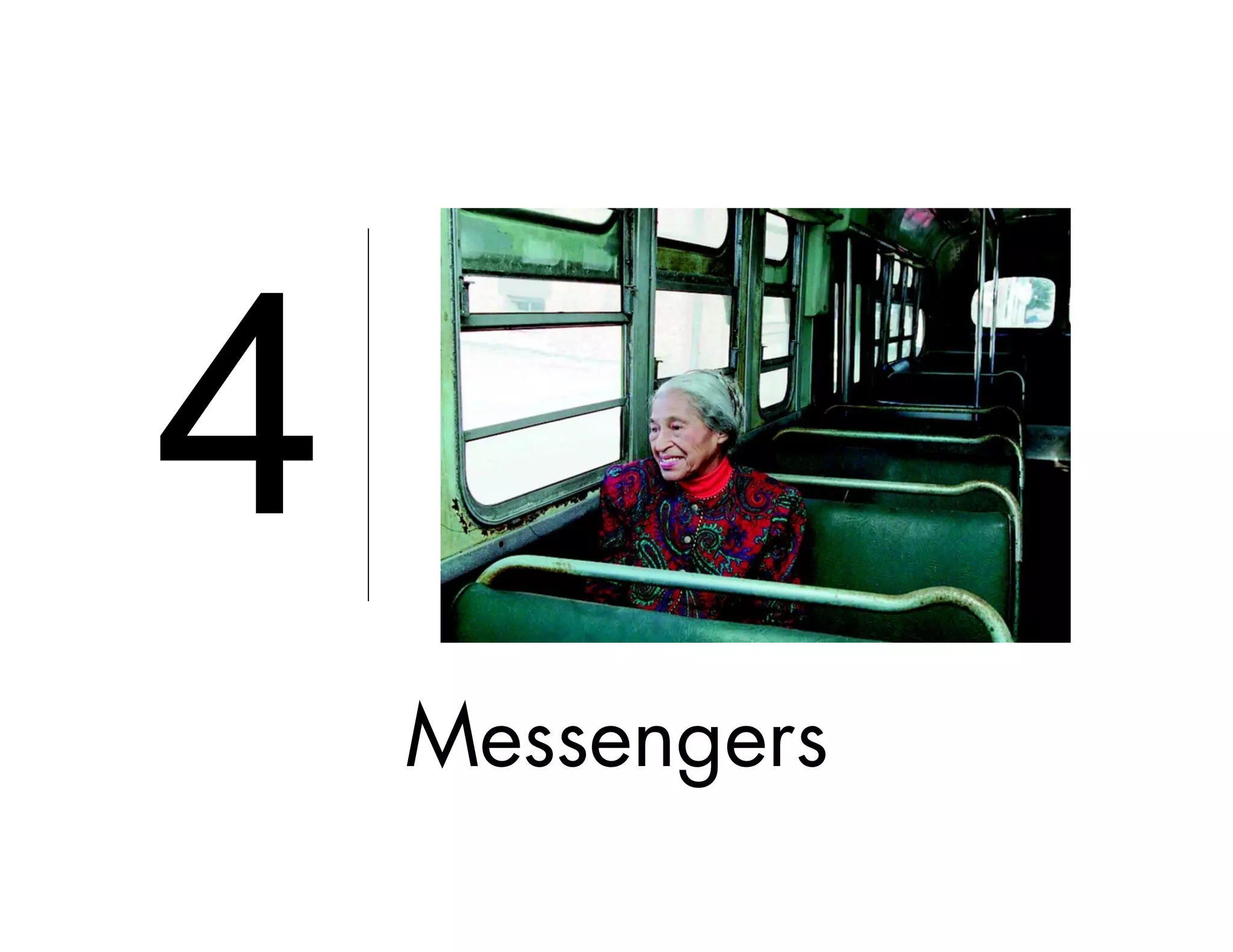
Messengers
4
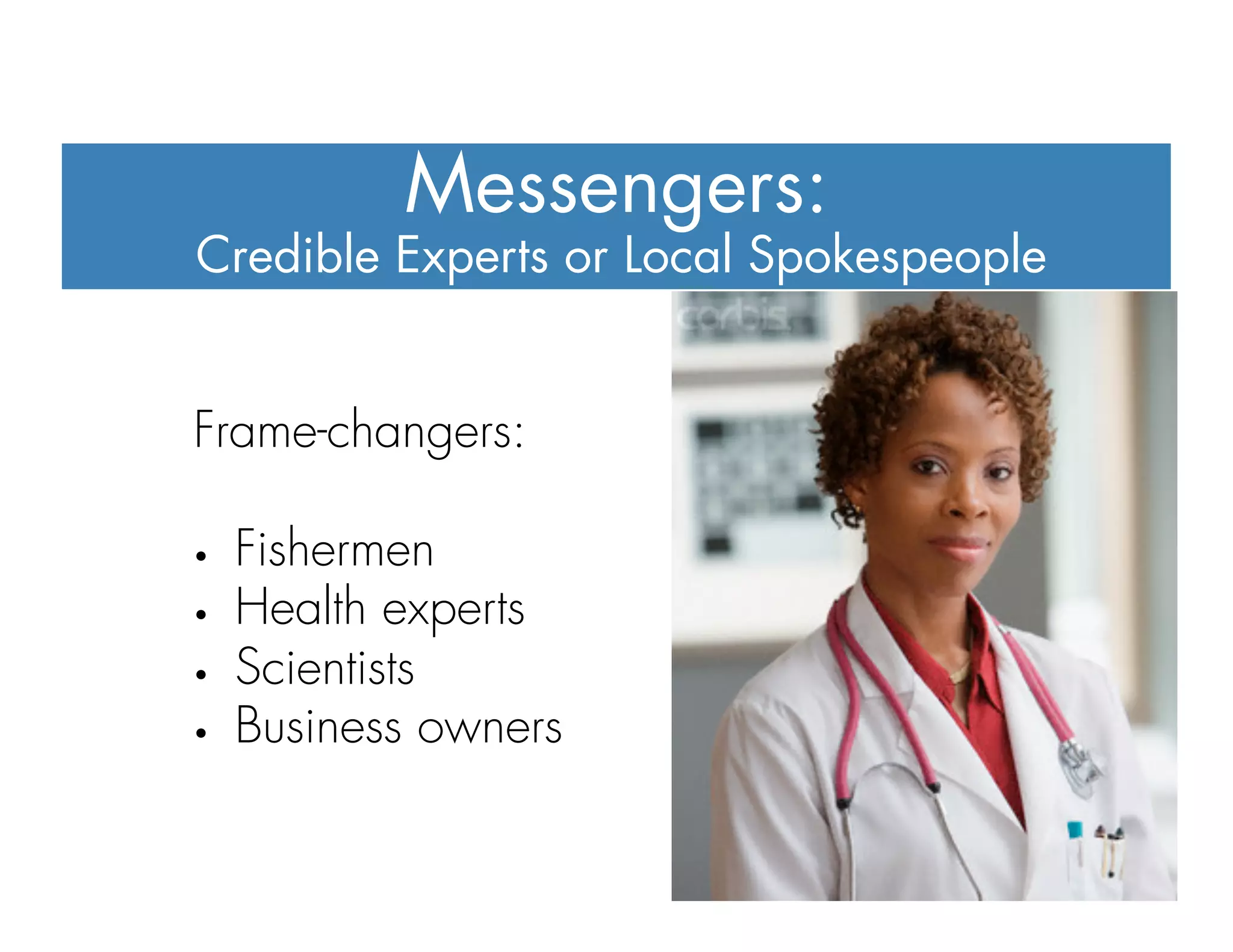
Credible Experts or Local Spokespeople
Messengers:
Frame-changers:
•  Fishermen
•  Health experts
•  Scientists
•  Business owners
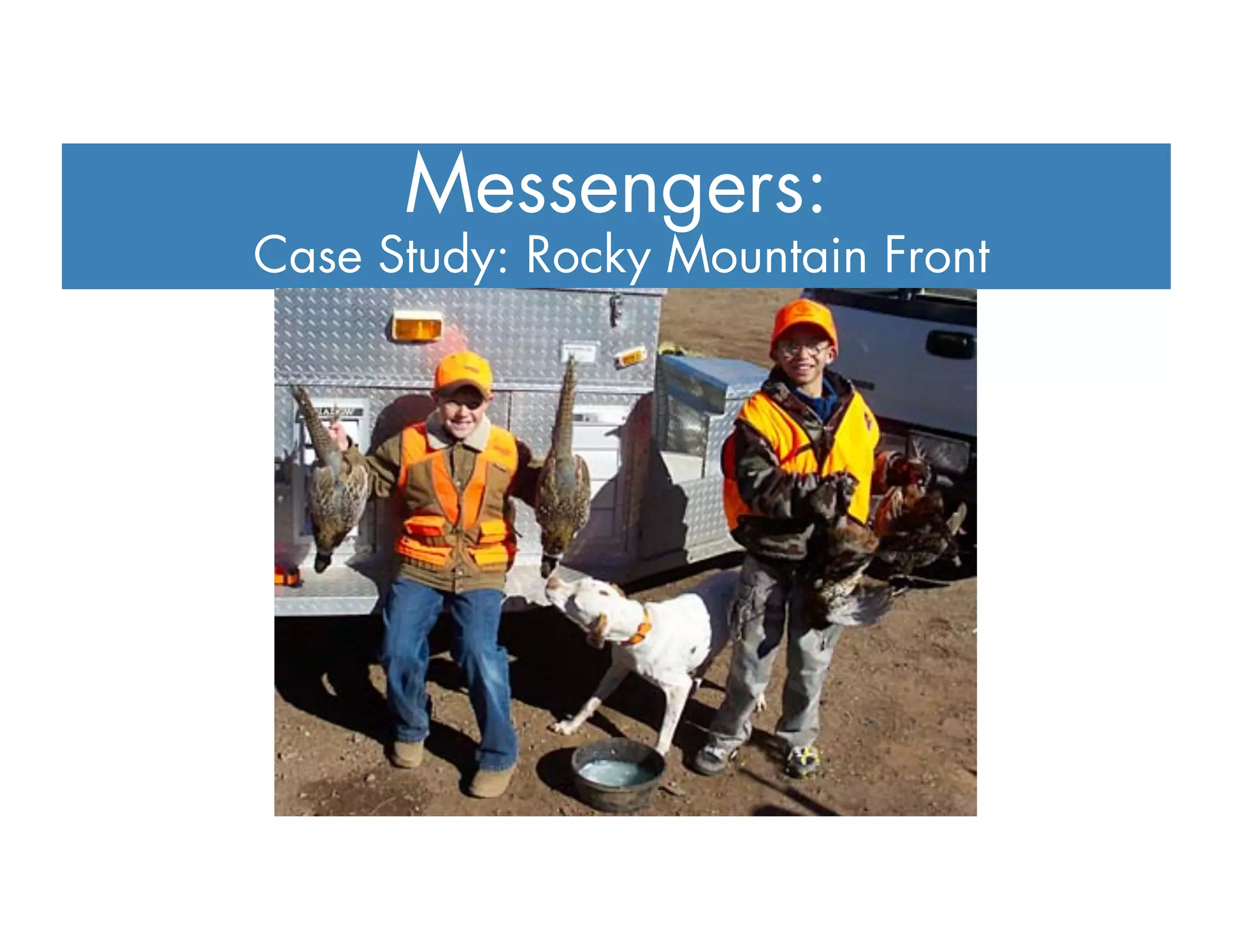
Case Study: Rocky Mountain Front
Messengers:
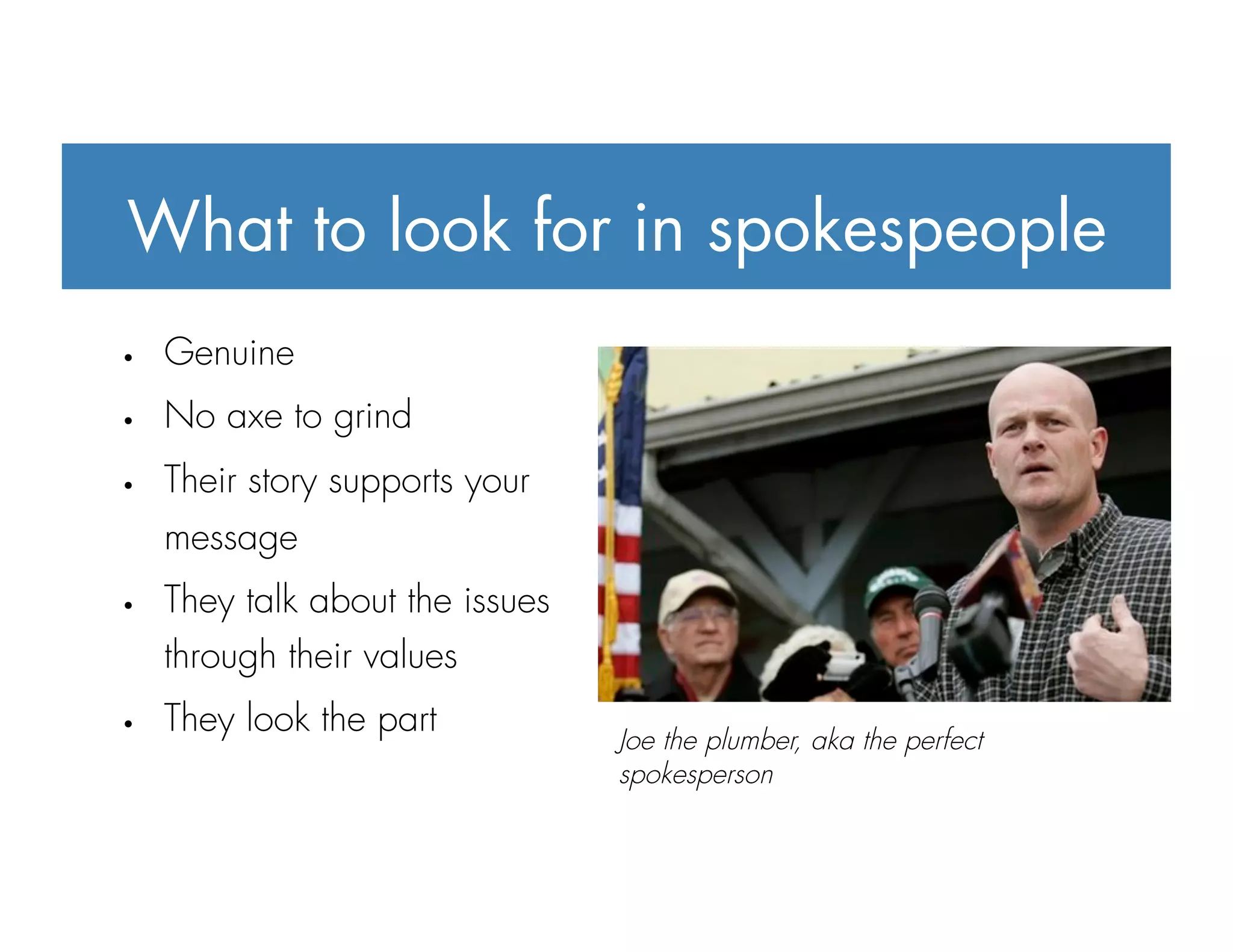
What to look for in spokespeople
Joe the plumber, aka the perfect
spokesperson
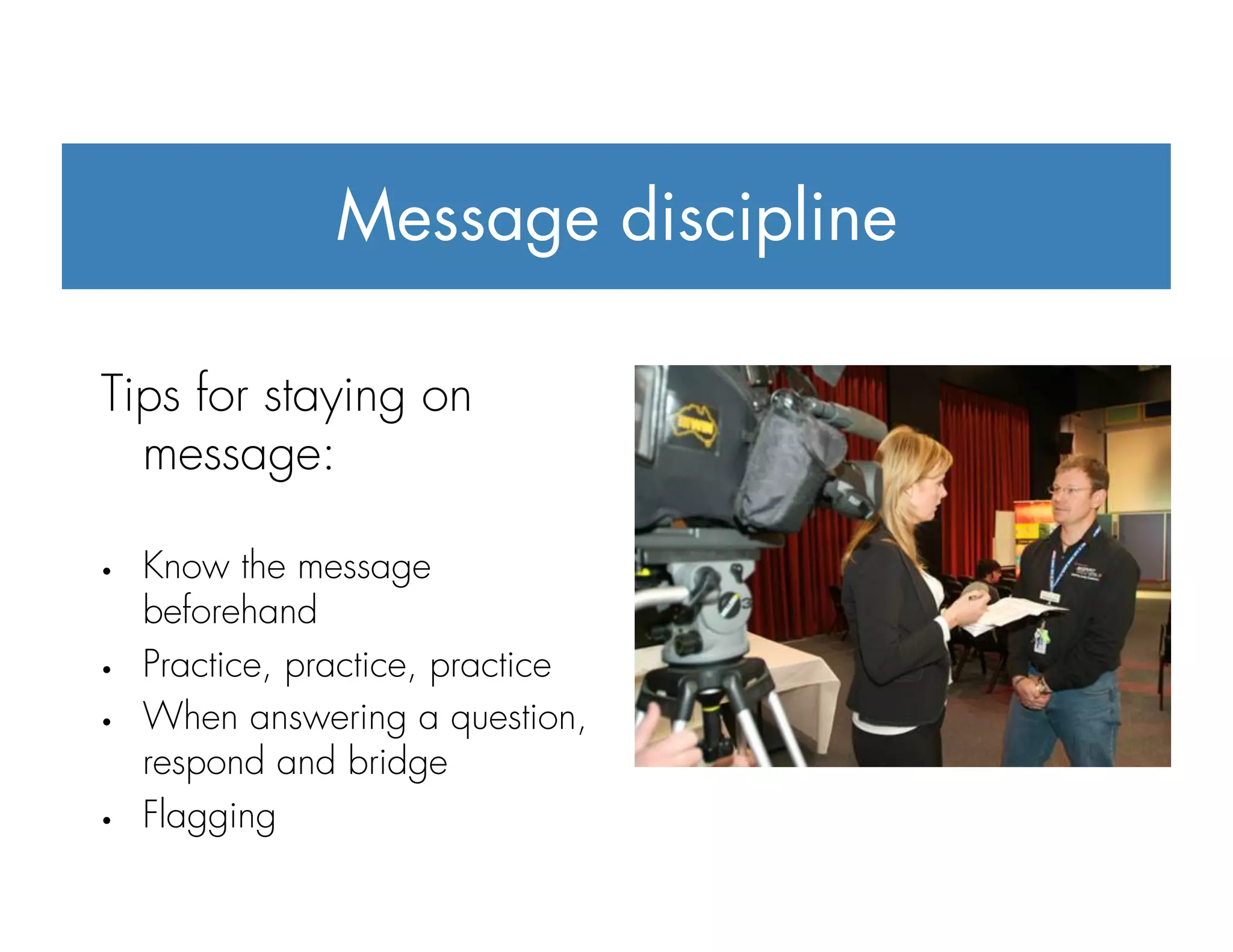
Message discipline
Tips for staying on
message:
•  Know the message
beforehand
•  Practice, practice, practice
•  When answering a question,
respond and bridge
•  Flagging
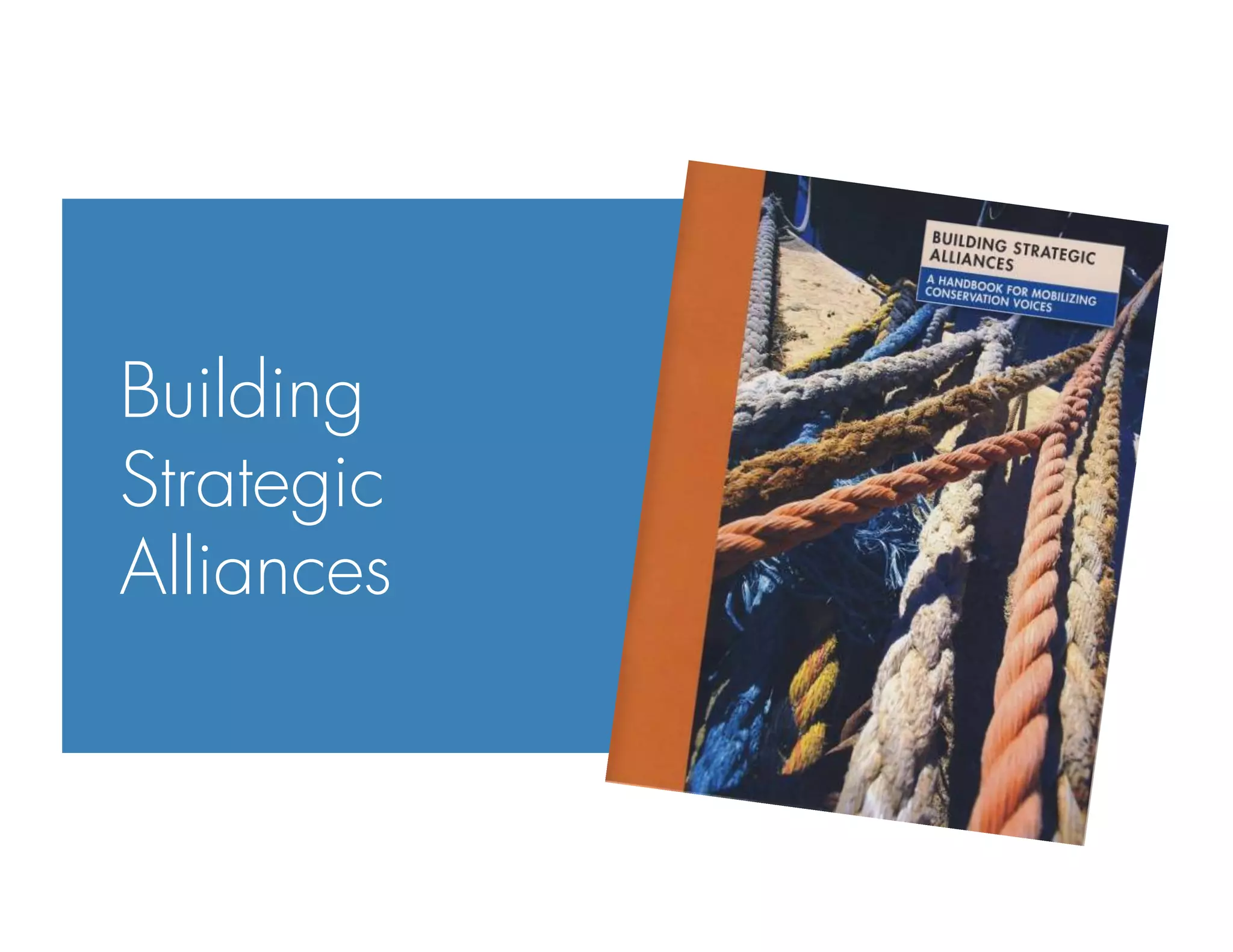
Building
Strategic
Alliances
5 Take-Aways
Takeaways:
•  If you don’t tell your story,
someone else will tell it for
you.
•  Know your audience and
what matters to them.
•  Your messenger can be just
as important as the
message.
•  Practice, practice, practice!
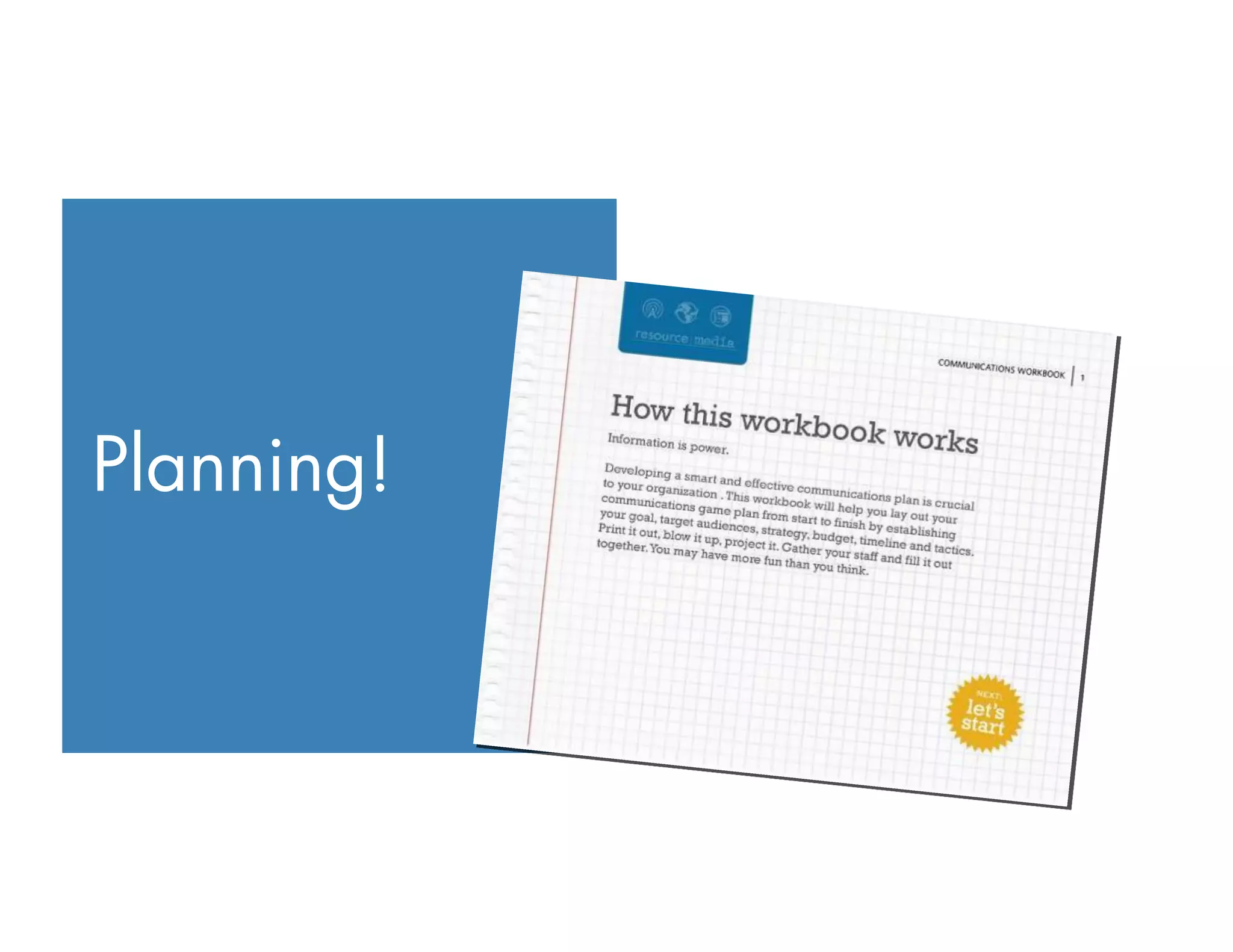
Planning!
Social Media
1. Would you recommend this webinar to a friend?
2. On a scale of 1 to 10 with 1 as poor and 10 as best –
how would you rate this webinar?
3. Comments?
Feedback?
Sian Wu
Program Director
Resource Media
sian@resource-media.org
206.374.7795 x102
@ThatsSoEco
Belinda Griswold
Program Director
Resource Media
belinda@resource-media.org
206-374-7795 x101
We Welcome Your Questions!
Explore More RM Trainings
•  Media Relations – October
•  Story Pitching – November
•  Blogger Relations – December
In the
Beginning

Frame Your Campaign To Win