Tom Banse
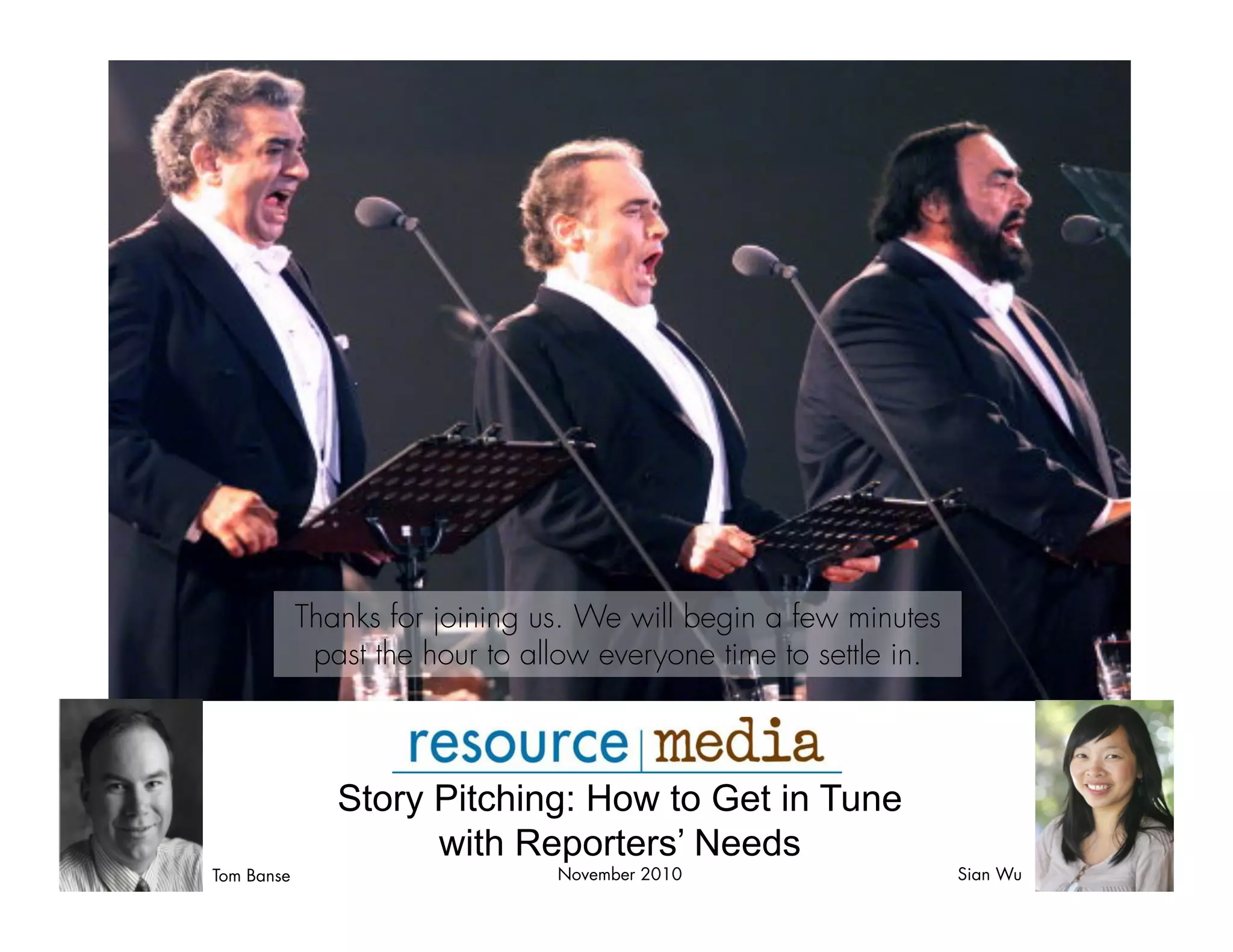
Thanks for joining us. We will begin a few minutes
past the hour to allow everyone time to settle in.
Sian Wu
Story Pitching: How to Get in Tune
with Reporters’ Needs
November 2010
About Resource Media
•  Communications Strategy
•  Execution and Outreach
•  Digital and Social Media
•  Environmental and Health Focus
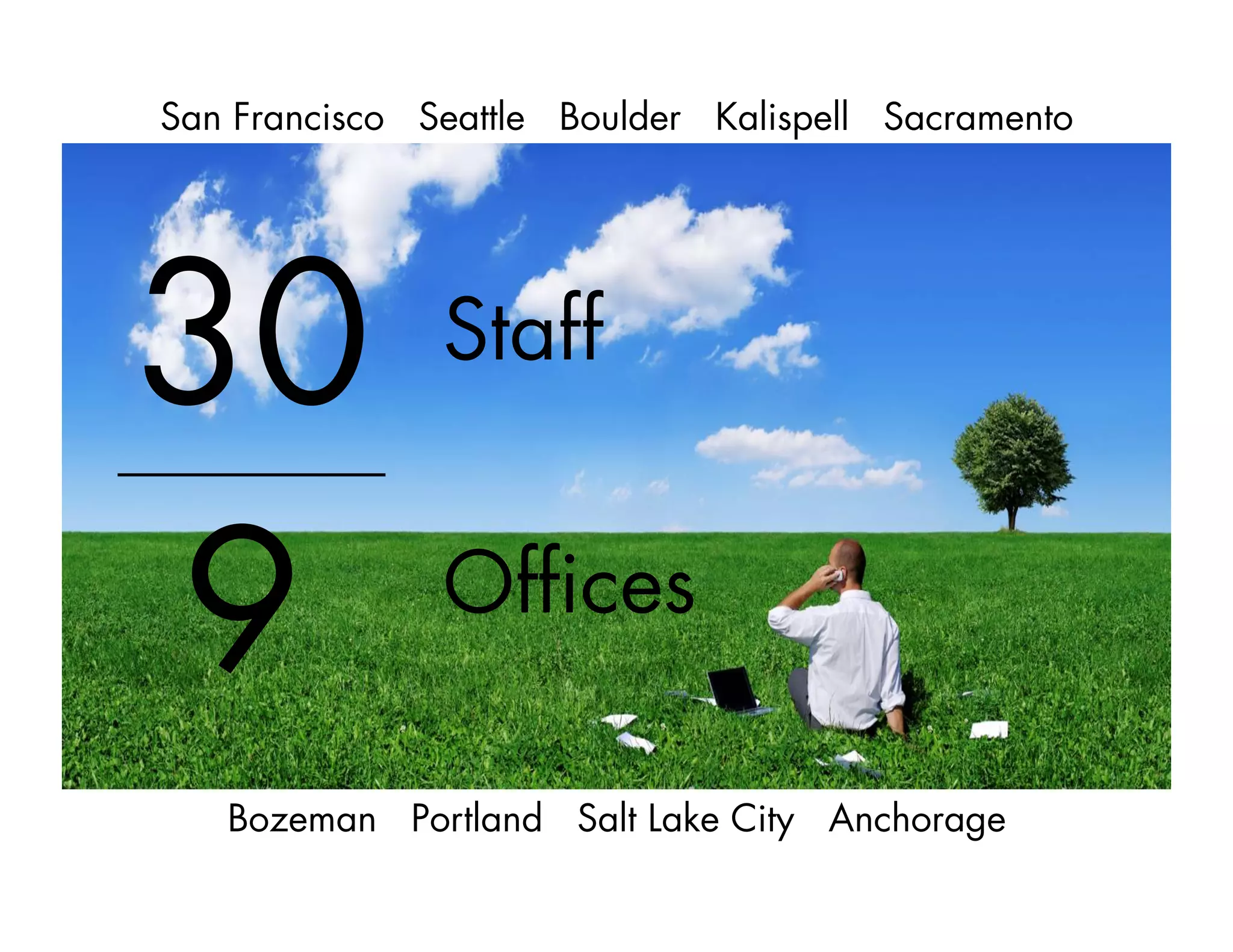
Staff
30
9 Offices
San Francisco Seattle Boulder Kalispell Sacramento
Bozeman Portland Salt Lake City Anchorage
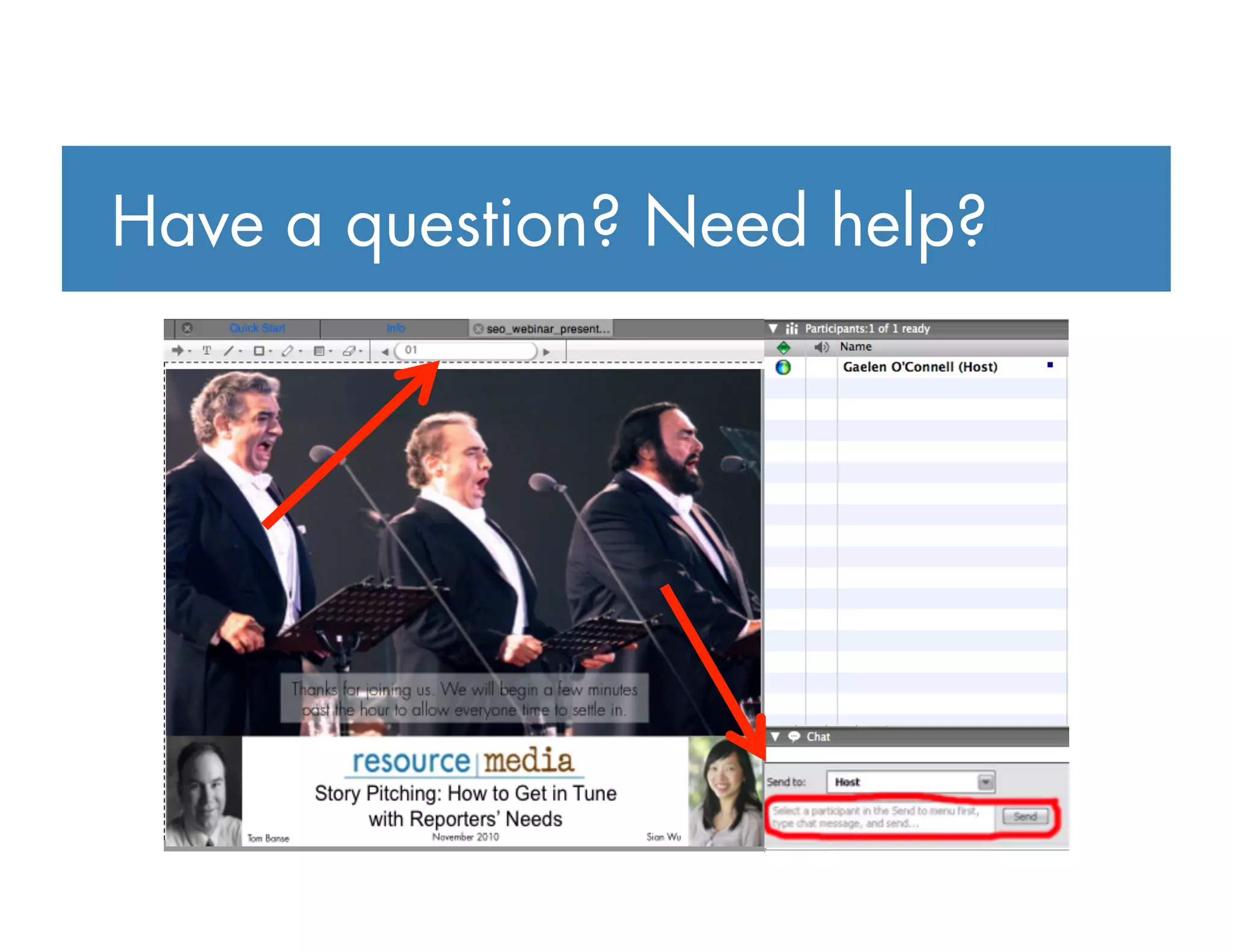
Have a question? Need help?
1. Research your pitch
2. Practice your pitch
3. Practice good reporter etiquette
4. Understand your audience: the media
5. Make it memorable: hooks and angles
6. Special Guest: NPR Reporter Tom Banse
What we’ll
cover today
Tuning up:
research your pitch
1
First ask:
• How will media achieve my
end goal?
• No media is a strategy
Think strategy
•  Aggressive?
•  Informative?
•  Buzz-building?
•  Base-activating?
What kind of story do you want?
•  Has this been covered before?
•  Who’s been quoted on this?
•  How is the issue currently framed?
•  What types of outlets would be most
influential?
•  Who writes on this?
•  Do we want to go national or local
first?
Do a sound check
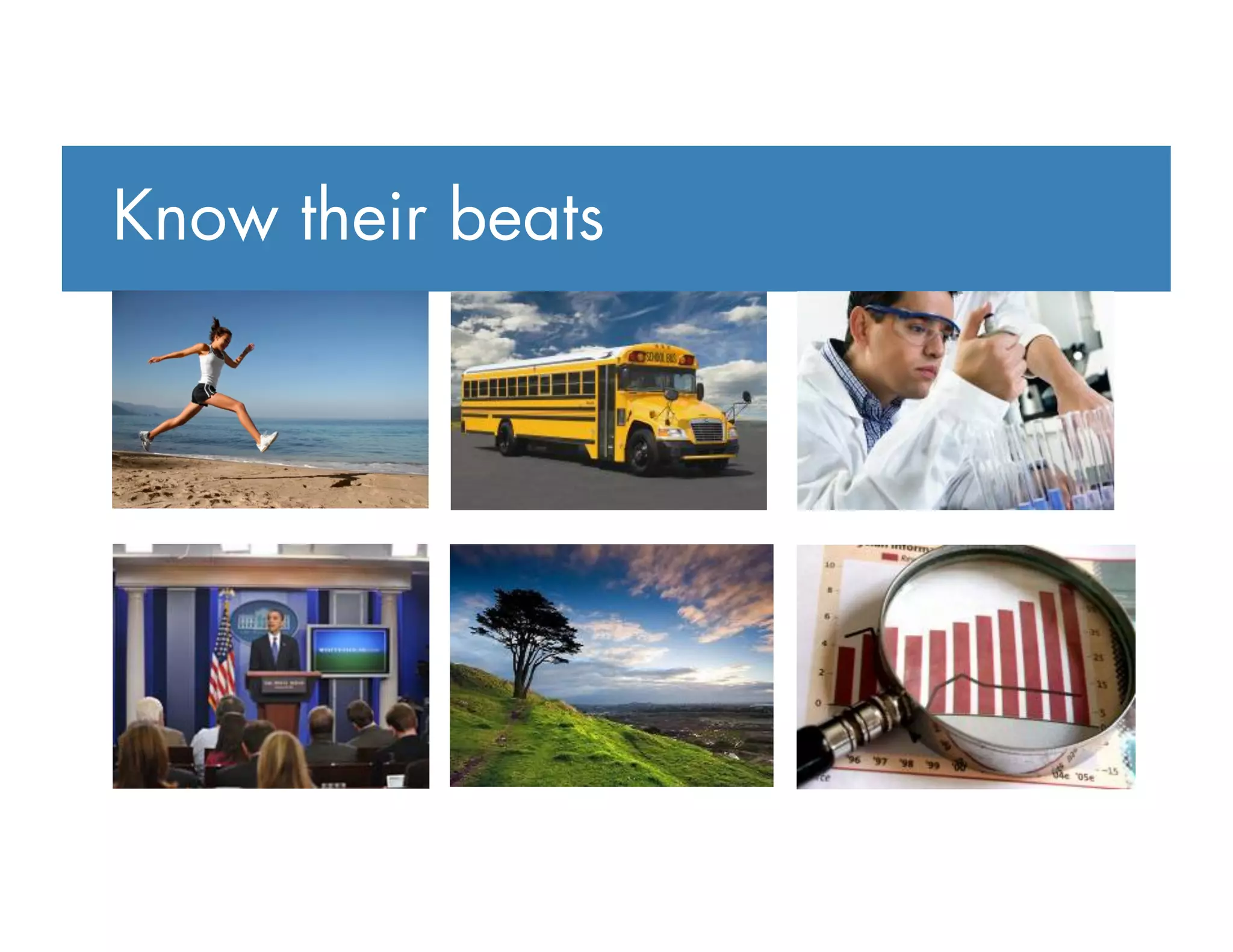
Know their beats
Make a note of:
•  What they’re interested in
•  The stories/blogs they’ve written
•  Who doesn’t want to be called
•  Who is on social media
•  Their status after your pitch
Keep tabs on them
Practice good
reporter etiquette
2
Be mindful of their lives:
•  Pitched by hundreds of people
•  Working on daily deadlines
•  Need to answer to their editors
•  Need a good visual (especially true
for TV)
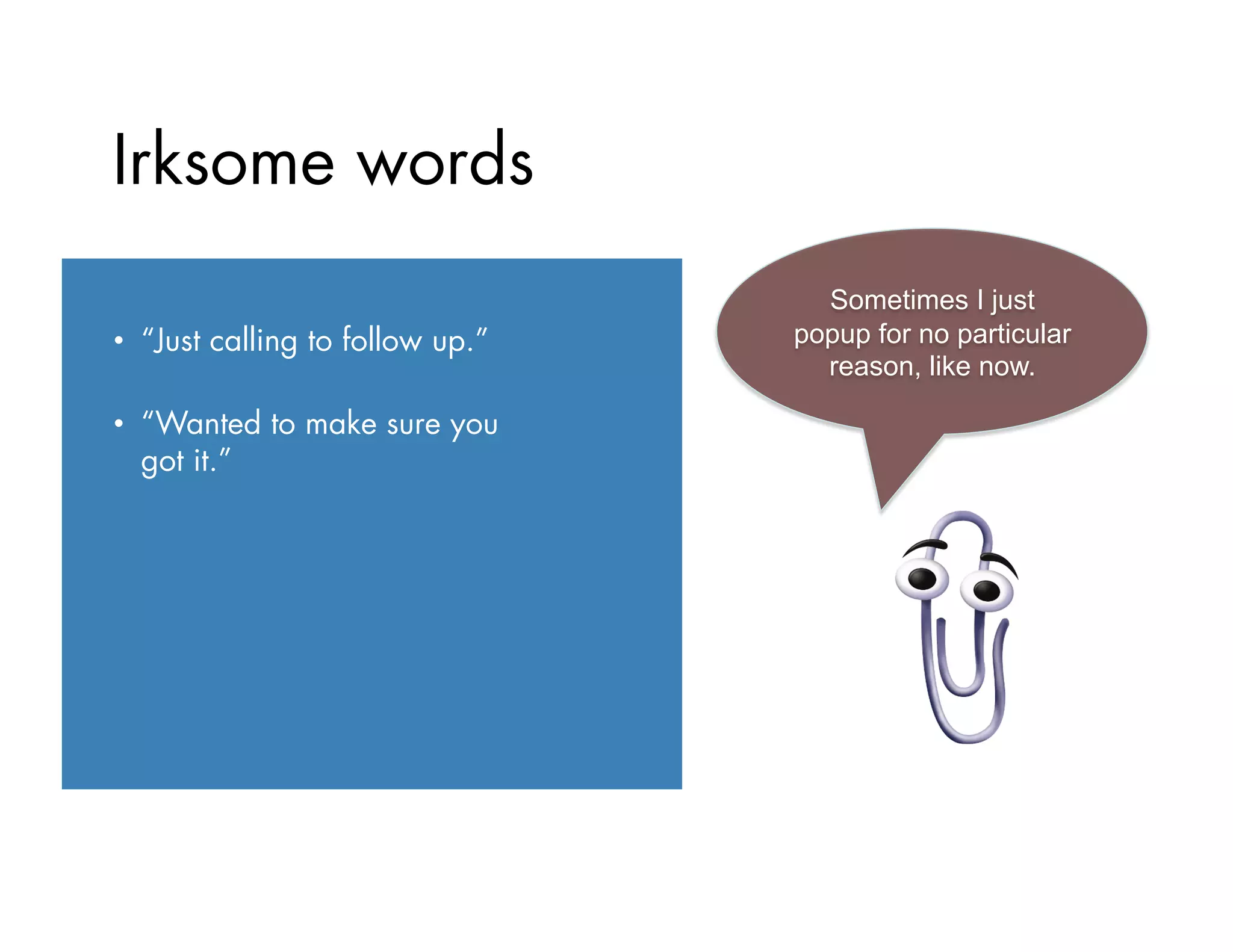
•  “Just calling to follow up.”
•  “Wanted to make sure you
got it.”
Irksome words
Sometimes I just
popup for no particular
reason, like now.
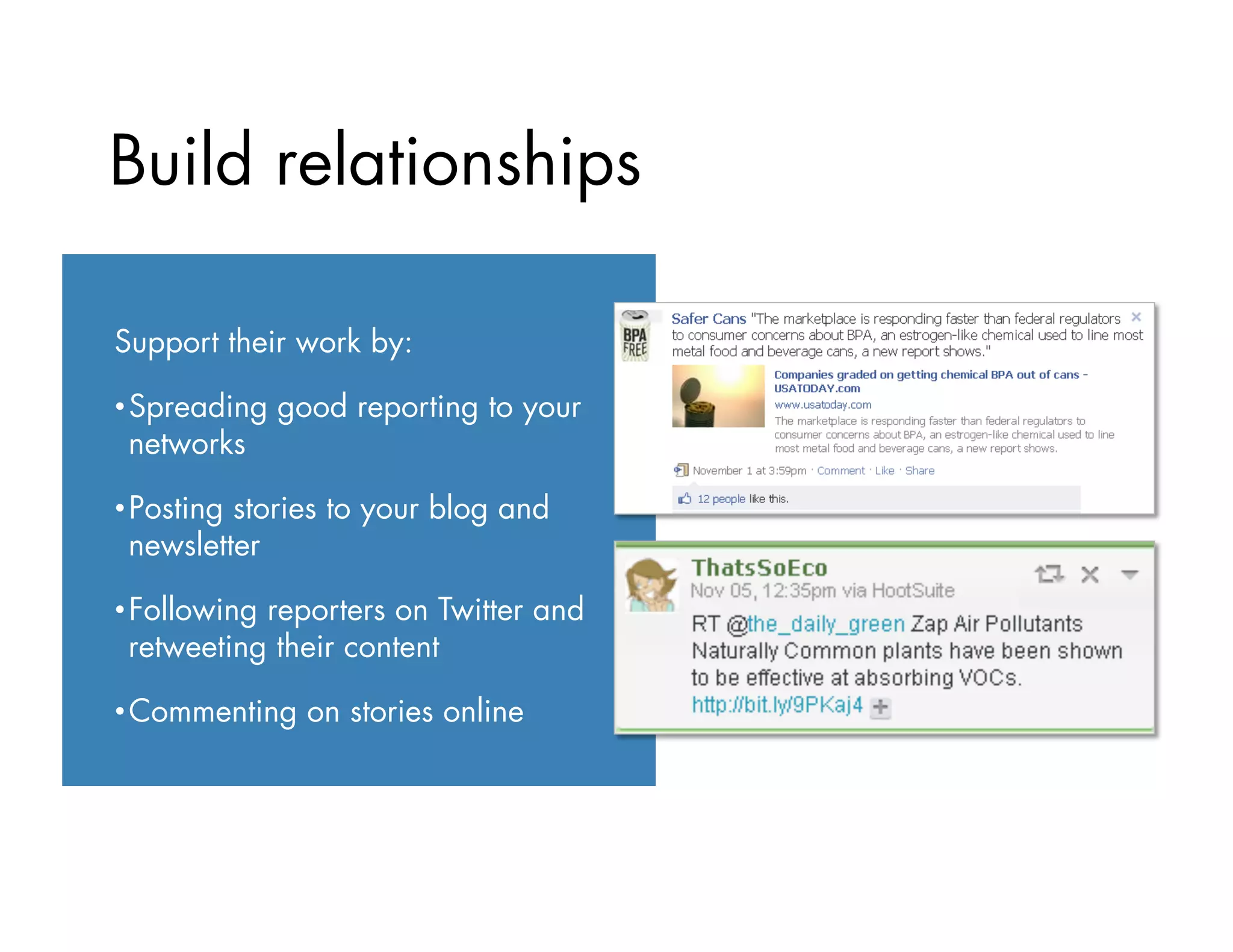
Build relationships
Support their work by:
• Spreading good reporting to your
networks
• Posting stories to your blog and
newsletter
• Following reporters on Twitter and
retweeting their content
• Commenting on stories online
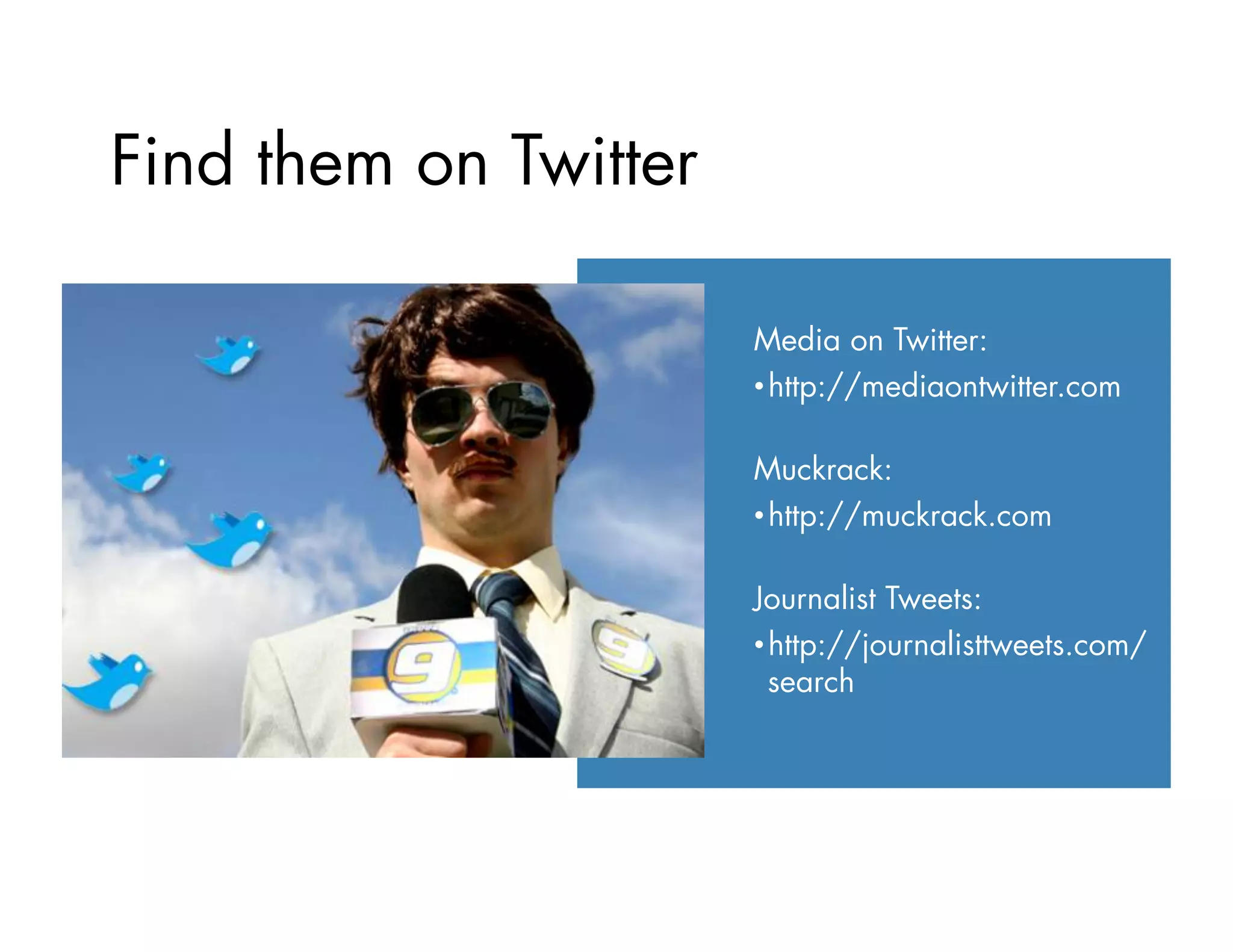
Find them on Twitter
Media on Twitter:
• http://mediaontwitter.com
Muckrack:
• http://muckrack.com
Journalist Tweets:
• http://journalisttweets.com/
search
Grace under fire
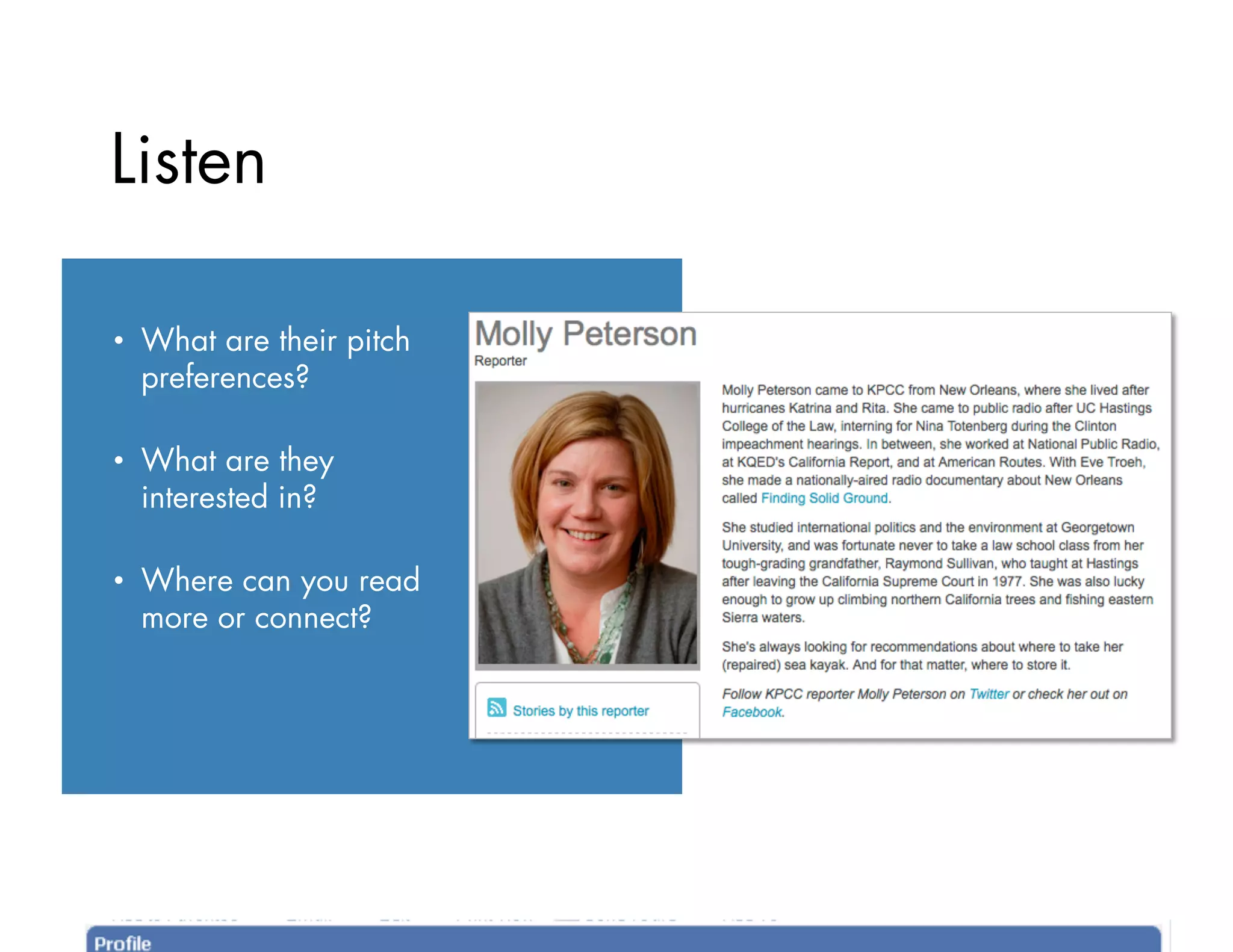
•  What are their pitch
preferences?
•  What are they
interested in?
•  Where can you read
more or connect?
Listen
Know when to let go
Understanding your
audience: the media
3
Stay in tune with a reporter’s needs
•  Access to spokespeople
•  Quality images, logos and
video
•  Embargo lift date and time
•  Transparency
•  Timeline of important decisions
•  Access to primary documents
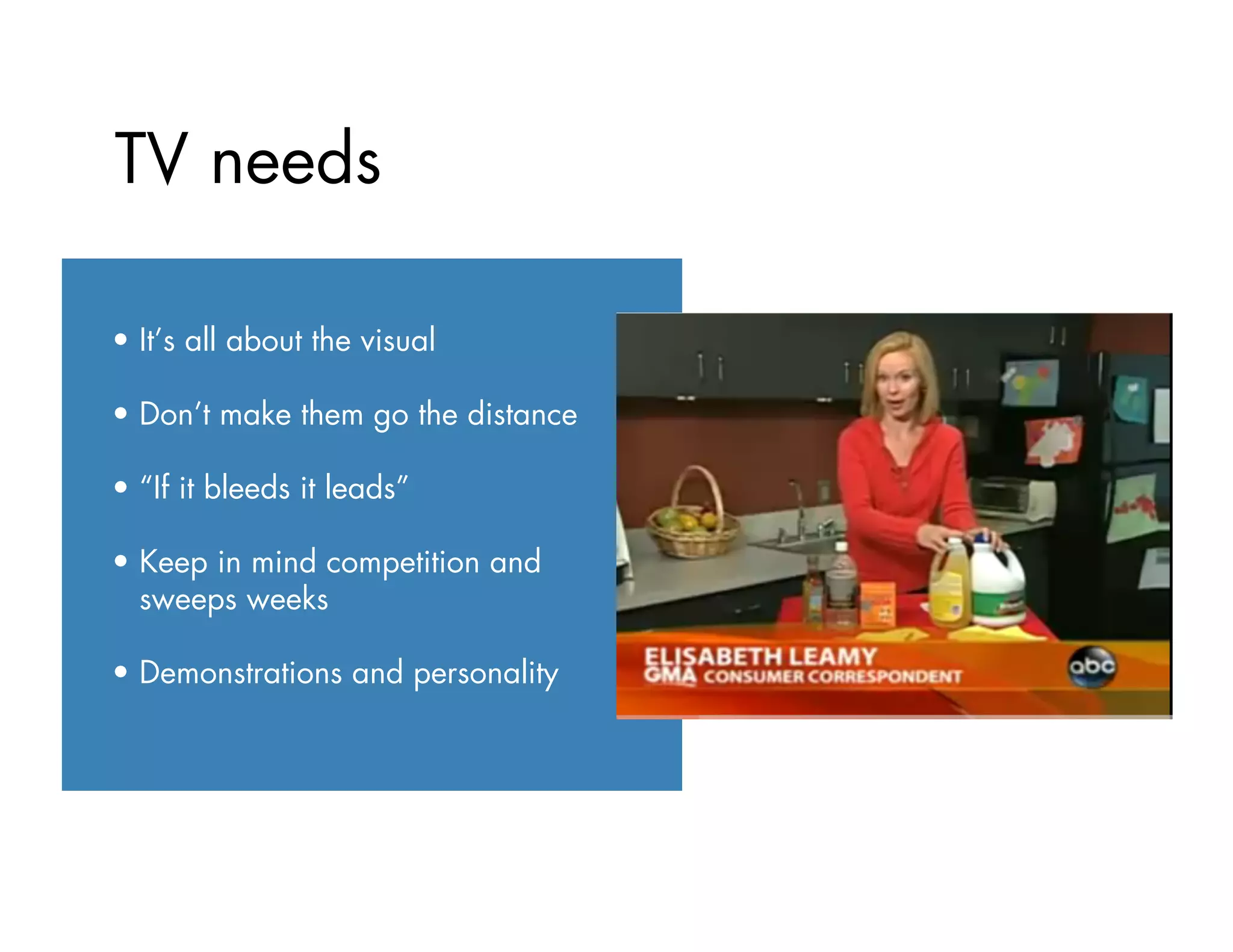
TV needs
•  It’s all about the visual
•  Don’t make them go the distance
•  “If it bleeds it leads”
•  Keep in mind competition and
sweeps weeks
•  Demonstrations and personality
Stay in tune with a reporter’s wants
•  Peculiarity
•  Proximity
•  Prominence
•  Promptness
•  Peer review
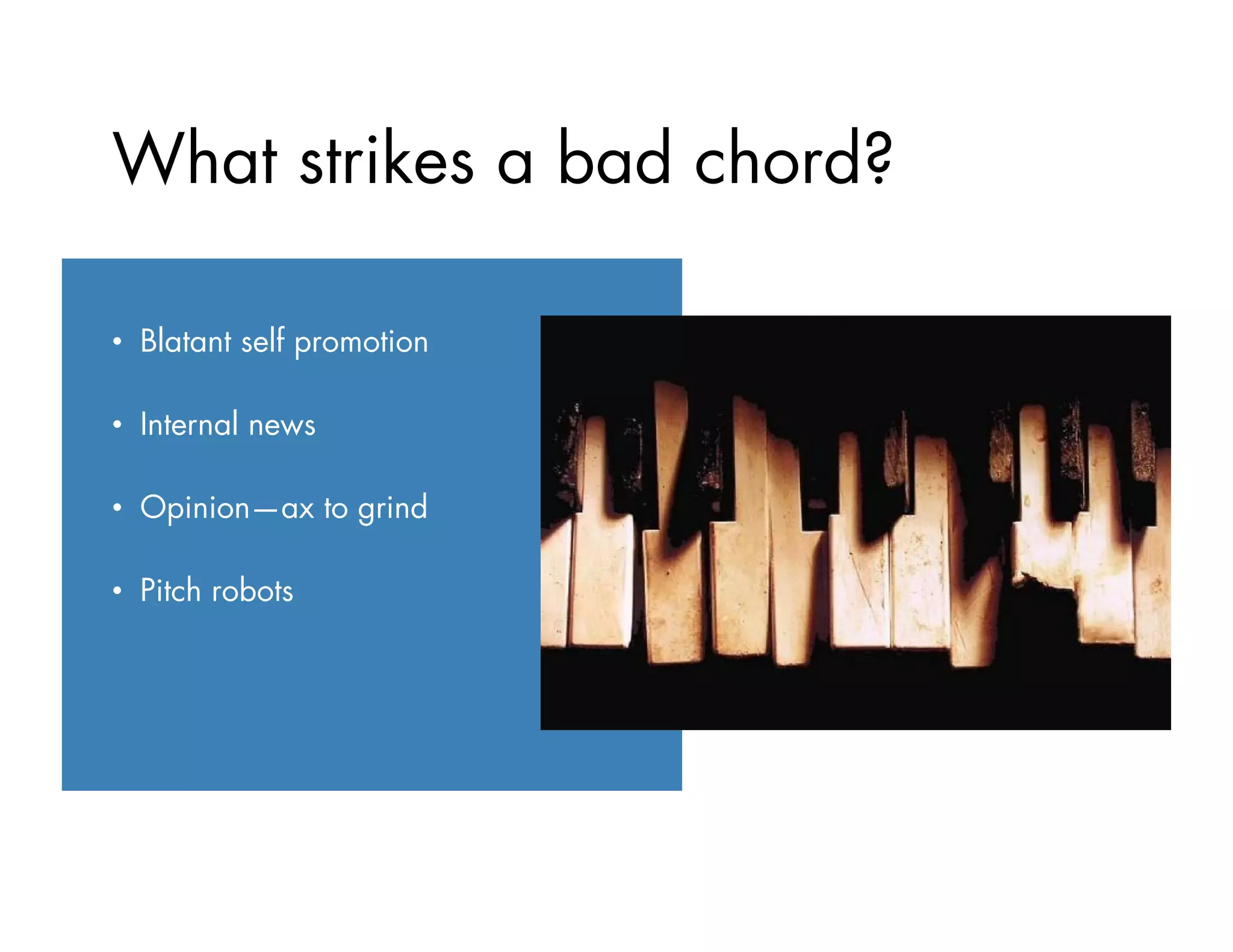
•  Blatant self promotion
•  Internal news
•  Opinion—ax to grind
•  Pitch robots
What strikes a bad chord?
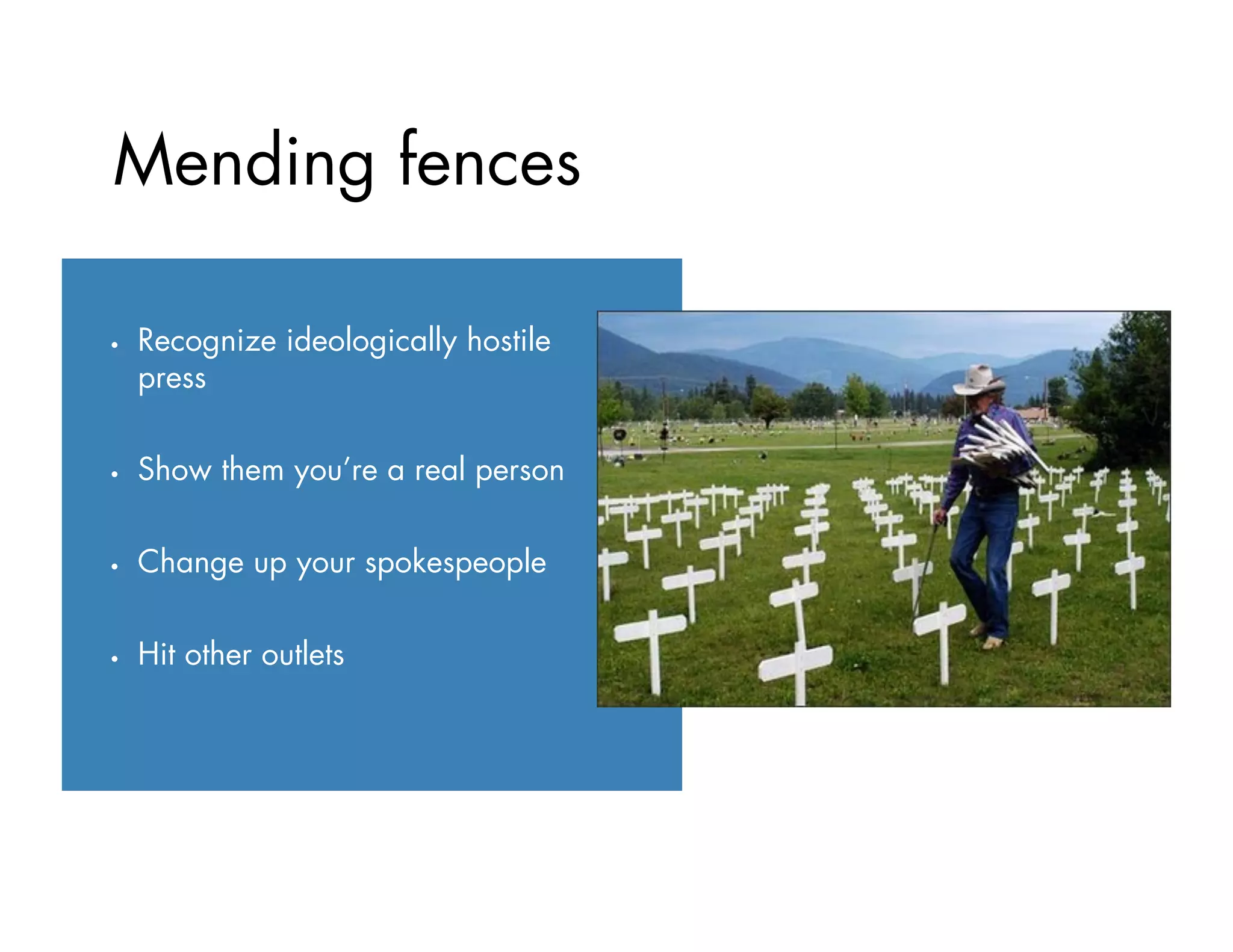
Mending fences
•  Recognize ideologically hostile
press
•  Show them you’re a real person
•  Change up your spokespeople
•  Hit other outlets
Make it memorable:
hooks and angles
4
Develop your news hook
What’s:
• New
• Interesting
• Surprising
• Timely
• Relevant or
• Localize a national story
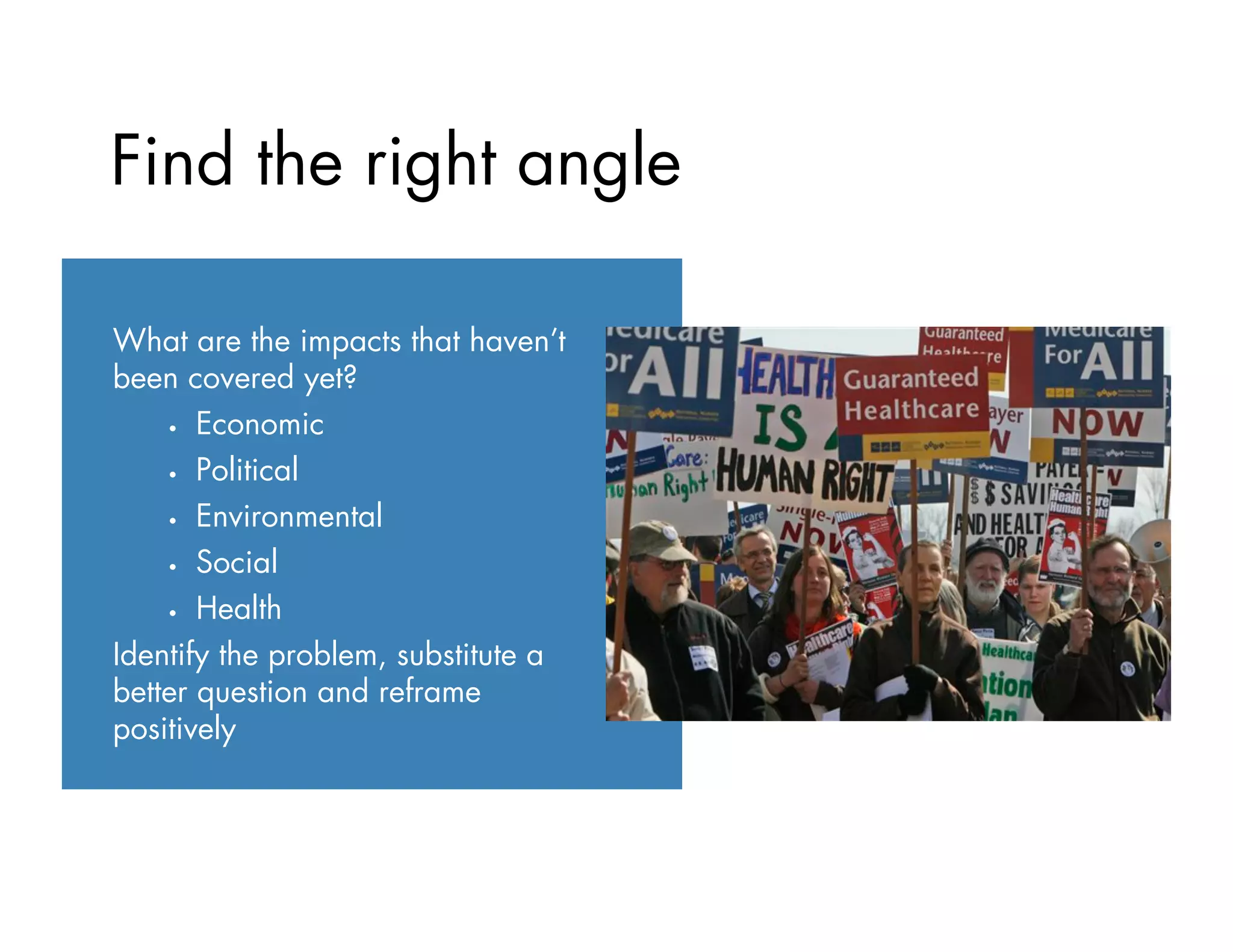
What are the impacts that haven’t
been covered yet?
•  Economic
•  Political
•  Environmental
•  Social
•  Health
Identify the problem, substitute a
better question and reframe
positively
Find the right angle
•  Always call with breaking
news
•  Be mindful of deadlines
•  Give advance notice for
events or feature story ideas
•  Suggest a meeting or field trip
•  Try, try again
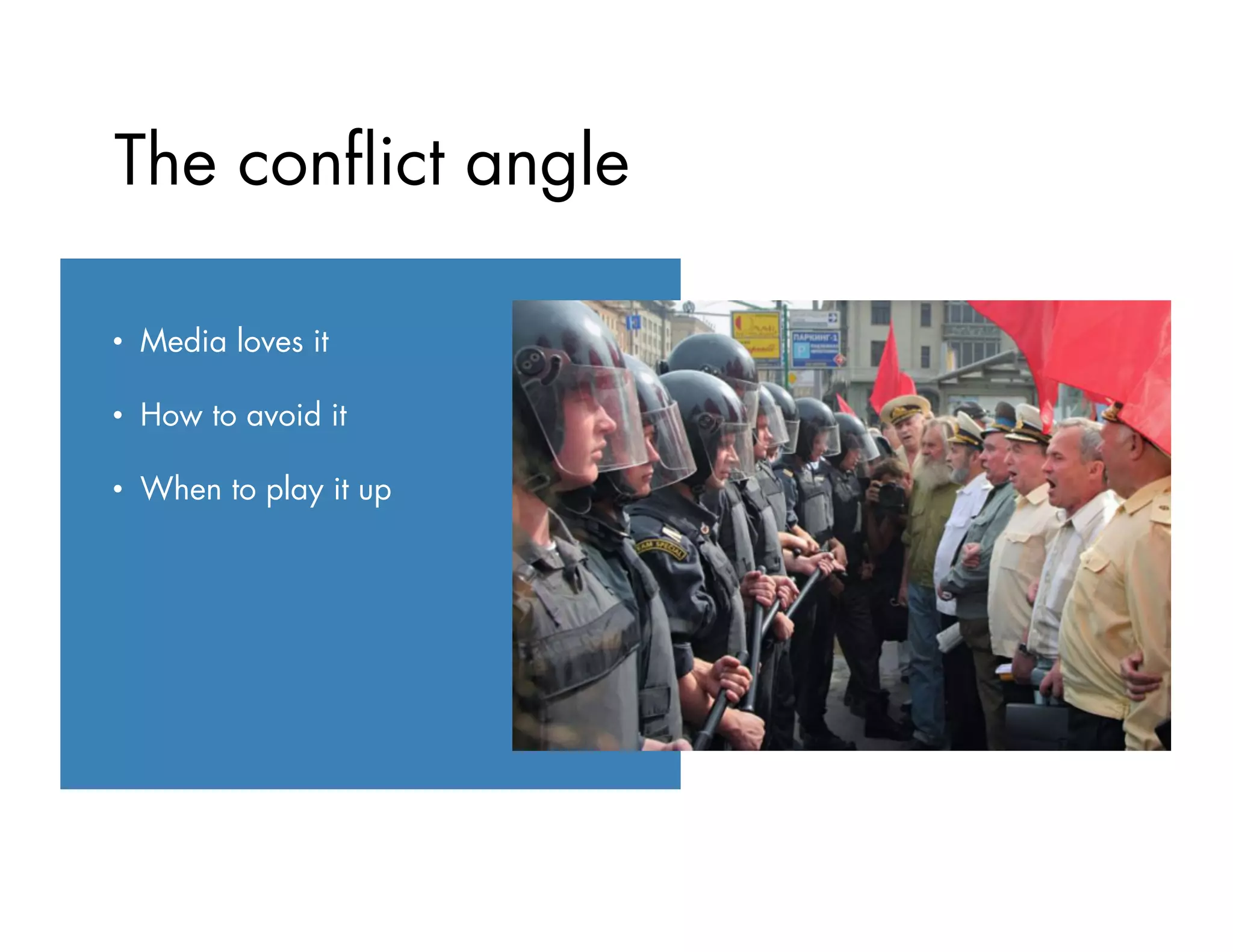
The conflict angle
•  Media loves it
•  How to avoid it
•  When to play it up
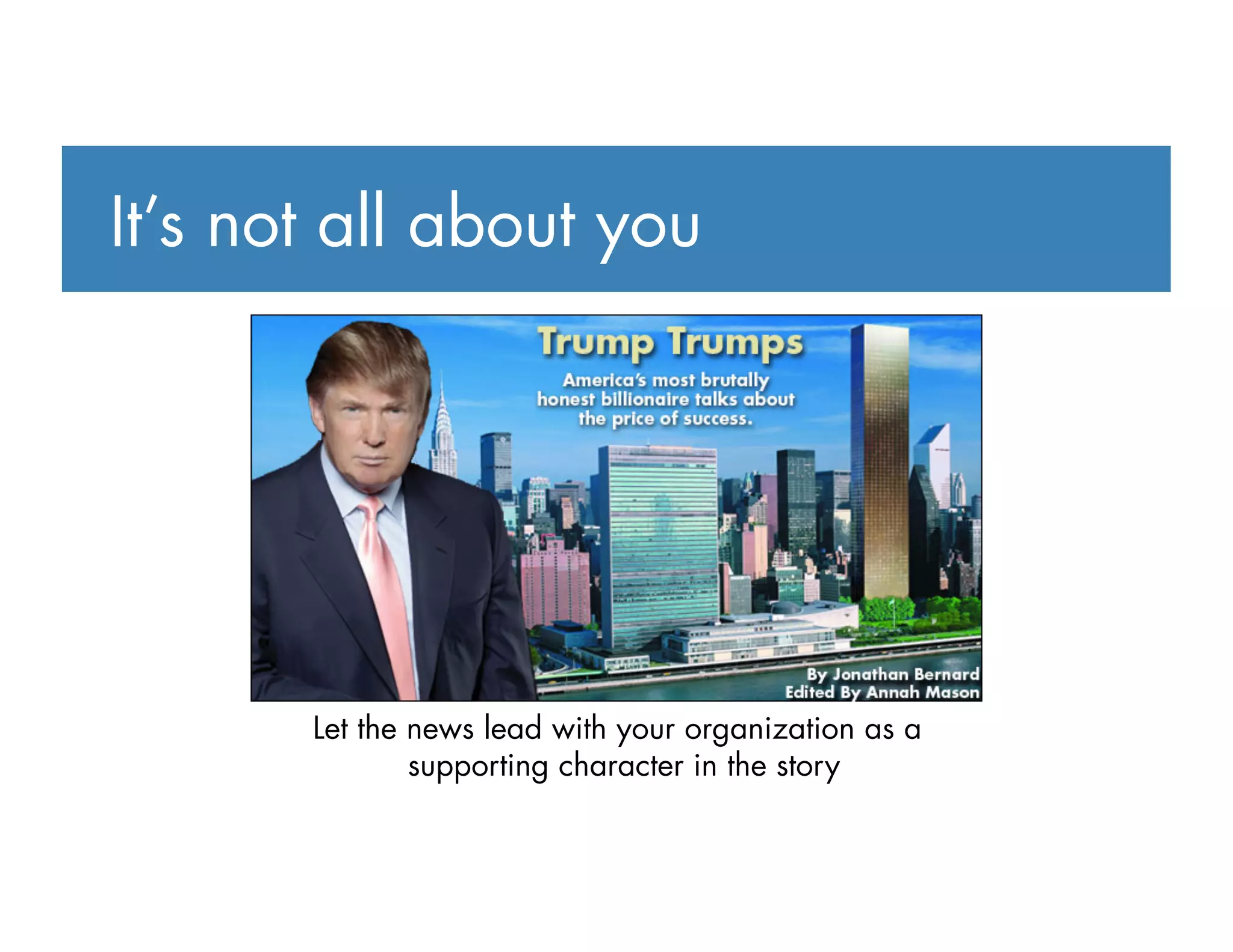
It’s not all about you
Let the news lead with your organization as a
supporting character in the story
Warming up:
practice your pitch
5
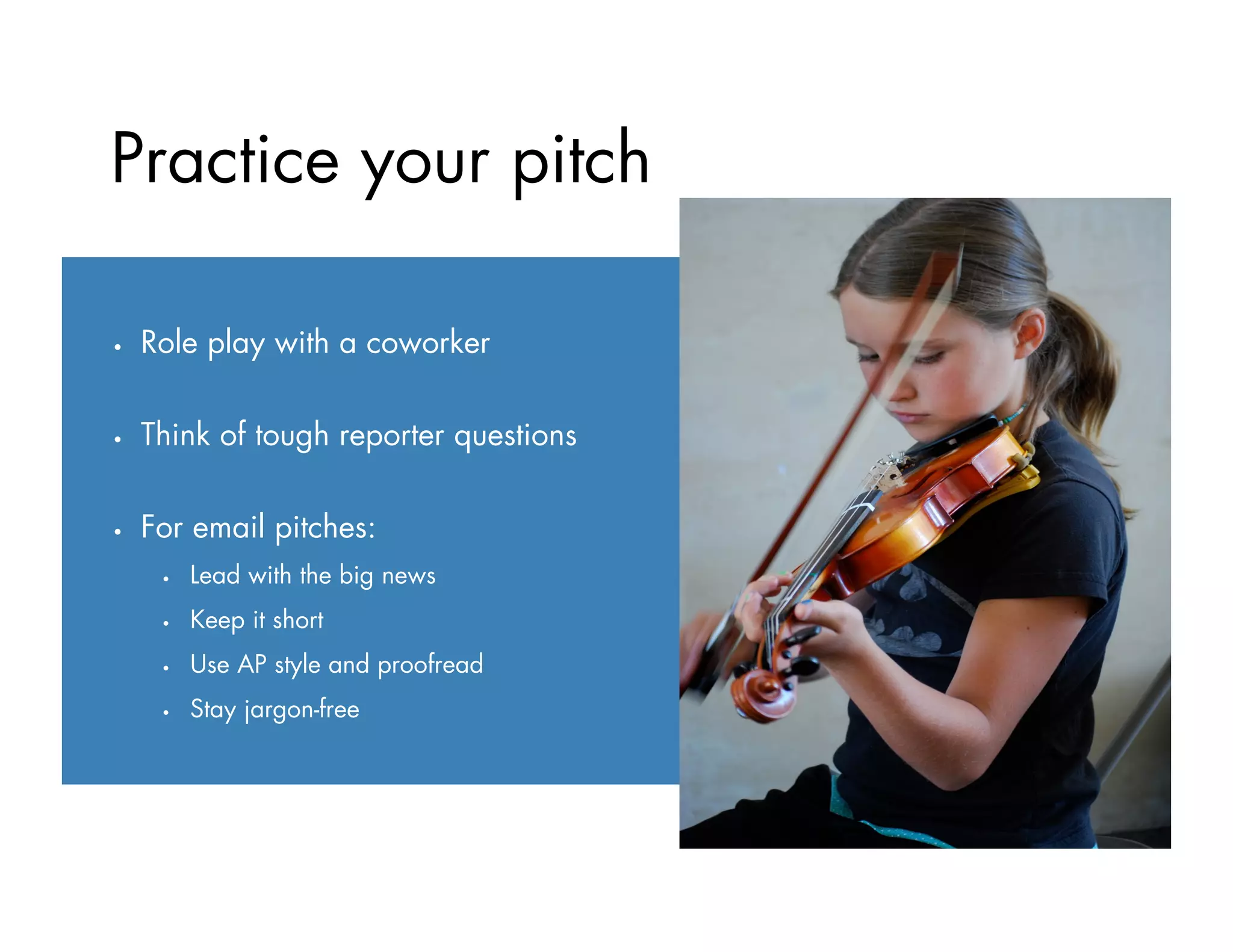
Practice your pitch
•  Role play with a coworker
•  Think of tough reporter questions
•  For email pitches:
•  Lead with the big news
•  Keep it short
•  Use AP style and proofread
•  Stay jargon-free
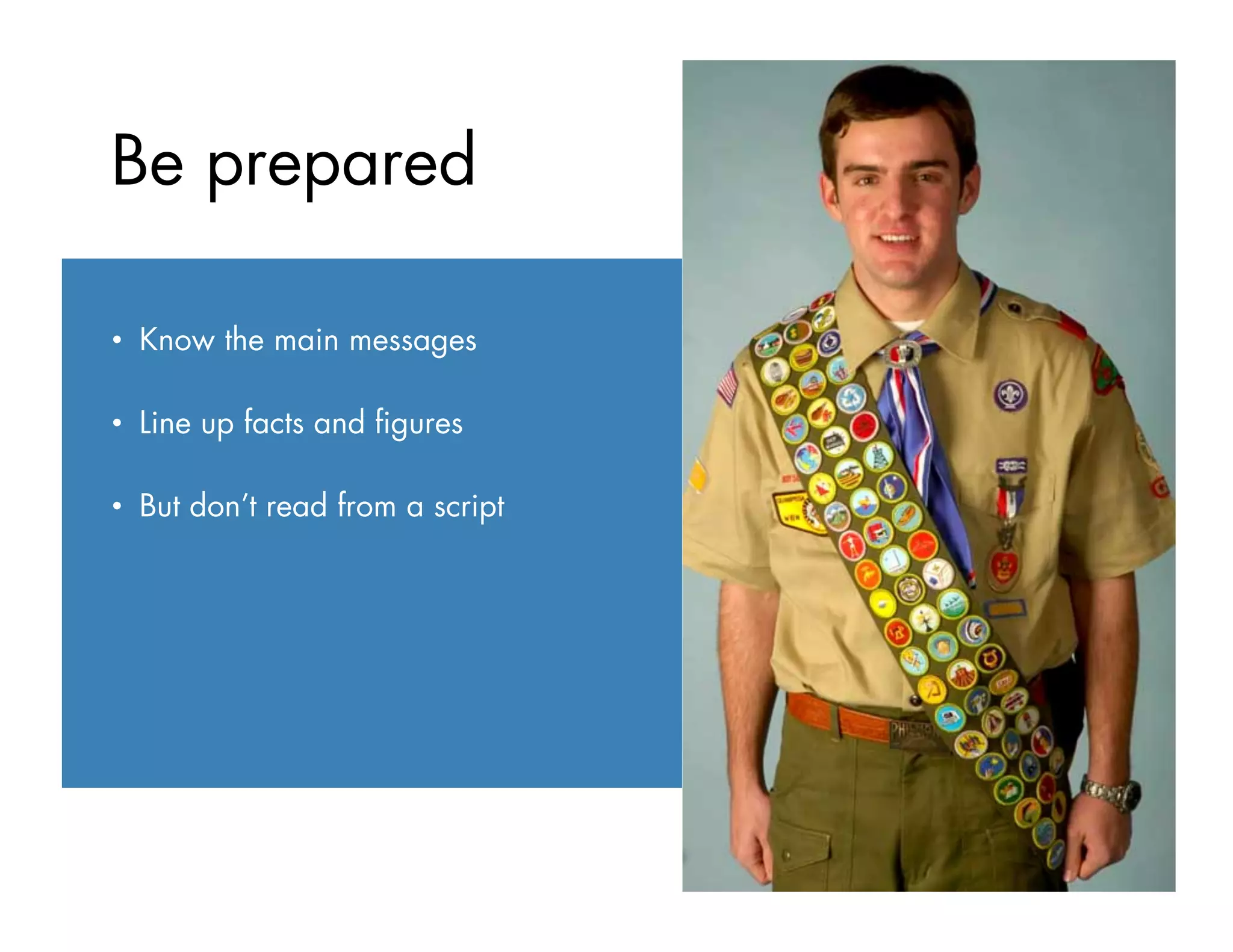
•  Know the main messages
•  Line up facts and figures
•  But don’t read from a script
Be prepared
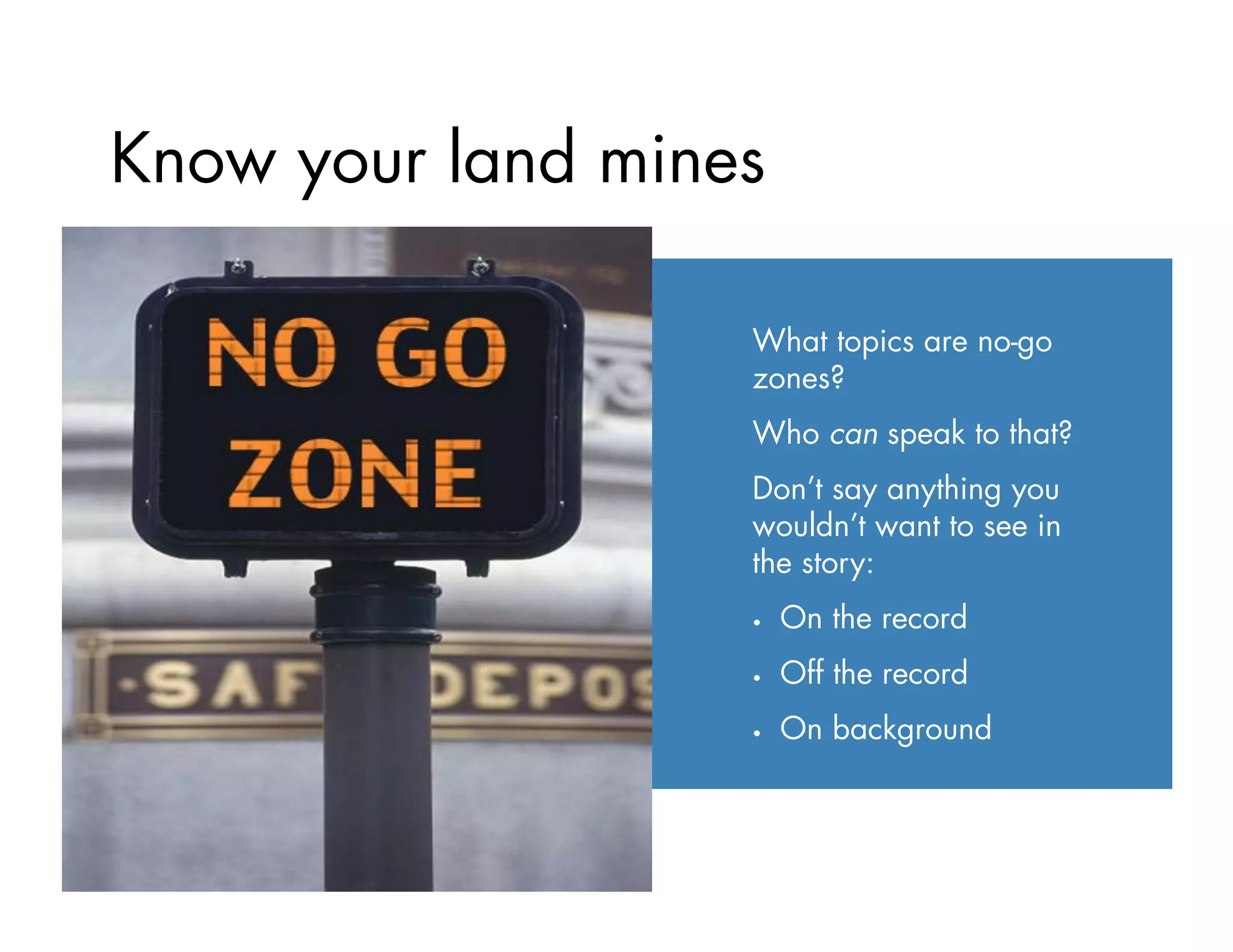
Know your land mines
What topics are no-go
zones?
Who can speak to that?
Don’t say anything you
wouldn’t want to see in
the story:
•  On the record
•  Off the record
•  On background
•  Consider how media will help
you achieve your goal
•  Know your reporters really well
by being a news junkie
•  Understand reporter deadlines
and inboxes
•  All good stories need a good
hook
•  News stories aren’t all about you
Reminders:
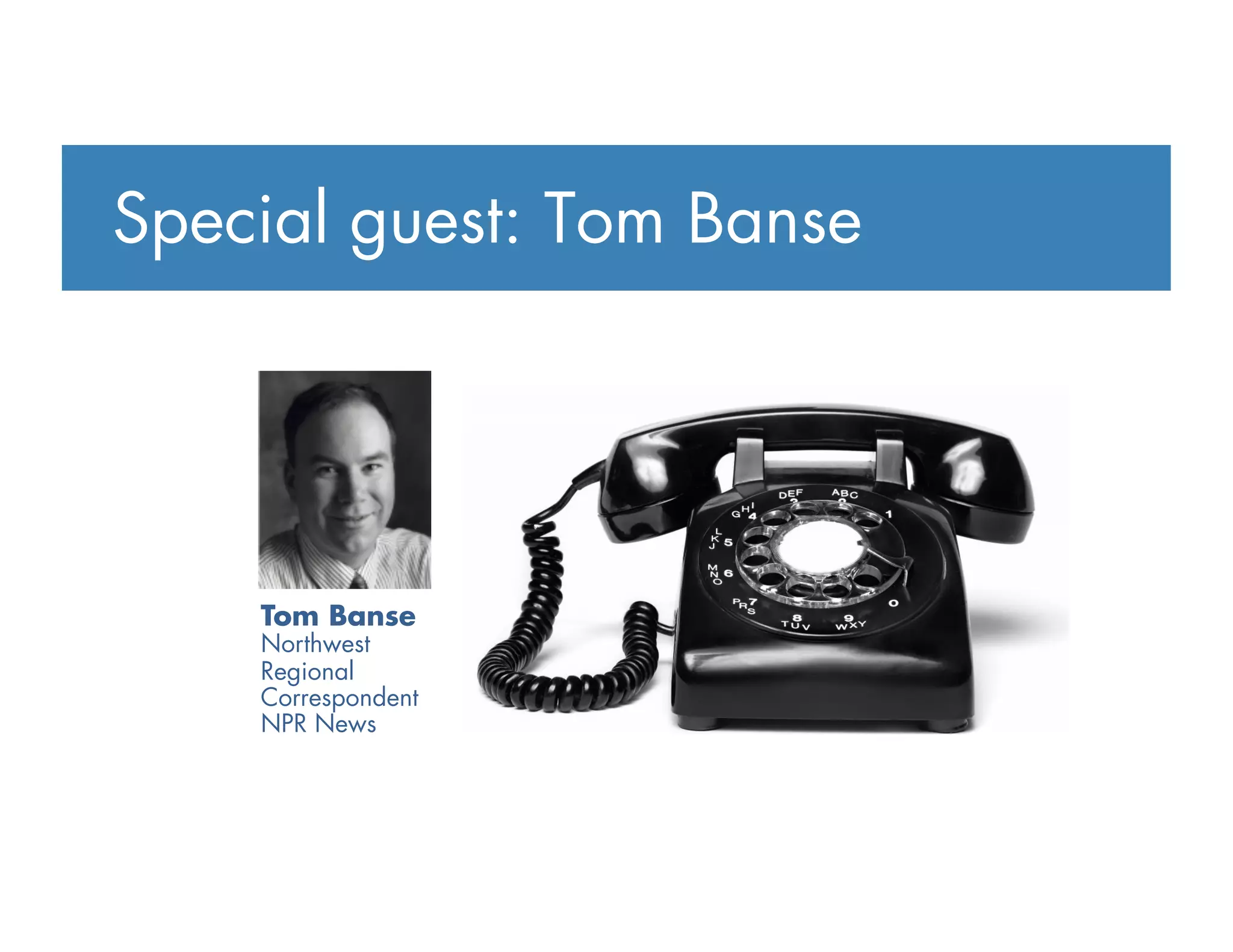
Special guest: Tom Banse
Tom Banse
Northwest
Regional
Correspondent
NPR News
Sian Wu
Program Director
Seattle Office
sian@resource-media.org
206.374.7795 x102
@ThatsSoEco
Tom Banse
Northwest Regional
Correspondent
NPR News
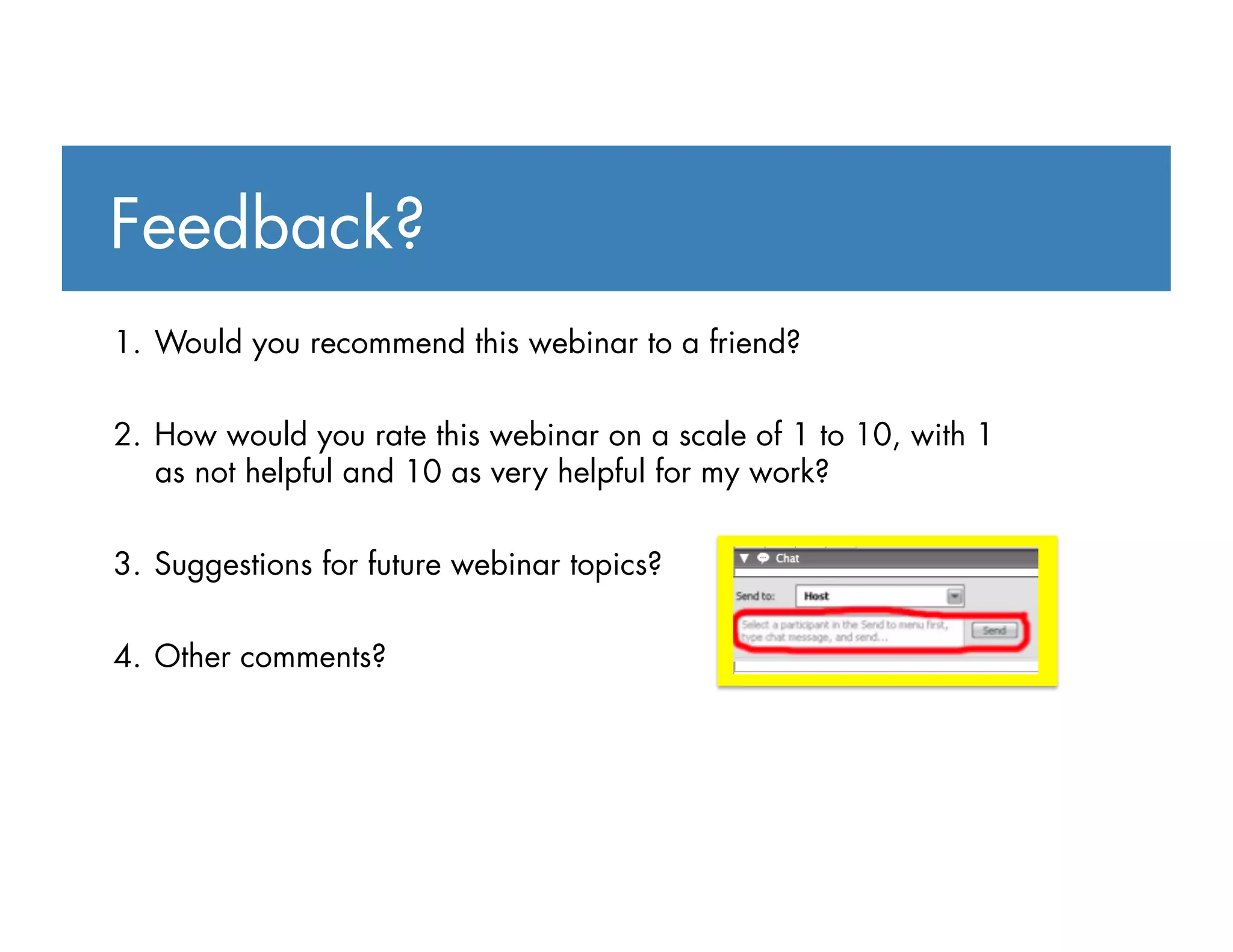
We welcome your questions!
1.  Would you recommend this webinar to a friend?
2.  How would you rate this webinar on a scale of 1 to 10, with 1
as not helpful and 10 as very helpful for my work?
3.  Suggestions for future webinar topics?
4.  Other comments?
Feedback?
Explore More RM Trainings
• Blogger Relations – December
• Coming up in 2011:
•  Communicating science TBD
•  Branding TBD
•  Interviewing and public speaking TBD
•  LinkedIn for nonprofits TBD
In the
Beginning

Story Pitching: Get in Tune with Reporters' Needs

  • 1.
    Tom Banse Thanks forjoining us. We will begin a few minutes past the hour to allow everyone time to settle in. Sian Wu Story Pitching: How to Get in Tune with Reporters’ Needs November 2010
  • 2.
    About Resource Media • Communications Strategy •  Execution and Outreach •  Digital and Social Media •  Environmental and Health Focus
  • 3.
    Staff 30 9 Offices San FranciscoSeattle Boulder Kalispell Sacramento Bozeman Portland Salt Lake City Anchorage
  • 4.
    Have a question?Need help?
  • 5.
    1. Research yourpitch 2. Practice your pitch 3. Practice good reporter etiquette 4. Understand your audience: the media 5. Make it memorable: hooks and angles 6. Special Guest: NPR Reporter Tom Banse What we’ll cover today
  • 6.
  • 7.
    First ask: • How willmedia achieve my end goal? • No media is a strategy Think strategy
  • 8.
    •  Aggressive? •  Informative? • Buzz-building? •  Base-activating? What kind of story do you want?
  • 9.
    •  Has thisbeen covered before? •  Who’s been quoted on this? •  How is the issue currently framed? •  What types of outlets would be most influential? •  Who writes on this? •  Do we want to go national or local first? Do a sound check
  • 10.
  • 11.
    Make a noteof: •  What they’re interested in •  The stories/blogs they’ve written •  Who doesn’t want to be called •  Who is on social media •  Their status after your pitch Keep tabs on them
  • 12.
  • 13.
    Be mindful oftheir lives: •  Pitched by hundreds of people •  Working on daily deadlines •  Need to answer to their editors •  Need a good visual (especially true for TV)
  • 14.
    •  “Just callingto follow up.” •  “Wanted to make sure you got it.” Irksome words Sometimes I just popup for no particular reason, like now.
  • 15.
    Build relationships Support theirwork by: • Spreading good reporting to your networks • Posting stories to your blog and newsletter • Following reporters on Twitter and retweeting their content • Commenting on stories online
  • 16.
    Find them onTwitter Media on Twitter: • http://mediaontwitter.com Muckrack: • http://muckrack.com Journalist Tweets: • http://journalisttweets.com/ search
  • 17.
  • 18.
    •  What aretheir pitch preferences? •  What are they interested in? •  Where can you read more or connect? Listen
  • 19.
  • 20.
  • 21.
    Stay in tunewith a reporter’s needs •  Access to spokespeople •  Quality images, logos and video •  Embargo lift date and time •  Transparency •  Timeline of important decisions •  Access to primary documents
  • 22.
    TV needs •  It’sall about the visual •  Don’t make them go the distance •  “If it bleeds it leads” •  Keep in mind competition and sweeps weeks •  Demonstrations and personality
  • 23.
    Stay in tunewith a reporter’s wants •  Peculiarity •  Proximity •  Prominence •  Promptness •  Peer review
  • 24.
    •  Blatant selfpromotion •  Internal news •  Opinion—ax to grind •  Pitch robots What strikes a bad chord?
  • 25.
    Mending fences •  Recognizeideologically hostile press •  Show them you’re a real person •  Change up your spokespeople •  Hit other outlets
  • 26.
  • 27.
    Develop your newshook What’s: • New • Interesting • Surprising • Timely • Relevant or • Localize a national story
  • 28.
    What are theimpacts that haven’t been covered yet? •  Economic •  Political •  Environmental •  Social •  Health Identify the problem, substitute a better question and reframe positively Find the right angle
  • 29.
    •  Always callwith breaking news •  Be mindful of deadlines •  Give advance notice for events or feature story ideas •  Suggest a meeting or field trip •  Try, try again The conflict angle •  Media loves it •  How to avoid it •  When to play it up
  • 30.
    It’s not allabout you Let the news lead with your organization as a supporting character in the story
  • 31.
  • 32.
    Practice your pitch • Role play with a coworker •  Think of tough reporter questions •  For email pitches: •  Lead with the big news •  Keep it short •  Use AP style and proofread •  Stay jargon-free
  • 33.
    •  Know themain messages •  Line up facts and figures •  But don’t read from a script Be prepared
  • 34.
    Know your landmines What topics are no-go zones? Who can speak to that? Don’t say anything you wouldn’t want to see in the story: •  On the record •  Off the record •  On background
  • 35.
    •  Consider howmedia will help you achieve your goal •  Know your reporters really well by being a news junkie •  Understand reporter deadlines and inboxes •  All good stories need a good hook •  News stories aren’t all about you Reminders:
  • 36.
    Special guest: TomBanse Tom Banse Northwest Regional Correspondent NPR News
  • 37.
    Sian Wu Program Director SeattleOffice sian@resource-media.org 206.374.7795 x102 @ThatsSoEco Tom Banse Northwest Regional Correspondent NPR News We welcome your questions!
  • 38.
    1.  Would yourecommend this webinar to a friend? 2.  How would you rate this webinar on a scale of 1 to 10, with 1 as not helpful and 10 as very helpful for my work? 3.  Suggestions for future webinar topics? 4.  Other comments? Feedback?
  • 39.
    Explore More RMTrainings • Blogger Relations – December • Coming up in 2011: •  Communicating science TBD •  Branding TBD •  Interviewing and public speaking TBD •  LinkedIn for nonprofits TBD
  • 40.