Presentation By:
Panchal Brothers
Engine is a device which transforms
one form of energy into the other
form.
Heat engine is a modified form of engine
used for transforming chemical energy of
fuel into thermal energy and
subsequently for producing work.
 A four-stroke engine:
 Is an internal combustion engine
 Converts gasoline into motion
 Is the most common car engine type
 Is relatively efficient
 Is relatively inexpensive
 Two-stroke engines
 Diesel engines
 Rotary engines
 Turbine engines
 Steam engines
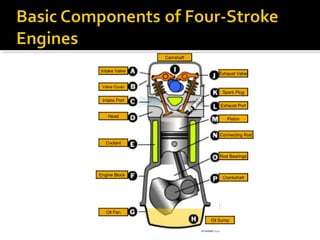
Intake Valve
Valve Cover
Intake Port
Head
Coolant
Engine Block
Oil Pan
Oil Sump
Crankshaft
Camshaft
Exhaust Valve
Spark Plug
Exhaust Port
Piston
Connecting Rod
Rod Bearings
 A. Intake Valve- opens at the proper time to
let in air and fuel.
 B. Valve Cover- Protects the valves and the
valve springs. Keeps dirt out and lubricating
oil in.
 C. Intake Port- the passageway in a cylinder
head for the fuel and air to pass through.
 D. Head- a platform containing most of the
parts of the combustion chamber.
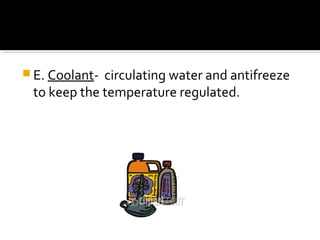
 E. Coolant- circulating water and antifreeze
to keep the temperature regulated.
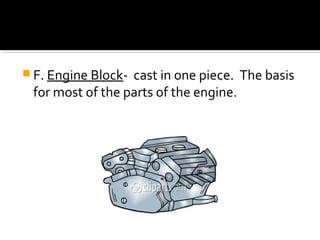
 F. Engine Block- cast in one piece. The basis
for most of the parts of the engine.
 G. Oil Pan- where the oil is collected and
recirculated.
 H. Oil Sump- the collected oil primarily for
lubricating the crankshaft and rod bearing
 I. Camshaft- a round shaft with lobes, that
rotates to open and close the fuel and
exhaust valves.
 J. Exhaust Valve- open at the proper time to
release the exhaust
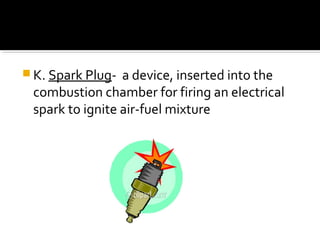
 K. Spark Plug- a device, inserted into the
combustion chamber for firing an electrical
spark to ignite air-fuel mixture
 L. Exhaust Port- the passageway in a cylinder
head, for the exhaust to pass through
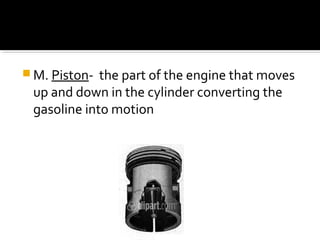
 M. Piston- the part of the engine that moves
up and down in the cylinder converting the
gasoline into motion
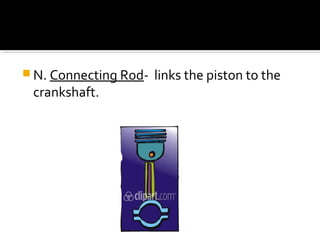
 N. Connecting Rod- links the piston to the
crankshaft.
 O. Rod Bearing- used to reduce friction to
the rod and crankshaft
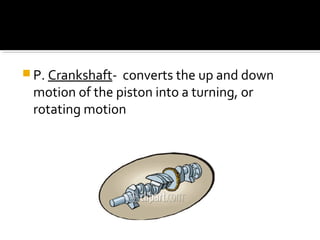
 P. Crankshaft- converts the up and down
motion of the piston into a turning, or
rotating motion
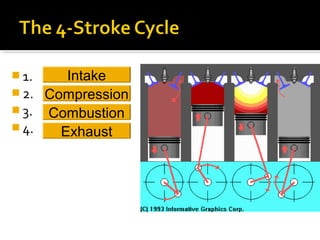
 1.
 2.
 3.
 4.
Intake
Compression
Combustion
Exhaust
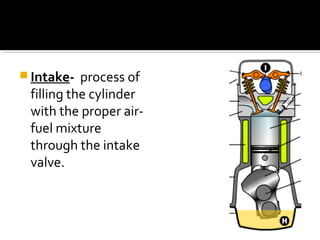
 Intake- process of
filling the cylinder
with the proper air-
fuel mixture
through the intake
valve.
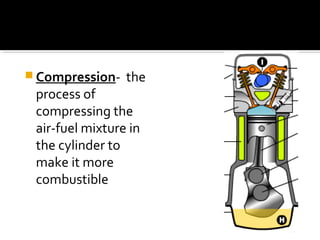
 Compression- the
process of
compressing the
air-fuel mixture in
the cylinder to
make it more
combustible
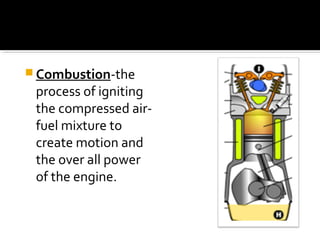
 Combustion-the
process of igniting
the compressed air-
fuel mixture to
create motion and
the over all power
of the engine.
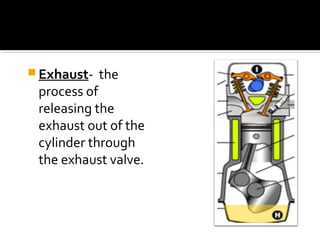
 Exhaust- the
process of
releasing the
exhaust out of the
cylinder through
the exhaust valve.
Four stroke IC engine

Four stroke IC engine

  • 1.
  • 2.
    Engine is adevice which transforms one form of energy into the other form.
  • 3.
    Heat engine isa modified form of engine used for transforming chemical energy of fuel into thermal energy and subsequently for producing work.
  • 5.
     A four-strokeengine:  Is an internal combustion engine  Converts gasoline into motion  Is the most common car engine type  Is relatively efficient  Is relatively inexpensive
  • 6.
     Two-stroke engines Diesel engines  Rotary engines  Turbine engines  Steam engines
  • 7.
    Intake Valve Valve Cover IntakePort Head Coolant Engine Block Oil Pan Oil Sump Crankshaft Camshaft Exhaust Valve Spark Plug Exhaust Port Piston Connecting Rod Rod Bearings
  • 8.
     A. IntakeValve- opens at the proper time to let in air and fuel.
  • 9.
     B. ValveCover- Protects the valves and the valve springs. Keeps dirt out and lubricating oil in.
  • 10.
     C. IntakePort- the passageway in a cylinder head for the fuel and air to pass through.
  • 11.
     D. Head-a platform containing most of the parts of the combustion chamber.
  • 12.
     E. Coolant-circulating water and antifreeze to keep the temperature regulated.
  • 13.
     F. EngineBlock- cast in one piece. The basis for most of the parts of the engine.
  • 14.
     G. OilPan- where the oil is collected and recirculated.
  • 15.
     H. OilSump- the collected oil primarily for lubricating the crankshaft and rod bearing
  • 16.
     I. Camshaft-a round shaft with lobes, that rotates to open and close the fuel and exhaust valves.
  • 17.
     J. ExhaustValve- open at the proper time to release the exhaust
  • 18.
     K. SparkPlug- a device, inserted into the combustion chamber for firing an electrical spark to ignite air-fuel mixture
  • 19.
     L. ExhaustPort- the passageway in a cylinder head, for the exhaust to pass through
  • 20.
     M. Piston-the part of the engine that moves up and down in the cylinder converting the gasoline into motion
  • 21.
     N. ConnectingRod- links the piston to the crankshaft.
  • 22.
     O. RodBearing- used to reduce friction to the rod and crankshaft
  • 23.
     P. Crankshaft-converts the up and down motion of the piston into a turning, or rotating motion
  • 24.
     1.  2. 3.  4. Intake Compression Combustion Exhaust
  • 25.
     Intake- processof filling the cylinder with the proper air- fuel mixture through the intake valve.
  • 26.
     Compression- the processof compressing the air-fuel mixture in the cylinder to make it more combustible
  • 27.
     Combustion-the process ofigniting the compressed air- fuel mixture to create motion and the over all power of the engine.
  • 28.
     Exhaust- the processof releasing the exhaust out of the cylinder through the exhaust valve.