is the study, evaluation, and
interpretation of literature. Modern
literary criticism is often informed
by literary theory, which is the
philosophical discussion of its methods
and goals. Though the two activities
are closely related, literary critics are
not always, and have not always been,
theorists.
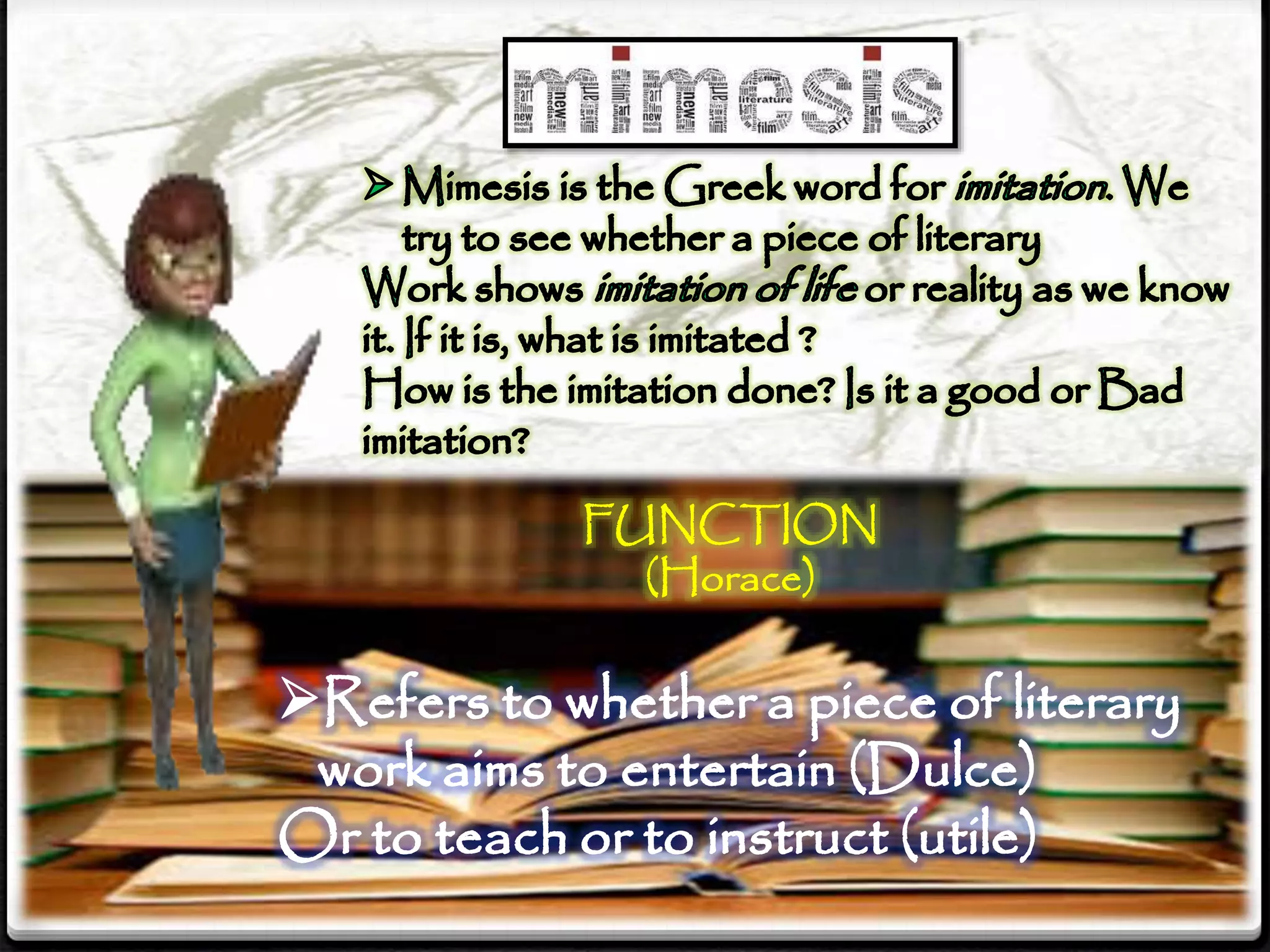
FUNCTION
(Horace)
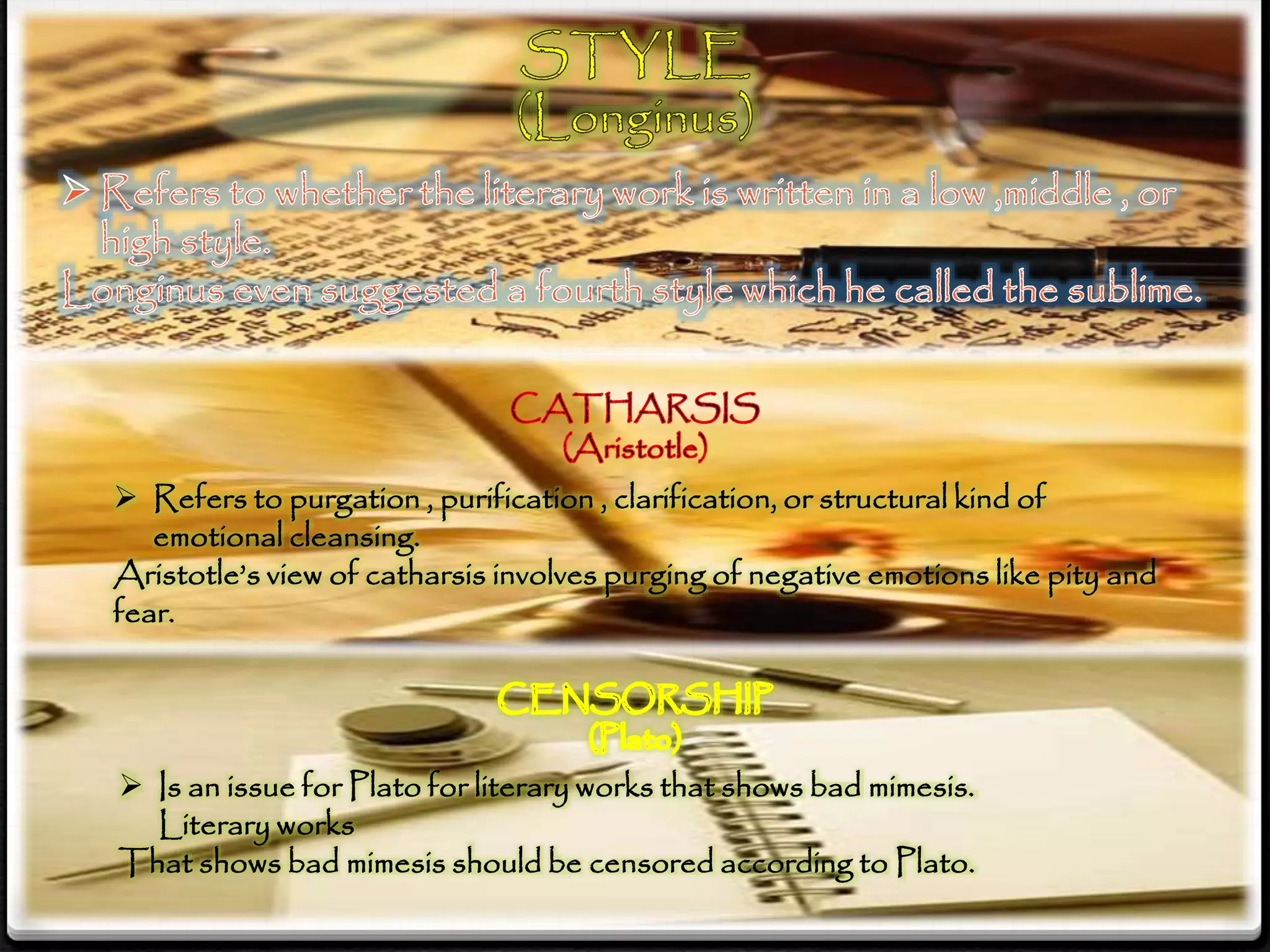
 Refers to purgation , purification , clarification, or structural kind of
emotional cleansing.
Aristotle’s view of catharsis involves purging of negative emotions like pity and
fear.
 Is an issue for Plato for literary works that shows bad mimesis.
Literary works
That shows bad mimesis should be censored according to Plato.
Romantic Theory
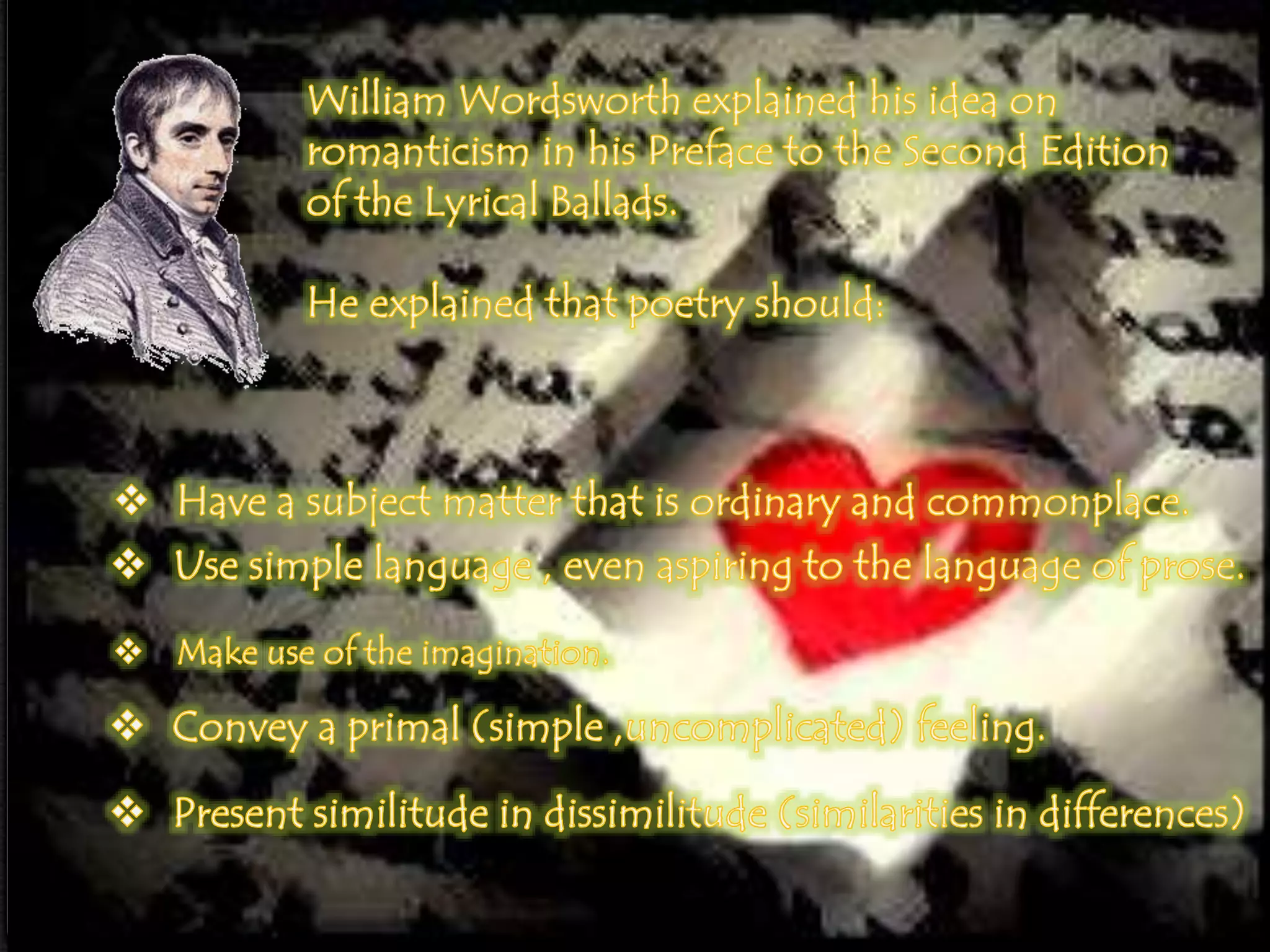
0 William Wordsworth explained his idea on
romanticism in his Preface to the Second Edition of
the Lyrical Ballads.
This theory believes that literature is an organic unity. It is independent of
its author or the time when it was written or the historical context. It is
concerned solely with the ‘text in itself’, with its language and organization.
To use this theory, one proceeds by looking into the following:
The persona
The addressee
The situation(where and when)
What the persona says
The central metaphor (tenor and vehicle)
The central irony
The multiple meanings of words
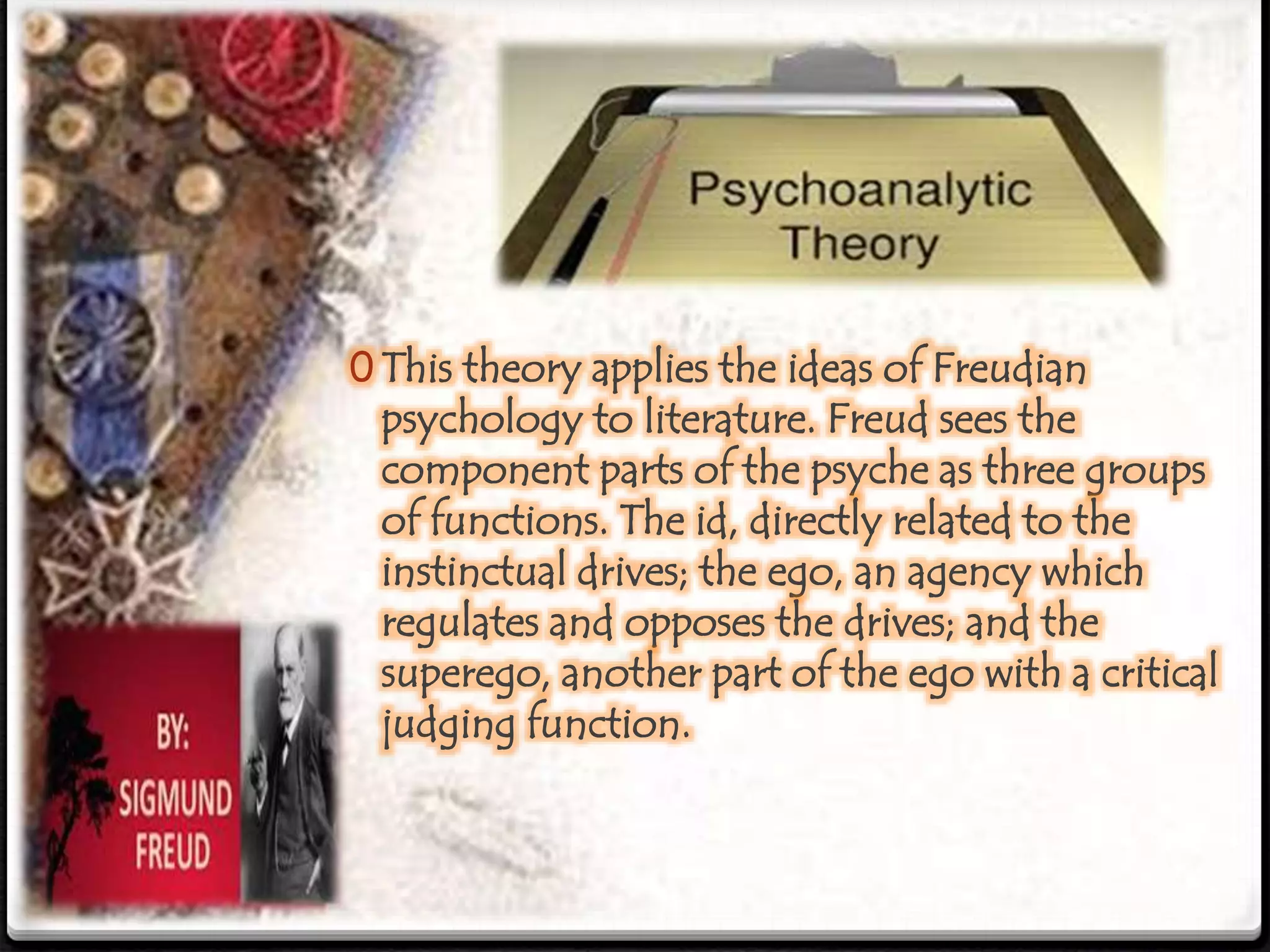
0 This theory applies the ideas of Freudian
psychology to literature. Freud sees the
component parts of the psyche as three groups
of functions. The id, directly related to the
instinctual drives; the ego, an agency which
regulates and opposes the drives; and the
superego, another part of the ego with a critical
judging function.
Mythological/
Archetypal
Approach
This approach to literary study is based on Carl Jung’s
theory of the collective unconscious.
Myths are universal although every nation has its own
distinctive mythology.
This theory questions texts
of all kinds and our common
practices in reading them.
The deconstructionist critic
begins by discerning a flaw in
the discourse and then
revealing the hidden
articulations. Deconstructing
a text call for careful reading
and a bit of creativity. The
most important figure in
deconstruction is the
Frenchman Jacques Derrida.
DECONSTRUCTION
Marxist Literary Theory
Feminist Critism
This is a specific kind of political discourse: there are two
kinds of feminist criticism: one is concerned with unearthing.
Rediscovering or re-evaluating women’s -writing, and he other
with re-reading literature from the point of view of women.
Feminism asks why women have played a subordinate role to
men in the society.
Postcolonial criticism
Postmodern literary theory
Structure of feeling that refer to the
culture of advanced capitalist societies.
This culture has undergone a profound
shift in the paradigm shift in the structure
of feeling. A whole new way of thinking
and being in the world emerged a paradigm
shift in the cultural, social, and economic
orders.
That’s All ,
Thank you !
I hope you like it .

forms of literary criticism.

  • 3.
    is the study,evaluation, and interpretation of literature. Modern literary criticism is often informed by literary theory, which is the philosophical discussion of its methods and goals. Though the two activities are closely related, literary critics are not always, and have not always been, theorists.
  • 5.
  • 6.
     Refers topurgation , purification , clarification, or structural kind of emotional cleansing. Aristotle’s view of catharsis involves purging of negative emotions like pity and fear.  Is an issue for Plato for literary works that shows bad mimesis. Literary works That shows bad mimesis should be censored according to Plato.
  • 9.
    Romantic Theory 0 WilliamWordsworth explained his idea on romanticism in his Preface to the Second Edition of the Lyrical Ballads.
  • 10.
    This theory believesthat literature is an organic unity. It is independent of its author or the time when it was written or the historical context. It is concerned solely with the ‘text in itself’, with its language and organization. To use this theory, one proceeds by looking into the following: The persona The addressee The situation(where and when) What the persona says The central metaphor (tenor and vehicle) The central irony The multiple meanings of words
  • 11.
    0 This theoryapplies the ideas of Freudian psychology to literature. Freud sees the component parts of the psyche as three groups of functions. The id, directly related to the instinctual drives; the ego, an agency which regulates and opposes the drives; and the superego, another part of the ego with a critical judging function.
  • 12.
    Mythological/ Archetypal Approach This approach toliterary study is based on Carl Jung’s theory of the collective unconscious. Myths are universal although every nation has its own distinctive mythology.
  • 14.
    This theory questionstexts of all kinds and our common practices in reading them. The deconstructionist critic begins by discerning a flaw in the discourse and then revealing the hidden articulations. Deconstructing a text call for careful reading and a bit of creativity. The most important figure in deconstruction is the Frenchman Jacques Derrida. DECONSTRUCTION
  • 16.
  • 17.
    Feminist Critism This isa specific kind of political discourse: there are two kinds of feminist criticism: one is concerned with unearthing. Rediscovering or re-evaluating women’s -writing, and he other with re-reading literature from the point of view of women. Feminism asks why women have played a subordinate role to men in the society.
  • 18.
  • 19.
    Postmodern literary theory Structureof feeling that refer to the culture of advanced capitalist societies. This culture has undergone a profound shift in the paradigm shift in the structure of feeling. A whole new way of thinking and being in the world emerged a paradigm shift in the cultural, social, and economic orders.
  • 20.
    That’s All , Thankyou ! I hope you like it .