III BA ENGLISH
SEMESTR V
MADURAI KAMARAJ UNIVERSITY
MS. M. CHRISTINA SUSAN M.A., M. PHIL., PGDCA
ASSISTANT PROFESSOR, DEPARTMENT OF ENGLISH,
N. M. S. SERMATHAI VASAN COLLEGE FOR WOMEN,
MADURAI.
 A term derived from the Greek words “krino”
meaning “ to judge” and “krites” meaning “a
judge or jury person”.
 In general, criticism is the expression of
disapproval of someone or something on the
basis of perceived faults and mistakes.
 In literary terms, criticism is the analysis and
judgment of the merits ad faults of a literary
work.
LITERARY THEORY LITERARY CRITICISM
• Refers to a set of ideas,
tools and principles
used in interpreting a
work of literature.
• Process of
understanding what the
nature of literature is
and provides a
theoretical framework
for analysis of
literature.
• Lens or framework
through which a critic
views a work.
• Evaluation and estimation
of literature.
• Art of judging and
commenting on the
qualities and character of
literary works.
• Is informed by literary
theory.
• Act of analysis.
• Began with the Greek
Philosophers-Plato
‘Republic’ and Aristotle
‘Poetics’ – provides the
first basic concept of
criticism
THE ART OF CRITICISM
THE CRITICAL METHOD:
• Literature [poetry, drama, fiction]- enjoyed in two ways:
Haphazardly as a lay man enjoys it.
- vague, confused
methodically as a trained man does.
-fully accounted for.
- criticism
• A critic is an ideal reader.
• Trained judgment on whatever he reads.
• Criticism is born of questioning.
• For criticism intellectual freedom is necessary.
• Atmosphere-questioning and inquiry are freely allowed.
LIMITATIONS:
• Trend of the age, attitude of the critic-tend to limit the critic’s freedom.
• Slave to one’s time and mental make-up
• No fixed principles of criticism to be applied indiscriminately to the works
of all ages and writers.
• The Principles of Criticism – various interpretations of literature or literary
activity, advanced from time to time.
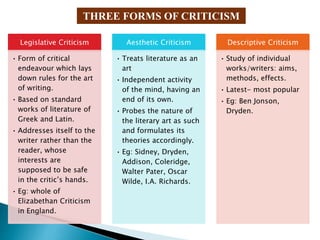
THREE FORMS OF CRITICISM
Legislative Criticism
• Form of critical
endeavour which lays
down rules for the art
of writing.
• Based on standard
works of literature of
Greek and Latin.
• Addresses itself to the
writer rather than the
reader, whose
interests are
supposed to be safe
in the critic’s hands.
• Eg: whole of
Elizabethan Criticism
in England.
Aesthetic Criticism
• Treats literature as an
art
• Independent activity
of the mind, having an
end of its own.
• Probes the nature of
the literary art as such
and formulates its
theories accordingly.
• Eg: Sidney, Dryden,
Addison, Coleridge,
Walter Pater, Oscar
Wilde, I.A. Richards.
Descriptive Criticism
• Study of individual
works/writers: aims,
methods, effects.
• Latest- most popular
• Eg: Ben Jonson,
Dryden.
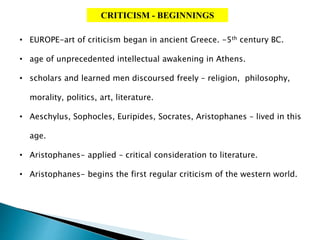
CRITICISM - BEGINNINGS
• EUROPE-art of criticism began in ancient Greece. -5th century BC.
• age of unprecedented intellectual awakening in Athens.
• scholars and learned men discoursed freely – religion, philosophy,
morality, politics, art, literature.
• Aeschylus, Sophocles, Euripides, Socrates, Aristophanes – lived in this
age.
• Aristophanes- applied – critical consideration to literature.
• Aristophanes- begins the first regular criticism of the western world.
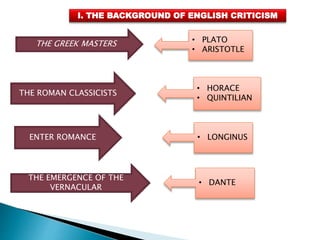
I. THE BACKGROUND OF ENGLISH CRITICISM
THE GREEK MASTERS • PLATO
• ARISTOTLE
THE ROMAN CLASSICISTS
• HORACE
• QUINTILIAN
ENTER ROMANCE • LONGINUS
THE EMERGENCE OF THE
VERNACULAR
• DANTE
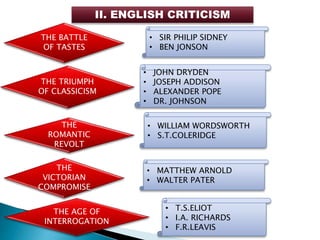
II. ENGLISH CRITICISM
THE BATTLE
OF TASTES
• SIR PHILIP SIDNEY
• BEN JONSON
THE TRIUMPH
OF CLASSICISM
• JOHN DRYDEN
• JOSEPH ADDISON
• ALEXANDER POPE
• DR. JOHNSON
THE
ROMANTIC
REVOLT
• WILLIAM WORDSWORTH
• S.T.COLERIDGE
THE
VICTORIAN
COMPROMISE
• MATTHEW ARNOLD
• WALTER PATER
THE AGE OF
INTERROGATION
• T.S.ELIOT
• I.A. RICHARDS
• F.R.LEAVIS
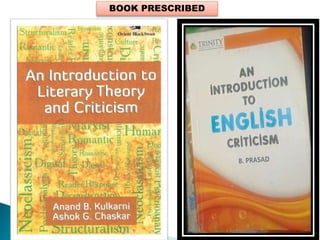
BOOK PRESCRIBED

Literary criticism introduction

  • 1.
    III BA ENGLISH SEMESTRV MADURAI KAMARAJ UNIVERSITY MS. M. CHRISTINA SUSAN M.A., M. PHIL., PGDCA ASSISTANT PROFESSOR, DEPARTMENT OF ENGLISH, N. M. S. SERMATHAI VASAN COLLEGE FOR WOMEN, MADURAI.
  • 2.
     A termderived from the Greek words “krino” meaning “ to judge” and “krites” meaning “a judge or jury person”.  In general, criticism is the expression of disapproval of someone or something on the basis of perceived faults and mistakes.  In literary terms, criticism is the analysis and judgment of the merits ad faults of a literary work.
  • 3.
    LITERARY THEORY LITERARYCRITICISM • Refers to a set of ideas, tools and principles used in interpreting a work of literature. • Process of understanding what the nature of literature is and provides a theoretical framework for analysis of literature. • Lens or framework through which a critic views a work. • Evaluation and estimation of literature. • Art of judging and commenting on the qualities and character of literary works. • Is informed by literary theory. • Act of analysis. • Began with the Greek Philosophers-Plato ‘Republic’ and Aristotle ‘Poetics’ – provides the first basic concept of criticism
  • 4.
    THE ART OFCRITICISM THE CRITICAL METHOD: • Literature [poetry, drama, fiction]- enjoyed in two ways: Haphazardly as a lay man enjoys it. - vague, confused methodically as a trained man does. -fully accounted for. - criticism • A critic is an ideal reader. • Trained judgment on whatever he reads. • Criticism is born of questioning. • For criticism intellectual freedom is necessary. • Atmosphere-questioning and inquiry are freely allowed. LIMITATIONS: • Trend of the age, attitude of the critic-tend to limit the critic’s freedom. • Slave to one’s time and mental make-up • No fixed principles of criticism to be applied indiscriminately to the works of all ages and writers. • The Principles of Criticism – various interpretations of literature or literary activity, advanced from time to time.
  • 5.
    THREE FORMS OFCRITICISM Legislative Criticism • Form of critical endeavour which lays down rules for the art of writing. • Based on standard works of literature of Greek and Latin. • Addresses itself to the writer rather than the reader, whose interests are supposed to be safe in the critic’s hands. • Eg: whole of Elizabethan Criticism in England. Aesthetic Criticism • Treats literature as an art • Independent activity of the mind, having an end of its own. • Probes the nature of the literary art as such and formulates its theories accordingly. • Eg: Sidney, Dryden, Addison, Coleridge, Walter Pater, Oscar Wilde, I.A. Richards. Descriptive Criticism • Study of individual works/writers: aims, methods, effects. • Latest- most popular • Eg: Ben Jonson, Dryden.
  • 6.
    CRITICISM - BEGINNINGS •EUROPE-art of criticism began in ancient Greece. -5th century BC. • age of unprecedented intellectual awakening in Athens. • scholars and learned men discoursed freely – religion, philosophy, morality, politics, art, literature. • Aeschylus, Sophocles, Euripides, Socrates, Aristophanes – lived in this age. • Aristophanes- applied – critical consideration to literature. • Aristophanes- begins the first regular criticism of the western world.
  • 7.
    I. THE BACKGROUNDOF ENGLISH CRITICISM THE GREEK MASTERS • PLATO • ARISTOTLE THE ROMAN CLASSICISTS • HORACE • QUINTILIAN ENTER ROMANCE • LONGINUS THE EMERGENCE OF THE VERNACULAR • DANTE
  • 8.
    II. ENGLISH CRITICISM THEBATTLE OF TASTES • SIR PHILIP SIDNEY • BEN JONSON THE TRIUMPH OF CLASSICISM • JOHN DRYDEN • JOSEPH ADDISON • ALEXANDER POPE • DR. JOHNSON THE ROMANTIC REVOLT • WILLIAM WORDSWORTH • S.T.COLERIDGE THE VICTORIAN COMPROMISE • MATTHEW ARNOLD • WALTER PATER THE AGE OF INTERROGATION • T.S.ELIOT • I.A. RICHARDS • F.R.LEAVIS
  • 9.