Formative Spaces: Making monks in
early medieval Iberia
• October 2016
• British Academy-Leverhulme
Trust small research grant
• Exploring relationship between
organisation of space and
training of monks and nuns in
6th & 7th century Iberia
• Levels of inquiry:
1. monasteries as formative
spaces for individuals and
communities
2. comparisons between regions
3. comparisons between source
types
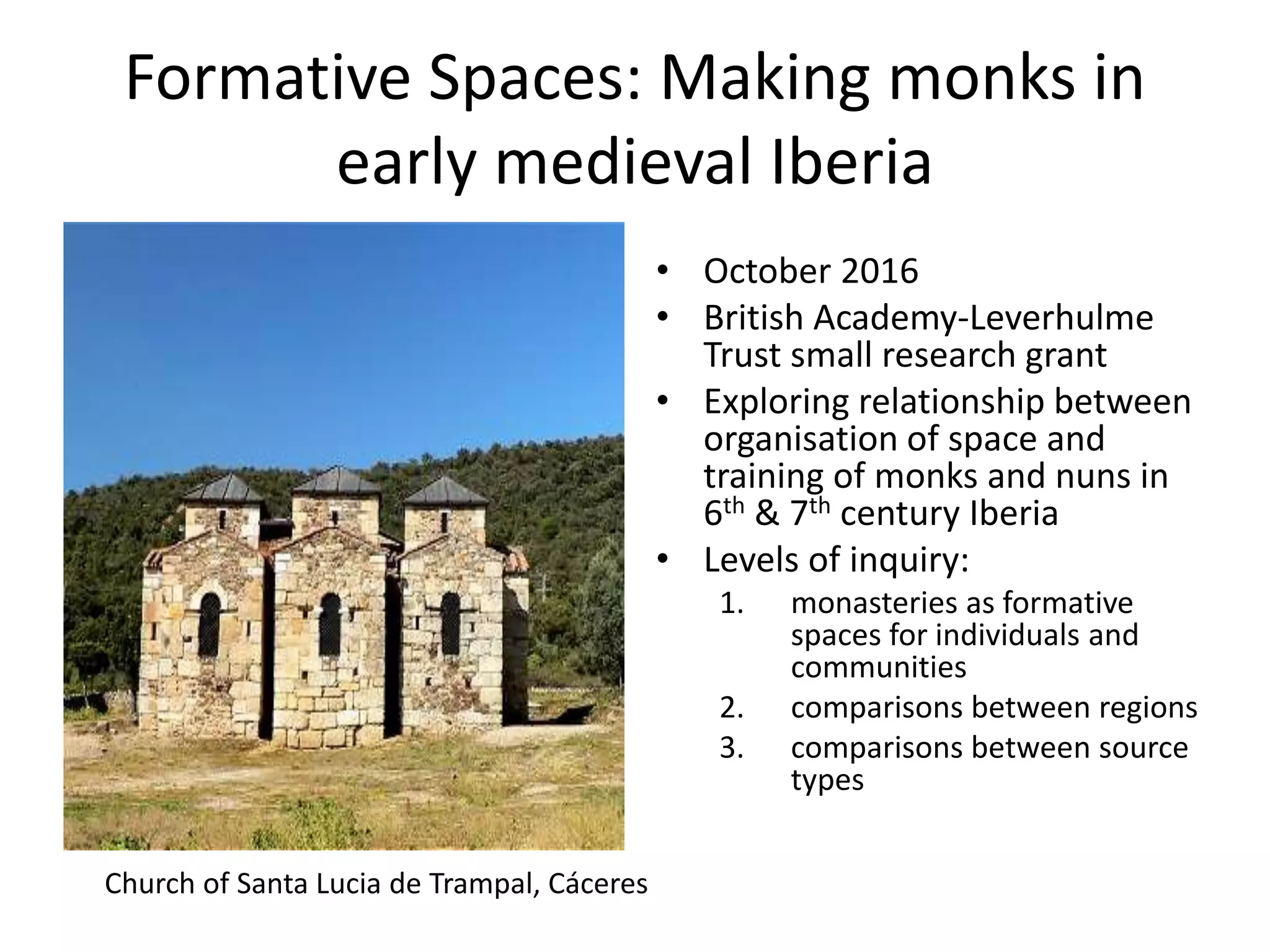
Church of Santa Lucia de Trampal, Cáceres
Sources and method
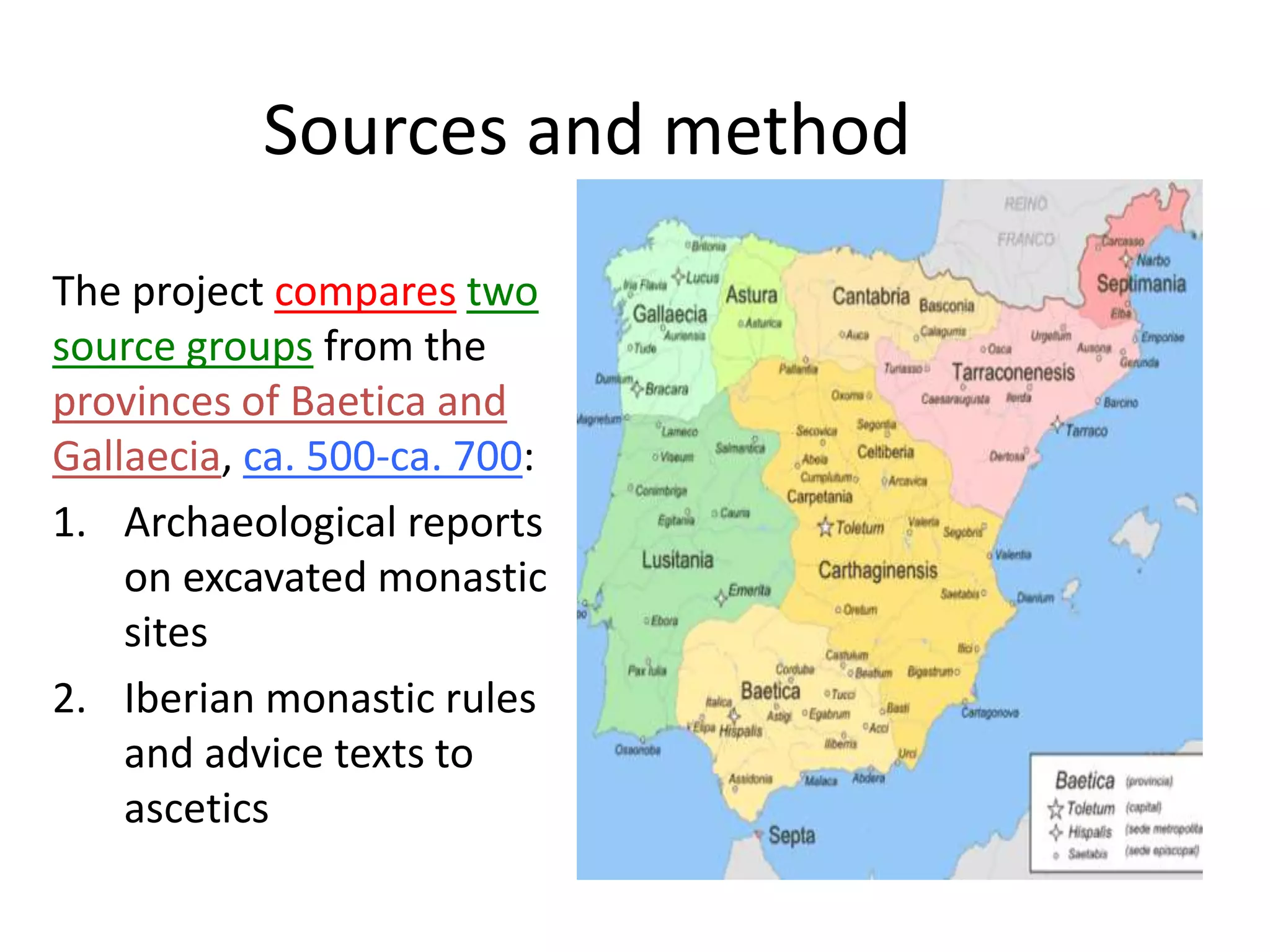
The project compares two
source groups from the
provinces of Baetica and
Gallaecia, ca. 500-ca. 700:
1. Archaeological reports
on excavated monastic
sites
2. Iberian monastic rules
and advice texts to
ascetics
Texts and physical spaces
“The walls of the monastery
will have one main entrance,
with an additional small back
entrance that leads into the
garden. Any settlement must
ideally be distant from the
monastery, in case if it were
near then it might bring the
distress of danger or taint the
monastery’s honourable
reputation. The cells of the
monks should be located next
to the church so that they can
go as quickly as possible to
Divine Office.”
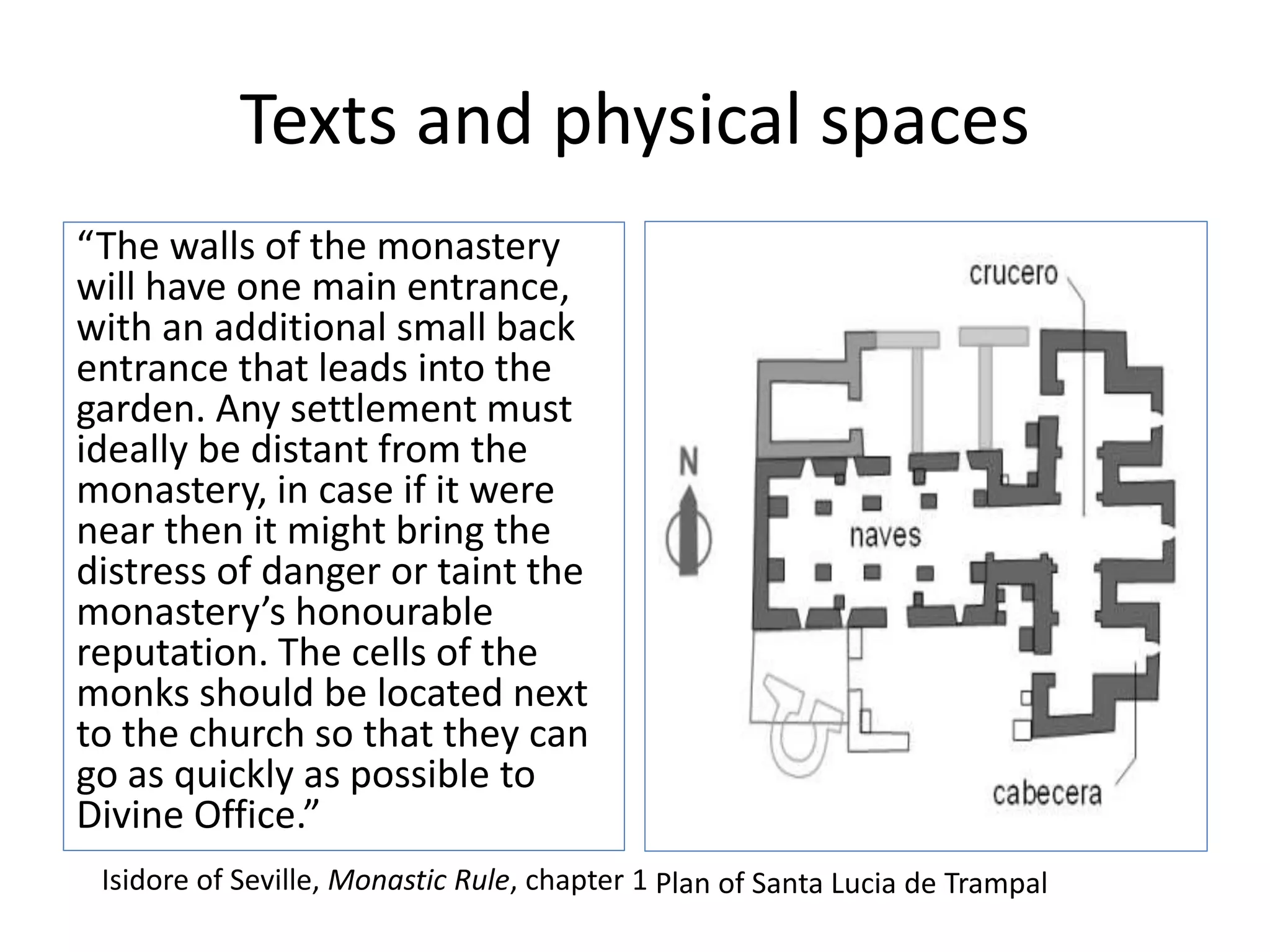
Plan of Santa Lucia de TrampalIsidore of Seville, Monastic Rule, chapter 1

Formative spaces: a brief introduction

  • 1.
    Formative Spaces: Makingmonks in early medieval Iberia • October 2016 • British Academy-Leverhulme Trust small research grant • Exploring relationship between organisation of space and training of monks and nuns in 6th & 7th century Iberia • Levels of inquiry: 1. monasteries as formative spaces for individuals and communities 2. comparisons between regions 3. comparisons between source types Church of Santa Lucia de Trampal, Cáceres
  • 2.
    Sources and method Theproject compares two source groups from the provinces of Baetica and Gallaecia, ca. 500-ca. 700: 1. Archaeological reports on excavated monastic sites 2. Iberian monastic rules and advice texts to ascetics
  • 3.
    Texts and physicalspaces “The walls of the monastery will have one main entrance, with an additional small back entrance that leads into the garden. Any settlement must ideally be distant from the monastery, in case if it were near then it might bring the distress of danger or taint the monastery’s honourable reputation. The cells of the monks should be located next to the church so that they can go as quickly as possible to Divine Office.” Plan of Santa Lucia de TrampalIsidore of Seville, Monastic Rule, chapter 1