The Medieval Monastery
Mr. Smith
The Medieval Monastery
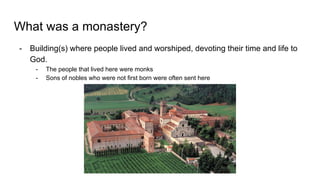
What was a monastery?
- Building(s) where people lived and worshiped, devoting their time and life to
God.
- The people that lived here were monks
- Sons of nobles who were not first born were often sent here
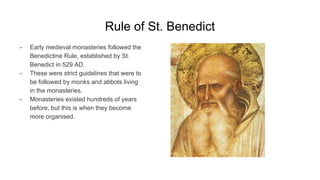
Rule of St. Benedict
- Early medieval monasteries followed the
Benedictine Rule, established by St.
Benedict in 529 AD.
- These were strict guidelines that were to
be followed by monks and abbots living
in the monasteries.
- Monasteries existed hundreds of years
before, but this is when they become
more organised.
Monks v. Friars
Monks - their life was spent on the monastery.
Friars - they interacted with the world.
Examples - Contemplative orders who lived strictly apart from the world,
e.g., Trappists
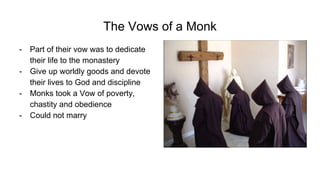
The Vows of a Monk
- Part of their vow was to dedicate
their life to the monastery
- Give up worldly goods and devote
their lives to God and discipline
- Monks took a Vow of poverty,
chastity and obedience
- Could not marry
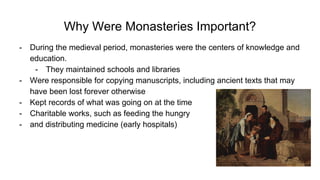
Why Were Monasteries Important?
- During the medieval period, monasteries were the centers of knowledge and
education.
- They maintained schools and libraries
- Were responsible for copying manuscripts, including ancient texts that may
have been lost forever otherwise
- Kept records of what was going on at the time
- Charitable works, such as feeding the hungry
- and distributing medicine (early hospitals)
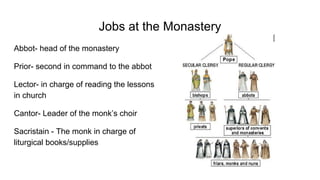
Jobs at the Monastery
Abbot- head of the monastery
Prior- second in command to the abbot
Lector- in charge of reading the lessons
in church
Cantor- Leader of the monk’s choir
Sacristain - The monk in charge of
liturgical books/supplies
Porter - monk who was in charge of the door, literally, gaining or denying admittance to the
monastery.
Novice Master - monk in charge of novice or apprentice monks.
Guest Master - monk in charge of quarters for guests.
Task Master - Mr. Lafayette.
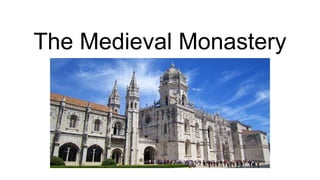
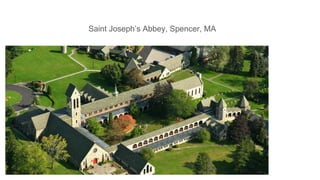
Saint Joseph’s Abbey, Spencer, MA
The medieval monastery

The medieval monastery

  • 1.
  • 2.
  • 3.
    What was amonastery? - Building(s) where people lived and worshiped, devoting their time and life to God. - The people that lived here were monks - Sons of nobles who were not first born were often sent here
  • 4.
    Rule of St.Benedict - Early medieval monasteries followed the Benedictine Rule, established by St. Benedict in 529 AD. - These were strict guidelines that were to be followed by monks and abbots living in the monasteries. - Monasteries existed hundreds of years before, but this is when they become more organised.
  • 5.
    Monks v. Friars Monks- their life was spent on the monastery. Friars - they interacted with the world. Examples - Contemplative orders who lived strictly apart from the world, e.g., Trappists
  • 6.
    The Vows ofa Monk - Part of their vow was to dedicate their life to the monastery - Give up worldly goods and devote their lives to God and discipline - Monks took a Vow of poverty, chastity and obedience - Could not marry
  • 7.
    Why Were MonasteriesImportant? - During the medieval period, monasteries were the centers of knowledge and education. - They maintained schools and libraries - Were responsible for copying manuscripts, including ancient texts that may have been lost forever otherwise - Kept records of what was going on at the time - Charitable works, such as feeding the hungry - and distributing medicine (early hospitals)
  • 8.
    Jobs at theMonastery Abbot- head of the monastery Prior- second in command to the abbot Lector- in charge of reading the lessons in church Cantor- Leader of the monk’s choir Sacristain - The monk in charge of liturgical books/supplies
  • 9.
    Porter - monkwho was in charge of the door, literally, gaining or denying admittance to the monastery. Novice Master - monk in charge of novice or apprentice monks. Guest Master - monk in charge of quarters for guests. Task Master - Mr. Lafayette.
  • 10.